

Forgotten History
@4gottnHistory • 42,741 subscribers
Independent researcher of ancient history.
Shorts




Videos


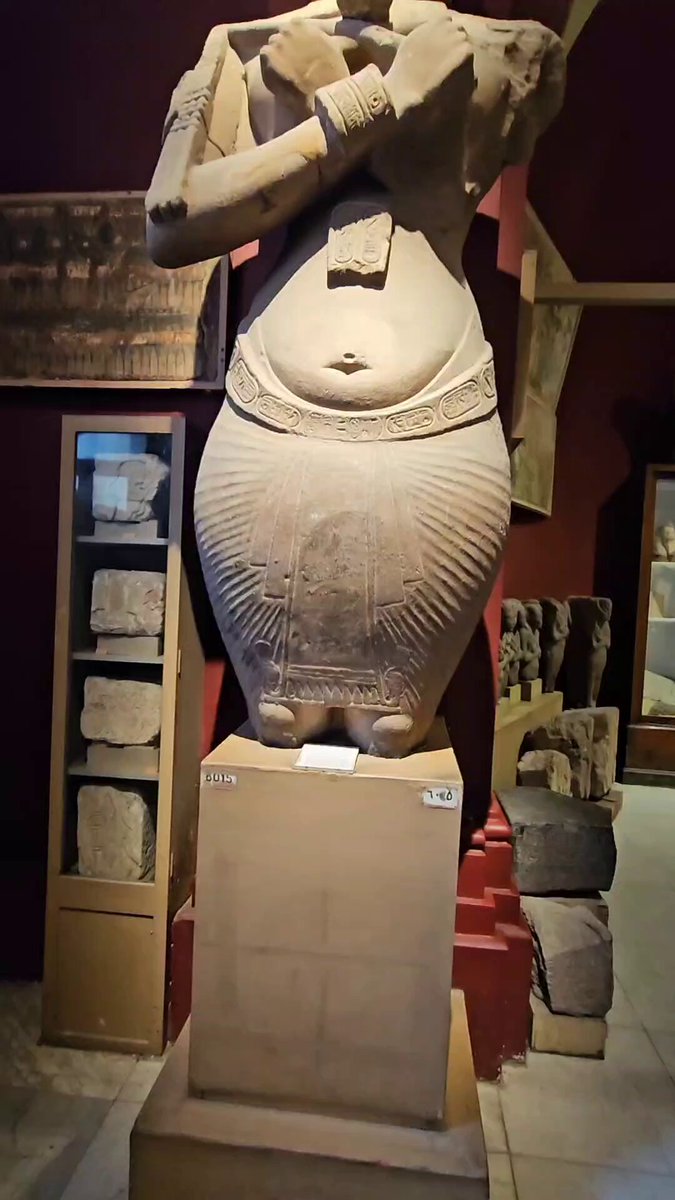
I shot this inside the Egyptian Museum in Cairo, and just look at the level of precision here. This is carved from granite, one of the hardest stones the ancient Egyptians worked. Look at the symmetry, the smooth surfaces, the curves around the face, the eyes, the beak, the proportions. The closer you look, the more impressive it gets. How do you think they achieved this level of precision in granite?
Forgotten History14,161 次观看 • 5 天前

I’m not saying the ancient Egyptians couldn’t work granite. BUT...... I’m questioning whether we’ve been given the full story of how they did it. Granite is extremely difficult to shape. The methods demonstrated by archaeologists show it can be worked using the tools attributed to the Egyptians… But only through an incredibly slow and painstaking process. ⏳ Yet across Egypt, we find granite: 📍 Cut 📍 Drilled 📍 Shaped 📍 Polished 📍Produced on an enormous scale Sometimes with astonishing precision. So why did they repeatedly choose one of the hardest stones available? Perhaps they had a better way of working it that we still haven’t discovered. 🤔
Forgotten History32,956 次观看 • 13 天前

Why did ancient builders leave these strange knobs protruding from enormous stone blocks? You can find them at ancient sites across Egypt, Peru and beyond, sometimes on stones weighing many tonnes. The usual explanation is that they were lifting points, or simply unfinished remnants left during quarrying. But why do they appear in different civilizations, separated by thousands of miles, and why are they sometimes positioned where they seem useless for lifting? What do you think these knobs were actually used for?
Forgotten History28,929 次观看 • 14 天前





Explain this. This is a 92-foot-deep, 23-foot-wide shaft in Saqqara, Egypt. It was carved directly into solid limestone bedrock. 🤯 How did they keep the walls so straight? People often say ancient builders had simple tools. But when you look at something like this, it's hard not to question that explanation. Because digging a hole is one thing. Carving a giant shaft directly into bedrock is another.
Forgotten History60,246 次观看 • 3 个月前

I keep coming back to this place. Puma Punku in Bolivia. Because no matter how many times I look at it… it just doesn’t sit right. These stones, some of them are absolutely massive. But it’s not just the size. It’s the cuts. The angles. The way everything lines up with this almost unnatural precision. Look at the details up close, it genuinely looks machined.
Forgotten History64,531 次观看 • 5 个月前


Holy shit, This just stopped me in my tracks. Graham Hancock has revealed on Diary of a CEO that this may be his last interview because he may not survive an operation scheduled for later this month. Agree with him or disagree with him, Graham has spent decades challenging people to think differently about the past and ask difficult questions. Wishing you Graham Hancock all the best for the operation and very much hope you make a full recovery.
Forgotten History29,673 次观看 • 3 个月前


How did they excavate something on this scale using the tools we are told they had? Beneath the Step Pyramid of Saqqara lies something most people never see… A colossal shaft plunging 28 metres underground, roughly the height of a nine-storey building, with a network of tunnels and chambers branching out beneath it. And remember: this was carved more than 4,600 years ago, beneath Egypt’s first pyramid.
Forgotten History14,056 次观看 • 1 个月前

The Trilithon stones at Baalbek are 800–900 tons each, that's far heavier than the largest stones used in the Great Pyramid of Giza, which are around 80 tons. But the weight isn’t the only strange part. Look closely at Baalbek and you’ll notice something even more intriguing… We see completely different architectural styles stacked on top of each other, yet we're told the Romans built it all. (Full video is on youtube now)
Forgotten History45,520 次观看 • 6 个月前

