
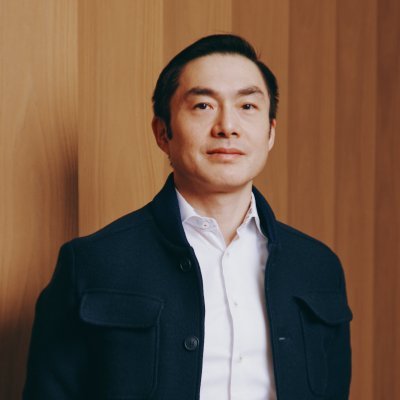
Alfred Lin
@Alfred_Lin • 121,920 subscribers
Partner @sequoia. Working w/ founders from idea to IPO & beyond: @airbnb @doordash @citsecurities @kalshi @clay @foundforbiz @Nominal_io @zipline
Videos

.Tarek Mansour on Kalshi: “The thing that was unique about us is we never pivoted. It was always Kalshi. We were dragged by the idea. I wasn't the type that wanted to be an entrepreneur. I think if you re-roll the dice multiple times, I'd probably just be a trader or risk manager. I would not be an entrepreneur. But the idea was so glaring in front of us that we just had to do it.” Successful founders will often tell you that the idea pulled them, not the other way around. Kalshi walked through the desert for six years. Most teams reset the idea once the desert gets long enough. They never did, because they were dragged by the idea, not short-term outcomes. When they persevered and became the first regulated prediction market, they compounded to ~95% US market share. The patience to do things right became an advantage, not a constraint. Keep the long game in mind when you feel like you're in the desert.
Alfred Lin98,106 görüntüleme • 1 ay önce

.Tarek Mansour has a great metaphor for scaling a company: you're driving a ship as hard as you can, and there's always a hole leaking water somewhere. One kind of founder stares at it all day. Another throws a rug over it and tells everyone things are fine. Great founders stop waiting for calm water. They resign themselves to the holes constantly appearing, and get good at spotting the next one before it spreads. It sounds grim. It's actually the whole game. If you’re lucky enough to build a legendary company, the work will never end. The trick is to love what you do enough that you’re energized by fixing the holes. You can see it in Kalshi's own progress: the CFTC lawsuit, then over-reliance on a few big brokers, then communicating clear lines between regulated markets and offshore ones. Solve one, the next is already taking on water.
Alfred Lin39,753 görüntüleme • 1 ay önce

Drone delivery is about to be cheaper than cars. But the drone is only 15% of the work to get there. A decade after starting in Rwanda flying blood to one hospital, Zipline has flown 140M+ autonomous miles with zero safety incidents, expanded to the US and to food delivery and household items, and delivery costs have fallen from $300 to $12 - now cheaper than a car. Getting there meant building almost everything from scratch: flight computers, motors, GPS modules, even the air traffic software regulators use to track them. And it meant a discipline most engineers find nearly impossible. That's the reality behind Zipline, the largest autonomous system on Earth. Keller Cliffton and Eric Watson joined me and Pat Grady to talk more about their journey. 00:00 Introduction 02:28 Early Vision and Regulation 04:09 Rwanda Launch Hard Lessons 06:49 Scaling to 24/7 Impact 09:35 Real World Ops Surprises 11:15 Safety Redundancy Failover 20:24 Precision Delivery Pod Tech 25:34 Building the Drone Network 26:51 Fleet Commanders Explained 28:22 Scaling to a Million a Day 29:51 Autonomy Enables 24 7 Ops 31:52 Reinventing Air Traffic Control 36:08 Why Zipline Is Vertical 41:40 First Principles Delete Parts 44:45 Market Explosion and Closing Thoughts
Alfred Lin32,690 görüntüleme • 1 ay önce

"Physics gets a vote." Cameron McCord learned this viscerally in his time at Anduril. "Simulate everything" became industry gospel, but it turns out testing is still critical in hardware. That experience became the thesis behind Nominal. He and co-founders Jason Hoch and Bryce Strauss built Nominal around testing because it's where software-defined hardware meets the physical world for the first time, and where the real advantage gets built.
Alfred Lin14,724 görüntüleme • 5 ay önce

On this week's Training Data, I served as a guest host for a great conversation with Kareem Amin, founder of Clay AI, a go-to-market creative tool revolutionizing how teams approach sales and marketing through AI. We explored the delicate balance between automation and human creativity, diving into what AI can (and, importantly, cannot) do in modern sales, the company’s technology approach, and Kareem’s unique company-building philosophy.
Alfred Lin16,771 görüntüleme • 1 yıl önce
Daha fazla içerik yok.