
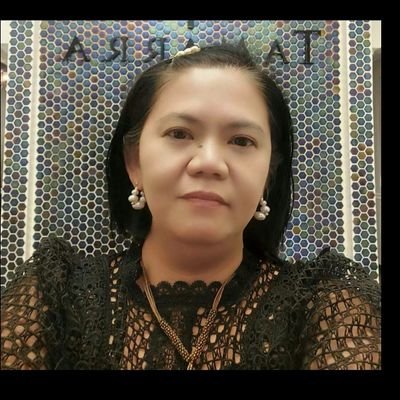
Anna Malindog-Uy
@AnnaMalindogUy • 8,072 subscribers
Columnist, The Manila Times (TMT) Columnist, The LOBBYIST, PUBLICUS Asia, Inc. Ph.D. Candidate in Economics, ISSCAD, Peking University
Videos

This is former PH Senator Nikki Coseteng! This interview was taken just days before the May 2022 Presidential Elections in PH. It’s in TikTok these days…. I am shocked. I only watched this interview now. Again, the allegation is straightforward. To address the concerns troubling the Filipino people, both domestically and abroad, the most effective solution would be to conduct a HAIR FOLICLE TEST. This should be done with national TV coverage by independent reliable health facilities and medical practitioners. It's as simple as that! Is this really difficult to do? I genuinely wonder why. Remember, this is an issue of PUBLIC TRUST, WHICH IS NOW IN DOUBT! #ProtectThePeople
Anna Malindog-Uy159,363 просмотров • 2 лет назад


Philippines WAKE UP! During the Emergency Press Conference: The Danger of Nuclear War Is Real and Must Be Stopped! June 12, 2024, National Press Club, Washington, D.C. Speakers: *Scott Ritter: former U.N. weapons inspector and U.S. Marine intelligence officer * Col. (ret.) Richard H. Black: former head of the U.S. Army’s Criminal Law Division at the Pentagon; former State Senator, Virginia
Anna Malindog-Uy143,041 просмотров • 2 лет назад

Thank you, China! China Coast Guard Rescues 13 Philippine Crew Members After Cargo Ship Capsizes At 1:34 a.m. on January 23, China Coast Guard received a report from the Maritime Search and Rescue Center of Sansha City, Hainan Province, that a foreign cargo vessel had capsized 55 nautical miles northwest of China’s Huangyan Dao, with a total of 21 Philippine crew members on board. China Coast Guard immediately dispatched two vessels to the site for search and rescue. As of now, 13 crew members have been rescued, and rescue operations are ongoing.
Anna Malindog-Uy41,620 просмотров • 7 месяцев назад

Folks, WATCH - Interview features Atty. Levi Baligod, lawyer of the 18 former Marines who claim they delivered cash to ICC officers, allegedly in connection with the investigation involving former president Rodrigo Duterte. Atty. Baligod discusses the allegations and explains what he says are the possible implications of this exposé, while also responding to the government’s statements on the issue.
Anna Malindog-Uy33,319 просмотров • 5 месяцев назад

RIGHT on point... In fairness, this is the truth and the reality... This is it naman talaga eh... Folks, yung mensahe ng video ang dapat focus. , not sure if this AI coz pinasa sa akin ito.. Pero if pa pakinggan ang sinasabi ng Video na ito, this the reality ng kinakaharap ng pinas... Focus on the message nf video clip na ito dahil yan ang totoong kalagayan ng bayan lalo na pag dating sa massive corruption sa infrastructure... #unfiltered #exposethedeception #ExposeTheTruth #unfiltered #exposethedeception #ExposeTheTruth
Anna Malindog-Uy47,260 просмотров • 11 месяцев назад

The Art of Sounding Decisive While Saying Nothing…. The reporter’s question was direct: Given massive corruption, a sinking peso, a plunging stock market, slower GDP growth, and collapsing FDI, what is the plan to restore investor confidence and economic recovery? Mr. President BBM, your answer was a weather report, a vague lecture on “global shocks,” and a promise of more public spending—with no numbers, no targets, no reforms, and certainly no accountability. You did not answer the question at all. You were asked to present a plan to restore investor confidence and drive economic recovery. But what you said was: •A rundown of typhoons •A mention of climate change •An argument about the global trade structure •And the blanket fallback: “We’ll increase public spending.” Not a single part of your answer contained: ✔ A reform ✔ A timeline ✔ A target ✔ A policy adjustment ✔ Anti-corruption measures ✔ Monetary/fiscal coordination ✔ Investor-confidence repair steps Mr. President, the question was about governance and economic credibility. You revert to blaming the weather. EXCUSE #1: “It’s the typhoons.” Fact check: Wrong. Pagasa reports frequent typhoons every year, yet the Philippine economy grew 7.1% in 2021; grew 7.6% in 2022. Both years experienced severe weather events. Nevertheless, Typhoons didn’t stop growth then. Why now? EXCUSE #2: “Climate Change” slowed down the economy.” Fact check: Also wrong. Climate change impacts/harm agriculture, yes—but: •The sharp drop in FDI (down ~40%) •The loss of investor confidence •The peso’s fall to historic lows …are driven by financial and governance signals, not rainfall, not the weather. Investors do not flee or avoid a country because of clouds. They flee because they smell corruption, uncertainty, and mismanagement. EXCUSE #3: “Global trade structure shocks are hitting everyone.” Fact check: Only partly true—and misleading. Global headwinds exist, but: •Vietnam is still attracting record FDI with a growth rate of 8.23% in Q3, 2025 •Indonesia remains stable with a growth rate of 5.04% in Q3, 2025 •Malaysia is outperforming its forecasts with a growth rate of 5.2% in Q3, 2025 •India is surging •Bangladesh is maintaining growth •Japan is recovering •Even Thailand, with political uncertainty, is outperforming the PH in FDI inflows. •China’s growth even exceeds that of 2024. The Philippines, by contrast: •Has one of the worst-performing currencies in ASEAN this year •The weakest link in ASEAN economies •Has one of the largest FDI contractions •It is the only country where infrastructure disbursement collapsed due to corruption probes •has the sharpest stock market drop If everyone faced the same global conditions, why is the Philippines performing worse? Because the problem is not global, it is extremely, painfully domestic. EXCUSE #4: “We will increase public spending.” Fact check: Not a plan. No roadmap. Public spending was already budgeted. Increasing spending is NOT a strategy; it is an attempt to restart what corruption already broke. IMPLICATIONS: What BBM Answer Signals to Investors and the Public? seems he does not fully understand the economic drivers underlying the crisis. His analysis treats the Philippine economy as if: •Storms caused currency depreciation •Rainfall caused FDI outflow •The weather caused the drop in GDP growth In short, it signals poor comprehension or deliberate misdirection—both dangerous. 2. It seems he has no concrete recovery plan. If one existed, he would have cited at least: •tax reforms, •ease-of-doing-business measures, •procurement cleanups, •governance reforms, •monetary-fiscal coordination. •He cited none. 2.Investors will read his answers as red flags: Markets hate uncertainty, and a leader unable (or unwilling) to address governance issues signals instability. Sorry to say this, Mr. President Marcos Jr., but your answer to the reporter reveals a troubling pattern: excuses instead of solutions, deflection instead of accountability, and rhetorical confidence masking policy emptiness. It looks like a performance of leadership without the substance of governance. A speech filled with clouds, storms, and global winds, when the real storm is happening inside your own government and domestically. Folks, if this is the economic messaging coming from the top, it’s no wonder investors are heading for the exits.
Anna Malindog-Uy37,451 просмотров • 9 месяцев назад

She just announced her 2028 Presidential Bid. In political terms? That wasn’t just a declaration — that was the opening bell. 😊 To her detractors: stretch properly. Hydrate. This won’t be a short sparring match. To her supporters: lace up the gloves, fix the headgear, and check your footwork. Because, like it or not, the arena is set. This isn’t a whisper campaign. This isn’t shadowboxing. This is a full-card main event. To both camps — detractors and supporters alike — Are you ready to rumble? 😂😂 Let’s get ready to rumble, folks… 2028 just got very interesting hehehehe😅😅
Anna Malindog-Uy20,440 просмотров • 6 месяцев назад

WATCH! Feel free to share! I was interviewed by Russia Today (RT) on May 14, 2025, Wednesday, about the outcome of the May 12, 2025, midterm elections in the Philippines, a political watershed that proved favorable to the Duterte camp. Notably, former President Rodrigo Duterte made a dramatic political comeback, securing a landslide victory in his mayoral bid in Davao City. This development underscores the enduring strength of Duterte's political legitimacy and currency and signals a potential reconfiguration of national power dynamics as the country edges closer to the 2028 presidential race. RT
Anna Malindog-Uy39,544 просмотров • 1 год назад

MUST WATCH & SHARE, folks! 😊 VP Sara Duterte broke her silence in an exclusive RT (Russia Today) International interview. She dived deep into the unjust detention of former President Rodrigo Duterte in The Hague, gave her take on the high-stakes impending impeachment trial she now faces, and touched on the geopolitical chessboard between China and the US, while emphasizing that the Philippines is no mere pawn, it has to pursue an independent foreign policy as what the country’s Constitution dictates, which is contrary to what Marcos Jr.’s foreign policy which is obviously and undeniably leaning to the United States, and the whole world knows this, and that the country, like any middle powers in the region, should stay neutral in the game of thrones of superpowers. This is genuine #ProPhilippines’ stance, consistent with the country’s Constitution’s dictates! Folks, don’t just scroll, WATCH, REFLECT, and SHARE! 🌏🔥👊👊👊 #ProPhilippines
Anna Malindog-Uy32,009 просмотров • 1 год назад


Sharing my live broadcast media interview with Russia Today (RT) late last night. The interview focused on former President Rodrigo Duterte and the unfolding events in the Philippines, which have garnered significant media attention both domestically and internationally. Duterte has been arrested and transferred to the International Criminal Court (ICC) in The Hague to face charges of crimes against humanity related to the anti-drug campaign during his presidency from 2016 to 2022. Duterte was apprehended in Manila on March 11, 2025, upon returning from Hong Kong from a family vacation. His arrest followed a 12-hour standoff at the Manila Villamor air base. He was subsequently transported to The Hague, arriving at Rotterdam Airport on March 12, 2025. Note that the ICC has no jurisdiction over the conduct of the Philippines after its withdrawal from the Rome Statute. Under Article 127, paragraph 1, of the Rome Statute, a State may withdraw from the Statute by notification in writing to the Secretary-General of the United Nations, which will take effect one year after the date of notification. The Philippines officially initiated the process of withdrawal on March 17, 2018, and the withdrawal took effect on March 17, 2019, making the withdrawal legal and effective. According to Article 127, paragraph 2, of the Rome Statute, even if a State withdraws from the Statute, its withdrawal does not exempt it from legal obligations undertaken during the State's time as a State party or from investigative proceedings that have been initiated. However, the withdrawing State is not obliged to assist in cases initiated or advanced by the ICC after withdrawal, including the obligation to cooperate in connection with the submission of the accused (Article 86). This means that the Philippines no longer has a legal obligation to assist in the extradition of Duterte or other defendants after withdrawal. To Watch click the video. Thank you!
Anna Malindog-Uy27,509 просмотров • 1 год назад


Why did Former President Rodrigo Duterte, during his time as Mayor of Davao City and President of the Republic of the Philippines, strongly emphasize peace and order, including the fight against illegal drugs? For Tatay Digong, (Former President Duterte), law and order weren’t just policies—they were personal. He saw firsthand what crime could do to a city and made it his mission to fix it. Whether through controversial or effective means, Duterte’s legacy in Davao City remains one of transforming a once-dangerous urban center into one of the safest in the country. 1. The Violent Past of Davao City (1970s–1980s) • Before Duterte became mayor in 1988, Davao City was known as the "Murder Capital of the Philippines" due to rampant crime, communist insurgency, and warlordism. • The New People’s Army (NPA) had strongholds in the region, and the city was plagued with assassinations, kidnappings, and drug-related violence. • The presence of vigilante groups made the city one of the most dangerous in the country. 2. Duterte’s Early Career as a Prosecutor • Before entering politics, Duterte was a prosecutor in Davao City, handling cases involving drugs, criminal syndicates, and rebel groups. • He witnessed firsthand how crime, impunity, and corruption crippled the city, likely shaping his hardline stance against lawlessness. 3. Personal Convictions on Leadership and Governance • Duterte has always believed that economic progress is impossible without law and order. • He saw that past mayors failed to control crime, and he took it upon himself to clean up Davao when he took office in 1988. • His approach was swift and direct, implementing strict policies on curfews, liquor bans, and firearm regulations. 4. Influence of His Father • Duterte’s father, Vicente Duterte, was a former governor of the undivided Davao province. • Vicente was known for his discipline and governance style, and Duterte likely inherited this perspective on strong leadership. 5. His Close Ties with Police and Military • Unlike traditional politicians, Duterte developed deep ties with law enforcement and the military, understanding their challenges and using them to enforce his vision of order. • He provided better salaries and benefits to the police in Davao & gave them more operational freedom to combat crime. 6. His Strong Anti-Drug and Anti-Crime Advocacy • Duterte was particularly aggressive against illegal drugs, seeing them as the root cause of crime. • He declared that drug lords and criminals had no place in his city, which later became a national policy when he became president. • His tough stance led to allegations of EJKs, but his supporters argue that it was necessary to maintain order. 7. Support from the Business Community • Business leaders in Davao City supported Duterte’s law-and-order policies because they made the city safer for investments. • The once-dangerous city transformed into an attractive destination for investors, with shopping malls, international hotels, and businesses thriving under his tenure. 8. His ‘Strongman’ Leadership Style • Duterte’s leadership approach is similar to that of other figures known for strong-willed leadership and pragmatism, where results take precedence. He has a no-nonsense approach to crime and discipline. 9. Personal Experience w/ Threats and Violence • His direct involvement in security matters—sometimes personally joining patrols and inspecting crime scenes at night—showed his commitment to enforcing his policies. 10. Political Longevity and Public Approval • Duterte’s success in drastically lowering crime rates in Davao led to overwhelming support, and he secured multiple re-election victories (he served 22 years as mayor). • His “Davao Model” of governance ultimately catapulted him to the presidency, with many Filipinos believed he could replicate the same nationwide. Feel free to share 🙏😊❤ #bringhimhome👊👊👊
Anna Malindog-Uy18,569 просмотров • 1 год назад


All roads in PH lead to the Edsa Shrine! #StandW/thePeople! #ProtectThePeople
Anna Malindog-Uy14,485 просмотров • 1 год назад
