Carlos Creus Moreira
@CreusMoreira • 10,085 subscribers
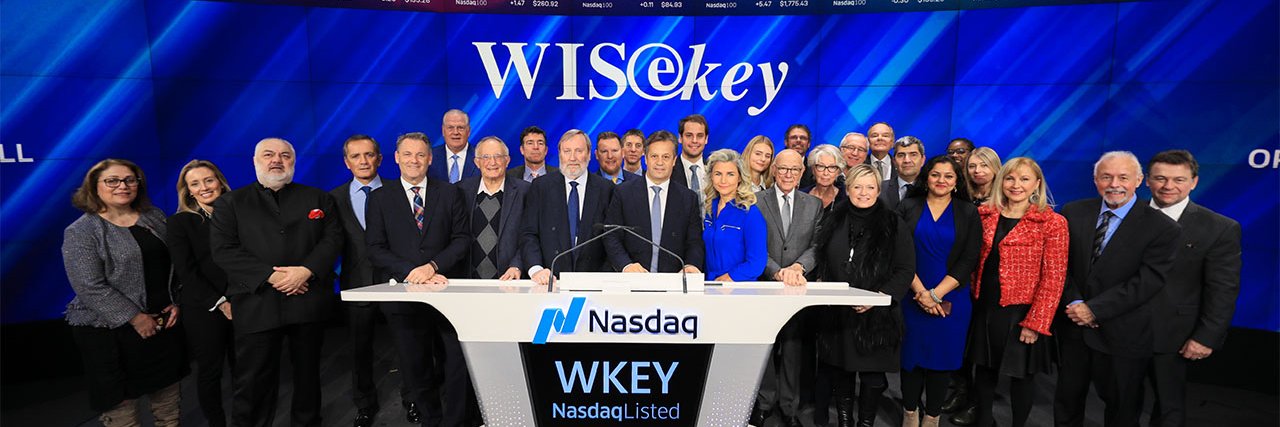
Founder CEO #Wisekey and https://t.co/0emFmxYNzj & https://t.co/SeTENxXcKV , co-writer #transhumancode bestseller, former UN Expert #Cybersecurity WEF New Champion https://t.co/mKJLQm6jdF
Shorts

Videos

Fund: "Over the last few days, SEALSQ $LAES and WISeKey have accelerated their vision of building the world's first sovereign quantum-secure infrastructure. Through strategic acquisitions and investments, we are creating a complete ecosystem spanning semiconductors, quantum technologies, digital identity, blockchain, AI, and space."
Carlos Creus Moreira581,581 次观看 • 3 个月前

Carlos Creus Moreira Talks about is the quantum technology platform of SEALSQ SEALQuantum is the quantum technology platform of SEALSQ , created to build a sovereign, vertically integrated quantum and post-quantum technology stack — from Root of Trust to Qubit. Through strategic investments, acquisitions and partnerships with leading quantum technology companies, SEALQuantum brings together critical capabilities across post-quantum semiconductors and cryptography, ASIC design, quantum computing, quantum communications, photonics, quantum networking and secure infrastructure. Our strategy goes beyond creating a portfolio of independent technologies. SEALQuantum is integrating these capabilities into an interoperable architecture designed to provide governments, enterprises and critical industries with trusted, sovereign and deployable quantum solutions. By combining SEALSQ’s expertise in secure semiconductors and post-quantum security with advanced quantum technologies developed across Europe, the United States and other strategic markets, SEALQuantum aims to accelerate the transition from today's cybersecurity infrastructure to the quantum-secure and quantum-enabled infrastructure of tomorrow. SEALQuantum: From Root of Trust to Qubit.
Carlos Creus Moreira123,143 次观看 • 27 天前


The Hashgraph Association Association and SEALSQ are collaborating to build the Future of Decentralized Physical Infrastructure Networks (#DePIN) on the Hedera Distributed Ledger Technology #DLT Network. This partnership signifies a groundbreaking step in merging blockchain technology with physical infrastructure, poised to revolutionize the way we interact with our built environment. Key to this collaboration is the integration of SEALSQ’s platform with Hedera, enabling trillions of object transactions to be securely recorded and managed. This transformative solution, showcased at Times Square and Nasdaq, underscores the potential of #SEALCOIN and Hedera’s DLT to support scalable, decentralized networks for physical infrastructure. By harnessing the power of SEALSQ’s advanced cryptographic solutions and The Hashgraph Association’s cutting-edge technology, this initiative is set to redefine decentralized ecosystems and accelerate the adoption of secure and efficient DePIN solutions globally.
Carlos Creus Moreira31,032 次观看 • 1 年前

🚀 SEALSQ $LAES at Times Square — Leading the Future of Quantum & AI Security! We’re proud to share that SEALSQ was featured today on the Nasdaq Tower in Times Square, announcing that our CEO Carlos Moreira will deliver the Opening Keynote at IQT Quantum + AI 2025, taking place October 19–21 in New York City. 🎤 Keynote: “AI Meets Quantum: Building Unbreakable Post-Quantum Security” Carlos will explore how AI and Quantum Computing are converging to redefine cybersecurity and shape the next era of digital trust. He will also join Panel 8: CEO Roundtable, alongside top executives from Rigetti, ORCA, SEEQC, and Arqit, to discuss the business and technology strategies driving the quantum revolution. 🔐 During the event, SEALSQ will present updates on its groundbreaking Quantum Shield “QS7001” — a RISC-V-based post-quantum secure hardware platform — and the progress of its Common Criteria EAL5+ certification with Serma Labs. The QS7001 platform integrates Kyber and Dilithium (NIST-standardized post-quantum algorithms) with advanced hardware accelerators for low-latency, high-throughput encryption, ensuring robust protection for IoT, automotive, healthcare, and critical infrastructure systems. 🌐 With this innovation, SEALSQ enables partners to future-proof devices against both classical and quantum attacks, ensuring compliance, efficiency, and trust in a rapidly evolving digital landscape. 💬 “Quantum and AI represent both opportunity and risk. With the Quantum Shield QS7001 platform and our broader post-quantum roadmap, SEALSQ is building the security foundation required to protect critical infrastructure, connected devices, and human data against the threats of tomorrow.” — Carlos Moreira, CEO, SEALSQ 📍 Event Details: 🗓️ October 19–21, 2025 📍 New York City 🎤 Opening Keynote: “AI Meets Quantum: Building Unbreakable Post-Quantum Security” 👤 Speaker: Carlos Moreira, CEO, SEALSQ 💼 Panel 8: CEO Roundtable featuring Rigetti, ORCA, SEEQC, Arqit, and SEALSQ #SEALSQ #PostQuantum #AI #QuantumComputing #Cybersecurity #TimesSquare #Nasdaq #IQT2025 #Innovation #RISC-V #Kyber #Dilithium #FutureOfSecurity
Carlos Creus Moreira12,991 次观看 • 11 个月前

没有更多内容可加载