Genius Business
@GeniusBusiness_ • 90,209 subscribers
I expose how billion-dollar empires were really built. The real stories of capitalism. Building the #1 business page on X
Shorts

Videos

Jack Dorsey on the day a departing employee switched off Donald Trump's Twitter account: Andrew Ross Sorkin asks Twitter's CEO what happened. "We had an employee who on his last day took it upon themselves to deactivate the account," Dorsey says. His first conclusion is blunt: "first that should never be possible." What followed was an audit of Twitter's own internals, "we started looking into the controls that we have in place and what we could improve and where we have weaknesses and where we have gaps" and a second look at "the particular policies around what agents have control over and what they don't." Dorsey is precise about what actually happened to the account, and the precision is the point: "The account was not removed, it was not suspended, it was deactivated, which is a very different state than what you would assume. So it was not deleted. It was put in a state waiting for the owner to come back to it and reactivate it." The president came back to it and reactivated it. Asked whether Trump called him, Dorsey gives four words: "We have conversations." Then Sorkin turns the incident into the harder question. "What would the president have to say on Twitter to be kicked off?" Dorsey's answer starts with the principle: "We hold every single account to the same standard, to the same rules, and to the same policies." And then immediately concedes where the principle breaks down: "Where we haven't been great is showing the interpretations of our policies as it pertains to enforcement." The example he reaches for is not a president: "If an account were to publicly attack or harass a private citizen, for instance, we would take action and we would, of course, have conversations with the party involved and the abuser, the harasser." So: a customer support employee, on their way out the door, had enough access to switch off the most consequential account on the internet. And the rules governing that account were, by Dorsey's own description uniformly written but opaquely enforced.
Genius Business191,058 просмотров • 1 месяц назад
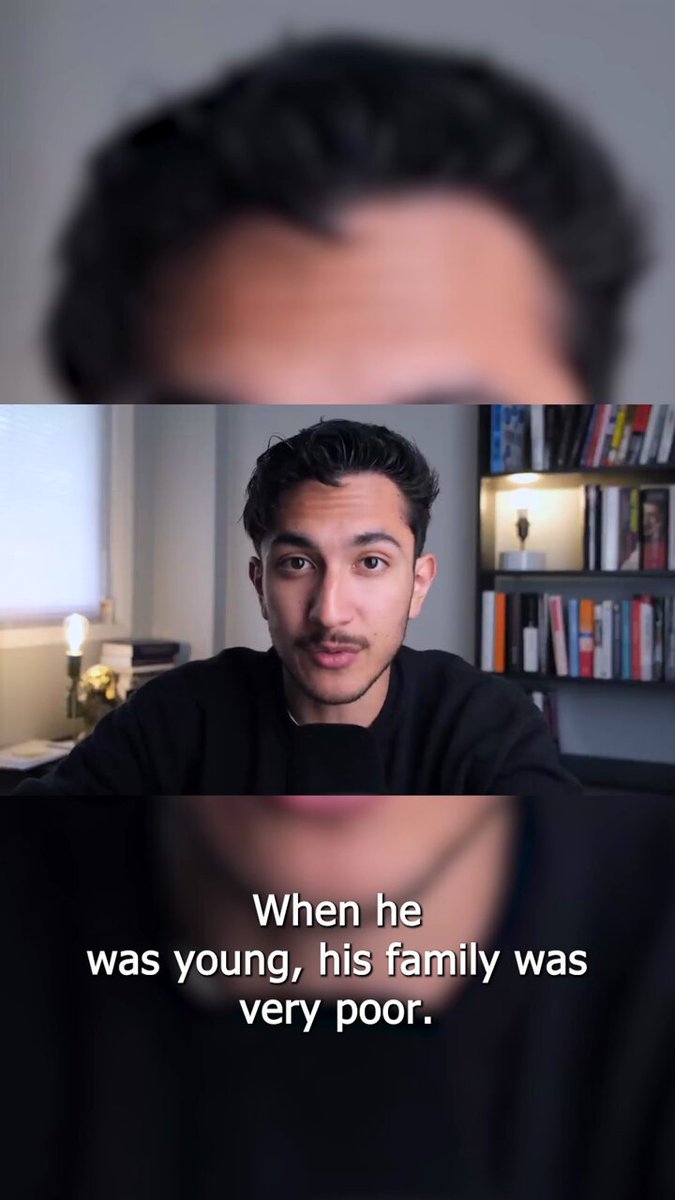


AppLovin founder Adam Foroughi lays out the long-term vision for the company: turn ads into something so well-targeted they function as content, and use a billion-strong audience of mobile gamers as the distribution layer. The starting point is the audience itself. Adam explains that AppLovin reaches over a billion users who play games every single day around the world, with more than 150 million adults in the US alone. The power user isn't who you'd expect: "That's not the same 21 year old who's on Instagram for six hours a day. The power user who's playing casual games, Candy Crush for 2-3 hours a day, as an example, is more of like a middle-aged person who has more time and is just getting relaxation here." These users are willing to sit through long ads. Adam notes that the average ad on the platform runs over 35 seconds — "like a television commercial on the mobile device." For years, that attention was only used to push more games. Adam describes the old loop bluntly: "We used to take a user and say game, game, game, game, game. If you weren't in the business of switching games, that's a pretty bad ad format to show you." The expansion into e-commerce changed that, and Adam frames it as the first step toward a much bigger thesis — that as the targeting models get better, ads stop feeling like interruptions and start feeling like discovery. He explains: "The diversity will go up, the technology is already capable to do it, and then the value to the end consumer will go up. And that whole thing I said earlier of the ad becomes more like content." Then comes the punchline that defines the vision: "The hope we have is that we can get the local laundromat discovered by someone playing a game because we serve a really good ad to someone who needs their clothes washed. If that happens and we get to that level of scale, this business is going to be much, much bigger than it is today." Adam is clear about who he wants to serve first. AppLovin has no sales force, so large enterprises will eventually come to the platform on their own. The real opportunity, in his mind, is the small and medium businesses that nobody else helps: "We want to help those small to medium sized businesses. What made us really successful in gaming was going to the companies that really didn't have much support at most of the other businesses and going, what's your 10 people? Let's work together. Let us grow your business." The end state is a single targeting engine pointed at a billion adults, capable of matching them to the right local shop, the right Shopify store, the right product — not the right game. When advertising gets accurate enough, it stops being advertising.
Genius Business15,371 просмотров • 3 месяцев назад
Больше нет контента для загрузки