
GHANA FACTS & HISTORY
@GhanaianMuseum • 211,148 subscribers
Preserving Ghana’s history through rare archival footage, photographs and historical research for historical and educational purposes. [email protected]
Videos

Footage of General Joseph Ankrah calling former President Kwame Nkrumah “useless” and accusing him of “tyranny and partisanship” following the 1966 coup. Ankrah also insisted that the coup was planned entirely from within Ghana, with no help or instigation from any foreign country.
GHANA FACTS & HISTORY63,561 Aufrufe • vor 4 Tagen

Kpanlogo dance performed by Frank Laine and Gifty Collins in Ga Mashie, Accra, in 1984. Filmed for the documentary Repercussions: Africa Come Back, the footage features members of Otoo Lincoln’s Kpanlogo Special group and preserves one of Ghana’s most influential post-independence dance traditions.
GHANA FACTS & HISTORY103,013 Aufrufe • vor 21 Tagen

2:14
Sensitive content
This media may contain sensitive content.
Viewer discretion advised. Accra, July 1995 — Severe floods after torrential rains killed at least 20 people and caused widespread damage across the capital and nearby towns. As rescue and clean-up efforts continued, President Jerry John Rawlings visited the worst-hit areas.
GHANA FACTS & HISTORY173,208 Aufrufe • vor 1 Monat

In 1960, Ghanaians gathered at Kwame Nkrumah Circle, firing old muskets, beating drums, and raising banners to celebrate Ghana’s boycott of South African goods — a bold protest against apartheid and racial discrimination in South Africa, in solidarity with Black South Africans.
GHANA FACTS & HISTORY152,318 Aufrufe • vor 1 Monat

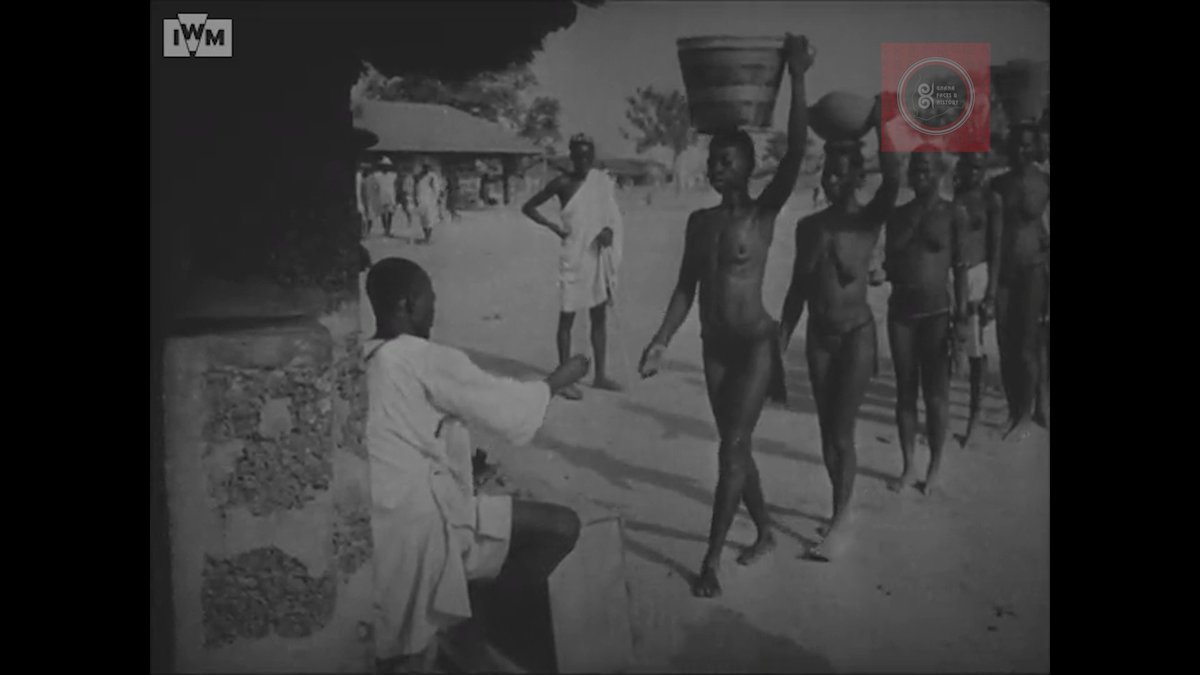
A market day in a Mamprusi village, Gold Coast, 1944 — a rare glimpse of trade and everyday community life in northern Ghana. Filmed during the governorship of Sir Alan Burns, the footage captures village life at a time when British colonial authorities were considering constitutional and local-government reforms, while traditional chiefs continued to exercise significant authority under the system of indirect rule.
GHANA FACTS & HISTORY30,459 Aufrufe • vor 14 Tagen

Footage from 1964: Inside the Ghana Cannery Corporation, Nsawam. Established under President Kwame Nkrumah in the early 1960s, it was a state-owned fruit and vegetable processing factory. The cannery processed pineapples, citrus fruits and tomatoes into juice, canned fruit and other products, forming part of Ghana’s post-independence vision of linking agriculture with industry through State Farms and local farmers.
GHANA FACTS & HISTORY65,751 Aufrufe • vor 1 Monat

Accra, Ghana, 6 March 1971 — More than 100,000 people gathered at Black Star Square for the legendary 15-hour “Soul to Soul” concert, held as part of Ghana’s 14th Independence anniversary celebrations. The historic event brought Ike & Tina Turner, Wilson Pickett, Santana, The Staple Singers, Roberta Flack and other African American artists to Ghana, performing alongside Ghanaian and African musicians such as Guy Warren/Kofi Ghanaba, Charlotte Dada, Kwaa Mensah and The Magic Aliens. It became a powerful Independence Day celebration of music, African identity, and unity between Africa and the diaspora.
GHANA FACTS & HISTORY60,020 Aufrufe • vor 1 Monat


February 1974: Ghana’s military government, led by Colonel I.K. Acheampong, ordered the closure of the country’s three public universities following nationwide student demonstrations. The protests were sparked after a University of Ghana student was allegedly subjected to military drills by soldiers in Ho, an incident that fuelled outrage across the campuses of Legon, KNUST and UCC. The government claimed the students had refused to present their grievances through official channels and instead engaged in demonstrations it described as unlawful, prompting the closure of all three universities. Students were ordered to leave their campuses immediately and could only return after applying individually and signing an undertaking to be of good behaviour. The incident remains one of the most significant confrontations between Ghana’s university students and military rule during the Acheampong era.
GHANA FACTS & HISTORY41,930 Aufrufe • vor 1 Monat

1:20
Sensitive content
This media may contain sensitive content.
Western Region, Ghana — March 1973. Archival footage captures the production of Contact, a major Italian-Ghanaian feature film made through cooperation between the Ghana Film Industry Corporation and Italy’s Ital Victoria. The film was later released as Contratto carnale, with international titles including Only Love Defies and The African Deal.
GHANA FACTS & HISTORY35,684 Aufrufe • vor 29 Tagen


Today marks Kulungugu Day. On 1 August 1963, thousands gathered at Kulungugu to commemorate one year since President Kwame Nkrumah survived the bomb attack at the village. The ceremony honoured those who were killed and injured and featured prayers, the pouring of libation, speeches, dancing and the crowning of Miss Kulungugu.
GHANA FACTS & HISTORY19,706 Aufrufe • vor 16 Tagen

Monica Amekoafia, Ghana’s first Miss Ghana, arrives in London, United Kingdom, in April 1957 for a 12-day official visit just weeks after Ghana’s independence. Representing Trans-Volta Togoland, she competed as Contestant Number 9—a number that, according to a long-standing Ghanaian tradition, later became associated with the people of the Volta Region.
GHANA FACTS & HISTORY25,162 Aufrufe • vor 23 Tagen


Funeral of Robert Mensah, arguably Ghana’s greatest goalkeeper, who was tragically stabbed while trying to stop a bar fight. After his death, a song emerged. (1971) “Robert Papapa (clap) x2 Robert Mensah, No.1 goalkeeper, aka Nansa, woakɔ aburokyire. Kwasia bi te hɔ, ɛyɛ ne ya.”
GHANA FACTS & HISTORY212,017 Aufrufe • vor 8 Monaten


July 1973: Head of State Col. Acheampong visited the Dawhenya Irrigation Scheme, where students, soldiers & women volunteers helped build a 5.5-mile canal for the wider Accra Plains project. Acheampong rolled up his sleeves & joined the volunteers in the canal with his own shove
GHANA FACTS & HISTORY35,723 Aufrufe • vor 1 Monat