James Lucas's banner
James Lucas's profile picture

James Lucas

@JamesLucasIT797,986 subscribers

Beauty is truth, truth beauty; that is all ye know on earth, and all ye need to know.

Shorts

The most famous keyhole in Rome Through the Aventine Keyhole, you’ll see a perfectly framed view of St. Peter’s Basilica, aligned through the beautiful gardens of the Priory of the Knights of Malta.

The most famous keyhole in Rome Through the Aventine Keyhole, you’ll see a perfectly framed view of St. Peter’s Basilica, aligned through the beautiful gardens of the Priory of the Knights of Malta.

25,747,525 просмотров

Penguin leaps to safety as ice breaks

Penguin leaps to safety as ice breaks

9,613,558 просмотров

The Colosseum had a retractable roof, operated by a crew of sailors, almost 2000 years before any modern stadium. It was called the velarium: an enormous awning of canvas and rope that could be drawn across the open top of the arena to shade fifty thousand spectators from the Roman sun. It was so large and so complex that ordinary labourers could not manage it. The Romans brought in sailors from the imperial fleet, men who spent their lives handling rigging and sail, and stationed them at the top of the structure to extend and retract the canvas as the day moved. A building that has stood, roofless to our eyes, for centuries was in fact designed to be covered. That is the pattern with the Colosseum: almost everything about it was way more advanced than it looks today... Construction began around 72 AD under the emperor Vespasian. Once completed, it was the largest amphitheater in the Roman world: an elliptical structure of stone, concrete, and travertine, 189 meters long, rising as high as a modern fifteen story building. It could hold around 50,000 people and the staircases allowed that entire crowd to enter and leave with a speed that modern stadium designers still study. Beneath the arena floor lay the hypogeum, a hidden labyrinth of tunnels, cells, and machinery. Animals and gladiators waited there in the dark. Numerous trap doors opened in the wooden floor above them, and through hidden lifts and ramps a lion, a leopard, or an armed man could rise into the daylight as if from nowhere, in front of tens of thousands of people. The Romans knew that they had built something that would outlast them so completely that the Colosseum became, for the people who came after, a measure of the world's own endurance. In the 8th century, an epigram attributed to the Venerable Bede offered a prophecy that has never lost its allure: "As long as the Colosseum stands, so shall Rome; when the Colosseum falls, Rome shall fall; when Rome falls, so falls the world." If you enjoyed this, I write a weekly newsletter read by over 50,000 people who love rediscovering the beauty of the past. You can join us here: If you'd like to support my work, a paid subscription is what makes it possible.

The Colosseum had a retractable roof, operated by a crew of sailors, almost 2000 years before any modern stadium. It was called the velarium: an enormous awning of canvas and rope that could be drawn across the open top of the arena to shade fifty thousand spectators from the Roman sun. It was so large and so complex that ordinary labourers could not manage it. The Romans brought in sailors from the imperial fleet, men who spent their lives handling rigging and sail, and stationed them at the top of the structure to extend and retract the canvas as the day moved. A building that has stood, roofless to our eyes, for centuries was in fact designed to be covered. That is the pattern with the Colosseum: almost everything about it was way more advanced than it looks today... Construction began around 72 AD under the emperor Vespasian. Once completed, it was the largest amphitheater in the Roman world: an elliptical structure of stone, concrete, and travertine, 189 meters long, rising as high as a modern fifteen story building. It could hold around 50,000 people and the staircases allowed that entire crowd to enter and leave with a speed that modern stadium designers still study. Beneath the arena floor lay the hypogeum, a hidden labyrinth of tunnels, cells, and machinery. Animals and gladiators waited there in the dark. Numerous trap doors opened in the wooden floor above them, and through hidden lifts and ramps a lion, a leopard, or an armed man could rise into the daylight as if from nowhere, in front of tens of thousands of people. The Romans knew that they had built something that would outlast them so completely that the Colosseum became, for the people who came after, a measure of the world's own endurance. In the 8th century, an epigram attributed to the Venerable Bede offered a prophecy that has never lost its allure: "As long as the Colosseum stands, so shall Rome; when the Colosseum falls, Rome shall fall; when Rome falls, so falls the world." If you enjoyed this, I write a weekly newsletter read by over 50,000 people who love rediscovering the beauty of the past. You can join us here: If you'd like to support my work, a paid subscription is what makes it possible.

405,762 просмотров

Colorized footage is like a time machine 🧵 1. English kids in 1901, 124 years ago

Sensitive content

Colorized footage is like a time machine 🧵 1. English kids in 1901, 124 years ago

24,549,292 просмотров

The castles of Europe are some of the most amazing things we’ve inherited from history Between 75,000 and 100,000 castles were built in Western Europe during the medieval period, with around 1,700 in England and Wales alone, and roughly 14,000 in German-speaking areas... Most of them rose between the 9th and 15th centuries after the collapse of centralized Roman authority and the rise of fragmented feudal power. As attacking armies grew more sophisticated, so did the walls meant to stop them. The cost was staggering: from 1179 to 1188, King Henry II of England spent over £6,500 on Dover Castle alone — an enormous sum given that his entire annual revenue was around £10,000. That figure was more than three times what he spent on any other building project in his reign, and more than four times what went into grand royal residences like Windsor. And then there is Malbork... Built by the Teutonic Knights in what is now Poland, Malbork is the largest castle in the world measured by land area. It covers 52 acres and once housed approximately 3,000 knights. A medieval visitor reportedly noted it seemed "more a city enclosed by walls than a single castle." In 950, Provence was home to just 12 castles. By 1000, the number had risen to 30. By 1030, it was over 100. The pace was not driven by a single empire with a plan, but by thousands of individual decisions made by lords, bishops, and kings who each decided, in their own time and place, that stone was the only reliable answer to an uncertain world... The word castle is derived from the Latin word castellum, which is a diminutive of the word castrum, meaning "fortified place". Between seventy-five thousand and a hundred thousand of these fortresses were built over six centuries as a reminder that every civilization eventually decides what it will leave behind. Europe decided on this. And the castles are still here.

The castles of Europe are some of the most amazing things we’ve inherited from history Between 75,000 and 100,000 castles were built in Western Europe during the medieval period, with around 1,700 in England and Wales alone, and roughly 14,000 in German-speaking areas... Most of them rose between the 9th and 15th centuries after the collapse of centralized Roman authority and the rise of fragmented feudal power. As attacking armies grew more sophisticated, so did the walls meant to stop them. The cost was staggering: from 1179 to 1188, King Henry II of England spent over £6,500 on Dover Castle alone — an enormous sum given that his entire annual revenue was around £10,000. That figure was more than three times what he spent on any other building project in his reign, and more than four times what went into grand royal residences like Windsor. And then there is Malbork... Built by the Teutonic Knights in what is now Poland, Malbork is the largest castle in the world measured by land area. It covers 52 acres and once housed approximately 3,000 knights. A medieval visitor reportedly noted it seemed "more a city enclosed by walls than a single castle." In 950, Provence was home to just 12 castles. By 1000, the number had risen to 30. By 1030, it was over 100. The pace was not driven by a single empire with a plan, but by thousands of individual decisions made by lords, bishops, and kings who each decided, in their own time and place, that stone was the only reliable answer to an uncertain world... The word castle is derived from the Latin word castellum, which is a diminutive of the word castrum, meaning "fortified place". Between seventy-five thousand and a hundred thousand of these fortresses were built over six centuries as a reminder that every civilization eventually decides what it will leave behind. Europe decided on this. And the castles are still here.

1,920,772 просмотров

Why does Mary look younger than Jesus in Michelangelo's Pietà? The answer is one of the most beautiful in art history... Mary is holding the body of her 33 year old son, but she looks 20. Critics noticed it the moment the sculpture was unveiled in 1499. The mother of a man who has just been crucified would have been in her late forties or early fifties. Michelangelo had carved her as a girl. His own biographer, Ascanio Condivi, was the one who finally asked him why. The answer Michelangelo gave is preserved in Condivi's Life of Michelangelo and has been repeated for centuries: "Do you not know that chaste women stay fresh much more than those who are not chaste? How much more in the case of the Virgin, who had never experienced the least lascivious desire that might change her body?" Most modern critics treat this answer as a half-serious deflection. Michelangelo was famous for his sharp tongue and refused to explain himself to people he considered beneath his intellect. The deeper answer is older, and it lies inside one of the greatest poems ever written. In the final canto of Dante's Paradiso, Saint Bernard of Clairvaux begins his prayer to the Virgin with one of the most extraordinary lines in Italian literature: "Vergine madre, figlia del tuo figlio." "Virgin mother, daughter of your own son." Michelangelo, who knew Dante by heart, was carving that line into stone. Mary is younger than Jesus because Jesus is older than the universe... because she gave birth to her own creator. But there is another reading, simpler than either of those, and it is the one I find myself thinking of today. Every mother who has held her child has held them at every age at once. The infant is still inside the toddler. The toddler is still inside the teenager. The young man on her lap, even dead, is also the boy she nursed and the baby she first carried home. And maybe that's why Michelangelo did not carve Mary as the years had aged her. He carved her as love had kept her: outside of time, outside of grief, holding her son the way she had always held him... Happy Mother's Day. -- -- -- If you enjoyed this, I write a weekly newsletter read by over 50,000 people who love rediscovering the beauty of the past. You can join us here: I write about beauty in all its forms. If you'd like to support my work, a paid subscription is what makes it possible.

Why does Mary look younger than Jesus in Michelangelo's Pietà? The answer is one of the most beautiful in art history... Mary is holding the body of her 33 year old son, but she looks 20. Critics noticed it the moment the sculpture was unveiled in 1499. The mother of a man who has just been crucified would have been in her late forties or early fifties. Michelangelo had carved her as a girl. His own biographer, Ascanio Condivi, was the one who finally asked him why. The answer Michelangelo gave is preserved in Condivi's Life of Michelangelo and has been repeated for centuries: "Do you not know that chaste women stay fresh much more than those who are not chaste? How much more in the case of the Virgin, who had never experienced the least lascivious desire that might change her body?" Most modern critics treat this answer as a half-serious deflection. Michelangelo was famous for his sharp tongue and refused to explain himself to people he considered beneath his intellect. The deeper answer is older, and it lies inside one of the greatest poems ever written. In the final canto of Dante's Paradiso, Saint Bernard of Clairvaux begins his prayer to the Virgin with one of the most extraordinary lines in Italian literature: "Vergine madre, figlia del tuo figlio." "Virgin mother, daughter of your own son." Michelangelo, who knew Dante by heart, was carving that line into stone. Mary is younger than Jesus because Jesus is older than the universe... because she gave birth to her own creator. But there is another reading, simpler than either of those, and it is the one I find myself thinking of today. Every mother who has held her child has held them at every age at once. The infant is still inside the toddler. The toddler is still inside the teenager. The young man on her lap, even dead, is also the boy she nursed and the baby she first carried home. And maybe that's why Michelangelo did not carve Mary as the years had aged her. He carved her as love had kept her: outside of time, outside of grief, holding her son the way she had always held him... Happy Mother's Day. -- -- -- If you enjoyed this, I write a weekly newsletter read by over 50,000 people who love rediscovering the beauty of the past. You can join us here: I write about beauty in all its forms. If you'd like to support my work, a paid subscription is what makes it possible.

794,096 просмотров

This is the Devil’s footprint It is one of Germany's most famous legends: when Munich’s Frauenkirche was being built in the 15th century, the architect made a deal with the Devil. The church would be funded... but only on one condition: it could have no windows. When construction was finished, the Devil stood at a precise spot near the entrance and saw nothing but bare walls. Convinced he had won, he stomped his foot into the floor so hard that it left the dark imprint visitors still see today. But when he stepped forward, he discovered the truth. The "windowless" church was an illusion, created by perfectly positioned columns that hid the stained glass windows from his view. Realizing he had been tricked, the Devil fled in fury, leaving only his scorched footprint behind. Some ghost tours in Munich add even more to the myth. Guides claim the air near the entrance is strangely cold, as if the Devil still circles the church, searching for a way back in. In winter, they say, the snow at the doorway is always last to melt. History tells us it's just a legend... but the footprint is real, the illusion is real, and the story continues to haunt the cathedral to this day.

This is the Devil’s footprint It is one of Germany's most famous legends: when Munich’s Frauenkirche was being built in the 15th century, the architect made a deal with the Devil. The church would be funded... but only on one condition: it could have no windows. When construction was finished, the Devil stood at a precise spot near the entrance and saw nothing but bare walls. Convinced he had won, he stomped his foot into the floor so hard that it left the dark imprint visitors still see today. But when he stepped forward, he discovered the truth. The "windowless" church was an illusion, created by perfectly positioned columns that hid the stained glass windows from his view. Realizing he had been tricked, the Devil fled in fury, leaving only his scorched footprint behind. Some ghost tours in Munich add even more to the myth. Guides claim the air near the entrance is strangely cold, as if the Devil still circles the church, searching for a way back in. In winter, they say, the snow at the doorway is always last to melt. History tells us it's just a legend... but the footprint is real, the illusion is real, and the story continues to haunt the cathedral to this day.

3,158,395 просмотров

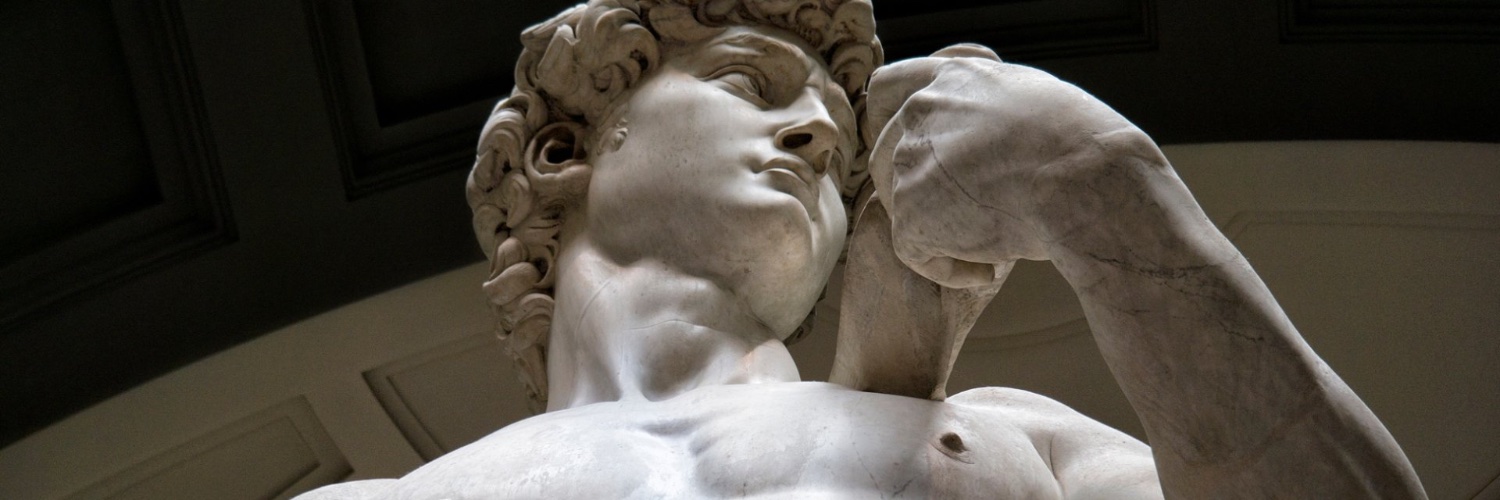
In 1504, Michelangelo finished a sculpture that contained a fact medical science would not catch up with for another 124 years. No doctor noticed it for centuries... The sculpture is the David, in the Galleria dell'Accademia in Florence. The fact, hidden in plain sight on his neck, was finally observed in 2019 by an American cardiologist named Daniel Gelfman, a clinical professor at the Marian University College of Osteopathic Medicine. Gelfman had gone to the museum like millions of visitors before him. But where most people see a perfect male body carved out of stone, he saw something only a heart specialist could see: the external jugular vein on the right side of David's neck is distended, raised visibly above the collarbone, exactly as it would appear on a real human being in a state of intense physical excitement. In ordinary anatomy, this vein is not visible. It only stands out under specific conditions — adrenaline, fear, exertion, the cardiovascular surge that comes before great physical effort. In other words, exactly the state a young man would be in moments before facing a giant. Gelfman published the finding in JAMA Cardiology, one of the most respected medical journals in the world. He called it the David Sign, and noted that it had been hiding in plain sight for more than 500 years. What makes this detail extraordinary is when Michelangelo carved it... The mechanics of the human circulatory system — the way blood actually returns to the heart through the venous network — were not formally described until 1628, when the English physician William Harvey published De Motu Cordis. Michelangelo finished David in 1504. He had sculpted, with anatomical precision, a circulatory phenomenon that medicine would not understand for over a century. "Michelangelo, like some of his artistic contemporaries, had anatomical training," Gelfman wrote. "I realized that he must have noticed temporary jugular venous distension in healthy individuals who are excited." He had. And he carved it into the marble. His contemporaries knew they were watching something more than a sculptor at work... They called him Il Divino, the divine one. In a letter dated September 1537, the poet Pietro Aretino wrote: "The world has many kings, and only one Michelangelo." If you enjoyed this, I write a weekly newsletter read by over 50,000 people who love rediscovering the beauty of the past. You can join us here: For the full breakdown of Michelangelo's David, check out today’s article: 5 details hidden inside what many consider the greatest work of art ever created by man. And if you'd like to support my work, a paid subscription is what makes it all possible.

In 1504, Michelangelo finished a sculpture that contained a fact medical science would not catch up with for another 124 years. No doctor noticed it for centuries... The sculpture is the David, in the Galleria dell'Accademia in Florence. The fact, hidden in plain sight on his neck, was finally observed in 2019 by an American cardiologist named Daniel Gelfman, a clinical professor at the Marian University College of Osteopathic Medicine. Gelfman had gone to the museum like millions of visitors before him. But where most people see a perfect male body carved out of stone, he saw something only a heart specialist could see: the external jugular vein on the right side of David's neck is distended, raised visibly above the collarbone, exactly as it would appear on a real human being in a state of intense physical excitement. In ordinary anatomy, this vein is not visible. It only stands out under specific conditions — adrenaline, fear, exertion, the cardiovascular surge that comes before great physical effort. In other words, exactly the state a young man would be in moments before facing a giant. Gelfman published the finding in JAMA Cardiology, one of the most respected medical journals in the world. He called it the David Sign, and noted that it had been hiding in plain sight for more than 500 years. What makes this detail extraordinary is when Michelangelo carved it... The mechanics of the human circulatory system — the way blood actually returns to the heart through the venous network — were not formally described until 1628, when the English physician William Harvey published De Motu Cordis. Michelangelo finished David in 1504. He had sculpted, with anatomical precision, a circulatory phenomenon that medicine would not understand for over a century. "Michelangelo, like some of his artistic contemporaries, had anatomical training," Gelfman wrote. "I realized that he must have noticed temporary jugular venous distension in healthy individuals who are excited." He had. And he carved it into the marble. His contemporaries knew they were watching something more than a sculptor at work... They called him Il Divino, the divine one. In a letter dated September 1537, the poet Pietro Aretino wrote: "The world has many kings, and only one Michelangelo." If you enjoyed this, I write a weekly newsletter read by over 50,000 people who love rediscovering the beauty of the past. You can join us here: For the full breakdown of Michelangelo's David, check out today’s article: 5 details hidden inside what many consider the greatest work of art ever created by man. And if you'd like to support my work, a paid subscription is what makes it all possible.

793,329 просмотров

Here's what the world looked like a century ago - thread 🧵 1. Kids on the streets of England in 1901

Sensitive content

Here's what the world looked like a century ago - thread 🧵 1. Kids on the streets of England in 1901

32,242,158 просмотров

The story goes that when Paolina Bonaparte, sister of Napoleon, was asked whether it had been uncomfortable to pose nearly naked for Antonio Canova, she answered with a line that has been repeated ever since: "All veils may fall before Canova." She had married into one of the great noble families of Rome, the Borghese, in 1803. Two years later, her husband Camillo commissioned the most celebrated sculptor in Europe to portray her in marble. Canova carved her between 1805 and 1808 as Venus Victrix — Venus the Victorious — reclining on a couch, semi-nude, holding the golden apple given to the goddess in the Judgement of Paris, when she was named the most beautiful of all the goddesses of Olympus. It scandalised Rome. Aristocratic women, especially the sister of an emperor, were not portrayed without drapery. The gossip was relentless, and the reply attributed to her became just as famous as the scandal itself... Canova carved her in white marble so finely that the mattress beneath her appears to give under her weight, and the surface of her skin glows in the light as though the stone were alive. She reclines today in the Galleria Borghese in Rome, where she has not moved in nearly two hundred years. "I can't read or write," Canova used to say, holding up his hammer and chisel, "but with these I can create poetry." If you enjoyed this, I write a weekly newsletter read by over 50,000 people who love rediscovering the beauty of the past. You can join us here: And if you'd like to support my work, a paid subscription is what makes it possible.

The story goes that when Paolina Bonaparte, sister of Napoleon, was asked whether it had been uncomfortable to pose nearly naked for Antonio Canova, she answered with a line that has been repeated ever since: "All veils may fall before Canova." She had married into one of the great noble families of Rome, the Borghese, in 1803. Two years later, her husband Camillo commissioned the most celebrated sculptor in Europe to portray her in marble. Canova carved her between 1805 and 1808 as Venus Victrix — Venus the Victorious — reclining on a couch, semi-nude, holding the golden apple given to the goddess in the Judgement of Paris, when she was named the most beautiful of all the goddesses of Olympus. It scandalised Rome. Aristocratic women, especially the sister of an emperor, were not portrayed without drapery. The gossip was relentless, and the reply attributed to her became just as famous as the scandal itself... Canova carved her in white marble so finely that the mattress beneath her appears to give under her weight, and the surface of her skin glows in the light as though the stone were alive. She reclines today in the Galleria Borghese in Rome, where she has not moved in nearly two hundred years. "I can't read or write," Canova used to say, holding up his hammer and chisel, "but with these I can create poetry." If you enjoyed this, I write a weekly newsletter read by over 50,000 people who love rediscovering the beauty of the past. You can join us here: And if you'd like to support my work, a paid subscription is what makes it possible.

150,307 просмотров

In South America, there is a place where 275 waterfalls cascade together. It is called Iguazu Falls, and it is the largest waterfall system in the world.

In South America, there is a place where 275 waterfalls cascade together. It is called Iguazu Falls, and it is the largest waterfall system in the world.

3,067,596 просмотров

For 600 years, the only way to reach these monasteries was to climb into a net and let monks haul you, by hand, hundreds of metres into the sky... The place is Meteora, which means suspended in the air, where enormous pillars of sandstone rise straight out of the plain of Thessaly, some of them climbing hundreds of metres into the air. They were shaped over millions of years by water and earthquakes into a forest of stone columns. On top of these pillars, against every instinct a human body has, monks built monasteries. They first came to these rocks in the 11th century, living as hermits in the caves and cracks of the cliffs. By the 14th century they began building on the summits themselves, seeking refuge as the Byzantine world collapsed and Ottoman power rose around them. As many as twenty-four monasteries were eventually raised on these peaks in central Greece. They had no stairways, no roads, and in many cases no obvious way up at all. For centuries, the only way to the top was to be lifted in a net or basket, hauled by hand on a rope wound around a wooden winch by the monks above. Food, building stone, supplies, and people all rose the same way, swinging in open air, hundreds of metres above the ground. Stairways were finally carved into the rock in the 1920s, and today six of the monasteries are open to visitors. G.K. Chesterton once said: "The world will never starve for want of wonders; but only for want of wonder." He was right. The wonders are still here. Whether we still have the wonder is up to us... If you enjoyed this, check out today's article for a deeper dive: And if you'd like to support my work, a paid subscription is what makes it possible:

For 600 years, the only way to reach these monasteries was to climb into a net and let monks haul you, by hand, hundreds of metres into the sky... The place is Meteora, which means suspended in the air, where enormous pillars of sandstone rise straight out of the plain of Thessaly, some of them climbing hundreds of metres into the air. They were shaped over millions of years by water and earthquakes into a forest of stone columns. On top of these pillars, against every instinct a human body has, monks built monasteries. They first came to these rocks in the 11th century, living as hermits in the caves and cracks of the cliffs. By the 14th century they began building on the summits themselves, seeking refuge as the Byzantine world collapsed and Ottoman power rose around them. As many as twenty-four monasteries were eventually raised on these peaks in central Greece. They had no stairways, no roads, and in many cases no obvious way up at all. For centuries, the only way to the top was to be lifted in a net or basket, hauled by hand on a rope wound around a wooden winch by the monks above. Food, building stone, supplies, and people all rose the same way, swinging in open air, hundreds of metres above the ground. Stairways were finally carved into the rock in the 1920s, and today six of the monasteries are open to visitors. G.K. Chesterton once said: "The world will never starve for want of wonders; but only for want of wonder." He was right. The wonders are still here. Whether we still have the wonder is up to us... If you enjoyed this, check out today's article for a deeper dive: And if you'd like to support my work, a paid subscription is what makes it possible:

162,496 просмотров

Thread of the most surreal sky phenomena ever caught on camera 🧵 1. The coolest meteor video ever

Thread of the most surreal sky phenomena ever caught on camera 🧵 1. The coolest meteor video ever

22,543,407 просмотров

What we do in life, echoes in eternity. 15 architectural marvels that have withstood the test of time - a thread 🧵 1. The Colosseum, Rome

What we do in life, echoes in eternity. 15 architectural marvels that have withstood the test of time - a thread 🧵 1. The Colosseum, Rome

8,991,902 просмотров

Why did we stop building wonders?

Why did we stop building wonders?

243,770 просмотров

In 1499, Michelangelo overheard people crediting his greatest work to someone else. He snuck into St. Peter's at night and carved his name on the sculpture. He regretted it immediately and never signed anything again for the rest of his life... He was 24 years old. The year before, a French cardinal had paid him 450 gold ducats to sculpt a statue for his own tomb. The contract had one strange clause: it had to be "the most beautiful work of marble in Rome, one that no living artist could better." Michelangelo had never completed a major public commission. He accepted anyway... He carved for two years from a single block of Carrara marble that he later called the most perfect stone he ever worked. What he produced was the Pietà: the body of Christ, lifeless, across the lap of his mother. When it was unveiled, visitors refused to believe a 24-year-old Florentine had made it. They credited the work to a more famous Lombard sculptor. So according to Vasari, Michelangelo slipped into the basilica with a chisel and carved his name in Latin across the sash running between Mary's breasts: MICHAELANGELUS BONAROTUS FLORENTINUS FACIEBAT. "Michelangelo Buonarroti, the Florentine, made this." Then he vowed never to sign another work. He kept that vow. Through the David. Through the Sistine Chapel. Through the dome of St. Peter's. Through 65 more years of work, until he died at 88. Not one of them bears his name. What I can never quite get over is that he was only 23 when he started. A young man who believed he could carve the most beautiful object on earth. And then he did... If you enjoyed this, I write a newsletter read by over 50,000 people who love rediscovering the wonder and beauty of the past, one story at a time. You can join us here: History is more beautiful than we remember.

In 1499, Michelangelo overheard people crediting his greatest work to someone else. He snuck into St. Peter's at night and carved his name on the sculpture. He regretted it immediately and never signed anything again for the rest of his life... He was 24 years old. The year before, a French cardinal had paid him 450 gold ducats to sculpt a statue for his own tomb. The contract had one strange clause: it had to be "the most beautiful work of marble in Rome, one that no living artist could better." Michelangelo had never completed a major public commission. He accepted anyway... He carved for two years from a single block of Carrara marble that he later called the most perfect stone he ever worked. What he produced was the Pietà: the body of Christ, lifeless, across the lap of his mother. When it was unveiled, visitors refused to believe a 24-year-old Florentine had made it. They credited the work to a more famous Lombard sculptor. So according to Vasari, Michelangelo slipped into the basilica with a chisel and carved his name in Latin across the sash running between Mary's breasts: MICHAELANGELUS BONAROTUS FLORENTINUS FACIEBAT. "Michelangelo Buonarroti, the Florentine, made this." Then he vowed never to sign another work. He kept that vow. Through the David. Through the Sistine Chapel. Through the dome of St. Peter's. Through 65 more years of work, until he died at 88. Not one of them bears his name. What I can never quite get over is that he was only 23 when he started. A young man who believed he could carve the most beautiful object on earth. And then he did... If you enjoyed this, I write a newsletter read by over 50,000 people who love rediscovering the wonder and beauty of the past, one story at a time. You can join us here: History is more beautiful than we remember.

750,144 просмотров

The most surreal beaches on Earth 🧵 1. Navagio beach in Zakynthos, Greece

The most surreal beaches on Earth 🧵 1. Navagio beach in Zakynthos, Greece

6,316,381 просмотров

15 streets that don’t look real 🧵 1. Hanoi Train Street, Vietnam

15 streets that don’t look real 🧵 1. Hanoi Train Street, Vietnam

6,382,536 просмотров

Oxford University is older than the Aztec Empire, the Ming dynasty of China, the Inca Empire, the Māori settlement of New Zealand, and the Ottoman Empire.

Oxford University is older than the Aztec Empire, the Ming dynasty of China, the Inca Empire, the Māori settlement of New Zealand, and the Ottoman Empire.

192,985 просмотров

This mechanical masterpiece was built in Bremen, Germany in the early 1930s

This mechanical masterpiece was built in Bremen, Germany in the early 1930s

689,557 просмотров

Videos

JamesLucasIT's profile picture

The most heavily fortified refuge in the history of the popes was originally built as a tomb... It stands on the bank of the Tiber in Rome, a massive stone cylinder rising above the river, and for centuries it was the safest place in the city. When enemies marched on Rome, the pope did not stay in the Vatican. He fled here, across a secret elevated passage built into the city wall, and shut himself behind walls that had been standing since the age of the Caesars. But it was not built for any of that. Around 135 AD, emperor Hadrian commissioned it as a mausoleum for himself and his family. It was completed in 139, a year after his death, and his ashes were placed inside, along with those of the emperors who followed him, until Caracalla in the third century. For a time it was the tallest building in Rome... Then the empire fell, and the building began its second life. In the fifth century, its majestic walls and commanding position over the river made it a natural fortress, and it was absorbed into the defences of the city. Its name changed after the year 590, when, according to legend, Pope Gregory the Great led a procession through a plague-stricken Rome and saw the Archangel Michael appear above the old tomb, sheathing his sword — a sign that the plague was ending. From then on, it was called the Castel Sant'Angelo, the Castle of the Holy Angel. Over the following centuries it became almost everything a building can be. A fortress. A papal residence with frescoed Renaissance apartments. A treasury. A prison, whose cells held the condemned, and whose execution courtyard became the setting for the final act of Puccini's Tosca. Today it is a museum. It has watched Rome rise, fall, and rise again for nearly nineteen centuries. Hadrian built it so that he would not be forgotten after his death. He could not have imagined that the forgetting would never come and that his tomb would outlive his empire, his religion, and his entire world, and still be standing, full of visitors, two thousand years later... If you enjoyed this, I write a weekly newsletter read by over 50,000 people who love rediscovering the beauty of the past. You can join us at the link below, and if you'd like to support my work, a paid subscription is what makes it possible: Thanks for reading!

James Lucas

435,389 просмотров • 1 день назад

JamesLucasIT's profile picture

The ancient world, then and now

James Lucas

1,320,795 просмотров • 6 дней назад

JamesLucasIT's profile picture

This was Chicago during the 1930s

James Lucas

62,911 просмотров • 20 часов назад

JamesLucasIT's profile picture

This is what Japan looked like in the 1960s

James Lucas

67,519 просмотров • 1 день назад

JamesLucasIT's profile picture

This is what California looked like in the 40s

James Lucas

47,960 просмотров • 1 день назад

JamesLucasIT's profile picture

Life in America 40 to 100+ years ago 🧵 1. This was Los Angeles in the 1950s

James Lucas

17,800,404 просмотров • 9 месяцев назад

The beauty of Italy, region by region 🧵 1. Campania: an evening on the Amalfi Coast
0:28

Sensitive content

This media may contain sensitive content.

JamesLucasIT's profile picture

A hilarious April fools video made by the police

James Lucas

1,657,915 просмотров • 2 месяцев назад

JamesLucasIT's profile picture

In the 1930s, Dresden was considered one of the most beautiful cities in the world. For more than two hundred years the capital of Saxony had been called the Florence on the Elbe. Its kings had imported artists from across Europe and filled the city with Baroque palaces, churches, opera houses, and wide riverfront promenades. The skyline was a crowd of domes and spires above the river. Painters had travelled there in the 18th century just to capture it, and the canvases they left behind show a city that looked less built than composed, like a single enormous work of art. By the early 1940s, Dresden had been spared the bombing that had flattened other German cities. Many of its residents believed it would stay that way. Some told themselves the city was simply too beautiful to destroy and that no one could look at it and give the order. On the night of 13 February 1945, the order came. Wave after wave of Allied bombers dropped thousands of tons of explosives and incendiaries onto the old centre. The fires merged into a firestorm, a column of heat so violent it generated its own wind and pulled people and buildings into its core. By morning, the Florence on the Elbe was gone and tens of thousands of people were dead. Eight square miles of the historic centre had been reduced to rubble and ash. What had taken three centuries to build had taken roughly fourteen hours to undo... Beauty is not permanent. It is built slowly, by many hands, across generations, and it can be taken in a single night. And yet human beings keep building it, keep rebuilding it, keep believing it is worth the risk. After the war, the people of Dresden gathered the blackened stones of their ruined cathedral and, decades later, raised it again from its own ashes. Because beauty does not stop wars, but it refuses to concede that the worst of what humans do is the whole of what humans are. Dostoevsky said beauty would save the world. He did not mean it would happen quickly. He meant it could not, ultimately, be stopped. If you'd like to sit with this a little longer, today's article is a deeper meditation on how time changes everything: And if you'd like to support my work, a paid subscription is what makes it possible:

James Lucas

30,972 просмотров • 2 дней назад