
David Roche
@MountainRoche • 24,554 subscribers
Coach of runners on the trails, roads & track 🦖 Leadville 100 Mile course record holder 🧡 Check out the Some Work All Play podcast!
Shorts


Videos

The solution for the disaster at the USATF Half Champs where the top 3 athletes were directed off course by a motorcade of official vehicles: 1. Have 2 full podiums for National Championship honors (necessary for bonuses and future opportunities) 2. Send the 3 athletes directed off-course to the World Champs 3. Full prize money for all 6 athletes If USATF fails to act on behalf of athletes, the leadership has to change 🙏
David Roche120,072 Aufrufe • vor 6 Monaten

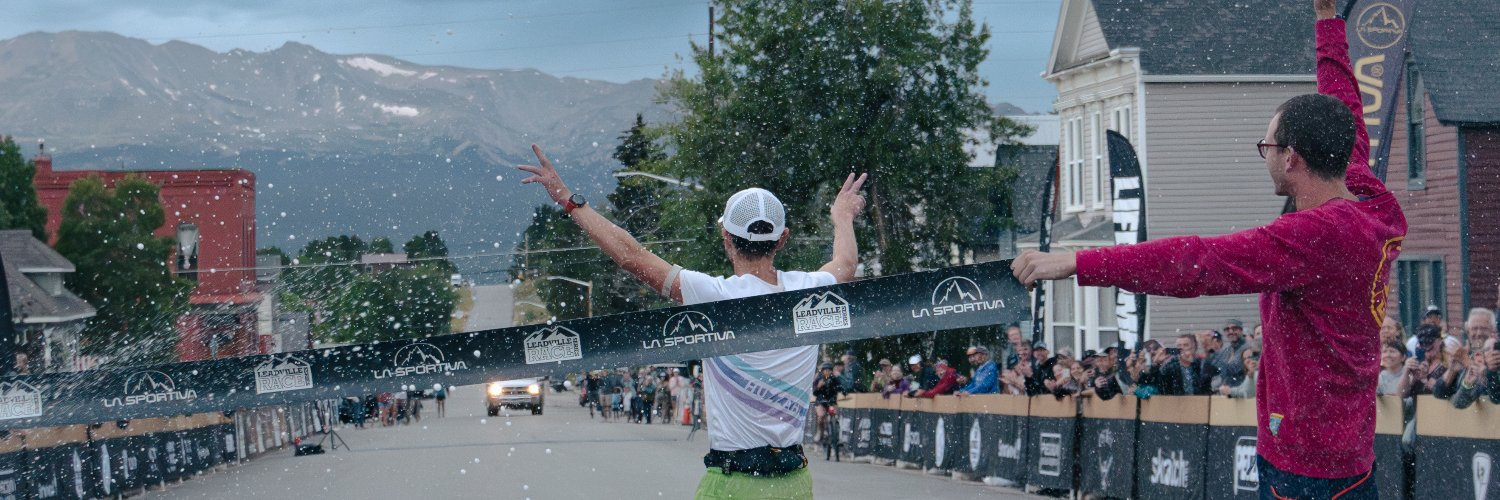
Back in January when Megan and I charted out the year, the dream of the Leadville 100 course record was overwhelming. But big dreams should be overwhelming. It was time to get to work. Our plan started from 3 principles: 1. I’d need to be capable of running a 13:xx 5k at altitude, or around sub-4 min mile fitness. 6-minute mile pace would need to be a jog on race day, and that all came from improving my running economy. 2. I had to get stronger to handle the unknown distance, both in terms of threshold climbing and actual muscular strength. 3. I’d have to run every step of the race, including Hope Pass. Most interestingly, none of those goals required lots of training volume. I did 8-12 hours of aerobic training most weeks with very few doubles given life constraints, usually around 60-75 miles of running and 1-2 bike rides (pulsing up and down for adaptations, with some bigger weeks and a longer down period for my accident). You don’t need to do consistent 100+ mile weeks to be good at this sport. I have been building endurance bricks for 18 years, and every brick counts. With that time, we applied 6 ideas: 1. Most weeks had a speed workout (often pacing Allie Ostrander ahead of the Olympic Trials 🔥), culminating in 12 x 400 on short rest in 63-64 seconds at altitude in June 2. I’d do threshold sessions approximately every other week, often on the uphill treadmill at 8% or 15% grade, culminating in a massive 12 x 5 minute session a few weeks before race day 3. I did uphill treadmill runs in Z2 at 20% grade all year, including for 10 min after as many aerobic runs as I could 4. I did 3-4 days of strides every single week. My strength is my speed. 5. I biked once per week in place of a run, often using Zwift races for hard sessions (A+ racing category in Zwift!) 6. Every week, I did Ultra Legs strength + squats and took a rest day, plus did heat training Big takeaway: you don’t need to do wild volume to have success in ultras. Get fast, stay fast year round, spend time in Z2, and stack some fun bricks in the context of your life. The record may have shocked the ultra world. But as Megan said, it only shocked people who haven’t been following my Strava for the last decade 🧡
David Roche158,587 Aufrufe • vor 2 Jahren

14-minute course record at the Quad Rock 50 Mile, “no secrets” style: -150 grams of carbs per hour. I took a SiS Beta Fuel gel at :20 and :40, followed by an Enervit caffeine gel at 1:00. High carb has revolutionized all endurance sports. I think that the Western States podium will require breaking 14:05, and everyone who has a shot at it will be slurping carb totals that would have been unthinkable 5 years ago -600 mg caffeine. I become a good technical runner when I have enough caffeine to launch a rhino to space -1 liter of fluid per hour, with 1 Precision 1000 tab and 3/4 scoop of Skratch per 0.5 liter bottle, totaling 30 g of carbs and 1500 mg sodium each hour. I am cursed with an astronomical sweat rate, and dialing in my needs with testing has unlocked the endurance of this cramp boy. The hydration revolution and the fueling revolution are intertwined -Bicarb 12. Pre-race sodium bicarbonate serving at 3:45 AM before 5:30 AM start. 5 years from now, the science will catch up to the practice of bicarb driving ultra-distance performances too -100% heat adapted. I think my biggest change this year has been using the Core 2 heat sensor. Even though it was hot, I was cold all day and I never experienced any heat stress. High carb now has full adoption. I am hoping I can be one year ahead of the game with heat (and I realize that by saying this, I am losing some of my advantage. But that’s the point of “no secrets” 🙏) -145 average heart rate for 7:06. That’s in the middle of my Z2, the same way I’ll race 100 milers. Arm band HR is a tech breakthrough -1 sore knee post-race. Scared money don’t make money, but I need to be safe now. I will be ready if I’m healthy and happy -20,000 “I love you” and “You’re amazing” cheers. It’s so special to be in this community and to share this silly sport with everyone 🧡 -6 weeks, 6 days. The amount of time until the Western States moonshot 🚀 Real talk: I’m a coach, and this whole year feels like a lucky mistake. Anything I do as an athlete will be dust in the wind. I just hope to help give the next generation of athletes the tools to put anything I do to shame. Here’s to exploring the limits, together 🙏
David Roche82,029 Aufrufe • vor 1 Jahr

No secrets. After the Leadville 100 record, maybe being an open book about my experience can help us understand a bit more about what humans can do in ultras. If I’m running 15:26, there is someone out there right now who will run sub-14:45, and people who couldn’t dream of 100 miles who will achieve a transcendent finish. Here’s a no-secrets rundown: Training: I stacked aerobic bricks for 18 years, and it took those years of hard work for some commentators who haven’t been following on Strava to view me as an overnight success. This one is for the brick-stackers. Other training elements: lower volume for ultra, fast hill strides 3-4 times per week at end of runs (including day before race), uphill treadmill 20% for 10-15 min after most runs (not on Strava), big uphill TM threshold and Z2 sessions, building bike fitness via Zwift racing and outside Z2, steady/moderate running after speed/hill workouts (inspired by Mike Smith at NAU), downhill vert consolidated in final few weeks to harness the repeated bout effect, long runs with tempo Recovery: Vega protein shakes (aiming for 100+ g protein daily), tons of food, stretching, Roll Recovery, hot tub 3-5x per week for blood volume (including race week) Strength: Mountain Legs routine, squats (2 x 10 at 135lb) 2x per week, back extensions, “Core Snack” 2x per day Supplements: AG1 (yeah, I said it 😂), First Endurance Multi-V 2x per week (single gene variant carrier for Hemochromatosis = some iron, but not too much), Momentous Ashwagandha and Omega 3s, Turmeric, post exercise Ketone IQ 3-5 times per week, sodium bicarb 12.5 before hard workouts (all NSF Safe For Sport) Fueling: 90-120 g/hr high carb on hard efforts (up to 150 on Zwift races) + caffeine, Precision 1000 tabs in all bottles, sometimes lower carb on easy training. Some Tylenol for race—please don’t do this, just want to truly have no secrets (search GlobalDRO for all medications) Gear: double belt with Janji built-in belt liner + Naked belt to carry all calories/liquid without pack, Adidas ASU supershoes, Coros Arm Band HR, inadequate lubrication (don’t ask), Chappel Roan playing in head (so hot to go) All questions welcome 🧡 THANK YOU ALL!
David Roche99,303 Aufrufe • vor 2 Jahren

In 2025, the Western States 100 is going to be a track meet. I think that in 5-10 years, almost every major ultra is going to be a track meet. Our big theory is that as ultrarunners probe the limits of human physiology, athletes will be leaving time on the table if they aren’t developing their true speed. And most athletes can’t leave time on the table as the margins get more and more narrow. That theory doesn’t mean you need to be ready for a track race—I would get my doors blown off at the Olympic Trials. It just means that every aspect of running economy has a relation to top speed. Mile speed is connected to 5k speed is connected to 100-mile speed is connected to multi-day speed. We all have our limiters, and pushing back the speed limit via strides and workouts causes immediate and sustained improvement even at very low effort levels. The same principles apply to athletes doing their first ultra or dreaming of staying ahead of cutoffs (it might even apply more). Plus, it’s fun. The amazing Cody Bare filmed my workout yesterday for The Feed (for an upcoming video series), and this is the finish of the final 3 minute interval. The session: 4 miles Z2 warm-up 6 x (3 min on/1 min easy/1 min on/1 min easy) GI training consisting of 32 oz fluid at once 2.5 miles Z2/Z3 steady running after workout At the end of the video, I go to my arms, inspired by track/trail runners like Allie Ostrander and Anna Gibson and Grayson Murphy (hitting 3:50 min/mile pace). As I said at the end with my hands on my knees: “fun.” It’s so exciting to see how our understanding of human limits is changing with big fueling, an emphasis on long-term health, and fun training. I am so inspired by everyone out there pushing their own limits, wherever those limits happen to be. I can’t wait to see where all of you go in 2025. Let’s have some fun 🧡 WE LOVE YOU ALL (even more than we love strides)
David Roche60,917 Aufrufe • vor 1 Jahr

Before high carbohydrate fueling, I finished every race totally wrecked. Even in my best races, I’d cross the finish line desperate to stop. As an athlete, I had no idea how anyone could go farther than 50k. With high carb, I had a new realization: what I thought was an endurance limitation was just a fueling limitation. 100 milers feel easier than some trail 30ks I used to do. But knowing the science of high carb and actually slurping down tons of gels in a race setting are two different things. Episode 10 is all about a practice race at the Cheyenne Mountain 50k where the main goal was to get over 125 grams of carbs per hour (500+ calories) in an urgent, high-performance setting (I got to 135 grams per hour, which was a prelude to 150 grams per hour at my 50 miler 2 weeks later). It’s a super fun video by amazing director Cody Bare and presented by The Feed 🧡 Watch here and subscribe: What does high carb look like for everyone? It doesn’t have to be complicated! When you are pushing harder, start with a 40 gram of carb gel every 30 min plus electrolyte drink for hydration, dialed into your sweat needs. I think that anyone can learn to take a 40 gram gel every 30 min, and that alone will do more for endurance performance than almost every training intervention (except easy running and strides, of course 😂). You deserve high carb. In hard events, it improves adaptation AND health outcomes. Don’t listen to anyone preaching to you about health risks or fat adaptation like it’s 2010. The science has moved past that. Fuel the work you are doing. I just wish I could go back to 2010 and show my younger self this video of the end of a 50k. Oh how different the next 13 years could have been! That’s why I come to you with this message now: Give yourself the gift of higher carb, and higher carb will give you the gift of exploring new horizons. Carbs are for everyone 🧡💚💜
David Roche42,201 Aufrufe • vor 1 Jahr

What does the Pain Cave look like? It looks like Powerline Climb at mile 80 of Leadville, with pitches over 20% grade at nearly 11,000 feet altitude. What does it sound like? For me, it sounds like Megan saying “I am so proud of you” over and over. Before last year, every Leadville record attempt was scuttled around Powerline. It’s just so hard to run that high for that long, and the GOATs of the past are the GOATs for a reason (even if they didn’t have our advantages of high carb, bicarb, and plated shoes). In 2024, I barely survived the climb, almost passing out at the top. In 2025, though, I had a not-so-secret secret: Megan is the best coach in the world. She started pacing me at mile 77, and I went silent. I knew the Pain Cave was coming. It’s dark. It’s scary. It’s where I failed so emphatically at Western States. Megan’s voice filled the silence. “I’m so proud of you.” “I love you.” “We’re making history.” “I”m just talking, don’t respond.” I went stealth mode before the race, only telling a few loved ones that I was doing it. My goal was to absolutely obliterate myself, and to share love while doing it. Or, as Megan told me before the start line: “time to redecorate the Pain Cave.” So what does the Pain Cave feel like? The easiest way to describe it is a deep part of your brain screams STOP STOP STOP, a signal from billions of years of evolution. It feels more reptile than human. Megan countered that screaming with love. She bedazzled the the Pain Cave. We put 7+ minutes on my 2024 ghost in the final 23 miles (and infinity minutes on my Western States ghost, who is still panicking somewhere outside Foresthill). 100 milers will always be a trip into the Pain Cave. Megan helped me rediscover that the blood and tears that inevitably splatter all over the walls can be used to paint a big, bright heart ❤️ Coach Vince Lombardi famously said that “Winning isn’t everything. It’s the only thing.” Utter BS. I have the best coach in the world, and she taught me the truth: “Love isn’t everything. It’s the only thing.” ♥️💜💙🧡 Video by brilliant Director Cody Bare! Full documentary coming in September!
David Roche30,013 Aufrufe • vor 1 Jahr

The Pain Cave. Ultras are known for the “Pain Cave,” this mythical place where athletes suffer for hours on end. What I learned after my bike accident in April is that the Pain Cave doesn’t mean “pain” like a head injury or broken bones. It means stripping down the physical artifice of normal life and exposing your muscles and sinew to the world. It’s totally vulnerable, and I (the anxiety-riddled former football player who very few people believed was setting a reasonable goal) wanted to see what would happen when I was stripped down to that vulnerable place. Leadville was my first 100 miler, and I didn’t care when and how I got to experience the Pain Cave. I just wanted to experience it of my own volition, not because of a damn car making a left turn without seeing me. And I learned that I could go into that cave, turn on a light, and find thousands of people giving me love and telling me how I inspired them no matter how the race turned out. I hope I can inspire other people to do things that mortify them and seem impossible. Because when you venture into the cave and make yourself that vulnerable, I bet that there might be something special waiting for you when you turn on a light 🧡 This video is from the 20% grade on Powerline climb at mile 80. I didn’t want to walk a step of the race, and I was having doubts. I was in the cave. And the believers were with me in this moment, carrying me to a record I didn’t know I could achieve. Thank you to all my cave friends 🙏 Also, on the drive home to our AirBnB after the race, I thought I was dying. It was my first 100, and it felt so strange. I made Megan pull over. She’s a doctor, and she assured me I wasn’t dying. But I wasn’t sure. So I sat there, about to pass out, when suddenly: FARRRRRRRRTTTTTTTTT. I let out a 20-second fart from the pits of hell. “It was just a fart panic,” Megan said. Ultras are the best.
David Roche41,692 Aufrufe • vor 2 Jahren

Confession: I am intimidated by hard workouts. Other people are born to run. I feel like I am born to lounge. 65 million years from now, archaeologists will understand our species by the geological butt indents I made in couches. If that’s you too, I see you. If you see a video like this, it was probably preceded by 10 mind games and 200 mg of caffeine. My guess is that Megan put this sign in our Pain Cave because it’s the message I need to hear: GET SH*T DONE. Implied: laugh at yourself, give yourself a chance, you’re enough as you are. In conclusion: Hard work is hard. It’s ok to be soft 🧡❤️💜💙 (of course, that's what she said)
David Roche20,127 Aufrufe • vor 11 Monaten

For 19 years, the Leadville 100 Mile course record had been considered one of the most iconic records in ultrarunning. In 2024, I shocked myself to beat the record by 16 minutes. The win changed my life and went on to be named Trail and Ultra Performance of the Year. In 2025, we're running it back. "Nothing To Lose" is the full documentary about what happens after an athlete hits rock bottom, and what might be waiting on the other side. Even knowing what happened, part of me still thinks it was a 1 in 10,000 day. This film tells the behind-the-scenes, totally raw story of a day that feels impossible. Directed and Edited by Cody Bare 🧡 Made possible with support from The Feed, Wahoo, and Janji 🙏 Watch here: We love you all! THANK YOU!
David Roche19,167 Aufrufe • vor 11 Monaten

I watched this video and cried—a cry of release, of catharsis, of love for the broken road to get here. Allie Ostrander created a 10-minute documentary on the Leadville 100 course record, live now. I am so in awe of her art and storytelling, and I’m so thankful for her friendship. 20 years from now, her video is how I want to remember this experience. In April, I was hit by a car while biking. My brain didn’t feel like my own for months after. But something happened in that accident that helped me run freely on those trails. Allie captured it in a way that I didn’t fully process until those tears started flowing. The crux of Leadville is Hope Pass. When I was in the depths post accident, that name felt appropriate. All I wanted to do was climb out of that hole. And I did. Here’s to Hope 🧡🧡🧡 Watch the full video and subscribe to Allie's channel here:
David Roche28,998 Aufrufe • vor 2 Jahren

2024 was about shooting my shot at a big record that felt deeply improbable. 2025 is about going all-in on a season of dreams that seems totally impossible. No regrets, no defense mechanisms, no secrets. All grit and carbs. Whether you’re here to cheer for wins or epic fails, thank you for caring. This season is for the people who haven’t found trail running yet—I want to use my short time in the arena as an athlete to support the growth of a sport full of love, inclusion, openness, and kindness. Put those heart hands up 🫶 I love you all! April 12: Gorge 100k June 28: Western States 100 August 16: Leadville 100 October 25: Javelina 100 December: World Record attempt 50-100 miles TBD
David Roche24,541 Aufrufe • vor 1 Jahr

We are 3.5 months away from the Western States 100. It’s time to turn this track meet uphill 🏔️ The Hill Beast is the workout that wins races. The only goal is to survive it. If you do, the Hill Beast growls back: “Dream bigger.” Director Cody Bare took incredible footage of some of the most beautiful trails on Earth. I can’t wait for you to see it in Episode 5, presented by The Feed 🧡 I came into this video full of doubts. I left the video with those doubts too. But it really helped to share them. I’m not sure what’s possible. But I won’t let the doubts take the wheel. I’m not throwing away this shot. DREAM BIGGER 🫶 We love you all!
David Roche22,804 Aufrufe • vor 1 Jahr

We officially got the green light for an entire Road To Western States video series, all presented by The Feed ❤️ Thank you to everyone for watching the pilot. Our goal is to show everything. No secrets. The best story coming from the series won’t have anything to do with me. It’s about the director and videographer, Cody Bare🙏 In 2023, Cody moved to Colorado and spent his life savings on photo equipment to pursue his dream. He went to races without any payment, shooting his shots over and over. He burned the boats. At Leadville in August 2024, he was there shooting his shots when I came into the mile 22 Outward Bound aid station. He snapped a few of those shots right then (see my profile photo). And maybe he saw something in my eyes, or overheard me telling Megan that I was going to demolish the record, but he dropped all of his plans and followed me around the course. I distinctly remember a blond-haired guy I didn’t know crouched in a bush at mile 94 in the middle of freaking nowhere, camera clicks blazing alongside some joyous hoots and hollers of encouragement. Cody took photos that day that were seen by millions of people and that I will cherish until the day I die. He shared all of them with me (plus video) for free. I don’t know much about art, but I immediately saw that this 24-year old was already one of the best photographers on the planet. Other people who know a lot more than me saw it too. Cody shot Javelina, this time paid. And after that race, he emailed me with a business plan of his new vision: “I believe there’s a huge audience interested in your journey and I would love to help document it!” He had never done videography like this. He had to buy the equipment. No contracts or certainty. Burn the boats. Cody is a storyteller. But whatever stories he tells in this series will only exist because he left certainty behind in Georgia. His story is what I will be thinking about when things are hard and I want to go back to the comfort of low-key races. If Cody can burn the boats, I can too. History, here we come. GOATs don’t need boats 😂🐐❤️
David Roche22,425 Aufrufe • vor 1 Jahr

7 months ago, I got hit by a car while biking. That crash and the crap we went through around that time lit something within me. I decided this year that I was done with the bullshit. The next time I’m making heart hands at a finish line, look closely for the scar on my nose. Because that shows the real story behind the heart 🫶 Love you all 🧡
David Roche20,489 Aufrufe • vor 1 Jahr

Training for an Ultra in 100 Degrees I think there’s an argument that this year’s Javelina 100 was the hottest super-competitive ultra ever run. Nearly 100 degrees record heat, absolutely no shade or creeks, with a 5-day desert pre-bake. Also, I always thought that I sucked in hot weather. We were going to have to science the crap out of this problem. My heat training protocol involved 3 interventions: 1. Passive heat exposure via hot tub. Studies on hot water immersion show an increase in blood volume and heat tolerance, plus enhanced capillary function 2. Active heat exposure via heat suit training. Since 2021, 10+ studies have shown that as little as 3 weeks of heat suit training sessions can increase hemoglobin mass. My heat suit involved a base layer of normal running clothes, a sweatshirt under a down jacket, and polyester sweatpants under winter rain pants. Plus a fuzzy hat 3. Strenuous heat exposure via treadmill workouts in a warm room Here is the protocol Megan and I settled on to balance stress with training adaptations: 1. Hot tub at 104 degrees F 2-3 times per week. I stayed in until my heart rate reached 100-110 (100 on rest days, 110 when immediately after training) 2. At 4 weeks out, I started using the heat suit for 15 minutes on the uphill treadmill after runs 3 times per week, starting at moderate intensity to get my core temperature up rapidly, then dialing it back. 3 weeks out, I added 1 x 90 minute heat suit run. 2 weeks out, 1 x 90 min heat suit bike plus a 1 hour heat suit run 3. Two massive treadmill workouts in a room that was around 80 degrees 2.5 and 3.5 weeks out 4. On race week, I did hot tub every day including the day before the race, since studies show the hemoglobin mass adaptations can reverse rapidly In the race day furnace, my main goal was to gaslight myself into thinking I enjoyed the heat (which is also backed up by studies finding that emotional perception of temperature influences physiological response). In reality, I still don’t love the heat. But I love science. And I think we scienced this problem so hard that I had one of the better heat performances ever 🔥🧡 Race video from the amazing Emily Cameron 🙌
David Roche19,018 Aufrufe • vor 1 Jahr

GRAYSON MURPHY WORLD CHAMPION 🇺🇸🥇 One of the best performances of all time to win the World Mountain Championships! Grayson Murphy has it all—speed, strength, and brilliance. She showed it all today. We are watching sports history in real time! ALL HAIL THE QUEEN 👑
David Roche20,664 Aufrufe • vor 3 Jahren