
Hellenist ☀️🏺⚡️
@RealHellenist • 50,995 subscribers
The flame of Hellenism 🏛️ Wisdom of the Olympian Gods. Platonist. Hellenist. The Soul is Eternal.
Shorts


Videos


The Greek landing at Smyrna on 15 May 1919 was authorised by the Allied Supreme Council, representing Britain, France, the United States and Italy, as part of the post-war settlement following the First World War, in a region with a large and historic Greek population. Greece entered Anatolia with Allied approval, only to be abandoned by the same powers that had sanctioned its presence. In 1921, the Greek Army advanced across Anatolia, winning battle after battle and reaching within 60 kilometres of Ankara. It marked the culmination of a century of national restoration, from the Revolution of 1821 to the liberation of much of the historic Greek world. For a moment, Greece stood close to becoming the dominant power of the Aegean and the Straits. Greece was not fighting the turks alone. Soviet Russia helped build and sustain Kemal’s war machine, supplying gold, millions in financial aid, tens of thousands of rifles, hundreds of machine guns, artillery pieces, tens of millions of cartridges and vast quantities of shells. Italy, resentful that Greek expansion threatened its own ambitions in Anatolia, chose to arm Kemal rather than support its fellow Allied state. Through its occupation zone in the south-west, it channelled weapons and ammunition to Kemal’s forces, then abandoned its territorial claims and relinquished the region to the movement it had helped strengthen. France likewise helped Kemal diplomatically by breaking Allied unity, negotiating separately with Ankara and secretly supplying the turks with arms. After the Greek advance was halted at Sakarya, France strengthened Kemal’s forces further by withdrawing from Cilicia, ceding the occupied territory to the Ankara government and transferring substantial quantities of arms and military equipment. The end of the Cilician front also freed turkish troops and resources to be turned against the Greek Army. Britain had backed Greece politically in western Anatolia, but never provided the sustained military and financial aid needed to carry the campaign through. Greece was left to finance, arm and supply its own army, while its efforts to secure substantial British assistance or a major loan failed. It ultimately stood isolated against an enemy increasingly armed, financed and diplomatically strengthened by powers that had themselves authorised the Greek presence. The Greek Army was forced back only after foreign arms, money and diplomacy had decisively shifted the balance of the war. Without that foreign assistance, the fake state of Turkey would have never existed.
Hellenist ☀️🏺⚡️86,433 次观看 • 3 个月前


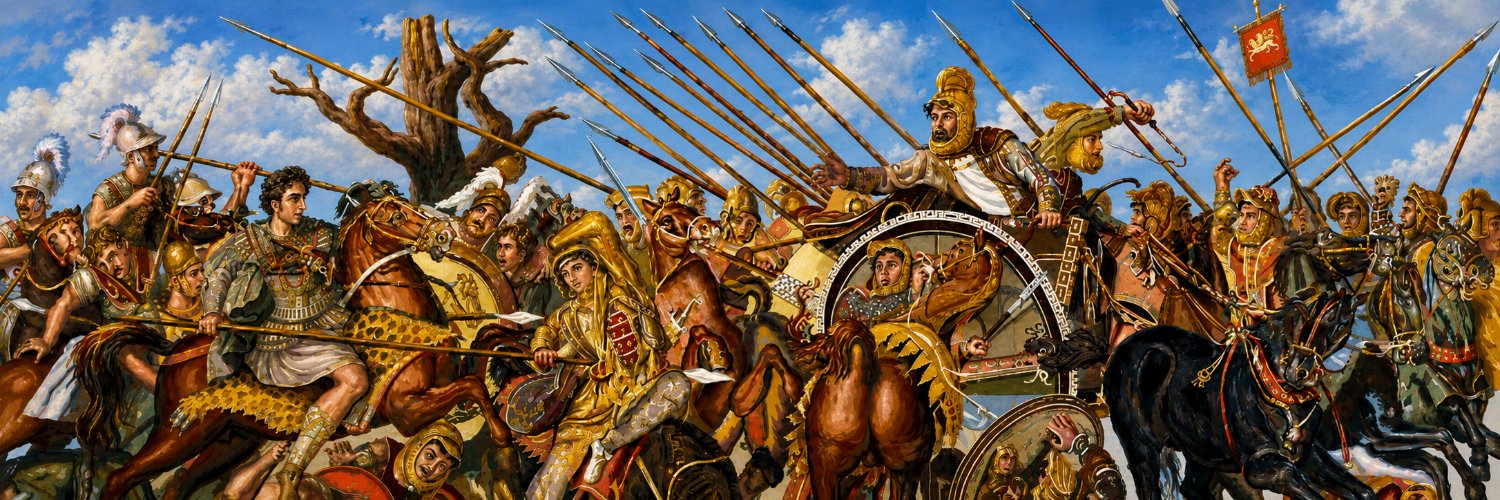
Greek expansion into the East was not built upon the mass mixing or disappearance of the Greek people. It was achieved through selective integration. A smaller part of the Greek population entered foreign dynasties, ruling families and local populations through intermarriage and political alliance. This allowed Hellenic ancestry, language, Gods and institutions to take root in lands whose native populations vastly outnumbered the Greek settlers. The greater body of the Greek population continued to marry within its own communities, preserving its ancestry, language, customs and identity. Those who integrated with foreign peoples formed an outer extension of the Hellenic world, carrying Hellenism beyond the Greek settlements without dissolving the nation itself. Hellenisation was not founded upon the extermination, expulsion or wholesale replacement of conquered populations, but upon extending Greek civilisation among existing peoples, spreading the Greek language and gradually transforming their institutions, art, religion and thought. Alexander’s conquests carried Greek power into Bactria and India. The cities, kingdoms and institutions established afterwards allowed Hellenism to endure there. The so-called Greek Buddha, the Indo-Greek kings, bilingual coinage and the union of Hellenic and eastern forms do not prove that Greeks were simply absorbed into the East and disappeared. They show that Hellenism entered foreign societies deeply enough to reshape them, leaving an imprint that survived even after Greek political power weakened. Alexander’s Macedonian companions resisted his adoption of Persian court customs and his marriage policies. Their reaction reveals the normal Hellenic expectation. Conquest was not supposed to end with the conqueror dissolving into the conquered. Greeks could integrate selectively, establish alliances and extend the Hellenic world, but most Greeks were expected to remain Greek, multiplying within their own communities at a greater rate than the smaller part integrating with foreign populations. From the Hellenistic kingdoms to the Roman Greek East, through the Greek-speaking Roman Empire and into the modern Greek nation, this balance preserved the continuity of the Greek people while carrying the Hellenic spirit and soul far beyond Greece. The Hellenic soul was immortalised both within the nation that sustained it and within the civilisations permanently marked by its presence.
Hellenist ☀️🏺⚡️31,255 次观看 • 3 个月前


