
Zartonk Media
@ZartonkMedia • 31,076 subscribers
• An Independent, Global 🇦🇲 Media Company. | Your home for all things Armenian from Armenia, the diaspora, and everything in between.
Shorts


Videos

Katy Perry Whitewashes Aliyev’s Crimes, Waves Azerbaijani Flag At Formula 1 Baku ➖➖➖ American pop star Katy Perry waved the Azerbaijani flag on stage in Baku on Friday, September 25, as Leyla Aliyeva and Arzu Aliyeva, daughters of Azerbaijani dictator Ilham Aliyev, watched from the audience. Perry headlined the entertainment program of the Formula 1 Azerbaijan Grand Prix at Baku Crystal Hall. Perry's dancers handed her the Azerbaijani flag, which she raised on a pole atop the stage. She repeatedly shouted "Azerbaijan!" to the crowd, Mediaaz reported. She also told the audience they should be very proud of Baku, thanked them for inviting her and called it her first but not her last visit, according to Mediaaz and 1newsaz. Azerbaijani outlets presented the moment as a personal endorsement. Axşamaz headlined that Perry "waved our flag in Baku," and the story was republished across Azerbaijani media within hours, while the same report acknowledged the flag had been handed to her during the show. The image arrived almost 3 years after Aliyev raised the Azerbaijani flag over occupied Stepanakert on October 15, 2023, weeks after the ethnic cleansing of Artsakh. Aliyev knelt to kiss the flag before raising it, and Azerbaijani media filmed him walking over an Artsakh flag laid on the ground. The concert fell on the third anniversary of the Berkadzor fuel depot explosion near Stepanakert, in which 218 Armenians were martyred on September 25, 2023. Azerbaijan forcibly displaced 120,000 Armenians from Artsakh (Nagorno-Karabakh) that week, after a 9-month blockade and a military assault on the civilian population. F1 moved this year's race from Sunday, September 27, to Saturday at the request of the Baku promoter and "relevant government stakeholders" to accommodate Azerbaijan's "Remembrance Day." Aliyev created the day by decree in December 2020 to honor Azerbaijani soldiers killed in the 44-Day War. Azerbaijan launched that war against Artsakh on September 27, 2020, with Turkish support, Syrian mercenaries and Israeli drones. More than 3,825 Armenians were martyred. Perry joins a list of international stars Baku has used to polish its image. At the same Grand Prix in 2024, Will Smith wore an "I Love Azerbaijan" T-shirt on stage, and that same month content creator Nas Daily portrayed Azerbaijan as a model of "tolerance." Past Baku Grand Prix headliners also include Christina Aguilera, Dua Lipa and Mariah Carey. As F1 drew global audiences to Baku, 19 Armenian hostages remained unlawfully held at the Umbaki Penitentiary Complex. They include former Artsakh presidents Arayik Harutyunyan, Bako Sahakyan and Arkadi Ghukasyan, former State Minister Ruben Vardanyan, former Foreign Minister David Babayan and former National Assembly Speaker Davit Ishkhanyan. The hostages were sentenced in sham trials at the Baku Military Court that Amnesty International called "a travesty and a mockery of justice." Azerbaijan expelled the International Committee of the Red Cross in September 2025. In July, Perry publicly objected when the White House used her song "Firework" in a video about strikes on Iran, saying she did not condone it. As of Saturday, she had not commented on Baku.
Zartonk Media13,152 просмотров • 3 дней назад

Dan Bilzerian Calls Out Israel For Denying The Armenian Genocide 🇦🇲 ➖➖➖ Armenian-American Dan Bilzerian calls out Israel for denying the Armenian Genocide and for committing genocide against Palestinians in Gaza. Bilzerian criticized Israel for its denial of the 1915 Armenian Genocide while consistently referencing the Holocaust. He expressed frustration over what he perceives as hypocrisy, drawing attention to the impact of these actions on both the Armenian and Palestinian communities. Dan Bilzerian said: “Israel has committed so many terrorist attacks, they’re stealing land right now they’re operating an apartheid, they're currently committing a genocide on Palestinians” Bilzerian also said: “They constantly refer to the Holocaust, when they’re the biggest Holocaust deniers on the planet they deny the Armenian Holocaust which you know like half of my people got wiped out half of your people got wiped out they deny that, so I don’t think it’s right for them to whine about the Holocaust.” He called out Israel for force-feeding the Holocaust narrative, when “They can’t recognize the Armenian Holocaust, we lost half our population they didn’t lose half their population but yet we have to hear about it.” Bilzerian made these remarks while appearing as a guest on Armenian-Assyrian-American Patrick Bet-David’s PBD Podcast. Daniel Bilzerian is an Armenian-American professional poker player and businessman.
Zartonk Media279,317 просмотров • 2 лет назад


BREAKING: Armenian Students Assaulted By Police While Protesting Turkey’s Ambassador At USC In Los Angeles
Zartonk Media152,835 просмотров • 3 лет назад

Korean Blogger Exposes Artsakh Under Azerbaijani Occupation, Revealing Empty Cities, Tourist Scams & Erasure of Centuries of Indigenous Armenian Identity ➖➖➖ A Korean travel blogger has shared a rare recent video documenting his journey through Artsakh, offering one of the few firsthand looks into the region under Azerbaijani occupation following the 2023 ethnic cleansing of its indigenous Armenian population. Traveling through Shushi, Askeran, and Stepanakert, YoungMin Skies captures empty streets, damaged landmarks, and what he describes as a systematic effort to erase Armenian traces and reshape the identity of the occupied region. His trip into Artsakh was part of a group tour, after attempts to obtain an individual permit proved nearly impossible. Visitors were not allowed to leave the van at any point, and access to sites was strictly controlled, shaping the narrative presented during the visit. The blogger also drew personal parallels between his family history in North Korea and the Armenians who have been cut off from their historical lands, highlighting a shared experience of displacement and loss. He described his drive through largely deserted territory as haunting. Upon reaching Stepanakert, the former capital, his first impressions were stark: “Tragedy, sadness. Everywhere you go, it’s just empty houses.” At the city’s entrance, he noted the heavy presence of Azerbaijani state symbols, including flags and music blasting through the streets. “Not enough Azerbaijani flags and blasting Azeri music. I get it, we’re in Azerbaijan,” he said. The blogger highlighted widespread abandonment and damage across the city. Many Armenian landmarks had been destroyed, remodeled, or repurposed. Yet the iconic “We Are Our Mountains” monument, also known as “Grandma and Grandpa,” remained intact. He interpreted this as a political decision: although the authorities appear intent on erasing Armenian heritage, the monument was left as a carefully controlled symbol to show that the government dictates which elements of the past are allowed to remain. “It is the only Armenian symbol standing here, because the government says it stays, despite wanting everything Armenian to be gone,” he said. Repeated requests to visit Armenian cultural and religious landmarks were blocked or redirected. Notably, he was denied proper access to the Holy Mother of God Cathedral in Stepanakert, one of the city’s most significant religious and cultural sites. “I wanted to see the main cultural icon here, which is the church, but they kept shutting us down… which made me suspicious about what they’re doing to it,” he said. According to the blogger, the group repeatedly asked to be shown more about Armenian history in the region, but they were repeatedly told they were running late. Ultimately, they were not shown much and received little information about the Armenian presence that once shaped the city. He also documented the destruction of former Armenian government and educational buildings. The former Artsakh parliament had reportedly been demolished and replaced with a “victory park,” while Artsakh State University had been renamed and remodeled after the war to reflect a new identity. “It is completely unrecognizable,” he said, reflecting on the city’s cultural and administrative landmarks. Throughout the visit, the tour consistently emphasized Azerbaijani narratives, leaving little room for independent exploration. By the end, the blogger said frustration had set in. “Stepanakert was supposed to be the highlight… but instead, we did not step foot in the city. The controlled narrative was getting tiresome.” Beyond the tours and cultural restrictions, the blogger also reported being scammed by local hotels. He described poor service, hidden charges, and deceptive practices, estimating that the incidents cost him around $2,400 in total damages. He also noted the stark contrast between the region’s display of oil wealth and the lack of real substance beneath the carefully curated image. The video is one of the rare recent firsthand accounts from an outside traveler, sharing footage and observations from Artsakh. It shows a region undergoing heavy transformation, where Armenian cultural traces are being systematically erased and the region’s identity is being tightly controlled and reshaped.
Zartonk Media36,712 просмотров • 6 месяцев назад

BREAKING: Former U.S. Presidential Candidate Vivek Ramaswamy Calls Out The United States For Staying Silent & Funding Azerbaijan’s Genocide In Artsakh 🇺🇸🇦🇲 ➖➖➖ Former U.S. Presidential Candidate Vivek Ramaswamy calls out the United States for remaining silent and funding Azerbaijan’s genocide and ethnic cleansing of over 120,000 ethnic Armenians from Artsakh (Nagorno-Karabakh). Ramaswamy criticized the United States' selective intervention around the world, describing it as a “product of incoherent foreign policy coming out from both political parties” (Democratic and Republican Party). Ramaswamy made these comments on the PBD Podcast, hosted by Armenian-American entrepreneur Patrick Bet-David. 🎥 PBD Podcast
Zartonk Media113,557 просмотров • 2 лет назад

Armenian Pair Skates To “Artsakh,” Qualifies For Winter Olympics Finals 🇦🇲 ➖➖➖ Karina Akopova and Nikita Rakhmanin skated Armenia’s pairs short program to Ara Gevorgyan’s “Artsakh” on February 15 at the Winter Olympic Games in Milan and Cortina, earning 66.27 points to advance into the top 16 and qualify for the finals. With 38.66 awarded for technical elements and 28.11 for difficulty, the Armenian pair secured qualification for the finals and at least a 16th-place finish in a field of 19 pairs. Azerbaijan’s National Olympic Committee had protested the use of the title “Artsakh” in Olympic competition, labeling it “political” and “separatist.” While the official Olympic program listing removed the name, the music itself was still played in full during the performance. Akopova and Rakhmanin, Armenia’s first pair figure skaters to qualify for the Olympics since independence, previously announced they would skate to “Artsakh,” a composition by Armenian composer Ara Gevorgyan from his 1999 album Ani. The duo is set to compete in the free skate on February 16. 🎥 Figure Skating Federation of Armenia
Zartonk Media34,214 просмотров • 7 месяцев назад

🇦🇲 @SystemofaDown’s @DaronMalakian says, “To all of the college campus protesters, I’d like to ask you this: where was your outrage when the babies of Artsakh were crying,” before playing Hypnotize at the 2024 Sick New World Festival in Las Vegas on April 27.
Zartonk Media87,852 просмотров • 2 лет назад

Did you know that Daniel Varoujan, who wrote in Western Armenian, studied at the University of Ghent in Belgium? 🇦🇲🇧🇪 He was so notable there that a plaque in the university library honors him. Upon returning to his homeland, he sought to enrich Armenian culture. Tragically, Varoujan was killed in the Armenian Genocide of 1915. Yet, his poetry continues to inspire, keeping the Armenian spirit alive. 🎙️ Zartonk Host Alec Kouloujian / Armat Antwerpen
Zartonk Media30,133 просмотров • 8 месяцев назад

Turkish Woman Takes DNA Test, Realizes She’s Not Turkish But 53.9% Armenian, 34.7% Georgian & 8.8% South Italian ➖➖➖ A video has gone viral on social media showing a Turkish woman reacting after discovering through her ancestry DNA test results that she is not Turkish but 53.9% Armenian, 34.7% Georgian, 8.8% South Italian, 1.4% Greek/Albanian, and 1.2% Persian/Kurdish. The results have sparked fresh discussion online, highlighting the deep ethnic diversity that exists within Turkey despite the country’s long-standing emphasis on a singular national identity. Though she still identifies as Turkish, the test showed no genetic connection to the original Turkic peoples of Central Asia. While DNA-based ancestry kits have exploded in popularity globally, in Turkey the direct-to-consumer ancestry DNA kits are effectively banned or heavily regulated, with citizens often forced to rely on foreign laboratories or legal intermediaries to obtain testing, according to Hellenic Daily News. The government’s restrictions stem from long-standing sensitivities around ethnicity and national identity. Turkey’s modern population descends from a complex blend of Anatolian, Caucasian, and Balkan peoples, yet official narratives have historically emphasized a singular “Turkish” identity. Viral stories like this one challenge that notion and highlight the region’s diverse ancestral roots, including significant Armenian and Georgian heritage often obscured by decades of assimilation policies.
Zartonk Media24,623 просмотров • 6 месяцев назад

🚨🇦🇲 Here is everything you need to know about what is happening in Artsakh today. ‼️
Zartonk Media91,352 просмотров • 3 лет назад

Korean-American Chef Introduces Armenian Cuisine To His Millions Of Followers 🇦🇲🇰🇷 A Korean-American content creator with more than three million followers introduced his audience to Armenian cuisine this week, cooking a full spread after one fan spent over two months requesting it in his comments. POV_Husband, who is known for taking on elaborate meals from cuisines around the world, told viewers his familiarity with the food came from growing up near Glendale, home to one of the largest Armenian communities in the United States. "Made Armenian food for the first time," he wrote, adding that he thought it turned out really good. The full spread included lula kebab (minced lamb), steak kebab, lamb chops, chicken kebab, sarma (grape leaves), harissa (chicken porridge), manti (Armenian dumplings), tabbouleh, Armenian salad, muhammara (red pepper dip), mutabal (eggplant dip), lavash (flatbread), Armenian rice pilaf, and tan (yogurt drink). He credited Armenian creators Ara Zada and Lara Karamardian for sharing accessible recipes. To close the meal, he invited the follower who had been asking for it, Harry, founder of the Los Angeles Armenian Fishing Club, to come sit at the table and share the food. 🎥: POV_Husband/Instagram
Zartonk Media18,356 просмотров • 5 месяцев назад

ON THIS DAY in 1956, Yuri Vardanyan, the Armenian Weightlifting Legend Who Set 43 World Records & Broke 5 in a Single Olympic Day, Was Born. 🇦🇲 70 years ago today, on June 13, 1956, one of the greatest weightlifters in history was born in Leninakan, the city now known as Gyumri. Yuri Vardanyan would go on to become an Olympic Champion, a seven-time World Champion, and the Armenian titan who set 43 world records and stood atop the world of weightlifting through the late 1970s and early 1980s. Vardanyan began training in 1970 at the age of 14 under his uncle Sergey Vardanyan at the legendary Lokomotiv club, in a city already famous for producing some of the strongest men in the world. By 20, he had broken every world record in his division. By 21, he was a World Champion. By 24, he was an Olympic gold medalist. Moscow, 1980: Five World Records In A Single Day When Vardanyan stepped onto the platform at the 1980 Moscow Summer Olympics, no one in the arena could have predicted what they were about to witness. Over the course of a single afternoon in the light heavyweight 82.5 kg category, he rewrote the record books five times. He broke through the 400-kilogram barrier in his class, a number long thought beyond human reach, and walked away with the gold medal around his neck. With it, he became the first Armenian ever to stand atop an Olympic weightlifting podium. Across a career that lasted barely a decade, he amassed 43 world records, claimed seven World Championship golds including five consecutive years from 1977 to 1981, won five European titles, and stood as the undisputed king of his division through the late 1970s and early 1980s. The Soviet Union named him Honoured Master of Sports in 1977 and awarded him the Order of Lenin in 1985. In 1994, the International Weightlifting Federation inducted him into its Hall of Fame. The Olympic Crown He Was Denied The full measure of Vardanyan's career carries a quiet tragedy: by the 1984 Los Angeles Olympics he was at his peak and the heavy favorite for a second gold, but the Soviet boycott denied him the stage. He competed at the Friendship Games instead, dominated, and retired the following year at 29. After his career, Vardanyan returned to public life in Armenia, serving as adviser to President Sargsyan, Minister of Sports in 2013, and later Armenia's Ambassador to Georgia. He passed away on November 1, 2018, at the age of 62 in the United States. The Pride Of Gyumri Yuri Vardanyan was a son of Gyumri, the city devastated by the 1988 Spitak earthquake and rebuilt in the decades that followed. Gyumri's weightlifters have long been a source of national pride, and Vardanyan stands at the front of that tradition, the man who lifted Armenian sport onto the world's highest podium and held it there. 70 years after his birth, his records remain landmarks, his Olympic gold a touchstone, and his name one of the most beloved in the history of Armenian sport. #YuriVardanyan #ArmenianOlympian #ArmenianWeightlifting #Gyumri #ArmenianSports
Zartonk Media14,172 просмотров • 3 месяцев назад


One Million Hectares of Pasture. So Why Can’t Armenia Feed Itself? 🇦🇲 Armenia has over 1 million hectares of pasture, yet we still import thousands of tons of meat to make up the difference. Up to 80% of that pasture sits unused. And in the last decade, our cattle population has dropped by nearly 40%. The problem isn’t a lack of land, but how that land is accessed, managed, and used. The answer may already be under our feet. Follow Zartonk Media to learn more soon.
Zartonk Media10,800 просмотров • 3 месяцев назад

Turkish Woman Takes DNA Test, Realizes She’s Not Turkish But 87.8% Armenian, 8.3% South Italian & 2.3% Greek/Albanian ➖➖➖ A video has gone viral on social media showing a Turkish woman living in Germany reacting in disbelief after discovering through her ancestry DNA test results that she is not Turkish but 87.8% Armenian, 8.3% South Italian, 2.3% Greek/Albanian, and 1.6% Persian/Kurdish. Shocked, she begins the video saying she expected to be “97 or 98 percent Turkish,” then spirals into disbelief as she reads the results out loud: “What? What’s going on? No… no… I can’t believe it. 87.8% Arme… Arme… South Italian… Albanian… Persian and Kurdish…,” repeatedly stopping mid-sentence and asking, “Huh?” as she tries to process what she’s seeing. In disbelief, she then says she’s “literally 0% Turkish,” emphasizing, “I’m from the Black Sea, Trabzon. I’m Turkish. 0%? I’m 0% Turkish. I can’t believe this,” before adding that she doesn’t know how she’ll tell her parents and family “that we aren’t Turks.” She says she would have understood if it showed “70% Turkish” or even “50%,” but admits, “I need to process this. I wish I never did this. I regret it now.” The video, like many others, has continued to spark intense discussion online, highlighting the deep ethnic diversity that exists within Turkey despite the country’s long-standing emphasis on a singular national identity. While DNA-based ancestry kits have exploded in popularity globally, in Turkey the direct-to-consumer ancestry DNA kits are effectively banned or heavily regulated, with citizens often forced to rely on foreign laboratories or legal intermediaries to obtain testing, according to Hellenic Daily News. The government’s restrictions stem from long-standing sensitivities around ethnicity and national identity. Turkey’s modern population descends from a complex blend of Anatolian, Caucasian, and Balkan peoples, yet official narratives have historically emphasized a singular “Turkish” identity. Viral stories like this one challenge that notion and highlight the region’s diverse ancestral roots, including significant Armenian heritage often obscured by decades of assimilation policies.
Zartonk Media20,242 просмотров • 7 месяцев назад

🇺🇸🇦🇲 U.S. Proposes 100-Year Lease to Control So-Called “Zangezur Corridor” & Advance Armenia-Azerbaijan Peace Process ➖➖➖ The United States has proposed managing the disputed transport corridor between Armenia and Azerbaijan, aiming to facilitate the peace process. Speaking at a press briefing in New York on July 11, U.S. Ambassador to Turkey Tom Barrack revealed that Washington is offering to take control of the 32-kilometer route—known as the Zangezur Corridor to Azerbaijan—under a 100-year lease. “They are arguing over 32 kilometers of road, but this is no trivial matter. It has dragged on for a decade,” Barrack said. “So what happens is that America steps in and says: ‘Okay, we’ll take it over. Give us the 32 kilometers of road on a hundred-year lease, and you can all share it.’” While Armenia and Azerbaijan reached a preliminary peace agreement in March, key sticking points remain, chief among them the corridor that would link mainland Azerbaijan with its exclave, Nakhichevan, via Armenia’s southern Syunik Province. Azerbaijan has pushed for the route to be outside of full Armenian jurisdiction, citing concerns over guaranteed access. Armenia, in turn, rejects the use of the term “Zangezur Corridor,” viewing it as an irredentist claim on its sovereign territory. Yerevan has also opposed any third-party control over the corridor, further complicating negotiations. Despite this, the U.S. proposal envisions a neutral American logistics operator managing the route to ensure transparency and shared usage. According to a recent Carnegie Endowment report, the proposal mirrors a previously floated EU plan and draws on international precedents, such as oversight mechanisms in Georgia’s breakaway regions. The plan would ensure both security for Azerbaijan and respect for Armenia’s sovereignty. Barrack’s remarks confirm that the Trump administration had already discussed the idea of a private U.S. operator serving as a guarantor. A regional source familiar with the talks told Middle East Eye that Turkey was the first to suggest the involvement of a neutral company approved by both sides. Meanwhile, diplomatic momentum around the peace process has continued. On June 20, Armenian Prime Minister Nikol Pashinyan made a rare visit to Istanbul to hold talks with Turkish President Recep Tayyip Erdogan, in what Yerevan described as a “historic” step toward regional peace. Shortly after, Pashinyan and Azerbaijani President Ilham Aliyev held their first-ever direct meeting without international mediators. The bilateral talks, which took place in Abu Dhabi, focused on confidence-building measures and ways to finalize a comprehensive peace agreement. However, disagreements remain. “The Armenian side demanded that the company also operate on the Nakhichevan side, which was unacceptable for Baku,” the Middle East Eye source said. The report by Middle East Eye also suggests Turkey has been encouraging Azerbaijan to move forward with the peace deal, pointing to shifting geopolitical trends, including Iran’s waning regional influence. Turkey’s own normalization with Armenia is closely tied to the peace process. Middle East Eye also reports that Turkish companies see Armenia as a key link in the “Middle Corridor” project, which aims to connect Turkey to Central Asia via the Caucasus. Infrastructure investments in Armenia could follow if tensions ease.
Zartonk Media31,362 просмотров • 1 год назад

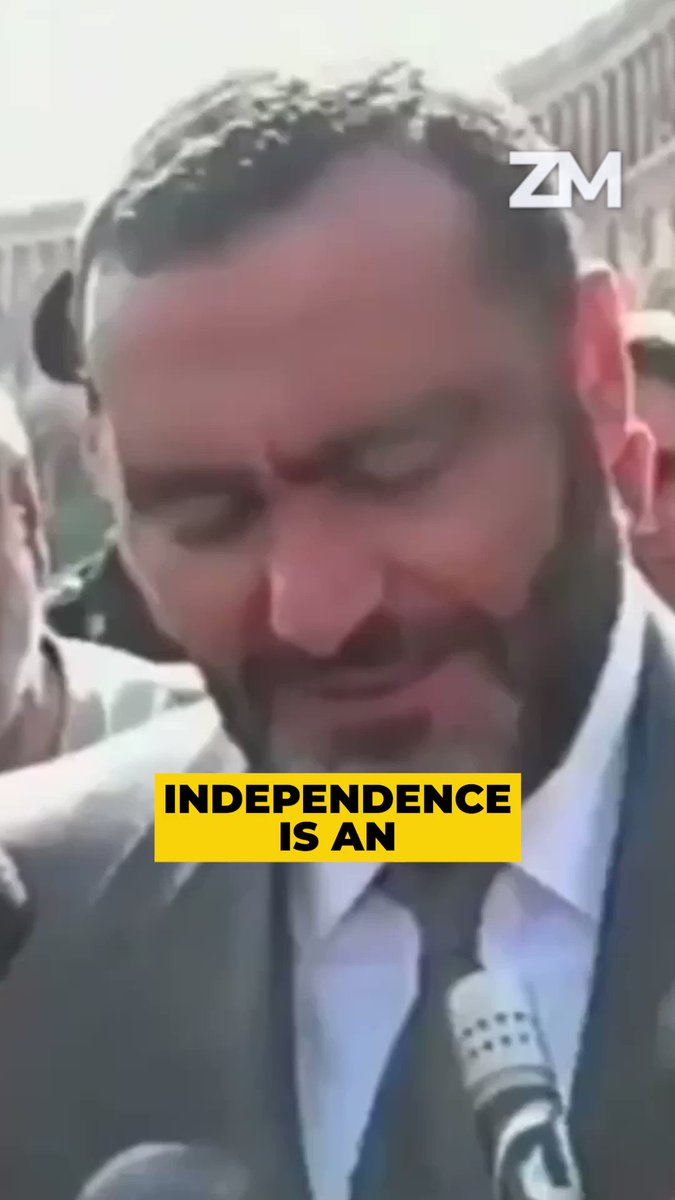
🇦🇲 32 years ago this day, Armenians voted 99% in favor of independence. It was a time of pure happiness as the long-awaited freedom was gained, marked by the scars of war and an endless battle. Today, 32 years later, we face one of the most difficult chapters in our history. Artsakh’s fate hangs in the air, as Armenia, constantly under existential crisis, finds itself in an extremely worrying and precarious circumstance. 32 years after independence, Armenia’s independence is as fragile as it has been in recent history, with bloodthirsty, oil-fueled Azerbaijan inching ever-closer.
Zartonk Media55,442 просмотров • 3 лет назад

Thousands Join Torchlight Procession in Yerevan Honoring Armenian Genocide Martyrs 🇦🇲 ➖➖➖ Tonight, thousands joined the annual torchlight procession in Yerevan, commemorating the victims of the Armenian Genocide and marking its 111th anniversary on April 23rd in Republic Square. The powerful march lit up the streets as participants walked in silence and solidarity toward Tsitsernakaberd. The torchlight procession is organized every year on the eve of April 24th by the Armenian Revolutionary Federation (ARF-D) where Armenians honor the martyrs of the 1915 Armenian Genocide. 🎥evn_beauty _vardandanielyan arfhem
Zartonk Media13,036 просмотров • 5 месяцев назад