Albert Rudatsimburwa 🇷🇼
@albcontact • 132,241 subscribers
Life is a Gift, Humanity is a Privilege. ✊🏾 Music Journalism Media Storytelling. Kind of Blue 1959. Speak Truth .. Even if they put you in a straight jacket
Shorts


Videos

The first season “they got “luckier”… they surrendered and were allowed to go back to their families… after being warned never to come back… but of course for ErikDPrince , it’s all about the Benjamins 💵 💵 $$$$ he can’t fail to find racist imperialist colonial minded ready to go for an “African Safari” …
Albert Rudatsimburwa 🇷🇼248,807 просмотров • 11 дней назад

1:00
Sensitive content
This media may contain sensitive content.

Geo_monitor This is what was said and the reactions it triggered
Albert Rudatsimburwa 🇷🇼1,007,513 просмотров • 1 год назад


#Rwanda 🇷🇼 Despite the fact that Rwanda wasn’t Belgium’s colony … the latter has been the roots of all the atrocities Rwandans endured from the moment they “administrated” Rwanda and Burundi as decided by the League of Nations after WorldWar 1 … They even did a “coup” … took down the monarchy and installed a fascist regime by organizing the first rigged elections on the African continent, to install a violent fascist, obedient to the “catholic church”, Belgian christian-democrats political parties and Flemish “farmer syndicates”. The late monarch Kigeli V Ndahindurwa, explains here how he was “not allowed to come back” to Rwanda after he had gone for a meeting UN Sec Gen Dag Hammarskjöld in Congo… the ban had been decided by the Belgian “Resident” in charge of administrating Rwanda and Burundi. After his ban, the first acts of genocide were organized and orchestrated by the Belgian administration. They brought a Belgian military, Colonel Logiest, from Congo (their colony at that time) with Congolese troops to push and support Rwandans to take down the monarchy and assaulting those labeled as “Tutsi”, anti Tutsi pogroms … which resulted into the first massive wave of refugees… with the targeted populations fleeing in the neighboring countries… the Rwandans - Tutsi - were the first refugees in Africa, even before the independence wave of the 60ies that ended the “colonial” era for the majority of the European colonies. If some of King Leopold’s colonial atrocities in “Belgian Congo” have been exposed over time… This particular “dark side” of Belgian colonial past has never been brought up in Belgium.. especially that it links and connects the Belgian political class, Flemish Christian Democrats syndicates and establishment - to the worst crimes committed in Africa, from the colonial time to 1994 - and even until today… as they evacuated to Belgium the perpetrators and eventually integrated them in their own society. This will remain the backdrop until Belgian intellectuals, politicians and others of civil society get the guts to take it up with honesty and rationality. There remains so much not dealt with. This here is a clip from back in 1960… Monarch Kigeli V Ndahindurwa… but until today Belgians haven’t returned the remains of his father Yuhi III Musinga, who had been removed from the throne by Belgium, sent to Congo forbidden to ever return back to his own motherland and died in exile in “Belgian Congo”. Never ever even a medical report on the causes of death… The untold story of colonial Belgium.
Albert Rudatsimburwa 🇷🇼39,879 просмотров • 24 дней назад

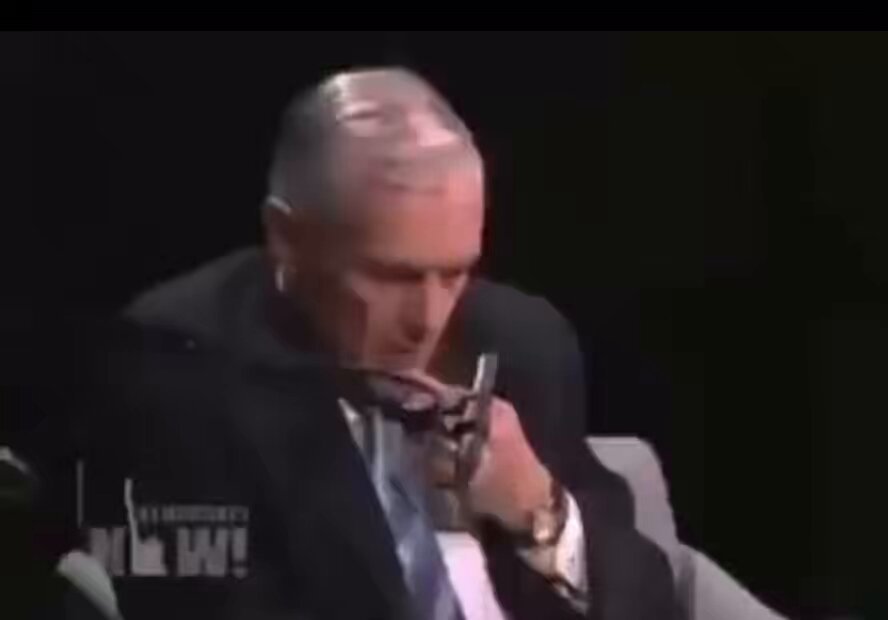

#DRC The people filming are the ordinary civilian populations in Eastern Congo. The armed thugs filmed on camera are the “Wazalendo”. They are armed, equipped and paid by Tshisekedi as auxiliaries of the National Army. They are together with FDLR the most lethal forces, responsible for the highest death toll on the populations, murders on civilians. Who’s ultimately accountable for their crimes? Tshisekedi is.
Albert Rudatsimburwa 🇷🇼364,406 просмотров • 1 год назад

RDC 🇨🇩 Quelques vérités rappelées par Bertrand Bisimwa de l’AFCM23 … dont personne va douter qu’il est bel et bien “Congolais”. - Tshisekedi Présidence RDC 🇨🇩 qui a invité tant d’armées étrangères contre sa propre population et pour mener la guerre contre un pays voisin … il vous distrait avec ce qu’il appelle “un ennemi commun” qu’il appelle le Rwanda… on crée un “ennemi commun” pour distraire les Congolais, pour justifier la débâcle sur le plan militaire … sinon pourquoi lorsque nous avons pris Goma, pourquoi son armée a fuit au Rwanda? Si c’était le Rwanda qui était réellement sur le sol congolais? Pourquoi ils nous ont fuit nous qui sommes congolais et sur le sol congolais? Ils sont là dans des camps… Tshisekedi Présidence RDC 🇨🇩 est mis à nu dans cette interview de Bisimwa
Albert Rudatsimburwa 🇷🇼12,739 просмотров • 13 дней назад

DRC The Truth They Don’t Want Told: Rwanda, Congo, and the Thirty-Year Lie of War For three decades, the world has been told that Rwanda and the Democratic Republic of Congo (DRC) have been locked in a cycle of war. That formulation is repeated so often it is accepted as fact: “thirty years of war.” But it is a dangerous distortion. What the region has endured is not thirty years of war between equals, but thirty years of denial — denial that genocidal forces defeated in Rwanda in 1994 were allowed to survive, regroup, and thrive under international cover in Congo. Denial that United Nations peacekeepers and international experts, mandated to protect civilians and tell the truth, instead became complicit in perpetuating instability. Denial that successive Congolese governments have collaborated with these forces while Western institutions inverted reality to portray the victims as perpetrators. This is ultimately part of the Denial of the Genocide Against the Tutsi in Rwanda 1994 and the same time a support for those who committed the genocide and their western supporting powers. This narrative inversion — turning the perpetrators of genocide into victims, and Rwanda into the aggressor — has been so persistent that it now structures international debates at the UN Security Council and the Human Rights Council. The most recent sessions in New York and Geneva showcased the same pattern: Félix Tshisekedi’s government, which has integrated genocidal militias and even contracted foreign mercenaries, was spared scrutiny, while Rwanda was once again presented as the destabilizing actor. Such distortions are not just insulting; they are dangerous. They perpetuate impunity, embolden genocidal forces, and condemn millions of Congolese to continued suffering. 1994: The Crime the World Saw but Chose Not to Stop The truth begins in 1994, when Rwanda descended into the fastest genocide of the twentieth century. The United Nations Security Council was not blindsided. It had reports on its desk from the commander of the UN peacekeeping force in Rwanda. It knew about hate speech broadcast by extremist radio stations. It knew about militias arming and training openly. Yet when the presidential plane was shot down on April 6th and the genocide machinery was unleashed, the Council dithered. For one hundred days, more than a million Tutsi were hunted down and slaughtered while the so-called international community watched. When the genocide was halted by the Rwandan Patriotic Front, the perpetrators were not dismantled. Instead, they were escorted into Zaire, under French military cover, and given sanctuary by Mobutu’s regime. It was a stunning betrayal: would the Allies after World War II have tolerated a Nazi army regrouping in Switzerland or Austria, rearming, and launching cross-border raids? The question answers itself. What was unthinkable in Europe was tolerated in Africa. Thirty Years of Denial The remnants of the genocidal regime reconstituted themselves into new armed groups, most prominently the FDLR. They launched raids into Rwanda, destabilized eastern Congo, and embedded themselves into local conflicts. Rwanda and other African states were drawn into wars to neutralize them, yet the international community consistently refused to recognize the root cause. Instead, it adopted the lazy shorthand of “thirty years of war between Rwanda and Congo,” erasing the agency of the genocidal forces and the complicity of their enablers. The refusal to confront this truth has consequences. It allows the myth to persist that instability in eastern Congo is a Rwandan export rather than the direct result of harboring genocidal actors. It permits Congolese leaders, from Laurent Kabila to Félix Tshisekedi, to use the FDLR as a political tool, while scapegoating Rwanda whenever domestic failures come under pressure. And it encourages Western chancelleries and UN officials to absolve themselves of responsibility by blaming the most convenient target. MONUSCO: A Mission that Multiplied Armed Groups Since 1999, the United Nations has deployed its largest-ever peacekeeping mission, MONUC — later renamed MONUSCO — in the DRC. Its track record is damning. When the mission began, there were just four armed groups active in Congo. Today, there are more than 200. When Tshisekedi began his presidency, there were 28. This explosion of armed groups happened under MONUSCO’s watch. Even more damning is its relationship to the very forces it was meant to neutralize. MONUSCO never dismantled the FDLR. At times, it even cooperated with them. Atrocities in Ituri province continue to unfold despite MONUSCO’s heavy presence. And yet, year after year, the Security Council mandates “UN Experts” to report on the situation. These reports, opaque in recruitment and methodology, have consistently deflected blame away from MONUSCO and the Congolese government, while shifting suspicion onto Rwanda. Far from being impartial, they have helped to construct and entrench the false narrative of Rwanda as aggressor. Tshisekedi’s Calculated Escalation Félix Tshisekedi has not only inherited this machinery of denial; he has actively deepened it. His government has integrated the FDLR into the Congolese army, multiplied local militias known as Mai-Mai (later rebranded as “Wazalendo” to dodge international criticism), and even hired foreign mercenaries. Romania, a NATO member, sent a contingent that was captured during the fall of Goma. The United States, through Erik Prince — founder of the notorious Blackwater — has supplied another. Neither the UN, nor the EU, nor the African Union, which formally banned mercenaries in Africa in 1977, has spoken a word of condemnation. The hypocrisy is staggering. Rwanda is scrutinized for defensive actions aimed at protecting its borders from genocidal militias, while the Congolese government is given carte blanche to collaborate with those militias and employ Western mercenaries. This is not neutrality; it is complicity. The Manipulation of Numbers and Memory The distortion goes beyond politics into the realm of memory itself. The oft-repeated claim of “millions dead in Congo” is traced back to the UN’s infamous “Mapping Report” covering 1993–2003. That document was so riddled with methodological flaws that it reads less like professional research than a political pamphlet. Its purpose was transparent: to inflate numbers in ways that incriminate Rwanda, while erasing the structural causes of death in Congo — state collapse, corruption, and the harboring of armed groups. Yes, thousands have perished in Congo — from direct violence, from displacement, from preventable disease. But to inflate these figures into the millions without context, and to assign blame selectively, is not just bad scholarship. It is a moral crime. It erases the real victims, most of all the Congolese Banyarwanda, who have been displaced and targeted for over thirty years. And it allows those responsible — Congolese politicians, UN officials, and their international enablers — to wash their hands of accountability. Geneva, New York, and the Inversion of Truth All of these threads converge in the present. At the UN Security Council’s latest session on the DRC, and at the Human Rights Council in Geneva, the script was repeated once more. Tshisekedi’s government organized side events and interventions designed to paint Rwanda as the aggressor, while UN officials played along. The FDLR’s role was minimized. MONUSCO’s failures were ignored. The use of mercenaries was never mentioned. Instead, the narrative inversion was complete: Rwanda, the country that stopped a genocide and has spent thirty years defending its borders from its remnants, was presented as the destabilizer. It is a shameful spectacle. But it is also a revealing one. The international system is not neutral. It protects its own failures. It prefers denial to accountability. And in doing so, it ensures that the cycle of violence continues. The Urgency of Truth Thirty years on, the question is no longer whether the world failed Rwanda in 1994. That is beyond dispute. The real question is why the world has continued to fail the Great Lakes region for three decades afterward — by denying the root causes of instability, by shielding the perpetrators, and by inverting the roles of victim and aggressor. It is time to say it plainly: this has not been thirty years of war. It has been thirty years of denial. Denial that has protected genocidal actors. Denial that has enabled Congolese governments to weaponize militias. Denial that has allowed UN peacekeepers and “experts” to preside over the multiplication of armed groups. And denial that has permitted Western chancelleries to avoid their own complicity by pointing the finger at Rwanda. Breaking that denial is not only about Rwanda. It is about justice for the Congolese civilians trapped in cycles of violence, abandoned by their own state, and failed by the international community. It is about accountability for institutions that claim moral authority while practicing selective blindness. And it is about finally affirming that African lives, African history, and African truths cannot be endlessly distorted without consequence. If the world truly cares about peace in the Great Lakes, it must abandon the thirty-year lie and confront the truth it has avoided for too long. Until then, every new resolution in New York and every new declaration in Geneva will be nothing more than a continuation of the denial that has condemned the region to endless suffering.
Albert Rudatsimburwa 🇷🇼142,945 просмотров • 10 месяцев назад


Benimana Twaramukanye Imana uti “amashyo” nti “amashongore” mugire inka na ingoma
Albert Rudatsimburwa 🇷🇼33,434 просмотров • 1 месяц назад

#Burundi 🇧🇮 L’interview de SE Evariste Ndayishimiye par Marc Perelman est carrément un cas d’école de comment aider l’interviewé à répondre aux questions… il n’arrête pas de lui “souffler”: Rwanda … ceci, Rwanda cela… même si lui-même “devrait au moins connaître le contenu des accords qu’il évoque .” Le “retrait des forces Rwandaises” ne peut se faire que “après” la neutralisation des FDLR… pourquoi ne lui demande-t-il pas au sujet du CONOPS? Et il laisse le président “mentir” qui prétend qu’ils (les troupes Burundaises) n’ont jamais été en contact ne sont pas en contact avec les FDLR… alors que déjà le village de Nturo, dans le Nord Kivu, avait été détruit par les FDLR et les Wazalendo, facilités par l’armée qui en plus faisait partie des troupes de l’EAC sensées contribuer à la Paix et protéger les populations…. Ils étaient aussi à Goma et tiraient sur le Rwanda avant de fuir sur Bukavu qu’ils ont défendu jusqu’à fuir encore plus loin… dans le Sud… l’armée Burundaise a et est toujours dans toutes les tentatives d’extermination des Banyamulenge, à Minembwe… Perelman n’évoque même pas le cas des “mercenaires” Roumains et les plus récents, les hommes d’Eric Prince… et pourtant il interview le “président en exercises” de l’Union Africaine qui elle: depuis La Convention de l'OUA sur l'élimination du mercenariat en Afrique, adoptée à Libreville le 3 juillet 1977, qualifie le mercenariat de crime contre la paix et la sécurité sur le continent africain. Il le laisse même radoter sur le M23 alors que lui-même devrait savoir que leurs cas se négocie en Suisse, après Doha Qatar… Bref Perelman nous fait une démonstration de tout ce qu’on ne fait pas quand on la prétention de faire du journalisme.. intègre. Mais ce n’est peut-être pas ses ambitions.
Albert Rudatsimburwa 🇷🇼17,990 просмотров • 27 дней назад

Congo 🇨🇩 AFCM23 spokesman Lawrence KANYUKA telling Goma journalists: "Tshisekedi Présidence RDC 🇨🇩 calls for dialogue and, as soon as we are at the negotiating table, he violates the ceasefire. His regime kills our compatriots, should we stand idly by?" What does the facilitation (Washington Department of State) say about this?
Albert Rudatsimburwa 🇷🇼20,007 просмотров • 1 месяц назад

#RDC 🇨🇩 “FIZI” La progression AFCM23 est indiscutable… Eric Prince avait déjà empoché plus de 100Millions $ comme avance … mais ses mercenaires eux reculent… déjà à Uvira … comme à Goma, ce n’est pas eux qui feront la différence… faut être aliéné pour croire que “l’homme blanc va venir faire la différence alors que Tshisekedi a même l’armée Burundaise et les FDLR et les Wazalendo avec lui… Etienne Tshisekedi était du Congo, Félix A. Tshisekedi est de Bruxelles Matonge - arnaque sur arnaque… il est de ceux qui sont tellement aliénés, il est de la même veine que ceux qui ont vendu Patrice #Lumumba aux impérialistes Belges et Américains. Ceux qui empêchent le Congo à prendre sa place sur le continent Africain
Albert Rudatsimburwa 🇷🇼24,292 просмотров • 1 месяц назад

RDC 🇨🇩 L’obsession… la seule référence pour Tshisekedi Présidence RDC 🇨🇩 c’est le Rwanda 🇷🇼 dans n’importe quoi… Ceci dit, adopter les bonnes pratiques de gouvernance est normalement une bonne chose… mais ce côté grotesque qu’ils doivent rajouter révèle leurs limitations d’esprit… voilà Comme au Rwanda à l’aéroport de Kanombe … voilà qu’on a déployés des robots à l’aéroport international de Ndjili… j’avoue à première vue, ils sont différents et on l’air de marcher au lieu de rouler… mais… la grotesque-rie c’est que les robots seraient programmés pour reconnaître Félix Tshisekedi et le saluer avec l’expression “Fatshi Béton” … aaaah Matonge Bruxelles pour toujours 😂😂😂
Albert Rudatsimburwa 🇷🇼52,187 просмотров • 3 месяцев назад

Space Summit in France Imagine if we had 10 President Kagame in Africa full story on Poliscoop Media
Albert Rudatsimburwa 🇷🇼21,044 просмотров • 1 месяц назад

Rwanda 🇷🇼 October 1st Today in 1990 The Rwandan Liberation War was launched on October 1, 1990, when the Rwandan Patriotic Army (RPA), the armed wing of the Rwandan Patriotic Front (RPF-Inkotanyi), crossed the Ugandan border at the Kagitumba border post. Led by late Major General Fred Gisa Rwigema, the RPF sought to overthrow the autocratic fascist regime of President Juvénal Habyarimana, end so called “ethnic” segregation, and secure the right of return for hundreds of thousands of Rwandan refugees displaced since 1959. Unfortunately, only a day after the successful invasion began, Major General Fred Rwigema was killed in action on October 2, 1990 from a straight bullet of a fleeing unit in a jeep from the governmental army, dealing a profound blow to the leadership. While the attack had been launched in his absence, Major General Paul Kagame (he got that rank later) returned from a military course in the United States to take command, shifting the military strategy toward mobile guerrilla warfare from the northern territories in the Volcanoes and bamboo forests. A four-year conflict got the fascist regime on its knees, despite the support of Mitterand’s France and Mobutu’s Zaire (and others) … which lead to peace talks and the Arusha Accords that got at the end never acted as the fascist extremists killed their own President who was returning from the last meeting meant to implementing the accords on April 6th 1994 and unleashed the last genocide of the 20th century. It was the RPA under Kagame that ultimately stopped the 1994 Genocide against the Tutsi and captured Kigali on July 4, 1994. A beautiful Liberation Day to all Rwandans. Never forget where we came from, always for a better future. Salute !
Albert Rudatsimburwa 🇷🇼12,499 просмотров • 20 дней назад


UB40 🔥🔥🔥 Kingston Town … Time Machine 🔥🔥🔥 Wayyyy baaaaack 🔥🔥
Albert Rudatsimburwa 🇷🇼53,054 просмотров • 4 месяцев назад