Annemarie Ward 💜
@Annemarieward • 14,645 subscribers
💜 CEO of @FAVORUK - Advocating for those suffering & recovering from #Addiction -Interested in Justice, Mercy & Good Faith ✝️ Character is Destiny. 💜
Videos

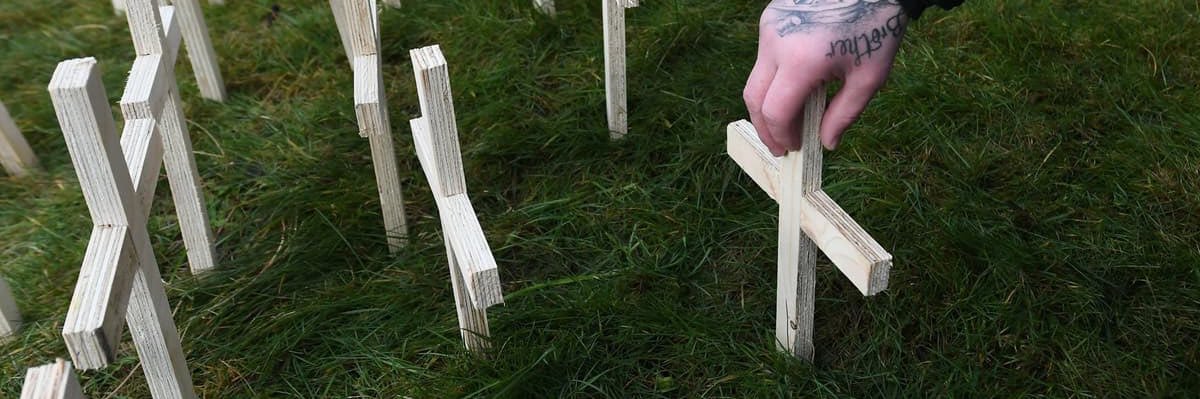
I find the Minister’s response almost impossible to reconcile with the figures published today. Scotland has recorded 1,133 drug deaths, an increase of 11 per cent in a single year. Eight hundred and thirty of those who died were men. Male deaths increased by 19 per cent while female deaths fell by 5 per cent. The highest death rates remain among people aged 35 to 54, and in our poorest communities the drug-death rate is now fifteen times that of our wealthiest. These are catastrophic figures. Yet we are told again about the “progress” of the National Mission and offered substantially more of the same. At what point does failure actually count as failure? Another fund. Another advisory forum. Another executive group. Another pilot. Another promise to listen, learn and redouble efforts. Scotland has been "listening and learning " for years. People are still dying. One of the fundamental problems is that government continually confuses activity with outcomes. We hear how many naloxone kits have been distributed, how many rehabilitation placements have been funded, how many projects have received money and how many times the Glasgow drug consumption room has been used. Those are measures of activity. They are not measures of success. The Glasgow consumption room opened in January 2025. Glasgow City subsequently recorded 196 drug deaths, up from 185, an increase of around 6 per cent. It is not working as an answer to Glasgow's drug-death crisis. Government can tell us how busy the facility is and how many emergencies have been managed inside it. But Glasgow ended the year with more dead people, not fewer. Indeed, when the Scottish Government was asked for its analysis quantifying the consumption room’s impact on drug deaths, it confirmed that it held no completed internal analysis specifically quantifying that impact. So stop presenting activity as outcome. Now we are offered drug checking. I support gathering accurate intelligence about an increasingly dangerous drug supply. Nitazenes were implicated in 247 deaths last year and cocaine in 589. If checking a substance prevents somebody dying tonight, good. But checking somebody’s drugs is not treating their addiction. There is a peculiar naivety in believing that people in the grip of severe addiction will behave like rational consumers if only we give them sufficient information about the product in front of them. Addiction is characterised precisely by the progressive loss of control. Harm reduction and stabilisation have a proper place. Keeping someone alive tonight matters enormously. But keeping somebody alive must be the beginning of our ambition for that human being, not the end of it. Scotland has become trapped in the belief that addiction can be indefinitely managed if only we become sophisticated enough at managing its risks. And after years of catastrophic outcomes, remarkably little changes about who gets to decide what happens next. The same system remains standing. Many of the same institutions remain influential. The response to failure is another structure populated by government, local government, “key partners” and the same professional establishment. Where is the fundamental examination of why Scotland remains such an extreme international outlier? Where is the accountability? And where is the willingness to ask whether the institutions that designed, operated and defended this system should continue to dominate the conversation about reforming it? People in recovery have been saying for years what is required. People need rapid routes into detoxification, treatment and residential rehabilitation. They need recovery communities, housing, relationships, employment, responsibility, belonging and purpose. Above all, they need a system which believes they can get well rather than one organised around indefinitely managing their deterioration. And we urgently need to confront something else. What is happening to Scotland’s men? Eight hundred and thirty men died from drugs last year. That is 131 more dead men in a single year. These are sons, fathers, brothers, partners and friends, many dying in the middle of their lives. We need to examine drugs alongside alcohol, suicide, homelessness, deprivation, isolation, family breakdown and social disconnection. Something profound is happening to working-age men in Scotland, and we seem remarkably reluctant even to name it. The Minister says: “We must be better.” No. Government must do something different. After 1,133 deaths, another commitment to strengthen the existing approach is not change. It is doing substantially the same things again while hoping for a different result. The families burying their sons, fathers, brothers, daughters and mothers deserve more than that.
Annemarie Ward 💜23,208 views • 1 month ago

I’m about to leave my hotel in Calgary to deliver a keynote on what Scotland’s drug-death crisis might teach Canada. This morning, Scotland learned that 1,133 people died drug-use deaths in 2025 an increase of 11 per cent. There is a painful irony in travelling thousands of miles to find that Scotland’s recovery expertise is valued abroad, while those carrying it are still too often kept at the edge of the conversation at home. I recorded this before leaving for the conference. Scotland should not have to export its recovery expertise before learning to value it. I hope, eventually, we will be willing to listen. #Recovery #DrugDeaths #Scotland #RecoveryCapital #Calgary
Annemarie Ward 💜16,842 views • 1 month ago


1/3 Today's debate in the Scottish Government is nothing short of a slow-motion car crash, with policymakers willfully ignoring global evidence while steering Scotland further into drug policy disaster. Instead of fixing our broken treatment system and backing recovery, they are doubling down on failure, pushing policies that have already devastated communities in Portugal, Oregon, and British Columbia. Let’s be crystal clear: decriminalisation isn’t saving lives—it’s killing more people. In Portugal, drug deaths have skyrocketed, treatment services are overrun, and Lisbon has become a hotspot for open-air drug markets. Oregon’s so-called "progressive" policy has turned its cities into lawless wastelands of public drug use, overdoses, and cartel activity, forcing the government to scramble to re-criminalise drugs just a few years later. And yet, here we are—watching Scottish politicians repeat these same catastrophic mistakes, pretending that more "harm reduction" will work when all the evidence screams the opposite. This isn’t just ignorance—it’s negligence. If Scotland keeps chasing these failed fantasies of decriminalisation, we’ll be standing in the wreckage of a policy that normalises addiction, fuels overdoses, and abandons the very people it claims to help. Where is the accountability? Where is the outrage? The Right to Recovery Bill offers a real solution—a legal right to treatment, a commitment to recovery, and an end to the bureaucratic blockade that keeps people trapped in addiction. It’s time to wake up. Stop following the junk science of failed decriminalisation and start fighting for real recovery.
Annemarie Ward 💜29,262 views • 1 year ago

As many of you know, the evidence sessions for the Right to Recovery Bill are underway. Some have already taken place, and I’m due to give evidence this Wednesday. Clare Haughey has told us that only one of us — either myself or Stevie Wishart 🏴 — will be allowed to speak. (See screen shot below from Douglas Ross Let that sink in. Stevie is the person who first came up with the idea for this Bill. He wrote the original draft almost five years ago. No one knows this Bill more intimately. No one can speak to its spirit, intent, and practical importance with more lived or professional authority than him. Five years. That’s how long this has been stalled, delayed, and kicked into the long grass — and now, at the eleventh hour, the people who built it from the ground up are being told to stand back. What makes this even more outrageous is that the same restriction does not apply to the quangos, the statutory services, the ADPs, or the council departments. They’ve been allowed to send multiple people to give evidence — sometimes two, three, or more from the same organisation. Most of them, it should be said, are on the Scottish Government’s payroll. This is not a balanced or fair process. It is skewed — rigged in favour of those defending a failing status quo. The very system that the Bill is trying to change has been given the microphone, while the voices of genuine reformers are being silenced.
Annemarie Ward 💜20,375 views • 1 year ago


No more content to load