
Arjun Mahadevan (Mr. LLC 🇺🇸)
@ArjunMahadevan • 30,113 subscribers
CEO/Founder of @doolaHQ. Company Formation API + MCP for global founders. Powering the platforms that power businesses worldwide. ⚡️
Shorts

Videos

The last tab a founder ever opens to start a business has been closed. doola is integrated with Claude and Replit ⠕. You can now form a US LLC without leaving the AI chat you’re already in. First business formation platform to do it. Start one in your next prompt.
Arjun Mahadevan (Mr. LLC 🇺🇸)22,634,173 просмотров • 4 месяцев назад


665M entrepreneurs today. 850M by 2030. 1 in 6 working adults will start a biz. Most will be global. Most need a US entity to bank, get paid, or go live. Most platforms can't give them one. Until today. Introducing the doola Formation API, the future of business formation👇🏾
Arjun Mahadevan (Mr. LLC 🇺🇸)61,850 просмотров • 2 месяцев назад

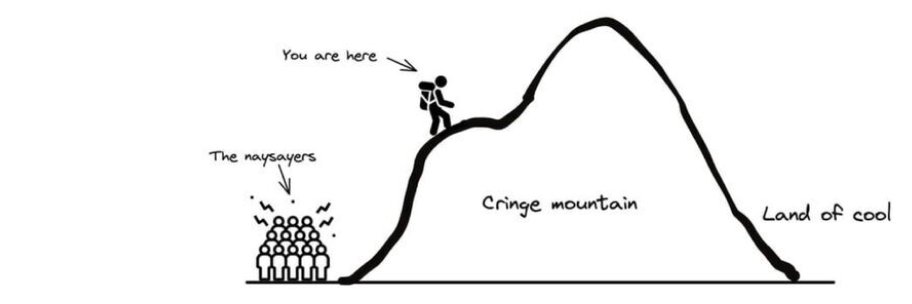
6 words I wish I had learned 6 years ago. Don't be afraid of the circus:
Arjun Mahadevan (Mr. LLC 🇺🇸)297,763 просмотров • 3 лет назад
![The most epic 13 minute AI rant I've heard in 2026 PS: My parent's heard this when I was playing it in the car and thought Jason ✨👾SaaStr.Ai✨ Lemkin went OFF like Stephen A Smith does on first take PPS: Full transcript below [17:00] Harry Stebbings: I I just wanted to ask Jason, if the people that we want are fundamentally different, the developers that we used to hire, we don't because AI writes the code for us. The marketers we don't want, the sales people we don't want—who who do we want genuinely? Like what is the attractive profile? Because your Anthropic’s and your OpenAIs are hiring, so so what are the people that we want in the companies of the future? [17:18] Jason Lemkin: Look, I know it sounds trite, but but the answer is simple. It's just the expression each year changes. We want folks that are genuinely AI fluent. It's pretty simple. Now you know, maybe last year we called them prompt engineers, right? That used to be a job. I don't know if you remember that actually used to be the hottest job on planet earth. Now no one needs a prompt engineer because it's pretty easy to prompt all these tools. That job died. Okay. Um and now we need go-to-market engineers. Um I think that job's going to die. We need—everyone needs so many forward deployed engineers. Like you can't hire enough forward deployed engineers. But uh you know um but Palantir just announced in whatever their their big their big event—they've gotten their deployment times down over 90% with forward deployed engineers. So that may become—so the this wave of disruption for the titles and the specificity, it's also exhaustingly accelerating. But it's really simple. You meet anyone for any role—sales, marketing, engineering, product, QA—they're they're either they're either they can't keep all of the ways they use AI to accelerate their job from spewing out of their mouth, or they're staring at you. It's there's nowhere in the middle. Like, and the person that comes in and says—it's it's it sounds Captain Obvious—but like, you know, you just had the whatever from Lovable, the the marketing head that was super popular on the show, right? She's just spewing AI-native insights into Lovable, right? It's not that complicated. You hire her, Elena, or whatever it is. You just hire her. It doesn't matter whether she's still in college or a junior or a senior or a middler, a left or right. And honestly, if you interview people, I would say of all even of the best startups I've invested in, maybe 30% of the management team meets this standard at best. 30%. Maybe less. And of the interviews I do in general, it's single-digit percents. It's just and in in that sense, it's the same as ever. Like you either lower the bar in hiring or you hire someone that's actually great. And someone that's actually great is so far ahead of you in how to apply to to employ the efficiencies of AI in their role, your jaw falls on the table. The difference is we used to need warm bodies. That's what's changing. We used to need warm bodies to answer the call, to do QA, to do code review, to to get the blue pixel to go from the upper left to the lower right. You laugh, but you need you literally needed to brute force this with humans. With AI, every day that goes by, the AI—you do not need brute force human beings on your team. And that's another reason they're shrinking. Why are all these new companies so efficient? They're just not brute forcing things with humans. They're just not. They're choosing not to. And so these team—all the brute forcers out there—everyone talks about how bloated teams got in 2021. I don't agree with that. I think they got as big as they needed to be when growth was high and you needed humans to do everything. All you look at these teams that that doubled—well if growth continued at 60% like the rate in early 2021 for 5 years or can help me do the math and every single thing a software company did required a human. You were understaffed by your 2021 headcount. You'd be sitting here in 2026. You every office in SoMa would be triple packed and you there wouldn't be enough humans to staff your company. It's just the world changed. [20:33] Harry Stebbings: Jason, you live on the bleeding edge. I think me and Rory see that and I think the world sees that when they hear you every week in terms of how you run SaaS. For all of the CEOs and execs who listen to the show, what would you advise them in terms of determining whether someone is AI fluent when they meet them for jobs, for talent? [20:51] Jason Lemkin: Here's I realized I was just asked this. I just did a review with a super fast startup growing just crossing 100 million and I was asked this question. And one of my favorite executives, I thought his answer was pretty dated and because he gave me an answer that was about 6 months old. The answer 6 months old is: "I look for folks in my team, I look for you know at what tools they play with." Okay, that was a great answer in like summer of 2025. Okay, I tried Lovable last week. Okay, the answer in 2026 is: "What commercial AI tool have you brought into your organization this month?" That's the test. Anyone that is on the bleeding edge that you would want to hire—now there are so many great products in the market. Okay, there is no excuse in any role to have not brought one tool a month into your organization. Okay, there—now there's going to be better and better tools and better and better products as the year goes on. What's the one you did? And you will see folks with their deer in the headlights to this question. What what sales tool? What marketing tool? What product tool? What engineering tool? What did you bring in? Why did you pick it? How does it working? Because if you're at remotely at the cutting edge, you're all over this. You're looking for the next agentic tools that will radically improve how you do business. This is—you think everyone thinks SaaS is at the bleeding edge, right? You know, you know, all we do is we're just looking for the tools and trying them. Okay? Okay, we're one year ahead of everybody else because we did the simplest thing in the world. Like we tried the tools early and we trained them. We trained them for a month. Okay, I'll give you—want hear a horrible example from this week? Super hot AI company valued at 6 billion. Okay, I'm not going to name it. Um, this week yesterday told us we had to quadruple what we spent on their product. Okay, their agent told us, right? And why did this happen? Okay. Well, at this $6 billion company, no one had trained the agent on its pricing properly. No one had tested it. They said, "Well, well, we've been in beta." And we said, "Well, when did the beta launch? A year ago." Okay, these are people asleep at at the wheel. You want somebody who the instant this comes up, they exactly know what the issue is. And "Hey, when I was at Lovable Replit, we trained the agent. This is how we did it. I brought in this tool. I brought in this tool that that Rory invested in last week. It solved all these issues." That's what you want to hear. And if they haven't brought in a tool in the last 30 days, at least deeply evaluated it. I don't really care whether they bought it, but gone so far down the funnel they can tell you—pick whatever tool: Fixie, Regie, GC, AIGC—I don't care how you went through it, you looked at it, you can tell me the eight ways it would improve the productivity of your business and three you didn't. Just don't hire that person because they're going to run your company to the ground. This is the job today. The job today is not to screw around on ChatGPT and to be a prompt engineer. The job today is to bring the best AI and agentic products into your organization and leverage all the hard work that the engineers have done building those products. That's your job. You don't have to screw around. You don't have to be a prompt engineer anymore. You have to be an agent deployment expert. A—this is the new job we're making up today. An Agentic Deployment Expert. That's your job from C-level to junior. Agentic Deployment Expert. Don't hire anybody else. You're going to regret it. They're going to stare at the camera. He's good. Stare at the camera. He's honorable. We could probably just I could slip away, get a coffee, and come back. No. And I I sound exasperated, Rory. And I—but the reason I am is I can just see I can see my best companies doing it. And I can see some companies I've invested in not doing it. And I want to cry. I just want to cry when they have no ADs on their team. I just—like you're flushing your years of your life down the toilet by not approaching your how you're building this company this way. [24:33] Rory: Yes. And at the risk of being positive, it's worth pointing out two things he didn't say. Well, something implicit why he said—Jason didn't do the only hire, you know, he didn't commit the um employment law, I think it's a civil penalty of saying only employ people below X who get the new new thing because he implicitly said anyone can do it provided you're willing to learn. And I think that's the big aha that's one of the positive statements to make here right? Look and I think it applies—I'm always wary of being "Hey, coming across, hey this this is the things that you all have to do." I think it applies to everyone including investors right? I mean I will say I have found that unless you're willing to invest the time learning these tools you actually shouldn't be investing in them. One of my partners Andy had this expression: "You know, if you decide you want to stop learning new things you probably should retire within 6 to 12 months and never write another check again." Maybe that's down to 3 to 6 months at this stage, right? And I think, you know, it's— [25:27] Harry Stebbings: Yeah, I actually I actually had a meeting with mine and Jason's biggest investor the other day and I—pretend he's not here—I said I think he's the most equipped investor for this generation of investing because I don't think anyone quite sits at the bleeding edge like he does on the investor side. [25:42] Harry Stebbings: Why in terms of using the equip stuff? Yeah. Yeah. In terms of using the stuff, understanding understanding bottlenecks, constraints. For sure. [25:51] Jason Lemkin: But can I just add one point? We can just cuz it's so important if it helps people. Okay, we are—and thank you Harry. We're going through these phases. Okay, and when AI started to blow up for real for us, uh call it early 2024, right? Maybe late '23, I wasn't equipped. It was too technical. I wasn't going to go in and figure out—I wasn't smart enough to figure out how to deal with a massively hallucinating LLM API and turn that and turn that into something magical. Kudos to investors and others that that got it in early '23, '22. I mean I remember I—I guess it was maybe SaaStr Annual '23. I was with David Sacks and I did a Q&A and I said, "How you thinking about AI at Craft?" He's like, "Well we're all in. We want 80% of '23 of investments to be AI." I'm like, "Great but like show me the show me the great ones in market." He's like, "They're all prototypes. We're all they're all they're all proof of concepts but we're all in anyway." That's where you kind of had to be in '23 if you weren't investing at like the LLM level. Okay, I wasn't smart enough. Then we went through this weird-ass prompt engineer era where like you you could torture these products to do something good, right? But you had to torture them. You had to like craft these crazy things that made no sense. Now we are in the era where mere ordinarily smart generalists can make these tools do magical things. And literally I go to these meetings and people be like, "I don't know how to like this is so scary. I don't know how to do this." And we show them our backends. Do you know how to do a workflow generator? Do you know how to do a a decision tree? Like we've been building these since software in the '90s. Okay, if you—I can show you all of our agents. The how they work is novel. They do have to be trained. You can't be lazy and have these agents work. But honestly, the the UI, the UX, the way we interact with them, it's just software. And so my point is: Pick yourself off the ground. This is your time now. If you felt lost in AI era, if you felt like you're behind, you don't understand what all these people are saying on X and Twitter and their Claude and and their and talking about all the 4.6 point Nano point and it's over—like you just it's not your world. This is your time. This is your time for the generalist that knows how to use software tools really really well. And I—this is my last point but it's so important. If ever in your recent life—and this is why you could be all you need to be is young at heart to Rory's point—if in the last three to five years you have successfully deployed a piece of enterprise software of any sort you yourself, not some agency you hired, but if you have deployed it, you can deploy any agentic tool. Any. And you can become the hero in your company and you can become the hero in your functional area. But I watch folks—I'm literally helping a company now that they're adding hundreds of sales folks this year with a new pre-IPO COO—he's not hasn't brought in a single tool, totally scared of it. Okay, it's not that hard. Did you use SalesLoft? Did you use Outreach? Did you use HubSpot? Do you know these tools? If you can deploy these tools, you can deploy a world-changing AI agent. And so this is the time for people like the folks that that were shut out of the AI revolution right now. The generalist folks that are not that know how to deploy software that don't even know how to build software. Like vibe coding for me was folks who knew how to build software, but you didn't have to be an engineer. Now, you just need to know how to deploy software to win with AI agents. That's all you need to know. So many people have these skills and they're petrified of AI. "How did you do that? How did you deploy an AI BDR?" Well, we bought a piece of software, we figured out how it worked for a day, we set it up in an afternoon, and then and then we did spend 30 months training it, which you didn't do with this old software because in the old days, we just had to manually upload all the data, right? And there was no training. The the only non-intuitive part is training these things. And it's it's it's just work. So that's why when I see folks on the management team not doing this, there's no excuse. You do not need to be technical to win with AI agents in Q2 of '26. You do not need to be even 1% technical. Not at all. So it's your time. Or you're going to get laid off. Or you're going to get laid off because you're not going to matter.](https://image.24vids.com/tw-2036795243681423518/amplify_video_thumb/2036794127560613888/img/52_cdbzzL6_foTSI.jpg)
The most epic 13 minute AI rant I've heard in 2026 PS: My parent's heard this when I was playing it in the car and thought Jason ✨👾SaaStr.Ai✨ Lemkin went OFF like Stephen A Smith does on first take PPS: Full transcript below [17:00] Harry Stebbings: I I just wanted to ask Jason, if the people that we want are fundamentally different, the developers that we used to hire, we don't because AI writes the code for us. The marketers we don't want, the sales people we don't want—who who do we want genuinely? Like what is the attractive profile? Because your Anthropic’s and your OpenAIs are hiring, so so what are the people that we want in the companies of the future? [17:18] Jason Lemkin: Look, I know it sounds trite, but but the answer is simple. It's just the expression each year changes. We want folks that are genuinely AI fluent. It's pretty simple. Now you know, maybe last year we called them prompt engineers, right? That used to be a job. I don't know if you remember that actually used to be the hottest job on planet earth. Now no one needs a prompt engineer because it's pretty easy to prompt all these tools. That job died. Okay. Um and now we need go-to-market engineers. Um I think that job's going to die. We need—everyone needs so many forward deployed engineers. Like you can't hire enough forward deployed engineers. But uh you know um but Palantir just announced in whatever their their big their big event—they've gotten their deployment times down over 90% with forward deployed engineers. So that may become—so the this wave of disruption for the titles and the specificity, it's also exhaustingly accelerating. But it's really simple. You meet anyone for any role—sales, marketing, engineering, product, QA—they're they're either they're either they can't keep all of the ways they use AI to accelerate their job from spewing out of their mouth, or they're staring at you. It's there's nowhere in the middle. Like, and the person that comes in and says—it's it's it sounds Captain Obvious—but like, you know, you just had the whatever from Lovable, the the marketing head that was super popular on the show, right? She's just spewing AI-native insights into Lovable, right? It's not that complicated. You hire her, Elena, or whatever it is. You just hire her. It doesn't matter whether she's still in college or a junior or a senior or a middler, a left or right. And honestly, if you interview people, I would say of all even of the best startups I've invested in, maybe 30% of the management team meets this standard at best. 30%. Maybe less. And of the interviews I do in general, it's single-digit percents. It's just and in in that sense, it's the same as ever. Like you either lower the bar in hiring or you hire someone that's actually great. And someone that's actually great is so far ahead of you in how to apply to to employ the efficiencies of AI in their role, your jaw falls on the table. The difference is we used to need warm bodies. That's what's changing. We used to need warm bodies to answer the call, to do QA, to do code review, to to get the blue pixel to go from the upper left to the lower right. You laugh, but you need you literally needed to brute force this with humans. With AI, every day that goes by, the AI—you do not need brute force human beings on your team. And that's another reason they're shrinking. Why are all these new companies so efficient? They're just not brute forcing things with humans. They're just not. They're choosing not to. And so these team—all the brute forcers out there—everyone talks about how bloated teams got in 2021. I don't agree with that. I think they got as big as they needed to be when growth was high and you needed humans to do everything. All you look at these teams that that doubled—well if growth continued at 60% like the rate in early 2021 for 5 years or can help me do the math and every single thing a software company did required a human. You were understaffed by your 2021 headcount. You'd be sitting here in 2026. You every office in SoMa would be triple packed and you there wouldn't be enough humans to staff your company. It's just the world changed. [20:33] Harry Stebbings: Jason, you live on the bleeding edge. I think me and Rory see that and I think the world sees that when they hear you every week in terms of how you run SaaS. For all of the CEOs and execs who listen to the show, what would you advise them in terms of determining whether someone is AI fluent when they meet them for jobs, for talent? [20:51] Jason Lemkin: Here's I realized I was just asked this. I just did a review with a super fast startup growing just crossing 100 million and I was asked this question. And one of my favorite executives, I thought his answer was pretty dated and because he gave me an answer that was about 6 months old. The answer 6 months old is: "I look for folks in my team, I look for you know at what tools they play with." Okay, that was a great answer in like summer of 2025. Okay, I tried Lovable last week. Okay, the answer in 2026 is: "What commercial AI tool have you brought into your organization this month?" That's the test. Anyone that is on the bleeding edge that you would want to hire—now there are so many great products in the market. Okay, there is no excuse in any role to have not brought one tool a month into your organization. Okay, there—now there's going to be better and better tools and better and better products as the year goes on. What's the one you did? And you will see folks with their deer in the headlights to this question. What what sales tool? What marketing tool? What product tool? What engineering tool? What did you bring in? Why did you pick it? How does it working? Because if you're at remotely at the cutting edge, you're all over this. You're looking for the next agentic tools that will radically improve how you do business. This is—you think everyone thinks SaaS is at the bleeding edge, right? You know, you know, all we do is we're just looking for the tools and trying them. Okay? Okay, we're one year ahead of everybody else because we did the simplest thing in the world. Like we tried the tools early and we trained them. We trained them for a month. Okay, I'll give you—want hear a horrible example from this week? Super hot AI company valued at 6 billion. Okay, I'm not going to name it. Um, this week yesterday told us we had to quadruple what we spent on their product. Okay, their agent told us, right? And why did this happen? Okay. Well, at this $6 billion company, no one had trained the agent on its pricing properly. No one had tested it. They said, "Well, well, we've been in beta." And we said, "Well, when did the beta launch? A year ago." Okay, these are people asleep at at the wheel. You want somebody who the instant this comes up, they exactly know what the issue is. And "Hey, when I was at Lovable Replit, we trained the agent. This is how we did it. I brought in this tool. I brought in this tool that that Rory invested in last week. It solved all these issues." That's what you want to hear. And if they haven't brought in a tool in the last 30 days, at least deeply evaluated it. I don't really care whether they bought it, but gone so far down the funnel they can tell you—pick whatever tool: Fixie, Regie, GC, AIGC—I don't care how you went through it, you looked at it, you can tell me the eight ways it would improve the productivity of your business and three you didn't. Just don't hire that person because they're going to run your company to the ground. This is the job today. The job today is not to screw around on ChatGPT and to be a prompt engineer. The job today is to bring the best AI and agentic products into your organization and leverage all the hard work that the engineers have done building those products. That's your job. You don't have to screw around. You don't have to be a prompt engineer anymore. You have to be an agent deployment expert. A—this is the new job we're making up today. An Agentic Deployment Expert. That's your job from C-level to junior. Agentic Deployment Expert. Don't hire anybody else. You're going to regret it. They're going to stare at the camera. He's good. Stare at the camera. He's honorable. We could probably just I could slip away, get a coffee, and come back. No. And I I sound exasperated, Rory. And I—but the reason I am is I can just see I can see my best companies doing it. And I can see some companies I've invested in not doing it. And I want to cry. I just want to cry when they have no ADs on their team. I just—like you're flushing your years of your life down the toilet by not approaching your how you're building this company this way. [24:33] Rory: Yes. And at the risk of being positive, it's worth pointing out two things he didn't say. Well, something implicit why he said—Jason didn't do the only hire, you know, he didn't commit the um employment law, I think it's a civil penalty of saying only employ people below X who get the new new thing because he implicitly said anyone can do it provided you're willing to learn. And I think that's the big aha that's one of the positive statements to make here right? Look and I think it applies—I'm always wary of being "Hey, coming across, hey this this is the things that you all have to do." I think it applies to everyone including investors right? I mean I will say I have found that unless you're willing to invest the time learning these tools you actually shouldn't be investing in them. One of my partners Andy had this expression: "You know, if you decide you want to stop learning new things you probably should retire within 6 to 12 months and never write another check again." Maybe that's down to 3 to 6 months at this stage, right? And I think, you know, it's— [25:27] Harry Stebbings: Yeah, I actually I actually had a meeting with mine and Jason's biggest investor the other day and I—pretend he's not here—I said I think he's the most equipped investor for this generation of investing because I don't think anyone quite sits at the bleeding edge like he does on the investor side. [25:42] Harry Stebbings: Why in terms of using the equip stuff? Yeah. Yeah. In terms of using the stuff, understanding understanding bottlenecks, constraints. For sure. [25:51] Jason Lemkin: But can I just add one point? We can just cuz it's so important if it helps people. Okay, we are—and thank you Harry. We're going through these phases. Okay, and when AI started to blow up for real for us, uh call it early 2024, right? Maybe late '23, I wasn't equipped. It was too technical. I wasn't going to go in and figure out—I wasn't smart enough to figure out how to deal with a massively hallucinating LLM API and turn that and turn that into something magical. Kudos to investors and others that that got it in early '23, '22. I mean I remember I—I guess it was maybe SaaStr Annual '23. I was with David Sacks and I did a Q&A and I said, "How you thinking about AI at Craft?" He's like, "Well we're all in. We want 80% of '23 of investments to be AI." I'm like, "Great but like show me the show me the great ones in market." He's like, "They're all prototypes. We're all they're all they're all proof of concepts but we're all in anyway." That's where you kind of had to be in '23 if you weren't investing at like the LLM level. Okay, I wasn't smart enough. Then we went through this weird-ass prompt engineer era where like you you could torture these products to do something good, right? But you had to torture them. You had to like craft these crazy things that made no sense. Now we are in the era where mere ordinarily smart generalists can make these tools do magical things. And literally I go to these meetings and people be like, "I don't know how to like this is so scary. I don't know how to do this." And we show them our backends. Do you know how to do a workflow generator? Do you know how to do a a decision tree? Like we've been building these since software in the '90s. Okay, if you—I can show you all of our agents. The how they work is novel. They do have to be trained. You can't be lazy and have these agents work. But honestly, the the UI, the UX, the way we interact with them, it's just software. And so my point is: Pick yourself off the ground. This is your time now. If you felt lost in AI era, if you felt like you're behind, you don't understand what all these people are saying on X and Twitter and their Claude and and their and talking about all the 4.6 point Nano point and it's over—like you just it's not your world. This is your time. This is your time for the generalist that knows how to use software tools really really well. And I—this is my last point but it's so important. If ever in your recent life—and this is why you could be all you need to be is young at heart to Rory's point—if in the last three to five years you have successfully deployed a piece of enterprise software of any sort you yourself, not some agency you hired, but if you have deployed it, you can deploy any agentic tool. Any. And you can become the hero in your company and you can become the hero in your functional area. But I watch folks—I'm literally helping a company now that they're adding hundreds of sales folks this year with a new pre-IPO COO—he's not hasn't brought in a single tool, totally scared of it. Okay, it's not that hard. Did you use SalesLoft? Did you use Outreach? Did you use HubSpot? Do you know these tools? If you can deploy these tools, you can deploy a world-changing AI agent. And so this is the time for people like the folks that that were shut out of the AI revolution right now. The generalist folks that are not that know how to deploy software that don't even know how to build software. Like vibe coding for me was folks who knew how to build software, but you didn't have to be an engineer. Now, you just need to know how to deploy software to win with AI agents. That's all you need to know. So many people have these skills and they're petrified of AI. "How did you do that? How did you deploy an AI BDR?" Well, we bought a piece of software, we figured out how it worked for a day, we set it up in an afternoon, and then and then we did spend 30 months training it, which you didn't do with this old software because in the old days, we just had to manually upload all the data, right? And there was no training. The the only non-intuitive part is training these things. And it's it's it's just work. So that's why when I see folks on the management team not doing this, there's no excuse. You do not need to be technical to win with AI agents in Q2 of '26. You do not need to be even 1% technical. Not at all. So it's your time. Or you're going to get laid off. Or you're going to get laid off because you're not going to matter.
Arjun Mahadevan (Mr. LLC 🇺🇸)37,901 просмотров • 6 месяцев назад


Today marks the 4th biggest day in doola's history. Introducing doola's Business-in-a-Box™ for E-Commerce. The front end of E-Com is Shopify and Amazon FBA. But the backend... It’s been missing. Fragmented. Duct-taped together with tools that don’t talk to each other.
Arjun Mahadevan (Mr. LLC 🇺🇸)48,506 просмотров • 1 год назад

The Perfect Co-Founder Isn't A Person: Meet the First AI Co-Founder for E-Commerce Founders. E-commerce founders don't fail from lack of ambition. They fail because the back-office slows them down. doola's AI Co-Founder gets you from U.S. LLC formation to first sale faster than anyone else because we're the only integrated platform that handles everything in one place. While others make you juggle 10 tools, we handle it all: LLC formation, bank account setup, bookkeeping, taxes, compliance. Hours of weekly admin cut to minutes. Unlike generic AI, it knows YOUR business: - Helps with LLC formation and getting your EIN - Guides you through U.S. banking and Shopify Payments setup - Tracks state deadlines and reminds you before they're due - Keeps your books clean and organized - Handles business taxes for founders globally One login. One AI Business-in-a-Box™ platform. Zero friction. Today, it guides. Tomorrow, it executes. Eventually, your entire back office runs itself. Stop juggling tools. Start making sales. Get to first sale faster with doola's AI Co-Founder:
Arjun Mahadevan (Mr. LLC 🇺🇸)24,153 просмотров • 1 год назад

A mental model everyone should know: The Regret Minimization Framework. This is how Jeff Bezos used this model to decide to start Amazon: I went to my boss and told him, "I'm going to go do this crazy thing — I'm going to start this company selling books online." This is something I had already been talking to him about in a more general context, and he said, "Let's go on a walk." So we went on a 2-hour walk in Central Park in New York City. The conclusion of that was, he said, "This actually sounds like a really good idea to me, but it sounds like it would be a better idea for somebody who didn't already have a good job!" He convinced me to think about it for 48 hours before making a final decision. So I went away and was trying to find the right framework to make that kind of big decision. I had already talked to my wife about this, and she was 100 percent supportive, saying, "You can count me in – whatever you want to do." It's true, she had married this guy with a stable career and path, but she was 100 percent supportive. So it was really a decision I had to make for myself. The framework I found, which made the decision incredibly easy, was what I called — only a nerd would call — a regret minimization framework. I wanted to project myself forward to age 80 and say, "I'm looking back on my life, I want to have minimized the number of regrets I have." I knew that when I was 80, I was not going to regret having tried this. I was not going to regret participating in this thing called the Internet that I thought was going to be a really big deal. I knew that if I failed, I wouldn't regret that. But I knew the one thing I might regret is not having ever tried. And I knew that would haunt me every day. When I thought about it that way, it was an incredibly easy decision. If you can project yourself to age 80 and think, "What will I think at that time?" it gets you away from some of the daily pieces of confusion. I left this Wall Street firm in the middle of the year, and when you do that, you walk away from your annual bonus. That's the kind of thing that in the short-term can confuse you, but when you think about the long-term, you can really make good life decisions that you won't regret later. *** Summary Ask yourself: in X years, will I regret not doing this? • If Yes → DO IT! • If No → Don't bother. This can apply to any decision: • Should I switch jobs? • Should I start my dream business? • And more... *** Takeaway: Optimize for Asymmetric Upside • Record content (podcast, video) • Write content (book, blog) • Go to a cocktail party • Move to a big city • Invest in startups • Go on first dates • Build in public • Start a biz • Tweet Shoot. Your. Shot. Life is too short not to do so. *** That's a wrap and I hope you found this helpful. If you found value in this post: 1. Follow me Arjun Mahadevan (Mr. LLC 🇺🇸) for more. 2. Re-post this, if you can, to share this mental model with a friend and to remind them to: Shoot. Your. Shot. Life is too short not to do so.
Arjun Mahadevan (Mr. LLC 🇺🇸)25,594 просмотров • 3 лет назад
Больше нет контента для загрузки