Bene Schneiderbauer
@BeneSB_ • 12,521 subscribers
how I develop my teams
Shorts

Videos

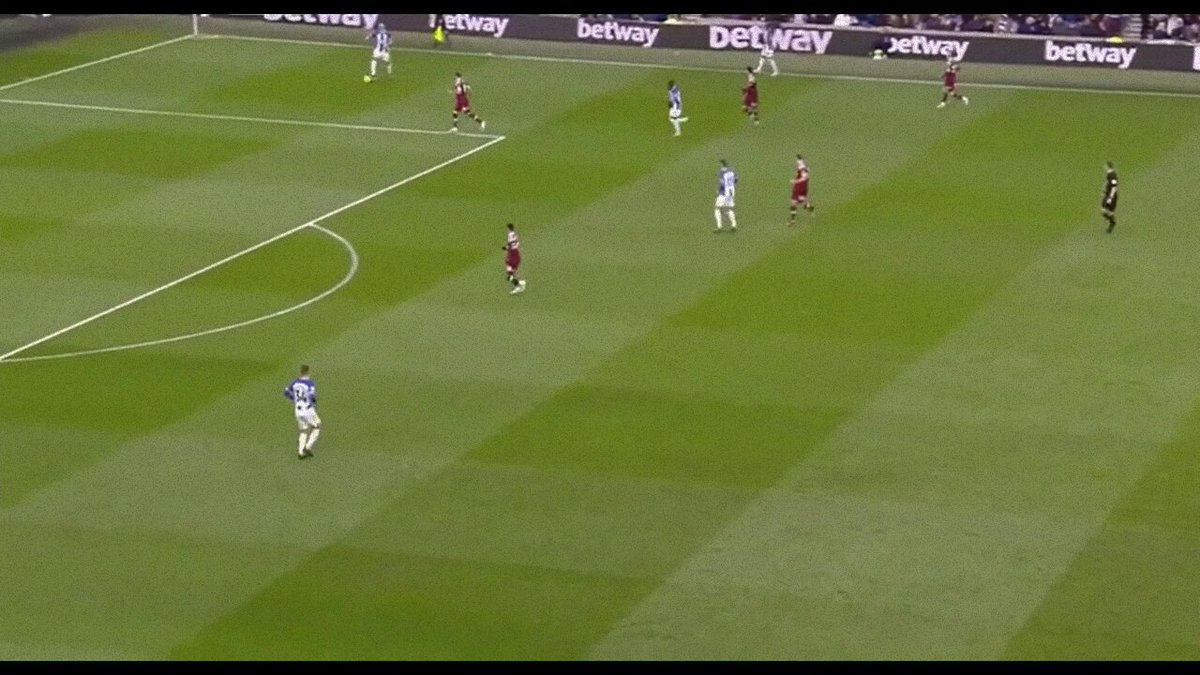
![Football is a game of time and space. And De Zerbi is a master of Timing. “Brighton is a master of passing the ball to the free man, but also knowing when to pass the ball. [..] They know how to move at the right time. [..] They have the right tempo to pass to the man free.” (Guardiola) How does De Zerbi use the Timing aspect? ⬇️](https://image.24vids.com/tw-1755279565843238965/ext_tw_video_thumb/1755270612988174336/pu/img/_CcXZ5whW-iSM_GX.jpg)
Football is a game of time and space. And De Zerbi is a master of Timing. “Brighton is a master of passing the ball to the free man, but also knowing when to pass the ball. [..] They know how to move at the right time. [..] They have the right tempo to pass to the man free.” (Guardiola) How does De Zerbi use the Timing aspect? ⬇️
Bene Schneiderbauer84,918 görüntüleme • 2 yıl önce

How I Build My Teams I always liked the idea of ‘possession football’: - Control the game. - A tool to develop players. - The opponent can’t score without the ball. But I built it the wrong way: “Keep the ball. Find a gap to attack.” This turned into “side-to-side” passing. It was boring and ineffective. \ The idea. So, I flipped the idea: Instead of controlling to attack, we attack to control. Play as vertical as possible (while maintaining control). If not possible, pass back. Avoid sideways passes. For better connections and counter-press, we use a vertical, narrow structure: These simple decisions lead to short, vertical, and diagonal passes. This is what I call 'vertical possession' football. \ Make it work. The idea is simple. The execution is not. Over the years, I’ve worked to close the gap between vision and reality. (watch example below) My goal is to get closer to my vision every day. But as Vince Lombardi said: “Perfection is unattainable, but if we chase perfection we can catch excellence.” Here’s my plan to 'catch excellence': 1. Build it my way. Ignore opinions. Opinions lead to conformity. We reduce our philosophy to its essence—and build from there. Everything else is a distraction. 2. Stick to it. We limit ourselves to core principles, and stick to them. When there’s a problem, we don’t change the idea—we improve its execution. 3. Eliminate waste. Building a style of play is like carving a statue. You start with a block of marble and chip away everything unnecessary. All that’s left is the sculpture. We do the same. We cut every unnecessary touch and step: - Fewer touches mean we need less time and space. We have more space to be creative. - The simpler it gets, the more recognizable the style. 4. Obsess over the players. We don’t adapt to opponents. We focus on our players. That's what matters in the long run. When our ideas work, we can compete against anyone. 5. Develop technical and creative players as a by-product. - Possession: Many touches to refine technique. - Vertical: No “easy” sideways passes. Learn to play in tight spaces. - Control: Avoid hectic football. Control the ball to make deliberate decisions. 6. One Training Structure. We compress our philosophy into one structure. Then, we repeat it every session. We make our style of play a habit. And we develop the tools to execute it. 7. Master a Few Exercises. We repeat a small set of core games over and over. We focus on improving execution, not on new drills. The better we execute, the faster we get to our vision. 8. Bottleneck Coaching. We can’t predict what happens, so we don’t over-plan. Instead, we prepare for what might happen. This liberates our coaching: Rather than sticking to pre-planned coaching points, we solve the most critical issue—the bottleneck. 9. Competition Drives Development. Games are the core of our training. Players compete to win. They force each other to get better and better, session after session. 10. Positive Team Culture. I used to react with anger when things didn’t go right. And yes, it can work in the short term. But to build something great, players must stay on the path for a long time. This is more likely when they enjoy the process. Positive reinforcement is harder to do, but more sustainable. \ What's next? That's the plan. Now, it’s all about execution. I'll keep you updated.
Bene Schneiderbauer59,810 görüntüleme • 1 yıl önce

For 2026, I am going all-in on one idea: 'Unfoulable' Possession Football. I see football development trending in two directions: - Individualize: Break the game into tiny pieces, improve them, then glue them back together later. - "Let them play": Just step back, and you'll naturally get creative and technical players. Both are valid. Both work. But I’m here to demonstrate a Third Way. I believe in football as a team sport first. The idea is simple: If we play better team football, the players have to adapt. It’s a byproduct of the system. In other words: Through our way of playing we force the players to get better. The core of our way of playing is 'Unfoulable Possession'. It’s exactly what it sounds like: attacking in a way where the opponent can't even get close enough to make a foul. It works so well because players learn not to rely on being faster or stronger. It forces them to get creative and technically skilled. It teaches them to play in a way that allows them to compete against stronger opponents: - Have a narrow structure so you have options to solve problems without relying on physicality or speed. - Hide your intentions with feints to put the opponent on the wrong foot - Think ahead to know what to do before you have the ball - To control the ball well so you can keep the ball in tight space. Players learn that as a byproduct of playing based on this idea - without teaching each component in isolation or by just letting them play and hope they’ll develop them. I’ve been refining this methodology for over a decade. My plan for 2026 is to keep going down this path and pass on the lessons to coaches who are interested in this approach. Here’s the plan: 1 - Refine the Unfoulable Methodology every day. Mastery doesn't have a finish line. The better I get, the better I can teach it, and the better players we can develop. 2 - Build in public. Share my progress, experiences, and ideas on X (Twitter). 3 - Daily Insights. I'll extract one daily insight from the process and share it with my newsletter subscribers: 4 - The 100. I've put my methodology together that I teach to a small group of coaches to demonstrate how it works. I’m capping it at 100 people so I can actually help everyone one-on-one. That’s the plan. And while building this, I follow a code. Here are the rules: a - Build it my way. I’m ignoring the noise. If you listen to everyone else’s opinion, you just end up looking like everyone else. We’re sticking to the essence: Unfoulable. Everything else is just a distraction. b - Remove, not Add. Great football emerges not by adding more, but by removing everything unnecessary. We ruthlessly simplify the game. We cut every extra step, touch, or element. Simple isn’t easy. Simple creates more. The less waste, the more capacity for creativity. As Antoine de Saint-Exupéry wrote: “Perfection is achieved, not when there is nothing more to add, but when there is nothing left to take away.” c - Mastery by repeating what you can, and not what you can’t. The common narrative is to push players out of their comfort zone to make them to grow. This approach focuses on what they can’t do. But there are infinite things players can’t do. If you focus on that, you won’t have the time to build up strengths. So, we focus on what they can do. And make that a bit better every day. Repeat this process over and over, and you’ll end up with powerful players. d - Master a few Core Games. We play the same few core games over and over again. This forces us to focus on mastering our way of playing instead of wasting time explaining and adjusting to new activities. / That's the plan. All that’s left is execution. If you’d like to follow along and get a daily insight on how we build our teams, join the newsletter: Bene.
Bene Schneiderbauer10,741 görüntüleme • 7 ay önce
Daha fazla içerik yok.