
BURKOV
@burkov • 59,769 subscribers
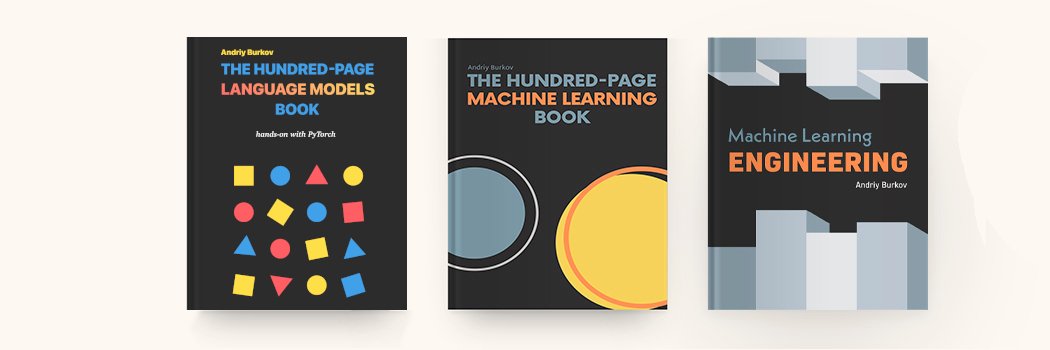
Books: https://t.co/0EmPM3De9B & https://t.co/45NGbbXIzC App: https://t.co/n2jvMtYhVm PhD in AI, author of 📖 The Hundred-Page LMs Book & The Hundred-Page ML Book
Videos


This is what AI is for. Just this use case alone is worth every dollar invested in it.
BURKOV1,074,370 görüntüleme • 2 yıl önce

If this is your so-called bright, AI-driven future, count me out.
BURKOV271,055 görüntüleme • 2 yıl önce


As many of you know, for the last five months I've been working full-time on my next big thing. The challenge was to invent something new and implement it entirely using LLMs for writing code. The first stage of the project is now complete: the web application, which I called is now online and accepting users. You can see a short demo in the video. 100% of the code of the app was generated by LLMs (mostly Gemini and Claude, maybe 10% of ChatGPT). I haven't written a single line of code. The tech stack is TypeScript, React, and Supabase/Postgres which was (and still is) fully new to me. During these five months, I implemented from scratch three versions of the software. It started as a Markdown editor to help me with my book writing and ended up as an AI-assisted reading and self-learning platform. What makes ChapterPal unique is a novel reading experience where the user can use the keyboard keys to reveal or "unreveal" the content and ask questions at any moment. (Mouse wheel, touchpad, smartphone screen, and voice input are also supported.) The LLM receives the entire content of the chapter and tries to answer questions based on the chapter's content, which reduces the chance of hallucination to the minimum. (Though not to 0%, of course, but near it.) This way of content consumption is known as **active reading,** a strategy for engaging with a text to improve comprehension and retention by consciously interacting with the material. The goal is to move beyond passive reading to a deeper understanding of the text and to remember key information more effectively. The registration on ChapterPal is via the waiting list. This is to avoid unexpected load spikes and cloud charges. Usually, it takes less than 24 hours for me to activate a user. Give it a try and let me know what you think. The next stage is finishing the content ingestion pipeline, which will automatically convert high-quality content from sources like HTML, PDF, and LaTeX into Markdown. Obviously, only those pieces whose licenses allow creating copies. ChapterPal has its own collection of textbooks and articles on AI, machine learning, and data science topics. If you don't find a piece of content you would like to read in ChapterPal's collection, a Chrome extension, ChapterPal Uploader, allows you to upload any PDF or HTML page to ChapterPal in one click. The content is only available for you to read to avoid the possibility of copyright infringement. I hope you enjoy using it as much as I enjoy building it.
BURKOV81,258 görüntüleme • 11 ay önce


We've all finished a chapter only to realize we can't remember what we just read. This points to something decades of research has confirmed: passive reading is surprisingly ineffective for learning. # The control effect Markant et al. (2014) stripped away different aspects of self-directed learning to find what actually matters. They have found that even just pressing a button when ready to see the next item—with no control over content or duration—significantly enhanced recognition memory. The researchers suggested this works because controlling when you see new information lets you coordinate stimulus presentation with your own attentional state. When you decide when to advance, your brain is better prepared to encode what comes next. # Self-pacing and strategy Tullis and Benjamin (2011) showed that self-paced learners outperformed those who studied for the same total time but couldn't control their pace. The benefit was strongest for learners who spent more time on difficult material—a "discrepancy reduction" strategy. Self-pacing isn't just about having control; it's about using it to allocate attention where it's needed. # Why agency matters DuBrow et al. (2019) found that choice are inherently rewarding. Items learned when participants could make a choice (even an inconsequential one) were remembered better, and there was a correlation between how much someone's preference increased for chosen items and how much their memory improved. Agency engages value-based brain systems that strengthen consolidation. Ding et al. (2021) extended this to incidental memory—showing that even when participants weren't trying to memorize, having control over the task improved later recognition, particularly for items processed quickly. # ChapterPal I programmed ChapterPal to implement these principles: gradual text reveal controlled by the reader, AI-generated comprehension quizzes inserted during reading, regular guess-this-blurred-term puzzles, and contextual Q&A for engaging with difficult passages. The quizzes and puzzles align with research showing that testing and guessing strengthens retention, while the self-paced reveal directly implements the minimal agency sufficient to enhance memory. # References - Tullis & Benjamin (2011). On the effectiveness of self-paced learning. Journal of Memory and Language. - Markant et al. (2014). Deconstructing the effect of self-directed study on episodic memory. Memory & Cognition. - DuBrow et al. (2019). A common mechanism underlying choice's influence on preference and memory. Psychonomic Bulletin & Review. - Ding et al. (2021). The effect of choice on intentional and incidental memory. Learning & Memory. A demo of puzzles and Q&A's on ChapterPal:
BURKOV39,849 görüntüleme • 10 ay önce


Daha fazla içerik yok.