
Danny (Dennis) Citrinowicz ,داني سيترينوفيتش
@citrinowicz • 82,882 subscribers
Middle East, National Security and intelligence expert خبير لشؤون الشرق الأوسط وإيران Senior Fellow @inss_hebrew Nonresident Fellow @AtlanticCouncil
Videos
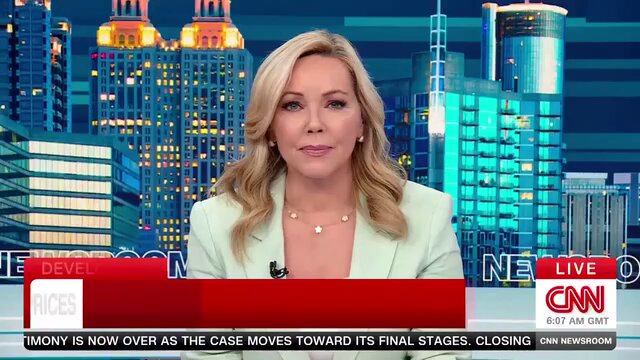
My interview CNN International with Rosemary Church: A. With all due respect to the emerging Iran-Oman agreement, the key question is not what Tehran and Muscat agree on. The real question is whether the Trump administration is prepared to accept the arrangement. B. The Strait of Hormuz is unlikely to fully reopen unless Washington accepts a framework that gives Iran at least some role, and therefore some degree of leverage, over what happens in the Strait. That may be uncomfortable for the United States, but it is increasingly the strategic reality it has to confront. C. If Washington rejects the emerging arrangement, the risk of escalation will rise significantly. Iranian officials have made clear that Tehran will not indefinitely accept a situation in which other Gulf producers continue exporting oil while Iranian exports remain constrained. Iran may be under considerable economic pressure, but that does not mean it will simply absorb that pressure without responding. D. Oil prices are currently benefiting in part from American signals that Washington does not want to return to a major military confrontation. But avoiding war is not a unilateral decision. It takes two sides to prevent escalation. If the United States rejects the diplomatic framework being developed by Oman and Iran, Washington could still find itself drawn back into a confrontation it clearly prefers to avoid. E. That is also why the recent regional diplomatic activity matters, including the visits by Pakistan's military leadership and the Qatari prime minister. Regional actors understand how unstable the current situation is and are trying to bridge the gap between Washington and Tehran before the escalation cycle resumes. F. On the nuclear issue, Iran is using the return of international inspectors as leverage against both Washington and Israel. For that reason, I would be very surprised to see meaningful IAEA access restored before Tehran receives significant sanctions relief from the United States. G. Until then, the United States and Israel will have to rely heavily on their own intelligence capabilities to understand what is happening at Iran's nuclear sites. And that matters because there are indications of activity at some of these locations, including developments around the so-called Pickaxe Mountain site. The longer inspectors remain outside Iran, the greater the uncertainty surrounding the actual status and direction of the Iranian nuclear program. #IranWar
Danny (Dennis) Citrinowicz ,داني سيترينوفيتش14,046 görüntüleme • 2 gün önce

My interview CNN International Polo Sandoval: The real question is not what the administration is trying to achieve militarily. That part is relatively clear: Washington is attempting to weaken Iran's ability to control the Strait of Hormuz, and strikes on Bandar Abbas and related military infrastructure contribute to that objective. The tactical gains should not be dismissed. The real uncertainty lies in their strategic value. Iran still retains multiple escalation options. It can intensify attacks against Gulf states, target undersea communications cables that pass through the region, strike critical civilian infrastructure, and encourage the Houthis to expand operations against Gulf shipping and energy assets. In other words, if Washington raises the stakes, Tehran still has several ways to respond. Any realistic strategy should begin with one core assumption: Iran is unlikely to capitulate. If that assumption is correct, the United States will eventually face a strategic choice. It can continue escalating in pursuit of objectives that may require a much larger military commitment, or it can accept a negotiated outcome that reflects at least some of Tehran's terms. The broader strategic question therefore remains unanswered: How does the administration envision this ending? Thirty-nine days of military operations did not force Iran to surrender or fundamentally alter its decision-making. There is little evidence that a limited extension of the current campaign would produce a different result. Before expanding the conflict further, Washington needs to define a realistic political end state rather than relying on military pressure alone. #IranWar
Danny (Dennis) Citrinowicz ,داني سيترينوفيتش91,014 görüntüleme • 1 ay önce

My interview CNN International #newsroom: A. The current situation in the Gulf is inherently unstable. Even after CENTCOM’s operational successes and the administration’s efforts to move additional oil through the region, the current equilibrium can be sustained for long. President Trump clearly has little interest in returning to a large-scale war with Iran. But Tehran has already made its position clear: it will not accept a situation in which other regional producers can export their oil freely while Iranian exports remain constrained. That makes some form of Iranian escalation increasingly likely. Timing matters as well. Tehran may calculate that President Trump will become increasingly sensitive to oil prices as the U.S. midterm elections approach. Iranian leaders could therefore conclude that they have leverage precisely because the White House wants to avoid another energy shock and another major Middle Eastern conflict. In any case Iran won't capitulate. B. This also highlights an important gap between Washington and Jerusalem. Israel fundamentally opposes an agreement that would stabilize and strengthen the current Iranian regime, because Israel seek to topple this regime. Israeli Defense Minister has publicly spoken about returning to military action. The logic behind this approach is that sustained strikes against Iran’s critical infrastructure could eventually turn Iran into a failed state with far less ability to threaten Israel. The Trump administration appears to see the problem differently. Despite the president’s aggressive rhetoric, his behavior still suggests that he would prefer a diplomatic solution that avoids another prolonged war. In other words, Washington and Jerusalem increasingly disagree over the desired end state and how to achieve it. C. And Iran is not the only issue where these differences are emerging. There are also meaningful gaps between Israel and the United States over Gaza, Lebanon, Syria, and increasingly Turkey. These disagreements are compounded by President Trump’s reluctance, at least so far, to publicly embrace Prime Minister Netanyahu ahead of Israel’s elections. It is therefore reasonable to assume that considerable maneuvering is taking place behind the scenes. Israel’s immediate objective is to prevent Washington from returning to an agreement with Tehran. From Jerusalem’s perspective, once an American president signs a new agreement with Iran, it becomes much more difficult for an Israeli government to challenge it—particularly because there is no guarantee that Trump, or any future U.S. president, would be willing to return to another major military campaign against Iran. That is the central strategic divergence: Israel increasingly sees renewed military pressure as necessary to fundamentally weaken Iran, while Trump still appears to be searching for an off-ramp that prevents the United States from being pulled back into a major war. #iran
Danny (Dennis) Citrinowicz ,داني سيترينوفيتش17,204 görüntüleme • 6 gün önce

Told Becky Anderson: Reaching a deal with Iran’s current leadership will be extremely difficult. The targeted killings of senior figures such as Khamenei and Larijani have significantly radicalized the Iranian system, strengthening hardline elements and narrowing the space for pragmatic engagement. As a result, the likelihood of meaningful diplomacy in the near term is low — while escalation dynamics continue to intensify. Israel, for its part, is likely to continue its campaign, further reinforcing a cycle of action and reaction with limited off-ramps until president Trump will decide to stop.
Danny (Dennis) Citrinowicz ,داني سيترينوفيتش177,265 görüntüleme • 5 ay önce

My interview #newsroom CNN: A. Trump’s threats against #Oman reflect a deeper U.S. concern over the emerging regional order around the Strait of Hormuz. Washington fears that an Omani-Iranian arrangement could effectively legitimize a significant Iranian role in managing the Strait, while broader diplomatic pressure from Gulf staes could increase pressure on the United States to ease or remove its naval blockade. B. Trump’s approach toward Oman risks further eroding U.S. credibility among Gulf partners. For Gulf states, the question is increasingly whether Washington remains a predictable security guarantor or whether even long-standing partners and mediators can suddenly become targets of American coercion. Those doubts were already intensified by the war with Iran, and threats against Oman could reinforce the perception that U.S. commitments and relationships are increasingly transactional and unpredictable C. Economic pressure alone is unlikely to produce Iranian capitulation. Tehran appears to believe that it can absorb substantial economic pain as long as it can impose significant costs on the United States and its regional partners in return. That creates a dangerous asymmetry: Washington may view sanctions and military pressure as tools for forcing concessions, while Tehran may view escalation itself as a source of leverage. If Iranian leaders ultimately conclude that they face a choice between strategic capitulation and another round of escalation, they are more likely to escalate than surrende, particularly as control over Hormuz gives them an unusually powerful instrument for imposing economic costs beyond Iran itself. D. On Gaza, the core obstacle is that the political incentives of Netanyahu and Hamas remain fundamentally incompatible. Netanyahu has little domestic political room to accept an arrangement that could be portrayed as leaving Hamas militarily intact, while Hamas has little incentive to accept genuine and irreversible disarmament. Its preference would be to preserve enough military capability, or at least the ability to regenerate it, to remain a relevant actor in Gaza. As a result, the most consequential decisions over Gaza’s political and security architecture may ultimately be postponed until after Israel’s elections, when the Israeli government has greater political latitude to make compromises that would currently carry prohibitive domestic costs. #IranWar
Danny (Dennis) Citrinowicz ,داني سيترينوفيتش15,646 görüntüleme • 11 gün önce

مقابلة معي العربية Rasha Nabil حول المقال الذي كتبته Haaretz.com أن إسرائيل لن تتمكن من الاندماج في الشرق الأوسط من دون إحراز تقدم ملموس في القضية الفلسطينية. شددتُ في المقابلة على أنه ينبغي أن نتوقع أنه حتى في حال حدوث تغيير في الحكم في إسرائيل، فمن المرجح ألا نشهد تغييرًا في السياسة تجاه الفلسطينيين. لكنني حرصتُ في المقال على التأكيد أن إسرائيل لا يمكنها أن تتوقع المشاركة في مشاريع إقليمية والمضي قدمًا في مسار التطبيع، وفي الوقت نفسه الاستمرار في سياستها الحالية تجاه الفلسطينيين. كما أن تغيير النظام في إيران لن يحل لإسرائيل جميع مشاكلها في الشرق الأوسط. والمشكلة هي أن الجمهور في إسرائيل لا يدرك حجم الضرر الدولي الناجم عن استمرار السياسة الحالية.
Danny (Dennis) Citrinowicz ,داني سيترينوفيتش16,037 görüntüleme • 17 gün önce

My interview CNN International Becky Anderson Ahead of Netanyahu’s Meeting with President Trump A. Pm Netanyahu will likely try to convince President Trump that there is little value in negotiations with Iran as long as Tehran continues to advance both its nuclear capabilities and its conventional military posture. He would also welcome an expansion of the campaign against Iran. B. Netanyahu’s challenge, however, is that there are influential voices inside the Trump administration , including Vice President J.D. Vance and others, who are concerned that Netanyahu could once again pull the United States into an open-ended and potentially inconclusive conflict with Iran. C. Netanyahu will also seek to leverage Trump’s political support at a time when his standing in Israeli public opinion remains complicated. He will likely argue against Israeli withdrawals from Syria or Lebanon, warning that such moves could undermine his security credentials ahead of Israel’s next elections. D. It is important to remember that none of the leading figures who could potentially replace Netanyahu are currently proposing a dramatic shift in Israel’s foreign and security policy. The recent comments by Naftali Bennet regarding toppling the Iranian regime are another example of this broader consensus. E. If there is a political transition in Israel, its most significant impact is likely to be on domestic issues, such as the relationship between the state and the ultra-Orthodox community, rather than on major foreign policy questions. Expectations of a fundamentally different Israeli approach under a future government should therefore be tempered. F. Gulf states do not trust Iran, but they also understand that pushing Tehran into a corner carries significant risks. Their highest priority is restoring a sense of security in the Gulf in order to rebuild their economies and maintain stability, even if that requires preserving working relationships with Iran. G. This does not mean that Gulf countries are abandoning their desire to deepen ties with Israel. Rather, it reflects a broader reality: their foreign policy approach is not binary. They are willing to pursue relationships with multiple actors simultaneously based on their national interests, security needs, and economic priorities. #IranWar
Danny (Dennis) Citrinowicz ,داني سيترينوفيتش26,946 görüntüleme • 1 ay önce

My interview NewsNation Ahead of Prime Ministet Netanyahu's Meeting with President Trump: A. Netanyahu arrives in Washington with two central objectives. Domestically, he needs to preserve Trump's political backing amid growing political challenges at home. Strategically, he is expected to argue that Iran has continued rebuilding key military capabilities and will likely present intelligence intended to convince President Trump that any renewed nuclear agreement would ultimately fail to prevent Iran from becoming a long-term strategic threat. B. At the same time, quiet diplomacy, primarily through Omani mediation, continues in an effort to find a formula for reducing tensions around the Strait of Hormuz. The current ceasefire suggests that neither Washington nor Tehran has abandoned diplomacy. Despite President Trump's tough rhetoric, both sides still appear interested in keeping the door open for a negotiated settlement. C. One of the most important strategic developments is inside Iran itself. Ali Khamenei had long resisted crossing the threshold to nuclear weapons, preferring to preserve strategic ambiguity. Today's leadership, led by Mojtaba Khamenei and senior Islamic Revolutionary Guard Corps figures, is increasingly shaped by the lesson they draw from North Korea: only a nuclear deterrent can guarantee regime survival. Although Operation Midnight Hammer significantly damaged Iran's nuclear infrastructure, Tehran still retains the scientific expertise and industrial foundation to move toward a weapon if it chooses. Focusing exclusively on Hormuz risks overlooking the more consequential nuclear challenge. D. The maritime situation remains deeply concerning. With shipping through both the Strait of Hormuz and Bab el-Mandeb severely disrupted, the consequences extend far beyond the Middle East, affecting global energy markets and the international economy. Geography cannot be changed, and the Houthis appear determined to break the Saudi-led pressure campaign. Supporting regional partners in restoring maritime security is therefore essential, not only for regional stability but also for protecting the global economy and limiting Iran's ability to leverage energy markets as a strategic tool. E. Regardless of whether the recent attack in Germany is linked to Iran, it highlights a broader security concern. The greatest terrorist threat following Ali Khamenei's death may not come from organized networks but from self-radicalized lone actors inspired by Iranian propaganda and motivated by revenge. That possibility deserves close attention from Western security services. #IranWar
Danny (Dennis) Citrinowicz ,داني سيترينوفيتش22,522 görüntüleme • 1 ay önce

My interview CNN International with Becky Anderson regarding the latest escalation between the United States: First, if President Trump is determined to secure freedom of navigation through the Strait of Hormuz by force, he will eventually confront a fundamental reality: Iran is highly unlikely to relinquish control over the strait voluntarily. Any attempt to fundamentally alter the military balance would likely require operations against Iran's positions along its side of the strait , a far more demanding undertaking than punitive strikes or limited naval operations. Second, the current exchange still appears to be operating within relatively limited boundaries. However, the longer the cycle of retaliation continues, the greater the risk of miscalculation and unintended escalation, even if neither Washington nor Tehran is actively seeking another large-scale war. Third, President Trump's proposal that commercial shipping pay for U.S. protection in the Strait of Hormuz raises difficult questions. Washington has long criticized any attempt by Iran to impose costs or conditions on international navigation. Asking commercial vessels to pay for passage risks creating an uncomfortable contradiction with America's longstanding position in defense of freedom of navigation. Fourth, the Houthi front may prove just as consequential as Hormuz itself. Reports that the Houthis have sought to expand their air bridge with Iran, followed by Saudi military action, increase the likelihood of Houthi retaliation. If that retaliation extends to disrupting traffic through the Bab el-Mandeb Strait, the consequences for global energy markets could rival developments in Hormuz. Such a scenario would directly serve Iran's broader objective of increasing pressure on global energy supplies and raising oil prices. Finally, Israel is unlikely to view the collapse of U.S.-Iran diplomacy negatively. At the same time, the current dynamics suggest that neither Washington nor Tehran has a strong interest in bringing Israel directly into the confrontation, since doing so would significantly increase the risk of a broader regional war. #IranWar
Danny (Dennis) Citrinowicz ,داني سيترينوفيتش29,074 görüntüleme • 1 ay önce

My interview CNN International Fareed Zakaria on the difficult choices facing the U.S. administration over the crisis in the Strait of Hormuz, with no good options on the table, as well as the implications of the emerging alliance between Turkey, Saudi Arabia, and Pakistan, and what these developments could mean for Israel. #IranWar #ksa #turkey #pakistan
Danny (Dennis) Citrinowicz ,داني سيترينوفيتش13,370 görüntüleme • 20 gün önce

My interview CNN International: From an Israeli perspective, the proposed U.S.–Iran agreement is seen as highly problematic. Critics in Israel argue that it could strengthen the Iranian regime, precisely the outcome Israel has long sought to prevent, while offering only uncertain or limited constraints on Iran’s nuclear program. There are also concerns that any final deal will not include meaningful restrictions on Iran’s missile program or its network of regional proxies, or that such provisions would be weak and difficult to enforce . At the same time, Israel’s ability to directly challenge or reshape the position of the U.S. administration is viewed as limited. As a result, Israeli policymakers are expected to act cautiously, particularly so as not to undermine the U.S. president’s efforts to reach an agreement. Strategically, Israel has tried to separate the Lebanese and Iranian fronts in order to manage regional escalation more effectively. However, this approach has had limited success so far. Overall, Israel’s capacity to influence the direction of U.S. policy on this issue is perceived as more constrained than in the past, given the dependence in the administration and President Trump. #IranWar
Danny (Dennis) Citrinowicz ,داني سيترينوفيتش33,509 görüntüleme • 2 ay önce

Told Isa Soares CNN International: Nobody should be surprised by the speed of Iran’s military recovery. We already saw indications of this during the 12-day conflict. Iran has the motivation, the technical knowledge, and, importantly, many of its strategic facilities are underground and heavily fortified. Even if the current campaign were to end today, Iran would eventually rebuild its capabilities. And if fighting resumes, Iran would still retain the ability to strike Israel and the Gulf states. The gaps between Iran and the United States remain significant, but mediators are working intensively behind the scenes because both sides understand they want to avoid another war. President Trump still wants to exhaust the diplomatic option, but we are entering a critical moment. From his perspective, if no agreement is reached, he may feel he has little choice but to return to military action. Israel is extremely concerned about the possibility of a U.S.-Iran agreement. Israel would prefer to maintain or renew military pressure, and it is clear that Prime Minister Netanyahu and President Trump are not fully aligned on the current approach while the White House is pursuing diplomacy. For Netanyahu, almost any agreement is problematic because it could limit Israel’s freedom of action not only now, but also in the future. That is why he is trying, as much as possible, to prevent such a deal from materializing. #iran
Danny (Dennis) Citrinowicz ,داني سيترينوفيتش39,762 görüntüleme • 3 ay önce

My interview CNN International: A. The negotiations were never expected to be easy. However, at a fundamental level, both sides have an interest in reaching some form of agreement. The mediators will have to work very hard to bridge the significant gaps that remain. Still, as President Trump himself acknowledged, diplomacy remains the best available option for reopening the Strait of Hormuz and addressing concerns regarding Iran's enriched uranium stockpile. B. The Lebanese issue remains a major potential spoiler. Israel, which is not a party to any potential agreement, is not necessarily enthusiastic about a deal that could undermine its broader strategy of maintaining maximum pressure on Iran. While Israel continues to conduct operations in Lebanon to address legitimate security concerns, its long-term strategy is not entirely clear. From Israel's perspective, and with encouragement from Washington, the most constructive path forward would be to accelerate negotiations with the Lebanese government, withdraw where possible, and allow the Lebanese Armed Forces to assume control over the relevant areas in accordance with existing understandings. C. Iran may be prepared to offer limited concessions on its nuclear program in exchange for sanctions relief, particularly given the severe economic damage it has suffered following the war. However, if policymakers in Washington believe they can leverage Iran's economic weakness to secure major concessions on its regional power projection, support for proxy groups, or far-reaching additional nuclear restrictions, they are likely to be disappointed. These issues are deeply rooted in the ideological foundations of the Islamic Republic and are viewed by the leadership as core national security interests rather than negotiable bargaining chips.
Danny (Dennis) Citrinowicz ,داني سيترينوفيتش27,376 görüntüleme • 2 ay önce


למרות המהלכים הצבאיים האגרסיביים של ארצות הברית נגד איראן בימים האחרונים והתגובה האיראנית, שני הצדדים עדיין מקפידים במידה רבה על "חוקי המשחק", מתוך רצון שלא לנתק את הערוץ המדיני לחלוטין. בשלב זה נראה כי אף שהעימות הצבאי מתרחב, הוא עדיין מנוהל באופן שמותיר פתח לחזרה למשא ומתן. כל עוד מוקד החיכוך יישאר סביב מיצרי הורמוז ולא יתרחב לזירות נוספות, הסבירות למעורבות ישראלית ישירה נותרת נמוכה יחסית. ראיון ברוך קרא חדשות 13
Danny (Dennis) Citrinowicz ,داني سيترينوفيتش19,559 görüntüleme • 1 ay önce

My interview Sky News Yalda Hakim: A. The growing tensions between Ukraine and Iran are another reminder that today's conflicts are deeply interconnected. Iran's military support for Russia has made it a direct stakeholder in the war in Ukraine, while Ukraine's reported actions against the emerging logistical corridor across the Caspian Sea demonstrate that Kyiv is increasingly willing to challenge Iran directly. Although the foreign ministers recently held talks, the fact that each side issued very different readouts suggests that the diplomatic gap remains wide. If Tehran decides it must restore deterrence, another round of escalation cannot be ruled out. B. Prime Minister Netanyahu arrived in Washington politically weaker than at any point in recent years. Beyond his domestic challenges, he faces growing skepticism within President Trump's inner circle. Senior figures, including Vice President J.D. Vance, reportedly worry that Netanyahu could once again draw the United States into a broader confrontation with Iran. That concern is reinforced by a broader perception in Washington among lawmakers and parts of the public that Israel pushed the United States into a costly campaign that ultimately failed to achieve its central strategic objective: changing the Iranian regime. C. Netanyahu also needs Trump's political backing. Netanyahu also depends on Trump because he is arguably the last major world leader on whom the Israeli prime minister can truly rely. Trump is well aware of that political reality and is likely to use it as leverage in managing the relationship and advancing his own priorities. With polls suggesting his political future is increasingly uncertain, he has a strong incentive to demonstrate a close relationship with the White House while arguing against any Israeli withdrawal from Lebanon or Syria and keeping the option of renewed military action against Iran on the table. From his perspective, these issues are closely tied to his domestic political standing. That is why it was hardly surprising that he portrayed the meeting as highly successful, despite the absence of a separate one-on-one meeting or any major public announcements afterward. Still, based on past experience, we cannot rule out the possibility that Netanyahu was able to influence Trump's thinking on Iran. It remains entirely possible that the president could ultimately decide to expand the military campaign if he concludes that diplomacy has reached its limits. D. At the same time, rising tensions in the West Bank underscore a broader strategic reality: Israel's security challenges will not disappear even if the Iranian regime eventually falls. Escalating violence between Israeli settlers and Palestinians points to a deteriorating situation that the next Israeli government will have to confront. It will eventually need to make fundamental decisions about the future of the West Bank—whether that means pursuing a two-state framework, moving toward annexation, or accepting the implications of a one-state reality. Continuing to postpone those decisions carries significant costs, including making normalization with Saudi Arabia increasingly difficult to achieve. #IranWar
Danny (Dennis) Citrinowicz ,داني سيترينوفيتش12,478 görüntüleme • 1 ay önce

My full interview Jim Sciutto CNN International: Key Takeaways: Extending the ceasefire is not a viable long-term solution. President Trump’s threats are unlikely to compel the Iranian leadership to capitulate, and Tehran is more likely to respond to sustained pressure, such as a maritime blockade rather than to concede to U.S. negotiating demands. Over time, in order to reach a durable agreement, the administration will likely have to make concessions of its own. Absent such flexibility, escalation becomes increasingly likely. This could include significant disruptions to maritime traffic, up to and including attempts to close strategic chokepoints such as the Bab al-Mandab Strait.
Danny (Dennis) Citrinowicz ,داني سيترينوفيتش37,575 görüntüleme • 4 ay önce

Mu interview BBC News (World) regarding the situation at Hormuz Straits: The renewed tensions in the Strait of Hormuz should not come as a surprise. While President Trump argues that the United States emerged victorious from the conflict, Tehran appears to believe that it also achieved its core strategic objectives. From Iran's perspective, maintaining leverage in the Strait of Hormuz is essential. Iranian leaders understand that U.S. sanctions can be imposed or lifted at Washington's discretion, making control over or the ability to threaten maritime traffic one of the few enduring sources of strategic leverage available to Tehran. The current situation also reflects the limitations of a hastily negotiated understanding that, did not fully address two of the most significant potential spoilers: Lebanon and the Strait of Hormuz. The fundamental question is what the administration's long-term strategy toward Iran actually is. Washington may ultimately face difficult tradeoffs between pursuing a durable diplomatic agreement and seeking to fundamentally alter the balance of power in the Strait of Hormuz. If the objective is merely to conduct limited punitive strikes, they may have only a temporary effect on Iranian behavior while increasing the risk of undermining diplomacy. If, however, the objective is to fundamentally change the strategic reality in the Strait, that would likely require a far larger and more sustained military commitment, with significant costs and risks. The administration will therefore need to determine which objective it prioritizes most, because these different approaches may not be fully compatible. #IranWar
Danny (Dennis) Citrinowicz ,داني سيترينوفيتش17,349 görüntüleme • 1 ay önce

My interview CNN International Despite the significant damage inflicted on Iran's nuclear program, it has not been eliminated. Tehran retains important elements of its nuclear capability, and the current absence of IAEA inspectors combined with satellite imagery that appears to show renewed activity at sites such as Mount the so-called "Pickaxe Mountain" complex, is particularly concerning. Reestablishing international inspections and placing effective constraints on Iran's nuclear program should therefore remain a priority, even if doing so has the unintended effect of strengthening the regime politically. Preventing nuclear proliferation must take precedence over pursuing regime weakness for its own sake. Regarding the Strait of Hormuz, Tehran may be prepared to preserve freedom of navigation, but only if Washington refrains from challenging what Iran considers its authority over maritime traffic through the strait, particularly by insisting that tankers use the channel adjacent to Oman rather than the route Iran seeks to regulate. Foreign Minister Abbas Araghchi's visit to Oman today appears aimed at reaching understandings on the future management of maritime traffic, thereby reducing the likelihood of direct U.S. involvement in this dispute. More broadly, it remains unclear whether the Trump administration has settled on a coherent strategy toward Iran. Washington is approaching a critical decision point: it can continue to prioritize the Hormuz dispute, risking that maritime disagreements overshadow and potentially derail nuclear diplomacy, or it can leave the management of Hormuz primarily to the regional states and focus its diplomatic efforts on reaching a nuclear agreement with Tehran. Trying to pursue both objectives simultaneously may prove increasingly difficult. President Trump has previously warned that if he were harmed, he had already left instructions for overwhelming retaliation against Iran. His latest statement therefore represents continuity rather than a major policy shift. Likewise, there is little reason to doubt that Iran continues to seek revenge for the death of Supreme Leader Ali Khamenei; this requires no classified intelligence to assess. Israel is likely to use these threats as further evidence in arguing to the Trump administration that any agreement with the Islamic Republic is ultimately destined to fail. At the same time, many policymakers in Washington believe that Israel will do everything possible to prevent a U.S.-Iran agreement from materializing, a perception that continues to shape the debate inside the administration. #iran
Danny (Dennis) Citrinowicz ,داني سيترينوفيتش16,171 görüntüleme • 1 ay önce

Told Christina Macfarlane CNN International: A. The tensions we've seen over the last few hours are driven not only by the deep mistrust between the parties. The fact that the negotiations are not being conducted directly means that each side is trying to maximize its public achievements while inflating the costs it is supposedly being asked to pay. B. At the end of the day, the parties are closer to an agreement than ever before because neither side particularly likes its alternatives. Despite the public drama and the tough rhetoric, there is a strong incentive to reach a deal. That said, it is important to acknowledge that such an agreement would effectively strengthen the very regime that both Israel and the United States were seeking to weaken only a few months ago . C. Reaching a comprehensive nuclear agreement within 60 days will be an extremely difficult task. We should also keep in mind that as time passes, the United States may lose some of its leverage over Iran. As a result, even if the parties reach a framework understanding in the coming weeks, there is no guarantee they will be able to translate it into a final, detailed agreement. #iran
Danny (Dennis) Citrinowicz ,داني سيترينوفيتش19,372 görüntüleme • 2 ay önce