
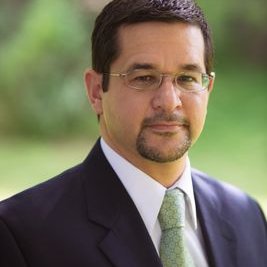
Doug Lewin
@douglewinenergy • 21,893 subscribers
Leading energy strategy and market development in Texas @Google. Powering breakthroughs and innovation at scale. Opinions stated here are my own. RT≠endorse
Videos

Something remarkable just happened in Pakistan. In only 8 months, citizens built the equivalent of half the country’s national electric grid, without waiting for government or utilities. How? ☀️ Cheap solar panels ☀️ TikTok tutorials showing how to install them ☀️ Farmers leading the way, swapping diesel pumps for solar The results: ✅ Diesel sales dropped 35% in one year ✅ Families slashed costs and gained energy independence ✅ National demand on the grid actually declined because of so much distributed generation This isn’t just about Pakistan. It’s a glimpse of how fast the world can shift when technology gets cheap enough and people take energy into their own hands. These are the kinds of numbers that change the world. 🎧 Full Energy Capital Podcast episode with Bill McKibben here: #EnergyTransition #Solar #Pakistan #EnergyCapitalPodcast
Doug Lewin783,390 views • 1 year ago

One acre of corn for ethanol = 25,000 miles in a Ford F-150. One acre of solar = 700,000 miles in an F-150 Lightning. That’s the scale of possibility Bill McKibben laid out on the Energy Capital Podcast. And here’s the kicker: with agrovoltaics, farmers can still use that land. Grazing, shade for certain crops, pollinator habitat, even just as fallow land. French wine growers reported 20-60% higher yields with shading from solar panels. Instead of displacing agriculture, it supercharges it. 📊 Corn ethanol is a rounding error compared to what solar can deliver and uses far more land. 📈 Solar turns land into a true energy cash crop, while preserving ag value. ⚡ The opportunity is sitting in front of us, if we choose to take it. The question isn’t whether solar works. The question is how fast we’ll unlock its potential here in Texas and across the U.S. 🎧 Full episode: #EnergyCapitalPodcast #SolarEnergy #TexasEnergy #CleanEnergy #EnergyPolicy
Doug Lewin137,708 views • 1 year ago

China installed 400 GW of new power last year, over 350 gigawatts of solar and wind. The U.S.? Just 63. We talk a big game about leading on AI, chips, and reshoring manufacturing. But where’s the electricity going to come from? Some say natural gas can replace renewables. But the largest turbine manufacturer, GE Vernova, is already sold out until after Trump's term. Meanwhile: 📌 China = 400 GW 📌 U.S. = 60 GW 📌 GE Vernova's global gas turbine output = 20 GW… for the entire globe! If we gut clean energy incentives now, we don’t just fall behind, we're cooked. You can't grow your economy and run AI data centers on backorders and broken promises. We’re demanding more energy than ever. And we’re about to constrain the resources that are actually delivering it. Full Video:
Doug Lewin75,464 views • 1 year ago

I’ve watched energy hearings in Texas for over 20 years. The hearing on SB 819 was unlike anything I’ve ever seen for an energy bill. 50+ Texans spoke up to oppose the bill, including this rancher from Armstrong County: "Y'all don't realize what small counties need." 1/5
Doug Lewin61,295 views • 1 year ago

HB 3356 and SB 715 will raise power bills and lower reliability, all while pretending to be a fix. This proposal is expensive, inefficient & would lead to retirements of existing generation. The bill acknowledges "net increased cost to consumers." Who would pay for that? #txlege
Doug Lewin39,536 views • 1 year ago

Recently, Congressman Chip Roy compared renewable energy jobs to jobs in the drug trade and Alex Epstein called clean energy jobs “fentanyl jobs.” Yes, really. They should apologize. Who works in the renewable energy industry? 📌 Millions of Americans 📌 Roughly 60,000 Texans 📌 And thousands of Texas veterans These are people working long hours to power our grid and increase reliability. ERCOT’s own numbers show solar and storage reduced emergency risk by 95% in one year. So let’s be clear: These are hard working Americans providing vital energy to our homes and businesses. They deserve respect and they deserve an apology. If you think solar makes the grid weaker, you’re ignoring the data. If you insult the people building our future, you owe them an apology. This isn't a partisan issue. It’s a question of decency and facts. 🎧 Full video:
Doug Lewin21,364 views • 1 year ago

90% of new solar installs in Houston now include batteries. That’s not a trend. It’s a transformation. On this week’s Energy Capital Podcast, I spoke with Nat Bullard of Halcyon about the explosion of smaller batteries popping up across ERCOT. Small, distributed systems doubled from 2023 to 2024 and are now one of the fastest-growing trends in the state. ⚡ They’re consumer-driven. Policy helps, but most growth is happening because Texans want reliability, resiliency, safety, and control. ⚡ They create community resilience. As Nat said, “If you’re the only house on the block with power during an outage, your neighbors will notice and come charge up.” This isn’t just about hardware. It’s about a new relationship with the grid. One where Texans generate, store, and distirbute power locally. Texas has quietly entered a new phase of the energy transition, one led from the garage. Could this decentralized model become ERCOT’s greatest strength? 👉 Full conversation in the reply.
Doug Lewin16,849 views • 11 months ago


Capacity is old thinking. With AI and data centers, we need to measure capabilities over capacity. 1% flexibility = 15 gigawatts saved in ERCOT. That’s what researchers at Duke found: if Texas AI data centers flexed just 1% of their hours, it could offset the equivalent of 15 GW of new load. We keep talking about AI terms of gigawatts and capacity. But we should be focused on gigawatt-hours and capabilities. More energy spread across the year can mean economic growth, re-shoring of American manufacturing, lots of jobs, winning the global race for AGI, AND lower costs for small consumers, if we use energy wisely. Key takeaways from my conversation with Lynne Kiesling: ⚡ Capacity is old thinking, digital tech enables capabilities ⚡ Demand flexibility is valuable, but we don't have price signals for all forms of flexibility yet ⚡ AI data centers can be part of the solution, not just the problem The bottom line: AI demand doesn’t have to break the Texas grid. If we build flexibility into the system, it could strengthen it. 👉 Full conversation in the comments.
Doug Lewin11,559 views • 1 year ago

No more content to load