
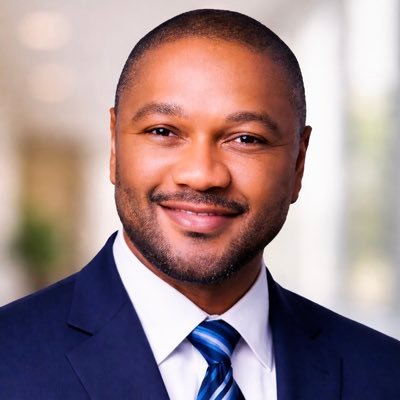
Dr. Banda Khalifa
@dr_bandak • 14,081 subscribers
Medical Doctor | Physician-epidemiologist | Johns Hopkins MPH & MBA | Ph.D. Epidemiology @JohnsHopkinsSPH | Global Health Expert | AI & Innovation
Shorts

Videos

Who is this guy? Medical school training is strikingly similar everywhere…. I remember one day on ward rounds, one One of my colleagues was in the middle of presenting a case he had been assigned to… usually you talk to the patient the day before ward rounds, so you have the updated story… The professor asked the patient whether her symptoms matched what the student was describing… Patient said NO. 😆😂 It was bloody that day…
Dr. Banda Khalifa189,031 views • 6 months ago


Bridging Theory and Practice: A Reflection on Ghana’s National Science & Maths Quiz – The 10% Law or Perhaps the 10% Problem. First, Congratulations to Presbyterian Boys' SHS for clinching the title in this year's National Science and Math Quiz (NSMQ), and heartfelt appreciation to Primetime and all sponsors for facilitating this esteemed competition. The NSMQ has indeed grown in stature, now rivaling our national love for soccer in popularity. While the competition continues to excel, it's prudent to offer constructive feedback to further hone its impact and sustain interest. This piece seeks to address a notable incident from this year’s competition, reflecting on the balance between theoretical precision and practical understanding, a key element in nurturing innovative minds capable of tackling real-world challenges. The “10% law” question provides an opportune moment to reflect on the essence and impact of educational competitions. A question concerning the "10% Law" in the context of food chains saw a response marked incorrect due to a minor omission, despite the understanding of the concept being evidently clear. ❓Question Name the law that explains that each trophic level in a FOOD CHAIN transfers 10% of its energy to the level above it, and the other 90% of its energy is lost to heat or reproduction. ❌ Answer given by OPOKU WARE SCHOOL: The 10% law. However, our beloved quiz mistress marked this response as incorrect, stipulating the answer should have been "The 10% law in food chain”. However, the context of the question was clearly delineated; hence, the phrase “in food chain” was implicitly understood, making the given answer accurate and succinct. The penalization for a perceived lack of completeness, in this case, underscores a prevalent concern in our educational fabric - the emphasis on mechanical/verbatim memorization over a nuanced/holistic understanding of concepts. While precision in scientific terminology is vital, the pendulum should not swing to the extreme where the essence of learning is overshadowed by the rigidity of expression. Here is why we need to rethink such rigidity in expression. 📌 Strict Adherence to Terminology In the scenario presented, the adjudication appears to have been fixated on precise terminology rather than understanding the underlying concept. While technical precision is important in scientific communication, the emphasis on exact wording to the detriment of conceptual understanding can be counterproductive. 📌 Impediment to Practical Learning This approach can potentially hinder creativity and critical thinking essential for real-world problem-solving. The focus shifts from a practical understanding of concepts and their applications to a memorization of textbook definitions and terminologies. 📌Impact on Student Engagement When students are penalized for minor omissions in terminology despite demonstrating a clear understanding of the concept, it can be demoralizing and may affect their confidence and performance. *********************** Educational competitions like the NSMQ are pivotal in inspiring and nurturing scientific inquiry among young learners. They serve as platforms for not merely disseminating knowledge but for promoting critical thinking, innovative problem-solving, and practical application of theoretical concepts. 📌Way forward🤝 ✅Real-world Applications Integrating more real-world scenarios and problem-solving exercises can enrich the learning experience and demonstrate the relevance of theoretical knowledge. In essence, while maintaining a high standard of excellence, it's imperative that educational competitions like the NSMQ evolve to foster a conducive environment for practical learning and innovative thinking. This balanced approach can significantly contribute to nurturing a generation of thinkers, innovators, and problem solvers well-equipped to tackle the multifaceted challenges of our contemporary world.
Dr. Banda Khalifa MD, MPH, MBA189,378 views • 3 years ago

He went from working as a hospital janitor in the U.S. to training in neurosurgery. And his message is simple: Age should never be a barrier. Dr. Kwadwo, originally from Ghana 🇬🇭, had to leave his undergraduate studies at the University of Ghana when he got the opportunity to move to the United States. When he arrived, he had to start over. As someone without a science background at the time, he returned to college to take the science courses he needed, all while working different jobs to survive. → McDonald’s → other side jobs → and eventually as a hospital janitor That was his last job before the next chapter of his journey began. Today, he is on track to complete his neurosurgery residency. Stories like this shows that progress is not always linear. Sometimes the path looks delayed. Sometimes it looks unlikely. Sometimes it looks nothing like the final destination. But with persistence, discipline, and vision, a lot can change. The rest is history.
Dr. Banda Khalifa36,803 views • 7 months ago

I am now a resident of Ghana - President of Ensign Global University
Dr. Banda Khalifa31,500 views • 7 months ago

I feel sorry for this fresh graduate. The internet is split into two camps. She was disrespectful. He was outdated. I am a little conflicted. I learned to address power in different worlds. African institutions, the military, American Institutions, International organizations. If you are a young professional, here is my advice. Look beyond social media reactions. Some very senior colleagues and leaders have given me explicit permission to call them by their first name. Even with that permission, I still gauge the room before I use it. In a private conversation, I might say the first name. In a formal setting, in front of their peers, their staff, or their students, I return to the title. My default is always title first, then name only when the setting and the invitation both allow it. Permission is one variable. The room or context is the other. You need both. Now, about the older interview of Mr Elumelu, where a moderator calls him Tony. I have sat on panels and moderated quite a number. Before most sessions, moderators ask each speaker what they prefer to be called. They agree on that name before anyone walks on stage. Same man. Different context. That is exactly the lesson. → Formality is a local language, and fluency in one register is worthless in a room governed by another. ↳ The skill is knowing which room you are in. → The safest default anywhere in the world is the formal one. → When workplace culture and national culture disagree, the person with the least power in the room pays the price. In this case, the young fresh graduate paid the price. The way he reacted is also another topic for a different day. 😀… I am not sure Oyibo life is entirely bad. I am sure he subscribes to different aspects of Oyibo life, but not this one 😀. Whatever you think of his reaction or delivery, that sentence is the entire lesson: rooms have norms, and the norms are local.
Dr. Banda Khalifa11,488 views • 2 months ago

How do you get into every school you apply to? Planning + Mentorship
Dr. Banda Khalifa17,744 views • 6 months ago

A Departmental Chair of an Ivy League PhD Program at Columbia University reveals……Every PhD interview starts with three questions She said “That’s the first thing I ask. If you can’t answer it clearly, the interview is already off track.” If you’re preparing for PhD interviews this cycle, this is the work that matters most. → Why a PhD? → Why this university? → Why this department? Here’s the mistake many applicants make: They prepare long stories instead of clear answers. A strong PhD interviewee should be able to answer each of these in 30–60 seconds: • Why a PhD → your research motivation and long-term scholarly goal • Why this institution → specific alignment with resources, culture, and training • Why this department → faculty fit, methods, and intellectual home No fluff. No prestige talk. No generic admiration. Because before faculty evaluate how smart you are, they assess whether you belong here, right now. — If you’re interviewing soon: Can you answer all three; clearly, concisely, and convincingly? Cc: Ana Navas Acien
Dr. Banda Khalifa MD, MPH, MBA20,140 views • 8 months ago
No more content to load