Dr. Rhonda Patrick
@foundmyfitness • 1,801,100 subscribers
Ph.D in biomedical science interested in nutrition, brain & aging. Host of FoundMyFitness podcast https://t.co/rirQwqebxL
Videos
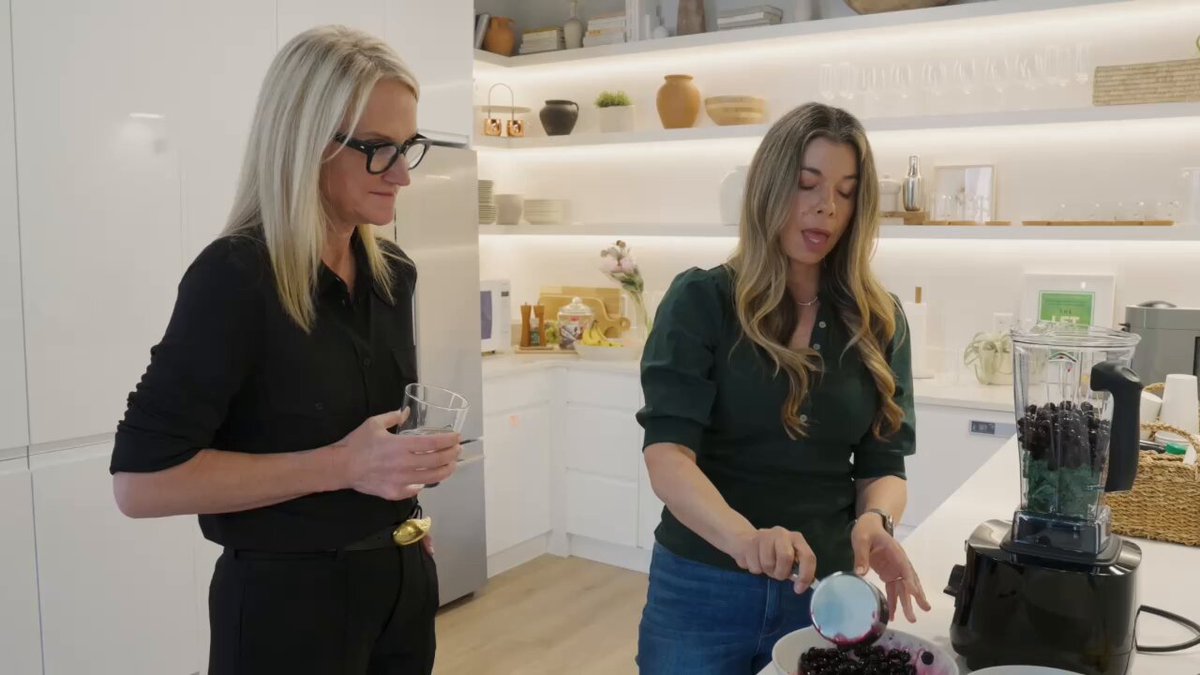
I don't add bananas to my smoothies. Why? Not because bananas are bad (I love bananas). They contain polyphenol oxidase, an enzyme that can break down polyphenols. And studies suggest that when you add banana to a blueberry smoothie, you may absorb fewer of the beneficial polyphenols from the berries! So instead, I use avocado. It gives the smoothie the same creamy texture with the bonus of monounsaturated fat in avocado, which can increase absorption of carotenoids like lutein and zeaxanthin from kale - nutrients important for eye and brain health. I talked about this recently on my appearance on The Mel Robbins Podcast.
Dr. Rhonda Patrick1,906,243 次观看 • 1 个月前

People often ask what I eat in a typical day. I worry less about a fixed macro split and focus on protein, vegetables, fruit, and fiber. I aim for at least 1.2 g/kg of protein daily and usually get 1.3–1.4 g/kg. I often train fasted, but if I need fuel, I’ll have a homemade muffin made with psyllium husk, whey protein, and blueberries. Breakfast (first meal) is full-fat yogurt with blueberries and sliced almonds, or sometimes a turkey burger with raw kale and pumpkin seeds, or homemade chicken soup. Lunch is an extra turkey burger or another protein with a small salad if I need it. For dinner, I'll have salmon, chicken, filet mignon, or a chicken-and-vegetable stir-fry, usually with sautéed greens or a kale salad with pumpkin seeds, carrots, and homemade avocado dressing.
Dr. Rhonda Patrick72,997 次观看 • 4 天前

More protein does not necessarily mean more muscle. For most people doing resistance training, gains in muscle and strength appear to plateau around 1.6 g/kg/day. But there’s a good reason to push protein higher when the goal is fat loss or body recomposition. Higher protein intake can: - increase satiety and make a calorie deficit easier to sustain - help preserve lean mass so more of the weight lost comes from fat - modestly increase energy expenditure through the thermic effect of food This often gets lost in debates about “optimal” protein intake. You may not need more than ~1.6 g/kg/day to maximize muscle growth, but higher intakes can still be useful when you’re trying to lose fat without losing muscle.
Dr. Rhonda Patrick160,517 次观看 • 24 天前

Using the sauna after aerobic exercise improves VO₂ max more than training alone. People who performed 30 minutes of cycling and then sat in a sauna for ~15 minutes afterward saw greater gains in their VO₂ max after 8 weeks of training compared to those who did the workout without sauna. There’s also emerging evidence for strength training, with studies showing greater increases in markers of anabolic signaling associated with muscle growth with post-exercise heat exposure. The sauna has several health benefits. But it's also a powerful tool to amplify the body's adaptations to both endurance and strength training. Clip from my recent appearance on Thomas DeLauer
Dr. Rhonda Patrick1,038,363 次观看 • 6 个月前

Supplementing with omega-3 fatty acids slows biological aging. Combining omega-3s with vitamin D and exercise has an additive effect, translating to ~3 months of slowed biological aging. These were the results of the 3-year-long DO-HEALTH study, which Prof Steve Horvath believes is one of the strongest pieces of evidence that simple interventions (that also likely correct a deficiency) are powerful ways to slow or reverse the aging process. We discuss this study and more in the latest episode of the FoundMyFitness podcast.
Dr. Rhonda Patrick494,119 次观看 • 3 个月前

There is not yet strong, consistent evidence that magnesium supplementation reliably improves sleep. Observationally, people who consume more magnesium tend to report better sleep quality. And some meta-analyses suggest magnesium supplementation can improve sleep quality scores, sleep efficiency, and sleep duration. But the individual studies are inconsistent, and several have found no meaningful effect at all. Could it help some people, particularly those with low magnesium status? Possibly. Magnesium plays important roles in neuronal signaling, stress regulation, and pathways involved in sleep-wake control. So the biology is plausible. However, to say “magnesium improves sleep” is a much stronger claim than the current evidence supports.
Dr. Rhonda Patrick62,523 次观看 • 12 天前

Coffee’s health impact depends on how you brew it. Filtered coffee is linked to a lower cancer risk, while unfiltered methods—like French press or boiled coffee—let oily compounds called diterpenes sneak into your cup. These compounds, particularly cafestol and kahweol, can raise LDL cholesterol by 10–30 mg/dL in just a few weeks. Long-term exposure to high levels of these diterpenes has been associated with a modest uptick in the risk for certain cancers, including pancreatic and respiratory tract cancers, as well as a higher risk of dementia (generally observed with very high levels of boiled coffee consumption in particular). What’s going on here? Diterpenes are fat-soluble, so they slip through metal filters or stay suspended in boiled brews. Filtered coffee contains undetectable levels of cholesterol-raising diterpenes. Polyphenols, on the other hand (like chlorogenic acids) are water-soluble antioxidants that pass through paper filters and deliver cellular benefits. If you’re drinking multiple cups per day, consider switching to filtered coffee. It preserves the antioxidants while minimizing cholesterol-raising compounds.
Dr. Rhonda Patrick2,102,913 次观看 • 1 年前

Fruits & vegetables likely account for a majority of people's dietary microplastic and PFAS intake. What’s frustrating is that this isn’t something you can just rinse off. In many cases, the contamination appears to be taken up into the food itself. Organic may reduce some of that exposure, but even organic farms can be affected when they’re near contaminated land or water. Should you stop eating produce? No. We should be much more upset about how widespread these chemicals have become, especially when children are being exposed through foods we otherwise consider healthy. One practical thing I think is worth considering is beta-glucan. There’s some evidence it may help support the excretion of PFAS, and given how unavoidable these exposures are becoming, that may be a useful tool, especially for families who can’t realistically eliminate every source.
Dr. Rhonda Patrick569,639 次观看 • 4 个月前

The next decade may be the most consequential longevity window of our lives. In a brand-new episode of the FoundMyFitness podcast, I sit down with immunologist and aging researcher Dr. Derya Unutmaz (Derya Unutmaz, MD) to explore a provocative possibility: AI may accelerate medicine fast enough to change what aging, cancer, and disease prevention look like within our lifetimes. Derya is not making these predictions from the sidelines. OpenAI has repeatedly featured his work as evidence that frontier models can contribute to real scientific discovery—including a case study in which GPT-5 helped his lab solve a three-year-old immunology mystery. We discuss how AI is already compressing months of biological analysis into hours, how digital twins could personalize treatment and shorten clinical trials, and whether disease could be predicted years before symptoms appear. We also get into: • Why he believes the next 10 years could add decades to human lifespan • Why cancer is so difficult to cure—and why he thinks that may change • When avoiding AI support could become medically irresponsible • What supercentenarians reveal about engineering greater resistance to aging • How cellular reprogramming might restore younger biological function • How to begin building a simple “mini digital twin” from your own health data You do not have to agree with every timeline to appreciate the stakes. This is one of the most ambitious conversations we have had about the future of biology and medicine. The episode is available now on YouTube, Spotify, and Apple Podcasts. Links in the comments below. Timestamps: 0:00 - Introduction 1:27 - Add 50 years to your life? 5:35 - Months of analysis in minutes 11:06 - Trials in weeks, not years 13:42 - How safe is safe enough? 17:57 - Have we hit AGI? 23:39 - The case for AI optimism 29:51 - Crossing the intuition threshold 36:32 - Is avoiding AI malpractice? 42:35 - Can AI catch cancer's next move? 46:09 - Which AI models to trust 51:45 - Claude vs. GPT in diagnosis 55:15 - Generalist vs. specialist AI 58:41 - Cancer's self-vs-self problem 1:02:35 - The end of cancer? 1:06:46 - A dog's custom cancer vaccine 1:08:47 - Can AI prevent overtreatment? 1:11:44 - Predicting disease years early 1:18:06 - Biology goes exponential 1:23:15 - Why prevention beats reversal 1:29:07 - Engineering aging resistance 1:34:23 - One gene, many outcomes 1:38:28 - Reverse-engineering the lucky 1:40:38 - From Dolly to Yamanaka factors 1:45:12 - Full-body rejuvenation 1:53:00 - What if AI thinks for a month? 1:55:42 - The biosecurity dilemma 2:00:28 - Limits of epigenetic clocks 2:06:51 - The cells that won't retire 2:09:38 - Can brain aging be reversed? 2:16:06 - The ultimate longevity prompt 2:18:06 - How to build a digital twin 2:27:42 - The personal health wiki 2:30:50 - When lab ranges mislead
Dr. Rhonda Patrick240,237 次观看 • 1 个月前

Should you still exercise if you’re sleep deprived? In most cases, yes. Just don’t make it your hardest workout. A single night of insufficient sleep can worsen insulin sensitivity and increase inflammatory signaling. But studies suggest physical activity can help blunt some of those effects. Long-term data also show that people sleeping fewer than 7 hours per night tend to have higher mortality risk, yet among people meeting physical activity guidelines, much of that excess risk appears to be attenuated. This does not mean you can exercise your way out of chronic sleep deprivation. Sleep is still foundational. But after the occasional bad night, some movement may be one of the better things you can do, even if exercise is often the last thing you feel like doing. From my last appearance on Andrew D. Huberman, Ph.D..
Dr. Rhonda Patrick112,932 次观看 • 27 天前

Exercise and meditation don’t have to compete for your time. You can do both at once. Mindfulness can be practiced during physical activity, including vigorous aerobic exercise. That combination may be especially interesting because aerobic exercise is a powerful stimulus for neuroplasticity, increasing the brain’s capacity to change in response to experience. Pairing the neuroplastic effects of exercise with intentional mental training is an opportunity to cultivate awareness, connection, compassion, or other constructive states of mind. From the latest episode of the FoundMyFitness podcast with Dr. Richie Davidson.
Dr. Rhonda Patrick60,129 次观看 • 14 天前

New episode with Dr. Richard J. Davidson (Dr. Richie Davidson). He has spent more than four decades asking whether well-being can be trained. His answer is yes—but the training does not have to happen only on a meditation cushion. In this episode, we explore “contemplative aerobics”: combining physical exercise with awareness, connection, insight, or purpose. We can use a run, walk, warm-up, commute, or chore to return attention to the present, see thoughts as transient events, and connect daily effort to something larger than ourselves. Richard explains his four pillars of flourishing, how attention and stress communicate with the immune system, and the incredible evidence linking meditation with inflammation, asthma, and the gut microbiome. We also discuss how generosity and purpose can shift well-being beyond the self and much, much more! The central message is that physical and mental exercise can strengthen one another, and flourishing grows through small practices repeated in ordinary life. This is a can't-miss conversation. Links to the episode on all platforms in the comments below. Timestamps: 0:00 - Introduction 0:55 - Meditate or exercise? 4:38 - The biology of loneliness 6:18 - Can compassion be trained? 8:48 - Timing meditation around exercise 12:03 - The foundations of flourishing 18:11 - The six emotional styles 25:45 - When emotional styles go too far 27:35 - Shaping the brain on purpose 30:19 - When neuroplasticity backfires 32:06 - The right dose of adversity 35:53 - Why kids stay present 37:47 - Strength training as mindfulness 43:48 - Can mindset change biology? 48:18 - Precision training for the mind 49:59 - Can 5 minutes lower inflammation? 55:08 - The meditation–microbiome link 59:22 - The brain's map of your organs 1:03:56 - The stress-inflammation buffer 1:05:32 - Meditation in motion 1:08:50 - Gratitude at every meal 1:10:34 - When meditation raises anxiety 1:12:58 - Children absorb parental stress 1:18:07 - Can connection extend life? 1:21:04 - How connection curbs self-focus 1:23:35 - Why giving feels better 1:25:54 - Finding purpose in ordinary life 1:30:29 - How curiosity loosens pessimism 1:33:57 - Flourishing without meditation 1:36:28 - Why exercise alone isn't enough
Dr. Rhonda Patrick76,417 次观看 • 19 天前

People ask about my daily smoothie a lot, so here it is. I use it to make it easier to get a meaningful amount of leafy greens, berries, healthy fat, fiber, and protein in one meal. Mine usually has: - 3 cups kale - 2.5 cups blueberries - 1/2 avocado - 1 scoop protein powder - beta-glucan fiber Why these ingredients? Kale gives me lutein, magnesium, calcium, and vitamin K1. Blueberries provide anthocyanin-rich polyphenols. I use avocado instead of banana because banana contains polyphenol oxidase, which can reduce some of the beneficial polyphenols in berries (and the avocado fat also improves absorption of carotenoids from the kale). I add beta-glucan for extra prebiotic fiber, LDL support, and its potential to help increase excretion of PFAS or "forever chemicals." It’s just an easy way to build one meal around foods I know I want more of. I broke down my entire recipe on Mel Robbins podcast!
Dr. Rhonda Patrick278,998 次观看 • 2 个月前

Five minutes of meditation a day can produce measurable changes well beyond the brain. Dr. Richard Davidson describes new data showing that just 5 minutes of daily meditation for 28 days significantly reduced IL-6, a pro-inflammatory cytokine. They also observed changes in the gut microbiome including shifts in pathways involved in the production of the short-chain fatty acid butyrate, which helps maintain intestinal barrier integrity and has important effects on immune and metabolic function. Some of these changes were still detectable up to 3 months after the formal intervention ended! There's a growing body of evidence that training the mind can produce measurable biological effects throughout the body, and meaningful changes may not require hours of meditation every day. New episode with Dr. Richie Davidson out now!
Dr. Rhonda Patrick64,339 次观看 • 18 天前

Could cancer become largely curable within the next decade? Cancer is not one disease, but hundreds, and one reason it's so difficult to treat is that cancer cells arise from our own tissues. Destroying them without harming healthy cells requires extraordinary precision. AI may help make that precision possible by integrating genetics, metabolism, immune function, and enormous biological datasets to identify the vulnerabilities unique to each tumor. We are already seeing the beginnings of this with targeted drugs designed around specific mutations and CAR-T therapies that engineer immune cells to recognize and destroy cancer. A provocative (and hopeful) forecast from Derya Unutmaz, MD. From the latest episode of the FoundMyFitness podcast.
Dr. Rhonda Patrick162,089 次观看 • 1 个月前

You don't need to lift heavy weights to gain muscle. As long as volume and effort are high, and you train to fatigue, you can build muscle mass (hypertrophy) with lower weights. Dr. Stuart Phillips (Stuart Phillips (he/him)) and colleagues recently showed that low-load (20–25 reps at ~30–40% 1RM) and high-load (8–12 reps at ~70–80% 1RM) resistance exercise led to similar gains in muscle hypertrophy and stimulation of myofibrillar protein synthesis in the upper and lower body over 10 weeks of training. Effort drives adaptations.
Dr. Rhonda Patrick711,761 次观看 • 8 个月前

Plastic blenders are a source of microplastics that most people overlook. Those with plastic jars or pitchers release microplastics, and even nanoplastics, into blended food or drinks due to friction and mechanical abrasion during blending. A single 30-second blending cycle can release up to 1 billion (yes, with a "b") micro- and nanoplastic particles. BPA-free products are safer but can still release particles due to heavy use, heat, or abrasion. My advice is to switch to a completely stainless-steel blender. It's the only way to avoid contamination. Thanks to Steven Bartlett for allowing me to audit his kitchen! Check out the full episode.
Dr. Rhonda Patrick478,372 次观看 • 5 个月前

I recommend creatine to nearly everyone. But here are my caveats: 1. Make sure it's creatine monohydrate - this is the form that's most well-studied and effective. You don't need a "fancy" form. 2. Beware of gummies. If you use them, make sure you're getting one that's been third-party tested and contains the stated amount of creatine (many brands do not). 3. Look for an an NSF certification. This will help avoid heavy metals and other contaminants you don't want. Clip is from my recent appearance on Jordan Harbinger show!
Dr. Rhonda Patrick473,443 次观看 • 6 个月前

People who age happier and healthier tend to do 7 things: They don’t smoke, exercise regularly (but not excessively), maintain a healthy weight, and are mindful with alcohol or other substances. But one of the most interesting ideas that Dr. Arthur Brooks underscores is that the "happy-well" also have 3 less obvious traits. They keep learning, they develop real skill in dealing with life’s problems, and they prioritize love—through a strong marriage, close friendships, or both.
Dr. Rhonda Patrick448,849 次观看 • 5 个月前

Sleep may be the most underrated performance enhancer in sports. And the simplest experiment is to get a little more. Move bedtime earlier by 15 minutes at a time and track what happens to your speed, strength, reaction time, and recovery. Before a major competition, bank sleep for a week or two. Do not place all the pressure on the night before. And do not panic over one bad night. The bigger problem is sleep loss accumulating across several days or weeks. More sleep. Added gradually. Banked before competition. No catastrophizing over one imperfect night. That's the strategy Dr. Michael Grandner outlined in our recent podcast discussion.
Dr. Rhonda Patrick117,010 次观看 • 1 个月前