ISRO
@isro • 8,063,586 subscribers
Indian Space Research Organisation https://t.co/UolRyaZlZi. https://t.co/Q3K7buUqAI
Shorts


Videos

Milestone Wins – Flight to the Moon Chandrayaan 3’s Vikram Lander placed India near the Moon's south polar region and became milestones of ingenuity, precision and resolve. Join us via livestream for NSpD2026 Celebration: #NationalSpaceDay2026 #Chandrayaan3 #VikramLander #SoftLanding
ISRO505,207 views • 2 months ago

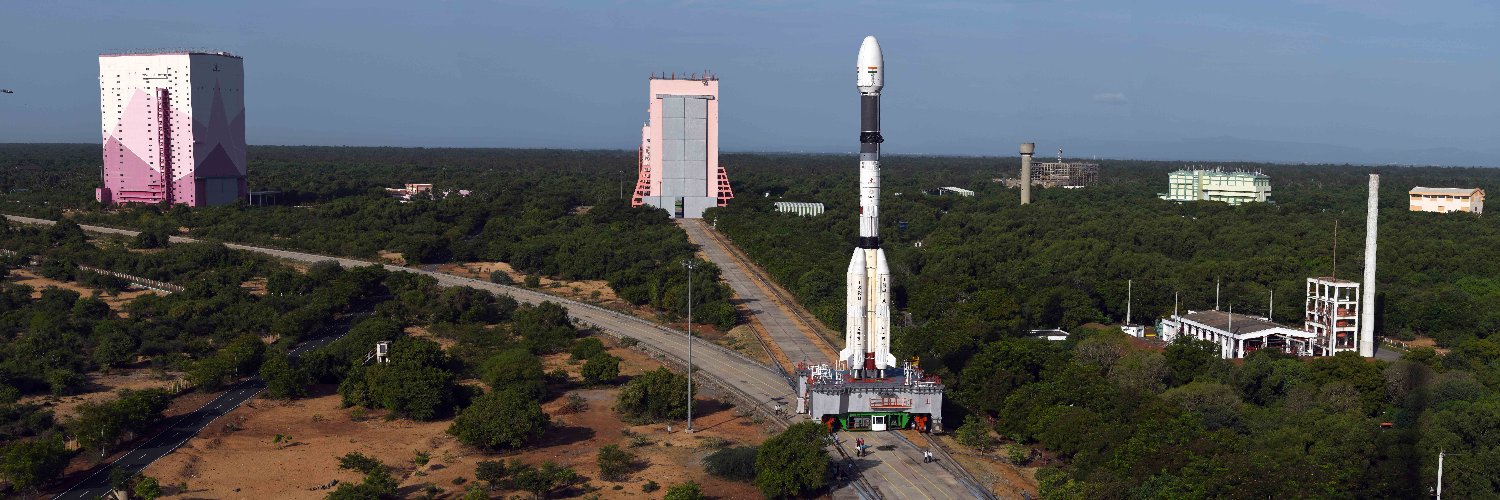
GSLV-F17 carrying EOS-05 was moved from the Vehicle Assembly Building (VAB) to the Umbilical Tower (UT) on 28th August 2026 at Satish Dhawan Space Centre, SHAR, Sriharikota, as preparations continue for the scheduled launch on: 🗓️ 04 Sept 2026 | ⏰ 02:55 AM IST Livestreaming starting from 02:25 AM IST onwards: For more information: #GSLVF17 #EOS05 #ISRO
ISRO366,765 views • 1 month ago

Chandrayaan-3 Mission: The mission is on schedule. Systems are undergoing regular checks. Smooth sailing is continuing. The Mission Operations Complex (MOX) is buzzed with energy & excitement! The live telecast of the landing operations at MOX/ISTRAC begins at 17:20 Hrs. IST on August 23, 2023. Here are the images of the moon captured by the Lander Position Detection Camera (LPDC) from an altitude of about 70 km, on August 19, 2023. LPDC images assist the Lander Module in determining its position (latitude and longitude) by matching them against an onboard moon reference map.
ISRO7,690,345 views • 3 years ago

... ... and here is how the Chandrayaan-3 Rover ramped down from the Lander to the Lunar surface.
ISRO6,757,743 views • 3 years ago

Chandrayaan-3 Mission: 🇮🇳Vikram soft-landed on 🌖, again! Vikram Lander exceeded its mission objectives. It successfully underwent a hop experiment. On command, it fired the engines, elevated itself by about 40 cm as expected and landed safely at a distance of 30 – 40 cm away. Importance?: This 'kick-start' enthuses future sample return and human missions! All systems performed nominally and are healthy. Deployed Ramp, ChaSTE and ILSA were folded back and redeployed successfully after the experiment. #Chandrayaan_3 #Ch3
ISRO5,633,210 views • 3 years ago

Milestone Wins – POEM-4, SpaDex, NISAR One Stage. A second life in orbit. POEM-4 hosted 24 payload, SpaDex concluded in-space docking experiment and NISAR goes operational! Join us via livestream for NSpD2026 Celebration: #NationalSpaceDay2026 #POEM-4 #SpaDex #NISAR #ISRO
ISRO238,013 views • 2 months ago

Heritage – From Thumba to India’s First Launches A bicycle carried rocket parts. A church became a laboratory. A beginning with the launch of Nike Apache and the journey began with modest means, audacious purpose and an unshakeable belief in possibility. Join us via livestream for NSpD2026 Celebration: #FromABicycleToTheStars #NSpD2026 #ISRO #NikeApache #Thumba
ISRO203,228 views • 2 months ago


.... and The moon as captured by the Lander Imager Camera 4 on August 20, 2023. #Chandrayaan_3 #Ch3
ISRO3,277,744 views • 3 years ago

Here is how the Lander Imager Camera captured the moon's image just prior to touchdown.
ISRO3,037,571 views • 3 years ago


Mission Gaganyaan: 🔸VSSC/ISRO, in collaboration with ADRDE/ DRDO , successfully conducted Drogue Parachute Deployment Tests at the RTRS facility in Chandigarh. 🔸Drogue parachutes, armed with pyro-based mortars, stabilize and decelerate the crew module during re-entry to ensure a smooth descent. 🔸The tests instil assurance for integrating drogue parachutes into the Test Vehicle-D1 mission.
ISRO1,206,182 views • 3 years ago

Gaganyaan Mission: Two more hot tests on the Gaganyaan Service Module Propulsion System were conducted successfully at IPRC/ISRO on July 26, 2023. Tests were conducted in pulsed and continuous modes necessary for the mission. Three more hot tests are scheduled to demonstrate de-boosting requirements and off-nominal mission scenarios.
ISRO1,075,432 views • 3 years ago

Chandrayaan-3 Mission: In-situ Scientific Experiments Another instrument onboard the Rover confirms the presence of Sulphur (S) in the region, through another technique. The Alpha Particle X-ray Spectroscope (APXS) has detected S, as well as other minor elements. This finding by Ch-3 compels scientists to develop fresh explanations for the source of Sulphur (S) in the area: intrinsic?, volcanic?, meteoritic?,......?. The video shows an automated hinge mechanism rotating the 18 cm tall APXS, aligning the detector head to be approximately 5 cm in proximity to the lunar surface. PRL, Ahmedabad has developed APXS with support from PRL, Ahmedabad. URSC, Bengaluru has developed the deployment mechanism.
ISRO856,965 views • 3 years ago

