
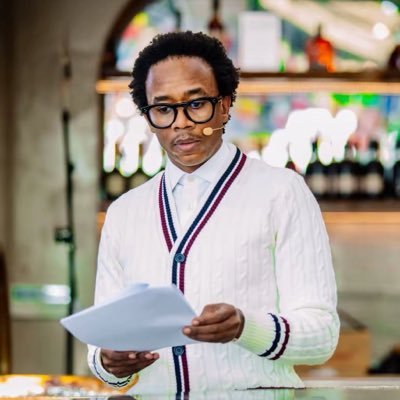
@luphumlongcayisa
@luphumlongcayis • 108,743 subscribers
Communications Strategist| Moderator | Events Producer| Creative Director
Videos

South Africa, unlike many other African countries, appears to struggle with what might broadly be described as music appreciation: the ability to engage with, understand and value music beyond the narrow confines of one’s preferred genre, generation or cultural moment. There is an increasingly narrow and linear approach to what audiences have been conditioned to listen to, celebrate and ultimately recognise as “good music.” Too often, familiarity has become the measure of quality. If a song does not belong to the dominant sound of the moment, or to the musical vocabulary of a particular generation, audiences can be remarkably quick to dismiss it. Radio must accept some responsibility for this. Radio is not merely a mirror of public taste; historically, it has also been one of its great curators and educators. Its role should extend beyond repeatedly giving audiences what research suggests they already like. There is value in introducing listeners to what they do not yet know they like. The consequences of our diminished musical curiosity become particularly apparent when curating music for a national show intended to speak to audiences across generations. The tension is immediate: more mature audiences become agitated by what younger audiences regard as contemporary culture, while younger audiences become restless when confronted with music they perceive as archaic, slow or irrelevant. Yet a national music platform cannot simply choose one generation over another. Nor should good curation amount to placing the old music in one corner and the new music in another. The more interesting task is to build musical bridges—to demonstrate lineage, influence and evolution; to show younger audiences where contemporary sounds come from, while allowing older audiences to hear how those traditions have been reinterpreted by a new generation. This is where radio has an important cultural responsibility. Stations should make a deliberate effort to broaden the musical vocabulary of their audiences. That sometimes requires programming beyond immediate audience demand—introducing unfamiliar genres, revisiting important catalogues, contextualising older music and repeatedly exposing listeners to different sounds until that diversity becomes normal rather than disruptive. After all, exposure creates familiarity, familiarity creates curiosity, and curiosity is the beginning of appreciation. A healthy music culture should allow a 20-year-old to appreciate a beautifully constructed song recorded before they were born, and a 60-year-old to recognise the artistry in a contemporary genre they may never choose to play at home. Music appreciation does not require us to like everything. It requires us to develop enough musical literacy to recognise value beyond the boundaries of our own taste. PS. The performance below 👏🏾👏🏾👏🏾
@luphumlongcayisa103,627 次观看 • 15 天前


The 16th instalment of the Thabo Mbeki Africa Day Lecture. If you are an events producer and curator you will understand how fulfilling it is when the vision finally comes to life. I am grateful to have been entrusted with this important project for five consecutive years. Equally grateful to the leadership and teams from the Thabo Mbeki Foundation and UNISA who are the engines behind this machine. I consider myself a very lucky service provider to have you as clients. As the week long Africa Day activities that boasted five high impact programs and events draws to a close, my heart is filled with joy and gratitude. Thank you for choosing me. 🎥 Thabo Mbeki Foundation
@luphumlongcayisa94,398 次观看 • 3 个月前


A former learner of JS Skhenjane in Dutywa has taken to social media, naming two teachers as rapists who prey on learners. She says this is an open secret, and many have corroborated her story on TikTok. What then is the role of law enforcement, department of education and social services? Do they sit back and wait until a formal case is opened; knowing full well that many of these evil men target children from poor families who can be silenced with as little as R200? When allegations of child abuse surface, aren’t police duty-bound to conduct proactive investigations? Or are we once again expected to wait for white-led NGOs to step in to lead. Please don’t CYRILISE the closing line. PS. Of course black men won’t be outraged by this. It is obviously not as serious an issue as some piece of legislation that permits those men who choose to take the surnames of their wives.
@luphumlongcayisa182,469 次观看 • 11 个月前

An honour to have been entrusted with the responsibility to emcee and moderate a panel discussion at the Inaugural South African Engineering Symposium. We took stock and examined The Role of Voluntary Associations in Enhancing the Employability and Professional Positioning of Engineering Practitioners.
@luphumlongcayisa48,122 次观看 • 5 个月前


What an anointing. Very few can pitch, belt and emote like he does. May this be the beginning of a solid career that shall see him flourish and prosper beyond his imagination. His name is Sphe Khuluse. Remember this name. He kinda got me teary-eyed. We appreciate great talent.
@luphumlongcayisa27,399 次观看 • 4 个月前

In 2019, businessman and brother Paul Siguqa, son of a former Cape Winelands farm worker, Nomaro-ma Siguqa, acquired Klein Goederust, a 10-hectare farm in the heart of the Franschhoek Valley, making Klein Goederust the first 100% Black-owned wine farm in the valley. To stay true to his cultural heritage, but also to respect and honour Klein Goederust’s history, he retained the farm’s name, which dates back to 1905 when the farm was established, but added his IsiXhosa identity to the name by adding the Southern Ground Hornbill (the clan/family crest totem of Paul Siguqa) to the logo.
@luphumlongcayisa67,285 次观看 • 1 年前


For the next two days, I have the privilege of facilitating the Gauteng Department of Human Settlements Policy & Research Symposium, a gathering that brings together government leaders, academics, researchers, town planners , practitioners, and social partners. At the heart of this symposium is one of the most defining questions of our time: how do we build human settlements that respond not only to the need for shelter, but to the deeper questions of dignity, belonging, social justice, economic opportunity and the future of our cities?
@luphumlongcayisa11,226 次观看 • 1 个月前


It remains my fervent hope this incredibly talented duo would treat us to yet another delicious treat. There’s that undeniable Toni Braxton and Baby Face musical connection between these two. The knd of magic only the two of them are capable of unleashing. Busi still remains high up there with the world’s reigning queens in vocal house. That range, depth and hypnotic sultry is a rare find. Busi is not a whisperer. Busi SINGS! Black Coffee #REBIRTH👑 ndithetha nani makwedini. You owe us. Buyelani estudio.
@luphumlongcayisa21,260 次观看 • 5 个月前

Thank you Nigel Branken. As she is busy with her campaign trail. The questions below should be posed to Helen Zille each time she opens her mouth: I asked Johannesburg Mayoral Candidate, Helen Zille a simple question last night... First: when will she finally call this what it is? GENOCIDE! How many more dead children, how many more starving families, how many more bombed hospitals, before she finds the moral courage to say the word genocide? Second: the claim that we must all sit quietly until the ICJ gives a final ruling is nonsense. The genocide convention requires we act to prevent genocide. The ICJ has already acted because the rights protected under the Genocide Convention were plausibly at risk. Amnesty International has called it genocide. Human Rights Watch has documented extermination and acts of genocide. The International Association of Genocide Scholars has said it is genocide. It is genocide - we MUST name it and act to prevent it. ... and Third: the DA keeps telling us they can do nothing and that South Africa cannot influence what is happening. That is also nonsense. They can support the South African ICJ court case. They can support sanctions. They can support stopping coal exports. They can support the prosecution of South Africans serving in the IDF. They can choose to stand on the side of the oppressed instead of pretending powerlessness. And how did she respond? Basically this: South Africa is busy with its own great kumbaya project, we cannot influence the rest of the world, and what matters most is that we work on our project. In other words, our diversity becomes an excuse for silence while Palestinians are bombed, starved and erased.
@luphumlongcayisa16,328 次观看 • 4 个月前

This afternoon I rushed straight from facilitating @saculturalobservatory’s two day International Conference in CPT to Jhb to moderate a critical conversation on Ethics in the Built Environment. The intellectual calibre and brain trust on this panel was exceptional. We had: • Vishaal Lutchman — Group CEO, GIBB Holdings • Professor Mandla Makhanya — Commissioner, Public Service Commission & Former UNISA Vice-Chancellor • Sekadi Phayane-Shakhane — CEO, SAICE • Kris Dobie — Senior Manager: Organisational Ethics, The Ethics Institute We were welcomed by Mr. Friedrich Slabbert, SAICE member since 1980 and now President, followed by Mr. Ryan Males, Vice-President for Civil Engineering at DRA Global. The keynote was delivered by none other than Mr. Nazir Alli, Founding CEO of SANRAL. The discussion was robust, reflective, and at times appropriately uncomfortable as conversations about ethics must be. I am grateful to SAICE for trusting me to steer this important dialogue, and to the audience for their thoughtful engagement and presence. I leave this space fuller, challenged, and hopeful. My name is Luphumlo Ngcayisa. The conversation starter. I get the job done.
@luphumlongcayisa19,867 次观看 • 9 个月前
