

Miyu Horiuchi
@miyuselene • 4,378 subscribers
Replicater Labs | Toyota Riken Fellow | @PennEngineers @theresidency
Shorts

two weeks in Shenzhen and it’s an been eye-opening experience im here for a month with MIT SCALE and the speed of hardware production is easily 10× faster than sf. from product concept to production, everything is streamlined within a single building. Nearly every component you could need is available immediately thru Taobao(e bay of China) or HQB and there are 24/7 makerspaces equipped to build anything from micrometer-scale PCBs to full assembly-line robots. What’s striking is that Shenzhen already has much of the hardware and robotics that startups in sf are still trying to build except these systems have been deployed and operating for years. The manufacturing capability, supply chain depth, and technical execution here are world-class. That said, one gap keeps surfacing: brand design, storytelling, and cohesive user experience. Software polish, UX consistency, and attention to detail often feel secondary. Take this with a grain of salt, but it increasingly feels like the company that pairs Shenzhen-level hardware velocity with strong design sensibility and UX-first thinking will dominate the market.
149,572 Aufrufe
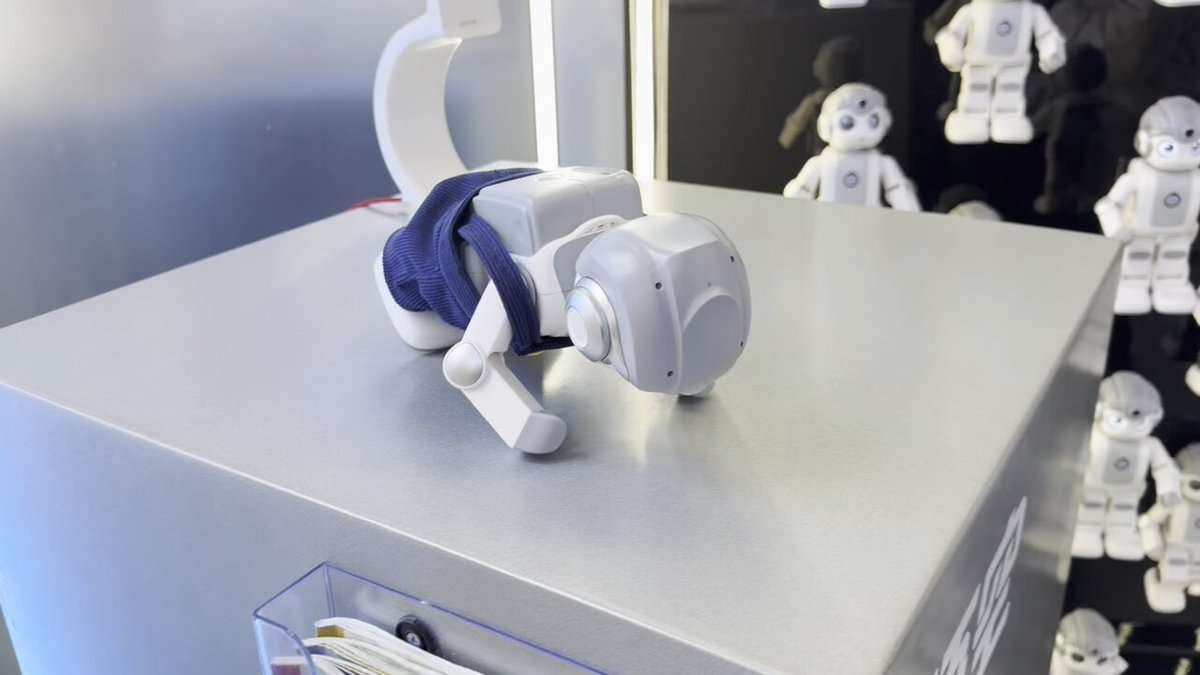
I spent a month in Shenzhen visiting factories and robotics companies, and the contrast with the U.S. was striking. While Figure and Boston Dynamics hide their humanoids behind closed doors, Chinese companies have massive showrooms open to the public. But what really stood out wasn't just the transparency, it was how good they are at selling. Take UBTech: they've already sold 1,200 humanoid units at $200k each to factories. And here's the kicker, these robots aren't even that useful yet. They can only pick up and drop boxes at 1/10th the speed of a human, and factories still need to hire system integrators to train them for specific tasks. My theory is that these factories are terrified of getting left behind in the robotics/AI wave. They're investing in new tech not because it's ready, but because they can't afford to wait. The second surprise was the breadth of their robotics portfolio. These companies aren't just building humanoids, they're deploying service robots everywhere: restaurants, hotels, apartments. Consumer robots are cleaning houses, pools, pet waste, dishes. They're covering the entire spectrum. But the education piece shocked me most. I picked up what I thought was a high school or college robotics textbook, it was for primary school. The government mandated AI and robotics education starting in elementary school. Almost every single school in China now has AI and robotics curriculum, complete with education robots so kids can learn by building. They're creating a generation that grows up fluent in robotics and AI. China owns the supply chain and the hardware stack. But here's what I think people are missing: the race isn't just about who can build robots faster or cheaper. The U.S. advantage has always been in the layer between hardware and human, the interaction design, the software intelligence, the intuitive interfaces that make complex technology feel natural. China is building the physical infrastructure, but they're also learning fast. Every deployed service robot, every classroom full of kids building with education kits, every factory running humanoids, that's all data collection at scale. The window for the U.S. to establish its wedge is narrowing. It's not enough to be better at AI or software anymore. We need to be building the integration layer, the intelligence that makes physical AI actually useful, not just impressive in a showroom. Because right now, China isn't just manufacturing robots. They're manufacturing a robotics-native culture, and that might be the most defensible moat of all.
90,718 Aufrufe

Your hardware startup doesn't need another funding round. It needs a one-way ticket to Shenzhen The talent pool is vast and affordable, I watched two students build an entire automated tennis ball feeder prototype for the founders who started the company. Two students in a few month. The whole thing... Some areas in shenzhen offer almost no taxes for businesses and even free office space. There's an exchange center that connects foreign founders with manufacturers, partners, and lawyers for free. You don't even need initial capital to start production. Some manufacturers I connected with will produce without upfront costs and co-design with you to make the product successful. They'll drive an hour to pick you up, spend three hours taking you to factories, and dedicate an entire day getting everything set up. They're not just service providers, they’re investing in you. And the people are genuinely kind. I had issues with a power supply for my motor components, and even when they were busy, they stayed with me until it was resolved. and they work until the task is perfectly done. 996 is pretty much the norm here, but they don't seem burnt out because there's each others support, working together like a group of friends on a project. If you're building hardware, Shenzhen isn't just an option. It's the obvious one
41,773 Aufrufe