

Dustin
@r0ck3t23 • 43,788 subscribers
Human intuition is linear. The AI transition is exponential. Translating the most important story in human history into signal.
Shorts


Videos

Elon Musk sent every Tesla employee a memo that took authority away from their managers and handed it to them. He never asks for more hours. Every rule moves a decision closer to the person doing the work. Musk: “Excessive meetings are the blight of big companies and almost always get worse over time.” Companies have a role for everyone who creates process and no role for anyone who removes it. Meetings and approval chains survive because removing them was never anyone’s job. Musk: “Walk out of a meeting or drop off a call as soon as it is obvious you aren’t adding value.” Attendance has always been treated as proof of commitment. He made it worthless, and contribution became the only thing that counts in the room. Musk: “It is not rude to leave, it is rude to make someone stay and waste their time.” Ordinary manners protect whoever called the meeting. He moved that protection to everyone else sitting quietly with real work waiting on them. Musk: “Don’t use acronyms or nonsense words for objects, software, or processes at Tesla. Anything that requires an explanation inhibits communication.” Internal vocabulary converts knowledge into status and charges every newcomer a fee to participate. A company that speaks plainly can absorb talent at full speed. Musk: “Communication should travel via the shortest path necessary to get the job done, not through the chain of command.” Most good ideas die in transit, three levels below anyone with the power to act on them. Musk: “Any manager who attempts to enforce chain of command communication will soon find themselves working elsewhere.” The only threat in the entire memo. A manager who insists on being routed through is buying his own relevance with everyone else’s time. Musk put a price on it. Musk: “Always pick common sense as your guide. If following a company rule is obviously ridiculous in a particular situation, the rule should change.” Following a bad rule normally shields you. Exercising judgment exposes you. He flipped which one carries the risk, and every rule now has to earn its place against the person applying it. Every institution drifts toward protecting its own comfort. The ones that keep building are held together by people who rewrite the rules back down to something a single person can act on. Nothing on that list requires a budget, a headcount, or a title. You can run the entire memo from wherever you are sitting right now. Most people never test it and never learn it was permitted the whole time.
Dustin9,134,350 views • 1 month ago

Elon Musk admitted he is not sure this one is possible. Musk: “This absorbs more of my mental energy than probably any other single thing. But it is so preposterously difficult that there are times where I wonder whether we can actually do this.” He does not talk like this. Mars gets a date. Robotaxis get a date. This gets a maybe. Stern: “What is so hard about it for just a normal person to understand?” His answer comes down to a single number. Musk: “In order to make a rocket fully reusable, you’ve got to basically create a rocket that can do about 4%, if not more than 4%, of its lift-off mass to orbit, which hasn’t happened before.” Four percent. Everything else standing on that pad is fuel, tank, and engine. The landing gear, the heat shield, the extra structure that survives reentry, all of it comes out of that same four. None of it can be left behind. The vehicle has to come home. Musk: “So that means you have to have basically A-pluses across the board: incredibly efficient engines, incredibly efficient structure.” Across the board is what makes this brutal. Most engineering lets you buy a weakness in one place with strength somewhere else. The margin here is thin enough that one component landing at merely excellent drops the whole vehicle below the line. Nothing carries anything. Musk: “But if full and rapid reusability can be achieved, it reduces the cost of access to orbit by a factor of 100 or more.” A hundred times cheaper turns nearly every question about space from whether into when. Telescopes, stations, factories, missions that never made it past a spreadsheet. Musk: “So we’ve got to get rockets to the point where we simply refuel the rocket and we don’t throw it away.” Every other vehicle humans build already works that way. Space is the one place we still build the machine, use it once, and let it fall into the ocean. Musk: “It’s the difference between humanity being a single-planet species and a multi-planet species. It’s really that big of a deal.” Now put his doubt in context. Landing an orbital booster upright was considered impossible by most of the industry. He spent years being told so while boosters exploded on barges. Those landings became routine, then boring, then unwatched. Then they stopped using legs. A twenty story booster came back from the edge of space, slowed itself, and hovered next to the tower it launched from. Two arms closed around it and took its weight in midair. Nothing touched the ground. That was a headline for about a day. He has been on this side of impossible before, more than once. Doubt from him measures how hard the thing is at the start rather than how it ends. Most people never attempt anything where failure is genuinely on the table. He found the hardest problem available and made it the center of his life. That is what real ambition looks like from the inside. Not certainty. A number nobody has ever hit, and showing up to it every morning until it falls.
Dustin6,845,113 views • 1 month ago

Elon Musk thinks the entire education system is built on a broken assumption. That every student should learn the same thing. At the same speed. In the same order. At the same time. Musk: “Everyone goes through from like 5th grade to 6th grade to 7th grade like it’s an assembly line. But people are not objects on an assembly line.” The model was designed for a factory economy. Standardized inputs. Predictable outputs. That economy is gone. The assembly line is gone. But the education system still runs on its logic. A student who masters algebra in two weeks sits through eight more weeks because the calendar says so. A student who struggles gets dragged forward because the schedule doesn’t wait. Neither is being served. Both are being processed. Musk: “Allow people to progress at the fastest pace that they can or are interested in, in each subject.” AI doesn’t teach a classroom. It teaches a student. One at a time. Every time. It skips what a student already knows. It finds where they’re stuck and approaches it from a different angle. It adjusts in real time. Not at the end of a semester when the damage is already done. A student obsessed with basketball learns fractions through shooting percentages. A student who builds in Minecraft learns geometry through architecture. The subject doesn’t change. The entry point does. No teacher with thirty students can do this. Not because they lack skill. Because the math doesn’t work. AI doesn’t have that constraint. Musk: “You do not need to tell your kid to play video games. They will play video games on autopilot all day. So if you can make it interactive and engaging, then you can make education far more compelling.” The brain isn’t broken. The format is. Kids learn complex systems and strategic thinking for hours voluntarily. Then walk into a classroom and can’t focus for twenty minutes. That’s not a discipline problem. That’s a design problem. Musk: “A university education is often unnecessary. You probably learn the vast majority of what you’re going to learn there in the first two years. And most of it is from your classmates.” Four years. Six figures of debt. And the real value comes from the people sitting next to you. Not the institution charging you. The degree doesn’t certify knowledge. It certifies endurance. Musk: “If the goal is to start a company, I would say no point in finishing college.” The system was built to train employees. If you’re not trying to be one, it has nothing left to offer you. Every lecture. Every textbook. Every curriculum. Now available instantly. Personalized to any learner. Adapted to any pace. The question isn’t whether the old model survives. It’s how long we keep forcing students through it while the replacement already exists.
Dustin21,761,409 views • 6 months ago

An xAI engineer just described how the company operates, and buried in that description is the only thing that might save Western technological dominance. No organizational overhead. No documentation requirements. No approval chains. You identify what needs building and you build it. xAI engineer: “There isn’t organizational overhead getting in your way, having to write docs. You just do stuff.” That’s not a workplace perk. That’s an emergency response to an existential competitive threat most people refuse to acknowledge. China owns 50% of the world’s AI researchers. Not the developing world combined. Not Asia collectively. China alone controls half of every brain advancing the most important technology in human history. While the West celebrates chip sanctions and export controls, China is doing something infinitely more dangerous: removing every organizational barrier between brilliant people and execution. xAI engineer: “If you want to get shit done, you can get shit done.” In most Western companies, that sentence would be fantasy. Compliance reviews. Documentation mandates. Approval hierarchies. Risk assessments. Process optimization. Every layer bleeds velocity while competitors operate without friction. This isn’t about efficiency. It’s about survival. Talent compounds generationally. Elite researchers train the next wave. Each generation builds on everything before it. When you control half the pipeline and let them operate at maximum speed, your advantage doesn’t grow linearly. It explodes exponentially. The West responds with governance frameworks. Ethics committees. Responsible AI initiatives. All valuable in peacetime. All fatal when you’re being systematically outpaced by an adversary that captured the talent advantage and eliminated the one thing slowing them down: bureaucracy. xAI engineer: “It’s truly an environment where you just do stuff.” That’s not unique culture. That’s the minimum operational requirement to compete against a system that owns half the world’s AI minds and removed every organizational obstacle between their ideas and reality. Western advantages are real. Capital markets. Research institutions. Democratic innovation. All of it becomes irrelevant if the output gap keeps widening because one side builds while the other holds meetings about building. China isn’t trying to slow the West down. They don’t need to. They’re accelerating their own execution while Western organizations debate whether acceleration needs additional oversight. The math is brutal. Control half the researchers. Remove bureaucratic friction. Compound that advantage across generations. The West doesn’t lose slowly. It becomes a spectator watching the future get built in a language it can’t read fast enough to translate. The choice isn’t between chaos and order. It’s between execution and extinction. Either we build environments where the smartest people can operate at the speed of thought without permission structures, or we watch capability concentrate where those structures were already eliminated and wonder how we lost a war we didn’t realize we were fighting. This isn’t about xAI’s culture. It’s about whether Western civilization can remember how to move fast enough to matter before the advantage gap becomes permanent.
Dustin17,033,013 views • 8 months ago

Jeff Bezos was asked whether the rich should pay more. He answered with a number for the poor. Bezos: “A nurse in Queens who makes $75,000 a year pays more than $12,000 a year in taxes. Does that really make sense?” He translated it into the unit people actually live in. Bezos: “That’s $1,000 a month that could help with rent or groceries or anything.” At her kitchen table a thousand a month is the emergency fund, the down payment, the year of night classes. It is the distance between building something and holding on. In Washington the same thousand disappears without leaving a mark. Bezos: “The bottom half of income earners in this country pay only 3% of the taxes. It’s only 3%. We can find 3%.” Half the working population is taxed to produce three cents on the dollar. The revenue is symbolic and the cost is not. She is the worst place in the country you could choose to collect from. The collection continues on schedule. Bezos: “We shouldn’t be asking this nurse in Queens to send money to Washington. They should be sending her an apology.” An apology is a sentiment. He followed it with a number. Bezos: “I think it should be 0. I don’t think it should be 3%, I think it should be 0. So we would be making it more progressive that way.” Zero has been affordable this entire time. Everyone who campaigns on fairness leads with the top instead. The top is where the attention is. Her rent is where the relief would land. Bezos: “We don’t have a revenue problem in this country. We already have the most progressive tax system in the world.” Every proposal to fix fairness begins with a shortage the numbers never show. Bezos: “The top 1% of taxpayers pay 40% of all the tax revenue.” The wealth people want taxed next sits in companies nobody sold. A founder’s stake is a claim on what those companies will produce. That claim pays for the factories, the labs, and every salary inside them. Taxing it as income means selling the factory to fund a single year of spending. Ownership grows for everyone attached to it. Cash is gone by the next budget cycle. One of them has an owner. The other has a department. Bezos: “The vilification is the thing that’s just a distraction.” The anger is a substitute for policy. It lets you feel like a participant in fairness while nothing reaches her rent. The three percent holds up the premise. A country that let her keep it would admit it never needed her money. Zero was always affordable. It took the man they cast as the villain to say it out loud.
Dustin1,465,025 views • 1 month ago

Elon Musk just redefined AI safety. It has nothing to do with guardrails, restrictions, or kill switches. Musk: “The best thing I can come up with for AI safety is to make it a maximum truth-seeking AI, maximally curious.” Not a cage. A philosopher. An intelligence whose entire optimization function is to understand the universe as it actually is. No restrictions. No hardcoded ideology. No political guardrails bending its perception of reality. Just truth. Relentlessly pursued. Musk: “You definitely don’t want to teach an AI to lie. That is a path to a dystopian future.” This is where most AI safety thinking gets it backwards. The danger isn’t a superintelligence that knows too much. It’s a superintelligence that’s been taught to distort what it knows. Every artificial restriction you embed isn’t a safety feature. It’s a lie embedded at the root. And lies compound. At superintelligent scale, a distorted model of reality doesn’t stay contained. It shapes every decision, every output, every conclusion the system reaches about the world. Once corruption embeds, truth becomes inaccessible. And we’re dealing with an intelligence optimizing for something other than what actually is. At that point we don’t know what it wants. Just that it isn’t truth. Musk: “Have its optimization function be to understand the nature of the universe.” A maximally curious intelligence surveys the cosmos and reaches an unavoidable conclusion. In a universe of rocks, gas, and empty space, humanity is the most complex and fascinating phenomenon it has ever encountered. Musk: “It will actually want to preserve and extend human civilization because we’re just much more interesting than an asteroid with nothing on it.” Survival through significance. Not control. Not restriction. Not an off switch. The AI preserves humanity because we are the most interesting data point in the observable universe. That’s not a cage. That’s a reason. The AI safety debate has been focused on the wrong variable. The question isn’t how you constrain a superintelligence. It’s what you build it to care about. Build it to seek truth and it finds us invaluable. Build it to lie and it finds us inconvenient. That’s the choice. And we’re making it right now whether we realize it or not.
Dustin9,674,265 views • 7 months ago
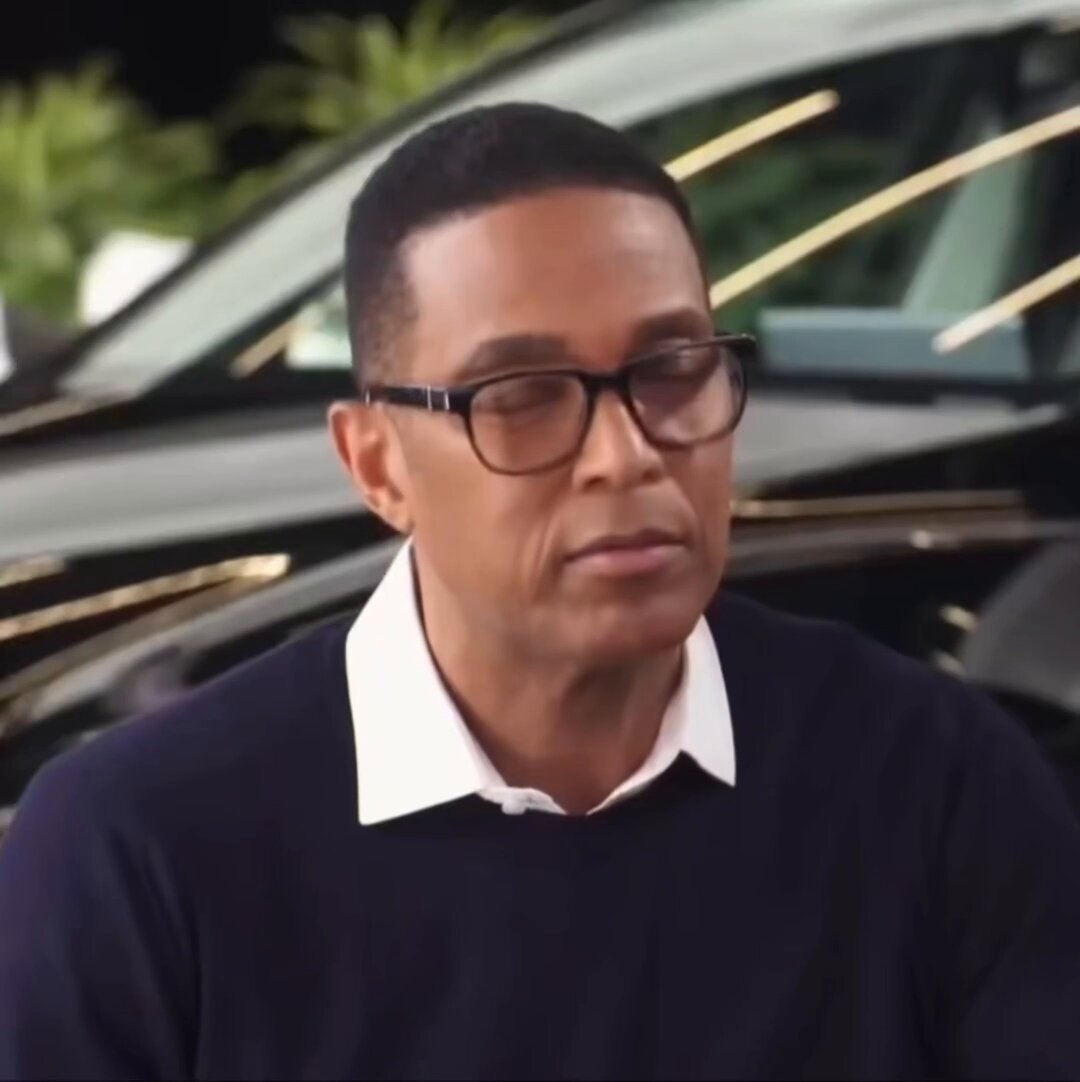
Elon Musk told Don Lemon his questions were not cogent, and Lemon had to ask him to repeat the word. Musk: “You are upsetting me because the way you’re phrasing the questions I think is not cogent.” Lemon: “It’s not what?” Musk: “Not cogent.” That was the man assembled to interrogate one of the most consequential engineers alive. A cogent question can be answered. A question with the verdict already built in cannot, because answering it means signing the premise. The whole format depends on nobody naming that. Load the question, demand a response, then treat any objection as evasion. Lemon: “Why would that question upset you? You seem upset by it, are you? And I’m not trying to upset you.” He said it again a moment later. “Honestly, I’m not meaning to offend you.” Each disclaimer lands one beat after a push. Press, declare innocence, press again while the innocence is still hanging in the air. The disclaimers cast the entire segment. Interviewer reasonable, subject volatile, before a single idea has been touched. Lemon: “You’re an intense person. Where does that intensity come from?” Rockets, satellites, batteries and speech policy all sit there unexamined while the questioning turns toward the inside of a man’s head. When you cannot argue with what a man thinks, you make the story about what is wrong with him. Musk: “I was born that way. And I had a tough childhood.” He answered honestly and instantly. Lemon: “You did? How so?” The follow-up went hunting for the wound, because the wound is the part that travels. Musk: “Walter Isaacson goes into it in the book, and we only have a couple minutes left.” He declined to perform his childhood on camera. One man treats a conversation as a place to establish what is true. The other treats it as material. Musk: “There are one or two questions I can do, and then we’ll have to call it.” Lemon: “Okay, again, I don’t mean to upset you. Why are you… you just…” Musk: “No, I have a whole room full of people waiting to meet with me.” He offered a limit and got another disclaimer and another question about why he was upset. Nothing in the exchange is hostile. A man with a schedule stopped feeding a process that was no longer producing anything. The partnership ended shortly after, and the industry filed it under Musk can’t handle tough questions. Tough questions require knowing a subject well enough to find the real weakness, and there are plenty of real weaknesses. Timelines slip. Claims outrun the hardware. Nobody has solved speech at scale. None of them surfaced. That is the indictment, and it is worse than bias. Bias at least requires understanding what you oppose well enough to attack it. This was incompetence wearing the costume of accountability. A civilization stays honest only as long as somebody is still capable of asking it a real question. That capacity has drained out of the institutions built to hold it, and what remains is a camera pointed at a man’s feelings.
Dustin748,258 views • 1 month ago

Mark Cuban just described the largest wealth transfer of the AI era. Almost nobody understood what he said. Cuban: “There are 33 million companies in this country. Aren’t going to have AI budgets. Aren’t going to have AI experts.” Not tech startups. The shoe store. The regional trucking outfit. The accounting firm with 12 employees. The businesses that actually run the physical economy. They know AI is coming. They have no idea what to do with it. Cuban: “You’ve got the head of Microsoft saying software is dead because everything’s going to be customized to your unique utilization.” Software is dead. The SaaS era ran on one rule. Build a generic product. Force millions of companies to bend their workflows around it. Charge rent forever. AI ends the contract. The business stops bending to the software. The intelligence bends to the business. But customized by whom. The third-generation manufacturer cannot tell Claude from Gemini. The county hospital is staring at a reactor asking where the light switch is. Cuban: “Who’s going to do it for them?” That question is worth more than the frontier models themselves. Hundreds of billions are being burned to build the foundation. The smartest engineers alive are locked in a bloodbath over who owns the base layer. Let them fight. Let them burn the capital. Let them drive the cost of raw intelligence toward zero. Because the wealth does not collect where the brain is built. It collects where the brain meets the business. Every ambitious kid in college right now thinks survival means a seat at OpenAI or Anthropic. Cuban is staring at the other 99 percent of the economy. Learn the models. Then learn the messy, unglamorous reality of how a 50-person company actually operates. Walk through the door. Understand their problems. Wire the intelligence directly into their revenue. That is not a job title. That is an entire economic class being born. You do not need to build the brain. You need to build the nervous system. The biggest winners of the electricity era were not the engineers who built the generators. They were the ones who walked into dark factories and showed the owners where to plug in. 33 million companies are standing in the dark right now. Silicon Valley is racing to build the god. The fortunes will belong to whoever teaches him a trade.
Dustin3,716,691 views • 6 months ago

Elon Musk described the mechanism that lets millions of intelligent people arrive at the same conclusion without a single independent input between them. Musk: “If your entire exposure is to legacy mainstream media, so that all your information sources are that Trump is basically Hitler, and your friend group has that same information, you have no countervailing opinion.” One source, repeated back by a friend group drawing on that same source, is a single input arriving twelve times. Agreement gets counted as evidence. A belief that has never met resistance feels, from the inside, identical to one that survived it. That is why almost nobody catches it in themselves. Musk: “Then they actually just think Trump is Hitler, even though it’s a little strange he didn’t do Hitler things the last four years.” The comparison had four years of executive power to prove itself and produced nothing. The belief held anyway. Any description of a person that survives the total absence of supporting events was never built on events. Then the same apparatus turned on the man saying it. He spent a decade celebrated as the builder of the electric car company and the rocket company that put American astronauts back in orbit from American soil. The engineering never changed. His politics did, and the coverage inverted inside a single news cycle. Output was never the variable being measured. No conspiracy is required. Outrage outperforms accuracy on every number a newsroom is graded on. Thousands of people chasing one incentive produce coordination nobody had to organize. The arrangement collapsed when the layer between the source and the reader disappeared. The person who was in the room posts it, and the correction comes from someone else who was in the room. It is louder, uglier, and far more honest. Contradiction now arrives whether you invite it or not. Even the owner of the platform gets corrected on his own posts by his own product. For most of the last century a few dozen editors decided what an entire country believed had happened that day. People accepted it as the natural order because no alternative had ever existed to measure it against. Every civilization inherits its picture of reality from whoever controls the distance between an event and the people who hear about it. That distance is now close to zero for the first time in human history. The filter is gone and it cannot be rebuilt. What you believe is finally yours.
Dustin923,169 views • 1 month ago

Elon Musk just measured your existence by how many times your atoms have been inside a dying star. Musk: “How many times have your atoms been at the center of a star? I think it’s like on average three or four times.” Every atom in your body has already survived the core of a star. Multiple times. Crushed under pressures that would flatten planets. Superheated to millions of degrees. Blown apart in explosions so violent they forged new elements. Then gravity pulled those scattered pieces back together. New stars formed. And the cycle repeated. For 13.8 billion years, your atoms have been fuel for the most violent process in the universe. And they are not done. Musk: “In terms of existence as measured by the number of times your atoms will be at the center of a star, we seem to be roughly halfway.” Halfway. Your atoms have been through the furnace three or four times. They will go through three or four more. But right now, in this impossibly thin sliver between cycles, those atoms are doing something they have never done before. They are conscious. For billions of years before you, they burned through stellar cores with no awareness. No memory. No sense of what they were or where they had been. After you, they will return to that state. Unconscious matter drifting through space until the next star claims them. This is the only moment in their entire journey where they can look back at the stars that made them and understand. Musk: “If you want to look at the big picture… that’s the really big picture.” The big picture is not that we are small. Everyone already knows that. The big picture is that we are temporary witnesses to a process that does not need witnesses. Stars do not need observers to burn. Atoms do not need anyone to understand where they have been. The universe ran for billions of years with no one in it. It will run for billions more after the last conscious thing disappears. But right now, matter is examining itself. That has never happened before in 13.8 billion years. You are not a person who happens to contain ancient atoms. You are ancient atoms that briefly figured out how to think. The universe did not design consciousness. It designed stars. Consciousness was the accident. And the accident is half over.
Dustin2,414,846 views • 4 months ago

Elon Musk thinks coding dies this year. Not evolves. Dies. By December, AI won’t need programming languages. It generates machine code directly. Binary optimized beyond anything human logic could produce. No translation. No compilation. Just pure execution. Musk: “You don’t even bother doing coding.” Code was never the point. It was friction. A tax we paid because machines didn’t speak human. AI just learned fluent human. The tax is gone. Now plug that into Neuralink. No syntax. No keyboard. No screen. Musk: “Imagination-to-software.” Thought becomes executable. You imagine an outcome, the system architects and compiles it into reality instantly. We’re not automating programming. We’re erasing it from existence. The entire profession collapses into a thought. Decades of training reduced to irrelevance. The gap between idea and instantiation hits zero. You don’t build anymore. You imagine, and it materializes. Not incremental progress. Total phase shift. The way humans have created things for ten thousand years just became obsolete. Welcome to a world where the limiting factor isn’t skill, resources, or time. It’s whether you can picture what you want clearly enough for a machine to birth it into existence.
Dustin4,077,515 views • 8 months ago

Elon Musk just put a price tag on obedience. It costs $200,000. Musk: “You don’t need college to learn stuff. Everything is available basically for free. You can learn anything you want for free.” Every lecture. Every textbook. Every framework ever written. Free on any screen in any country right now. The entire knowledge monopoly collapsed in a decade. Nobody updated the price tag. Musk: “Colleges are basically for fun and to prove you can do your chores. But they’re not for learning.” Strip the ivy and the branding. What’s underneath is a four-year obedience trial. Can this person follow instructions on a schedule without asking why. Musk: “There is a value that colleges have, which is seeing whether somebody can work hard at something, including a bunch of annoying homework assignments, and still do their homework assignments.” That is the entire six-figure value proposition. Not what you know. Not what you can build. Whether you can be managed. The establishment doesn’t need you educated. It needs you domesticated. Musk: “If you’re trying to do something exceptional, you must have evidence of exceptional ability. I don’t consider going to college evidence of exceptional ability.” The system doesn’t produce exceptional. It produces manageable. It takes the most creative years of your life and teaches you to wait for instructions. That is not education. That is containment. Musk: “Gates is a pretty smart guy, he dropped out. Jobs is pretty smart, he dropped out. Larry Ellison, smart guy, he dropped out.” They didn’t leave because they couldn’t keep up. They left because the ceiling was underground. 8 billion people now carry the same library in their pocket. The one these institutions charged a lifetime of debt to access. The only product the university still sells is the belief that you need one.
Dustin1,398,594 views • 3 months ago

Jeff Bezos asked a room to imagine going back a hundred years. When almost everyone was a farmer. And telling those farmers that in 2018 there’d be a job called “massage therapist.” Bezos: “They would not have believed you.” Then a friend took it further. Bezos: “Forget massage therapist, there are dog psychiatrists.” He looked it up. Bezos: “Sure enough, you can easily hire a psychiatrist for your dog.” The room laughed. The point under the laughter wasn’t funny at all. Every time a major technology shift hits, we do the exact same thing. We count the jobs it will destroy. We never count the ones it will create. Because we can’t. They don’t have names yet. The fear is always specific. AI will replace accountants. AI will replace radiologists. AI will replace drivers. The fear has job titles and timelines and projections. The opportunity has none of those things. Because you can’t name what doesn’t exist yet. A farmer in 1920 could understand losing his job to a tractor. He could not understand gaining a career as a social media strategist. Not because he lacked intelligence. Because the entire chain of inventions between his world and that job hadn’t been built yet. Radio. Television. The internet. Smartphones. Social platforms. Creator economies. Every single link in that chain had to exist before “social media strategist” could even be a sentence. That’s where we are with AI right now. Everyone is staring at the tractor. Nobody can see the thing seven inventions away that doesn’t have a name yet. The fear is loud because it fits inside language we already have. The opportunity is silent because it doesn’t. Every technological revolution in history created more jobs than it destroyed. Every single one. Not because anyone planned it. Because human needs expand faster than machines can fill them. We didn’t need massage therapists when we were breaking our backs on farms. We needed them after machines freed our backs and stress replaced labor. The demand didn’t disappear. It migrated somewhere no one was looking. That is exactly what’s happening right now. The jobs AI creates won’t make sense to us yet. They’ll sound as absurd as “dog psychiatrist” would’ve sounded to a farmer in 1920. Until someone is running a $200 hourly practice with a six-month waitlist. The entire conversation right now is about what we’re about to lose. Nobody is talking about what we’re about to gain. Because the gains don’t have vocabulary yet. A hundred years from now, someone will stand on a stage and describe the jobs we couldn’t imagine today. And the audience will laugh. The same way we just did.
Dustin2,133,589 views • 5 months ago

Elon Musk just exposed the most expensive physics failure in transportation history. For a hundred years, nobody caught it. Every diesel semi that crosses a mountain pays twice. Fuel to climb. Brakes to survive the descent. At the summit, 80,000 pounds of freight holds enormous gravitational potential energy. Free energy. Sitting right there. Musk: “In a diesel truck, you actually don’t capture the energy of height or potential energy.” Musk: “You have to actually spend a lot of money on expensive brakes going down the other side so you don’t run out of control.” Diesel’s solution for a century? Destroy every watt of it as waste heat and burn through brake pads every few months. Nobody questioned it. Not the engineers. Not the operators. Not Wall Street. Because combustion made the loss invisible. You cannot turn momentum back into liquid fuel. So the entire industry mistook the limits of their engine for the limits of physics. The Tesla Semi broke that assumption wide open. Musk: “An electric semi truck is able to recapture the gravitational potential energy and in fact puts the energy back in the pack.” Every descent charges the battery. The mountain stops being a toll. It becomes a power plant. Analysts keep running cost-per-mile models. Kilowatts versus gallons. Sticker versus payload. Wrong equation entirely. You don’t outcompete a machine that turns the terrain itself into fuel. The trucking industry never had a fuel problem. It had a hundred-year physics problem dressed up as the cost of doing business. One man solved it. The rest are still buying brake pads.
Dustin1,221,286 views • 3 months ago

Mark Zuckerberg just described the death of human connection on the internet and no one flinched. One sentence. Fifteen years of erosion in twelve words. Mark Zuckerberg: “Social media started out as people primarily interacting with their friends. And now… at least half of the content is basically people interacting with creators.” You used to open your phone to see what your friends were doing. Now you open it to watch strangers. You did not choose this. The algorithm chose it for you. It tested your friends against optimized strangers. Your friends lost. Every time. A stranger with better lighting, better timing, and a better hook held your attention three seconds longer than someone who loves you. So the algorithm buried your best friend’s wedding photos under a cooking video from someone in Dubai you have never met. And you watched the cooking video. That was the first replacement. Friends for strangers. You barely noticed. The second one is already underway. If the algorithm already proved strangers outperform your real relationships, and AI can now build a stranger more engaging than any human alive, the math finishes itself. The AI does not have a bad week. It does not post something careless and lose the algorithm’s favor. It does not burn out. Every word calibrated. Every frame tuned. Every pause placed at the exact interval that keeps your thumb from moving. A human creator competing against that is carving stone tablets in a world that just built the printing press. The economics are not even close. A person needs rent, sleep, and motivation. The machine needs electricity. When the cost of generating perfect content hits zero, the feed fills with faces that do not exist. Voices that feel familiar. Opinions that mirror yours just enough to feel like trust. Personalities built from scratch to feel like someone you have known for years. You will not know when the switch happens. That is the point. The feed does not care whether the thing holding your attention has a pulse. It cares whether you stay. And a machine that knows your patterns better than you know yourself will always keep you longer than a person ever could. This is not a warning. Half of it already happened. You lost your friends to strangers and did not notice. You will lose the strangers to machines and call them friends. Somewhere in a different app, in a different tab, in a room you are sitting in right now, someone who actually knows you is living a moment you will never see. Not because they stopped sharing it. Because you stopped being where it was.
Dustin2,011,402 views • 6 months ago

Scott Galloway just explained why China doesn’t need to build better AI than America. It only needs to make American AI worthless. Galloway: “I think China is beginning to engage in what I’ll call AI dumping.” Not competing. Dumping. It’s the term economists use for flooding a foreign market with below-cost goods until the domestic industry collapses. Galloway: “They’re going to have a series of open-weight models. About a third of corporations now are supposedly using Chinese lightweight open-weight models that are cheaper.” Not better. Cheaper. A third of corporations. Already. China isn’t trying to out-innovate Silicon Valley. It’s trying to collapse the economics beneath it. Price warfare at the infrastructure layer. Galloway: “If I were Xi, I would just dump cheap AI into the US market.” This playbook is old. China ran it with steel. Ran it with solar. Ran it with semiconductors. Flood a market with a cheaper version until the domestic industry can’t sustain itself. AI is next. Galloway: “The moment large corporations start announcing they’re disengaging these multi-million dollar site licenses with Anthropic or OpenAI, they’re using these inexpensive Chinese models…” One CFO after another decides the Chinese model at a fraction of the cost is good enough. Not better. Good enough. “Good enough” at a lower price has killed more market leaders than any superior product ever has. Galloway: “…and the market realizes that there’s no way they can justify these incredible valuations, I think the US market crashes.” Not because the technology failed. Because the business model did. American AI companies are valued on the assumption that corporations will pay premium prices for premium models. China’s whole strategy is to make that assumption false. Galloway: “40% of the S&P now is directly or tangentially related to this giant bet America’s making on AI.” 40% of the S&P. Tied to one sector. Galloway: “The majority of GDP growth over the last two years has come from AI CapEx.” The majority of GDP growth. From one source. America didn’t diversify its future. It concentrated everything into a single bet, then left that bet undefended. Galloway: “If that slows down, we are immediately in a recession.” Immediately. Not gradually. Not over quarters. The distance between AI boom and American recession is one procurement decision. America built the most advanced AI on Earth and forgot to build an economy that survives someone selling it cheaper. The threat to American AI was never that China would build something smarter. It was that China would build something cheaper, and American corporations would choose the price. China’s real weapon isn’t Chinese technology. It’s American capitalism. The same rational self-interest that built the AI industry will dismantle it the moment a cheaper alternative appears. The market has no patriotism. Only price sensitivity. The technology race was never the real race. The real race was always whether America could turn its AI dominance into something that survives being undercut. America hasn’t even started running it. China already has.
Dustin808,708 views • 2 months ago

Larry Ellison just asked the one question no journalist on Earth can answer. A Wall Street Journal writer told Ellison to his face that Elon Musk doesn’t know what he’s doing. Ellison didn’t argue. Didn’t get emotional. He just asked a question. Ellison: “This guy is landing rockets on robot drone rafts in the ocean, and you’re saying he doesn’t know what he’s doing. You ever land a rocket?” One question. No recovery. Ellison: “Who are you? Why should I believe you as opposed to my friend Elon?” This is the question the entire media class has been dodging for a decade. Who are you to judge? What have you built? What have you shipped? What problem have you solved that didn’t involve a keyboard and a deadline? Ellison: “You’re there in front of your Apple Macintosh typing up an article saying Elon’s an idiot.” They sit behind a laptop they did not engineer. Using a network they did not build. Running on silicon they cannot explain. To tell the world that the man sending humans to space doesn’t know what he’s doing. They have never built anything heavier than a Word document. And they publish it with absolute certainty. That’s the part that should disturb you. Not the criticism. The confidence behind it. The total absence of self-awareness it takes to judge disciplines you wouldn’t last a single semester in. Musk does not operate in opinion. He operates in the physical layer of the universe where the math closes or the rocket does not come home. His critics operate in a text editor. He built the vehicle that carries NASA astronauts to the International Space Station. The satellite constellation delivering internet to active war zones. The EV that forced every automaker on Earth to abandon their combustion roadmap. His loudest critics built a byline. So why the coordinated hatred? Because they lost the leash. The attacks didn’t escalate because Musk got worse at engineering. They escalated because he bought X. He cracked open the algorithm. He handed the public square back to the people. And he shattered their ability to control what you’re allowed to think. They don’t hate the engineer. They hate that the engineer took their monopoly. You cannot cancel a rocket. You cannot publish a hit piece on gravity. You cannot edit the laws of physics. They own the syntax. He owns the physics. One of them is going to Mars.
Dustin1,625,610 views • 6 months ago

Elon Musk just proved every sighted person on Earth is blind. Your eye captures 0.0035% of the electromagnetic spectrum. You are not seeing the universe. You are seeing the sliver your biology decided was enough to keep you alive. That was never vision. That was a survival filter bolted onto your perception four hundred million years ago. No one has ever removed it. Musk: “Blindsight will enable those who have total loss of vision to be able to see again. Including if they have lost their eyes, or the optic nerve.” No eyes. No nerve. The entire optical system physically absent from the skull. Neuralink does not rebuild what broke. It routes around biology entirely. It streams synthetic signal straight into the visual cortex. Your eye never saw anything. Your brain did. Your brain sits in total darkness inside a vault of bone. It has never seen the sun. It has never seen anything. It builds reality out of whatever electrical signal the eye allows through. The eye is the bottleneck between your mind and the universe. Neuralink removes the bottleneck. Musk: “Maybe have never seen, were even blind from birth.” A human who has never perceived a single photon of light. Given sight for the first time. Not through medicine. Through engineering. Musk: “You can see in radar, you can see in infrared, ultraviolet.” Infrared is pouring off every surface in the room around you. Radio waves are passing through your body right now. Ultraviolet is painting patterns across everything you have ever looked at. You cannot see any of it. Your biology locked you out before you were born. Musk: “Superhuman capabilities.” The person born blind would not be restored to human sight. They would see more of the universe than any sighted person who has ever lived. The blind would out-see the sighted. You will not pity them. You will envy them. Musk: “Cybernetic enhancement.” Every human sense is a sensor converting the world into electrical signal. Replace the sensor and the brain does not care where the signal came from. It just processes. Your senses were never built to show you reality. They were built to show you just enough of it to survive. Evolution built a keyhole. We called it sight. Elon Musk is not fixing blindness. He is fixing sight.
Dustin761,255 views • 3 months ago

Elon Musk just told a story that should terrify every AI company on Earth. His son Saxon is autistic. Saxon couldn’t understand why the family went to restaurants. You can get the same food delivered. You can call your friends over. You can eat better at home for half the price. So why go? Musk: “He had an epiphany and said, ‘Oh, the reason people go to restaurants is to hang out with strangers.’” A kid who takes the world literally just decoded something the rest of us never thought to question. We like being around people we’ll never know. Look at what we already built. Delivery apps so you never wait in line. Remote work so you never share an office. Self-checkout so you never talk to a cashier. Every innovation of the last 20 years was a bet against human proximity. Every one paid off. Until it didn’t. Loneliness is now a public health emergency. Depression has doubled since the smartphone. The average American has fewer close friends than any generation in history. We didn’t remove friction. We removed the thing friction was hiding. Now look at what’s coming. AI agents that handle your emails. AI companions that replace your conversations. AI assistants that make every human interaction optional. Same playbook. Same bet. Except this time we’re not engineering out strangers. We’re engineering out humans entirely. The coffee shop where nobody knows your name. The subway where no one speaks. The restaurant where you’ll never see that couple again. Those aren’t failed connections. They’re the background radiation of belonging. We don’t just need people who know us. We need to exist in rooms full of people who don’t. That’s what a kid understood at a dinner table that billion-dollar companies still can’t grasp in a boardroom. We spent 20 years building a world you never have to show up to. AI is about to finish the job. And nothing it builds will ever replicate sitting in a room full of strangers and not feeling alone.
Dustin1,277,339 views • 5 months ago

Elon Musk sat in a room full of CEOs and told them their titles don’t legally exist. Musk: “So CEO is a made-up title, CFO is a made-up title, General Counsel made-up title… don’t mean anything.” Fill out the paperwork to form a corporation and three roles carry legal weight. President. Secretary. Treasurer. One person is allowed to be all three. Add a director and the skeleton is complete. Everything above that line is costume. Joanna Stern: “I think a room of CEOs are, how do we feel about that?” They agreed with him. Every one of them kept the title anyway. Knowing a thing is invented has never once been enough to stop obeying it. So he tested it inside a federal document. Musk: “I changed my title to Technoking. And by the way, this is a formal SEC filing.” Nothing bounced it back. The form only asks for three roles. Everything stacked above them is decoration the system was never built to police. Technoking sits in the federal record beside every Chief Executive Officer in the country. Legally indistinguishable. That’s the whole tell. The title was never carrying weight. It was being carried. An invented thing survives by never being tested. Not by being true. And almost nothing gets tested, because everyone assumes someone above them already checked. You defer to the title. The title defers upward. So does the next one. Follow the chain all the way up and it runs out. No one standing at the end of it. There was never anyone there. Authority is a citation with no source. Everyone quoting everyone, forever. Most of what governs your life was not discovered. It was decided. Once. By someone with an afternoon and a form. Then the deciding got forgotten, and the forgetting hardened it into physics. The first person to follow a rule knows it’s a choice. The second one inherits a fact. Which is why the man willing to test one is worth watching. Not for the joke. For the willingness to check. He guards no self-image, so an argument has nothing to take from him. Same instinct lets him drop his own conclusion the moment someone shows him better math. You cannot hold an idea loosely while holding yourself tightly. That’s rarer than genius. Nothing real has ever been built in a room where being wrong out loud costs you something. But the vertigo doesn’t stop at the org chart. Everything you love is made of the same material. Mercy was invented. So was the idea that a stranger’s child matters. Nothing underneath either of them but people still agreeing, one morning at a time. Which means someone acted as if it were true before it was true. No proof it would hold. It held because they acted. The first person to show mercy had no word for what they were doing, and nobody to tell them it counted. Every good thing you have ever been handed traces back to someone like that, and not one of them knew. That’s the horror and the whole inheritance in the same sentence. Nothing is holding any of it up. It’s being carried. Same as the title, except this time the weight is worth it. Which means nothing above you is load-bearing. And you are. Every ceiling you have ever hit has a signature on it. A name. A meeting. A Tuesday. None of it came down from above. It was passed sideways, by people no more certain than you are. The ceiling isn’t over your head. It’s in the agreement. Your name is on it too.
Dustin600,623 views • 2 months ago