
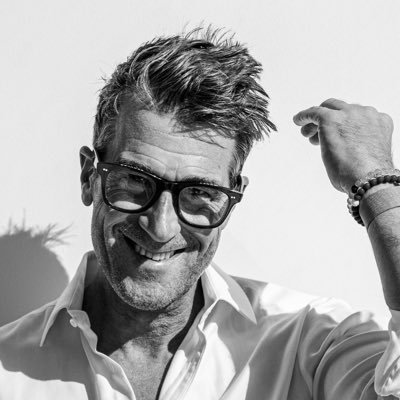
richroll
@richroll • 139,652 subscribers
Ultra endurance athlete, bestselling author of FINDING ULTRA & host of THE RICH ROLL PODCAST. Run far, talk long. One Love https://t.co/T5TqaqT5Gx
Videos

On May 8, 2025 I underwent spinal fusion surgery, a 6 hour procedure in which I was filleted from front to back. First, my abdomen was opened up so that the surgeon could scrape out the disc between L5 and S1, replacing it with a perforated cage containing bone grafting material that was screwed into my vertebra. Then I was flipped over and opened up on my back so that my surgeon could screw vertical rods into L5 and S1 to secure my spine position to ensure the fusion sets properly. The procedure was successful, correcting 15 years of lower back debilitation due to severe Spondylolisthesis. However, the recovery process demanded I endure far more than I bargained for, debilitating me in ways I thought might handicap me permanently. For the first 3 months I could barely move. For the first six months my activity was limited to walking only. Pain was constant. At nine months I was still in so much discomfort, still so limited in my range of motion, still too unstable to do anything to elevate my heart rate. My weight ballooned. My muscles atrophied. My mood plummeted. And I was becoming resigned to the idea that my athletic identity (let alone performing extreme feats of ultra-endurance) was a thing of the past, a memory well behind me. But very slowly after that I began to turn a corner. At ten months, I finally felt stable enough to resume a very modest non-spine compressing return to fitness exercise regimen. Zone 1 indoor cycling, gentle core work, extremely low weight / high rep resistance training. Proceeding on a ‘less is more’ mandate in late November (which demands discipline for someone like myself prone to taking everything to the extreme, I just showed up every single morning to do what I could, and stop well before doing more than I should. Today I am down 35 pounds from November (207 to 171) including a body fat reduction from 20% to 11%. More importantly, I am beginning to feel like myself again. Grateful and hopeful. I still have a long way to go—it takes 12-18 months for the fusion to fully set. My surgeon was not optimistic that I will be able to run again. Time will tell of course, but I’m confident that provided I continue to proceed patiently that I have a future in which running can become part of my new reality. Towards that end I have a goal—which is to celebrate my 60th birthday this Fall by participating in the NYC Marathon. But here’s the thing. I’m not trying to return to who I once was. I’ve leaned into the stillness this experience has demanded of me to become someone new and better. I am posting this story not for external validation but rather to say that change is always possible. And the way to do it is the same way I have navigated every one of my many life transformations, from alcoholism to sobriety, from sedentary to middle aged ultra endurance athlete, and from a corporate lawyer career to becoming an author and podcaster: getting sober and staying sober: by taking contrary action consistently and religiously—one day at a time. As Chris Paul said on my podcast, “keep stacking days.” And remember, every obstacle life presents you is simply an opportunity custom-designed for your growth and evolution.
richroll442,456 просмотров • 6 месяцев назад

The bar for focus has never been lower. Today on the pod: a conversation about agency with Andrew Yang🧢⬆️🇺🇸.
richroll42,131 просмотров • 3 месяцев назад

If you're finding yourself chronically online and devoid of meaning in life, go listen to this episode with Dr. Arthur Brooks.
richroll54,531 просмотров • 5 месяцев назад


Welcome to this teaser for OPEN CONTAINER, my new YouTube series where I invite exceptional people into my home gym—to workout and share health & fitness wisdom as I rebuild my body in the aftermath of spinal fusion surgery. Episode 1 drops soon, exclusively on my YouTube channel. Proud of this project and excited for you to finally enjoy what we’ve worked hard to cook up for you!
richroll14,808 просмотров • 1 месяц назад

14 Years. 1000 episodes. All the feels. To all my guests, thank you for trusting me with your story, and for sharing your experience, strength, and wisdom. To all our brand partnerships, thank you for supporting the stories I care about sharing. To my team, thank you for all the behind scenes work that makes the show possible. And most importantly, thank YOU—the audience—for trusting me with your time and attention. I don’t take any of this lightly. I am blessed to have the best job in the world. For all of it I am grateful. Can’t wait to see what comes next. ✌🏽🌱❤️ - r
richroll13,613 просмотров • 1 месяц назад

Put your phone down and find your purpose. Lifted from my convo with Adam Skolnick on looksmaxxing.
richroll42,292 просмотров • 6 месяцев назад

David Roche is the mad scientist of ultra-endurance. Every once in a while, a brash someone comes a long who has the audacity to defy convention and try something new and bold that others dismiss as likely to fail. Usually it does fail. But once in a blue moon it doesn’t, resulting in an unexpected leap forward that advances an understanding of optimal performance and the path towards mastery. David Roche is once such example of this, a former college football player turned trail runner and elite coach who, this summer, broke one of ultrarunning’s most revered records at the Leadville 100—in his first attempt at the distance. But more noteworthy is HOW he did it, by focusing on speed and intensity on a fraction of the mileage most would recommend (note: built upon an 18 year base). And by studying the habits of competitive eaters, leveling up his capacity to absorb an inhuman amount of carbohydrate fuel per hour, a strategy to better sustain his speed. David is fascinating, but not the maniacally performance driven data geek I expected from his popular social media posts, in which he transparently shares his curious endurance ways. He is genuine, and empathetic to a fault. This is a way of saying that his story isn’t just about running faster than anyone else—it’s a transformative journey disguised as an athletic adventure, revealing how extraordinary achievements spring from the courage to chase audacious dreams with love and vulnerability. David’s exploration into the pain cave confirms one of my favorite truths: we are all capable of far more than we imagine. Enjoy the podcast, which you can watch on YouTube and is streaming on all the pod platforms.
richroll72,924 просмотров • 1 год назад

Maximize your muscle in the next year or NO pain for 50 years: Which one would you choose? Episode 944 with Andy Galpin, PhD✌🏼🌱
richroll30,968 просмотров • 10 месяцев назад


Avoidance is the signal telling you where to direct your energy. Lifted from my convo with Adam Skolnick. Episode 953.
richroll21,819 просмотров • 9 месяцев назад


What drives us to sacrifice curiosity for the illusion of security? This week, I’m joined by Steve Magness (Steve Magness), a renowned performance expert and author of “Win the Inside Game.” We examine why our modern obsession with achievement often leads to self-sabotage and how our drive for external validation can become calcified into patterns that no longer serve us. Through the aperture of his journey from elite runner to pioneering coach, Steve reveals how social media hijacks our basic needs and why group identity threatens growth. His insights offer a framework for moving beyond survival mode to genuine thriving. We dive into the power of curiosity, the value of productive discomfort, and why sustainable excellence requires balancing growth with commitment. Now streaming on YouTube, Spotify, Apple Podcasts and everywhere you enjoy the RRP. Episode 887. ✌🏼🌱 - Rich
richroll36,381 просмотров • 1 год назад

