

Sarah Adams
@sarahadams • 407,701 subscribers
CIA Alum 🥷 Facts over Narratives 10% Humanitarian | 90% Warlord — Host, @The_Watch_Floor Author, Benghazi: Know Thy Enemy, Sister of Bandits!
Shorts


Videos


What happens when intelligence agencies lose decades of experience and institutional knowledge? On today's episode of The Watch Floor, Phil Gurski and I discuss the consequences of losing experienced intelligence professionals and why that expertise matters when identifying and disrupting terrorist threats. Experience isn't something you can replace overnight. Watch now:
Sarah Adams21,353 次观看 • 6 天前


Al-Qaeda Releases Documentary Marking Five Years of Taliban Rule in Afghanistan Today, Al-Qaeda in the Indian Subcontinent (AQIS) released a new documentary marking the fifth anniversary of the Taliban’s return to power in Afghanistan on August 15th. The documentary features former Al-Qaeda commander Khurram Saeed Kiyani, also known as Haji Qasim. Kiyani was killed in a U.S. drone strike in Zabul Province in 2017. He was an active commander within Al-Qaeda’s network in Pakistan. Before joining Al-Qaeda, he was also affiliated with Al-Badr Mujahideen (ABM) and Lashkar-e-Taiba (LeT) and fought in Kashmir. AQIS’s decision to release the documentary on the anniversary of the Taliban’s return to power is not at all suprising. Al-Qaeda is not simply celebrating a Taliban victory. It is celebrating the return of the safe haven it lost after September 11, 2001. Since the fall of Kabul in 2021, the Taliban has continued to harbor multiple components of Al-Qaeda inside Afghanistan, including not just AQIS, but Al-Qaeda Central, including the group’s senior Shura and military commissions, and Al-Qaeda’s Afghanistan branch, a newer branch that has taken shape over the past several years. That is what makes August 15th worth celebrating for Al-Qaeda. The Taliban’s return to power did more than put an old ally back in Kabul. It gave Al-Qaeda its safe haven back. The family is all together again.
Sarah Adams147,434 次观看 • 2 个月前

Twenty-five years ago, Al-Qaeda assassinated Ahmad Shah Massoud. They were already planning for the day after 9/11. Massoud warned us in 2001. Today, his son carries that same burden, warning us about what he sees coming. We should have listened then. We need to listen now. Note: The following video contains terrorist propaganda, viewer discretion advised.
Sarah Adams89,755 次观看 • 1 个月前

Apparently, we are all supposed to be terrified of terrorist propaganda now. Although to me, that sounds more like a convenient excuse for weakness. So I thought I would share a few of my own appearances in terrorist propaganda to put things into perspective. Let's jump right in. First up, the Islamic State-Khorasan Province (ISKP) featured me in one of its propaganda videos. Unfortunately, I had the misfortune of being born both a woman and a “sister of bandits,” so they blurred my face. I know that makes it so difficult to recognize me, but honestly, I've never looked better. Special shoutout to my fellow cast member ., who apparently wasn't pretty enough to earn the blurring feature. Then there is the Taliban article about me, titled “The Delusional Narratives of a Failed Agent.” Not exactly the glowing profile I was hoping for, but I do appreciate the effort they put into creating such a quality cover graphic. Honestly, the biggest part of selling a story is the packaging, and I have to give their graphic design department some credit. Shame about the Al-Mirsaad English journalism though. Next, we have former Tehrik-e-Taliban Pakistan (TTP) spokesman Ehsanullah Ehsan calling me a “mad woman” on X. Apparently, I've made quite an impression to jihadis (this one is NOT a jihottie) on both sides of the border. And in some truly heartbreaking news, his X account,Ehsanullah Ehsan, has been suspended. Such a loss, please pray for him. And finally, my personal favorite. After I leaked a photograph of Osama bin Laden's grandson in Afghanistan, Al-Qaeda senior leadership got so upset over it that the Taliban's General Directorate of Intelligence (GDI) had to produce an entire video responding to it. They even found someone they apparently thought looked like Hassan, despite the guy looking at least 10 years older. But the funniest part? They couldn't even get Hassan's hat to use as a prop. Imagine going through all that trouble to produce a propaganda video, only to get the face, the age, AND the wardrobe wrong. Next time, try harder, boys. Here's my point. These terrorist organizations have spent decades producing propaganda designed to intimidate us, recruit new followers, glorify the murder of some of our very best, and manipulate public opinion, which is really just a nice way of saying they're looking for useful idiots to spread their hate. We shouldn't clutch pearls over it. We should expose it, mock it, counter it, and stop giving it the power they want it to have. And we certainly should not be using the fear of terrorist messaging as an excuse to show leniency to anyone. Terrorist propaganda is a weapon, but fear is an even more powerful one. And when we allow that fear to dictate our decisions, we are doing the terrorists' work for them.
Sarah Adams28,002 次观看 • 14 天前

From Baghdad to the Green Berets. My first guest on The Watch Floor is Steven Al Ebadi aka Alladdin, a former intelligence officer, combat linguist, and journalist whose career includes supporting U.S. Special Operations Forces, the DIA, and the FBI. In this clip, Steven explains how his journey began. We cover a lot more in the full interview, from the Iraq War and intelligence work to the threats he has faced and his reporting from Ukraine.
Sarah Adams24,518 次观看 • 13 天前

United Airlines knows that when Al-Qaeda in the Arabian Peninsula (AQAP) brought aviation targeting back into its propaganda in December 2023, United was specifically named as one of the airlines its supporters should target. The material included guidance on concealing explosives and where to detonate them aboard an aircraft. United Airlines also knows exactly what one of its own pilots, Ibrahim Mossallam, wrote on October 7th of that same year. As Hamas was murdering and kidnapping civilians, Mossallam described what was happening as “resistance by a brave people” and said the attack was “not unprovoked.” United removed him from service with pay while it investigated. According to a later federal court filing, he was back flying passengers about a month later. United has never publicly explained what that investigation found or why it decided am Islamist should return to the cockpit. That is where I have a problem. This is not about whether a pilot is allowed to have political opinions. It is about judgment, access and risk. A commercial airline pilot is trusted with hundreds of lives and has access to one of the most security-sensitive places in aviation. When that pilot publicly rationalizes a terrorist attack against civilians, that should raise a serious insider-threat concern. And what happened last week aboard Flydubai Flight #1073 is exactly why this matters. We have seen what can happen when the threat comes from inside the cockpit. That is why airlines cannot afford to dismiss warning signs involving Islamists who already have trusted access. If United has information showing that its investigation resolved those concerns, then say so. Explain what was reviewed. Explain the standard. Explain why passengers should be confident in that decision. Because this is not something the public should simply be told to trust. Based on what United has publicly explained so far, I do not trust this decision. Please do NOT wait until after an attack to decide a warning sign matters.
Sarah Adams27,277 次观看 • 18 天前

A Call to Local Action Against the Al-Qaeda Threat We’ve received too many reports that a number of state-wide fusion centers have NOT distributed the Office of the Director of National Intelligence's National Counterterrorism Center's (NCTC) al-Qaeda threat reporting to local law enforcement in their states. If agencies are unwilling to act, then everyday Americans must take responsibility to ensure these materials reach the people who need them. The scale and scope of the next attack on the U.S. homeland will be unlike anything we have seen before. You must take action now to prepare your community—because if you don't, no one else will. Please print the ODNI press release and the NCTC memo itself and deliver hard copies to nearby law enforcement offices, fire stations, and hospitals. Veteran communities will be among the most affected by al-Qaeda's upcoming plot after Washington, D.C., and the aviation sector. If you live in an area with a large veteran population, also be sure to alert city officials, churches, synagogues, schools, shopping centers, and public-transportation hubs as well. Thank you for doing the right thing for your communities. If this threat is not thwarted by our federal government, it falls to us to be prepared, to limit casualties in our hometowns, and to protect the people we love the most. ODNI Press Release titled 'NCTC Supports U.S. Law Enforcement, First Responders by Sharing Intel Product Aimed at Deterring Attacks by Al-Qa’ida': NCTC Memo for Law Enforcement and First Responders titled 'Al-Qa‘ida’s Recent Calls to Conduct Attacks in the US Highlights Its Enduring Threat to Public Safety':
Sarah Adams395,372 次观看 • 1 年前

One of the most important parts of school safety happens long before someone attempts an act of violence. Here, Wayne Black discusses behavioral threat assessments and why identifying concerning behavior, evaluating potential threats, and intervening early are essential parts of violence prevention. Threat assessment is not about profiling students or assuming that someone who behaves differently is dangerous. It's about recognizing behaviors that may indicate a pathway toward violence, gathering the right information, and taking appropriate action. We need to invest as much attention in preventing violence as we do in preparing to respond to it. The Watch Floor
Sarah Adams11,537 次观看 • 7 天前
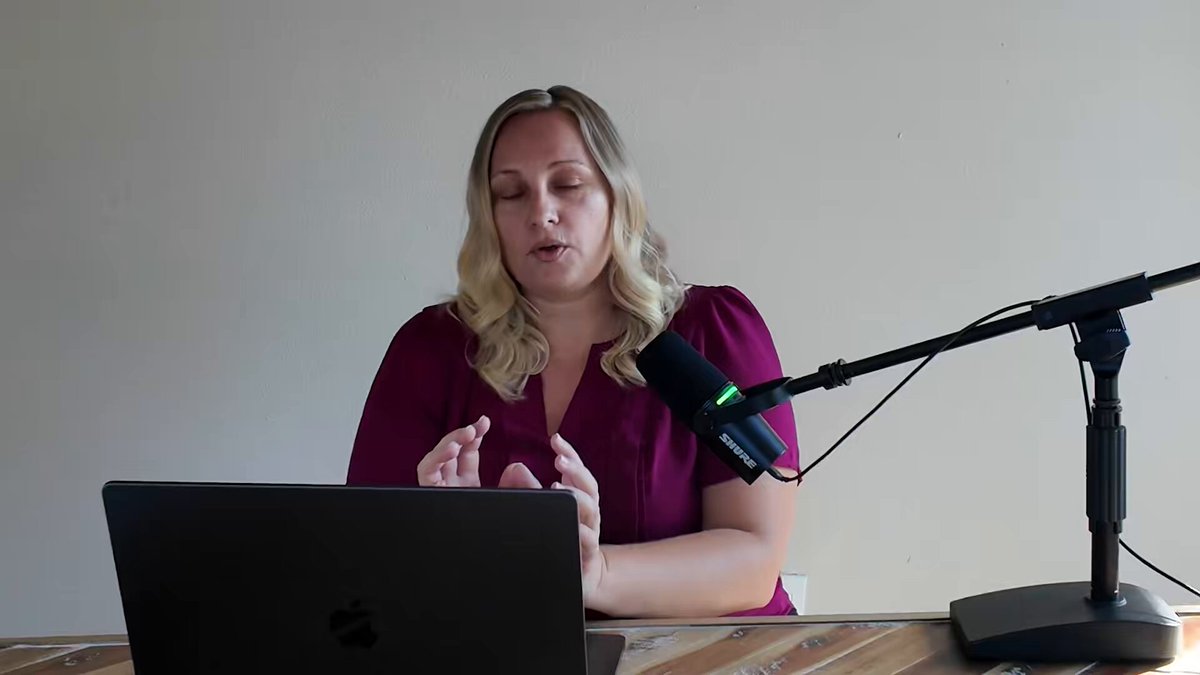
Intel Brief 073 is live! My Intel briefs for the Shawn Ryan Show are now also available on Patreon. Check out the latest brief at the link below — Hamas is already breaking the peace deal, the State Department just dropped two new advisories in Latin America, and al-Julani just met with Putin. You’ll want to hear what both sides put on the table. Enjoy this teaser👇
Sarah Adams303,371 次观看 • 1 年前

The Return of Hamza bin Laden Al-Qaeda released a video yesterday featuring its Emir, Hamza bin Laden, in footage that appears to have been recorded years after 2009, yet not a single major U.S. media outlet has reported on it. Ask yourself why. This video was released by al-Qaeda's central media outlet, As-Sahab and shows Hamza alongside Dr. Ayman al-Zawahiri. Accompanying the video is a nasheed performed by an al-Qaeda vocalist, reciting a poetry elegy written by Sheikh Abu Hafs al-Mauritani aka Mahfouz Ould al-Walid, the former mufti and Shura Council member of al-Qaeda, mourning Sheikh Osama bin Laden. You can clearly see Hamza bin Laden at 5:46. And by the way, he appears identical to the best image of Hamza that I obtained within the last couple years, the image I was suppose to show in-person to the National Security Council last February 2025 but my meeting was canceled by Sebastian Gorka. He even told some serving at the NSC that I was on drugs to stop them from seeing my evidence on Hamza. For years, the government and its think tank allies have told the public that this threat was gone. They have purposely lied to you. The evidence tells a different story. Consider this a wake-up call. The next generation of the bin Laden sons is coming to attack our homeland. Pay attention to what is being plotted and who is involved before events force the conversation that we have been preparing you for.
Sarah Adams99,184 次观看 • 4 个月前

The Director of NCTC, @NCTCKent, put out a warning to law enforcement after the release of this video by AQAP’s leader Saad al-Awlaki, yet the FBI is still telling law enforcement in our local communities that al-Qaeda isn’t planning a homeland attack. In addition to this clip, this video goes on to threaten Congress and their family members and highlights a number of U.S. cities, including two in Pennsylvania—Philadelphia and Johnstown, a town with a 12% veteran population and just 20 minutes from the Flight 93 crash site. The end of the video showcases the Islamic Army and highlights there will be attackers on our soil from multiple locations, including the Maghreb, Somalia, Yemen, Pakistan, and Afghanistan. Someone is lying to you. It’s not NCTC. If you haven’t read their press release and memo here you go! ODNI Press Release titled 'NCTC Supports U.S. Law Enforcement, First Responders by Sharing Intel Product Aimed at Deterring Attacks by Al-Qa’ida': NCTC Memo for Law Enforcement and First Responders titled 'Al-Qa‘ida’s Recent Calls to Conduct Attacks in the US Highlights Its Enduring Threat to Public Safety':
Sarah Adams219,097 次观看 • 1 年前

I've lived in Pakistan and seen these so-called 'peaceful' protesters firsthand. Trust me, those of us from Benghazi know a thing or two about the misrepresentation of 'peaceful protests.' Don't fall for the fake news. Even some of our own U.S. congresspeople are out here commenting on these protests without any actual ground truth. Here's a reality check: it's the protesters firing off tear gas. And no, 100 protesters in Islamabad weren’t shot and killed by the Pakistani military either. Just because it’s on the internet, and organizations like Amnesty International parrot it for donation dollars, doesn’t mean it’s true. Reminder that sharing false information only undermines the legitimacy of your own cause.
Sarah Adams382,755 次观看 • 1 年前

Five Years in Power and Still Hiding Taliban Supreme Leader Mullah Haibatullah Akhundzada marked the fifth anniversary of the Taliban’s return to power today by taking his victory lap through the streets of Kandahar. Well, “victory lap” may be a bit generous. Haibatullah traveled inside a black vehicle with all four windows completely tinted, surrounded by members of his special security unit deployed on foot and in Hilux vehicles. Not so much as a glimpse of the Taliban leader himself was visible through the windows. Since the Taliban returned to power, this appears to be the first time the notoriously reclusive Haibatullah has been seen traveling publicly like this in Kandahar. He may rarely show his face, but his presence has been felt in nearly every aspect of Afghan life. For five years, he has issued decrees stripping women and girls of their freedoms, indoctrinating a generation of Afghan boys, harboring terrorist organizations, deploying terrorists across Afghanistan’s borders, torturing former Afghan security forces and U.S. allies, and presiding over a regime that has once again made Afghanistan the international epicenter of terrorism. Apparently, everyone in Afghanistan has to live by Haibatullah’s rules. He just doesn’t have to show his face while imposing them. Nothing says victory quite like hiding from the people you rule. He will always be a coward.
Sarah Adams47,258 次观看 • 2 个月前

What to Watch for When You Fly: Doing Your Part to Keep America Safe As the holiday travel season approaches, every traveler can play a part in helping to thwart al-Qaeda’s upcoming aviation plot. Pre-attack surveillance often shows up days or weeks beforehand and then later in the season we will must shift our focus to watching for active threats. (1) Now through mid-December—watch for pre-attack surveillance and dry runs: -Passengers asking unusual or technical questions about crew, routes, or procedures. -Interest in sitting along the fuselage or near service areas. -Repeatedly accessing overhead bins or restrooms without reason; lingering near service carts. -Attempts to enter unauthorized areas of the airport or on the aircraft (including cockpit approaches). -Multiple boarding passes purchased under similar names/itineraries, often paid in cash. -Scouting trips on domestic routes to observe security routines. -Recording security and screening in procedures in the airport. -Testing crew responses by creating small disturbances or lingering near secured areas. -Anti-American remarks, isolating behavior, or attempts to avoid other passengers. -Unattended packages or bags — don’t ignore them. Please if you see something, say something. (2) Starting at the beginning of the Christmas travel season shift focus to signs of a possible suicide bomber or imminent attack: -Attempts to avoid or opt-out of the millimeter wave scanner. -Odd items on scanning belt including items like syringes; watch also inside the plane. -Lack of luggage or round trip travel. -Signs of drug use, particularly Ecstasy. -Erratic behavior or, conversely, an unnaturally calm, detached demeanor. -Visible physical stress signs: jugular vein extension (neck bulging), profuse sweating, clenched jaw, clenched fists, muscle rigidity, pacing. -Target fixation—obsessively looking at crew, flight deck doors, or passengers who appear to be law enforcement or military (“1,000-yard” stare). -Repeatedly touching or adjusting the same spot on clothing/body. -Watch for lines, bulging and sagging in clothing; attacker may also look at self in reflections throughout the airport for fear the bomb is visual. -Hyper sensitivity over an article of clothing on their body. -Visible burns, chemical marks, or other unexplained injuries on the skin. -Frequent self-reassuring gestures, whispered prayers, or profuse swearing combined with agitation. Trust your instincts. If something feels off, report it calmly to crew, airport security, or call 911 you may stop an attack before it ever begins. Note: The clip below related to the 2006 liquid bomb plot is a reminder that we haven’t seen attacks like these over the years because incredible humans have been stepped up and thwarted them. We need heroes like that again. Do your part!
Sarah Adams183,449 次观看 • 1 年前


Today, I put out a new episode in the Back to Benghazi series on The Watch Floor discussing the Libyans who came to our aid in the aftermath of the Benghazi attacks on September 12, 2012. In the episode, we briefly mention the 2014 attack on the Libyan Special Forces headquarters, carried out by many of the same terrorists who attacked us over the course of September 11–12, 2012. This separate ISIS video, produced at the time, includes the original operations plan for that assault. The plan centered on the adjacent Buhedima neighborhood, which the terrorists used as the staging area for their attack. It provides a rare look at the mindset behind the enemy’s operational strategy.
Sarah Adams59,384 次观看 • 4 个月前

The Invisible Bomb: Why the Christmas Day 2009 Plot Still Matters As we approach the anniversary of the failed Christmas Day attack, it is worth revisiting the 2009 “underwear bomber” plot, not as a historical footnote, but as a case study in how layered security can still fail and why al-Qaeda has not abandoned this line of effort. What is often overlooked is that this device did not pass through a single checkpoint. The failed suicide bomber, Umar Faruq, trained overseas in Yemen, returned to Africa with the device, and then traveled internationally with it—passing through security screening at three separate airports before boarding the U.S.-bound flight from Amsterdam to Detroit on December 25, 2009. At no point was the device detected. This was not an isolated screening failure. It reflected systemic vulnerabilities shared across multiple aviation security environments at the time: reliance on detection technologies optimized for conventional threats, limited ability to identify non-metallic explosives concealed on the body, and inconsistent integration of behavioral indicators and intelligence. Each layer assumed the previous one had worked. The device ultimately failed due to malfunction NOT because the system succeeded. For al-Qaeda, this was not a dead end. It became an obsession. Within the organization, variations of this device have been referred to as the “hidden bomb”—what Western services describe as the “invisible bomb.” Making this concept work has remained a persistent objective, not because it is new, but because it exposed how close they came to bypassing aviation security entirely. And they plan to do it again. Importantly, this effort has never been viewed by al-Qaeda as separate from the individual who carried it out. The bomber himself has remained both a symbolic and operational priority, with repeated interest in freeing him from U.S. custody and using his sacrifice to motivate the newest generation of aviation suicide bombers. These objectives underscore how this plot is viewed internally: unfinished business, not a failure. Even without the more recent innovations al-Qaeda and its affiliates have pursued in materials, concealment, tradecraft, and binary detonation, the core concept behind the 2009 device would still challenge security systems under the right conditions. Aviation security has improved, but it remains probabilistic as it is not applied equally even across U.S. airports, nor is it absolute. It continues to rely on intelligence integration, human judgment, and institutional memory. The lesson of Christmas Day 2009 is not simply that the attack failed. It is how close it came to succeeding, slipping through security apparatuses across multiple countries, and why adversaries continue to probe, study, and refine methods that exploit gaps, seams, and vulnerabilities rather than attempting to overpower defenses. It’s a clear reminder that a single failure can lead to disaster. Terrorist organizations remember that. The risk is that we forget.
Sarah Adams106,873 次观看 • 10 个月前