
Sequoia Capital
@sequoia • 820,773 subscribers
We help the daring build legendary companies from idea to IPO and beyond.
Videos

Announcing No Limit: a bot building tournament hosted by Sequoia Capital, Citadel Securities and OpenAI. Teams of 1 or 2 get 60 minutes to build a pokerbot from scratch. Agents play thousands of games across six scored rounds. Open to university students and recent grads (‘25 or ‘26). Regionals in Boston, Pittsburgh and the Bay Area in early November. Top five teams from each fly to the Finals. $100K grand prize.
Sequoia Capital874,539 views • 10 days ago

In 2014, Keller Cliffton Cliffton shut down his robotic toy startup to build a drone delivery network for life-saving medical supplies. Everyone said it wouldn’t work. Today, Zipline delivers for hospitals around the world. Now it’s reinventing how delivery works with Platform 2 - starting with Walmart and Chipotle in the US. This is a story of betting everything to transform the world. Featuring Keenan Wyrobek, Ryan Oksenhorn, Maggie Jim, Alfred Lin Hosted by Roelof Botha 00:00 – Chewing Glass 00:55 – Discovering Entrepreneurship 02:00 – From Robots to Real Problems 03:00 – The Vision for Global Health Logistics 04:30 – Betting on Rwanda 06:00 – Building the System 08:00 – The First Flight 09:15 – Breakthrough and Scale 11:15 – The Moment of Validation 12:30 – Platform Two: A New Bet 14:15 – Seeing Is Believing 15:45 – The Next Frontier 16:30 – Never Giving Up
Sequoia Capital1,340,956 views • 1 year ago


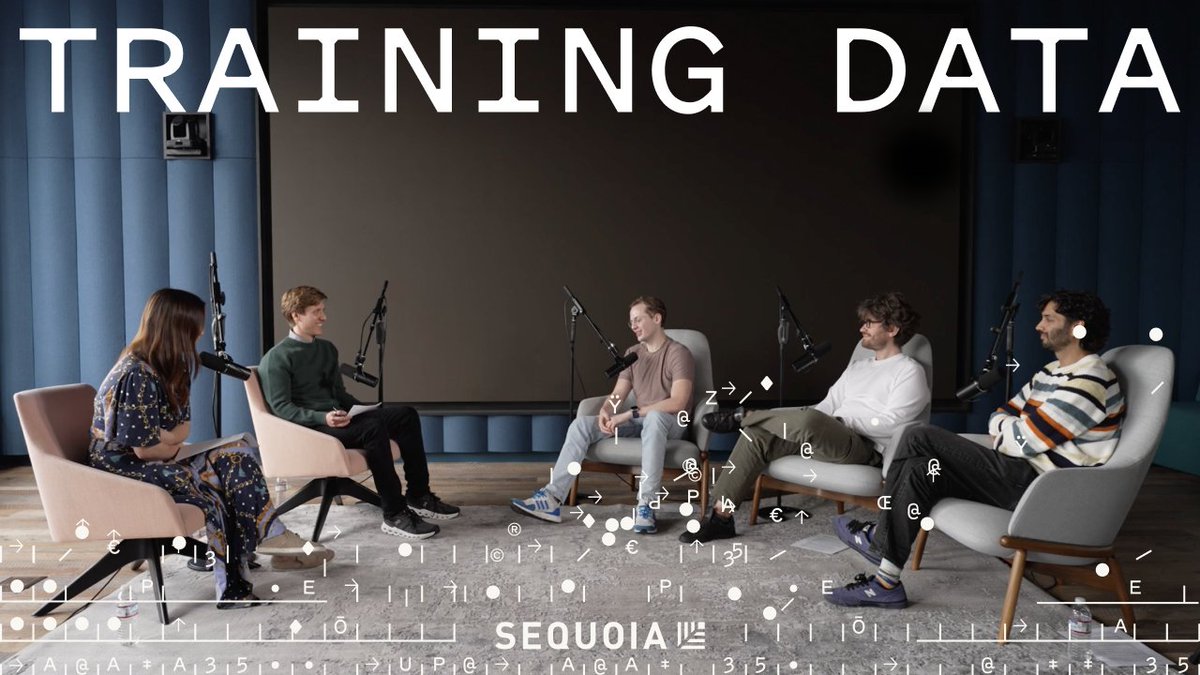
“Many of the best things we’ve learned have come through failures.” Ilkka Paananen built Supercell into Europe’s first decacorn by inverting the standard corporate hierarchy and radically accepting failures. Hear the story of Supercell today on a new episode of Crucible Moments.
Sequoia Capital315,006 views • 1 year ago

David Silver founded Ineffable Intelligence with a mission to build a "super learner" and make first contact with superintelligence. He says a super learner has capacity in two dimensions. Depth: it starts from knowing nothing at all and goes all the way to discovering things beyond what humans know. Breadth: you can drop it into any stream of experience and it keeps learning. His analogy is us. Humans started with gray mush and discovered languages, technology, science and mathematics for ourselves. Nobody handed us a blueprint or a dataset. No AI system has done that yet.
Sequoia Capital20,272 views • 22 days ago


Today's AI models train once. We don't work that way. We learn continuously, forget what doesn't matter, and retain what does. That gap is what Dan Biderman and Jessy Lin are closing at Engram. AI that never stops learning, with memory that lives inside the model instead of bolted on as an afterthought. In our latest Training Data episode we get into why memory is the next frontier: why the brain forgets on purpose, why RAG is a band-aid, and what becomes possible when a model is always training. 00:00 Introduction 00:59 Always Training Explained 01:51 Beyond Context Windows 03:29 Ngram Product Overview 04:34 Adapters And Training Signals 05:32 Internalize Vs Externalize 06:49 Compute And Token Savings 08:19 Teams First Then Individuals 08:51 Memorization Vs Understanding 12:47 Dreams And Offline Digestion 14:08 Training Beats Curation 15:19 Why Everyone Needs A Model 21:44 Bitter Lesson And Architecture 24:44 RAG Killer And KV Cache 31:38 Future Of Memory And Models
Sequoia Capital84,809 views • 4 months ago


"Is it Bitter Lesson-pilled?" — the most used, and most misused, phrase in AI right now. Richard Sutton sums it up on the latest Training Data with Khurram Javed , Sonya Huang 🐥, Alfred Lin "Don't be distracted by human knowledge, as AI traditionally has been many times. Instead, focus on learning methods that will scale with computation, like search and like learning."
Sequoia Capital29,118 views • 2 months ago


If everyone woke up sick tomorrow, coding-agent usage would collapse to near zero. Almost every token today starts with a human typing "hey, go do this." Factory co-founder Matan Grinberg's prediction is that in 12–24 months, 90% of tokens will be asynchronous – droids autonomously spotting a customer signal and showing up with a first-pass fix, no human kicking them off. We're still in copilot mode. Agent-native is next.
Sequoia Capital36,686 views • 3 months ago

In Iain Banks' The Player of Games, a civilization chooses its emperor by playing a strategy game. That may be the best metaphor for AI right now: multiple players, one board, and everyone at the table believes the winner controls AGI – whatever that turns out to mean. David Cahn joined Alex Kantrowitz on Big Technology to discuss: - How each player is playing the board: Anthropic, OpenAI, XAI, Google, Meta, Microsoft, and the rest - Why the $200B question is now the $1.5T question - Why nothing short of AGI justifies the spend - Whether humans will end up worshiping AI and more.
Sequoia Capital31,600 views • 3 months ago
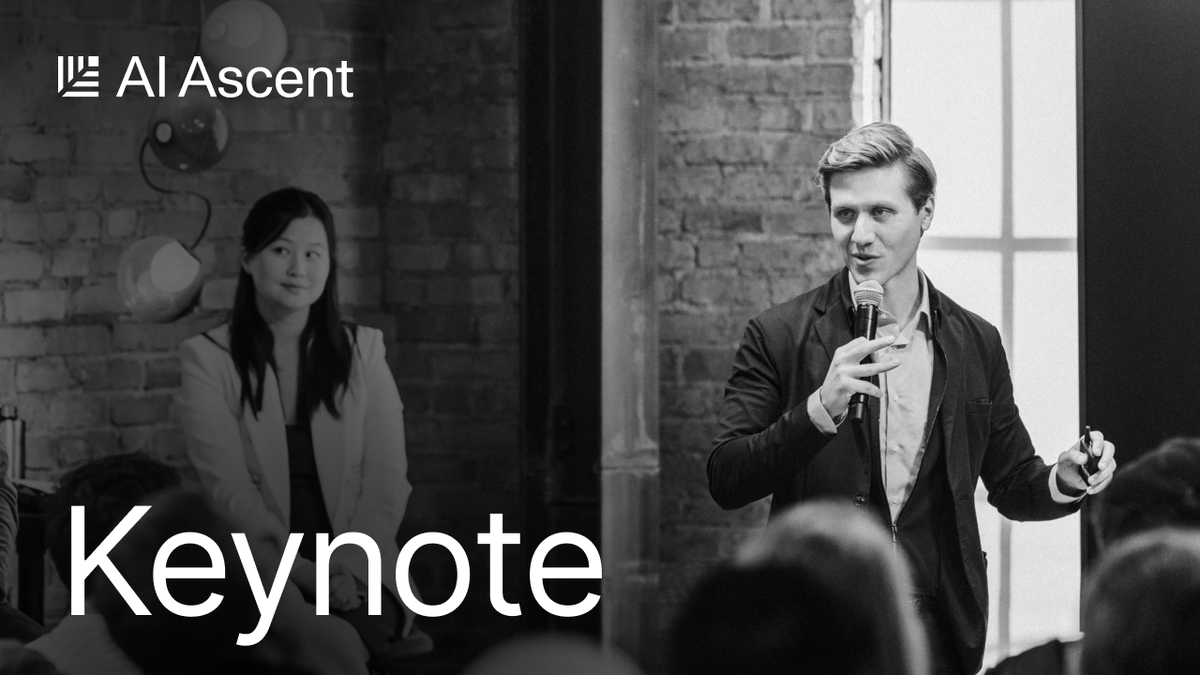
Last week we hosted our 2nd @Sequoia AI Ascent. We’re sharing some of the day’s most memorable talks. Hear thoughts from @mistralAI’s Arthur Mensch, Paul Jankura’s Daniela Amodei, AI Fund’s Andrew Ng, founding member of OpenAI Andrej Karpathy, and more to come.
Sequoia Capital201,207 views • 2 years ago

Building the most automated AI lab in the world doesn’t mean removing humans. co-founder Jerry Tworek's version of automated: give each researcher maximum agency. Walking gets you some distance. A bike gets you further. A car, much further. Farming by hand works a small plot; a machine works a vastly larger one. A single researcher can now move through ideas faster than entire teams could a few years ago. The choice every lab faces: retrofit old team structures around that, or build natively for it. They chose to build natively.
Sequoia Capital27,722 views • 3 months ago


The unwritten rule of AI research: prove your architecture at small scale, then earn the compute to scale it. Jerry Tworek thinks that rule may have quietly killed the transformer's competitors. RL showed almost nothing interesting until it crossed a compute threshold – the capabilities simply don't appear below a baseline. If that's true of RL, it's probably true of other architectures too. Which means there could be entire families of ideas sitting in the discard pile, written off before they were ever given enough compute to show anything at all. That's the bet behind Core Automation: run architecture search at the scale where the answers actually show up.
Sequoia Capital26,746 views • 3 months ago

