

vladuah
@vladuah • 3,427 subscribers
Building system for our future
Videos

This is the earliest known video of Warren Buffett. He’s 31. Unknown. Sitting on a local Omaha station in 1962. No hype. No predictions. No guru act.Just a young man explaining how markets actually work - before the world decided to listen.Rare footage. Watch it once.
vladuah605,269 Aufrufe • vor 17 Tagen

This is the earliest known video of Jeff Bezos. He’s 30. Unknown. Standing in a tiny room in Seattle in 1994. No hype. No predictions. No guru act. Just a young man pointing at his desk, a fax machine, and an orange extension cord because the room doesn’t have enough power - before the world decided to listen. Rare footage.
vladuah565,267 Aufrufe • vor 16 Tagen
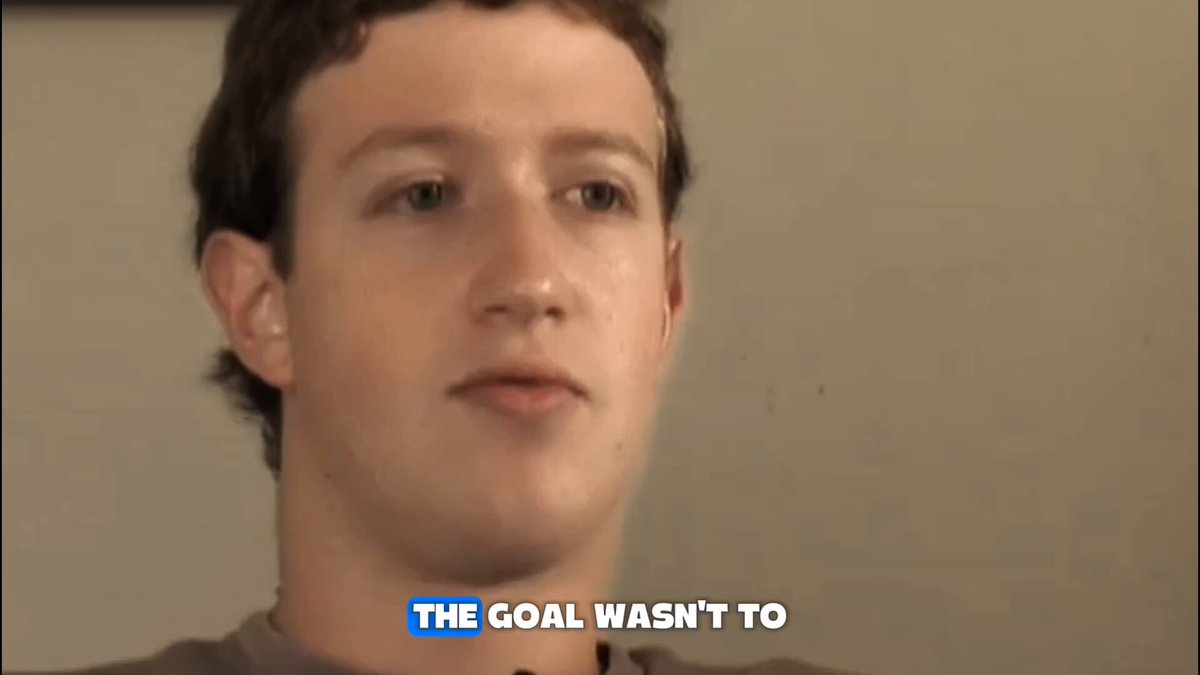
Zuckerberg: we ran Facebook for $85 a month. He was $160 in debt. Facebook was a search box, he says. Type a name. Get the file. A few days of code. February 4, 2004. Dustin bought *Perl for Dummies* and came back ready. They rented the servers for $85 a month. He was $160 in debt. Big sites celebrated 15% monthly return. His users came back 70% every day.
vladuah274,776 Aufrufe • vor 13 Tagen

In 1997, a developer publicly told Steve Jobs he had no idea what he was talking about. Jobs paused, then answered a question nobody had actually asked The developer's question was an insult wrapped in a technical challenge - asking Jobs to explain Java against OpenDoc, then adding: "Perhaps you could tell us what you personally have been doing for the last 7 years." Jobs didn't defend the technology. He didn't attack the developer either. He agreed with him first. "People like this gentleman are right in some areas," Jobs said. He admitted OpenDoc probably did things nothing else could do. He admitted the demos would look impressive. Then he pivoted to the actual question underneath the insult: how does any individual piece of impressive technology fit into a vision large enough to sell $8,000,000,000 to $10,000,000,000 of product a year? Here's the framework he laid out live, under pressure, with no preparation. Start with the customer experience. Work backward to the technology. Not the reverse. "You can't start with the technology and try to figure out where you're going to sell it." He admitted he'd made that exact mistake - building from technology outward - more than anyone else in the room. "I've got the scar tissue to prove it." Then he made the abstract point concrete with a story from over a decade earlier. Apple built the first small laser printer in the US. Inside the box: the first Canon laser engine on American soil, custom controller software, Adobe PostScript, AppleTalk networking. Genuinely groundbreaking engineering. None of that was the pitch. Jobs held up the printed page and said: "Do you want this?" Nobody needed to understand PostScript or AppleTalk to answer that question. In 1984, before laser printing existed for consumers, the answer was an immediate, involuntary "yes." That's the whole model. The technology enables the outcome. The outcome is what you sell. Jobs closed by conceding something most executives never say in public: "I readily admit there are many things in life that I don't have the faintest idea what I'm talking about." Then he defended his team anyway - engineers being offered 3 times their salary elsewhere during the hottest hiring market in Silicon Valley, and staying. "Mistakes will be made along the way. That's good, because at least some decisions are being made." He didn't win the argument by being right about everything. He won it by being right about the 1 thing that mattered: start with what the customer wants, then build backward.
vladuah1,303,892 Aufrufe • vor 1 Monat

Steve Jobs got a standing ovation for admitting the whole industry was too scared to ship wireless. 1999, iBook just launched, 50,000 people at Macworld. "We told them about Airport. They just lost it." Wireless existed for a decade - nobody shipped it. Dell blamed Windows, Microsoft called it low priority. "We're the last people who give a shit about making great computers." 7 profitable quarters, $200,000,000 last quarter. Most call that done. Jobs didn't. "I came here to make Apple great again." He didn't come back to fix a balance sheet. He came back to make people lose it again.
vladuah81,213 Aufrufe • vor 9 Tagen

Zuckerberg dropped out and still says the useful part of college was not the classes. He met Priscilla there. He met people who are still in his life. The lectures were fine, he says. Entertaining. The point was leaving home and learning how to be around other adults. He had already done two years of boarding school, then two years of college, and left. Then the part that is not nostalgia. College is expensive. You finish in debt. You are not guaranteed a job. If it is not preparing you for the work, you start in a hole. Saying not everyone needs the degree used to be taboo. He thinks that taboo is thinner than it was ten years ago.
vladuah45,773 Aufrufe • vor 6 Tagen

An F-22 test pilot who flew 76 different aircraft told MIT students something that sounds backwards: a Cessna is harder to fly than a $200,000,000 fighter jet His name is Randy Gordon, callsign Laz. 2 combat tours in Iraq and Afghanistan. MIT graduate, 2018. Test pilot - meaning fighter pilot and engineer at once, someone who understands MATLAB and flies aircraft that don't exist in any manual yet. His opening line to the class: everything you learn about a Cessna directly applies to the Raptor. There is no magic gap. Here's why the 2 aircraft look nothing alike. The Cessna's high wing sits above the cabin. Great visibility looking down. Terrible visibility looking through the wing during a turn. The wing works like an umbrella in the rain - convenient, not combat-relevant. The Raptor's wing sits behind the cockpit and sweeps backward. That gives the pilot full visibility forward and to the sides - critical in a dogfight where seeing the threat first decides the fight. The sweep also reduces wave drag at near-supersonic and supersonic speeds. Then the part that changes everything: the F-22 has no mechanical connection between the pilot and the control surfaces. The stick and pedals send commands to a computer. The computer decides how to move the surfaces and vector the thrust to execute what the pilot asked for. This is called fly-by-wire, and it's irreversible - meaning the computer's decision is the final decision. Different flight modes activate automatically. In air combat, a G-command mode holds exactly 4G even if the pilot releases the stick. Thrust vectoring is fully integrated - the system decides when to use it. The pilot never touches a separate switch. The power for all of this comes from 6 permanent magnetic generators. Even with both engines shut down, as long as the turbines keep spinning from airflow, the flight control system stays powered. The tradeoff for all this intelligence: Pilot Induced Oscillation. If the system's gain settings are wrong - especially during a configuration change like retracting the landing gear - the pilot can accidentally fight the computer and rock the aircraft into an oscillation it can't recover from. That's exactly what happened during a YF-22 prototype test flight. Incorrect gains after gear retraction, combined with afterburner engagement, brought the prototype down. The Cessna forces you to fly the aircraft directly - every mistake is yours, immediate, and mechanical. The Raptor removes that mechanical link and replaces it with a computer smart enough to hold 4G on its own. Which means the hardest part of flying it isn't the aircraft. It's trusting the system enough to let go of the stick.
vladuah259,338 Aufrufe • vor 2 Monaten

This is Zuckerberg’s first video. Harvard just emailed him. Zuckerberg is in pajamas. Beige computers by the bed. Dad filming. Dog on the floor. He opens it. “yay. i got accepted.” That is the whole celebration. His mom had already bet he would drop out. He took the other side. Two years later he left. Facebook was worth more than the degree. The clip is not cute because he got into Harvard. It is cute because one quiet word was enough.
vladuah54,020 Aufrufe • vor 15 Tagen

Bill Gates predicted Windows would win in 1983. By 1994 he was just waiting for everyone to admit it. "Even companies like WordPerfect and Lotus have now come out with Windows applications." His competitors were building on his own platform. "It's really attracting all the innovation in the industry." He didn't sell Windows. He waited it out.
vladuah21,745 Aufrufe • vor 8 Tagen

In 1997, Jeff Bezos explained why he picked books over 19 other product ideas - and called the entire internet "Day One. He was working at a quantitative hedge fund in New York when he found the number that changed his life: web usage was growing 2,300% a year. That single statistic sent him searching for a business model that made sense against that growth curve. He made a list of 20 possible products to sell online. Books won. The reason had nothing to do with reading habits and everything to do with catalog size. Music, the second-largest category, had roughly 200,000 active CDs at any given moment. Books had over 3,000,000 titles in print worldwide, across every language - more than 1,500,000 in English alone. That gap is the entire insight: when a category has that many items, you can build a store online that couldn't exist any other way. No physical bookstore on Earth could stock 3,000,000 titles under one roof. The inventory system he built reflected that scale directly. A few thousand bestsellers sat in Amazon's own warehouse. Another 400,000 titles ran on what Bezos called "almost just-in-time" inventory - ordered electronically from a network of over a dozen wholesalers the same day a customer bought, arriving on the loading dock the next morning. Another 1,100,000 titles came straight from 20,000 different publishers, taking a couple weeks. And 1,000,000 out-of-print books got tracked down individually, when findable at all. 2,500,000 books in the catalog. Almost none of it physically warehoused. Then the interviewer asked the harder question: how do you capture attention on the internet when everyone is trying? Bezos didn't credit marketing. He credited doing something genuinely new. "Attention is the scarce commodity of the late 20th century." His actual strategy: build something with real value for the customer first. If it's genuinely new, journalists write about it unprompted. Customers tell other customers. The fanout compounds on its own. Amazon ran zero paid advertising in its first year. Every bit of growth came from word of mouth and media coverage. The first ad Bezos ever ran was a tiny line at the bottom of the New York Times front page - a URL functioning almost like a compressed pitch: click here, this is a bookstore. He closes with the line that outlived the interview by decades. "This is Day One. This is the Kitty Hawk stage of electronic commerce." Not the peak. Not even early growth. The first flight, barely off the ground, with almost everything about the medium still unbuilt.
vladuah117,752 Aufrufe • vor 1 Monat

A Harvard professor asked 1 question 4 different ways - and got 4 contradicting answers His name is Michael Sandel. He teaches Justice. He opens the entire course with a hypothetical that takes 30 seconds to state and takes the rest of the hour to unravel. His entire framework fits on a napkin. You're driving a trolley. The brakes fail. 5 workers are on the track ahead. A side track has 1 worker. You can steer. Ask a room of students what they'd do, and the vast majority say the same thing: turn. Better 1 dies than 5. Here is where it falls apart. Change nothing about the math. Change only the mechanism. Now you're standing on a bridge, watching the same runaway trolley bear down on the same 5 workers. Next to you stands a heavy man. Push him off the bridge, his body stops the trolley, 5 live and 1 dies - the exact same trade as before. Almost nobody pushes him. Same numbers. Same outcome. Completely different answer. Sandel doesn't tell the room they're wrong. He asks them to explain the difference, and the room can't agree on one. 1 student argues the fat man never chose to be involved, unlike the worker already standing on the side track - except the worker never chose it either. Another argues that steering a wheel is a "split-second" reaction while pushing a man is deliberate murder - except both require an active, conscious decision to kill 1 person you weren't otherwise going to kill. Every explanation the room offers gets challenged by another student within seconds. Then Sandel tightens the trap further. You're an ER doctor. 5 patients need moderate care, 1 needs intensive care, you can't save all 6. Nearly everyone chooses the 5 - consistent with the trolley. Then: you're a transplant surgeon. 5 patients need 5 different organs. A healthy stranger naps in the next room. You could harvest his organs and save all 5. Almost nobody says yes. Same math, every single time. 1 life against 5. The answer keeps flipping, and the room keeps struggling to explain why. Sandel closes the lecture with a real case from 1884 - the shipwreck of the Mignonette. 4 sailors adrift with no food or water. After 19 days, the captain killed the weakest of them, a 17-year-old crew member, so the other 3 could survive by eating his body. All 3 survivors were rescued. 2 of them stood trial for murder back in England. The room splits immediately. Does it matter that the boy had no family waiting, while the others had wives and children? Is killing 1 to save 3 different in a lifeboat than on a bridge? Is murder wrong regardless of the outcome it produces, or only wrong when the math doesn't justify it? Here is what the lecture is really about. Sandel isn't teaching students the right answer to any of these cases. He's showing them that their own moral intuitions contradict each other within the same hour, under questioning they can't escape - and that noticing the contradiction is the actual beginning of moral philosophy. He teaches this to students who will spend careers making decisions that quietly involve this exact tradeoff - policy, medicine, law, business. Half of them will never examine the framework they're using. The other half will remember the moment their own logic broke in front of a room of strangers. The lecture is free. Harvard has taught it publicly for decades. The barrier was never access. The barrier is sitting with the contradiction long enough to admit you don't actually have a consistent principle - you have a set of feelings that change depending on how the question is asked. The napkin costs nothing. Realizing your moral intuitions contradict each other is the entire edge.
vladuah30,142 Aufrufe • vor 1 Monat

Steve Jobs ran a $100,000,000,000+ company with 0 committees His answer, when asked how Apple functions at scale: "We're the biggest startup on the planet." 1 person owns iPhone software. 1 person owns Mac hardware. 1 person owns iPhone hardware engineering. 1 person owns worldwide marketing. 1 person owns operations. No committee sits between any of them and a decision. The entire company synchronizes through 1 mechanism: everyone meets for 3 hours, once a week, and walks through the whole business together. Not their slice of it. All of it. Jobs' definition of teamwork wasn't collaboration for its own sake. It was trust specifically defined as the absence of surveillance - "trusting the other folks to come through with their part without watching them all the time." Then the interviewer asked the question that exposes whether a founder actually means what he just said. "Are people willing to tell you you're wrong?" "Yeah. We have wonderful arguments." "Do you win them all?" "Oh no. I wish I did. You can't." That's the entire management philosophy in 4 words: you can't win them all. Jobs explained why losing arguments wasn't a weakness - it was the mechanism that kept great people in the building. Hire talented people, then override their judgment constantly, and they leave. Let ideas compete on merit instead of rank, and the best people stay because their best thinking actually shapes the product. "You have to be run by ideas, not hierarchy. The best ideas have to win. Otherwise good people don't stay." The interviewer pushed back - surely Jobs was more than a facilitator running meetings. "I contribute ideas, sure. Why would I be there if I didn't?" That single line resolves the apparent contradiction. Jobs wasn't absent from the process. He was 1 voice in a room where rank didn't automatically win - including his own. 0 committees. 1 weekly meeting. Ideas competing on merit instead of title. That's how the biggest startup on the planet stayed a startup.
vladuah27,509 Aufrufe • vor 1 Monat

Day 1 of posting AI YouTube videos daily until hitting $6,700 a month The niche came from a single video - a man begging to get inside to escape a tornado. 15,000,000 views. The format was the product. Same format. Different threat. A gorilla instead of a tornado. ChatGPT wrote the prompt. Sora generated the video. ViewMax removed the watermarks and added an AI script and voiceover. Total production time: minutes. The logic is clean: find a format with 15,000,000 views behind it. Don't reinvent. Replace 1 variable. Post daily and let volume find the hit. Day 1 is done. The video is live. The channel either compounds or it doesn't. That answer comes from consistency, not talent. 30 days of this and the data tells you everything.
vladuah39,447 Aufrufe • vor 4 Monaten

At 33, Donald Trump was selling a single Trump Tower floor for $11 million The pitch began with a fixer-upper joke, then cut to a 33-year-old developer rumored on Wall Street to be eyeing the 110-story World Trade Center. Donald Trump had taken his father’s Brooklyn real estate business and expanded it. On Fifth Avenue, Trump Tower was rising - with 1 full floor listed for $11 million. His bet was simple: New York’s inner cities were “a wave of the future.” Five years earlier, he said, New York was not hot. Cities were not hot. Then he bought the old Commodore Hotel and turned it into a $110 million Grand Hyatt, set to open the following week. The logic was fuel, gasoline shortages, and transportation. If getting around becomes harder, central cities become more valuable. Then the interview turned to what development destroys. Trump had bought the old Bonwit Teller site at Fifth Avenue and 57th Street, next to Tiffany. The building came down. So did sculptures the Metropolitan Museum wanted preserved. His defense was physical - not sentimental: each sculpture weighed 2 tons, stood 15 feet high, and was about 2.5 feet thick. If one fell toward Fifth Avenue, he said, people could be badly hurt or killed. The interviewer asked what was left to chase at 33, with all that money. Trump’s answer was not a number. He said he wanted to stay busy, active, and interested in what he did. Then came the prediction: a New York hotel room could cost $1,000 a night within 5 years. Build higher. Charge more. Keep moving.
vladuah15,497 Aufrufe • vor 1 Monat

ASMR fruit cutting videos are hitting 1,000,000 views in under a week High schoolers are making $10,000 a week posting them. The content is simple: AI-generated footage of fruit being cut. Satisfying. Loopable. No voice. No face. No storyline. 100,000 views pays $250 to $3,000 depending on the audience. Videos posted last week are already past 1,000,000. Each one takes 5 minutes to make. The workflow: Go to Open Flow. Click new workflow. Click video. Drop in a screenshot of a reference video you want to replicate. It sharpens your visual idea into a better reference image. Paste your prompt into the video node. Hit generate. The full video comes out ready to post. Upload to YouTube. Collect views. Repeat daily. No editing software. No camera. No fruit. The algorithm loves this format because watch time is high - people rewatch ASMR content automatically. YouTube rewards rewatch rate with more distribution. 1 video per day at 5 minutes each. The channel builds. The passive income stacks. A 14-year-old can run this. A high schooler already is. The fruit was never real. The money is.
vladuah13,893 Aufrufe • vor 3 Monaten
Keine weiteren Inhalte verfügbar