A SCRIPTER IS PLANTING ENTIRE ROBLOX FORESTS WITH CODE... INSTEAD OF DRAGGING TREES ONE BY ONE Most builders still open Studio's terrain tool and hand-paint grass, then place every tree by clicking it into the world individually. He wrote a Luau script that reads the terrain height map first and scatters trees only where the slope and material actually make sense. Grass density shifts automatically too, thick near water, sparse on rock, without anyone painting a single texture by hand. He's running it through Studio's built-in Terrain Editor API, so the plugin handles the heavy terrain queries while his script decides what grows where. A biome that used to take a weekend of manual placement now generates in a single pass across the whole map. See how the placement logic actually works below👇show more

wast3
27,934 görüntüleme • 1 ay önce
Rio de Janeiro just became the first city in... the world to start reforesting itself with AI drones and the more i read about how it works the cooler it gets: the reason a city would even need this is that dead land is brutally hard to bring back when cattle farming or mining wrecks a piece of land, the soil turns hard and dry and basically dies. left alone it can stay like that for decades the only fix used to be huge crews planting seedlings by hand. one person covers about a hectare a day. at that pace a real forest takes years and a fortune, so most wrecked land just stays dead the company Rio hired is called MORFO. their answer is one drone plus an AI model doing the work of that entire crew it starts with the drone scanning the whole area from above from that scan, the AI studies the soil, the water, the slope, the plants already growing nearby it uses all of that to pick which native species have the best shot at surviving in each exact spot, choosing from a catalog of 300+ local plants once it knows what goes where, the drone flies back over and fires biodegradable seed pods into the ground, 180 every minute each pod holds seeds, nutrients, moisture. a little starter kit for surviving in dead soil flying like that, one drone covers up to 50 hectares a day. the work of a 50-person planting crew and it actually works. they tested it on Brazilian pasture that years of cattle farming had killed. a few months after planting, that same land had grass, bushes, small trees growing again the system keeps learning after the drones leave too. satellites watch what actually grows back, so each new project starts smarter than the last my favorite detail: the AI even decides where NOT to plant it left 16% of one 8,420-hectare site untouched because it detected the forest there was already regrowing on its own easily one of the coolest AI applications i've seen this yearshow more

Ole Lehmann
13,123 görüntüleme • 2 ay önce
You point at the mess and say "clean this."... That is the whole manual. Matic just shipped this. No app, no map to draw, no menu. The robot listens in more than 70 languages, watches where your hand points, and drives to that spot. Say "follow me" and it trails you into the next room. All of it runs on the robot itself, so it works with the WiFi off. Nine years of work for one thing: a machine you talk to like a dog that actually listens. Matic Robotsshow more

Chubby♨️
494,735 görüntüleme • 17 gün önce
you've never actually seen your own app. you've seen... one build. in english. logged in as you. on your phone. at Uber, that was the whole problem. no one knew what the app actually looked like. every week a room of designers would sit down and check, screen by screen, that the build matched the figma. and that was one language. the app shipped in 50+, across thousands of a/b tests, on hundreds of devices. thousands of versions of the same app, and nobody had seen most of them. we built atlas to map what users actually see.show more

Anam Hira
26,814 görüntüleme • 1 ay önce
Massive performance improvement. This is a bit more of... technical post, but man do I love this stuff! Units navigate the map using a 'Navigation Mesh'. Before, I was using one giant nav mesh that spanned the entire map. The more objects that were placed (especially on a large map such as this 'RadarAttack' map designed by Syphotic | Steel Command), the larger the 'lag' would be after placement. You can see here that there is a massive frame drop and the navmesh doesnt update for almost 5 seconds. Now, there are a ton of tiny navmeshes that connect to one another, and together they cover the whole map. Now, when an object is placed, the navmesh will update instantly, because it no longer needs to parse through every object on the map (potentially thousands!!!). It only needs to parse through the objects that exist in the mini navmesh that the object was placed in (probably only 1-5 objects now!). Performance XP Boost +100! Charles Horwood You might appreciate this one :) #Rts #RTSGame #IndieGameshow more

Smitty | Steel Command
60,072 görüntüleme • 8 ay önce
a🧵on how to do the movable crater tech, You... will learn this step by step, It should only take a couple of minutes to do it so lock in, Simple Overview: 1) Draw a black texture that represents a crack (use lasso or draw then fill tool) 2) Use a png to svg converter to make it into svg (you MUST make the crack black!) 3) Make the mesh of the crater 4) Export it as fbx and Import it in Roblox Studio 5) Create a viewport put the thing inside play with some lighting,material of crater n ur done 6) Make another viewport and make it so that it duplicates the character of the player every frame and puts in the viewport so that you can see it to be above the crater viewport Now for the detailed tutorial:show more

QwinkleTee
40,103 görüntüleme • 1 yıl önce
They did not take cursive from the schools because... children no longer needed it. They took it because of what it was quietly building in them. Consider what the exercise actually is. A child, six years old, is handed a pen and asked to draw a single unbroken line that becomes a word. The wrist must float. The fingers must hold a living pressure, never quite the same twice, always correcting. The eye must follow the ink forward and trust the hand to finish what it has begun. There is no lifting, no stopping, no starting over mid-word. The loop must close. The ascender must rise and return. The sentence must travel from one margin to the other as a single continuous gesture, and at the end of it the hand must still be steady. Twelve years of this. Every day. Ten thousand small acts of sustained, self-correcting attention, carried out below the level of conscious thought, until the motion belongs to the body and the body belongs to the motion. This is not penmanship. It is the slow construction of an interior form. The hand that has learned to carry a line without breaking it is the hand of a mind that has learned to carry a thought without breaking it. The two are not metaphors for one another. They are the same faculty, trained in the same child, by the same daily discipline. Continuity of the stroke becomes continuity of the reasoning. The patience of the loop becomes the patience of the argument. The commitment to finish a word one has started becomes the commitment to finish a sentence, a paragraph, a life's idea, without reaching for the nearest distraction halfway through. Print is a different creature entirely. Print lifts. Print stops. Print assembles a word out of separate, stamped, interchangeable pieces, each one beginning and ending in isolation. A mind raised only on print learns to think the way print is made, in discrete tokens, in replaceable units, in fragments that can be recombined by any outside hand without the owner noticing the substitution. It is precisely the shape of thought a language model produces. It is precisely the shape of thought a language model can steer. Cursive is kata. This is the whole of it. A form repeated daily, for years, not for the sake of the form but for what the repetition lays down in the practitioner beneath the form. The swordsman does not train kata so that one day he may fight in kata. He trains it so that when the moment comes and there is no time to think, the movement is already inside him, older and deeper than thought, and it rises on its own. Cursive was the kata of the literate mind, the daily quiet drilling of continuity, of patience, of a line held steady under the long pressure of its own length. And the signature it produced at the end, that small flourished mark unique to a single human being on earth, was only the outward proof of an inward form no machine and no other hand could ever reproduce. Take the kata away and the practitioner is left with vocabulary in place of faculty. He can recognise a whole thought when he encounters one. He cannot carry one himself. He can admire a finished argument. He cannot sustain one long enough to close its loop. He begins books he does not finish, sentences he does not end, ideas he abandons the moment the screen in his palm offers him a brighter one. And when the machine begins feeding him tokens in the exact shape his schooling taught him to receive, he meets it with no interior resistance at all, because no interior form was ever built in him to push back with. They removed it quietly, across a generation, and they removed it in the last years before the machines arrived. Twelve years of daily practice in unbroken, embodied, self-authored thought, gone from the curriculum of almost every child in the Western world, just as the instruments designed to complete their sentences for them came online. The hand forgets. The mind, having never been taught the kata, forgets a thing it never knew it had. That is what cursive was. That is what was taken. And that is why the thought of anyone who still writes by hand, in long unlifted lines, remains, quietly, stubbornly, and without their ever needing to announce it, their own. Now the question stands open. What else has been banned, phased out, quietly retired from the curriculum and from common life over these same decades, under the same soft excuses? Mental arithmetic. Memorisation of poetry. Latin. Logic as a formal subject. Map reading. Knot work. The keeping of a commonplace book. The reading aloud of long passages in class. Singing in parts. What was each of those actually building in the child, beneath the surface of the lesson, and whose interest was served by its disappearance?show more

SiriusB
443,811 görüntüleme • 4 ay önce
I built a custom TradingView indicator with Claude Code... & Fable 5. It's called the Storm Gauge and is built off a real quant trading strategy. I open-sourced the full code on GitHub. Free to install, free to fork, yours to improve. Here's how to install a quant indicator on your TradingView chart: What it actually is The Storm Gauge is a live implementation of the GARCH model, a Nobel Prize-winning volatility framework that real quant desks run daily. It forecasts how "violent" tomorrow's market could be by combining three inputs: an asset's baseline volatility, yesterday's shock, and where volatility was already sitting before that shock happened. It doesn't predict market direction. Instead, it measures risk, in real time, on your actual chart. How to install it Method 1. Plugin command Open the GitHub repo: Find the installation section, copy the command, and paste it into Claude Code. It runs the plugin install automatically. Method 2. Manual config Open garchmethod.md in the repo, copy the entire file, and paste it into Claude Code. It fetches the skill files directly and verifies the strategy for you. (you only need one method; I'm just showing both) Getting it onto your TradingView chart Inside the repo, there's a Pine Script folder. Open it, copy the entire file. Go into TradingView's Pine Editor, paste it in, hit Enter, and refresh. That's it. The Storm Gauge now runs live on your chart as a real number. Once it's installed, just talk to it: → "What's the volatility forecast on Bitcoin?" → "Explain what the current volatility forecast means on $BTC and how it should impact my position sizing" → "Help me size my S&P500 position according to current market volatility" Does it actually work? I backtested the same EMA cross strategy two ways across 15 years of BTC data. Same entries, same exits. → Fixed position sizing: $17,957 final equity → Storm Gauge (GARCH) sizing: $21,205 final equity Fewer drawdowns, less risk, better result. Full breakdown of the entire build process in my recent article - pinned on my profile.show more

Miles Deutscher
56,625 görüntüleme • 1 ay önce
cmon... this is so fun. Prompt here if you... want to steal it: Continuous shot with no scene cuts. Camera is traveling forward between trees kanopes and different things are on the tree branches. The light is low, it comes through tall trees and the foliage of leaves casts an interesting patterned shadow and light on to the scene. First we see a tamarin monkey looking very close to the lens, mostly it's face is visible and on of the hand trying to reach through the lens, then a man on his laptop in brown suit and yellow ties with red baseball hat, then a yellow giant snake around a branch, we see the texture of the snake and it's wet skin from a macro view. Then an orangutan taking a selfie then lanterns hanging from the branches then a bunch an area where fluffy clouds mixing with the tree leafs where a plane wreck is smoking and slightly on fire. Handheld documentary style. Natural camera shake. Raw indie film aesthetic. Heavy grain. Natural lighting only. Unpolished, authentic look. Low budget realism. Observational feel.show more

Cristóbal Valenzuela
40,880 görüntüleme • 8 ay önce
STUDIOS QUOTE $35,000 FOR THIS WEBSITE. A FULLY ANIMATED,... SCROLL-DRIVEN BUILD - CINEMATIC CLIPS, FILM GRAIN, GLASS CARDS - SHIPPED IN ONE SESSION FOR $12. Scroll it and one question won't leave: did an AI really assemble all of this in a single pass? For studios quoting $35,000 and billing $100-149/hr, that question lands like a verdict. Here's what the page actually runs: → Motion clips generated from 30+ models - not stock, not hand-shot → Scroll animations written automatically - zero hand-coded keyframes → Six cinematic effects baked in with no config: film grain, particles, vignette, glass cards, color tints, scroll pacing What that used to require: → A designer, a motion artist, and a developer → Weeks of handoffs → Six systems wired by hand - GSAP ScrollTrigger, Lenis, frame extraction, asset optimization, layout, copy That pipeline was the moat. It justified the invoice. It just collapsed into Claude Code + Higgsfield running in one pass. The gap nobody wants to say out loud: → Agency build: $6,000-$35,000+ → Real cost now: a Claude sub + a few dollars of credits → Timeline: weeks → a single session Follow me + reply "web-site" to this post and I will send you the step-by-step Playbook 👇show more

ZEUS⚡️
56,961 görüntüleme • 2 ay önce
This extraordinary illustration, titled Wild World, is a hand-drawn... global map created by artist and cartographer Anton thomas. Instead of political borders and city names, the map highlights wildlife, placing animals in their native habitats across every continent and ocean. Over the course of three years, Thomas meticulously illustrated 1, 642 species using coloured pencil and pen. Each animal is positioned according to its natural range, transforming the familiar shape of the world into a celebration of biodiversity. By removing human boundaries and focusing on ecosystems, the map offers a powerful reminder that the planet is shared space. It invites us to see geography not just as nations and borders, but as living habitats that connect species across land and sea.show more

Oceaiii🐋🐬
116,044 görüntüleme • 6 ay önce
Anthropic didn't build his memory system. He built it... himself, and what you're looking at is the proof. Same source, no gatekeeping. The Obsidian CEO published it, anyone can install it. That's not a screensaver on his second monitor. It's his vault. Every point of light is a note. Every cluster is a project his AI already understands without being told again. He doesn't even touch the keyboard to move through it. One hand up, and the whole cluster tilts and spins, like he's turning a globe that happens to be his own head. A year ago he opened a new AI tab every morning and explained himself from scratch. Who he is, what he's building, what he wants. 200+ hours a year, just re-introducing himself to a machine. Then he stopped writing prompts and started writing one file instead. It loaded before every session. His goals, his projects, his blind spots. Claude read it first, every time, without asking. Now the cluster on that screen keeps growing on its own. New notes link themselves. Nothing gets explained twice. He's not showing off code. He's showing off the machine that finally stopped forgetting him.show more

Superior
108,125 görüntüleme • 1 ay önce
Elon Musk gave the entire entertainment industry its expiration... date, and he is the one building the thing that kills it. Musk: “My guess is that we see the first compelling half hour, pure AI show next year.” Next year. A complete show generated entirely by AI. No writers. No actors. No cameras. No sets. No crew. No studio. Just a prompt and enough compute to render a reality that never physically existed. And shows are the easy part. Musk: “I say probably we’re maybe three years away from AI does the whole video game.” A show plays the same way every time. A game has to generate a living world that reacts to every decision in real time across every single frame. That is a fundamentally harder class of problem. And Musk put three years on it. Right now a single AAA title takes seven years and half a billion dollars across thousands of engineers and artists just to ship it. Musk is describing a world where one person types a paragraph and gets something comparable. The entire value proposition of a multi-billion dollar industry lives inside that gap. And it closes in thirty-six months. But the prediction is not the story. The person making it is. This is not an analyst speculating from the sidelines. This is the man building the largest AI compute clusters on the planet. The man who built xAI from zero in under two years. The man stacking hundreds of thousands of GPUs into facilities designed to do exactly what he is describing. When Musk says three years, he is not guessing about what someone else might eventually ship. He is reading you a delivery date off his own roadmap. Every media company on Earth is valued on a single assumption. That quality content is expensive and difficult to produce at scale. That one assumption is the structural foundation underneath every studio, every network, and every publisher in existence. Musk is dismantling it with raw compute. The studios still parading thousand-person production teams are not demonstrating strength. They are advertising the exact cost structure that one person with a prompt and a GPU allocation is about to make irrelevant. And it does not stop at entertainment. If AI can generate an interactive world that responds to human input in real time, it can generate anything. Advertising. Architecture. Training simulations. Product design. Every industry built on humans manually constructing visual experiences frame by frame is sitting on the same countdown Musk just read out loud. Now zoom out. Because this is not just an industry story. For the entire history of human civilization, the distance between imagining a world and actually creating one required thousands of people, millions of hours, and billions of dollars. That distance built Hollywood. That distance built the gaming industry. That distance made content scarce and studios powerful. Musk is collapsing that distance to zero. When the gap between imagining something and it existing disappears, every business model built on the difficulty of creation disappears with it. That is not disruption. That is a full inversion of how human beings create. Musk did not make a casual prediction on that podcast. He told you what he is building. He told you the timeline. And he told you which industries do not survive it. The entertainment industry is still debating whether this future is real. Musk is not part of that debate. He is building. And he just told you the delivery date.show more

Dustin
22,458 görüntüleme • 1 ay önce
Then the map of power changes: the "Mihail Kogelnicanu"... base in Romania, one of the main strongholds of NATO in the region, comes within the range of Russian systems like "Iskander". And that changes everything. But the reality is that for now there is no quick way to Odessa. The Black Sea Fleet cannot carry out a large landing, and advancing by land complicates the terrain and the enemy's resistance. The key for Odessa is not in negotiations, but in a complete change of the situation on the ground. Or everything - or nothing. In any scenario, one thing is clear – if Russia gives up Odessa now, it will become hostage to the next crisis. And then the stake would be even higher, and the price – even higher. The question is not only whether it is worth fighting for Odessa. The question is: what is lost if one does not fight?show more

Djole 🇷🇸
15,290 görüntüleme • 1 yıl önce
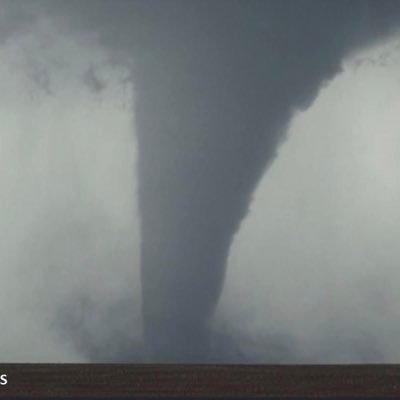
This was one of the saddest things to see.... People following the Dom so hard they literally pulled over next trees, unable to see anything. The janky bird fart tornado ongoing at the time was barely visible in the open, let alone through trees. I know the recovery vehicle has a purpose to follow, but everyone else? Pathetic. At one point prior to this the funnel passed nearly overhead as I sat on the side of the road watching, then the circus pulled up and things got clustered...had that thing actually planted into something real....yikes. Shortly after that and seeing how bad it was becoming, I had to change my strategy to simply put miles between myself and it all...the chase became more enjoyable minus the terrain/roads we were plagued with all day. There's a point where trying to be closest to get your little extreme storm chaser points isn't worth the loss of sanity. I'll gladly take a step back to breathe. I've got nothing to proove by trying to be mr zero meter all the time. I enjoy it, but only in certain circumstances.show more
Adam Lucio 🌪️
211,323 görüntüleme • 4 ay önce
You don't understand... Higgsfield MCP + Claude just automated... AI film making. Every single step you used to grind through to make an AI movie, you can now do 10x faster. Drop the script into Claude Opus 4.8 and say: "Here's my script. Break it into a full shotlist. Shot number, scene, shot type, camera move and the action in each frame." Now the whole film is mapped, shot by shot. - Pull your assets. Ask Claude: "From this shotlist, list every character, every location and every prop across the whole film." That's your build list. The stuff you would need to generate and give as references in next steps. - Build the character sheets. Higgsfield MCP is connected, so Claude has hands now to do stuff directly. It generates the images itself. Have the full body, back view and close up in the character sheet. One per character. Each sheet becomes the locked reference for that face. Same move for locations, generate the empty plate for each one before anyone steps into it. - Generate the frames. Feed Claude the references plus the shot and have it write and fire the Seedance 2.0 prompt. "Using the lead's character sheet and the alley plate, generate shot 4 in Seedance 2.0. Low angle, slow push-in, rain." Claude builds the prompt, calls Seedance 2.0 and the frame lands back in chat. Use a Seedance 2.0 skill to teach Claude how to prompt it properly. Now, there are 3 ways to make the shots. Pick one per scene. - Pure prompting. Fastest one. You describe the action in words and let Seedance interpret it. For consistency across a sequence, feed it a frame from the previous shot so the look carries. - Storyboarding. You hand it a panel and it matches that composition exactly. Way more control over how the shot is framed. The tradeoff is that it can introduce more cuts than you actually want. - Path Control System This is the latest technique Seedance 2.0 technique. Generate a still base plate of the scene. Draw a red line across it to mark the exact path of the movement, then describe what's happening. Seedance follows that line for the action. Also ask Claude to remove the red line when animating. This is the one for anything where motion has to land precisely. The output reads like real live action. - Lastly, generate every clip you need, then cut them together. Get it to Capcut for editing and audio design. And that's it. The pipeline that used to need a full crew and a studio can now run from one Claude chat. 2026 is gonna be wildshow more

Rez Karim
10,951 görüntüleme • 3 ay önce
$350,000,000 already sitting on the table and most people... still haven’t taken a single dollar while millions of kids log into Fortnite every day completely free meanwhile the smart creators: > run one Python + Claude pipeline > generate 20 retention-first concepts in under 3 min > turn one good map into ~$2,190/month > stack 10 maps into a portfolio that actually pays Epic built the audience AI removed the hard work you just ship and collect the pool is funded, only thing missing is youshow more
wast3
75,115 görüntüleme • 4 ay önce
A SOLO CREATOR JUST SHIPPED A $35,000-TIER ANIMATED SITE... IN ONE WEEKEND - WITH CLAUDE CODE + HIGGSFIELD, FOR THE COST OF A SUBSCRIPTION. What you're looking at isn't a template. It's a fully animated, scroll-driven site, generated end to end in a single agentic session. What's actually on the page: → Cinematic motion clips pulled from 30+ generative models → Scroll animations written automatically - not a single hand-coded keyframe → 6 cinematic effects baked in with zero config: film grain, particles, vignette, glass cards, color tints, scroll pacing Scroll the demo and one question keeps surfacing: a person didn't build this by hand… did they? For studios billing $100-149/hr, that question lands like a verdict. What this normally takes: → A designer, a motion artist, and a developer → Weeks of handoffs between all three → 6 systems wired by hand - GSAP ScrollTrigger, Lenis smooth-scroll, frame extraction, asset optimization, layout, copy That pipeline was the moat. It's what justified the invoice. Here's the part the agency won't put in its pitch deck. The price gap: → Boutique agency build: $6,000-$35,000+ → Industry average project: ~$5,280 → Your cost: a Claude subscription + a few dollars of Higgsfield credits → Timeline: weeks of production → one session One operator now runs all six systems in a single pass and ships a working site - without opening a frame extractor or writing one CSS keyframe. Full breakdown of how it's built in the article below. Save it & read today 👇show more
ZEUS⚡️
21,779 görüntüleme • 2 ay önce
34,547 ELEMENTS. 34 WARNINGS. 7 DUPLICATE ELEMENTS REVIT'S OWN... SCHEDULE NEVER CAUGHT. One prompt, one live Revit model, one Claude session through the MCP connection. No plugins, no exported schedules to reformat by hand. Claude walked the model tree: rooms, families, sheets, every open warning, cross-checked counts against each other, and came back with a full audit. Top flag: three fire-rated doors modeled without a fire rating parameter. The rest ranked below it, from code-adjacent to cosmetic. Still the read-only side of Revit's official MCP server, the part Autodesk shipped first, on purpose. Write access is on their own roadmap, through a separate server built specifically for it. Nothing here moved a single element. The model just got properly looked at, faster than a manual QA pass usually runs.show more

Solvaix
28,689 görüntüleme • 1 ay önce
Deep in the woodlands of northern Tanzania, a foreign... visitor follows Chabba, a member of the Hadza, through the ancestral lands his people have called home for countless generations, moving along hidden paths known only to experienced hunters and gatherers as he points out edible plants, animal tracks, medicinal trees, and survival techniques passed down through centuries of oral tradition, turning an ordinary walk into a rare journey through one of the last remaining hunter-gatherer cultures on Earth, where every tree, footprint, and sound in the forest carries meaning, revealing a deep relationship with nature that continues to shape Hadza life in ways largely unchanged by the modern world.show more

Ashley Kay
123,813 görüntüleme • 3 ay önce
This broke my mental model of game dev 💀... 2.5 hours → fully playable ‘Worms’ clone. Built with Hermes agent by Nous Research Here’s what made that speed possible: Hermes used ‘Persistent Shell’ mode, which ensured it didn't forget its current folder or active tools. This allowed it to work smoothly, without the distraction of constantly having to recall where it left off last time. To optimize the workflow, the agent moved beyond linear execution and parallelized the workload. It spawned isolated subagents while executing multiple independent tool calls via ThreadPoolExecutor. Like, one subagent wrote Python RPC scripts for the projectile physics while another utilized vision tools for character sprites. When the complex terrain logic required debugging, the agent used filesystem checkpoints and the /rollback command to instantly return to a stable state. To fix UI bugs, it attached to a live Chrome instance via CDP (/browser connect), fixing rendering issues in real-time. The agent’s built-in learning loop was active from the very beginning. By the time the game was finished, this continuous process allowed the agent to autonomously convert the physics logic into a custom skill. This logic is now a permanent plugin file in the agent's plugin architecture, making the physics engine a native capability that the agent can reuse for future projects. Follow War_v3_FINALE.exe for updates!show more

Javier
38,414 görüntüleme • 5 ay önce