🚨 CHINESE SCIENTISTS JUST INVENTED 3D PRINTING THAT CREATES... OBJECTS IN 0.6 SECONDS USING ONLY LIGHT. Researchers at Tsinghua University have developed a new method called DISH (Digital Incoherent Synthesis of Holographic light fields) that can print complex millimeter-scale objects almost instantly. Instead of slowly building layer by layer, the system fires thousands of precisely patterned light images from multiple angles into a still vat of liquid resin. Where the light overlaps, the resin instantly hardens into a solid 3D object. The entire process takes just 0.6 seconds. Why this matters: • It’s currently the fastest volumetric 3D printing method ever demonstrated • Achieves extremely fine detail features thinner than a human hair • The resin stays completely still, so there’s no vibration or distortion • It can work with watery (low-viscosity) resins, making it suitable for biological applications • The team has already printed complex structures like blood vessel-like tubes and even a tiny bust of a historical figure The deeper implication: Traditional 3D printing has always been limited by speed and the need to move either the print head or the resin. This approach removes both constraints by using light itself as the sculptor. Because it can print directly into still liquid (and potentially onto living tissue), it opens new possibilities in bioprinting, medical devices, and rapid manufacturing. If the technology can be scaled beyond millimeter sizes, it could fundamentally change how we think about making physical objects turning “print” from a slow process into something closer to instantaneous fabrication. We’re moving from “layer by layer” to “all at once.” How do you think instant volumetric 3D printing like this could change medicine, manufacturing, or everyday life if it becomes widely available? Follow for more frontier manufacturing and materials science breakthroughs.show more

TheNewPhysics
347,458 просмотров • 2 месяцев назад
[ELEGOO Saturn 4 Ultra] [Tilt Release Technology⚡⚡️] Embrace the... future of fast printing with our Tilt Release Technology! The #ELEGOOSaturn4Ultra LCD 3d printer features a tilt release technology, which prints faster as it helps release your printed models by tilting the resin tank and LCD screen. This means faster printing speeds than before and reduced overall print times! You can even switch between fast and slow print speeds with ease during the printing process, and the maximum speed can be up to ✅150mm/hour. Paired with a 12K high-resolution LCD screen, you can get high precision and perfect surface detail effects while enjoying rapid printing at the same time! . Subscribe to our official store for notifications when it is available:show more

ELEGOO
74,783 просмотров • 2 лет назад
Multi-axis 3D printing with curved layers! 🖨️ Researchers from... the The University of Manchester introduced a neural network-based computational pipeline as a representation-agnostic slicer for multi-axis 3D printing. Traditional 3D printing works like stacking pancakes, flat layers on top of each other. 🥞 This often requires temporary support structures that get thrown away after printing, wastes material, and creates weaker parts. Multi-axis 3D printing can print along curved paths that follow the object's natural shape. This eliminates support structures and makes stronger parts. But figuring out these curved paths is mathematically complex, you need to avoid collisions, respect what the printer can physically do, and optimize for strength. The neural network solves this automatically. It learns to create a "field" around the object, then extracts curved printing paths from this field. Because the entire process is differentiable (translation for non-math specialists, meaning you can optimize it end-to-end), the AI can directly optimize for manufacturing goals like "no support structures needed" and "make it as strong as possible." Here's the project: ~~ ♻️ Join the weekly robotics newsletter, and never miss any news →show more

Lukas Ziegler
57,048 просмотров • 5 месяцев назад
This is the kind of project that quietly changes... an industry. Instead of using traditional slicers, this creator built an app that converts hand-drawn curves directly into printable G-code for spiral vase mode prints. App → G-code → Print. - No complicated workflow. - No heavy setup. - Just turning ideas into physical objects almost instantly. The interesting part isn’t just the print quality. It’s how tools are becoming so simple that more people can create complex things without needing advanced technical knowledge. Would tools like this make 3D printing finally mainstream? 🎥 Media: ( Instagram ) ⚠️ This content is shared for informational purposes only. CTO Robotics Media is a media platform and does not own or develop the technology shown. Credit belongs to the original creators.show more

CTO ROBOTICS Media
132,290 просмотров • 3 месяцев назад
The future of footwear may not be manufactured in... bulk. It may be fabricated around you. That is what makes this shift so interesting to me. 3D-printed footwear is moving from novelty to a real industrial model, with market forecasts pointing to rapid growth over the next decade. At the same time, brands and manufacturers are using additive manufacturing, digital design, and custom-fit workflows to shorten development cycles and make more personalized products viable. What is new here is not just the printer. It is the system around it: → scan the foot → model the fit digitally → print the part on demand → produce closer to the customer That matters. Because once footwear becomes data-driven and locally fabricated, several things change fast: → fit gets more personal → prototyping gets faster → waste drops because you do not overproduce → inventory pressure falls because you do not need to guess demand the same way To me, that is the bigger signal. This is not just about a better sneaker. It is about a different manufacturing logic. Formlabs notes that 3D printing already enables customized orthotics with better biomechanical precision, lower material waste, and simpler digital workflows. McKinsey has also pointed to digitization and 3D design as a way to shorten design cycles and reduce sampling iterations in apparel and footwear. And once that logic matures, the use cases get much bigger: → custom athletic footwear built from gait and pressure data → hospitals producing orthotics faster and closer to the patient → micro-factories making products on demand instead of stocking shelves → footwear designed for one body, not an average body That is why I think this matters now. The question is no longer whether personalized fabrication is possible. It is whether brands move fast enough before customers start expecting every product to fit like it was made only for them. Would you actually wear a shoe fabricated around your own biometric data? #AI #3DPrinting #Footwear #Manufacturing #Innovation #FutureOfWork #RetailTech #Customization #Technologyshow more

Pascal Bornet
47,489 просмотров • 4 месяцев назад
Two weeks ago I fixed one of my teeth... with algorithms I wrote a couple of years ago! I got hooked by 3D scanning when I started to work for a software shop in Zurich that was programming 3D computational geometry algorithms for denture scanning to produce crowns (and more). Back then, a typical reconstruction pipeline was like: scan the patient’s teeth using an intraoral scanner, reconstruct the surface mesh, design the restoration digitally, and finally mill the crown out of ceramic. We were working mostly with point clouds and meshes, but it wasn’t just math, it was craftsmanship translated into a digital process. Every micron mattered. You could literally see how a good algorithm meant a better fit in someone’s mouth. Gaussian Splatting isn’t about surface reconstruction, it’s about appearance reconstruction. It doesn’t care about explicit topology, it captures how light interacts with the scene. In a sense, it’s the opposite philosophy of the dental world: instead of modeling what the object is, it models how the object looks. 3D Gaussian Splatting enables applications like training self driving cars, teaching robots to understand their environment, creating virtual worlds, or monitoring real sites. It represents scenes as millions of small Gaussians rendered in real time without the need for meshes or textures. Coming from a world where precision geometry was everything, this shift felt natural. It’s still about reconstruction, but with a different goal: not manufacturing a perfect object, but reproducing how the world actually looks. Two weeks ago I got my first dental crown, made with the same software, reconstruction algorithms, and Swiss precision I once helped develop. I haven’t worked there in two years, but sitting in that chair and seeing the process from the other side was a proud moment. It reminded me why I love this field.show more

MrNeRF
290,257 просмотров • 10 месяцев назад
🚨 SCIENTISTS MAY HAVE FOUND A REAL “LOOPHOLE” FOR... WARP DRIVES. And for the first time, the math may not completely break physics. For decades, warp drives were considered impossible because they seemed to require massive amounts of “exotic negative energy” that doesn’t exist in usable quantities. But new theoretical models suggest there may be ways to reshape spacetime using far less exotic energy or in some versions, almost none at all. Why this matters: • A warp drive doesn’t actually move the ship faster than light • It compresses spacetime in front of the craft and expands it behind • The ship stays inside a stable bubble while the universe itself moves around it • Einstein’s speed limit remains intact the ship never locally exceeds c The deeper implication is mind-bending: If spacetime can be engineered like this, distance itself becomes programmable. Interstellar travel would stop being an impossible energy problem… and turn into a geometry problem. The universe may not be blocking faster-than-light travel. We may simply be too primitive to shape spacetime correctly yet. What happens when humanity learns to engineer gravity itself? Follow for more frontier physics and reality-bending breakthroughs.show more
TheNewPhysics
89,623 просмотров • 3 месяцев назад
Polymorphic moulding: a manufacturing method that forms parts using... a grid of computer-controlled pins: Each pin can move up or down independently, so together they shape a surface that acts like a custom mould. Instead of building a fixed mould for every product, the machine quickly repositions the pins to match a new digital model. This means a mould can be created in minutes, used, and then reshaped again for the next design. Because the hardware stays the same and only its configuration changes: > no permanent tooling is needed > very little material is wasted > setup time between products is minimal The system essentially turns mould making into a programmable process. Engineers send a design file, the pins form the mould geometry, and the material is cast or formed inside it. Especially useful for rapid prototyping and customised manufacturing, where many different shapes must be produced in small quantities without rebuilding tools each time. Credit: ---- Weekly robotics and AI insights. Subscribe free:show more

Ilir Aliu
38,234 просмотров • 6 месяцев назад
I still can’t believe the entire outer body of... the Cybercab is PLASTIC. I think this is the first production Tesla vehicle built this way. Tesla molds the COLOR directly into the panels using reaction injection molding. Far from a traditional paint shop. A process that can take hours with normal automotive paint can now take minutes. Tesla says this cuts manufacturing emissions for those parts by around 35% and eliminates the paint VOCs from the traditional process. And before anyone says, “But what about safety?” The plastic exterior is not the crash structure. The massive front and rear giga castings underneath are doing that job. I rode in the Cybercab myself. Trust me, it does NOT feel cheap at all. It actually makes you realize what Tesla is trying to do here. Fewer parts. Fewer manufacturing steps. No traditional paint shop. Faster production. Lower cost. The unboxed process… This is so much more than Tesla just using plastic to make a cheap car. Tesla is completely rethinking how you build millions of robotaxis.show more

Teslaconomics
1,100,839 просмотров • 1 день назад
You Can Heal Yourself With Nature Movement - By... moving our body we give strength to our muscles, promote blood flow and lymphatic flow enhancing the delivery of nutrients and the removal of waste products. We also create a piezoelectric effect that energises the system. Breathing - The delivery of air into the body through intentional conscious breathing is one of the most powerful modalities for nervous system renewal, mental peace and the delivery of oxygen to the body and the removal of carbonic acid buildup from the system Sunshine - It’s my belief that the more sunlight we absorb without sunscreen, the healthier we will become. A tan looks good because it is healthy and every part of your body thrives when sunlight touches it delivering blood flow as well as a high frequency and energy Grounding - Existing in connection with the earth’s electrical fields resets everything about our energy, reduces inflammation and promotes the movement of proper channels such as detox - it’s a fantastic practice to be connected to nature. Green light - When sunlight moves through trees and leaves we receive Green light by which is very healing and high in near infrared light, in fact it is one of the most healing modalities to absorb in your skin particularly if you have any abrasions or wounds - even more powerful than red light . Fresh air - The first nutrient, having fresh air that is rich in oxygen is absolutely imperative to health and you should always have all of your windows open in the house if possible when not outside. Positive thinking - Whatever you think, shall become and having and cultivating a positive mindset that intentionally brings you positive energy is one of the cornerstones to great health. You can think yourself into sickness and you can think yourself into health so choose to view the world in a positive light and so it’ll be for you.show more

⚡️🌞 Sol Brah 🌞🐬
14,430 просмотров • 2 месяцев назад
the letter "g". in isolation, a welcome addition to... the alphabet we all know and love. but in packs, they can wreak havoc on the very airwaves we habituate, day in and day out. just think... 3g... 4g... dare i say, 5g? and don't even get me started on c-band. you thought one letter was bad? wait until you hear about TWO letters. but i'm getting ahead of myself... where were we? oh yes, the dreaded "G". already, telecommunication firms are beginning to hype up the eve of the 6-"G," a new-fangled technological miracle set to revolutionize "video streaming on the train" as we know it. but what if i told you there was a darker side to this wave of innovation? let's unmask this con-job for what it really is: a method of once-and-for-all commandeering the vacuous minds of their loyal disciples, turning the masses of mind-numbed sheep into even more mind-numbed, uhh... aphids, or silkworms, or something. don't believe me? well... take a look at this: footage leaked by an anonymous technician at sloppco communications sheds new light on this "6-G" technology, revealing it for what it is: a means of mind control. using little more than this fashionable metal propeller hat, researchers were able to directly alter this lab sealnar's thoughts and memories, all while staying well within the FDA's so called "safe exposure limits." with just 30 seconds' worth of bandwidth, the team at sloppcom were able to get this unwitting sealnar to purchase a new funko pop, with 85% success— all the way down to the correct edition, number, and finish. and according to our whistleblower, just 5 minutes of daily exposure could be enough to turn this communist-worshipping marxist sealnar into an ardent conservative. (from twt @ Seallyprincess i think)show more

Myths and Stories
34,428 просмотров • 3 месяцев назад
A metal origami! 🪭 This method is called Hyperbolic... Metal Forming and is hypnotizing to watch. Instead of shaping metal with slow mechanical force, HMF uses controlled shockwaves to form complex geometries at extreme speed, often without the need for heavy dies or post-processing. The result is stronger, lighter parts with shapes that are almost impossible using traditional stamping. That’s why you see it popping up in aerospace, automotive structures, and defense components. Think of it like metal origami, but driven by high-energy pulses instead of presses. A small reminder that some things in manufacturing come from physics, not just automation. ~~ ♻️ Join the weekly robotics newsletter, and never miss any news →show more
Lukas Ziegler
567,473 просмотров • 9 месяцев назад
🚨 THIS HAS NEVER HAPPENED BEFORE 🚨 🚨NOBODY UNDERSTANDS... WHAT THEY JUST TRIGGERED. 🚨 🚨 People always talk about Iranian oil in terms of barrels, but rarely about what’s actually inside them. That’s the key difference—and the reason Western refineries have quietly relied on back-channel networks through places like Dubai for years to keep getting it, even under sanctions. Crude oil isn’t all the same. It’s a mix of hydrocarbons with different molecular weights, and that mix determines how easily it can be turned into the fuels refineries actually sell—like gasoline, diesel, jet fuel, and heating oil. The main measure here is API gravity. Higher API means lighter crude that’s easier and cheaper to refine, and it produces more of those high-value fuels. Lower API means heavier crude that takes more energy, more processing, and more expensive equipment, while producing more low-value leftovers. Iranian Light crude sits right in a sweet spot, with an API gravity around 33–36 and moderate sulfur levels. It’s light enough to produce a lot of gasoline and middle distillates without high costs, but not so light that it limits what refineries can make. In industry terms, it’s close to an ideal blend. Now look at the alternatives. Venezuela’s Merey crude is much heavier, with very low API gravity and high sulfur. Refining it profitably requires specialized, expensive equipment like cokers and hydrocrackers. Some refineries are built for that—but it’s not interchangeable with Iranian crude. It’s a completely different type of input. On the other end, US West Texas Intermediate is very light and low in sulfur. Sounds perfect in theory, but in practice it’s almost too light. Many refineries—especially in Europe and Asia—are designed for medium-grade crude, so they can’t just switch to WTI. They often have to blend it with heavier oils to make it work. That’s where Iranian crude stands out. It fits right into the middle of the system. It doesn’t need the heavy-duty processing of Venezuelan oil or the blending adjustments required for ultra-light US shale. That balance is why it’s consistently in demand and often priced at a premium. It also explains why countries like India kept buying it despite sanctions, and why those complex trading networks through Dubai existed in the first place. The Strait of Hormuz isn’t just a route for oil—it’s a route for this specific kind of oil that global refineries are optimized to process. If that flow gets disrupted, it’s not just about losing supply. It’s about losing the type of crude the system runs most efficiently on, forcing refineries to adapt with less suitable alternatives. That’s what’s really baked into oil prices like $82—not just how much oil is available, but what kind it is.show more

A K Mandhan
3,645,659 просмотров • 5 месяцев назад
"Pros won’t use generative AI, and when the bubble... pops, nobody will ever talk about it again." No. That’s delusional. 1/ Generative AI is already being used professionally at the level of big studios like Disney ($1B to OpenAI), and there’s zero doubt that studios like Industrial Light & Magic, Netflix, Hollywood VFX experts, etc. are already experimenting with it too. Or do you think they’re idiots? They’re not idiots at all. They have the experience and, more importantly, the DISTRIBUTION POWER. The point is: someone with taste, judgment, and storytelling experience, basically from their living room, will have access to (almost, or not even almost) the same capability as the big guys, because the pure "making stuff" skills have been commoditized, and the new way to create is just NATURAL LANGUAGE. What hasn’t been commoditized is good taste, the ability to create great stories that move people, and the ability to get them in front of people. So in the end, what wins is story quality and distribution. Having good taste, making a name for yourself, and owning strong IP (Marvel, etc.) will still matter. That’ll be true right up until AI is genuinely opinionated and can create by itself: if it comes to that, with zero human direction, stuff as good as (or better than) the very best human experts today, and on top of that, interactive in real time... Because yeah: there’s nothing in this universe that actually prevents that from happening. BUT WE’RE NOT THERE. For now, generative AI is a tool that needs direction and taste to make anything decent. And I hope it stays that way for a long time, because otherwise that’s going to be a brutal hit to humanity’s ego. 2/ On the "bubble": you have to distinguish between a stock valuation bubble (possible, I actually believe it) vs a bubble like some people imagine where it "pops" and we never hear about AI again. That obviously makes no sense given how insanely useful it is. It can only grow, and it’s going to grow fast, regardless of any stock market drawdowns (the internet kept growing even when valuations got nuked in 2000). Either way, the near future is going to be extremely interesting.show more

Javi Lopez ⛩️
75,190 просмотров • 6 месяцев назад
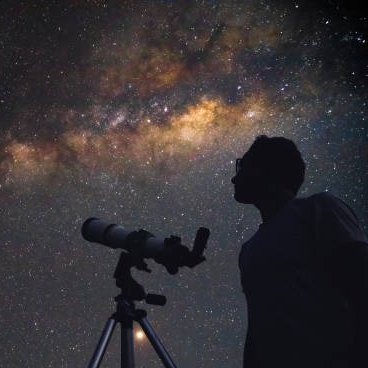
Space objects such as meteoroids and asteroids move across... the solar system and can collide with both Earth and the Moon. However, the Moon shows far more visible impact marks on its surface. One main reason is that Earth has a thick atmosphere that protects the planet. When many meteoroids enter Earth’s atmosphere, they burn up due to friction before they can reach the ground. This process creates the bright streaks of light we call shooting stars. The Moon, however, has almost no atmosphere, so incoming space rocks are not slowed down or burned up. They travel directly to the lunar surface and strike it at very high speed. Each collision creates an impact crater, throwing dust and rocks outward from the impact point. Over billions of years, thousands of these impacts have covered the Moon with craters. Unlike Earth, the Moon also has no wind, water, or weather to erase these craters, so they remain visible for millions or even billions of years. This is why the Moon looks heavily cratered when we observe it from Earth through telescopes.show more
The Astronomy Guy
17,500 просмотров • 5 месяцев назад
Apparently, I saw this video online and I decided... to share. What this worker is applying is called bitumen, or what many of us know as bituminous coating. Most people think a wall is a solid, impenetrable block, but in reality, it is more like a sponge. Concrete and blocks have microscopic pores that pull water from the earth through a process we call capillary action. This thick black substance is the shield that stops that water from climbing up into the house. It is not about making the wall look good because this part will be buried under the dirt forever. It is about creating a skin that water cannot breathe through. When do you need to do this? The need for this arises because the soil is a very aggressive environment. Water is not your only enemy.. The ground also contains salts and sulfates that want to eat away at the cement. If this moisture finds its way to the steel bars inside the columns, those bars will start to rust. And when steel rusts, it expands, and that expansion is what cracks the concrete from the inside out. This coating is the only thing standing between your foundation and that kind of slow destruction. Thats is why if you see wet patches at the bottom of your walls inside your house, it usually means someone skipped this step or did it poorly during construction. You can apply this anytime you are building parts of a structure that will stay in contact with the ground. It is common in areas where the water table is high or where the soil stays damp for most of the year. This is a one-shot opportunity. Once you backfill the soil, you can never go back to fix it without a lot of expense and a lot of digging. It is about having the foresight to protect the heart of the building while it is still exposed. Please don’t ignore this if you need to. If you ignore it now to save a bit of money, you will be funding the future decay of your own home. I hope this helps.show more

A.Y.O
75,399 просмотров • 4 месяцев назад
In the summer of 2023, I cold emailed Jensen... Huang and asked to capture a NeRF of him at SIGGRAPH. He responded in about an hour and said yes. A radiance field is, in the simplest terms, akin to a 3D photograph. A moment in time, so completely reconstructed that you can move through it and see it from angles the original cameras never occupied. NeRFs were the original method. Gaussian splatting, which debuted at that same SIGGRAPH, has since become the dominant form of radiance field. I called my late friend James, who told me we needed to begin practicing immediately. We ran capture after capture for weeks until we consistently got the capture time down to ~30 seconds with one camera. Later, in a hallway at the LA Convention Center during SIGGRAPH, I captured the portrait you're seeing now, a full 360° gaussian splat of Jensen, rendered here as a 2D flythrough. Afterward, I continued the conversation with him and members of his team to make the case for radiance fields as a foundational representation for imaging. To my surprise, they listened. Three years later, NVIDIA has several works, including NuRec, fVDB, 3DGRUT, and gsplat all utilizing radiance fields. The landscape has evolved enough that the reasoning is obvious. Gaussian splatting has begun to ship across some of the world’s largest industries, including autonomous vehicles, AEC, geospatial, media and entertainment, robotics, e-commerce, hospitality. It’s become clear that lifelike 3D is here to stay. And yet I think we will look back and be disappointed by how late we started taking 3D portraits of the people around us, just like how we have sparse 2D photos of our grandparents and great grandparents. We have billions of photographs of the people we know and love, but almost no radiance fields of them. I'll be returning to SIGGRAPH in LA where this was initially captured three years ago, with the landscape looking significantly different. Radiance fields are more under deployed than ever relative to what they can do. I'm excited for the future of imaging, and for 2D to transition into 3D. I have a few things up my sleeve that I think will make that case plainly.show more

Radiance Fields
18,084 просмотров • 2 месяцев назад
When a spacecraft leaves Earth, it doesn’t just fire... its engines and head straight to its destination. In many missions, especially those going beyond low Earth orbit, there’s a more subtle and elegant strategy at play, one that uses gravity itself as part of the navigation system. This is often called a gravity assist, or a slingshot maneuver. But in the case of missions like #Artemis II, what’s being used is a closely related idea known as a free-return trajectory. At first glance, it might sound simple: the spacecraft goes to the Moon, loops around it, and comes back. But the physics behind it is anything but simple. Instead of relying on continuous propulsion, the spacecraft follows a carefully calculated path through the gravitational field of the Earth–Moon system. It is launched with just the right speed and direction so that, as it approaches the Moon, the Moon’s gravity bends its trajectory. The spacecraft is effectively flung around the Moon, redirected onto a path that naturally brings it back toward Earth. No major engine burn is needed for the return. Small trajectory corrections may still be required, but gravity does the heavy lifting. That’s the key. This kind of trajectory is not just efficient, it’s also safe. If something goes wrong with the spacecraft’s engines or onboard systems, gravity itself ensures the return. It’s an inherent backup plan, built into the trajectory from the very beginning. The same fundamental idea appears in gravity assists used across the Solar System. When a spacecraft flies past a planet, it can gain or lose speed by exchanging momentum with that planet. From the spacecraft’s point of view, it’s as if it has been accelerated without using fuel. In reality, it has borrowed a tiny amount of orbital energy from the planet itself. That’s how missions like Voyager reached the outer planets, and how probes continue to explore regions far beyond what their onboard fuel alone would allow. But there’s an important distinction. An interplanetary gravity assist is typically used to change speed and direction, often increasing the spacecraft’s energy. A free-return trajectory, like the one used in Artemis II, is designed for something more specific: a path that naturally loops back to Earth without requiring additional propulsion. It’s less about gaining energy, and more about shaping a trajectory that guarantees a return. To understand why this works, it helps to stop thinking in straight lines. In space, motion follows curves defined by gravity. The spacecraft is constantly falling, first toward Earth, then toward the Moon, and then back toward Earth again. What looks like a loop is really a continuous free fall through a changing gravitational landscape. This way of navigating space reveals something deeper. We tend to think of engines as the drivers of motion, but once a spacecraft is on its way, gravity does most of the work. The art of spaceflight is not just about thrust. It’s about knowing when not to use it. #GoodLuck #Artemis NASA Artemisshow more

Erika
235,073 просмотров • 5 месяцев назад
If you think OpenAI Sora is a creative toy... like DALLE, ... think again. Sora is a data-driven physics engine. It is a simulation of many worlds, real or fantastical. The simulator learns intricate rendering, "intuitive" physics, long-horizon reasoning, and semantic grounding, all by some denoising and gradient maths. I won't be surprised if Sora is trained on lots of synthetic data using Unreal Engine 5. It has to be! Let's breakdown the following video. Prompt: "Photorealistic closeup video of two pirate ships battling each other as they sail inside a cup of coffee." - The simulator instantiates two exquisite 3D assets: pirate ships with different decorations. Sora has to solve text-to-3D implicitly in its latent space. - The 3D objects are consistently animated as they sail and avoid each other's paths. - Fluid dynamics of the coffee, even the foams that form around the ships. Fluid simulation is an entire sub-field of computer graphics, which traditionally requires very complex algorithms and equations. - Photorealism, almost like rendering with raytracing. - The simulator takes into account the small size of the cup compared to oceans, and applies tilt-shift photography to give a "minuscule" vibe. - The semantics of the scene does not exist in the real world, but the engine still implements the correct physical rules that we expect. Next up: add more modalities and conditioning, then we have a full data-driven UE that will replace all the hand-engineered graphics pipelines.show more

Jim Fan
6,183,252 просмотров • 2 лет назад
So, my opinion on what the Antarctic (Antarctica) Anomaly... is that it's a type of frequency technology. It must be way more powerful than HAARP, as many have claimed it to be, because we would see these anomalies at other HAARP sites, and we don't, not like this. With that said, and I'm very much trying to avoid letting what I want it to be not play a part here, I think it is a technology that is being used either off the coast of Antarctica itself or Bouvet Island. A third possibility is an area just to the northwest of the island that looks odd. It's possible it is a sonar scan from a ship, but why in that remote location? It looks like an antenna set up or rows of something that is out of place. I also believe that the weather events and fires that have taken place in Africa could possibly have been because of this. Each time we saw the anomaly, it was followed by a destructive weather event in Africa. A weird connection to that is we have been told and warned of a very busy 2024 Atlantic hurricane season. This is in part because of the above-average Atlantic ocean temperatures, which is the fuel to Hurricanes. With all this info, it's possible to see how the Anomaly could be a frequency tech that can manipulate or create weather, And or WARM up the Ocean temps to purposely enhance the Hurricane season and Storm growth. Keep in mind that many of our hurricanes and many of the biggest hurricanes have come from the west coast of Africa and form over the Cape Verde islands before heading towards the Caribbean and the United States. This is all of course speculation, and I'm learning many new things every day, so this idea may morph over time as we learn more. In the end, it is very hard to ignore all these findings. #antarctica #anonaly #AntarcticaAnomaly #BouvetIslandshow more

In2ThinAir
442,580 просмотров • 2 лет назад