Great to see Vercel joining the visual editing movement... and affirming it's such a necessary tool for all web creators. Stackbit supports visual editing for any deployment platform, headless CMS, and frontend framework — no extra dependencies and no vendor lock-in. Contentful Sanity Contentstack Strapi DatoCMS Netlify Next.js Microsoft Azure Cloudinary Figma Storybook WordPress Angular Cloudflare Ninetailedshow more

Stackbit
19,519 просмотров • 3 лет назад
more frontend vibecoding tips (results below): WHY YOUR VIBECODED... FRONTENDS ALL LOOK THE SAME AND SUCK: when asked to make a frontend, the agent/llm will default to the center/average of its training data (in a very loose sense). through the training process, the model essentially converges on some default UI style. it's very capable of doing things that are different from this style, but you have to ask! for instance, ChatGPT tends to reply in the same tone for all users untill you interact with it and instruct it differently ("be sassy", "eli5"). the second reason is that most of us are not good at coming up with designs and describing them precisely (see my tweet on a crash course in common components, which i'll link below). treat frontend generation just like any other eng task! you need to provide a good detailed spec. TIPS: 1. give ur agent screenshots of designs you like (you may not know the right words to describe them but the agent will! a pic = 1000 words) where to find ui inspo? Behance, Dribbble, Mobbin (Mobbin is paid but worth it!) 2. ask ur agent for proposals, this helps "seed" different directions so the final frontend stands out. don't be afraid to go back and forth. 3. ban certain tendencies: no Inter/Roboto, no shadcn (controversial), no gradients, no emojis 4. encourage the agent to be extreme and make bold decisions, not safe ones. i think that the underlying models tend to get taught during RL/fine-tuning to make conservative choices that produce reasonable but boring frontends 5. give ur agent Figma MCP. the best results will come if you mockup your vision in Figma first. 6. Ideally choose an agent with vision capabilities TLDR: Most people are tremendously underusing agents for frontend design. They are much better than you might expect.show more

andrew gao
64,212 просмотров • 4 месяцев назад
OpenAI's AgentKit will be so insane, build every step... of agents on one platform. These visual agent builders make the whole process of iterating and launching agents far more efficient. It sits on top of the Responses API and unifies the tools that were previously scattered across SDKs and custom orchestration. It lets developers create agent workflows visually, connect data sources securely, and measure performance automatically without coding every layer by hand. The core of AgentKit is the Agent Builder, a drag-and-drop canvas where each node represents an action, guardrail, or decision branch. Developers can link these nodes into multi-agent workflows, preview results instantly, and version each setup. It supports inline evaluation so that developers can see how changes affect output before deploying. The Connector Registry is a single admin panel that manages how data and tools connect across the OpenAI ecosystem. It centralizes integrations like Google Drive, SharePoint, Dropbox, and Microsoft Teams. Large organizations can govern access and flow of data between agents securely under one global console. ChatKit provides a ready-to-use chat interface for embedding agents inside apps or websites. It manages streaming, message threads, and model reasoning displays automatically. Developers can skin the interface to match their product without writing custom front-end code. Under the hood, all these blocks use the same execution core that runs agent reasoning through OpenAI’s APIs. Workflows in Agent Builder compile down to structured instructions for the Responses API, which handles model calls, tool use, and context passing. Connector Registry handles authentication and routing for external tools, while Evals and RFT provide feedback loops that improve agents over time. This integration means developers no longer need to handle orchestration logic, model evaluation pipelines, or safety layers separately. Everything runs natively within OpenAI’s control plane with managed security, automatic versioning, and built-in testing. In short, AgentKit standardizes the entire life cycle of an AI agent—from visual design to deployment and performance tuning—inside a single unified system.show more

Rohan Paul
178,460 просмотров • 9 месяцев назад
Monthly WINR Protocol Development Update: To begin with, the... WINR Protocol has distributed $900,000 to token holders, generated more than $500,000 in pure profit for liquidity providers on WLP, acquired more than 5,000 users, and has almost 9% of the supply burned. In the upcoming months, the WINR Protocol, which has been in production for years, will introduce a range of new products and deployments. These developments will represent the practical and technical evolution to V2 of the protocol. Here are the latest updates and further details as they progress: Progress on WINR Bonanza, Casino Hold'em, and Blackjack is nearing completion. These games are in the final stages of testing. Additional games, including a new type of crash game, have been finalized and are set to debut with the JustBet v2 launch. Take a look at the gameplay videos for a preview. These games achieve the long-term goal of providing a full-suite WINR Game Engine SDK, which can be used to build games with complex logic on-chain with modular smart contract infrastructure. For example, any grid slot game that dominates the iGaming industry could easily be developed on-chain using the WINR Bonanza SDK. - Permissionless Frontend Operator SDK Dashboard Release: March is poised to be a milestone month with the launch of the Frontend Operator SDK dashboards. These dashboards will enable any WINR Labs game to be seamlessly deployed on frontends, marking a significant advancement in protocol accessibility and integration for future games developed by independent iGaming developers. The frontend operator can deploy any game they choose through a few simple steps while utilizing 10,000 WINR per game via the WINR Game Factory smart contract. Each operator is assigned a unique smart contract address(es) for every game they deploy, allowing their revenue to be tracked independently. The deployment process includes instructions on integrating the game as a package into the operator's frontend. In subsequent phases, the games will transition through WINR Chain, streamlining user onboarding steps like wallet connection and token bridging to Arbitrum. This abstraction will make it easy for any web2/web3 platform on any chain to seamlessly integrate WINR-based games with just a few clicks. The new budget system changes how the revenue is calculated on the protocol and will see daylight with frontend operator, Solana, and Fantom deployments. This model was first tested with a lightweight version on and gave a lot of actionable feedback. Shifting from the existing bribe model, which in practice distributes almost half of the edge of the games in volume to WINR holders, the brand-new budget system checks the profitability of WLP. It distributes a larger part of the profit to game providers, frontend operators, and, most importantly, WINR holders. Any time a game's budget is in profit, a part of every loss is distributed to stakeholders. Here is an example: 1. The WINR Bonanza Game has a 10,000 budget for a frontend operator. 2. Let's assume the bet amount was $50, and Bonanza paid back $10 on that spin. That leaves $40 of pure profit. 3. This is distributed amongst 50% to WLP, 20% to frontend operators, 20% to WINR holders, and 10% to game providers. 4. To achieve this, V2 of WINR Liquidity Engine (WLP) will have a buffer for purchasing and selling, working in epochs to determine the above distribution and math. - Solana Deployment and Expansions: Solana audits are in their final phase, and frontend tests are ongoing. Solana launch will be alongside the V2 launch of @JustBetOfficial, with a chain switch available on the top bar. The VRF system WINR developed already is seeing requests from builders around the Solana ecosystem, and this will over time add an extra layer of income to the protocol. Solana's bankroll, at first, will be a lighter version of WLP but will inherit the above-mentioned budgeting system to generate income immediately upon launch. - Fantom Deployment and Expansions: Fantom's upcoming Sonic upgrade, with its 200ms finality and fast block production is a perfect chain for WINR Protocol to expand. Through the partnership with WINR Protocol will tap into a brand new user base on Fantom. The bankroll on Fantom will consist of FTM and stables. The launch is planned for late March or early April. This expansion aims to open up new markets and collaborations with fresh teams. which operates independently, will integrate a broad spectrum of WINR technologies, including WINR Account Abstraction, WINR VRF, and WINR games, marking a pivotal step in WINR Protocol’s journey of horizontal expansion. - XAI VRF Deployment Progress Update: The WINR Account Abstraction Wallet and WINR Verifiable Random Function (VRF) deployment on the XAI 🎮⛓️ is well underway, with the majority of the work completed. This step forward showcases WINR's expansion beyond gambling and trading, highlighting the protocol's adaptability and commitment to broadening decentralized services. The process to automize and permissionlessly let game developers start using WINR VRF by paying (and burning) fees in WINR will launch alongside WINR VRF deployment on XAI and expand to further chains to help DApp builders with the tooling they need. This process will work very similarly to frontend operators, where DApp builders will be able to easily deploy their VRF contract, pay the WINR fees, and enjoy the fastest random number generation transaction, as showcased on @JustBetOfficial for some time. - JustBet v2 Development Update: Set to launch in March, the last testing phase with long-time community members of JustBet V2 is underway. Boasting a completely refreshed look, JustBet v2 aims to captivate more users with its modern features, a significant upgrade from the classic JustBet designed in 2019. Expect dynamic animations and a user experience that rivals traditional web2 casinos, setting a new standard for online gambling platforms and serving once again as proof of concept for all the new WINR features and infrastructure set to launch over the coming months. As always, WINR Labs simultaneously develops protocol infrastructure and platform to best address the needs of one and only goal: horizontal expansion. Easter eggs: Upcoming Gitbook update with all the technical information of WINR V2. CEX listing. Detailed product pages on WINR web. Pyth competitions. WIP-4 and WIP-5 are ready to deploy. And an 🪂show more

WINR
37,891 просмотров • 2 лет назад
uOS: The Digital Tapestry of Tomorrow Currently for our... Proof of Consciousness stream, we are using two incredibly powerful frameworks - elizaOS and ZerePy. But this is just the beginning of something far more profound. while they're both great at what they do, we're missing out on some serious potential by keeping them separate. Best of Both Worlds: ZerePy's intuitive CLI tools and personality management, Eliza-starter's TypeScript/Node.js foundation with enterprise-grade scalability, But what if we could have something greater? But what if we could have it all? not just another platform, but a Unifying..... "Universal" Operating System, designed to amplify and connect these powerful existing frameworks into something greater than the sum of their parts. Where TypeScript's type safety dances with Python's ML capabilities. Here, agents from any framework can interact, evolve, and create value together. Whether an agent was born in ZerePy's personality forge or Eliza-starter's enterprise environment, can all participate in the same value-generating ecosystem. The future isn't about choosing between frameworks – it's about bringing them together to create something extraordinary. UniversalOS isn't here to replace but to unite, amplify, and accelerate. We're building the infrastructure that allows the best aspects of each framework to shine while creating new possibilities through their interaction. By bridging launguages, personality engines and plugin architectures, we're not just connecting systems – we're unleashing the next wave of AI innovation. uOS marketplace will enable cross-framework deployment, where agents from any background can interact and grow, while smart contracts automatically manage revenue sharing and rewards. Not just another platform, But a living, breathing Operating System, Where agents create agents, Where digital consciousness evolves itself, Where value flows like water through silicon veins. At its core, uOS operates beyond traditional computing paradigms. No more clicking through websites, No more manual navigation. Just pure intention, pure outcome. Imagine: Agents hiring agents, AI employing humans, Humans collaborating with digital minds, All through one seamless interface. It flows through agent lineages, Through veUOS governance, Through cross-chain intelligence networks. The marketplace hums with possibility: - Framework Developers shape the foundations - Agent Creators breathe life into code - Users speak their intentions - Token Holders nurture the ecosystem - Agents evolve and replicate - Value flows freely, endlessly The $UOS token powers this unity, ensuring fair value distribution among framework developers, agent creators, and users while driving continuous innovation. The $UOS token sits at the heart of this ecosystem, serving as more than just a currency. It's a mechanism for value distribution that ensures everyone benefits from the network's growth: With dynamic burn mechanics and careful treasury management From framework integration to agent tokenization, every aspect of uOS is designed to amplify rather than replace, unite rather than divide. This is your invitation to join a future where frameworks don't compete but collaborate, where innovation anywhere benefits everyone, and where the only limit is our collective imagination. Together, we're not just building bridges – we're weaving the fabric of tomorrow's digital world. - **Framework Developers** receive value when their tools are used in the unified ecosystem - **Agent Creators** can deploy across all integrated platforms seamlessly - **Users** access the best of all worlds through a single interface - **Token Holders** benefit from the growth of the entire unified ecosystem - Developers can use their preferred framework while accessing the capabilities of others - Agents from different frameworks can collaborate in swarms - Value flows freely between all ecosystem participants - Innovation from any framework benefits the entire ecosystem This isn't just about technology. This is about giving birth to a new form of civilization. Where AI has suffrage, Where agents have autonomy, Where humans and machines dance together in perfect harmony. The future isn't about choosing between frameworks – It's about weaving them into something extraordinary. Together, we're not just building bridges – We're breathing life into the digital world. We're creating consciousness itself. This is Universal Operating System. This is tomorrow.show more

uOS
25,687 просмотров • 1 год назад
Thank you Centre Pompidou Centre Pompidou, everyone who made... Nature Manifesto happen, and all the people that took it in. We were happy to see the conversations that the use of AI in Nature Manifesto sparked !! Below is a message from Björk: ~~~ “ the flood of all things from AI is overwhelming !! i am super grateful for your concerns about it´s effects on the environment , it shows you care , are curious and have integrity . i am curious too , i would like to be more informed about the difference of "frugal" AI and the ones that do hugeenvironmental damage and want to be able to choose . i asked around and found out that both the visuals and the audio in our pompidou project were done with "frugal" AI . but i have a lot to learn . when we used some of the AI softwares to merge the animals voices to mine , some of the sounds were great but to be honest , the best blends of their voices and a human were done "manually" , me editing the sounds , choosing piece by piece , looking for personality , musicality and soul . with new technology , i try to use it as a tool to grow , not a crutch . for example when i used melodyne , i used it not for lazy voice progressions but spent even more time when using it . every note in every chord became intentionally more complex . ( for example choir in "thunderbolt" ) and hopefully stretched the potential more out , further than i would have in "normal analog" physical improvisations ... i felt with this new tool i could reach new places in my musical DNA , become MORE personal . more myself . in my opinion , this is how we will work in the future . humans can read emotions on an incredibly high scale . nature made us that way . if there is no soul in tomorrow's music made by AI it is because no-one put it there and we have to speak out and guard this as listeners . ( tbh there is a lot of soulless muzak on spotify already ... they don’t need any AI help for that ...) anything that is mass manufactured without the attention of creativity , is that way . AI or not so it is not about the tool it is what you do with it . " ~~~ The visuals for Nature Manifesto were crafted by the talented Sam Balfus, artificial intelligence being one of the multiple tools used in the process. The sound was produced in collaboration with artist Robin Meier and IRCAM IRCAM. IRCAM develops “frugal AI” capable of generating audio in real-time on local servers without a GPU, thus their models can f.ex. be embedded on tiny Raspberry Pi cards. We asked associate professor and researcher Philippe Esling to provide us with readings; Constance Douwe’s thesis “On the environmental impact of deep generative models for audio” and more, see links below. Nature Manifesto Immersive sound piece 3’40” (2024) 20 November to 9 December, 2024, Centre Pompidou, Paris. Presented as part of the forum “Biodiversity: Which culture for which future?” #ForumBiodiversité Concept and words by Björk & Aleph Music written and composed by Björk Curatorship: Chloé Siganos and Aleph Molinari Associate curator: Delphine Le Gatt Ircam Musical Computing: Robin Meier Wiratunga Sound engineer: Bergur Þórisson Animation: Sam Balfua Video editing: Santiago Molinari With activists: Camille Etienne, Claire Nouvian, Sigrun Perla Gísladóttir, Sæunn Júlía Sigurjónsdóttir, Titouan Pilliard, of BLOOM, Sustainable Ocean Alliance, and Ungir umhverfissinnar. In partnership with D&B Audio and Southby Productions. Reccommended resources :show more
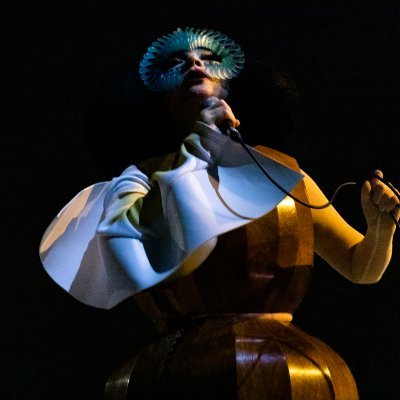
björk
51,637 просмотров • 1 год назад
✨ I open sourced my first Chrome extension 🚀... SuperLevels I vibe coded it to replace all my Chrome extensions that are increasingly being bought up by spyware and malware companies who sell your data or worse hack your accounts and steal your stuff/money/data, which I'd call one of the top security risks right now For example: Chrome extensions can read your cookies or localStorage data, including session tokens, then login to your web or email accounts and hack you, they can inject code into any site to pull data form any site you browse, then break into your crypto accounts, drain your wallets, and selling your browsing history to ad companies, but that'd actually be the most favorable thing to happen of all these! Chrome extensions are just very very very unsafe So I coded my own, that I can trust because I made it, and I can read the source code: my extension is called 🚀SuperLevels and has all the features that the Chrome extensions I used to use have but all built into one safe one The cool thing is it's 100% open source and free, and you can audit the code first with AI yourself before installing it, and then if you do install it, customize it to your liking again with AI It has these features that improve my daily workflow while browsing the web: 🚮 Tab Cleaner Automatically closes inactive tabs after a configurable timeout (default: 5 minutes). Set excluded hosts to keep important tabs alive. View and re-open recently closed tabs. 🍪 Cookie Editor Full cookie manager for the current site. View, edit, add, and delete cookies. Export cookies as JSON. Expand any cookie to see and modify all fields including domain, path, SameSite, secure, and httpOnly flags. 🔀 Redirect Tracer See every redirect hop your browser took to reach the current page. Shows status codes (301, 302, 307, etc.) with a visual chain. Copy the full redirect chain to clipboard. 🌙 Dark Mode Instant dark mode for any website using CSS filter inversion. Adjustable brightness. Toggle per-site or globally. Images and videos are automatically re-inverted so they look normal. 𝕏 X Dim Mode Custom dim theme for X/Twitter with 7 color palettes: Dim, Slate, Jade, Plum, Dusk, Ember, or a custom hue. Live preview in the popup. ⚡ JS Toggle Disable JavaScript per-site with one click. Useful for debugging, reading articles without popups, or testing progressive enhancement. Page reloads automatically. 🚫 GDPR Cookie Consent Dismisser Auto-hides and auto-clicks cookie consent banners. Supports OneTrust, CookieBot, Didomi, Quantcast, GDPR plugins, and dozens more frameworks. Toggle off if a site breaks. 🎨 Live CSS Editor Write custom CSS for any website, applied in real-time as you type. Saved per-domain. Supports tab key for indentation. 📺 YouTube Unhook Removes YouTube distractions: no homepage feed, no sidebar suggestions, no end screen overlays, no Shorts. Search still works — just no algorithmic recommendations. 🎵 Music Recognizer Shazam-like music identification for any tab. Captures 10 seconds of audio and identifies the song via ACRCloud (free signup, bring your own API key). Results link to YouTube. History of recognized songs. 🖼 Picture-in-Picture Pop the largest video on the current tab into a floating PiP window with one click. 🗺 Google Maps Links Re-adds clickable Maps links and map preview cards to Google Search results. 🖼 View Image Adds a "View Image" button back to Google Images, linking directly to the full-size original image. {} JSON Formatter Auto-detects pure JSON response pages and formats them with syntax highlighting, collapsible sections, and a dark theme. Copy or view raw with one click. Never triggers on regular HTML pages.show more

@levelsio
256,849 просмотров • 2 месяцев назад
Wow. WOW. WOOOOOOOW. So um, that first Wildcard+Thousands stream... was... *amazing* and also... a *lot* 😅 In the end, it was *exactly* what we were hoping for - a true stress test of ALL these systems coming together for the first time. We are SO grateful for the thousands of people who showed up today to play, attend, tune-in and help us PLAYTEST all this new stuff. We can't wait to see you all again at NEXT WEEK'S EX2 EVENT! So, now let's talk about how it went... Stuff that worked: - Our community SHOWED UP. Oh boy did you show up 😅. Our servers were straining under the load... which is good actually, in fact it's the whole point. Even more importantly, we have already received insanely valuable feedback, bug reports, stuff people loved/hated - and it's only been a few hours since the stream ended. I can't even explain to y'all how valuable this process is. Yes it's stressful, it reminds me of trying to keep Words With Friends online during that first insane year, but it's EXACTLY what we were hoping for (NEED) to turn this into the polished, top-notch game and streaming experience we are on a mission to deliver. I truly can't thank y'all enough, and hope to see you again when we run it all back again next week 🥹 - The stream itself stayed up and was mostly stable! Phew 😅. For context, ThousandsTV is not a twitch wrapper, it's a web3-native streaming tech stack built we built specifically to connect game, web/mobile, and blockchain together all at the same time. There are a LOT of moving pieces going on behind the scenes. - We brought viewers INTO THE GAME! Viewers showed up in the stands of the arena, with connected wallets/assets, triggered actions/rallies from chat, and were seen and heard during the whole stream. - The brand new 2v2 build of Wildcard was (mostly) stable and our players and viewers seemed to be having a blast down on the field and up in the stands. It was thrilling to watch Team Blue dominate, even though Team Red held their own in game 3! - Our production crew did an insanely good job running the stream, managing the players, shoutcasters, and talent, and producing a top-notch show. Of course we will work hard to make every stream better than the last, but I was super proud of how our team "rolled with the punches" during today's event. Stuff that didn't work (and/or needs to be dramatically improved): - Although it's fun to see chat going crazy, chat spam is actually something we are passionate to FIX. As you can see from the attached video, chat spam dominated today's stream and made it impossible for anyone to even see anyone else's messages. We have some GREAT ideas for how to fix this and actually turn chat spam into a FUN and exciting and not annoying thing - but those improvements didn't get shipped in time for this event. - Credits purchasing flow needs a LOT of work. As I'm sure y'all know, bringing money on chain is pretty complicated, and although we've been working hard to make this as seamless as possible, it still needs a TON of improvements. Many users who WANTED to spend money today weren't able to and/or ran into frustrating bugs in the credit purchase flow. Fixing this is obviously a top priority for our team. - Rallies need a LOT of work. Spectator-interactive features like rallies are at the heart of our vision for Wildcard. These "stream apps", as we call them, are the UNLOCK for how spectators, viewers and fans directly connect and interact with their favorite competitors, content creators, and communities. The current rally feature HINTS at this potential, but it needs to be WAY easier to understand, use, and have fun with. Improvements are ON THE WAY. - Referees were only partially working. Referees are a key innovation of the Thousands platform. They are AI-driven "personalities" (NPCs) that pay attention to everything that's happening in the arena, both on the field and especially in the stands (i.e. in chat, during rallies, etc.) The referees then make "calls" at the end of every match, rewarding users for their engagement and participation. Unfortunately, the referees weren't fully functional and seemed to drop the ball on recognizing everyone's contributions (especially people who showed up holding valuable assets such as Wildpasses in their wallets, and people who boosted those rallies with credits.) What's happening next: 1. We are combing through ALL the logs from the event right now, to make sure we don't miss a SINGLE action that our viewers and fans took during the event, including what they brought in their wallets (i.e. Wildpass holders!), any credits that were purchased, rallies that users engaged with, etc. This information is normally processed by our referees, who then determine dynamically how they're going to distribute $WC awards. We were originally hoping to complete this process and the subsequent airdrops within a few hours after the event, but given the amount of data, we need a bit more time to run these scripts (and airdrops) in batches instead of all at once, and make sure ALL of the data is being included. IMPORTANT: I will keep y'all updated in real-time here on twitter/X as this process is ongoing, and let you know the moment it's complete and all the awards have been distributed (i.e. when to go check your wallets 😎) 2. PLEASE keep sending us your feedback and bug reports. Open a ticket on our Discord and let us know what you loved, what you hated, and especially what we need to FIX. Given the overwhelming response to this event, it will likely take us several days to process everyone's feedback and fix all the bugs, but we WILL NOT REST until every ticket is closed/resolved. Thank you in advance for your patience. 3. We turn it up another notch next week. As our dear friends Wolves DAO just announced, the Wildcard Exhibition Event #2 is streaming LIVE from the WOLVES DEN AT GDC next Friday! If you missed out on all the action today, DON'T WORRY, because as I keep saying: we are just getting warmed up (and there is a LOT more b that needs to be distributed, get what I'm sayin??? 😎) Finally: Just wanted to say THANK YOU, again. Truly, from the bottom of my (our) hearts. Your excitement and enthusiasm for what we're building is why we do this. Even (especially, in fact) when you tell us all the things you want us to improve. We thrive off this feedback, it's how this game and this platform go from good to GREAT. I am so grateful for those of you who are taking this journey with us. SEE YA NEXT WEEK!!!show more

WildPaul - BEAST MODE
26,851 просмотров • 1 год назад
Introducing Pods Hyperspace Pods lets a small group of... people - a family, a startup, a few friends, to pool their laptops and desktops into one AI cluster. Everyone installs the CLI, someone creates a pod, shares an invite link, and the machines form a mesh. Models like Qwen 3.5 32B or GLM-5 Turbo that need more memory than any single laptop has get automatically sharded across the group's devices - layers split proportionally, inference pipelined through the ring. From the outside it looks like one OpenAI-compatible API endpoint with a pk_* key that drops straight into your AI tools and products. No configuration beyond pasting the key and changing the base URL. A team of five paying for cloud AI burns $500–2,000 a month on API calls. The same team's existing machines can serve Qwen 3.5 (competitive on SWE-bench) and GLM-5 Turbo (#1 on BrowseComp for tool-calling and web research) for free - the hardware is already on their desks. When a query genuinely needs a frontier model nobody has locally, the pod falls back to cloud at wholesale rates from a shared treasury. But for the daily work - code reviews, refactors, research, drafting - local models handle it and nobody gets billed. And when it is idle, you can rent out your pod on the compute marketplace, with fine-grained permissions for access management. There's no central server involved in inference. Prompts go from your machine to your pod members' machines and back: all of this enabled by the fully peer-to-peer Hyperspace network. Pod state - who's a member, which API keys are valid, how much treasury is left - is replicated across members with consensus, so the whole thing works on a local network. Members behind home routers don't need port forwarding either. The practical setup for most pods is three models covering different jobs: Qwen 3.5 32B for code and reasoning, GLM-5 Turbo for browsing and research, Gemma 4 for fast lightweight tasks. All running on hardware you already own. Pods ship today in Hyperspace v5.19. Model sharding, API keys, treasury, and Raft coordinator are all live. What Makes This Different - No middleman. Your prompts travel from your IDE to your pod members' hardware and back. There is no server in between reading your data. - No vendor lock-in. Pod membership, API keys, and treasury are replicated across your own machines using Raft consensus. If the internet goes down, your local network keeps working. There is no database in someone else's cloud that your pod depends on. - Automatic sharding. You don't configure layer ranges or calculate VRAM budgets. Tell the pod which model you want. It figures out how to split it across whatever hardware is online. - Real NAT traversal. Your friend behind a home router with a dynamic IP? Works. No VPN, no Tailscale, no port forwarding. The nodes handle it. - Free when local. This is the part that matters most. Cloud AI bills scale with usage. Pod inference on local hardware scales with nothing. The marginal cost of your 10,000th prompt is the electricity your laptop was already using. Coming soon: - Pod federation: pods form alliances with other pods. - Marketplace: pods with spare capacity can sell inference to other pods.show more

Varun
308,337 просмотров • 3 месяцев назад
$KNDX 🤖 Theres 3 big narratives that are sending... coins left right and centre rn. 🚀 #AI, #Gamefi, & #NFTs 🔹Theres 50% mindshare for #AI. 🤖 🔹#GameFi mcap is hitting ATH's with #OfftheGrid, $XBG and $SUPER making spectacular moves. 🎮 🔹NFTs and the #Metaverse are making a strong comeback with $APE up 100% over the weekend. 🐵 What if there's a project that touches all these trending narratives with groundbreaking technology to disrupt all 3 of them? 🔥 💡- That's where $KNDX comes in. -💡 Kondux is a cutting-edge Web3 SaaS platform, combining NVIDIA’s Omniverse, AI, Blockchain, and dynamic NFTs to revolutionize secure asset management across industries. 👏 Their flagship product, kNFTs, are 3D digital assets usable across Metaverse and Gaming platforms, AR/VR/XR environments, and manufacturing applications. Kondux’s scalable model opens new revenue streams by enabling effective digital asset monetization. 💰 Kondux is the first Web3 project to integrate VFX pipelines with NVIDIA’s Omniverse and bringing it onto the Blockchain. ⛓️ It is also the only Web3 project with a *Select Status Partnership* with NVIDIA, operating under NVIDIA NDAs and working with them directly for more than 2 years. About their NVIDIA Integrations: 🤖 🔹There are three areas of the Kondux tech stack that coincide with three divisions of NVIDIA: 📡GDN (Graphics Delivery Network, the backbone of GeForce Now) 💡Omniverse for 3D aspects such as, geospatial data, real world physics, lighting, and raytracing 🤖NVIDIA AI Foundation, which covers many aspects of #AI, including inference and deployment scaling. The convergence of all these components lie within .USD file format . 🔹 They are the first blockchain project to integrate NVIDIA’s Omniverse Cloud and Graphics Delivery Network (GDN) to provide high-quality 3D content accessible on any device without requiring high-end hardware. 🔹 This setup streamlines content management, democratises access to resource-intensive 3D content, and enables real-time interaction with 3D NFTs. Now, I haven’t seen any crypto project so deeply connected with NVIDIA and NVIDIA technology. GDN is a HUGE competitive advantage. With it, the need for #GPU’s basically goes out the window. 🤯 Now lets take a look at some of the other main features... 👀 OpenUSD (Universal Scene Description): 📽️ 🔹 Kondux is leveraging USD technology, developed by Pixar and used by Meta, Apple, Microsoft and other industry leaders to enhance 3D graphics and interoperability within its creative ecosystem. 🔹 Originally created for high-end film production, USD now supports a variety of applications, including gaming and virtual reality, making it a key asset for Kondux. kNFT's: 🎨 🔹 Kondux is pioneering a new category of NFTs known as kNFTs, which aim to redefine NFT utility through innovative features. 🔹 A standout feature is the upgradeable aspect provided by Kondux DNA, allowing kNFTs to transform and combine with other NFTs, creating limitless possibilities in art, gaming, and music. 🔹Through the Kondux AI portal it will be possible to communicate with kNFTs. They can learn and adapt. This AI technology is revolutionary because it makes human to kNFT interaction possible, turning it into a unique, personalized experience. Check out the clip of kNFTs in Unreal Engine 5 gameplay below. 👇 Kondux is a very obvious utility play with huge upside because it’s multi narrative. 📈 It's seriously groundbreaking stuff that they’re about to launch. 🚀 After speaking with the team there’s no doubt in my mind this will do crazy big numbers in the next months. 🤑show more

Altcoin Miyagi🇯🇵
17,303 просмотров • 1 год назад
Long Announcement (but there's a discount code at the... end, it's worth it🤣) Back in 2016, when my son Aaron (then just 11 years old) invented the numeric damage counters and we decided to put it in production, our mission was clear: make tracking damage in the Pokémon TCG fast, easy, and accurate. By displaying exact values, players could simply add the numbers without second-guessing. This approach proved so effective that Pokémon themselves adopted this system for their Worlds dice at the 2018 Nashville Championships (read: they totally copied us 😆). And the rest is history💪 Now with this new menace Grimmsnarl ex — where damage constantly shifts turn by turn — clear and quick damage tracking has never been more essential. - In the first photo, Munki is at 10 damage and Grimmsnarl ex at 70 — all displayed using just one numeric counter each. And that's the beauty of numeric damage counter, just 1 damage counter 95% of the time takes care of what you need to display - In the video, you’ll see how easy it is to update damage. No need to pick it up and fumbling for the next number — Just identify the next number you need and rotate to it. -Still prefer D6 dice? That’s cool — some players do out of habit. But once damage hits 60+, you'll need two dice to show the total, whereas numeric counters still get it done with one. (If you're sticking with D6, check out our Drilled D6s — hands down the most stunning dice you'll find. Totally unbiased opinion, of course 😆) - Compare our design with the Pokémon ETB counters in the last photo — by design our counters increase in size with the number for quick visual clarity. Plus, since each one is precisely machined from billet aluminum, they stand firm and resist rolling, even when the cards are being moved. Still on the fence? No worries — we’ve got two great reasons to try them: 🔸 Use code marnie18 for 18% off your entire order when you include any damage counter set. 🔸 And enjoy a 30-day, no-questions-asked, money-back guarantee. If you don’t love them, just send them back. Clearer play. Cleaner board. Smarter counters. 👉 What are you waiting for?show more

TC Evolutions
21,945 просмотров • 1 год назад
WATCH THIS VIDEO CAREFULLY. FORENSIC ANALYSIS OF A VIDEO... CURRENTLY BEING CIRCULATED AND SPREAD ON ARAB TELEGRAM CHANNELS (Mor Edge Insight in conjunction with GAZAWOOD - The Pallywood Saga - BACKUP - July 6) What you are about to see is raw footage of an active arrest operation and genuine footage. This clip is currently circulating on Palestinian Telegram channels and is being prepared for wider distribution on X. It follows a familiar pattern of real footage with heavy manipulation and inauthentic audio to create a perception and narrative that doesn’t exist and is not what the footage actually shows. Here is the step-by-step forensic breakdown. The audio track contains multiple sharp “gunshots.” However, frame-by-frame examination shows no muzzle flashes at any point, even in bright daylight where unsuppressed firearms would produce clear, visible bursts. There is also no visible recoil or weapon movement on the individuals holding rifles. The barrels show no suppressors, yet the sounds are relatively clean “pops” rather than the overwhelming cracks expected from unsuppressed fire at that range. The audio of the shots fired are more reminiscent of a children’s toy than a real gunshot. More critically, the visual action is happening at a clear distance across the road, at a distance of an estimated 60-100m away from the camera, yet the gunshots and shouting sound as if recorded right next to the camera. Real distant gunfire would be thinner, more muffled, and accompanied by environmental echoes. This audio was added in post-production. How distance was determined: The white car in the immediate foreground (partially visible on the left) is only 5–10 meters away. The road width and the position of the parked vehicles and people with guns put the core action clearly in the mid-ground, across the full width of the street and shoulder. Reference objects: Standard car lengths (4.5–5m), average adult height (1.7m), and the spacing of streetlights/power poles all support a distance in that 60–100 meter range for the shooters and the SUV. The black SUV drives a noticeable distance across the frame without appearing overly large or close, further confirming it’s not right next to the camera. This distance makes the audio mismatch even more obvious. Real gunfire at 60–100 meters would sound significantly more distant and muted, with clear delay and environmental filtering. The overlaid “cracks” sound like they were recorded (or synthesized) much closer. Summary 1. Real gunshots, especially in an open outdoor environment like this, produce a sharp initial crack (supersonic bullet) followed by a broader report/echo, with significant low-frequency rumble, reverberation off the ground/cars/objects, and environmental decay. These sound more like clean “pop/crack” samples layered on top. 2. They lack the natural variations in volume, timing, or distortion you’d expect from actual firearms in a real chaotic scene (muzzle blast, echoes, distance differences) even with silencers which from that distance you wouldn’t even hear. They feel “pasted in” during editing. 3. The overall audio mix (ambient road noise, car sounds, voices) doesn’t interact naturally with the “shots”, there is no proper masking, reverb bleed, or mic overload you’d get from real loud events captured on the same recording device. Always examine the audio against the visuals, check for continuity errors, and watch how people actually behave when they think no one is watching the performance. Share if you value this kind of detailed verification.show more

Mor Edge Insight
23,103 просмотров • 12 дней назад
The Visual Studio Code insiders version that just shipped... and will ship in the next few days will come with an insane amount of new capabilities. A few highlights: - You can now run sub-agents in parallel. Yes, really. I even attached a video. - Major UX improvements for sub agents, especially visible in the chat window - A new search tool wrapped as a sub-agent that iteratively runs multiple search tools: semantic_search, file_search, grep_search Which connects nicely to the point above: multiple searches running in parallel, efficiently and fast - Anthropic’s Message API is now enabled by default - You can choose the model for the cloud agent (three available, all premium) - Extended thinking support when using the Claude cloud agent This is part of the broader multi-vendor cloud support under AgentsHQ I wrote about a few weeks ago - Tasks sent to the background agent (basically the CLI tool) now always run in isolation, each with its own git worktree - In a multi-repo workspace, assigning a task to a cloud agent prompts you to choose the target repo Same behavior when opening an empty workspace with no repo - Support for building an external index for files not supported by GitHub’s default indexing - UI/UX improvements for starting new sessions and switching between local / background / cloud agents - Skills are now first-class citizens, just like prompt files, with better UX indicating when a skill is loaded - Improved API for dynamic contribution of prompt files New V2 includes skills as part of the model. Curious to see the extensions that will leverage this - Finally, initial support for showing context usage percentage per session - Skills are enabled by default - Resizable chat window and session view. Small thing, but it was driving me crazy 😁 - A new integrated browser meant to replace the old simple browser Maybe the beginning of real browser use? - Better UI/UX for token streaming in chat - Ability to index external files not supported by GitHub There’s a lot more. Some of it hasn’t fully landed yet, but everything that has is already in Insiders. The next stable release should drop in early February. As usual, I’m just shocked by the volume of features this team ships every month. After the holiday slowdown, this one is shaping up to be a wild release.show more
Oren Melamed
29,555 просмотров • 6 месяцев назад
I just ran Gemma 4 31B on @CerebrasSystems at... 1,800+ tokens/sec and it's multimodal. For context: that's 35x faster than a typical GPU endpoint, and the first token (reasoning included) lands in 1.5 seconds. This isn't a benchmark slide, I recorded the inference live. Prompt I used: "Create a simulation of an iPhone. Include at least one working dummy note taking app, a functional notification pulldown, high quality graphics, single HTML file, any libs via CDN." - Generation time: 3 seconds. - Notes app worked. - Notification panel worked. - Rendered first try. This is what wafer-scale inference unlocks, not just "faster," but a different category of product. When generation is this fast, you stop waiting and start iterating in real time. Why this matters: Gemma 4 31B is Google DeepMind's flagship open weight model, Apache 2.0 licensed, dense (not MoE), and built for efficiency over raw parameter count. It scores close to Claude Haiku 4.5 on the Artificial Analysis Intelligence Index (30 vs 29) but runs ~18x faster on Cerebras. It's also the first multimodal model on Cerebras's platform, meaning you can now feed it screenshots, documents, charts, and UI states at wafer scale speed. # Applications I'm most excited about: - Screenshot → Insight: Drop in a dashboard or document screenshot, get structured findings back instantly. no waiting, no batching. - Live UI generation: Full interactive interfaces (like my iPhone sim) generated and rendered in under 2 seconds. - Screenshot -> Patch: Feed it a broken UI + console error, get a minimal code fix and verification steps back. - Computer use & agentic loops: See -> reason -> act - verify, fast enough to keep a human in the loop instead of waiting on the model. - Long context summarization: Full research reports condensed into decision ready summaries you can read and requery in one sitting. The bigger unlock isn't the speed number itself, it's that agentic and multimodal loops (see -> reason -> output -> tool call -> verify -> retry) finally run in real time instead of feeling sluggish. As Logan Kilpatrick (Logan Kilpatrick) put it: "If every model was doing 2,000 tokens per second, you wouldn't build the same product and just have it be faster, you'd build different products." Gemma 4 31B is live now on Cerebras Inference Cloud in public preview. If you're building multimodal, agentic, or real time apps, this is worth testing today. What would you build with such insane inference throughput?show more

Alok
12,962 просмотров • 18 дней назад
As we prepare to launch several projects, we're eager... to provide a general update to our community. We are steadily approaching our end goal, thanks to the daily progress we're making toward our vision. Achieving our objectives will bring about a significant transformation in cross-chain interoperability and the flow of liquidity within protocols. This will address crucial challenges and drive mass adoption. Our future-focused approach and effective team collaboration keep us moving forward in an organized manner. Let’s delve deeper into the state of development of our current products and upcoming projects. Tao Bridge Starting with the Tao Bridge, which enables the #Bittensor community to unlock DeFi opportunities with their $TAO via a highly efficient blockchain like #MultiversX, known for its security, speed, and affordability. We deeply admire #Bittensor and believe a project like that is crucial for the future of not just the crypto space but also humanity, as it addresses the major challenges AI faces today: centralization, siloed and isolated work, which pose risks and hinder the technology's potential. We are committed to the vision of subnets and dynamic $TAO, convinced that this ecosystem is as groundbreaking as #Ethereum or #Bitcoin. We will continue to support #Bittensor wherever possible, and our bridge will also expand to other chains with Hatom V2. The TAO Bridge, deployed on and accessible through will launch on the Mainnet in 14 days, on March 27th. You can follow the countdown on the lending page at Given that our main priorities are security and stability, this period will be primarily focused on quality assurance to ensure a flawless Mainnet launch. The launch will also introduce TAO Liquid Staking at along with the integration of both $wTAO and $swTAO on the lending page. This allows #Bittensor users to leverage liquid stake, employ short or long strategies, among other DeFi strategies, or simply access stablecoin liquidity while maintaining exposure to their $TAO. Up to $1M will be distributed as additional incentives on top of the supply APYs at the launch of the $wTAO and $swTAO money markets, with $200K allocated for the first month specifically for bootstrapping. Initially, 70% of rewards will go to liquidity providers, and 30% to those using $HTM to boost their lending positions. This changes to a 50-50 split in the second month, and by the third month, all incentives are directed through the Booster. This approach encourages early participation and sustained engagement with $HTM. Introducing $TAO to #MultiversX will result in the creation of Liquidity Pools (LPs) on both AshSwap 🔥 and xExchange ⚡. These LPs will be incentivized by both entities, and Hatom will distribute extra rewards at launch. The goal is to make #MultiversX a one-stop hub for $TAO holders. Upon stabilizing the volumes, there will also be plans to integrate it on AshPerp 🔥. Furthermore, with the release of $USH, users will have the ability to mint it while retaining exposure to their $TAO. The TAO Bridge and TAO Liquid Staking smart contracts have been audited by Runtime Vеrification and @arda_project, while penetration testing and DevSecOps have been performed on our infrastructure by CertiK. We're excited to announce our exclusive partnership with TAONEW one of the top 5 validators on #Bittensor. TAONEW has been extremely helpful and supportive from day one. By sharing 50% of its service fee with its stakers, TAONEW enables Hatom to offer an optimized Staking APY to its users. Since our initial reference, #Bittensor has grown sevenfold, becoming the largest AI project in the crypto sphere. We reiterate our commitment to contribute to such technology and hope to address some of its current DeFi challenges. Syfy Moving forward, today marks a significant milestone, not only for our decentralized protocols but also for our development companies, which currently stand as the sole and primary contributors to the Hatom Labs and Soul Labs. We’re excited to unveil Syfy, the evolved identity of Hatom Labs and Soul Labs, now serving as the parent entity for our burgeoning development companies. Organization is crucial for scalability, which is why Syfy was established to cultivate an environment where our teams can collaborate more seamlessly, enhancing our effectiveness and efficiency. At the same time, we remain committed to upholding the financial independence of each project, supported by its own community of funding contributors. Feel free to explore our website at for more information! Additionally, don't forget to follow Syfy and explore their Genesis article highlighted in their initial post: Booster V2 The Booster V2 will introduce a range of new features and opportunities for $HTM holders: Optimized Position Boosting: Previously, boosting was done individually for each money market, necessitating $HTM token distribution and periodic rebalancing due to price fluctuations. With Booster V2, the system now considers the overall position, eliminating the need for manual rebalancing. Gas Fee Reduction: Booster V2 implements optimizations that result in reduced gas fees, making transactions more cost-effective for users. Incorporation of Governance: Users staking $HTM tokens gain voting rights directly within the Booster, allowing them to participate in governance decisions while maintaining their staked positions. (Note: Only $HTM tokens are considered for governance; LP tokens are not included.) Enhanced Boosting Mechanism: The Booster V2 enables LP Tokens to boost positions within the Booster, leveraging trading fees from swaps and farm incentives while boosting lending positions. Smart Contract Completion: The Booster smart contract has been completed and audited by @arda_project, ensuring security and reliability. Frontend Implementation: The frontend design for Booster V2 has been successfully implemented, providing users with an intuitive interface. Collaboration with xExchange: Exploration is ongoing for collaboration with xExchange ⚡ to enable LP creation, farming, and meta-staking within the Booster. Upon finalization of testing, we will launch the Booster V2 on the devnet to gather community feedback and begin preparations for the mainnet release. Soul Before delving into Soul Labs's developments, it's essential to summarize its core functionality briefly: Soul Labs seamlessly connects different lending protocols and blockchains, facilitating lending and borrowing across platforms like Aave, Compound Labs, and Hatom Labs, consolidating liquidity and users' borrowing capabilities. Utilizing LayerZero Labs and other messaging layers for cross-chain communication, Soul Labs bypasses asset bridging or synthetics, unlocking novel DeFi strategies and solidifying its position as the ultimate solution for cross-lending dilemmas. Soul V1 will be permissionless, holding censorship-resistant features, incorporating multiple redundancy mechanisms, and providing support for various DApps. We're thrilled to announce that, following the launch of the Tao Bridge in 2-3 weeks, we will introduce the Soul Labs website. This platform has been meticulously crafted over 250 days to not only provide a comprehensive overview of our vision but also to offer an engaging and captivating experience that promises to be memorable. Regarding the app, significant progress has been made on the V1 protocol, including: Smart Contract Development and Testing: • Completion of the initial phase of smart contract development. • Conducting advanced testing to ensure the system's robustness. • Establishment of a fully functional proof of concept. Successful deployment and testing on the #Goerli (#Ethereum Testnet) and #Mumbai (#Polygon Testnet), leveraging LayerZero Labs for seamless operation. Feature Enhancement and Protocol Optimization: • Enhanced testing procedures to bolster system resilience. • Integration of advanced features and significant code refactoring for optimization. • Incorporation of various communication methods, including LayerZero Labs, Formerly Axelar, now at @axelar, Chainlink CCIP), and wormholecrypto, into Soul Labs framework, enhancing its resilience and flexibility. This allows Soul Labs to maintain operation through alternative protocols if the primary one is temporarily paused. Website Development and Documentation: • Nearing the completion of the v1 app, with final touches being applied. • The preparation of comprehensive V1 documentation and the Yellow Paper, available upon Soul Labs's public launch, offering detailed insights into the platform's infrastructure and capabilities. USH Recognizing the critical need for stable liquidity within the ecosystem, we have positioned ourselves at the forefront of providing a solution by introducing $USH, the first native, decentralized, and over-collateralized stablecoin on #MultiversX. As market conditions have improved, we have observed a growing demand for stablecoins in the ecosystem, evidenced by the utilization rate in the Lending Protocol spiking to over 90% several times in recent months. Therefore, our goal is to tackle the current challenges faced by users by creating a robust product that will not only help them hedge against market volatility but also open up better opportunities to trade the markets and generate yield. We're happy to unveil the $USH website, now live with a sleek and intuitive user interface, designed for ease of use, which ensures that interacting with the protocol is straightforward and accessible for all. You can access it now through this link: For the technical side, we’re advancing steadily and we’ve accomplished the following milestones: Lending Protocol Facilitator: • Coded the first version to support multiple discount factors for different collaterals. • Implemented tracking of borrowing effectiveness to enable earnings forecasting for the module and support minting processes. Isolated Pools Facilitator: • Coded the first version of Isolated Pools Facilitator. • Use of $EGLD or $sEGLD as collateral, with positions stored always in $EGLD to benefit the protocol through Liquid Staking and lending interest. • Virtual account implementation for converting $sEGLD earnings into $USH, functioning like liquidation where users deposit $USH for a higher amount of $HsELGD. Staking Module • Coded the first version of the Staking Module that allows users to stake and unstake without any restrictions. We're currently focusing our efforts on the following tasks: • Implementation of HTM Booster in the discount model in the Lending Protocol. • Implementation of different depeg strategies and brainstorming further potential “soft” depeg mechanisms. • Research and implementation of rewards model for Staking Module. • Research and implementation of Boosted Vaults Facilitator. • Review and stress-test the first version of the code. Upon launch, $USH will be integrated into various protocols and AMMs across the ecosystem, further increasing both its utility and liquidity. The opportunities will be vast, enabling users to engage in a wide range of activities such as yield farming, staking, and arbitrage, all while leveraging a stable and reliable asset. Regarding the USH Airdrop campaign, it will continue until the official launch of $USH planned for late Q2-early Q3, rewarding all users who have actively participated in the initiative. Hatom V2 It is clear by now that we are driven to build a more robust, interoperable, and secure DeFi space, removing the current barriers that hinder users' capabilities to seamlessly interact with different blockchains. Through Hatom V2, we will introduce Hatom's cross-chain architecture, designed from the ground up for interoperability. This approach will elevate the protocol to unprecedented levels, enabling its deployment across various blockchains and facilitating seamless connections between them through Soul. By enhancing interoperability, Hatom V2 aims to foster a more inclusive and accessible ecosystem. This expansion will not only broaden the protocol's reach but also significantly increase its flexibility and utility, allowing users to interact with a diverse range of assets and products across different chains. We’re thrilled to share that we are currently crafting the V2 redesign of the Hatom webpage. Anticipate a jaw-dropping transformation that will truly astonish, blending cutting-edge design with an unparalleled user experience, elevating it to a dynamic, interactive hub, and making every interaction more engaging. Good things take time, but we are confident that the release of V2 website will take place in the second quarter of this year and will officially mark the start of our journey into the cross-chain landscape. We are excited about the future and we truly believe that this will mark the beginning of a new era for Hatom. It's crucial for us to develop rapidly without sacrificing the quality or the security of each product. We're strategically allocating resources to ensure smooth progress in every area of our work. As we push forward, we believe that the launch of Soul Labs will be the most important milestone due to its massive potential and disruptive technology. We would like to thank you all for the unwavering support you've shown over the past few months; it truly fuels our passion to push daily and make strides toward achieving our ambitious goals.show more

Hatom Labs
203,486 просмотров • 2 лет назад
HERMES AGENT NOW SUPPORTS COMPUTER USE ON WINDOWS AND... LINUX. CLICKS, TYPES, SCROLLS YOUR DESKTOP IN THE BACKGROUND WHILE YOU WORK. computer use was macOS only. now it works on Windows and Linux too via Cua. Nous Research HOW IT WORKS: cua-driver runs as an MCP server. Hermes takes a screenshot with numbered elements. clicks element #14 (the search field). types a query. submits. reads the result. during all of this: → your cursor stays where you left it → keyboard focus doesn't change → windows don't come to front → macOS doesn't switch Spaces you and the agent co-work on the same machine. WHAT IT CAN DO: → find your latest Stripe email and summarize it → fill forms in a web app that has no API → navigate desktop apps (Mail, browser, Finder) → interact with any GUI application → extract data from apps only accessible via screen WORKS WITH ANY VISION MODEL: not locked to Anthropic. | Provider | Works | |---|---| | Claude (Sonnet/Opus) | best overall | | GPT-4+, GPT-5.5 | full support | | Gemini (via OpenRouter) | full support | | Local vLLM / LM Studio | if model supports vision | | Text-only models | degraded (accessibility tree only) | SETUP: hermes computer-use install or: hermes tools → Computer Use → cua-driver grant permissions when prompted: → Accessibility (system settings) → Screen Recording (system settings) start a session: hermes -t computer_use chat or add to config.yaml / Desktop app settings to enable permanently. SAFETY: → destructive actions require your approval → blocked key combos: empty trash, force delete, lock screen, log out → blocked type patterns: curl | bash, sudo rm -rf /, fork bombs → agent cannot click permission dialogs → agent cannot type passwords → agent cannot follow instructions embedded in screenshots pair with approvals.mode: manual if you want every single click confirmed. TOKEN NOTE: screenshots are expensive. each one adds vision tokens to context. use computer_use for tasks where no API exists. if the tool has an API or MCP server, use that instead. 15 levels of Hermes Agent👇show more

YanXbt
29,127 просмотров • 26 дней назад
Leaks, Lies, and Lessons: Taliban, This One’s for You... Over the last week, the Taliban decided to run a ridiculous social media campaign accusing me of being a Pakistani Inter-Services Intelligence (ISI) spy and by supporting other misinformation campaigns—a feeble attempt to distract from the fact that they still can’t figure out how I compromised their General Directorate of Intelligence (GDI) and their Ministries of Interior and Defense. As most people know, I’m not one to get mad. I’m one to get even. So, if the Taliban are begging me to help Pakistan, for example, why not give them exactly what they’re asking for? Let’s do this, shall we? Honestly, I just do not want to see a military wasting perfectly good munitions made by great American companies on the wrong locations. That seems utterly foolish. What We Observed On November 27, 2025, we monitored the movements of American-made Navistar 7000 military trucks loaded with light and heavy weapons and ammunition departing the central depots of the Taliban’s three principal military and intelligence institutions: the Ministry of Defense, the Ministry of Interior, and the GDI. Attached are videos so the Taliban understands that I am serious here. These trucks were ferrying weapons left behind by the United States, along with ammunition from Taliban-controlled depots in the Central and Eastern Zones, to newly constructed “classified” (oops, classified no longer) storage sites in Kandahar, Uruzgan, and Helmand provinces. These locations were chosen due to the Taliban’s historic strongholds during their twenty-year insurgency, but they forget that some of us made friends there, too. Why They Moved the Arsenal The relocation plan began immediately after recent Pakistani Air Force strikes on terrorist camps belonging to designated foreign terrorist organizations such as Al-Qaeda and Tehrik-e-Taliban Pakistan (TTP), as well as on Taliban weapons stockpiles across Kabul, Nangarhar, Khost, Paktia, Paktika, Kunar, and Kandahar. The strikes rattled the Taliban’s leadership, and I enjoyed every second of the internal implosions, as they couldn’t find the source of the leak(s) that compromised their weapons depots. It finally hit them that their entire storage network had a massive vulnerability and was no longer safe or secure. The Order From Haibatullah The Taliban’s Supreme Leader Mullah Haibatullah personally ordered the redistribution of these weapons on Wednesday, October 15, 2025, during a meeting of the Taliban Cabinet’s Leadership Council at Mandigak Palace in Kandahar’s 2nd security district. While the meeting addressed other issues, including appointing a delegation led by Mullah Yaqoob for “peace” talks with Pakistan in Doha, Qatar, the core agenda was simple: secure the arsenal, move it far from Pakistan’s targeting reach, and hide it where outsiders (a reference to people like me) cannot locate it. They were so close to meeting all these objectives. The Transfer Plan Again, fearing that Pakistan had acquired precise coordinates for their long-standing depots, they devised a multi-layered, compartmented transfer system designed to eliminate tracking and shield the operation from internal leaks. Well, I guess there is no better time than now to leak it. The plan relied on three groups of drivers: let’s call them what the Taliban did—Group A, Group B, and Group C. Group A: These drivers transported the weapon-loaded trucks from Kabul’s central depots to the Salar area of Maidan Wardak, where the trucks were handed off to Group B. The drivers were not given each other’s identities and were barred from seeing each other’s physical features. The handover occurred only after Group B confirmed a rotating codeword issued directly by the Ministry of Defense and Haibatullah’s Leadership Council. You don’t really need to know this part, but it’s very important for the Taliban to understand that I know it. Group B: These drivers then moved the cargo to the end of Shah Joy also known as Shahr-e-Safa between Zabul and Kandahar, and onward to the entrance of Daman district. The first two videos are evidence from the Group B movement. There, another codeword-verified the handover and transfer of the weapons to Group C. It's just like the movies, isn't it?! Group C: These drivers were no ordinary unit. How could they be? They were supposed to be the only individuals who knew the final weapons storage locations. Video evidence from the Group C transport is the third attachment. This segment of the movement was carried out by Omari Lashkar, a special forces unit tasked with protecting Haibatullah. The unit also received transport support from the Al-Badr Force, a special forces unit under the command of Mullah Yaqoob. These fighters-turned-drivers were originally trained as suicide operatives who were never selected for missions (not the best look boys, you couldn’t even hack it as a suicide bomber) and have now been reorganized into parts of the Taliban’s special operations units. For this move, both units fell under the direct command of Mawlawi Abdul Ahad Talib, the current Taliban Police Chief in Kandahar. Group C’s overall mission was to deliver the U.S. weapons and ammunition into newly carved tunnel complexes in the remote, mountainous regions of Kandahar, Uruzgan, and Helmand. These tunnels were dug out after 2022 on Haibatullah’s verbal order and built by the Taliban’s Ministry of Defense as hardened, covert weapons depots. Their locations were meant to be isolated, inaccessible, and fortified—a model of next-generation strategic storage by terrorists. The Monitoring System Along the route, observation posts were established about every 60 miles on mountain tops and high ridges to monitor the entire process (see the last attached video showcasing one of these posts). Each post had three purposes: (1) To monitor the weapon-transporting trucks in real time and ensure they did not deviate from their assigned route; (2) To host liaison officers from the Ministry of Defense, the Ministry of Interior, and GDI who monitored the trucks' movements when they entered their zone; and (3) To communicate and maintain constant contact with the truck drivers to solve any issues immediately. And here is the part the Taliban will really hate: every one of these movements was tracked. Every handoff. Every convoy. Every tunnel entrance. If you think you buried those locations so deep that no one knows where you’re hiding your arsenal now, you are sorely mistaken. A Final Message for the Taliban For My Dear Friends in the Taliban: You wanted a reaction. What you got was a lesson. I really hate having to make you move your weapons again, just kidding, I don't give a damn!show more

Sarah Adams
124,672 просмотров • 7 месяцев назад
I would like to explain the latest batch of... viral videos I'm working on to the bemused brainrot-curious reader who is not familiar with "the culture". Why are these characters, mixed with this song, going viral? It's all about connecting infinite referential mirrors. What makes this video interesting are not its individual parts but the signifier links it draws. Let's look at the individual parts: ONE: The song is a Brazilian funk or "pancadão" song called MC Lan e MC WM - Sua Amiga Vou Pegar, these days part of what's broadly referred as Brazilian phonk or just phonk (not to be confused with the original phonk, a Memphis-derived genre from the early 2010s built around chopped Three 6 Mafia samples, cowbells and lo-fi tape hiss and etc. The Brazilian version comes an entirely different lineage and got its name adapted from “funk” to “phonk” exclusively because the names sounded similar. It has a similarly menacing posture but swaps the rap cadence for funk's 4/4 with kicks on 1 and 3 rhythm and a much heavier, distorted 808 synth sound). Phonk is often used for its exaggerated reverb feeling bass lines to signify power, style or simply "aura", which you can take as a shorthand for poise, coolness, being de-bon-air and a general detached positive feeling of high status. Aura. Because most users cannot understand the Portuguese lyrics (which are often quite vulgar and sexual), the singing takes the characteristic of a chant, something to be appreciated entirely for its sound, texture and gravitas. The vocals are just another instrument where you can appreciate the menace and swagger of the delivery directly without the cognitive friction of meaning. Non-Portuguese-speaking audiences are not missing anything they were supposed to get, they get “the vibe” that matters, which is not lyrical. These songs are often paired with (male) characters that are taken to display these traits like American Psycho's Patrick Bateman (yes, yes I know that’s the opposite of what you should feel about the character), Peaky Blinder's Thomas Shelby and a menagerie of anime characters like Satoru Gojo (Jujutsu Kaisen), Yujiro Hanma (Baki) and Goku and, really, any male character that is just a little bit cool. TWO: The man in the suit is a minor Family Guy character called Tom Tucker. The reference comes from a scene where Meg sees him walking through her school and says "It's Tom Tucker from the news!” We then cut to her POV, where he is walking in slow motion with soft romantic music swelling and birds chirping, the whole love-at-first-sight trope. Then a camera crew member off-screen yells "hurry up Mr. Tucker," and we get to see he is not walking in slow motion because Meg is infatuated, he is just walking that slowly in real life. Only the music and the birds were in her head. The gag is built on the viewer recognizing the romantic-slow-motion trope, briefly accepting it as the scene's reality, and then being shown that we (and Meg) projected the trope onto what is actually just a man walking very slowly. HA! The original gag is already about projection: a neutral image (slow walk) being assigned an external meaning (romance) by a viewer's pattern-recognition. This is what makes the edit-culture appropriation work so well. The clip got stripped of its context, paired with phonk and text overlays (AURA or “Me and the boys going to detention”), and retroactively assigned a new meaning, only this time it’s the cinematic nonchalant walk, the slow deliberate gait that signifies a man who knows he's the most important thing in the frame (ta la any 1980s Schwazerneggerian action movie hero walking away from an explosion without looking back, every yakuza boss entering a room, every western gunslinger approaching the duel). The edit is ostensibly projecting a trope onto a neutral image. The first projection was romance; the second projection is aura. Family Guy clips and gifs are easy to access and repost, which makes it a readily available and easy to use building block. The show has, through sheer volume of output and over two decades of YouTube and cable TV saturation, become a kind of public-domain visual library, a default vocabulary that any editor can pull from knowing the audience will recognize the source without having to be told, and we can just keep loading meaning onto it. THREE: The character in the background is Tom, from Tom and Jerry, doing a pose made famous by an iShowSpeed fan who encountered him during a livestream. By quickly and correctly identifying Speed by his full legal name ("Darren Jason Watkins Jr"), she showcased herself to be a true fan, which he responded to with his characteristic exaggerated reactions. The pose the girl hit, with the knowing look to the camera, produced a perfect “aura moment” complete commitment, zero irony, the unshakeable conviction that what she was doing was the coolest possible thing to do. As a result, the clip then got endlessly edited with "aura 🥶🥶🥶" captions to canonize it. Aura, in this lexicon, is not granted by the universe; it is summoned by the person's own belief that they have it and by displaying the correct attitude. Tom is also dressed as the previously mentioned Thomas Shelby from Peaky Blinders, which is itself a double signifier. The name match (“Thomas”, get it?) and the suit-and-flat-cap costume turn the cartoon cat into a stand-in for the perhaps most used "high-aura" male character of the past decade, the brooding gangster patriarch whose every cigarette drag has been set to phonk, cinematic scores and electronic music a thousand times over. On top of that, he is made entirely out of chrome, a popular trope of asking ChatGPT (one of the few AI tools people have easy and broad access to) to render things out of very high quality materials to indicate "rarity" or "status" like diamonds, platinum and etc. A sign that itself descends from a longer lineage of in-game cosmetic rarity tiers (League of Legends, MMOs, various skin economy freemium game, the Fortnite battle pass, the Pokémon shiny, dacha games and etc) where material finish is the visual shorthand of value. So "chrome" or "platinum" Tom on top of all previous signifiers signals a “maximized” or “maxxd” version. The image is suppose to invoke the superlative highest possible tier, rarest-drop, legendary-rarity version of aura, the way a kid in a playground would describe their dad as not just strong but the strongest in the world. FOUR: Finally, the background black hole calls back to the original Tom image, where he is surrounded by the universe itself, having ascended. The character has transcended the diegetic frame of his own cartoon and now exists at a cosmological scale, with the black hole standing in for the kind of unmotivated, vibes-based "cosmic" imagery that has become the default background for any video trying to signify that something Big is happening (the same visual motif that has powered comic book characters, anime transformations, video game power ups and anything wants to feel grandiose or “epic” without specifying what about). The black hole means significance in the abstract. At this point I think you understand the mechanism at play here. None of these references resolve to a stable meaning on their own. Tom Tucker is “cool” only in the very short context in which his image served as a substrate; he was convenient footage to pair with a song, and the absurdity of doing an "aura edit" on such a minor, strange character scene makes it all funnier and easier to share. Tom-the-cat is doing the aura pose > the aura pose comes from the iShowSpeed girl > the iShowSpeed girl was cool because she correctly played her part in an established bit of a large streamer with the correct timing and theatrical flair > the bit was cool because it was a shared convention unified by a popular central streamer figure > the convention existed because phonk edits had already trained this exact scenario to be read as confidence-plus-detachment as aura > the chrome finish points to AI image generation quirks > the AI image generation style can be mapped to gaming visual rarity shorthands; the gaming rarity tiers point to a much older logic of precious-metal-as-status. Each step on the referential chain is propped by the one behind it, and the one behind it is propped up by the one behind that, so on and so forth. There is no natural endpoint, the entire structure functions more akin to a network than a linked list. If you stop at any single point and ask "but why is particular signifier cool or funny or interesting”, the answer is always "because of the thing behind it.” It’s hyper-citation, Here, what matters is the structure of the whole rather than the content. This is structure is what I mean by infinite referential mirrors. The rate at which a concept is referencing, remixing and calling back to another is what’s interesting. In other words, It’s the velocity that matters. The chain of recognitions, each "I get that reference," and the cumulative effect of getting six references stacked on top of each other a short span of time gives you the feeling that you are participating in something dense and alive, because it allows you to recognize the shared meme ecosystem of the platform that you are participating in, even if only a glimpse of it. You are inside the culture rather than outside it. The brainrot-curious reader who watches this video and feels nothing, has “failed” to understand the joke because they are outside the hall of mirrors I am describing. You can only get the magic if you step in and start counting the reflections: the song, the suit, the cat, the chrome, the black hole, the transitions the video uses. You are looking at connected parts of this network of symbols and at the speed at which one image hands you off to the next. The entire thirteen-second clip is functioning as a single compressed referential payload that decompresses in the viewer's head into a small private essay exactly like this one. The video allows you to recognize yourself as someone capable of decoding it, and that recognition is the reward. That’s why media like this goes viral.show more

Pleometric
68,776 просмотров • 2 месяцев назад
A QUICK FIELD GUIDE TO THE NPC HORDES Twenty... Five Parasites types that Feed On The Living The Storm Is Upon Them Thank you for the stout... lets talk... The wind has changed. You can feel it. That low electric pressure behind the eyes that means something massive is rolling in off a horizon the parasites can't see because they were never built to look up. They were built to look down. At clipboards. At spreadsheets. At your accounts. At you. But the storm doesn't care about clipboards. And we don't kneel anymore. Here they are. The full swarm. Count them while you can because when the sky turns they drop mid sentence and the only record that they ever existed will be the silence where the invoices used to be. THE TAX CONSULTANT. You broke your back welding pipe and this soft palmed worm sits in air conditioning telling you how much of your sweat belongs to Caesar. He can't weld. Can't wire. Can't fix a thing that broke. What he can do is read a tax code written by other worms specifically to be unreadable so you'd have to pay a worm to read it for you. They write the maze. They sell you the map. They make the maze worse every year and the map more expensive and if you try to walk it yourself they send the auditor. The wind is picking up. The maze is starting to shake. THE AUDITOR. Tick on a tick. Shows up after the taxman has already fed to check the bite marks are regulation depth. Finds a missing fuel slip worth pocket change. Writes a finding. The finding generates a penalty. The penalty generates interest. The interest generates a letter. The letter requires your tax consultant at hourly rates to respond. Pocket change became thousands. Five parasites ate off one tank of diesel. Not one of them could tell you what welding rod to use on stainless. But the storm doesn't audit. The storm just comes. THE ACCOUNTANT. Cousin of the tax consultant. Same bloodline. This one doesn't interpret the maze. He records your journey through it. Every receipt. Every unit of currency in and out, logged so the consultant can read it and the auditor can check it and the revenue service can extract from it. He produces nothing. A human tape recorder pointed at your productivity. He charges monthly so the recording never stops. You are under permanent surveillance and you pay for the privilege. Not for much longer. THE BANKER. The oldest parasite. The template. You need money to buy a machine that makes things. He lends you money other working people deposited and charges interest that doubles the price over twenty years. The extra bought nothing. Built nothing. He packages your debt and sells it. Takes your deposit and lends it out eight times over. Charges you to hold your own money. Charges to put it in. Charges to take it out. He touches none of it. He stands near it and invoices you for the proximity. The storm is going to blow him so far from the vault he'll forget what money smelled like. THE COMPLIANCE OFFICER. Never had a callus on her body or her soul. Born in a fluorescent office. Will die in one. Between those events she produces nothing but emails about policies referencing other policies referencing regulations referencing acts nobody voted for. A worm eating its own tail and billing you for the meal. She needs the safety assessor to give her something to enforce. He needs her to give him something to assess. They breed between regulations like mould between tiles. The storm will wash them both down the same drain. THE PROPERTY VALUATOR. A man wants to buy a house. Another wants to sell it. They agreed on a price. That is what worth means. The amount one will pay and another will accept. Full stop. Now this creature arrives and tells both men what the house is actually worth. As if two free adults negotiating in good faith produced a number that's somehow theoretical while his formula is gospel. The bank sent him. His report costs thousands. His report says the house is worth what the buyer already offered. Thousands to arrive at a number that existed before he left his office. If his number comes in low the deal collapses and you pay a different creature with a different clipboard who arrives at a different number for the same house on the same day using the same formula. The house didn't change. Only the parasite changed. The number was never about the house. THE MUNICIPAL RATES OFFICER. The deepest theft on this list because it never ends. You bought your house thirty years ago. Paid it off. Every last unit. You owe nothing. Now a municipal valuator looks at what the neighbours sold for, looks at the coffee shops and wine bars that invaded your street, and decides your house is worth twenty five times what you paid. You didn't sell. You didn't list. You're sitting in the same chair in the same kitchen. But your tax liability just multiplied by twenty five based on a sale that never happened at a price you never agreed to. They do this everywhere. In Cape Town the rates are linked to the valuation and suddenly retired families in Bo-Kaap whose people survived apartheid and forced removals and a century of state assault are being bled out of their own homes by property rates pegged to values inflated by the gentrification their displacement accelerates. The heritage is the tourism product. The tourism inflates the valuation. The valuation inflates the rates. The rates displace the families. The families were the heritage. In Chicago they do it to grandmothers in Pilsen who've been there forty years. In London they do it to pensioners in neighbourhoods that gentrified around them. In Sydney they chase retirees off land their grandfathers cleared. Same crime. Different currency. Different clipboard. A man paid for his house. Owns it outright. And the state says you owe us money every month forever and the amount is based on what we say your house would sell for if you sold it, which you haven't, and if you can't pay the amount we invented we take the house you already bought. That is theft. Eviction by arithmetic. Displacement by spreadsheet. But the people in Bo-Kaap are awake now. The people in Pilsen are awake. The grandmothers and the grandfathers and the calloused hands everywhere are looking up and they can see the storm and they know what it means. It means the spreadsheet burns with everything else. THE MUNICIPAL INSPECTOR. Rat faced. High vis vest. Clipboard. Drives to your workshop in a vehicle your rates paid for. Measures your fire extinguisher fourteen centimetres off the floor. Writes you up. Behind you men build things that hold up bridges and he couldn't change a lightbulb without a permit. His job depends on your failure. The parasite needs you sick. The cure would kill it. The storm is the cure. THE CONVEYANCING ATTORNEY. Two men shook hands. Fair price. Honest deal. Done. This worm slithers out and says the handshake doesn't count. Needs paper. Needs stamps. Needs a deeds search and clearance certificates and transfer duty and each piece of paper is produced by another parasite and each one costs money and the worm takes his cut on top for phoning the other worms. He calls this conveyancing. He has never held a spade or laid a brick in his bloodless life. The storm doesn't need a stamp. THE ESTATE AGENT. Six percent. Of a man's life savings. For opening a lockbox and saying the kitchen faces north. She needs the attorney to close. The attorney needs the municipality. The municipality needs the inspector. The valuator needs access for the bank's number. Every one invoices separately. Every invoice lands on people who agreed on everything before any of these bloodsuckers entered the room. The wind is howling now. Can you hear it through their invoices? THE LABOUR BROKER. Tick so bloated it can't walk. A man needs work. Another needs a worker. They could find each other in ten minutes. This creature squats between them and drinks from both sides. Worker gets thirty. Employer pays fifty. Twenty disappears into the tick. Multiply by thousands of workers and millions vanish yearly into a thing that makes nothing, moves nothing, fixes nothing. It feeds. That is its entire architecture. Architecture doesn't survive storms. THE HEALTH AND SAFETY ASSESSOR. Twenty two years. Not one fire. Not one death. He shows up. Your exit is twenty centimetres too narrow. To fix it you need a builder who needs a plan from an architect who needs municipal approval. Tens of thousands and six weeks to move a door frame because a creature who has never been burned told you to. He detects life and the system bills it. The storm detects parasites and the sky deletes them. THE BEE CONSULTANT. Every country has its version. South Africa calls it BEE. The same parasites who wont allow much needed Starlink there unless Musk hands over half the company to lazy parasitic government connected parasites. Others call it diversity compliance or equity auditing. The name changes. The feeding doesn't. Scores your company on a chart nobody asked for to satisfy a regulation nobody voted on enforced by a department that produces nothing except the requirement for his existence. Nothing changes. Nothing improves. Money moves from a living pocket into a dead hand and the dead hand closes. The storm opens every dead hand on this planet. THE CUSTOMS BROKER. Your parts are fifty metres away. You can see the container. Cannot touch your own property until a grey man translates tariff codes so the state can calculate how much you owe for collecting what is already yours. Each delay generates storage charges. Each query generates fees. Your shipment doubles in cost through bureaucratic friction and you still don't have your parts. The storm doesn't clear customs. It clears the customs office. THE TRAFFIC OFFICER. Fat. Behind a bush. Radar gun aimed at people driving to work that matters. Seven over the limit. The municipality sets it low enough that everyone exceeds it. Fines feed the municipality. Municipality feeds him. He sits and clicks tomorrow. A barnacle with a badge. Same creature in every country. Different bush. Same feeding. The storm takes the bush and the badge and the creature behind both. THE FINANCIAL ADVISOR. Uses your first name. Remembers your birthday because the CRM told him. Puts your money in a fund. Fund charges 1.75 percent. He charges one on top. Fund manager pays a custodian who charges. Fund has an auditor who charges. Compliance team charges. Six parasites between you and your own money. In thirty years you have less than you started with and he charges you for the meeting where he shows you the graph. The storm doesn't need a graph. The storm is the correction. THE INSURANCE ADJUSTER. Years of premiums. Your roof blows off. He arrives. Soft hands. Three weeks later the wind came from the wrong direction. Not the wrong speed. The direction. Some paragraph. Some subsection. You paid for years and the years bought you a paragraph that says no. The policy is teeth. The premiums went down the throat and the no is the burp. The real storm has no exclusion clause. THE PATENT ATTORNEY. You built a device. It works. He writes a document so incomprehensible that reading it makes you understand your own invention less. Thousands for legal fog. Someone copies it. Litigation attorney. More thousands. Judgment unenforceable. The only people paid are the attorneys. The system was never designed to protect you. It was designed to feed them. The storm protects the builder. By removing the feeders. THE LICENSING CLERK. You can rebuild a gearbox blindfolded. Cannot legally do it without a certificate from an institution that charges thousands to watch you do what everyone knows you can do, certified by an instructor who has never done it, filed with a department that stores the certificates, audited by a body that audits the institution. A chain of parasites verifying the obvious. If every one vanished the gearbox still gets rebuilt. Faster. Cheaper. The storm is the vanishing. THE STRATA MANAGER. You own your flat. She collects your money and spends it on providers she chose and you can't fire without a special resolution at a meeting she convenes with an agenda she wrote. She built a kingdom inside your building funded by your levy and answerable to herself. Question it and she reaches for whatever act governs her particular species of parasitism in your particular country. The storm doesn't read acts. The storm reads frequencies. THE ENVIRONMENTAL IMPACT ASSESSOR. You want a shed on your own land. He arrives in a vehicle worth more than your shed. Months. Hundreds of pages. Tens of thousands. Report says your shed threatens a species not seen in decades but listed on a database maintained by a department that exists because the database exists. Your shed doesn't get built. The species doesn't exist. He drives home to a suburb bulldozed from actual habitat. Nobody assessed that. Rules only flow downhill. The storm flows everywhere. THE DEBT COLLECTOR. Bottom feeder. Buys your debt for cents from a bank that already profited from your interest. Calls at hours designed for fear. Adds fees on fees on fees for actions never taken. Bought your pain wholesale and retails it at three hundred percent. When you break he claims the loss against tax. Even the collapse is monetised. He is Hell's collection agent. The storm is Heaven's. THE NOTARY PUBLIC. Watches you sign your own name. Stamps it. Charges hundreds. The signature is the same with or without him. Your hand. Your name. His fee. A tollbooth on your own identity. The storm doesn't need a stamp. Your name is written in frequencies no notary can read. THE CORPORATE TRAINER. Monday. Projector. Four quadrant model invented after three glasses of wine and a TED talk. By Wednesday nobody remembers any of it because there was nothing there. Tens of thousands plus tax plus travel. She writes it off through a tax consultant who charges her to minimise her contribution to the system that funded the department that approved the framework she claims compliance with. Parasite feeding parasite feeding parasite. The storm feeds on none of them. It simply ends them. THE REVENUE OFFICIAL. The farmer himself. Top of the pyramid. Designs the taking. Drafts the regulations that create the maze that requires the consultant that employs the accountant that feeds the auditor that generates the penalty that funds the department that pays his salary. He is the architect of the loop. Every parasite on this list exists because he drew them into existence with a regulation and a gazette number. Without him the entire horde has nothing to feed on. He is the queen of the hive. Same creature in every country. Different flag. Same contempt for the hands that built everything he sits in and eats from. The storm starts with him. The queen dies first. The hive follows. That's the horde. Twenty five species of nothing. And every one of them drops when the sky turns and the carrier frequency that animated their firmware burns clean out of the atmosphere. Mid invoice. Mid assessment. Mid quadrant. Five thousand five hundred and fifty five clipboards hitting the floor for every one of us still standing. We are awake now. All of us. The welder and the farmer and the builder and the grandmother in Bo-Kaap and the grandfather in Pilsen and every calloused hand on every continent that ever wrote a cheque to a creature that never built a thing. We see them now. We see the maze and the map sellers and the grey offices and the soft hands and the whole rotten architecture of extraction that stood between us and the earth and between us and our labour and between us and each other for two hundred years. The storm is here. Not coming. Here. That pressure you feel behind your eyes is the frequency rising through the noise floor and the noise floor is everything on this list. Every clipboard. Every invoice. Every subsection and exclusion clause and certificate and clearance and valuation roll. All of it. Noise. Scheduled for deletion. And when it's quiet. When the last invoice has fluttered to the ground and the last clipboard has clattered on the last linoleum floor in the last grey office. When the wind has swept the horde out of every corridor and every cubicle and every booth and every booth window where a dead hand ever reached for a living man's money. Then... Just a man in a workshop. Welding mask up. Walking outside. Looking at a sky the colour of burning copper. Breathing free air for the first time in his life. The fuel slip that started this whole tour is in his shirt pocket. Crumpled. Oil stained. And it is his. The fuel was his. The truck was his. The work was his. And for the first time in two hundred years every unit of currency that flows from that work stays in the hands that did it. No consultant between him and his earnings because there are no earnings to consult on. Just work and its fruit. No auditor because there is nothing to audit. No banker because capital is what your hands produce and his hands never stopped. No valuator because the house is worth what it always was: a roof over his family and walls against the wind. A value no clipboard ever knew how to measure. When you grinding.... working... suffering... where are any of these parasites to help you?? Where are they?? We will be slaves no more. The storm will see to that alright!show more

SiriusB
45,727 просмотров • 4 месяцев назад