Here'ssssss Marshy!

Philadelphia Phillies
80,707 次观看 • 3 天前
Marshy brings home Schwarbs!

Philadelphia Phillies
67,508 次观看 • 10 个月前
Marshy is having himself a DAY

Philadelphia Phillies
63,439 次观看 • 10 个月前
Marshy comin' thru Toyota USA x #RingTheBell

Philadelphia Phillies
85,625 次观看 • 1 年前
(Not my video, credit to Marshy 444 on TikTok

White Fatalis
58,630 次观看 • 10 个月前
Back-to-back days with a bomb for Marshy! 💥 🗳️
Philadelphia Phillies
54,697 次观看 • 1 个月前
Penduline Tits are commonly found in wetlands, marshes, and... reedbeds across Europe, Africa, and parts of Asia. The setting in the image suggests a marshy or wetland area, typical of their natural habitat. #birdswildworldshow more

Angela
11,834 次观看 • 1 年前
Amsterdam was entirely built on marshy, waterlogged land. The... canals were actually dug to drain all the water into them, so the Dutch could use it as a mode of transport and to create drier land to build on.show more

Massimo
70,243 次观看 • 1 年前
#Trending | A luxury car stunt turned into an... embarrassing ordeal over the weekend when a Mercedes Benz got stuck in swampy sand at Dumas beach in #Gujarat’s #Surat. In a video of the moment that went viral on social media, the car’s occupants are seen standing helplessly, unsure how to retrieve it. The incident occurred after the group drove the high-end vehicle onto the beach, a practice explicitly banned in the Dumas area due to safety and environmental concerns. Despite the presence of police officials and regular patrols meant to enforce this restriction, the group managed to bypass authorities and reach the shore. According to local reports, the vehicle was parked close to the waterline. As the tide came in and later receded, the car sank deeper into the soft, marshy sand, making it impossible to move without external assistance.show more

IndiaToday
18,880 次观看 • 1 年前
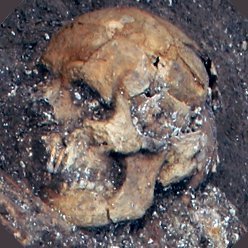
Facial reconstruction of a 7,000-year-old man from Eridu, Iraq... He lived during the Ubaid period, a culture that flourished in Mesopotamia before the rise of the Sumerian cities. The Ubaid people are known for establishing some of the earliest settled communities in southern Iraq, laying the foundations for later urban civilization. The Ubaid culture emerged in southern Mesopotamia through a combination of local development and external influences, such as from Susiana, with additional contributions from northern traditions such as the Samarra culture (particularly irrigation), as well as contact with groups associated with the Arabian bifacial tradition. A Babylonian creation text says of Eridu: "All the lands were sea, then Eridu was made." The history of Eridu goes back to the Ubaid period. Its inhabitants lived largely by fishing. Their harbour was located in a marshy, semi-aquatic environment. During the Uruk period (which follows the Ubaid and represents a key stage in the development of early Mesopotamian urban civilization, preceding the fully historical Sumerian city-state period), there is still ample evidence of Eridu’s importance. However, from the beginning of the historical period, it no longer appears to have been a populous settlement. From the Third Dynasty of Ur onward, Eridu was not so much a city as a complex of religious buildings, raised high above the surrounding plain on an artificial platform. The Sumerians and Babylonians worshipped Ea (Enki) here, the god of wisdom and patron of craftsmen and artisans. He was regarded as the father of Marduk and a principal deity associated with the primordial waters. His name was also reflected in that of the city Dur-Ea and in personal names such as Ea-gamil. The earliest written source mentioning Eridu dates to the time of Ur-Nanshe, founder of the Lagash dynasty (c. 2500 BC). By the time of the Third Dynasty of Ur, Eridu had already undergone desiccation and was largely uninhabited. Ur-Nammu, the founder of the dynasty, cut a new channel to the Euphrates to bring water back to the area in an effort to repopulate it, and he also rebuilt Enki’s temple. At the end of the 2nd millennium BC, Nebuchadnezzar I referred to himself as “Governor of Eridu.” By the beginning of the 1st millennium BC, Eridu functioned more as a sacred site than as a major inhabited city. The Assyrian king Sargon II regarded the occupation of Eridu in 710 BC as a significant achievement. The man, who was about 25 years old, was described as having Sub-Saharan African-like cranial affinities. His skull was artificially deformed during his lifetime using circular bandages. He had a medium cranial length of 179 mm, a medium-small cranial width of 135 mm, a small cheekbone width of 118 mm, and a medium condylar width (upper lower jaw width) of 107 mm. (Istvan Kiszely, 1978)show more
Ancestral Whispers
40,306 次观看 • 3 个月前
Facial reconstruction of a 7,000-year-old man from Eridu, Iraq... He lived during the Ubaid period, a culture that flourished in Mesopotamia before the rise of the Sumerian cities. The Ubaid people are known for establishing some of the earliest settled communities in southern Iraq, laying the foundations for later urban civilization. The Ubaid culture emerged in southern Mesopotamia through a combination of local development and external influences, such as from Susiana, with additional contributions from northern traditions such as the Samarra culture (particularly irrigation), as well as contact with groups associated with the Arabian bifacial tradition. A Babylonian creation text says of Eridu: "All the lands were sea, then Eridu was made." The history of Eridu goes back to the Ubaid period. Its inhabitants lived largely by fishing. Their harbour was located in a marshy, semi-aquatic environment. During the Uruk period (which follows the Ubaid and represents a key stage in the development of early Mesopotamian urban civilization, preceding the fully historical Sumerian city-state period), there is still ample evidence of Eridu’s importance. However, from the beginning of the historical period, it no longer appears to have been a populous settlement. From the Third Dynasty of Ur onward, Eridu was not so much a city as a complex of religious buildings, raised high above the surrounding plain on an artificial platform. The Sumerians and Babylonians worshipped Ea (Enki) here, the god of wisdom and patron of craftsmen and artisans. He was regarded as the father of Marduk and a principal deity associated with the primordial waters. His name was also reflected in that of the city Dur-Ea and in personal names such as Ea-gamil. The earliest written source mentioning Eridu dates to the time of Ur-Nanshe, founder of the Lagash dynasty (c. 2500 BC). By the time of the Third Dynasty of Ur, Eridu had already undergone desiccation and was largely uninhabited. Ur-Nammu, the founder of the dynasty, cut a new channel to the Euphrates to bring water back to the area in an effort to repopulate it, and he also rebuilt Enki’s temple. At the end of the 2nd millennium BC, Nebuchadnezzar I referred to himself as “Governor of Eridu.” By the beginning of the 1st millennium BC, Eridu functioned more as a sacred site than as a major inhabited city. The Assyrian king Sargon II regarded the occupation of Eridu in 710 BC as a significant achievement. The man, who was about 40 years old, was described as belonging to the South Iraqi type, which still inhabits the region today. His skull was artificially deformed during his lifetime using circular bandages. He had a medium-large cranial length of 184 mm, a small cranial width of 123 mm, a medium-large cheekbone width of 134 mm, and a large condylar width (upper jaw width) of 132 mm. (Istvan Kiszely, 1978)show more
Ancestral Whispers
85,884 次观看 • 3 个月前
Facial reconstruction of a 4,000-year-old EHG woman In 1934,... O. N. Bader and M. V. Voevodsky identified the Balakhna culture (now considered a part of the Comb Ceramic culture), a distinct Neolithic cultural region in the lower Oka River basin. This area was a sandy, marshy lowland rich in lakes, rivers, fish, and wildlife, making it ideal for dense populations of hunter-fisher groups. Settlements were not random but formed localized clusters near water sources. Most sites were temporary seasonal camps used by small groups, while each cluster also had one or two permanent settlements with dwellings and workshops. This pattern likely reflects kin-based group organization. Faunal remains show that fishing was the main subsistence activity, followed by hunting (especially moose, boar, and waterfowl). The stone tool industry is distinctive: dominated by small flake tools, especially steep-edged scrapers, with strong links to earlier microlithic (Azilian–Tardenoisian) traditions. Large macrolithic tools are absent. Ceramics are common, and tools were made from varied flint types. The Balakhna culture interacted with the neighboring Volosovo culture, producing mixed and transitional sites, though both retained distinct technological traditions. Over time, their differences gradually diminished. In 1945–1946, I. K. Tsvetkova excavated the Gavrilovka site , a combined settlement and burial ground near Dzerzhinsk. Six burials were found within the cultural layer, indicating they were contemporaneous with the settlement. The dead were buried on their backs without grave goods, likely directly within or near dwellings. One well-preserved skull allowed reconstruction. It was small and gracile, with an extremely narrow face and very strong prognathism. The features showed some “equatorial” traits. The anthropologist Mikhail Gerasimov describes the individual as follows: The skull is notably small, with a very delicate facial skeleton and extremely strong prognathism. A narrow, convex forehead, pronounced parietal bosses, and slight occipital projection give it a rhomboid shape. The cranial vault is relatively high, and in frontal view the skull appears ovoid, with a facial width (118 mm) much narrower than the cranial breadth (143 mm). The brow ridges are weak, and the low rounded forehead slightly overhangs the nasal root. The nasal bones are simple and concave, forming a broad, flattened bridge; the nasal opening is short and heart-shaped. The orbits are rounded, and the cheekbones are gracile but distinctive, with deep canine fossae that create sharp orbital margins and pronounced lateral projection. The upper jaw is strongly prognathic, further emphasized by projecting incisors and deep fossae; the lower jaw is relatively robust but with a short ramus and weakly projecting rounded chin. The degree of prognathism is exceptionally high, exceeding typical averages, though somewhat offset by the projecting nasal region. The reconstructed face is very narrow, with a small convex forehead, small eyes, and a short, broad, slightly upturned nose. The mouth is wide and strongly projecting, with full lips and a well-defined upper lip. The chin is broad and rounded, and the cheeks are slightly shortened and full. Despite some coarse features, the face has a certain soft gracility. Gerasimov notes some “Malay-like” traits but does not assign a clear ethnic classification. Other remains suggest the population was morphologically uniform, though poorly preserved. (Gerasimov 1949, 1955)show more
Ancestral Whispers
89,646 次观看 • 2 个月前
#discoelysium animation 🕺

IzzyBn Art
5,462,545 次观看 • 2 天前
I made a paper pyramid for my cat, and... it reminds him of the old daysshow more

We don't deserve cats 😺
4,507,582 次观看 • 2 个月前
THE MEN VS. TRINITY #loveislandusa

dani
988,359 次观看 • 23 天前
Corinna Kopf shocked her viewers after she started throwing... CAKE at them.... 😊show more

𝐅𝐞𝐢𝐧 ✞
182,661 次观看 • 4 个月前
🚨 U.S. Marines seen cleaning President Trump’s Hollywood Walk... of Fame starshow more

Derrick Evans
5,842,358 次观看 • 4 个月前
I don’t eat at Steak ‘n Shake very often... (their transparency and ownership have always been a little weird to me), but a new controversy I just read about is pretty silly. During remodels, they may add a QR code scanner for soft drink refills. Basically, you scan proof of purchase so people can’t just order water and then help themselves to unlimited soda. Some folks are now boycotting because they have to scan their receipt each time. I think it’s a smart move that helps keep people honest. The entitlement is wild, people are genuinely mad about scanning a code for a free refill? Go to almost any other country where free refills barely exist (if at all) and they’d be begging for this system. 😂🥤show more

McFranchisee
3,618,097 次观看 • 3 天前
Lady in black 🖤

Ayse Niqab 🧕☪️
74,138 次观看 • 1 年前
Half of my weight is in the cake 🎂 😩

Selene Castle
1,054,481 次观看 • 6 个月前