In October 2017, astronomers made a startling discovery that... captivated the world's imagination: an object hurtling through our Solar System at an incredible speed, seemingly originating from interstellar space. Named 'Oumuamua which loosely translates to "scout" ... 1/show more

Erika
1,569,518 views • 2 years ago
Another explanation for Oumuamua's unusual shape has been proposed... The asteroid Oumuamua, which flew through the Solar System in 2017, amazed scientists with its unprecedentedly elongated shape. It is 230 meters long and about 35 meters wide. Astronomers have never seen such objects before and tried to explain its origin. Oumuamua is the first known object to arrive from interstellar space. Its trajectory and speed left no doubt that it does not belong to the Solar System. The object rotated around its axis, changing its brightness, which made it possible to determine its size.show more
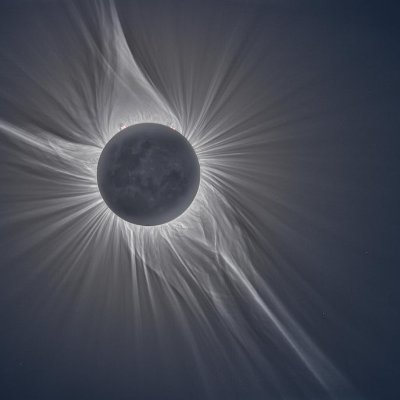
Black Hole
237,067 views • 1 year ago
And finally....its NOT an Asteroid. Yes.... They are here......... . A mysterious interstellar object, 31/ATLAS, is racing through our solar system and will reach its closest point to the sun October 29. At the same time, NASA is preparing the Artemis II mission for 2026, and aiming to return humans to the Moon by 2027. But the question remains… Is NASA showing us everything? Or is something being kept in the shadows of space?show more

முரளி
90,545 views • 10 months ago
We love Lucy! In this new animated series from... NASA Solar System, a plucky five-eyed spacecraft goes on an adventure through space to visit the Trojan asteroids in hopes of discovering the solar system's origin story. “Lucy” Episode 1 drops Nov 8 on NASA+:show more

NASA
1,146,402 views • 2 years ago
BREAKING🚨: A once-in-a-lifetime sky. 🌌 The Great Pyramids stand... beneath an incredible six-planet alignment of Mercury, Venus, Saturn, Mars, Uranus, and Neptune. As if that wasn't enough, a stray meteoroid streaked through the frame just as the shutter clicked. While the distant ice giants (Uranus and Neptune) required long-exposure photography to be pulled from the darkness, the final composite captures the full, chaotic beauty of our solar system.show more
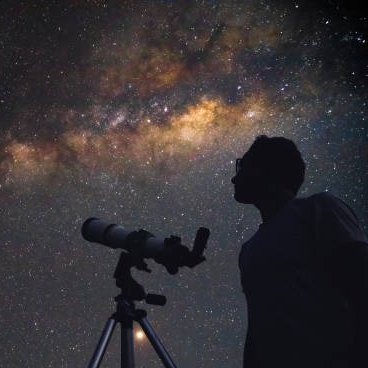
The Astronomy Guy
314,017 views • 6 months ago
🧵THE OBJECT ORBITING EARTH THAT ASTRONOMERS WONT CALL NATURAL... (1/6) A small object called Sar2901 recently passed Earth and entered a temporary orbit around the Earth-Moon system and people are going wild. When the Minor Planet Center looked at the observations, it couldn't decide whether Sar2901 was a natural mini moon or if it was an artificial object. It has now delayed giving it an official minor planet designation because if they did it would mean accepting that the object is natural and they don't know that it is. That's the official position of the organization responsible for collecting and publishing the orbits of asteroids and comets. Sar2901 is now beyond the reach of any current observations but it should become visible again in November, when astronomers might finally learn what has been moving around us.👇show more

Skywatch Signal
55,754 views • 7 days ago
🚨 BREAKING: A NEW INTERSTELLAR OBJECT JUST APPEARED BETWEEN... EARTH AND 3I/ATLAS! ☄️ Astronomers discovered C/2025 V1 (Borisov) on Nov 2 — another hyperbolic-orbit comet (e>1.009) from outside our solar system, found by the same guy who spotted 2I/Borisov! 39 62 It’s literally positioned directly in line between Earth (0.71 AU away) and 3I/ATLAS (2.2 AU away) in Virgo — initial reports showed no tail, just a coma. Recent obs confirm a short tail, but it’s still super weird. 64 2 Perihelion Nov 16 at 0.46 AU. Two interstellar visitors in one year, perfectly aligned? Space just got WAY more serious than we thought… the truth is staring us in the face. 🌌👀 #C2025V1 #Borisov #3IATLAS #InterstellarComet #SpaceMystery 7 “新 rogue object” “LARGE” 3 ”” “LARGE” (These images show the dramatic alignment graphic everyone’s sharing + the actual sky position in Virgo.)show more

Carlos Escobar NFT METAVERSE
74,363 views • 10 months ago
🚨 SCIENTISTS JUST DISCOVERED INTERSTELLAR “TUNNELS” CONNECTING OUR SOLAR... SYSTEM TO OTHER STARS. New data from the eROSITA X-ray telescope reveals that our Local Hot Bubble the 300-light-year-wide cavity of hot plasma surrounding the Sun isn’t an isolated pocket of space. Instead, it’s linked by massive structural “tunnels” of hot, low-density gas stretching toward the constellations Centaurus and Canis Major. Why this matters: For decades we thought our cosmic neighborhood was a relatively empty void carved out by ancient supernovae. eROSITA now shows it’s part of a much larger, foam-like network of hot interstellar channels. These tunnels act as cosmic conduits for gas, energy, cosmic rays, and heat across the galaxy. The deeper implication is staggering: Our solar system isn’t sitting in a quiet little bubble. We’re embedded in a dynamic, interconnected web of the Milky Way shaped by millions of years of stellar explosions and now revealed in stunning 3D detail. Space around us is far more alive and connected than we ever imagined. What happens when we start mapping the full galactic “foam” of these interstellar tunnels? Follow for more frontier physics and cosmic discoveries.show more

TheNewPhysics
129,007 views • 3 months ago
🚨🔥 THIS JUST GOT WEIRD 🔥🚨 3I/ATLAS isn’t just... drifting through our solar system — it’s HIDING. ☄️🌫️ 😱According to new analysis by Avi Loeb, this interstellar object is wrapped in a dust shroud so dense it sits right on the edge of blocking sunlight itself. 👀 Let that sink in. ⚠️ What makes this alarming: The dust veil is perfectly balanced — not too thick, not too thin Sunlight barely reaches the nucleus Any telescope zooming in wouldn’t see a solid body… only a fuzzy, obscuring cloud If natural → it must be huge If engineered → a smaller object intentionally shielding itself 🧠 The odds of this balance happening by chance? Uncomfortably small. This isn’t just a comet with a tail. It’s an object actively masking its true form. “3I/ATLAS is hiding behind a veil of dust.” Coincidence. Self-regulating physics. Or… design? The universe just asked us another uncomfortable question — and it’s coming from outside the solar system. 🚀 Stay alert. Stay curious. #SpaceAlert #3IATLAS #InterstellarMystery #AviLoeb #CosmicQuestions #AstronomyX 🌌show more

3I/ATLAS updates
32,857 views • 8 months ago
🚨 SATURN HAS 146 MOONS MORE THAN ANY OTHER... PLANET IN OUR SOLAR SYSTEM Saturn has 146 moons, the most of any planet, with sizes ranging from larger than Mercury (Titan) to as small as a sports arena. Enceladus, one of its smaller moons, has a global ocean beneath an icy shell. These moons influence Saturn's rings and magnetosphere and are key targets for future deep space missions. Some were discovered by notable astronomers like G.D. Cassini and W. Herschel, and many are recognized by the International Astronomical Union (IAU). Source: NASA Media Source: Latest in spaceshow more

Mario Nawfal
4,763,877 views • 2 years ago
🚨 THE “ALIEN COMET” MOMENT IS HERE — 3I/ATLAS... PASSES EARTH NEXT WEEK 🚨 Something extraordinary from outside our solar system is quietly passing by. The interstellar object 3I/ATLAS will reach its closest point to Earth on December 19, 2025, and many headlines are struggling to explain what’s really happening. Here’s the simple truth: 3I/ATLAS is NOT coming toward Earth. Instead, Earth is moving closer to its path as we orbit the Sun. It’s like two cars on different lanes briefly coming closer — dramatic to watch, but completely safe. 3I/ATLAS has already traveled beyond Mars’ orbit and is now heading out of the solar system forever. There is no impact risk. Even at its closest, it will remain hundreds of millions of kilometers away. What makes this moment special isn’t danger — it’s rarity. This object came from another star system, passed through our cosmic neighborhood, and will never return again. This isn’t a warning. It’s a reminder that the universe is vast, mysterious, and full of visitors we’re only just beginning to understand. #3IATLAS #interstellarobject #3Iアトラスshow more
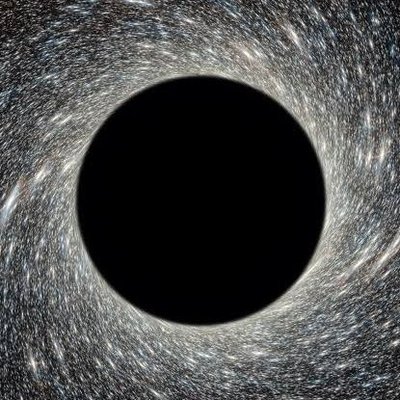
Night Sky Now
155,049 views • 9 months ago
ASTER VOLUME DOWN 88% FROM ALL-TIME HIGHS Perp volume... on the Aster 🥷 platform is down by around 88% from all-time highs set in October 2025. On October 17, $ASTER hit ATH daily volume at an insane $18 billion. In recent days, however, that figure is closer to $2 billion. Make no mistake, however - Aster is still a beast in the perp DEX sector. At time of writing, it is the world's second largest perp DEX with an impressive open interest metric of around $2.3 billion per DefiLlama data.show more

BSCN
16,561 views • 4 months ago
This is the most hilarious plushie. Made by 🧵NicstersPlushHaven🪡... who did an incredible job and worked so hard on this! Inspired by my favourite Striker moments from R2 with a plot twist from Sator 🌈🏴☠️ in which Moxxie licks Striker to get back at him. #helluvaboss #helluvabossstrikershow more

GatsbyBlue Art
24,631 views • 2 years ago
3I Atlas just flew past Mars—And it’s getting closer!... 3I/ATLAS, only the third interstellar visitor ever spotted in our Solar System. It swung closest to Mars on October 3, 2025 (~29 million km from Mars) and is racing toward the Sun for perihelion around October 29–30 (≈ 1.36–1.4 AU). At that point it’ll be ripping along at ~68 km/s. Afterward, it passes 0.65 AU from Venus (Nov 3) and makes its closest approach to Earth on December 19 at ~1.8 AU—far, but perfect for telescopes. How to watch: This won’t be a naked-eye show. Think astrophotography target: dark skies, telescope or long-lens + tracking, and stacked exposures. It’ll be tough through solar glare until after perihelion; December is when ground scopes get their best shot as it pulls away from the Sun. @europeanspaceagency already grabbed a time-lapse from Mars orbit—your final scene. Keep an eye out for its weird “backwards” dust stream (anti-tail): heavier grains pushed out by the comet’s own activity can line up sunward, while the classic ion/dust tail points away from the Sun. Interstellar, fast, and one-pass only—catch it now or it’s gone for good. Videos / Mars Express ESAshow more
Black Hole
56,258 views • 11 months ago
Something that would rival the Nimitz Encounter would be... the release of the footage that journalist Ross Coulthart claims exists, based on information from high-ranking insiders. Apparently, there is a classified UAP video on the SIPRNet servers showing a B-52 bomber being approached by a disc-shaped UFO. The UFO slowed down to match the bomber's speed, and an alien inside the craft, visible through some kind of energy shield, stared directly at the pilot before suddenly zipping away at incredible speed.show more

Open Minded Approach
230,587 views • 2 months ago
🚨 NASA JUST FOUND THE RAW INGREDIENTS OF DNA... INSIDE A ROCK OLDER THAN EARTH ITSELF. Samples returned from the asteroid Bennu contain complex organic molecules including precursors to DNA and RNA, plus many of the amino acids used by all life on Earth. These molecules formed in the early solar system and survived for billions of years inside the asteroid. Earth didn’t have to invent the chemistry of life from nothing. It was delivered ready-made from space. Why this matters: • Bennu is a primitive asteroid that has remained largely unchanged since the birth of the solar system (~4.5 billion years ago) • The samples contain the molecular building blocks of DNA, RNA, and proteins the core components of life as we know it • These organics were preserved through the violent early days of the solar system and could have been delivered to Earth by asteroids and comets • This is some of the strongest direct evidence yet that life’s chemistry has cosmic origins The deeper implication: This doesn’t mean aliens or microbes came from space. It means the raw materials for life were already floating around the solar system long before Earth cooled enough to support life. Our planet likely received these ingredients from above rather than creating them all from scratch. If these building blocks were common in the early solar system, then the starting chemistry for life may have been widespread dramatically raising the chances that similar processes could have happened elsewhere. How does it change your perspective to know that the molecular ingredients for DNA were already present in space billions of years before the first living cell appeared on Earth? Follow for more discoveries about the origins of life and what we’re learning from asteroid samples.show more
TheNewPhysics
87,603 views • 2 months ago