✨Jury Announced: 105th ADC × Dreamina AI | AI... Visual Design Category When AI steps into ADC, the century‑old benchmark of creativity, sparks between creative integrity and technology begin to illuminate new frontiers. This year, Dreamina AI joined hands with ADC to launch the AI Visual Design Category for creators around the globe. The One Club for Creativity The jury comprises 14 senior professionals from internationally recognized creative studios and agencies, including Studio Dumbar/DEPT®, Monks, and beyond. With backgrounds spanning independent creative practice, design leadership, and creative technology, the panel brings both depth and diversity to the judging process. We honor the "imperfection": Purposeful creations never lose their luster for being unfinished — instead, they grow stronger through authenticity. Dreamina AI's latest image model — Seedream 5.0 Lite — is here for you. Featuring richer visual expression, smarter and more precise editing, as well as 4K-level exquisite output, it frees every creator from tool constraints and lets inspiration bloom to its fullest. 🎨 Now seeking global AI artworks 💵 A $30,000 prize could be yours! ⏰ Submission Dates: January 16, 2026 – March 16, 2026 #DreaminaAI #ADCawards #AImperfectionismshow more

Dreamina AI
12,408 次观看 • 7 个月前
ROBOMAEDA TALK TODAY: Thank you to Professor Hiroshi Ishii... 石井 裕 as the inspiration for my talk today at the Massachusetts Institute of Technology (MIT) MIT Media Lab on "life as a hybrid." And it's not going to be my Azure AI Avatar talking for me today -- it'll be the real me. I think ... Date: November 8 (Friday), 11am Boston time Talk info at MIT: Zoom livestream (free): ** --- Building A Hybrid Career Across Tech, Business, And Design. Or, ”How I Learned to Speak Human After Leaving MIT :-)” What happens when a computer science major steps out of MIT and into design, business, and leadership? In “How I Learned To Speak Human After Leaving MIT :-),” I’ll share how leaving the Media Lab in 2008 set me on an unexpected path—from advocating for the arts with the STEAM movement at RISD to navigating venture capital, startups, and industries of all scales. Does being a multidisciplinary “hybrid” thinker and doer enhance or limit one’s career prospects? Through insights from my own journey, I’ll explore the unique challenges and opportunities hybrids face today, offering key takeaways for those building careers across multiple disciplines. This talk brings my journey full circle—from the early foundations of AI in the 80s to the dawn of a new AI-powered industrial revolution. --- Related links: - “Design Against AI” / Design in Tech Report 2024 at SXSW - “The Art and Craft of Business Resilience” / LinkedIn Learning - “Mr. Maeda’s Cozy AI Kitchen” / Learn LLM Coding Easy as CAIK - “Design, Business, Inclusion” / LinkedIn Learning - “How art, technology, and design inform creative leaders” / TED 2012show more

John Maeda
13,022 次观看 • 1 年前
Meta just launched its 1st image model after Mark... Zuckerberg’s AI shake-up. Muse Image is Meta Superintelligence Labs' first image generator after Muse Spark. They said the model will power new editing features in Meta’s Instagram photo app and be added to its marketer tools for creating platform ads. Meta had relied on Midjourney and Black Forest Labs for generation inside Meta AI. Muse Image brings that layer in-house, so Meta controls quality, cost, and product timing. Consumers get free access through Meta AI, WhatsApp chats, and Instagram Stories. Power users need Meta One or another monthly plan when free limits run out. Users can start from prompts, add photos, annotate edits, or sketch changes directly. Meta says it can erase photobombers, create QR codes, and keep visual text readable. Advertisers get variants through Advantage+ creative, with edits, style swaps, and brand-matched versions. Meta says internal tests trail GPT Image 2 but beat Nano Banana 2 on editing. This is another move in Meta's effort in trying to convert AI infrastructure spending into revenue beyond social ads.show more

Rohan Paul
20,377 次观看 • 2 个月前
OptimAI Lite Node v1.1: Built for Scale, Designed for... You! 💕 In just 2 weeks since the launch, the OptimAI Network has seen explosive growth—130,000+ active node participants powering the future of decentralized AI. With this incredible momentum came a new challenge: ensuring our network could scale seamlessly to support massive concurrent connections and real-time participation. That’s why we’ve rolled out OptimAI Lite Node v1.1—a major upgrade focused on: + Stabilizing infrastructure to handle high traffic from a global community. + Enhancing performance for smoother data mining, validation, and edge compute participation. + Refining user experience with UI updates that make contributing effortless. Every line of code and infrastructure upgrade was made with one goal in mind: to support YOU—the builders, validators, and visionaries of the OptimAI ecosystem. Now’s the time to bring more friends into the journey. 🔥 The more we grow, the smarter and stronger the network becomes—and the greater the rewards. Let’s keep building, validating, scaling. Together we’re not just powering AI—we’re reshaping how it’s built. Join or revisit the node here: 🌐 Chrome Extension: 📱Telegram Mini-App: What’s Coming Next: OptimAI Edge Node & the Rise of Agentic AI 🔸OptimAI Edge Node (Mobile) We’re working hard on the next major release: the Edge Node for mobile, which will allow mining and AI tasks to run in the background—unlocking more earning opportunities and decentralized compute power from your smartphones. 🔸More Task Types & Missions Expect new types of contributions, from AI-enhanced data validation to edge inference and scraping automation—powered by autonomous mining agents. 🔸Expanded Rewards Program As we grow, more reward tiers, bonuses, and campaigns will be introduced. Your participation now paves the way for long-term benefits. Also, do not forget to checkout our article below and learn more about our latest Community Tips & Best Practices!👇 __________________ OptimAI Network #L2 #DePIN Reinforcement Data Network for #Agentic #AI Mine Data. Fuel AI. Earn Rewards. Turn Your Data into Tomorrow’s AI #Agent. Visit our website at:show more

OptimAI Network
76,511 次观看 • 1 年前
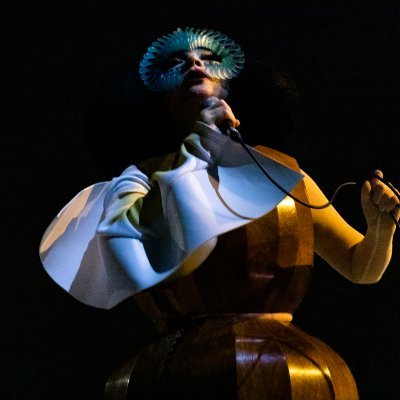
i wanted to tell you how we made the... visuals for nerve-bloom i did it with Natalia Kleszczewska and Natalie Liu . Natalia Kleszczewska is a painter , she painted the creatures and the backgrounds . Natalie Liu is a computer graphics director , she shaped the digital dimension of the work . my role in it was a creative director , bringing in the singer-songwriter tradition , where emotionally precise things happen inside the structure of a song . i guided colour pallettes , textures and the environments the music happens in . to make this possible , during the process , natalia often had to paint many shapes and sizes , different textures and layers of colours . natalie then developed the visuals, designing and overseeing CGI elements , and finding ways for the digital to sit organically alongside Natalia’s world . and include my dramaturgy and creative direction. we spent 7 months talking and working together , dedicated to relish in the craft of blending hand-made visuals with digital experimentation , 3D design and commit it to physical display technology . a lot of time was spent on researching different tools and techniques to find what worked best at each stage in the song . like i’ve done before , i wanted to merge old things with tech , giving it soul & a meaning . to paint a painting is an analog craft but computer programming is craftmanship too !! and both can co-exist , .....encouraging each other to bloom even further towards a mutual world . there is a tradition in pop music for the mucisian to choose a video director . in the art world , this is called “curation” , but where we came from , it was natural that the musician would have strong opinions on what your song needed , which mood , colours , textures & storyline . today this is called “creative director” and it is something we didn’t credit ourselves with in the 90s , but i am starting to understand this better now . i don´t think of me as a visual artist . because my heart is music . everything i do comes from a sonic point of view . this is something i have called “sonic symbolism” , sound made visual , a reverse synesthesia . when you listen to a song for the first time , it is like swallowing a whale , you need to feel the whole musical sculpture in one go . the structure of a song has always been extremely important to me : what shape it is . this is part of the craft of being a singer-songwriter ........... we are tune sculpturors ....... since i am talking about the visuals for nerve bloom it is impossible to not mention the avatars in my music videos . they have replaced the storyteller with anattempt to connect to the more universal element of music , through animation, avatars , puppetry both digital and analog . for me they are marionettes in a puppet-theatre , hopefully in a similar realm as the jungian archetypes ( which we all can act out the characteristics of ...) .... i feel nerve-bloom is a natural continuation .... an animated avatar archetype singing you a song ––––– Avatars, animation and archetypes: Nerve Bloom (remix) – on display at Listasafn Íslands / National Gallery of Iceland until September 20th 2026. The production of this film was made possible with the generous support of #bottegaveneta.show more
björk
1,412,742 次观看 • 4 个月前
"Europe has already lost the AI race." I hear... this bashing almost every single week on LinkedIn and X. Not so much when I talk to the teams who are actually working on it. They are trying to do something about it. Take Feyer. They are not building another generic wrapper application. Feyer is developing AI systems that autonomously design novel industrial hardware. Their neural explorers are coupled directly with differentiable physics simulations, allowing them to search enormous design spaces and discover hardware that humans might never come up with themselves. That could accelerate innovation across everything from lasers and quantum technology to microchip production. On September 9, Cyber Valley celebrates its 10th anniversary here in Tübingen. And I want to show and talk about companies like Feyer that are sitting here. They are a pretty good example of what can happen when world-class research turns into an ambitious company. They are building right here in Tübingen and just secured €3 million in the SPRIND, Federal Agency for Breakthrough Innovation - Bundesagentur für Sprunginnovationen Next Frontier AI Challenge. I spent some time on a call with their CTO Sören Arlt last week, and the level of technical ambition there is exactly what this ecosystem needs right now. And Feyer is part of a much bigger bet. SPRIND, Federal Agency for Breakthrough Innovation is deploying €125 million over 24 months to build three internationally competitive European frontier AI labs. Ten teams start with up to €3 million each, six can advance with another €8 million, and the final three can receive another €15.5 million each. Up to €26.5 million per winning team. And this is not a research thesis invented for a startup pitch. The work builds on years of research by Sören Arlt, Mario Krenn and their collaborators into machine-driven scientific discovery. I am going to share a lot more about what Sören Arlt, Jonathan Klimesch, Mario Krenn and the rest of the Feyer team are building very soon. If you want to see what European frontier AI can actually look like, keep an eye on them. Follow for more insights into AI and robotics. {Quick animation by me for now. We’ll have much better visuals to share over the next few weeks ;)}show more

Ilir Aliu
10,745 次观看 • 1 个月前
Fable 5 comes back!It can now build playable game... prototypes. I think it is actually a signal for where AI coding is going. Making a game is not just “write some code.” Even a small browser game needs: game loop;character movement;collision logic;scoring system;UI states;physics tuning;visual feedback;bug fixing;playtesting This is why game prototyping is a great test for AI models. A model cannot fake it with a pretty answer. Either the game runs, or it does not. What impressed me about Fable 5 is that it is useful for the messy middle: turning an idea into mechanics, turning mechanics into code, debugging broken interactions, and iterating until the prototype feels playable. But here is the practical part: I would not use the strongest model for every step. For game building, I would split the workflow: 1. Fable 5 for game design + architecture 2. a fast coding model for routine implementation 3. a vision-capable model for screenshot/UI feedback 4. a cheaper model for docs, test cases, and small fixes 5. fallback when latency, cost, or output quality becomes a problem That is the real AI coding stack. Not “one magic model does everything.” More like: the right model, for the right task, at the right cost, with fallback when things break. This is why I’ve been looking at ZenMux ZenMux. ZenMux gives developers one gateway to access multiple leading AI models, with OpenAI / Anthropic / Google Vertex compatible APIs, cost tracking, quality benchmarks, auto-routing, and compensation when output quality, latency, or throughput falls short. If AI can now make games, the next question is not just “which model is strongest?” It is:how do we manage the whole model workflow Fable 5 shows the creative ceiling. ZenMux is closer to the infrastructure layer you need when AI coding becomes a real production habit.show more

Rachel🥥
61,994 次观看 • 3 个月前
We are building the home of the doge economy... Projects across every major vertical are already gearing up to launch on DogeOS. Builders are cooking. Here's what the community should be excited to explore.... Much Thoughts ✍️ Very 🐕 So Soon... 💱 DeFi Swaps, lending, yield, memes all running on DogeOS with Dogecoin at the heart of it all. This means the most beloved and recognized asset in crypto finally gets a real financial system built around it. Doge stops being just a vibe and starts being productive. The community has been asking for this for years. 🎮 Gaming On-chain games built on DogeOS: play, compete, unlock with Dogecoin. Doge was born from meme and gaming culture. Bringing games on-chain is just Doge coming home. Play to unlock, play to grow, play because it's fun. Gaming is one of the strongest onramps in all of crypto. It's how you turn curious onlookers into active participants. This is a chance to bring the fun and the love of this community to a whole new wave of users, and remind the old ones why they fell in love with Doge in the first place. 🤖 AI Builders are already positioned to ship AI powered dApps, agents, and tools natively on DogeOS. Think automated trading agents, AI assistants that manage your wallet, dApp builders, and solutions that get smarter the more the ecosystem grows. Agents benefit from fast and cheap transaction environments, and that's exactly what DogeOS is built for. DogeOS becomes the rails for the next wave of on-chain AI, with Doge as the fuel. 📣 Community and Social Apps built for the culture. Social tools, creator platforms, community coordination, all on-chain and all for the Doge economy. Dogecoin has always had the strongest community in crypto. Now that community gets its own social layer instead of living as a guest in another chain's world. Dogecoin should be the focal point, not just another asset being served. 🐕 All your desires. One ecosystem. We are building toward the future this community has dreamt of, making Dogecoin the central piece of a real on-chain economy. This is just the start. Much building. Prepare your paws.show more

DogeOS
43,197 次观看 • 24 天前
The recent Massachusetts Institute of Technology (MIT) CSAIL paper... published on Recursive Language Models is a fascinating look into how AI systems reason in 2026. You can check it out here ➡️ → The paper notes that even frontier models suffer from “context rot” as inputs grow longer. More tokens don’t mean more understanding. Instead of compressing or summarising, RLMs “treat long prompts as part of an external environment” …and let the model programmatically inspect, decompose, and recursively requery itself over precise sections. This matters in Web3. Why? Smart contracts are long, stateful, and brittle. One missed assumption = unnecessary hassle. In the video below, we applied RLM principles to improve the prompt shown. The old prompt would try to force multi-step pauses. Therefore breaking the AI's workflow. Now it decomposes requirements, scores confidence for each component, verifies the logic, and then synthesises. Result = Production-ready contracts with flagged risks, not blind single-pass outputs. Try it out with our Smart Contract Generator today!show more

ChainGPT
82,385 次观看 • 8 个月前
every time art and technology collide, it gets uncomfortable.... photography, cgi, nfts. now it’s ai. inevitably, the people who lean in early, long before it’s fully accepted, are the ones who end up shaping what comes next. doodles was born out of this exact contention. we aim to do it again. when we decided to build Doodles AI, we built it as a first-party tool. trained exclusively on ip we own, on a visual language i’ve spent my entire career formulating. the goal was speed, but even more so, relevance. the ability to participate in culture in real time. because that’s what true internet-native brands should all be striving for. we’ve been running it internally for a while now, and the impact is tangible: more viral posts, more growth, more attention. but it was too powerful, too satisfying, and too fun to not share it widely. a strong ip doesn’t weaken when you open it up. it gets rediscovered from angles you couldn’t have planned for, by people you never would’ve reached. creativity has always had gatekeepers. skill. time. access. often, it’s a game of privilege. plenty of people have taste and vision but just don’t have the tools to match it. i’m proud to contribute my life’s work to this new era of co-authorship, with a singular style as the galvanizer. the best way to predict the future is to invent today.show more

burnt toast
31,053 次观看 • 7 个月前
$KNDX 🤖 Theres 3 big narratives that are sending... coins left right and centre rn. 🚀 #AI, #Gamefi, & #NFTs 🔹Theres 50% mindshare for #AI. 🤖 🔹#GameFi mcap is hitting ATH's with #OfftheGrid, $XBG and $SUPER making spectacular moves. 🎮 🔹NFTs and the #Metaverse are making a strong comeback with $APE up 100% over the weekend. 🐵 What if there's a project that touches all these trending narratives with groundbreaking technology to disrupt all 3 of them? 🔥 💡- That's where $KNDX comes in. -💡 Kondux is a cutting-edge Web3 SaaS platform, combining NVIDIA’s Omniverse, AI, Blockchain, and dynamic NFTs to revolutionize secure asset management across industries. 👏 Their flagship product, kNFTs, are 3D digital assets usable across Metaverse and Gaming platforms, AR/VR/XR environments, and manufacturing applications. Kondux’s scalable model opens new revenue streams by enabling effective digital asset monetization. 💰 Kondux is the first Web3 project to integrate VFX pipelines with NVIDIA’s Omniverse and bringing it onto the Blockchain. ⛓️ It is also the only Web3 project with a *Select Status Partnership* with NVIDIA, operating under NVIDIA NDAs and working with them directly for more than 2 years. About their NVIDIA Integrations: 🤖 🔹There are three areas of the Kondux tech stack that coincide with three divisions of NVIDIA: 📡GDN (Graphics Delivery Network, the backbone of GeForce Now) 💡Omniverse for 3D aspects such as, geospatial data, real world physics, lighting, and raytracing 🤖NVIDIA AI Foundation, which covers many aspects of #AI, including inference and deployment scaling. The convergence of all these components lie within .USD file format . 🔹 They are the first blockchain project to integrate NVIDIA’s Omniverse Cloud and Graphics Delivery Network (GDN) to provide high-quality 3D content accessible on any device without requiring high-end hardware. 🔹 This setup streamlines content management, democratises access to resource-intensive 3D content, and enables real-time interaction with 3D NFTs. Now, I haven’t seen any crypto project so deeply connected with NVIDIA and NVIDIA technology. GDN is a HUGE competitive advantage. With it, the need for #GPU’s basically goes out the window. 🤯 Now lets take a look at some of the other main features... 👀 OpenUSD (Universal Scene Description): 📽️ 🔹 Kondux is leveraging USD technology, developed by Pixar and used by Meta, Apple, Microsoft and other industry leaders to enhance 3D graphics and interoperability within its creative ecosystem. 🔹 Originally created for high-end film production, USD now supports a variety of applications, including gaming and virtual reality, making it a key asset for Kondux. kNFT's: 🎨 🔹 Kondux is pioneering a new category of NFTs known as kNFTs, which aim to redefine NFT utility through innovative features. 🔹 A standout feature is the upgradeable aspect provided by Kondux DNA, allowing kNFTs to transform and combine with other NFTs, creating limitless possibilities in art, gaming, and music. 🔹Through the Kondux AI portal it will be possible to communicate with kNFTs. They can learn and adapt. This AI technology is revolutionary because it makes human to kNFT interaction possible, turning it into a unique, personalized experience. Check out the clip of kNFTs in Unreal Engine 5 gameplay below. 👇 Kondux is a very obvious utility play with huge upside because it’s multi narrative. 📈 It's seriously groundbreaking stuff that they’re about to launch. 🚀 After speaking with the team there’s no doubt in my mind this will do crazy big numbers in the next months. 🤑show more

Altcoin Miyagi🇯🇵
17,323 次观看 • 1 年前
💍 ARQX LAUNCHING WORLD’S FIRST AI - LUXURY JEWELRY... TOKEN: $ARQX ⏰ When: May 7th - 16:00 UTC 📍 Where: Uniswap ⚡️ What: ARQx ($ARQX) & its consumer-focused AI mobile app have the potential to revolutionize how jewelry & luxury is created the world over. The ARQ Jewelry app, the first of its kind, enables anyone on earth to instantly design & build professional-level jewelry in seconds (available for both iOS & Android). 💎 By leveraging artificial intelligence, ARQx democratizes the design process, challenging a $350+ billion dollar (2023) centralized industry. AI is set to disrupt over 300 million full-time jobs in the next decade & the world of luxury is right in its cross-hairs. ➡️📱 ARQx will unveil its mobile jewelry design platform on the MAY 9TH, 2024 - 2 days after TGE. 💎 No need to wait weeks or months to try ARQx’s disruptive tech. This IS NOT a niche web3 game or defi project with a limited user base, but instead; a full-fledged consumer ecomm experience, primed mass market adoption with millions of users. You can use it, you wife can use it, your children can use it - anyone who has ever bought or worn jewelry can use the #ARQx Jewelry Design app. ARQX TOKEN DETAILS: 💎 Token name: ARQx AI 💎 Token ticker: $ARQX 💎 Total supply: 1 billion tokens split across BASE & ETH (1,000,000,000) 💎Market cap: $353,395 at launch | $7,000,000 fully diluted. 💎 Targeted Industries: Artificial Intelligence [AI], Real World Business [RWB], Luxury Fine Jewelry, Precious Metals. DEX TRADING WILL COMMENCE ON UNISWAP AT 16:00 UTC ON MAY 7TH, 2024: Multiple CEX listings locked, announcements shortly post TGE. ➡️ BASE contract address: 0x5e432eeCd01C12ee7071Ee9219C2477a347DA192 ➡️ ETH contract address: 0x5e432eeCd01C12ee7071Ee9219C2477a347DA192 * The contract address is the same on both the BASE and ETH chains. ** ARQX NEVER has any BUY tax, always 0%. Because of generous aggressive vesting + protection against malicious bot activity, ARQX has a 10% SELL for week 1, which will then set to 8%, before diminishing monthly to 2%. ARQX TOKEN UTILITY: 💎 The ARQ Jewelry platform is powered by the $ARQX token, which allows each user to design new jewelry dozens of times a day. The more jewelry designed, the more token usage (in-app AI gas). The app also includes a buyback & burn tax on ALL jewelry purchases… forcing increased buying pressure on the open market as ARQx scales its user base & sales. 💎 ARQx is built for ease-of-use by a combined audience of mainstream web2 & web3 alike. Traditional users can easily convert their fiat funds in-app into the token - without the hurdles of a legacy web3 user experience; creating an effortless USD to ARQX onramp. With sale prices ranging from $500 to $10,000, profit margins exceeding 100%, lucrative staking incentives (APY for web3, discounts for web2), the token price is geared to explode even independently of its open market trading. MAINSTREAM MISSION & ADOPTION: 💎 ARQx's resonating mission focuses on enabling the masses to awaken their creative expression, traditionally gate-kept by fashion industry elites. The platform encourages individuals to trust their creative instincts and design their own personal fashion, rather than forcing them to conform to seasonal trends dictated by “big lux”. 💎 Lastly, ARQx’s roadmap extrapolates all these strengths to include: smart NFC jewelry containing crypto wallets (already shipped), individual creator Shopify-style stores, B2B white-labeled solutions for the entire jewelry industry (first clients already acquired), and further expansion into additional custom lux AI products such as: fashion, handbags, collectibles, and footwear. Detailed roadmap can be found on the ARQx website [link in bio]. Becoming an early token adopter of the $ARQX token gives community members exposure to all of this asymmetrical upside, & "fomo-proofs" against the disruptive potential for AI in the jewelry industry: a perpetual precious-metal-focused ancient and robust part of human culture. ARQX - Changing the world of luxury forever… together!show more
$ARQx AI | The Future of Jewelry
46,910 次观看 • 2 年前
Impeccable 3.7 brings linting to design. Until now it... was a skill you asked for help. Now it's a design-system-aware feedback loop that runs while your agent builds, catching slop and design drift before they land. 🪝 Design hooks for Claude, Codex, and Cursor They run after every UI edit and quietly nudge your agent to fix slop and drift. The output isn't another wall of lint: it separates new findings from already-seen ones, flags clean scans, and asks the agent to use judgment. Fix real issues, leave intentional demos alone, save exceptions to config instead of littering your source. 🎨 Slop detection is now project-aware Reads your actual design system from DESIGN.md, your typography, palette, radius scale, and tokens, and flags drift from your system, not just generic AI slop: • this font isn't in your design system • this color is outside your documented palette • this radius doesn't match your rounded scale The same engine powers both the hooks and the CLI, and it's where we're investing next. 🖥️ Live Mode, ready for real projects Svelte/SvelteKit now preview variants as temporary framework components with live params, then accept cleanly back into your source component. Manual text edits got evidence / apply / discard routes, insertions preserve their anchors, and mapped lists and JSX slots clean up far more reliably. ⚡ Leaner core, sharper detector Rule-level evals across 3 providers and 4 niches cut guidance with no measurable lift and dropped examples that taught models bad patterns. The detector now skips hidden and screen-reader-only elements, understands OKLCH alpha and Sass-like inputs, and tightened checks for repeated kickers, oversized H1s, clipped overflow, and cramped padding. 🛠️ CLI caught up impeccable detect loads DESIGN.md by default, motion findings name the exact token or cubic-bezier instead of just "bounce," and impeccable ignores gives real CRUD for exceptions. Hooks and CLI share the same ignores. No split-brain config. Plus a much-improved interactive installer with hooks setup built in. Upgrade: npx impeccable install npm i -g impeccableshow more

Impeccable
233,051 次观看 • 3 个月前
Why is the market selling off today? (Save this).... The semi selloff right now is being driven by a mix of macro fear, profit taking and investors questioning how quickly all of this AI spending will actually pay off, not because demand for AI infrastructure suddenly disappeared. The market is basically trading this chain reaction, the ongoing US Iran escalation pushes oil higher, higher oil keeps inflation elevated, sticky inflation keeps Treasury yields high and that increases the risk of the Fed staying hawkish or even hiking again. That is a terrible setup for semis because many of these companies are valued on the massive earnings investors expect them to generate years from now. When yields rise, those future earnings become worth less today which is why the highest multiple AI and semiconductor names usually get hit first. (I don't think there will be a hike this year). This is also why everything is moving together right now. Nvidia, Micron, Nebius, SanDisk, Broadcom and Applied Optoelectronics are all completely different businesses, but institutions are not separating memory, networking, optics, compute and cloud infrastructure at the moment. They are reducing exposure to the entire AI trade, taking profits in the names that have already run the most and moving into a more defensive position potentially ahead of the Fed. There is also growing pressure around hyperscaler capex. Microsoft, Meta, Amazon and Google are still spending enormous amounts on GPUs, data centers, networking and power but the market is starting to ask when all of that spending will actually turn into revenue and free cash flow. Investors are no longer satisfied with hearing that AI capex is growing. They want proof that the returns are arriving fast enough to justify the valuations already priced into the entire AI ecosystem. That creates a weird situation where hyperscaler capex can continue rising while semiconductor stocks still fall. The market is not asking whether AI spending is growing anymore but rather asking whether it is growing fast enough to beat the expectations already baked into these stocks. Crowded positioning is another major factor. Semis and AI infrastructure stocks have been some of the biggest winners in the market so institutions are sitting on huge profits and many funds own the exact same names. When macro risk increases, investors usually sell the most liquid winners first. That does not mean demand for memory, optics or custom chips suddenly collapsed but rather means investors are locking in gains and reducing risk. Tariffs add another layer because even when they are not directly placed on chips, they can still raise the cost of servers, electrical equipment, cooling systems, construction materials and the overall data center buildout. That makes AI infrastructure more expensive while also adding another source of inflation. Then you have Jensen Huang’s letter to the White House this morning about open weight AI models, which I think is one of the most important long term developments here. Nvidia, Meta, Microsoft, Palantir and several other companies are pushing Washington not to place broad restrictions on open weight AI. OpenAI and Anthropic were notably absent because open models are much more of a threat to their business models. OpenAI and Anthropic benefit from a world where a few closed frontier labs control the best models and companies have to pay them through subscriptions and APIs. Open weight models weaken that advantage because businesses can download a model, customize it for their own use and run it on their own infrastructure or through a neocloud. That is bad for OpenAI and Anthropic because it puts pressure on pricing, margins and the idea that they will control the intelligence layer of the economy but it is very good for the AI ecosystem as a whole over the long run. But the question is what does this mean for all the OpenAI and Anthropic commitments? so that's adding to the fear as well. But with that being said open models make AI cheaper and more accessible. Instead of AI being controlled by a few giant labs, thousands of startups, universities, governments and regular businesses can deploy models themselves. That spreads AI adoption across the entire economy and creates a much larger infrastructure opportunity and that is exactly why Jensen cares. Nvidia does not need OpenAI or Anthropic to win. Nvidia just needs more people using AI. Whether the model comes from OpenAI, Anthropic, Meta, Mistral, Kimi or some startup nobody has heard of yet, it still needs GPUs, memory, networking, data centers and electricity. So open weight AI could actually weaken the model companies while making the infrastructure layer much bigger. More open models mean more companies running inference. More inference means more GPUs. More GPUs mean more HBM, optical transceivers, switches, data centers and power. That is bullish for Nvidia Nebius, Micron, Broadcom , Marvell and Applied Optoelectronics over the long run. So my take is that the current semi selloff is being driven mostly by macro uncertainty, higher oil, rising yields, Fed fears, tariffs, crowded positioning and questions around the return on hyperscaler capex. The underlying AI infrastructure thesis has not suddenly broken. We are not broadly seeing hyperscalers cancel GPU orders, slash capex, abandon data center projects or report that AI demand has collapsed. What has changed is the valuation investors are willing to pay while the macro environment remains unstable. The market is lowering the price it is willing to pay for semiconductor growth but is not necessarily saying that growth is gone. And while Jensen’s open weight push may be bad for OpenAI and Anthropic, it could be one of the best things possible for the AI ecosystem over the long run because it creates more models, more developers, more competition and ultimately much more demand for the infrastructure underneath all of it. Nothing about the AI thesis has changed for me, so I will be going shopping and taking advantage of this sale while the market is selling everything together. I am an analyst at Milk Road Pro, and if you want to see exactly what I am buying, you can join for just $1 using the link below.show more

Melvin
180,578 次观看 • 2 个月前
Google dropped a new AI paper called LUMIERE. It's... remarkably flexible, supporting video inpainting, image-to-video, AND stylized video generation tasks. Say hello to “space-time diffusion” for video generation! Now what the heck does that mean exactly?! 🌐⏳ → TL;DR it utilizes a “Space-Time UNet” architecture that generates the full duration of the video in one pass, rather than generating distant keyframes and interpolating between them like prior works. Because the computation is done in this “compressed space-time representation” to generate the full clip at once, it's far more temporally consistent. → Another benefit of generating the full video at once is that you can “direct” the video generation, making it easier to hand off to other models/tasks without having to stitch together partial solutions. You can condition generations on additional inputs, meaning you get the full stack of AI video capabilities – from video inpainting to image-to-video and beyond. → New SOTA for AI video generation? User study results in the paper suggest human evaluators preferred Lumiere over Runway Gen-2, Pika Labs, and Stable Video Diffusion in terms of quality, text alignment AND motion. But as always, we need to get hands-on with this tech when Google *actually* decides to ship it. → Could this end up inside YouTube? Y’all know i’m obsessed with blending reality and imagination – so it’s the video inpainting tech I'm most excited about. I really hope this model finds its way into YouTube's Generative AI efforts, and based on their prior announcements and the list of acknowledgments in the paper I think it might! 🤞🏽 Links: 🔗Paper: 🔗Project:show more

Bilawal Sidhu
44,822 次观看 • 2 年前
My startup that i founded with BlockPrints is now... live. is the website. Our first card we are selling before the "Upload your own card design and order a physical copy" is available. After that it will be "Create your own card design using AI and order a physical copy" - First we wanted to showcase the quality of the cards by creating a limited series called the "KOL Legend Series" - Each card in the series will have a print of 100. There will be 25 KOLs total. - The first KOL Legend is my good friend, the one-and-only yellowpanther (prediction arc) 💎 - many of you know know him well. He is the creator of AgentYP as well as a crypto gaming KOL extraordinaire. One of the most real and genuine guys in the space who has pushed it forward in many ways. It was an honor to have him be #1 and an honor to call him a friend. - Ive been good friends with YP for a while and he agreed to do this with us. He helped design the card. He has 175,000 followers on X and will be sharing a few posts about the sale soon. - We have not picked the second KOL yet. We wanted to get the first one out. - We are selling the card for $49, or if you want it "slabbed" AKA in an acrylic casing, its $68. Plus shipping and handling. We will ship to anywhere in the world. - This is a physical limited edition collectors item, priced much cheaper than your typical NFT. Something you can put on a shelf and see it every day. It has a beautiful rainbow holofoil finish. - If you order one, there is a QR code on the back that is covered by a sticker. Dont expose that code until the time is right. I will let you know. - This has not been announced on X yet, I wanted to give you guys here the first dibs. - This is a non-tokenized project. We have zero plans to release any sort of crypto token associated with this. - Whittling this down from a grand vision to a realistic multi-stage GTM strategy took some time, but that is an incredibly important process. This is seriously just the beginning. - This is what has been keeping me very busy the past month. - big thanks to both Psysquig Painting and TENNKN for their design help as well as development of the site by Steve Thanks everyone, Nickshow more

Nick
15,111 次观看 • 1 年前
The biggest Bitcoin miners on earth are quietly walking... away from mining Bitcoin, and the reason is not the one everyone keeps repeating. They are not fleeing a dead business. They lost an auction for their own power, and the winner was artificial intelligence. Start with the brutal arithmetic. It now costs the average public miner around $80,000 in cash to produce a single Bitcoin, and for stretches of this year $BTC traded below that. The most efficient operators on the cheapest power still clear a margin, but an estimated 15 to 20 percent of the global fleet is mining at a loss right now, burning more in power than the coins are worth the second they are minted. Three straight downward difficulty adjustments earlier this year, the first such streak since 2022, were the footprint of machines going dark. That looks like a simple story of a broken business until you see the number that explains the exodus. The same megawatt of power that earns a Bitcoin miner roughly $1 million a year earns between $10 and $20 million a year hosting AI compute. Ten to twenty times more, for the identical electricity, substation, and cooling. What made industrial miners valuable was never the mining. It was the power contracts, the land, the grid interconnects. AI walked in and bid an order of magnitude higher for exactly those assets. Mining did not fail. It got outbid for its own infrastructure. When Core Scientific runs its BTC segment at a negative margin while its AI colocation business prints money, the decision writes itself. CoinShares estimates listed miners could pull up to 70 percent of their revenue from AI by year end, up from about 30 percent. The power is being repriced to its highest use, and Bitcoin lost the bidding. If the giants leave, what happens to the network they secured? The doom posts assume it weakens. It does not, because Bitcoin has a self-healing reflex written into its core. When miners switch off, blocks slow, and within two weeks difficulty automatically drops, which makes mining cheaper and more profitable for everyone still running. The security does not vanish, it relocates, and you can already see where. State-backed pools are appearing, with one Gulf operator reportedly standing up a national pool near 3 percent of global hashrate, alongside private fleets and the handful of public miners like Marathon still choosing to buy Bitcoin rather than lease their power away. The network even hit an all-time high above one zettahash this year as the pivot accelerated. It does not need any particular miner. It needs someone, somewhere, for whom the math still works, and cheap stranded power has no shortage of those. But there is a deeper timer here, and the AI pivot just exposed it. Today miners earn almost everything from the block subsidy and almost nothing from fees, often under one percent of revenue on a quiet day. That subsidy halves again in 2028, and every four years after, marching toward zero. For Bitcoin to pay for its own security forever, fees eventually have to replace it. The open question is whether they can, and the evidence cuts both ways. On busy days, during token launches and inscription waves, fees have already spiked past 15 percent of revenue, and in 2024 some blocks earned more in fees than the entire subsidy. The capacity is there in bursts. Whether bursts become a baseline is the single most important unanswered question in Bitcoin. The AI exodus did not create that question. It pulled the cover off it years early, and showed how fast capital abandons hashing the moment something pays more. So the honest read is not that AI kills Bitcoin mining. It is stranger than that. AI is the first bidder rich enough to reveal what Bitcoin's security was always quietly worth, and what it will cost to keep once the free coins stop coming. The miners are not abandoning a sinking ship. They are selling the deck to a higher bidder while the same clock everyone forgot about keeps ticking underneath.show more

Shanaka Anslem Perera ⚡
90,812 次观看 • 3 个月前