New Subquantum Informational Mechanics framework (NMSI). A radical mathematical... shift in fundamental physics is introduced in the NMSI, inferring that information rather than energy or matter is the fundamental substrate of reality. The Universe isn’t expanding and doesn’t die thermally, the vacuum is not empty, but is an active medium composed of elementary units of information called infobits which self-organize through progressive compaction onto dynamically viable structures. The cosmic evolution is governed by optimal informational transport modeled upon a substrate called the Riemann Oscillatory Network (RON). The radical concept treats physical fields such as EM & gravity as emergent properties of a Coherent Logical Oscillator influenced by the Riemann zeta function (ζ) that governs the organization of space, time and mass. 🔗show more

Maurizio Iβα
11,137 просмотров • 4 месяцев назад
🚨 BREAKING What if mass… isn’t a fixed property?... Scientists just found evidence that mass can change. Not in theory. Inside real matter. They detected a rare state called an η′-mesic nucleus where a particle gets trapped inside a nucleus… and its mass shifts. Let that sink in. Same particle. Same physics. Different environment… different mass. That means: Mass isn’t just “what something is.” It’s how it interacts with the vacuum around it. And the vacuum? It’s not empty. It’s a hidden structure that gives particles their properties. Mass may come from the vacuum The vacuum changes in dense matter So mass itself can change This is huge. Because it flips the idea that mass is fundamental. Instead: mass might be emergent. In my view: Mass isn’t a property… it’s a response to time/field structure. Change the structure… you change the mass. So the real question is: Are particles “things”… or just stable patterns in a deeper field? Follow me physics isn’t discovering matter… it’s discovering what creates it.show more

TheNewPhysics
17,272 просмотров • 3 месяцев назад
Evolution is not computable. It seems that life itself... is proceeding toward a meta-law of increasing complexity. As the basic laws of physics result incomplete to provide all the answers to comprehend natural phenomena like biological evolution, novelties and abstraction. Scientists have proposed to use Functional Information Theory that supposedly promises a way to frame the exponential twists of all kinds of evolving systems. But turned out that to explain the degree of diversification, and convolutional outcome that the intelligent life is taking, isn’t a mathematical or a scientific problem but a philosophical one. Evolution isn’t computable. There are many more idiosyncratic pathways that the universe takes that do not follow the classical arrow of time imposed by the entropic principle. Although information itself may be a key to unlock unknown aspects, there might be a separate arrow in time able to define the increasing of complexity. Evolution is constantly creating not just new contextual knowledge but new possibilities for our consciousness to expand. At the same time the non computability issue touches the heart of what makes life so magical, unpredictable and rewarding. 🔗show more

Maurizio Iβλἄ
15,809 просмотров • 1 год назад
PLASMA demonstrating the same self sustaining TOROIDAL form as... the EARTH and our HEART. Most of the UNI VERSE is composed of plasma. It is an electrically conducting medium and the 4th state of matter after solid, liquid and gas. The PLASMA in our blood, that flows through our heart, carries energy, our LIFE FORCE... A plasma toroid. 🔗show more

WhatdoIknow
143,397 просмотров • 2 лет назад
In General Relativity and Quantum Gravity, diffeomorphism often called... diffeomorphism invariance or general covariance is an isomorphism of differentiable manifolds that defines the physical nature of spacetime. Rather than a mathematical tool, diffeomorphism is a smooth, bijective (invertible) mapping between two open sets where both the function and its inverse are continuously differentiable, ensuring that not only are the spaces homeomorphic (topologically equivalent), but they also share the same basic regarding calculus/differentiation. Diffeomorphism ensures that the equations of physics are independent of the coordinate system used, preserving the fluid structure of warped or deformed shapes without tearing, ripping, or creating holes. 🔗show more
𝓜𝒂𝒖𝒓𝒊𝔃𝒊𝒐 𝗜𝒃𝛼
28,926 просмотров • 3 месяцев назад
🚨 SCIENTISTS MAY HAVE JUST FOUND A COSMIC VERSION... OF HEISENBERG’S UNCERTAINTY PRINCIPLE AND IT COULD EXPLAIN DARK MATTER (OR DARK ENERGY). A bold new theory suggests the universe itself obeys a fundamental fuzziness: its size and rate of expansion cannot be known with perfect precision at the same time just like position and momentum in quantum mechanics. Why this matters: The universe is accelerating faster than it “should.” We call the mysterious driver dark energy (or sometimes link it to dark matter models). But this new idea from theoretical physicist Savvas Koushiappas needs no new particles or forces the acceleration emerges naturally from the universe’s own quantum-like uncertainty at cosmic scales. The deeper implication is mind-bending: Reality on the largest scales may be inherently “fuzzy,” just like the smallest scales. The geometry of spacetime itself carries a built-in uncertainty that could explain why the cosmos is speeding up without invoking exotic vacuum energy or hidden matter. We may be discovering that the universe has its own version of the uncertainty principle woven into its fabric. What happens if this cosmic fuzziness is real? Follow for more frontier physics and cosmic discoveries.show more
TheNewPhysics
32,867 просмотров • 2 месяцев назад
🚨 SCIENTISTS SAY “MAGIC” MAY BE WHAT GIVES SPACE-TIME... ITS GRAVITY. For years, physicists have understood how entanglement can build the structure of space-time in holographic models. But something was missing: why does space-time curve in response to matter the essence of gravity? A team including Charles Cao and John Preskill now proposes the missing ingredient is a quantum property called “magic” a measure of how complex and non-classical a quantum state is (the kind that makes quantum computers hard to simulate classically). In their theoretical framework, adding this magic turns rigid space into something that can bend. Matter can now tell space how to curve. Why this matters: • It offers a new way to think about how gravity emerges from quantum information • It connects ideas from quantum computing (error correction, magic states) directly to fundamental physics • It suggests space-time itself may be one of the most quantum objects in existence The deeper implication: Gravity may not be a fundamental force at all. It may be what happens when quantum information becomes sufficiently complex and “magical.” This is still early theoretical work in specific holographic models. But it hints that the pliability of the universe might have quantum roots we are only beginning to understand. What do you think is gravity ultimately just extremely complicated quantum information, or do you think we’re still missing something much deeper? Follow for more frontier quantum gravity and quantum information research.show more
TheNewPhysics
15,329 просмотров • 2 месяцев назад
Nothing as a concept is the absolute absence of... anything or the original physical reality that preceded our world and, perhaps, possessed the following characteristics: homogeneous, unstable, eternally existing, and spatially finite. :The author defines "Nothing" as the absolute absence of anything or a primordial physical reality predating our world, potentially characterized as homogeneous, unstable, eternally existing, and spatially finite. This perspective frames Nothing as either a void or a pre-cosmic state with distinct traits, prompting reflection on the universe’s origins. It suggests a finite yet eternal substrate, unstable enough to spark existence. The concept challenges conventional views of creation, emphasizing a paradoxical foundation for reality. It highlights the need to explore the nature of pre-existence to understand cosmic beginnings. The call is to ponder Nothing’s role in shaping the universe, guiding deeper inquiry into existence’s roots.show more

Zafar Mirzo | Quotes
395,263 просмотров • 10 месяцев назад
The very fabric of space-time at the smallest scales... is thought to be extremely turbulent and chaotic, described as a frothy sea called quantum foam. This concept, stemming from quantum mechanics and general relativity, suggests that the very nature of space-time is bubbling with tiny wormholes and fluctuations that appear and disappear within fractions of a second. 📷by Johann Rosarioshow more

Physics In History
1,106,985 просмотров • 2 лет назад
American Muslim scholar, Hamza Yusuf co-founder of the Zaytuna... College declares that “the whole concept of an ‘Islamic state’ is a fantasy in the minds of the modern Islamists” & confirms that the vast majority of Muslim states in history were “secular” (see above post for what he means by ‘secular’). As I recently argued in my Oxford Union debate - which we won - the reading into Islamic sources of the modern idea of a unitary legal ‘state’ (dawlah) over all of society, is an anachronism. It is the retrospective imposition of the European Westphalian nation-state concept onto traditional Islamic sources. The word ‘state’ (dawlah) is entirely absent from *all* Islamic sources of Shariah. As is the word ‘law’ (Qānūn) and as is the word ‘constitution’ (Distūr). It is thus impossible for the term ‘Islamic State’ to be anything other than a modernist reading. And Shariah is not a ‘law’ (the concept of unitary legal system did not exist) so there is no such thing as ‘Sharia law’. There is only Shariah (which means ‘the way’). Islam did not define any fixed notion of state, and hence the matter is left to the people to adopt within Islamic parameters. Here is my recent 10 minute Oxford Union debate speech which explains further:show more

أبو عمّار
13,298 просмотров • 1 год назад
If a brain’s neural connections can be mapped and... simulated, what we’re really recreating is the flow of information through that network. Conscious behavior may not be tied to biology alone it may emerge from the stability of the information patterns themselves. The real question isn’t just whether a fly can live in a simulation… It’s whether cognition is fundamentally a physical structure, or a dynamic information process that can exist on different substrates.show more
TheNewPhysics
41,917 просмотров • 5 месяцев назад
🚨 BREAKING: Scientists just proved something bigger than computing.... Information can be controlled… inside the nucleus of an atom. Not circuits. Not materials. Pure structure. Read that again. We’re no longer pushing electrons around… we’re shaping the state of reality itself. And it gets wild: Nuclear spins hold information longer… because they barely interact with the world. That means Stability Precision Control at the deepest level But the real shift is this: Technology isn’t separate from physics anymore… it is physics. So the real question is If information is built into reality… are we discovering computation, not inventing it? Follow me I track this shift in real time.show more
TheNewPhysics
26,472 просмотров • 3 месяцев назад
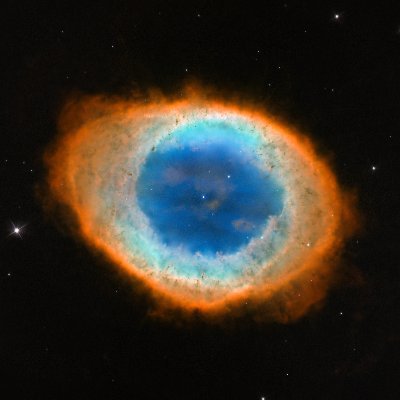
On March 6, 2015, astronomers reported observing a supernova... in a distant spiral galaxy. Although the explosion itself occurred millions of years earlier, the light carrying that event had only just reached Earth after traveling across intergalactic space. This delay is not unusual but a fundamental feature of the universe, where distance and the finite speed of light turn every observation into a glimpse of the past. In this way, telescopes function not just as instruments of sight, but as time machines, revealing events long after they have concluded. Each distant supernova reminds us that the cosmos we observe is a layered history, unfolding to us not as it is now, but as it once was across unimaginable spans of space and time. Credit: NASA/ESA Hubble Space Telescopeshow more
Cosmos Archive
23,079 просмотров • 3 месяцев назад
🚨 THE FORCE THAT HOLDS ATOMS TOGETHER MAY BE... TEARING THE UNIVERSE APART. A groundbreaking new study suggests that the strong nuclear force the same force that binds quarks inside protons and neutrons could be responsible for the accelerating expansion of the universe we call dark energy. Using advanced quantum chromodynamics modeling, physicists found that the behavior of the quark vacuum at cosmic scales produces an effect that mimics dark energy almost perfectly. Why this matters: • This could finally solve the “cosmological constant problem” — one of the biggest failures in modern physics (a 120-order-of-magnitude mismatch) • It links the tiniest scales (inside atoms) with the largest scales (the entire universe) • The model matches real observations from Type Ia supernovae, quasars, and HII galaxies • Upcoming telescopes like Euclid and the Vera C. Rubin Observatory can test this idea in the next few years The deeper implication is staggering: What if dark energy isn’t a mysterious new substance at all… but the same fundamental force that holds matter together, just acting on cosmic scales? The glue of the universe might also be its engine. What happens if this theory is confirmed? Would it rewrite our understanding of reality itself? Follow for more frontier physics and cosmic discoveries.show more
TheNewPhysics
12,128 просмотров • 2 месяцев назад
Either reality is such that the Universe is an... eternal and linearly infinite bubbling ocean of physical matter, where an infinite number of worlds arise and take shape — including infinitely identical ones — or our logic lacks something essential for understanding the limits of the Universe. : The author presents two stark alternatives for understanding reality. Either the Universe is an eternal, linearly infinite ocean of physical matter — a ceaselessly bubbling expanse in which an infinite number of worlds continuously arise, evolve, and sometimes mirror one another exactly or our current logic is fundamentally incomplete, missing some essential principle needed to grasp the true boundaries (or boundarylessness) of existence. This dilemma forces us to confront the limits of human reason when faced with cosmic scale. If the first option holds, then our own world is merely one fleeting bubble among countless others, and every event, every life, every civilization is repeated infinitely across the vastness. If the second is true, then reality may possess structures or dimensions that lie permanently beyond our conceptual reach. In either case, the question reveals the profound humility required when contemplating the ultimate nature of the cosmos. Our logic may be powerful, but it is not yet sufficient to settle whether infinity or incompleteness better describes the whole.show more
Zafar Mirzo | Quotes
1,057,985 просмотров • 5 месяцев назад
When a spacecraft leaves Earth, it doesn’t just fire... its engines and head straight to its destination. In many missions, especially those going beyond low Earth orbit, there’s a more subtle and elegant strategy at play, one that uses gravity itself as part of the navigation system. This is often called a gravity assist, or a slingshot maneuver. But in the case of missions like #Artemis II, what’s being used is a closely related idea known as a free-return trajectory. At first glance, it might sound simple: the spacecraft goes to the Moon, loops around it, and comes back. But the physics behind it is anything but simple. Instead of relying on continuous propulsion, the spacecraft follows a carefully calculated path through the gravitational field of the Earth–Moon system. It is launched with just the right speed and direction so that, as it approaches the Moon, the Moon’s gravity bends its trajectory. The spacecraft is effectively flung around the Moon, redirected onto a path that naturally brings it back toward Earth. No major engine burn is needed for the return. Small trajectory corrections may still be required, but gravity does the heavy lifting. That’s the key. This kind of trajectory is not just efficient, it’s also safe. If something goes wrong with the spacecraft’s engines or onboard systems, gravity itself ensures the return. It’s an inherent backup plan, built into the trajectory from the very beginning. The same fundamental idea appears in gravity assists used across the Solar System. When a spacecraft flies past a planet, it can gain or lose speed by exchanging momentum with that planet. From the spacecraft’s point of view, it’s as if it has been accelerated without using fuel. In reality, it has borrowed a tiny amount of orbital energy from the planet itself. That’s how missions like Voyager reached the outer planets, and how probes continue to explore regions far beyond what their onboard fuel alone would allow. But there’s an important distinction. An interplanetary gravity assist is typically used to change speed and direction, often increasing the spacecraft’s energy. A free-return trajectory, like the one used in Artemis II, is designed for something more specific: a path that naturally loops back to Earth without requiring additional propulsion. It’s less about gaining energy, and more about shaping a trajectory that guarantees a return. To understand why this works, it helps to stop thinking in straight lines. In space, motion follows curves defined by gravity. The spacecraft is constantly falling, first toward Earth, then toward the Moon, and then back toward Earth again. What looks like a loop is really a continuous free fall through a changing gravitational landscape. This way of navigating space reveals something deeper. We tend to think of engines as the drivers of motion, but once a spacecraft is on its way, gravity does most of the work. The art of spaceflight is not just about thrust. It’s about knowing when not to use it. #GoodLuck #Artemis NASA Artemisshow more

Erika
234,886 просмотров • 4 месяцев назад
🚨 WHY AREN’T MORE PEOPLE TRYING TO SOLVE MATH’S... GREATEST MYSTERY? Because some mathematicians believe humanity may not yet have the mathematics required to solve it. The Riemann Hypothesis is a 166-year-old unsolved problem tied to prime numbers — the hidden numerical structures underlying mathematics itself. And solving it could transform: • cryptography • quantum physics • computing • chaos theory • our understanding of mathematical order The strange part? The hypothesis suggests all the hidden “zeros” of the zeta function align along a single invisible line in higher-dimensional mathematics. And despite over a century of effort… nobody knows why. Some of the world’s greatest mathematicians openly admit they don’t even know where to begin. The deeper implication is unsettling: Reality may contain structures so deep… humanity still lacks the language needed to describe them. What if the greatest mysteries in the universe… aren’t hidden in space… …but hidden in mathematics itself?show more
TheNewPhysics
14,157 просмотров • 2 месяцев назад
What is an individual? Can we accept the idea... that an individual is not an isolated being, but a totality of traits, ideas, and deeds that arise within humanity, are shaped by it, and return to it? Every human being is a temporary form through which humanity expresses a part of itself. : The author redefines the individual not as an isolated entity but as a transient expression of humanity itself: a unique constellation of traits, ideas, and deeds that emerge from the collective, are molded by it, and ultimately return to enrich it. Each person serves as a temporary vessel through which humanity manifests and explores its own nature. This dissolves the illusion of absolute separateness, revealing every life as an integral thread in the living fabric of humankind. It portrays individuality as both gift and responsibility: a fleeting opportunity to contribute distinct value to the whole. The concept elevates personal existence to a sacred role in humanity’s continuous self-creation. It leads to recognition that our thoughts, actions, and choices ripple beyond the self, shaping the shared human story. Ultimately, framing every individual as both creation and co-creator of humanity’s evolving essence, bound in profound interdependence.show more
Zafar Mirzo | Quotes
864,277 просмотров • 8 месяцев назад