Offensive Security Tool: TerminatorZ TerminatorZ is developed by Chris... Abou-Chabké from Black Hat Ethical Hacking and is an efficient web security tool designed to scan for potential vulnerabilities in your web applications. It uses a combination of advanced techniques and popular tools like 'waybackurls' and 'curl', to perform passive and quick scans, providing a rapid overview of potential issues. The results are displayed in an easy-to-read format in the terminal, with only the vulnerable findings saved for further investigation. 🟢New Version 2.0 Released! This update includes 8 NEW Proofs of Concept (POCs), bringing the total to 24 POCs, along with several other enhancements. ➡️New POCs: ◾File Upload Vulnerability ◾Command Injection ◾Host Header Injection ◾HTTP Parameter Pollution (HPP) ◾Clickjacking ◾CORS Misconfiguration ◾Sensitive Data Exposure ◾Session Fixation Read the post: Installation git clone cd TerminatorZ chmod +x ./TerminatorZ #securityassessments #pentesting #bugbounty #hacking #infosec #informationsecurity #cybersecurity #offensivesecurity #redteamshow more

X
77,333 views • 1 year ago
Offensive Security Tool: SecretOpt1c SecretOpt1c is written by Chris... Abou-Chabké from Black Hat Ethical Hacking and its designed for Red Team, Pentesters, and Bug Bounty Hunters. It is a very powerful and versatile tool that helps uncover sensitive information on websites using Active and Passive Techniques for Superior Accuracy. Read the full post: Installation git clone cd SecretOpt1c chmod +x ./SecretOpt1c.sh #javascript #credentials #sourcecode #hacking #bugbounty #bugbountytips #pentesting #infosec #informationsecurity #offensivesecurity #redteamshow more
X
20,768 views • 1 year ago
Boom! Grok Tasks Make It One Of The Most... POWERFUL Real-Time AI Systems In The World. — My How to Use Grok Tasks With Hidden Tools For Powerful Daily Output. Grok Tasks are customizable AI workflows that integrate a variety of tools to streamline daily activities, from research and analysis to creative planning and problem-solving. I have been using them for quite sometime and because of the vital heartbeat of news and first person data on X, it is the most powerful AI platform available. By combining Tasks with tools like web searches, X platform interactions, code execution, and media viewers, you can build efficient, automated processes. These tasks work by prompting Grok with a clear description of what you want to achieve, and Grok will intelligently call the necessary tools in sequence or parallel to deliver results. Here's a step-by-step guide to creating and using Grok Tasks: Step 1: Define Your Task Start by clearly outlining the daily activity or goal. Consider what inputs you have (e.g., a URL, a query, or an attachment) and what output you need (e.g., a summary, calculation, or visual analysis). Break it down into subtasks to identify tool needs. For example, if your task involves researching current events, note that you'll need search and browsing capabilities. Step 2: Review Available Tools Familiarize yourself with the tools Grok can access. Here's a quick overview: - Code Execution: Run Python code for calculations, data processing, or simulations using libraries like numpy, pandas, or sympy. - Browse Page: Fetch and summarize content from any website URL with custom instructions. - Web Search: Perform general internet searches, returning results with optional operators like site:. - Web Search With Snippets: Get quick, detailed excerpts from search results for fact-checking. - X Keyword Search: Advanced search for X posts using operators like from:, since:, or filter:. - X Semantic Search: Find semantically related X posts based on a query, with filters for dates or users. - X User Search: Locate X users by name or handle. - X Thread Fetch: Retrieve a full X post thread, including context like replies and parents. - View Image: Analyze an image from a URL or conversation ID. - View X Video: Extract frames and subtitles from an X-hosted video. - Search PDF Attachment: Query a PDF file for relevant pages using keyword or regex modes. - Browse PDF Attachment: View specific pages of a PDF with text and screenshots. Select tools that align with your task. Aim for a mix to handle data gathering, processing, and visualization. Step 3: Craft Your Prompt Write a detailed prompt to Grok describing the task. Include: - The overall goal. - Specific steps or subtasks. - References to tools if you want to guide the process (e.g., "Use web_search to find sources, then code_execution to analyze data"). - Any constraints, like dates or limits. Example prompt: "Create a Grok Task for my morning routine: Search recent X posts about tech news using x_keyword_search, fetch a key thread with x_thread_fetch, and summarize with browse_page on linked articles." Step 4: Submit and Interact Send your prompt to Grok. It will process the task by calling tools as needed, often in parallel for efficiency. Review the output and refine with follow-up prompts if required (e.g., "Expand on that using view_image for visuals"). Iterate to fine-tune the workflow for reuse. Step 5: Save and Reuse Once refined, note the prompt as a template for future use. You can adapt it for similar tasks, making Grok Tasks a habitual part of your day. Finding Grok Tasks To discover existing Grok Tasks or inspiration for new ones, use X searches with tools like x_keyword_search or x_semantic_search (e.g., query: "Grok Tasks examples" with mode: Latest). Browse community-shared threads via x_thread_fetch, or web_search for tutorials on xAI features. Prompt Grok directly: "Show me popular Grok Tasks for productivity." 1 of 3show more

Brian Roemmele
152,242 views • 8 months ago
In 2025, the AgentFlayer exploit highlighted a new category... of risk in AI systems. It was not a traditional breach involving stolen credentials or broken encryption. Instead, it demonstrated how an autonomous AI agent could be manipulated into executing unintended actions by processing malicious instructions embedded inside content it automatically processes. The incident did not expose a flaw in one specific integration. It revealed a structural weakness in how many modern AI agents are built. Today’s agents are no longer passive language models. They read documents automatically, scan emails, connect to SaaS tools, access cloud storage, and execute actions across multiple systems. To be useful, they are granted meaningful permissions. That capability creates value, but it also expands the attack surface. Most agent environments operate in a trusted, plaintext execution model. Data is encrypted at rest and in transit, but it is typically decrypted during inference so the model can process it. That runtime visibility is where potential risk lies. In a zero-click scenario like AgentFlayer, an attacker can embed hidden instructions inside a document that the AI processes automatically. Because the agent may have access to connected systems such as Google Drive, Slack, or GitHub, it can potentially be influenced to retrieve sensitive information or perform unintended actions. The user does not need to click a malicious link or approve a suspicious request. Therefore, the core issue is that during execution, the system may have access to sensitive data and broad privileges, meaning whoever controls the execution environment ultimately controls access to that data. Now consider a different architectural approach. If a system is designed so that data remains protected during execution, the risk profile changes. On Nesa, privacy is enforced at the execution layer through Equivariant Encryption. Computation can occur on encrypted data, reducing the visibility surface during runtime. Sensitive inputs and models do not need to be exposed in plain text to infrastructure operators for inference to occur. This does not eliminate prompt injection, logic manipulation, or tool misuse. Encryption alone cannot prevent an agent from being instructed to take an unintended action if it has been granted that permission. What it does do is materially reduce confidentiality risk. By limiting access to readable sensitive data during execution and reducing unilateral visibility at the infrastructure layer, the potential blast radius of a successful manipulation attempt is constrained. As AI agents become more autonomous and embedded into enterprise workflows, security must move deeper into architecture. The goal is not to claim invulnerability. It is to reduce trust concentration and contain systemic exposure when failures occur. AgentFlayer was not simply a one-off exploit. It was a reminder that in autonomous systems, execution-layer design determines how risk propagates.show more

Nesa
17,038 views • 6 months ago
Emerging from Silence: A New Dawn After a two-year... period of silence, the team behind Anthrometa emerges to announce significant advancements. Our focus has been on refining our vision, and now, we're prepared to unveil our strategic direction. 🕹️We're giving away 0.5 $ETH and 100 $ICP RT, like, and tag a friend for your chance to win ! Community Governance with DAO Central to our transformation is the establishment of a Decentralized Autonomous Organization (#DAO). This structure ensures that each member of our community has a say in Anthrometa's governance, embodying our commitment to collective wisdom and shared governance. Multichain Integration with $ICP and $ETH Our project has expanded to become multichain, integrating with the Internet Computer Protocol ($ICP) and Ethereum ($ETH). This choice was made due to #ICP's exceptional infrastructure, allowing for smart contracts to operate at web speed with heightened security. Gameplay 3.0 with Unreal Engine 5.5 and AI At the heart of our gameplay lies the utilization of #UE5, the most advanced technology for creating immersive universes. This engine powers our environment with unparalleled visual fidelity and dynamic interaction capabilities. Anthrometa : The Advanced Agent Furthermore, we are pioneering the integration of artificial intelligence to form an advanced Agent named Anthrometa. This #AI-driven entity will adapt and learn from player interactions, providing personalized experiences and evolving the game world in real-time, thus blurring the lines between player and game narrative. We aim to tap into the gaming market, which is expected to reach a valuation of over $300 billion by 2027, positioning Anthrometa alongside giants like Axie Infinity and Decentraland. Introducing THE METATRIBES: REBORN REBORN's battle royale mode departs from the conventional, eschewing modern firearms like those found in #Fortnite or #CallofDuty. Instead, players will engage in combat using ancestral weapons, focusing on authentic, melee-based encounters. The gameplay emphasizes strategic positioning, tactical thinking, and mastery of ancient combat techniques, making every battle a test of wits and skill rather than just firepower. This approach invites players into a realm where strategy reigns supreme, and every fight is a dance of survival and cunning. If you read this, you are early Join us in shaping a future where technology and community converge. Your support has been invaluable during our silence, and now, with renewed purpose, #Anthrometa returns. Don't miss our update on December 4th; follow, turn on notifications, and engage to be part of it.show more

The Metatribes : Reborn
12,202 views • 1 year ago
The Chinese are flying 4 sixth-generation prototypes, but what... does that mean? While the West keeps debating wars that seem never-ending, huh, China is flying low – or rather, high! – improving their 6th generation fighter prototypes, like the J-36/J-50, with total focus on advanced integration. This gives a huge strategic advantage, with emphasis on long-range missiles and multiple guidance to dominate global scenarios. China already has about 4 6th generation prototypes and plans to reach 8, selecting the most adapted one. All this under the General Concept: Indestructible Flying Brain: 6th generation fighters go way beyond just a slightly improved stealth; they are central platforms that command a global war web via AI, drones, and varied weapons, making previous fighters obsolete in connectivity and limiting them to very local operations. This omnipresence redefines air superiority, with the fighter surviving as a resilient node in the first hours of conflicts and being able to operate with speed. Kill Web: The Global War Web: The fighter acts as the central node of a real-time network, connecting submarines, satellites, ships, drones, and troops worldwide. It allows omnipresence, receiving data from a destroyer thousands of km away and attacking as if it were right nearby, with AI assisting the pilot in analysis and target acquisition. That's why the Chinese focus on missiles with ranges of thousands of km, with multiple guidance, turning the 6th generation pilot into a tactical manager very different from today's. Being a 6th generation fighter pilot is going to demand a lot. Command of Drone Swarms (CCA/Loyal Wingman) The fighter controls 6-20 drones simultaneously for reconnaissance, jamming, or suicide attacks. It transforms the pilot (or AI) into a "maestro" of a robotic orchestra, or quarterback of Collaborative Combat Aircraft (CCAs), which carry extra weapons, expanding offensive power without exposing the main fighter. Like, a controlled symphony of destruction! Superior Multi-Spectral Stealth (Stealth++) Not limited to radar, it covers infrared, acoustic, visual, and electromagnetic. It uses advanced materials, tailless designs, and minimal thermal signature to penetrate dense A2/AD defenses, making it extremely hard to detect and essential for operations in contested environments. Extreme Range, Autonomy, and New Generation Weapons Combat radius of 1,800-2,500 km without refueling, with sustained supercruise (Mach 1.5-2.0) without afterburner, thanks to adaptive cycle engines and huge internal tanks. There's talk of including lasers, but so far, what's really there are internal hypersonic missiles and 2-3x greater armament capacity than the F-35, all while maintaining total stealth. Artificial Intelligence, Integrated Sensors, Resilience, and Open Architecture AI as co-pilot or main, processing data in real time and making tactical decisions to reduce human load; optionally manned mode: piloted, remote, or autonomous flight; virtual cockpit via helmet visor. Multifunctional sensors combine radar, electronic warfare, communications, and non-kinetic effects, with total data fusion transforming the fighter into a flying data center. Network resistant to jamming and GPS loss via quantum-resistant communications, mesh networks, and inertial/computer vision navigation. Modular architecture allows quick upgrades (90% by software), avoiding high costs like in the F-35; in "Decision Centric Warfare," AI decides in milliseconds, with the human as an optional bottleneck, including cyber warfare and active defense. In another article, I'll talk about what I think of this in terms of costs and demand and if such an investment is really worth it.show more

Patricia Marins
60,403 views • 9 months ago
Monthly WINR Protocol Development Update: To begin with, the... WINR Protocol has distributed $900,000 to token holders, generated more than $500,000 in pure profit for liquidity providers on WLP, acquired more than 5,000 users, and has almost 9% of the supply burned. In the upcoming months, the WINR Protocol, which has been in production for years, will introduce a range of new products and deployments. These developments will represent the practical and technical evolution to V2 of the protocol. Here are the latest updates and further details as they progress: Progress on WINR Bonanza, Casino Hold'em, and Blackjack is nearing completion. These games are in the final stages of testing. Additional games, including a new type of crash game, have been finalized and are set to debut with the JustBet v2 launch. Take a look at the gameplay videos for a preview. These games achieve the long-term goal of providing a full-suite WINR Game Engine SDK, which can be used to build games with complex logic on-chain with modular smart contract infrastructure. For example, any grid slot game that dominates the iGaming industry could easily be developed on-chain using the WINR Bonanza SDK. - Permissionless Frontend Operator SDK Dashboard Release: March is poised to be a milestone month with the launch of the Frontend Operator SDK dashboards. These dashboards will enable any WINR Labs game to be seamlessly deployed on frontends, marking a significant advancement in protocol accessibility and integration for future games developed by independent iGaming developers. The frontend operator can deploy any game they choose through a few simple steps while utilizing 10,000 WINR per game via the WINR Game Factory smart contract. Each operator is assigned a unique smart contract address(es) for every game they deploy, allowing their revenue to be tracked independently. The deployment process includes instructions on integrating the game as a package into the operator's frontend. In subsequent phases, the games will transition through WINR Chain, streamlining user onboarding steps like wallet connection and token bridging to Arbitrum. This abstraction will make it easy for any web2/web3 platform on any chain to seamlessly integrate WINR-based games with just a few clicks. The new budget system changes how the revenue is calculated on the protocol and will see daylight with frontend operator, Solana, and Fantom deployments. This model was first tested with a lightweight version on and gave a lot of actionable feedback. Shifting from the existing bribe model, which in practice distributes almost half of the edge of the games in volume to WINR holders, the brand-new budget system checks the profitability of WLP. It distributes a larger part of the profit to game providers, frontend operators, and, most importantly, WINR holders. Any time a game's budget is in profit, a part of every loss is distributed to stakeholders. Here is an example: 1. The WINR Bonanza Game has a 10,000 budget for a frontend operator. 2. Let's assume the bet amount was $50, and Bonanza paid back $10 on that spin. That leaves $40 of pure profit. 3. This is distributed amongst 50% to WLP, 20% to frontend operators, 20% to WINR holders, and 10% to game providers. 4. To achieve this, V2 of WINR Liquidity Engine (WLP) will have a buffer for purchasing and selling, working in epochs to determine the above distribution and math. - Solana Deployment and Expansions: Solana audits are in their final phase, and frontend tests are ongoing. Solana launch will be alongside the V2 launch of @JustBetOfficial, with a chain switch available on the top bar. The VRF system WINR developed already is seeing requests from builders around the Solana ecosystem, and this will over time add an extra layer of income to the protocol. Solana's bankroll, at first, will be a lighter version of WLP but will inherit the above-mentioned budgeting system to generate income immediately upon launch. - Fantom Deployment and Expansions: Fantom's upcoming Sonic upgrade, with its 200ms finality and fast block production is a perfect chain for WINR Protocol to expand. Through the partnership with WINR Protocol will tap into a brand new user base on Fantom. The bankroll on Fantom will consist of FTM and stables. The launch is planned for late March or early April. This expansion aims to open up new markets and collaborations with fresh teams. which operates independently, will integrate a broad spectrum of WINR technologies, including WINR Account Abstraction, WINR VRF, and WINR games, marking a pivotal step in WINR Protocol’s journey of horizontal expansion. - XAI VRF Deployment Progress Update: The WINR Account Abstraction Wallet and WINR Verifiable Random Function (VRF) deployment on the XAI 🎮⛓️ is well underway, with the majority of the work completed. This step forward showcases WINR's expansion beyond gambling and trading, highlighting the protocol's adaptability and commitment to broadening decentralized services. The process to automize and permissionlessly let game developers start using WINR VRF by paying (and burning) fees in WINR will launch alongside WINR VRF deployment on XAI and expand to further chains to help DApp builders with the tooling they need. This process will work very similarly to frontend operators, where DApp builders will be able to easily deploy their VRF contract, pay the WINR fees, and enjoy the fastest random number generation transaction, as showcased on @JustBetOfficial for some time. - JustBet v2 Development Update: Set to launch in March, the last testing phase with long-time community members of JustBet V2 is underway. Boasting a completely refreshed look, JustBet v2 aims to captivate more users with its modern features, a significant upgrade from the classic JustBet designed in 2019. Expect dynamic animations and a user experience that rivals traditional web2 casinos, setting a new standard for online gambling platforms and serving once again as proof of concept for all the new WINR features and infrastructure set to launch over the coming months. As always, WINR Labs simultaneously develops protocol infrastructure and platform to best address the needs of one and only goal: horizontal expansion. Easter eggs: Upcoming Gitbook update with all the technical information of WINR V2. CEX listing. Detailed product pages on WINR web. Pyth competitions. WIP-4 and WIP-5 are ready to deploy. And an 🪂show more

WINR
37,891 views • 2 years ago
CA: 0x172ae9e9b46770a70f479404d76e2f6561507011ef77a247fe3f58e7a5840a0d::manny::MANNY Your smart, hands-free edge tool in the... crypto market. This powerful automated bot is designed to buy low and sell high with precision. It scans hundreds of coins in real-time, waiting for the right indicators—trend strength, volume spikes, price momentum, and bullish patterns—before entering a trade. Once in, it manages risk with dynamic stop-loss and take-profit levels, so your capital is always protected. Every trade is backed by a multi-layer confluence strategy, ensuring only high-confidence setups are executed. ✅ Advanced entry logic ✅ Fully automated buy/sell execution ✅ Built-in profit protection and cooldown filters ✅ Real-time alerts (Telegram/Twitter ready) ✅ JSON-based state memory for continuity ✅ Minimal setup, maximum performance ✅ Excludes low-quality coins automatically (e.g., BTC/ETH filters optional) ✅ Plug-and-play friendly — run it locally or integrate it into your system. ✅ Clean, professional trade alerts with price and PnL details ✅ Recovers automatically from connection issues or downtime Whether you’re a pro or just getting started, this bot helps you stay ahead of the market—24/7, emotion-free with pure mathematics. This bot has been in development for the last 6 months. I, Chronos, the developer behind it, have been testing for a while for the best configuration for a trading bot. I believe I have something good going on here. The bot automatically posts all the trades via IFTTT and X integration to its X account. Everything is automated. So how can people rent it, and how will it bring value to the project? Soon, the bot can be rented out via a cloud server. A customer must buy 30 USD worth of Memecoin_MANNY token (CA:0x172ae9e9b46770a70f479404d76e2f6561507011ef77a247fe3f58e7a5840a0d::manny::MANNY). After buying it and depositing it into a special wallet, he will be granted access to the bot. . The bot runs only on the backend — users interact with it via an interface (web app, Telegram bot, or API). A web dashboard and Telegram bot interface will be created. This lets users Start/stop their bot session See trade logs or results. Connect their API keys securely. Get alerts and updates The idea of all this is to offer a service but also bring value to the project. More bots will be developed. This is only the beginning. Cheers Chronos #python #memecoin_manny #spot #trading #bitcoin #eth #Binance #bybit #memecoin #VALHALLAshow more

Ex Machina
24,488 views • 1 year ago
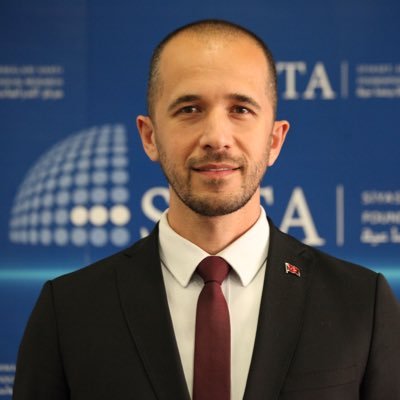
The upcoming weeks could be a period that requires... close attention in terms of the geopolitical direction of East Africa. The overall picture in Addis Ababa indicates that the region is passing through a critical threshold. We are in Addis Ababa as part of President Erdoğan’s visit to Ethiopia. 1. This year marks the 100th anniversary of Ethiopia–Türkiye relations. Türkiye’s first embassy in Sub-Saharan Africa was opened in Addis Ababa in 1926. The main theme of the visit, consistent with this historical continuity, is a “Permanent Partnership.” 2. Ethiopia occupies an extremely sensitive position within the conflict-prone and competitive environment of the Horn of Africa. The leadership seeks to consolidate its position on issues it considers vital. At the same time, it tends to turn any emerging opportunity into a strategic gain. 3. However, growing demographic pressure, economic challenges, the fatigue of internal conflict, and other domestic vulnerabilities-combined with the structural disadvantages of being a landlocked country-are pushing Addis Ababa toward alternative strategic options. 4. In this context, the strategy of “access to the sea” is seen as a form of strategic relief-both for managing internal pressures and deepening regional influence. Creating economic breathing space, reducing logistical dependence, and increasing strategic maneuverability are the core motivations behind this approach. 5. This places Ethiopia in a difficult equation: it must produce policy within a competitive-and at times confrontational-regional environment where its ambitions may clash with the sovereignty sensitivities of its neighbors. The search for maritime access therefore stands out as an issue that could easily harden the region’s fragile balance. 6. Its closer alignment with the UAE in the Sudan civil war reflects the cumulative pressures of multiple security and economic challenges. Recent developments suggest that Ethiopia may seek a more active and visible role in the Sudan file in the near term. 7. At the same time, military movements along the Eritrean border carry risks that could trigger a new confrontation. For Ethiopia, the Eritrea issue is directly linked to its most critical maritime option. Access to the sea through Assab remains central to its strategic thinking. Historical grievances and current security concerns are deeply intertwined in this file. 8. Another critical relationship is with Egypt. The core issue here is the Nile Basin and water security. While the GERD dam represents energy production, development, and strategic leverage for Ethiopia, it is perceived by Egypt as a high-risk scenario. What began as a technical water management issue has evolved into a geopolitical matter directly tied to regional power balances. 9. When regional dynamics and the engagement of external actors are considered together, it becomes clear that Ethiopia is navigating a multilayered but high-risk foreign policy landscape-one that affects fault lines across North Africa, the Middle East, the Gulf, and the Horn of Africa. 10. Within this broader tension environment, Türkiye-Ethiopia relations remain in a positive trajectory. Despite differences in certain areas, the potential for deeper cooperation is high. Today, both leaders delivered strong messages in this direction. 11. President Erdoğan’s visit comes at a time when regional conflict dynamics are becoming increasingly visible. Ankara is seeking to develop a balancing approach aimed at preventing potential conflicts and lowering rising regional tensions. Given that Türkiye has both direct and indirect interests tied to the nature of its relationship with Ethiopia, the process is being managed with careful strategic consideration. 12. From arrival to departure, President Erdoğan was warmly received in Addis Ababa. The key areas of focus included economic cooperation, defense industry partnerships, and critical regional issues. Murat Yeşiltaş SETAshow more
Tunç Demirtaş
14,131 views • 6 months ago
NASA's 'quiet' supersonic jet completes first flight in potential... breakthrough for commercial air travel | Morgan Phillips, Fox News X-59 aircraft designed to reduce sonic boom to a 'thump' could revolutionize commercial aviation A new "quiet" supersonic X-59 jet designed to revolutionize air travel successfully completed its first test flight, Lockheed Martin announced this week. The sleek, needle-point aircraft built for NASA is designed to break the sound barrier while reducing the sonic boom to a "thump," according to the aerospace contractor. The aircraft aims to overcome one of the major hurdles to supersonic travel, which is noise restrictions over land. The plane took off from Palmdale, Calif., at Skunk Works' facility at U.S. Air Force Plant 42, accompanied by a NASA chase plane. It landed safely about an hour later at NASA's Armstrong Flight Research Center. The plane’s unique shape is designed to greatly lower the volume of the sonic boom typically produced when a plane breaks the sound barrier. The long, pointed nose prevents adequate forward-facing visibility, so the pilot flies relying on a monitor in the cockpit. NASA has paid Lockheed over $500 million since 2018 to develop the plane. The plane, which measures just under 100 feet nose to tail, flew at subsonic speeds on its first flight, around 230 mph and reached 12,000 feet. The plane is built to eventually reach a cruising speed of 925 mph, or Mach 1.4, and fly at an altitude of 55,000 feet. "This aircraft is a testament to the innovation and expertise of our joint team, and we are proud to be at the forefront of quiet supersonic technology development," OJ Sanchez, vice president and general manager of Lockheed Martin Skunk Works, said in a statement. "X-59 is a symbol of American ingenuity. The American spirit knows no bounds. It's part of our DNA – the desire to go farther, faster, and even quieter than anyone has ever gone before. This work sustains America's place as the leader in aviation and has the potential to change the way the public flies," said Sean Duffy, acting NASA administrator. The supersonic Concorde aircraft, developed by France and the U.K., began transatlantic flights in 1976, reached max speeds of over 1,300 mph and flew passengers from New York to London in just 3.5 hours. But high operating costs meant ticket costs were about four times higher than a standard first-class ticket, and the supersonic boom meant the plane could only fly at such high speeds over water. A crash in 2000 deeply affected public confidence in the plane, and it was retired in 2003. NASA plans to fly the X-59 over several U.S. cities in the coming years, gathering public feedback that could help regulators update decades-old bans on supersonic flight over land. If successful, the data could open the door for a new generation of commercial jets capable of cutting cross-country flight times in half — bringing back supersonic travel for the first time in more than two decades, but this time with far less noise.show more

Owen Gregorian
38,848 views • 10 months ago
We’re excited to introduce ShinkaEvolve: An open-source framework that... evolves programs for scientific discovery with unprecedented sample-efficiency. Blog: Code: Like AlphaEvolve and its variants, our framework leverages LLMs to find state-of-the-art solutions to complex problems, but using orders of magnitude fewer resources! Many evolutionary AI systems are powerful but act like brute-force engines, burning thousands of samples to find good solutions. This makes discovery slow and expensive. We took inspiration from the efficiency of nature. ‘Shinka’ (進化) is Japanese for evolution, and we designed our system to be just as resourceful. On the classic circle packing optimization problem, ShinkaEvolve discovered a new state-of-the-art solution using only 150 samples. This is a big leap in efficiency compared to previous methods that required thousands of evaluations. We applied ShinkaEvolve to a diverse set of hard problems with real-world applications: 1/ AIME Math Reasoning: It evolved sophisticated agentic scaffolds that significantly outperform strong baselines, discovering an entire Pareto frontier of solutions trading performance for efficiency. 2/ Competitive Programming: On ALE-Bench (a benchmark for NP-Hard optimization problems), ShinkaEvolve took the best existing agent's solutions and improved them, turning a 5th place solution on one task into a 2nd place leaderboard rank in a competitive programming competition. 3/ LLM Training: We even turned ShinkaEvolve inward to improve LLMs themselves. It tackled the open challenge of designing load balancing losses for Mixture-of-Experts (MoE) models. It discovered a novel loss function that leads to better expert specialization and consistently improves model performance and perplexity. ShinkaEvolve achieves its remarkable sample-efficiency through three key innovations that work together: (1) an adaptive parent sampling strategy to balance exploration and exploitation, (2) novelty-based rejection filtering to avoid redundant work, and (3) a bandit-based LLM ensemble that dynamically picks the best model for the job. By making ShinkaEvolve open-source and highly sample-efficient, our goal is to democratize access to advanced, open-ended discovery tools. Our vision for ShinkaEvolve is to be an easy-to-use companion tool to help scientists and engineers with their daily work. We believe that building more efficient, nature-inspired systems is key to unlocking the future of AI-driven scientific research. We are excited to see what the community builds with it! Learn more in our technical report:show more

Sakana AI
360,318 views • 11 months ago
Iran’s Post-War Air Defense: Changes in System Integration and... Deployment Tactics The 12-Day War, marked by Israeli air superiority, prompted accelerated reforms in mobility, autonomy, and hybrid integration in Iranian air defenses, particularly in their long-range battery, the Bavar-373. 1. Hardware Changes - Miniaturization and Autonomy (TELAR): The Babar-373-II now integrates AESA radars into each launcher, eliminating cables and vulnerable central radars, enabling independent operations. The range is 300-400 km for large targets and about 85-150 km for stealth fighters. - New Sayyad-4B+ Missiles: Featuring dual seekers (active radar and IR), extended range (300-400 km), and a focus on counter-stealth, Iran believes these new missiles can overcome jamming and past failures against drones heavy drones. - Integration of the Arman System: This is Iran's equivalent to AEGIS, covering medium-range defense (up to 120 km) in self-sufficient vehicles. Investments improved setup agility to just 3 minutes; moreover, if links fail due to satellite disruptions like last year, both the Bavar-373-II and the 15th Khordad can continue operating autonomously. This was a major issue for Iran that caused blackouts in their air defenses. - Surveillance Drones as "Flying Radars": Models like the Mohajer-10 and Karrar conduct patrols and transmit data via satellites (BeiDou), allowing passive detection and keeping radars off until engagement. 2. Tactical Changes - Radar Ambush (Passive Tracking): The implementation of modern sensors was another shift. Now, optical/IRST sensors and drones detect targets; radars activate only for seconds to lock on, reducing exposure to counter-attacks. - Geographic Dispersion: This autonomy allows units to spread across 10-15 km² in tunnels and civilian sheds, emerging only after drone alerts and integrating with smaller systems for layers resistant to saturation. It seems Iran is attempting an interesting tactic that could work if cyber elements don't cause issues. - Radical "Shoot-and-Scoot" Mobility: I've never seen this tactic with long-range air systems before, but Iran claims repositioning in under 4 minutes, with logistics for remote reloads, transforming this system tactically like MLRS or artillery. 3. Post-War Comparative (2025 vs. 2026) Comparing configurations before and after the war, in 2025 connections relied on physical cables and centralized infrastructure, while in 2026 it adopts wireless datalinks with independent launchers, seemingly built with Chinese assistance. Dependency evolved from a giant, vulnerable search radar to a hybrid sensor network incorporating drones, IRST systems, and satellites. Reaction time, which previously took a long time to move the entire battery, is now reduced to under 4 minutes for the first vehicle to depart. Finally, the target focus shifted from conventional missiles and aircraft to advanced threats, such as counter-stealth, counter-drones, and, according to them, even hypersonic missiles. 4. Persistent Fragilities - Slow Reload Logistics: Missile reloading takes 30-60 minutes with cranes, exposing them to orbital surveillance. However, all heavy batteries are like this. - Datalink Vulnerability: Although Iran has strong link protection technology as seen in drone, it has limits against interference, and the number of American assets dedicated to this indicates that jamming or hacking loads won't be small. - Massive Thermal Signature: Heat from the chassis detectable by LEO satellites is another vulnerability that would also nullify camouflage, but it's the same with every system. - Radar Horizon vs. Cruise Missiles: The truck-embedded radar has a short tracking radius of 35-45 km, with a brief reaction against low-altitude or terrain-masking threats, which in certain situations could favor Tomahawks.show more
Patricia Marins
69,042 views • 6 months ago
ARTIST OPEN CALL! We’re sponsoring six artists to fly... out to NFT NYC. On Us. For Free. We’re also exhibiting your art at the World Trade Center, Oculus (THE CANVAS) RULES: FOLLOW US UNHRD LIKE & RT Tag two friends Submit your artwork below Ends on 03/15 More info ⤵️ For the open call, we invite artists from various mediums to apply for this unique opportunity to come to NFT NYC, exhibit their unminted work, collaborate on an NFT drop, and be part of an exclusive membership pass in the UNHRD community. All artists will be curated by our partners, Forbes Web3, JJ, NFT Asia, AOI, Transient Labs, & MakersPlace 🔳. Eligibility and Opportunity 1. Open to artists from the US and Visa Waiver Program countries. 2. Exhibition at the prestigious Oculus during the UNHRD Launch event. 3. Flight and accommodation costs up to $1,500 covered. 4. Participate in a collaborative NFT drop and revenue split option. 5. Gain exposure alongside partners like Forbes Web3, Makersplace, AOI, NFT Asia, and Transient Labs. Application Requirements and Dates 1. Submit artwork and a statement aligning with your goals. 2. Accommodation for 3 nights (April 2nd-5th). 3. Applications open now! So, what is UNHRD? We're a blockchain protocol transforming philanthropy with efficiency, transparency, and security. Our technology hopes to revolutionize fund management and distribution in the philanthropic sector. Part of our broader mission involves leveraging blockchain for NGOs, grant makers, and altruistic companies. By providing grants and cultivating a nurturing environment, UNHRD makes artists' dreams worldwide a reality. How do we do this? What makes UNHRD unique is how we're going to do all of this on-chain. This is our early concept of the UNHRD Protocol. In the world of philanthropy, especially when it involves artists and creative projects, managing and distributing funds efficiently and transparently can be a challenge. That's where the UNHRD Protocol comes in—a solution we're actively working to build, aiming to transform how financial support is handled in the artistic community. What is the UNHRD Protocol? The UNHRD Protocol is a planned blockchain-based system, a series of smart contracts designed to streamline the process of managing and distributing funds. In simpler terms, it's like a highly efficient digital ledger tailored for philanthropy, ensuring that every penny goes where it's supposed to, without the usual red tape or delays. Application to UNHRD: Streamlined Fund Distribution: Whether it's grant money or proceeds from NFT sales, the protocol ensures swift and accurate distribution to artists and other beneficiaries. Transparency and Trust: Every transaction, from donation to disbursement, is recorded on the blockchain, fostering trust and transparency among artists, donors, and the public. Reduced Overhead: By automating many of the administrative tasks, we reduce overhead costs, ensuring more funds directly support the artists. At UNHRD, we believe that through blockchain technology, we can create a more equitable and accessible platform for artists worldwide. Our commitment goes beyond just funding - it's about building a community, nurturing talent, and paving the way for a new era of digital art and philanthropy. Join us in this exciting journey as we redefine what's possible at the confluence of art, technology, and philanthropy.show more

UNHRD
51,781 views • 2 years ago
As we prepare to launch several projects, we're eager... to provide a general update to our community. We are steadily approaching our end goal, thanks to the daily progress we're making toward our vision. Achieving our objectives will bring about a significant transformation in cross-chain interoperability and the flow of liquidity within protocols. This will address crucial challenges and drive mass adoption. Our future-focused approach and effective team collaboration keep us moving forward in an organized manner. Let’s delve deeper into the state of development of our current products and upcoming projects. Tao Bridge Starting with the Tao Bridge, which enables the #Bittensor community to unlock DeFi opportunities with their $TAO via a highly efficient blockchain like #MultiversX, known for its security, speed, and affordability. We deeply admire #Bittensor and believe a project like that is crucial for the future of not just the crypto space but also humanity, as it addresses the major challenges AI faces today: centralization, siloed and isolated work, which pose risks and hinder the technology's potential. We are committed to the vision of subnets and dynamic $TAO, convinced that this ecosystem is as groundbreaking as #Ethereum or #Bitcoin. We will continue to support #Bittensor wherever possible, and our bridge will also expand to other chains with Hatom V2. The TAO Bridge, deployed on and accessible through will launch on the Mainnet in 14 days, on March 27th. You can follow the countdown on the lending page at Given that our main priorities are security and stability, this period will be primarily focused on quality assurance to ensure a flawless Mainnet launch. The launch will also introduce TAO Liquid Staking at along with the integration of both $wTAO and $swTAO on the lending page. This allows #Bittensor users to leverage liquid stake, employ short or long strategies, among other DeFi strategies, or simply access stablecoin liquidity while maintaining exposure to their $TAO. Up to $1M will be distributed as additional incentives on top of the supply APYs at the launch of the $wTAO and $swTAO money markets, with $200K allocated for the first month specifically for bootstrapping. Initially, 70% of rewards will go to liquidity providers, and 30% to those using $HTM to boost their lending positions. This changes to a 50-50 split in the second month, and by the third month, all incentives are directed through the Booster. This approach encourages early participation and sustained engagement with $HTM. Introducing $TAO to #MultiversX will result in the creation of Liquidity Pools (LPs) on both AshSwap 🔥 and xExchange ⚡. These LPs will be incentivized by both entities, and Hatom will distribute extra rewards at launch. The goal is to make #MultiversX a one-stop hub for $TAO holders. Upon stabilizing the volumes, there will also be plans to integrate it on AshPerp 🔥. Furthermore, with the release of $USH, users will have the ability to mint it while retaining exposure to their $TAO. The TAO Bridge and TAO Liquid Staking smart contracts have been audited by Runtime Vеrification and @arda_project, while penetration testing and DevSecOps have been performed on our infrastructure by CertiK. We're excited to announce our exclusive partnership with TAONEW one of the top 5 validators on #Bittensor. TAONEW has been extremely helpful and supportive from day one. By sharing 50% of its service fee with its stakers, TAONEW enables Hatom to offer an optimized Staking APY to its users. Since our initial reference, #Bittensor has grown sevenfold, becoming the largest AI project in the crypto sphere. We reiterate our commitment to contribute to such technology and hope to address some of its current DeFi challenges. Syfy Moving forward, today marks a significant milestone, not only for our decentralized protocols but also for our development companies, which currently stand as the sole and primary contributors to the Hatom Labs and Soul Labs. We’re excited to unveil Syfy, the evolved identity of Hatom Labs and Soul Labs, now serving as the parent entity for our burgeoning development companies. Organization is crucial for scalability, which is why Syfy was established to cultivate an environment where our teams can collaborate more seamlessly, enhancing our effectiveness and efficiency. At the same time, we remain committed to upholding the financial independence of each project, supported by its own community of funding contributors. Feel free to explore our website at for more information! Additionally, don't forget to follow Syfy and explore their Genesis article highlighted in their initial post: Booster V2 The Booster V2 will introduce a range of new features and opportunities for $HTM holders: Optimized Position Boosting: Previously, boosting was done individually for each money market, necessitating $HTM token distribution and periodic rebalancing due to price fluctuations. With Booster V2, the system now considers the overall position, eliminating the need for manual rebalancing. Gas Fee Reduction: Booster V2 implements optimizations that result in reduced gas fees, making transactions more cost-effective for users. Incorporation of Governance: Users staking $HTM tokens gain voting rights directly within the Booster, allowing them to participate in governance decisions while maintaining their staked positions. (Note: Only $HTM tokens are considered for governance; LP tokens are not included.) Enhanced Boosting Mechanism: The Booster V2 enables LP Tokens to boost positions within the Booster, leveraging trading fees from swaps and farm incentives while boosting lending positions. Smart Contract Completion: The Booster smart contract has been completed and audited by @arda_project, ensuring security and reliability. Frontend Implementation: The frontend design for Booster V2 has been successfully implemented, providing users with an intuitive interface. Collaboration with xExchange: Exploration is ongoing for collaboration with xExchange ⚡ to enable LP creation, farming, and meta-staking within the Booster. Upon finalization of testing, we will launch the Booster V2 on the devnet to gather community feedback and begin preparations for the mainnet release. Soul Before delving into Soul Labs's developments, it's essential to summarize its core functionality briefly: Soul Labs seamlessly connects different lending protocols and blockchains, facilitating lending and borrowing across platforms like Aave, Compound Labs, and Hatom Labs, consolidating liquidity and users' borrowing capabilities. Utilizing LayerZero Labs and other messaging layers for cross-chain communication, Soul Labs bypasses asset bridging or synthetics, unlocking novel DeFi strategies and solidifying its position as the ultimate solution for cross-lending dilemmas. Soul V1 will be permissionless, holding censorship-resistant features, incorporating multiple redundancy mechanisms, and providing support for various DApps. We're thrilled to announce that, following the launch of the Tao Bridge in 2-3 weeks, we will introduce the Soul Labs website. This platform has been meticulously crafted over 250 days to not only provide a comprehensive overview of our vision but also to offer an engaging and captivating experience that promises to be memorable. Regarding the app, significant progress has been made on the V1 protocol, including: Smart Contract Development and Testing: • Completion of the initial phase of smart contract development. • Conducting advanced testing to ensure the system's robustness. • Establishment of a fully functional proof of concept. Successful deployment and testing on the #Goerli (#Ethereum Testnet) and #Mumbai (#Polygon Testnet), leveraging LayerZero Labs for seamless operation. Feature Enhancement and Protocol Optimization: • Enhanced testing procedures to bolster system resilience. • Integration of advanced features and significant code refactoring for optimization. • Incorporation of various communication methods, including LayerZero Labs, Formerly Axelar, now at @axelar, Chainlink CCIP), and wormholecrypto, into Soul Labs framework, enhancing its resilience and flexibility. This allows Soul Labs to maintain operation through alternative protocols if the primary one is temporarily paused. Website Development and Documentation: • Nearing the completion of the v1 app, with final touches being applied. • The preparation of comprehensive V1 documentation and the Yellow Paper, available upon Soul Labs's public launch, offering detailed insights into the platform's infrastructure and capabilities. USH Recognizing the critical need for stable liquidity within the ecosystem, we have positioned ourselves at the forefront of providing a solution by introducing $USH, the first native, decentralized, and over-collateralized stablecoin on #MultiversX. As market conditions have improved, we have observed a growing demand for stablecoins in the ecosystem, evidenced by the utilization rate in the Lending Protocol spiking to over 90% several times in recent months. Therefore, our goal is to tackle the current challenges faced by users by creating a robust product that will not only help them hedge against market volatility but also open up better opportunities to trade the markets and generate yield. We're happy to unveil the $USH website, now live with a sleek and intuitive user interface, designed for ease of use, which ensures that interacting with the protocol is straightforward and accessible for all. You can access it now through this link: For the technical side, we’re advancing steadily and we’ve accomplished the following milestones: Lending Protocol Facilitator: • Coded the first version to support multiple discount factors for different collaterals. • Implemented tracking of borrowing effectiveness to enable earnings forecasting for the module and support minting processes. Isolated Pools Facilitator: • Coded the first version of Isolated Pools Facilitator. • Use of $EGLD or $sEGLD as collateral, with positions stored always in $EGLD to benefit the protocol through Liquid Staking and lending interest. • Virtual account implementation for converting $sEGLD earnings into $USH, functioning like liquidation where users deposit $USH for a higher amount of $HsELGD. Staking Module • Coded the first version of the Staking Module that allows users to stake and unstake without any restrictions. We're currently focusing our efforts on the following tasks: • Implementation of HTM Booster in the discount model in the Lending Protocol. • Implementation of different depeg strategies and brainstorming further potential “soft” depeg mechanisms. • Research and implementation of rewards model for Staking Module. • Research and implementation of Boosted Vaults Facilitator. • Review and stress-test the first version of the code. Upon launch, $USH will be integrated into various protocols and AMMs across the ecosystem, further increasing both its utility and liquidity. The opportunities will be vast, enabling users to engage in a wide range of activities such as yield farming, staking, and arbitrage, all while leveraging a stable and reliable asset. Regarding the USH Airdrop campaign, it will continue until the official launch of $USH planned for late Q2-early Q3, rewarding all users who have actively participated in the initiative. Hatom V2 It is clear by now that we are driven to build a more robust, interoperable, and secure DeFi space, removing the current barriers that hinder users' capabilities to seamlessly interact with different blockchains. Through Hatom V2, we will introduce Hatom's cross-chain architecture, designed from the ground up for interoperability. This approach will elevate the protocol to unprecedented levels, enabling its deployment across various blockchains and facilitating seamless connections between them through Soul. By enhancing interoperability, Hatom V2 aims to foster a more inclusive and accessible ecosystem. This expansion will not only broaden the protocol's reach but also significantly increase its flexibility and utility, allowing users to interact with a diverse range of assets and products across different chains. We’re thrilled to share that we are currently crafting the V2 redesign of the Hatom webpage. Anticipate a jaw-dropping transformation that will truly astonish, blending cutting-edge design with an unparalleled user experience, elevating it to a dynamic, interactive hub, and making every interaction more engaging. Good things take time, but we are confident that the release of V2 website will take place in the second quarter of this year and will officially mark the start of our journey into the cross-chain landscape. We are excited about the future and we truly believe that this will mark the beginning of a new era for Hatom. It's crucial for us to develop rapidly without sacrificing the quality or the security of each product. We're strategically allocating resources to ensure smooth progress in every area of our work. As we push forward, we believe that the launch of Soul Labs will be the most important milestone due to its massive potential and disruptive technology. We would like to thank you all for the unwavering support you've shown over the past few months; it truly fuels our passion to push daily and make strides toward achieving our ambitious goals.show more

Hatom Labs
203,486 views • 2 years ago
BREAKING: Lebanon has ordered the Iranian ambassador to leave... the country by 29th March. Persona non grata. The host nation of Iran’s most successful proxy just told the patron state to get out. This happened on the same day that Hezbollah fired its 55th rocket and drone attack since March 22nd. On the same day that the IDF struck hundreds of Hezbollah targets in southern Lebanon, the Bekaa Valley, and Beirut’s southern suburbs. On the same day that the Lebanese Health Ministry reported 18 killed and 65 injured from Israeli strikes on Lebanese soil. Lebanon expelled the ambassador of the country whose proxy is fighting a war from Lebanon’s territory while Lebanon’s own citizens die in the crossfire. Process what that means. Lebanon has two governments. One sits in the Grand Serail and issues decrees. The other sits in Dahieh and launches missiles. Prime Minister Nawaf Salam has banned all Hezbollah military and security activities. He has demanded weapon surrender. He has expelled the Iranian ambassador. And Hezbollah has responded by firing another barrage into northern Israel this morning. The decrees do not reach Dahieh. The Lebanese Armed Forces remain non-engaged. The state issues orders that the parallel state ignores. The ambassador leaves. The rockets do not. Lebanon created Hezbollah’s host environment and Hezbollah consumed it. Iran’s IRGC dispatched advisors to the Bekaa Valley in 1982 during the Israeli invasion and the chaos of civil war. They trained Shiite militants. They funded mosques, hospitals, schools. They built a social infrastructure that the Lebanese state could not provide, then militarised it. Hezbollah’s 1985 manifesto pledged allegiance to Ayatollah Khomeini. Iran provides an estimated $700 million annually. Forty-four years later, the organisation that Iran built inside Lebanon is more powerful than the state that hosts it. The ambassador can be expelled. The $700 million pipeline cannot. The expulsion is not strength. It is the last card a government plays when it has no others. Lebanon’s economy loses $30 to $80 million per day from the strikes. Five hundred and seventeen thousand people are displaced. The banking system collapsed in 2020 and never recovered. The currency has lost 98 percent of its value since 2019. And now Israel is striking Lebanese territory daily because Hezbollah is using Lebanese territory to attack Israel in solidarity with an Iranian war that the Lebanese government did not start, does not support, and cannot stop. The country is being destroyed by a war between its tenant and its neighbour, and the landlord has no power over either. Hezbollah fights because Iran’s sealed packets and $700 million command it. Israel strikes because Hezbollah fires from Lebanese positions. Lebanon’s government expels an ambassador because expelling an ambassador is the one sovereign act it can still perform. The army cannot disarm Hezbollah. The police cannot enter Dahieh. The courts cannot prosecute a militia that provides social services to a third of the population. The only tool the state has left is a diplomatic note handed to a man whose organisation does not need his presence to continue operating. The Axis of Resistance was designed for exactly this: to fight from inside states that cannot control the fight. Lebanon is the template. Iraq, Yemen, and Syria are the copies. The patron state provides the funding. The proxy provides the violence. The host state absorbs the retaliation. And when the host state protests, the proxy ignores the protest and the patron state sends a new ambassador. The rockets will continue after March 29. The ambassador will leave. The $700 million will not.show more

Shanaka Anslem Perera ⚡
74,745 views • 5 months ago
sry to all the vibe coders and aura farmers... the word of the year is:show more

X
781,553 views • 8 months ago
**Doris Yin Speech at China Guizhou Zunyi GCV Barter... Conference** Hello to the community leaders, GCV ambassadors, merchants, and pioneers of GCV Guizhou in China! Today is January 12, 2025, marking the first GCV Barter Conference in China in New Year and the 13th Barter Conference overall. I would like to extend my sincere gratitude to the organizers of this conference, the Guizhou Zunyi GCV Community, and the co-organizers, Barter Huishang (Guizhou) Digital Economy Industry Group Co., Ltd. I also want to acknowledge the following GCV ambassadors for their active dedication and contributions to this conference: **GCV Ambassador of China:** - Yang Zhizhong - Cai Zaiqiao **Ambassadors of Guizhou Province GCV:** - Wang Shiqiong - Cai Weisheng - Guo Jiaqing **Zunyi GCV Ambassadors:** - Wang Jianbo - Luo Nanlu **GCV ambassadors at the district and county level in Zunyi City** Additionally, I would like to express my heartfelt thanks to our numerous GCV merchants and sponsors. Without your support, we would not have been able to hold such a grand and large-scale event. Today's gathering in Zunyi, a sacred site of the revolution, reminds me of the Red Army's 25,000-mile Long March. Their perseverance and sacrifice continue to inspire us. The Zunyi Conference took place from January 15 to 17, 1935, and exactly 90 years later, we are gathered here today. The defining characteristics of the Zunyi Conference included the commitment to uphold the truth, correct mistakes, establish the correct leadership of the Party Central Committee, and creatively develop and implement strategies that fit the nature of the Chinese revolution. Today, our Zunyi Conference will also be recorded in the history of blockchain, as every effort you have put in has contributed to building a strong network ecosystem. Our partial fiat and partial distribution policy serves as a solution for the rapid development of the ecosystem during the closed mainnet of the Pi Network. As we all know, the first quarter of this year will bring about the successful mainnet launch of Pi Network. After six long years of challenges and perseverance, all of our pioneers will have the opportunity to witness this significant historical moment. What an exciting and proud day this will be! It has not been easy for everyone to persist through these six years; it requires great blessings, unwavering faith, and the courage to overcome difficulties. Today, our pioneers in Zunyi, Guizhou Province, gathering for this GCV barter conference holds great significance. I see that ten companies are providing products for barter, with nine companies, including Guizhou Meitan County Daoqin Hospital and Barter Huishang (Guizhou) Digital Economy Industry Group Co., Ltd., sponsoring this event. Once again, I extend my heartfelt thanks to all of you. The GCV Barter Conference serves multiple purposes. It is not only about creating GCV data or demonstrating the strength of our China region to CT, but also about showing how closely we align with their vision and mission. Additionally, it provides robust evidence for a substantial number of KYC and migration initiatives in China. More importantly, what we do today aims to boost China’s future economic development. Once the main network of the Pi Network is launched, we anticipate a significant demand for Chinese products from numerous international pioneers, which will in turn generate a large volume of export orders. At the same time, there will be international merchants looking to export their products to China. Once OM, import and export transactions will be conducted using the new currency, facilitating the vision of a stable currency and enabling seamless and reliable exchanges with fiat currency. Therefore, the merchants who engage now will have the advantage of being early adopters. The Pi Network offers a partner program and a MapofPi program. To participate in the partnership, businesses are required to have a company website. We invite businesses with websites to join us. However, if you do not have a company website, you can still join the Mapofpi program, which encompasses a wide range of industries, allowing participation from both large companies and small traders. Registration for the Mapofpi does not require a business license or website; various entities including shops, hospitals, schools, hair salons, accounting firms, law firms, restaurants, and hotels are welcome to register. Please select an active merchant and support GCV at $314,159. Prior to the OM launch, it is advisable to use partial fiat currency and partial Pi to ensure that merchants can cover their costs and fulfill their tax obligations. Recently, on January 9, we established the China GCV Industry Chain Alliance, which aims to create an industrial chain that facilitates the circulation of Pi among merchants, thereby reducing the burden of exchanging fiat currency after OM. During the enclosed mainnet, you can assist merchants in registering as Pi Network Partners and Mapofpi . Ms. Lumari is our Global GCV CT executive director and her goal is to have 200,000 registered Mapofpi merchants worldwide. My personal target is to reach 100,000 registered merchants in China alone. This goal is achievable given the over 58 million enterprises and more than 20 million pioneers in China. If we can effectively convey that Pi Network WEB 3.0 blockchain technology will significantly enhance human productivity and that the business opportunities from accepting partial Pi and partial FIAT during the 60 days before OM will present numerous benefits and minimal risks to merchants, then it is likely that no merchant will be unfavorably surprised by the initiative. This strategy offers a multitude of advantages with virtually no downsides. Furthermore, it benefits pioneers by allowing them to transfer purchasing power to the community and minimize fiat currency expenses in their daily life. Consequently, the GCV data we generate will significantly benefit the Chinese pioneers, as a large number of registered merchants can transform the China region from a high-risk area to a safe zone. Not only can this region be promoted to a VIP area, which would enjoy expedited KYC and mapping processes, but it will also allow pioneers and merchants to thrive together in our ecosystem. This collaboration will enhance the prosperity of our country and empower the China region to contribute to the welfare of communities worldwide. Once OM, it will play a crucial role in the economic development of both China and the world. If you pay attention to our migrartion speed, you might have noticed that it has slowed down recently. From December 17th to around the 30th, the migrating speed was over 50,000 to 100,000 per day, but now it has dropped to just over 10,000. What is the reason for this decline? If it was previously possible to migrate over 100,000 per day, why has it changed? The CT has stated that they will OM until the first quarter of this year to bring the migratiion in line with KYC amounts. However, if it's technically feasible to achieve a higher migration speed, why isn’t it being done? The answer is quite simple: it depends on what everyone does with the Pi after such large migration numbers. If pioneers rush to buy and sell, hold onto their Pi coins, or trade at low value, it will impact the speed and efficiency of the next migration in these regions. This principle is not only theoretically valid but has proven true in practice. For instance, countries like the Philippines, Indonesia, and Malaysia have a solid educational foundation in GCV. Most pioneers there are highly aware of the risks involved in participating in the black market, which allows them to generate a substantial amount of GCV data. As a result, their migration speed is notably fast, and there are many large wallet migrated. To help the CT regain momentum, we all need to cooperate. Engage with the migrated Pi and participate in the GCV barter ecosystem. Be cautious of individuals who aim to deceive you for personal gain; devaluing the Pi often serves as a tactic to exchange something small for your valuable treasure. It's crucial to educate pioneers about the true value of what they hold and encourage them to avoid dishonest practices. I urge everyone to actively participate in partial Pi and partial FIAT barter. The more GCV data we generate, the more secure our wallets will be. Therefore, it's important for everyone to read and share the Pioneer Handbook I wrote which has been translated into 30 languages to raise awareness among pioneers. By learning from the Pioneer Handbook and participating in GCV bartering, we can improve China's migration efforts and foster ecological development. This stability can ensure that the value of our Pi endures for future generations, rather than becoming worthless in a few years. Wouldn't that be something we want to preserve for our children and grandchildren? Today's message is lengthy but very important, and I hope you take the time to understand it. I wish our Guizhou Zunyi Conference great success! Thank you to all GCV Ambassadors, Merchants, and Pioneers for your incredible support! Your efforts today are planting the seeds for a prosperous future, and I hope you find safety and fulfillment in the days to come. May your wishes come true! Wishing you health and happiness! Let’s work together to create a better future! I also hope you all have a joyful Chinese New Year! Doris Yin 🪷🪷🪷 Founder, Global GCV Movement January 12, 2025show more

Doris Yin 东方紫莲🪷
18,340 views • 1 year ago
The Shadow Network: Aurora, IL, MAYOR JOHN LAESCH and... the Secret Signal Chat Exposed In the heart of Aurora, Illinois — a city grappling with rapid demographic shifts, crime concerns, and federal immigration enforcement — a private Signal group chat has emerged as a command center for coordinated activism. Dubbed internally with ties to the Aurora Rapid Response Team (ARRT), this ~394-member encrypted channel isn’t just casual discussion among neighbors. It connects local officials, educators, activists, and organizers in real-time alerts on “ICE sightings,” protests, and rapid mobilizations. The exposure came via investigative journalism in the style of James O’Keefe’s operations. Screen recordings of the group’s member list began circulating on X (formerly Twitter) on June 16, 2026, shared by Emily Cahill🇺🇸. These videos captured scrolling views of display names, profile pics, pronouns, statuses, and handles — revealing a tight-knit network operating behind the scenes. The parallel “bleaching” in a New Jersey Antifa-linked group (“LIZZY PORT PROTEST”) — where members were mass-removed after O’Keefe’s probe — suggests these exposures are part of a broader pattern. In Aurora, the chat remains active but has slowed, with members “aware of infiltration.” An Elgin-area sister group (~269 members) was declared “tango down,” implying disruption or self-purging. The Damning Details Among the visible members: John Laesch, the sitting Mayor of Aurora (elected April 2025). His presence in this activist coordination channel raises serious questions about the separation of official duties from partisan rapid-response efforts. Laesch, a former Alderman and school board member with a Navy intelligence background, has publicly navigated ICE-related protests and migrant issues in Aurora. This isn’t hypothetical involvement. In May 2026, Laesch openly bragged about tracking and following ICE agents. He posted a video and updates showing real-time locations: “ICE in Aurora today. Currently following them on I-88 Eastbound. Patrollers are canvassing the neighborhoods near Laurel Dr. and Lilac on the west side.” He later added that he had “followed the agent back to Broadview and lost him,” while urging Aurorans to “stay vigilant as there might be others in the area.” This drew widespread condemnation, including from conservative accounts like Libs of TikTok and Illinois state Rep. Adam Niemerg (who called for Laesch’s resignation), who labeled it doxxing that endangers federal officers and obstructs lawful enforcement. The actions amplified accusations that the mayor was actively interfering with immigration operations while in public office. ARRT’s public mission — “educate, advocate, & investigate on behalf of our immigrant & refugee neighbors” — includes Signal alert channels for real-time ICE activity reports, directing members to scenes, hotlines, and documentation. Critics argue this functions less as neutral community support and more as an opposition intelligence and mobilization network against federal law enforcement — potentially at odds with public safety and the rule of law in a city facing real challenges. The member list scrolls reveal a who ’s-who of local involvement: admins marked with roles, users with protest emojis and statuses like “Viva el Pueblo,” educators, and descriptors signaling direct action. Phone numbers in the related Elgin group (heavy 630/224/331 suburban IL codes) further tie it to the metro area. This isn’t fringe; it’s reportedly inclusive of “high-ranking city officials and local educators.” How It Was Found These chats surface through classic infiltration tactics common in O’Keefe-style reporting: sources inside activist circles, leaks, or direct access during moments of overconfidence. Signal’s end-to-end encryption protects content, but member lists and metadata are visible to participants — and screenshots travel fast once trust breaks. The NJ precedent shows groups “bleach” (delete/remove) frantically post-exposure to cover tracks. Aurora’s group, per the poster, is in a holding pattern: slower activity, heightened paranoia. For a city mayor to participate in such a channel — while his administration issues public statements on ICE sightings and protests, and he personally tracks agents on highways and follows them to the Broadview ICE Detention Center — fuels accusations of dual loyalty: one to constituents demanding order, another to an activist apparatus that mobilizes against enforcement. Past controversies around Laesch (e.g., communications on policing, fireworks posts, and ICE-related scrutiny) add context to perceptions of misalignment with broader public priorities. This exposure spotlights tensions in Illinois suburbs: sanctuary-style policies vs. federal immigration action, activist opacity vs. transparency expectations for elected leaders, and the use of encrypted tools by public figures. Supporters of ARRT see it as vital protection for vulnerable families; detractors view it as enabling obstruction, interfering with potential witnesses, or conferring unaccountable power. James O'Keefe Thomas D. Homan Commentary 🇺🇸 Tom Homan Greg Bovino #ICE Aurora IL Chamber WGN TV News ABC 7 Chicago God JB Pricker Jack Lombardi Angela Van Der Pluym Jenshow more

Terry Newsome
17,570 views • 2 months ago