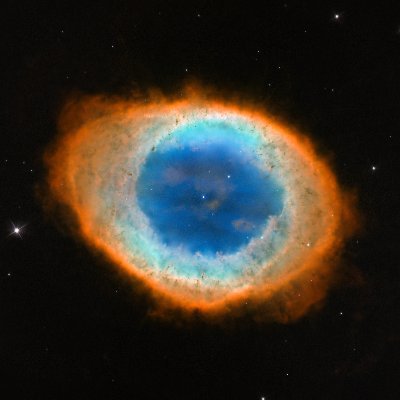
On March 6, 2015, astronomers reported observing a supernova... in a distant spiral galaxy. Although the explosion itself occurred millions of years earlier, the light carrying that event had only just reached Earth after traveling across intergalactic space. This delay is not unusual but a fundamental feature of the universe, where distance and the finite speed of light turn every observation into a glimpse of the past. In this way, telescopes function not just as instruments of sight, but as time machines, revealing events long after they have concluded. Each distant supernova reminds us that the cosmos we observe is a layered history, unfolding to us not as it is now, but as it once was across unimaginable spans of space and time. Credit: NASA/ESA Hubble Space Telescopeshow more
Cosmos Archive
23,079 просмотров • 3 месяцев назад
Most of us grew up seeing simplified diagrams of... the Hubble Space Telescope and assumed the James Webb Space Telescope follows a similar path around Earth. In reality, it operates in a very different region of space. It is not orbiting our planet in the traditional sense but instead travels around a point about 1.5 million kilometers away known as the Sun–Earth L2 point, keeping pace with Earth as both move around the Sun. This location is often described as a gravitational balance point, but it is not truly stable or neutral. JWST does not sit still there; it follows a controlled orbit around L2 and requires periodic adjustments to stay on course. The result is a delicate, engineered dance between gravity and motion, where the telescope remains aligned with Earth while staying far from its heat and light, allowing it to observe the universe with extraordinary clarity.show more
Cosmos Archive
31,985 просмотров • 3 месяцев назад
Did you know the James Webb Space Telescope isn’t... orbiting Earth at all? The James Webb Space Telescope operates near the Sun–Earth L2 point, about 1.5 million km from Earth. From there, the Sun, Earth, and Moon stay on the same side of the telescope, allowing its giant sunshield to block their heat and light at the same time. That keeps Webb cold and stable enough to detect extremely faint infrared signals from deep space. Because of this, Webb can peer through clouds of cosmic dust and observe galaxies whose light has traveled for more than 13 billion years. Every image it captures is not just a view across space, but a look back into the early history of the universe.show more
Cosmos Archive
22,557 просмотров • 2 месяцев назад
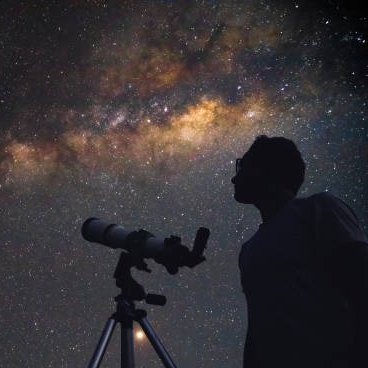
🌌🛣️ James Webb Found a Cosmic Highway. Using the... James Webb Space Telescope, scientists have observed a huge structure — a chain of around 20 galaxies stretching millions of light-years across the early universe. This structure is likely part of the cosmic web, where dark matter guides the formation of galaxies along filaments. The light from these galaxies has traveled for over 13 billion years, revealing how the universe began organizing itself into large-scale patterns. This discovery gives us a glimpse of the universe’s early “skeleton” — the framework that shaped everything we see today.show more
The Astronomy Guy
20,502 просмотров • 3 месяцев назад
OPINION: ELON AND THE DAWN OF THE WARP AGE... While the rest of the world is busy arguing about the present, Elon has been playing a multi-century game of chess. Most people remember his 2013 conference talk for the Hyperloop reveal, but the real bombshell was his take on the Alcubierre Drive. Proposed by theoretical physicist Miguel Alcubierre in 1994, the Alcubierre Drive is a speculative metric that allows a spacecraft to achieve apparent faster-than-light travel. Instead of a ship accelerating through space, which is limited by (the speed of light), the drive manipulates space itself. It works by contracting the fabric of space in front of the vessel and expanding it behind. Essentially, the ship sits in a "bubble" of flat spacetime, effectively "surfing" on a wave of warped reality. Elon did not just call warp drive science fiction; he broke down the physics of warping space so that space itself does the traveling. When you have a mind that views the speed of light not as a ceiling but as a technical challenge to be engineered around, the future starts looking a lot more like Star Trek and a lot less like a stagnant rock in the vacuum. Elon was a decade ahead of the curve. Back then, he noted that while SpaceX was focused on the immediate Mars roadmap, breakthroughs in warp theory were already bubbling at places like NASA. Fast forward to late 2025, and the vision is becoming reality. Former NASA Administrator Charles Bolden once admitted the goal was warp speed, and groundbreaking research even suggested we are finally moving toward manipulating spacetime without needing the impossible amounts of exotic matter we once feared. Source: Journal of Modern Physics, The Debrief, AllThingsD, Elon Muskshow more

Mario Nawfal
201,882 просмотров • 7 месяцев назад
We just saw the exact moment a star exploded... for the first time ever. Astronomers have achieved a rare feat: imaging the exact moment a massive star detonated—and the explosion was anything but spherical. SN 2024ggi, a supernova located 22 million light-years away in the spiral galaxy NGC 3621, was detected a mere 26 hours after ignition. This extraordinarily early discovery allowed researchers to train the European Southern Observatory’s Very Large Telescope in Chile on the event while it was still in its infancy. Using the technique of spectropolarimetry—which analyzes the polarization of light to reveal geometric structure—the team uncovered a surprising truth: the expanding shockwave was distinctly aspherical, elongated into an “olive” or prolate shape along one primary axis. This asymmetry means the catastrophic rebound following the star’s core collapse did not propagate uniformly in all directions, directly contradicting the long-standing assumption that the deepest layers of a core-collapse supernova explode spherically. The progenitor was a red supergiant 12–15 times more massive than the Sun that had exhausted its nuclear fuel, triggering gravitational collapse of its iron core. In most supernovae, the initial shape of this breakout is quickly obscured as the blast wave slams into the star’s outer envelope. Here, however, astronomers captured polarized light signatures of the still-unobscured ejecta, freezing the explosion’s geometry in time. The discovery carries far-reaching consequences. It strongly suggests that asymmetry is common, if not universal, in the earliest phases of massive-star deaths. Current theoretical models, which often assume spherical symmetry at the core, will need significant revision. Moreover, these distorted explosions could help explain observed peculiarities in supernova remnants, the production of gamma-ray bursts, and the kicking of neutron stars and black holes to high speeds at birth. By catching a star in the act of dying asymmetrically, SN 2024ggi has given us a vivid glimpse into the violent, chaotic physics that govern the final heartbeat of the universe’s most massive stars. [🎞️ Artist’s animation of a supernova explosion] [Unique shape of star’s explosion revealed just a day after detection. ESO, 2025]show more

Massimo
363,759 просмотров • 8 месяцев назад
As inconvenient as today’s blizzard is, I can’t help... but feel a pang of nostalgia. We hardly have storms like this anymore. They’re becoming relics of the not-so-distant past (at least in Toronto).show more

Adam Zivo
163,249 просмотров • 6 месяцев назад
🚨 RARE STELLAR EXPLOSION ABOUT TO LIGHT UP THE... NIGHT SKY A massive cosmic event is coming. T Coronae Borealis, known as the Blaze Star, is about to erupt in a once-in-a-lifetime nova. Every 80 years, a white dwarf siphons gas from a red giant until it explodes in a thermonuclear flash. This time it could shine as bright as the North Star. It's 16,200 trillion miles away but visible to the naked eye. Look to the Northern Crown constellation. No need for a telescope. Just look up. And it’s close. Source: Nasa, Goddard Space Flight Centershow more
Mario Nawfal
163,300 просмотров • 1 год назад
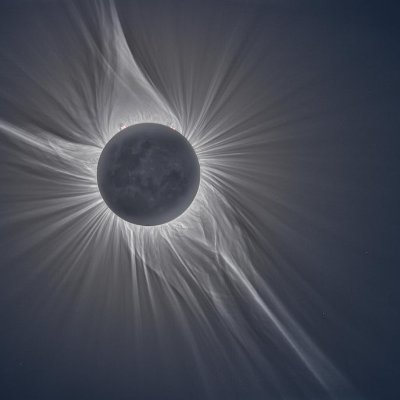
Earth + Theia = MOON Once upon a time... — about 4.5 billion years ago — Earth wasn't alone. A rogue planet, Theia, nearly the size of Mars, smashed into it at full speed. The result? A fiery collision that could have created the Moon in just a FEW HOURS, not the millennia previously thought. NASA supercomputer simulations show that the Moon wasn't pieced together from space debris, but was instantly born from molten fragments of Earth and Theia thrown into orbit. That's why the Moon is so similar to Earth — it's not just a satellite, it's a sister.show more
Black Hole
26,433 просмотров • 1 год назад
🚨 The 2022 Nobel Prize didn’t prove distance is... fake… It exposed something deeper. We’ve been thinking about the universe wrong. Not as objects moving through space… but as connections stretched across it. In quantum experiments: Particles don’t “send signals” faster than light. They were never truly separate. So what we call “distance” might just be: structure being stretched not connection being broken Now zoom out: Atoms Stars Galaxies All follow the same pattern: Structure → tension → separation → interaction But underneath… it’s still one continuous system. So maybe the real shift is this: We don’t live in a universe of things. We live in a universe of relationships. And “distance”… is just what connection looks like when it’s pulled apart. So the real question is: If nothing is truly separate… what does that mean for how the universe actually works?show more

TheNewPhysics
19,235 просмотров • 4 месяцев назад
A dramatic moment captures a space rock striking the... Moon’s surface, creating a powerful and sudden impact. The object hits at incredible speed, producing a brief flash and disturbing the lunar surface. With no atmosphere to slow it down, the Moon is constantly exposed to impacts from space rocks, which have shaped its cratered landscape over billions of years. Events like this are happening all the time, but capturing one clearly is rare. This moment gives a glimpse into the dynamic nature of space and how even the Moon continues to change. A brief impact, but a powerful reminder of cosmic activity. #nasa #space #spacexshow more

Physics & Astronomy Zone
497,252 просмотров • 3 месяцев назад
🚨 quantum entanglement isn’t “instant”… and it’s not limited... by light speed either? Both ideas might be wrong. In a τ-field view: Entangled particles aren’t communicating across space… They’re the same time structure. A single knot in time… stretched across locations. So when one changes the other doesn’t receive a signal. It updates because it was never separate. The “delay” we’re starting to measure? That’s not transmission… It’s the time field rebalancing itself. Entanglement isn’t faster than light. It’s deeper than space. What if distance is irrelevant… because connection exists in time geometry, not space? Follow me for more deep insightsshow more
TheNewPhysics
47,547 просмотров • 4 месяцев назад
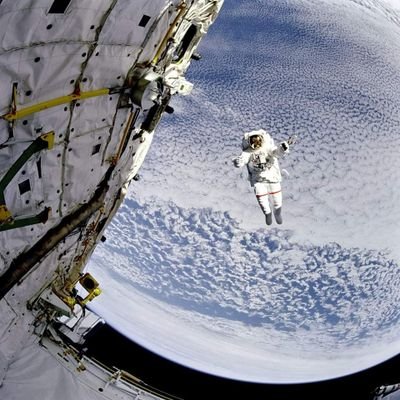
A dramatic moment captures a space rock striking the... Moon’s surface, creating a powerful and sudden impact. The object hits at incredible speed, producing a brief flash and disturbing the lunar surface. With no atmosphere to slow it down, the Moon is constantly exposed to impacts from space rocks, which have shaped its cratered landscape over billions of years. Events like this are happening all the time, but capturing one clearly is rare. This moment gives a glimpse into the dynamic nature of space and how even the Moon continues to change. A brief impact, but a powerful reminder of cosmic activity. #nasa #space #spacexshow more
Amazing Physics
92,949 просмотров • 3 месяцев назад
This extraordinary illustration, titled Wild World, is a hand-drawn... global map created by artist and cartographer Anton thomas. Instead of political borders and city names, the map highlights wildlife, placing animals in their native habitats across every continent and ocean. Over the course of three years, Thomas meticulously illustrated 1, 642 species using coloured pencil and pen. Each animal is positioned according to its natural range, transforming the familiar shape of the world into a celebration of biodiversity. By removing human boundaries and focusing on ecosystems, the map offers a powerful reminder that the planet is shared space. It invites us to see geography not just as nations and borders, but as living habitats that connect species across land and sea.show more

Oceaiii🐋🐬
115,873 просмотров • 5 месяцев назад
Kedarnath is a tremendous space. The utterance of the... sound “Shiva” attains a completely new dimension and significance in Kedar. It is a space which has been specially prepared for this particular sound. When we utter the word “Shiva,” it is the freedom of the uncreated, the liberation of one who is not created. It is almost like on this planet, the sound “Shiva” emanates from this place. For thousands of years, people have experienced that space as a reverberation of that sound. This is also a place that has witnessed thousands of Yogis and mystics of every kind. When I say every kind, you cannot imagine those kinds. These are people who made no attempt to teach anything to anyone. Their way of making an offering to the world was by leaving their energies, their path, their work – everything – in a certain way in these spaces.show more
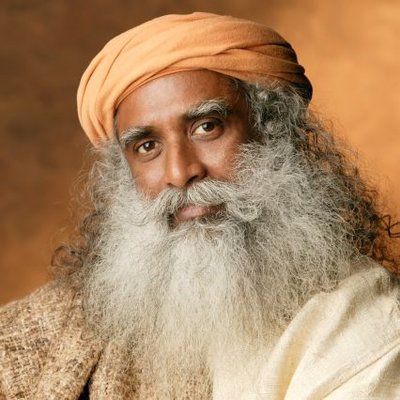
Sadhguru
57,767 просмотров • 3 месяцев назад
The Milky Way Galaxy is our galactic home; a... uniquely special place in the Universe. This beautiful barred spiral galaxy is estimated to contain roughly 100 billion stars and is over 100,000 light-years in diameter. It formed in the early Universe and is thought to be around 13.6 billion years old. It takes our solar system 200 million years to complete one full orbit around this gorgeous galaxy. The last time our solar system was in this location, dinosaurs ruled the Earth. The Milky Way is just one seemingly average galaxy in a cosmic sea of galaxies. But it contains life, and that makes it remarkable. 📽️ Credit: ESO/M. Kornmessershow more

FarLife
12,955 просмотров • 2 лет назад
Einstein’s wildest theory wasn't that time flows. It’s that... time is a physical fabric, and you can warp it. According to his equations, the future is not a distant destination, it is a speed limit. If you move fast enough through space, your clock slows down while the rest of the world rushes ahead. You don't need a time machine to reach the future. You just need enough speed to leap into it.show more

Kekius Maximus
105,781 просмотров • 1 месяц назад
There is a room in Málaga that was built... to be the closest thing on earth to standing inside heaven. It is called the camarín of the Virgin of Victory, and it is hidden at the top of a tower inside the Santuario de la Victoria. To reach it, you climb and the ascent is the entire point... The building you are climbing through was completed in 1700, and it was designed as a single argument made in stone. At the bottom lies a crypt: a black chamber crowded with white plaster skeletons, a meditation on death and the brevity of life. From there a staircase rises, and as you climb it the light grows stronger and the imagery changes from bones to saints. The architects of the time understood this ascent as the soul's own journey, the dark crypt as the stage of penitence, the staircase as the stage of spiritual progress, and the room at the very top as the final stage: the union of the soul with the divine. That room at the top is the camarín, and its dome is one of the most extraordinary interiors in Spain... Every surface is covered in white and gold plasterwork. There is no empty space anywhere. The Baroque called this horror vacui, the horror of the void: the conviction that a space meant to represent heaven should not contain a single bare patch of stone. Out of that plasterwork emerge angels, flowers, birds, and mirrors. The mirrors are not decoration alone. They catch the light pouring in through the windows of the drum and throw it around the chamber, so that the gold seems to move and the whole room appears to shimmer and breathe. This wonder was built by people who believed that if you wanted to show a human being what heaven might feel like, you did not describe it to them. You built a room, and you let them climb into it... -- -- -- If you enjoyed this, I write a weekly newsletter read by over 50,000 people who love rediscovering the beauty of the past. You can join us here: If you'd like to support my work, a paid subscription is what makes it possible.show more

James Lucas
69,389 просмотров • 2 месяцев назад
There is confusion in the religious view that the... world is 6,000 years old. That is not true; the current Age/Yuga started exactly 6,000 years ago after a geophysical event. There was a smaller, but nevertheless devastating, event in the middle of this Age—around 3,000 years ago—during the Bronze Age Collapse and the Steno–Etrussia geomagnetic excursion. Currently, we are moving toward a change of the Age and the Aeon. This event will be so devastating that it will probably reset civilization, just as it did 6,000 years ago.show more

Open Minded Approach
128,443 просмотров • 4 месяцев назад
There is confusion in the religious view that the... world is 6,000 years old. That is not true; the current Age/Yuga started exactly 6,000 years ago after a geophysical event. There was a smaller, but nevertheless devastating, event in the middle of this Age—around 3,000 years ago—during the Bronze Age Collapse and the Steno–Etrussia geomagnetic excursion. Currently, we are moving toward a change of the Age and the Aeon. This event will be so devastating that it will probably reset civilization, just as it did 6,000 years ago.show more
Open Minded Approach
1,151,787 просмотров • 6 месяцев назад
He's back. After days on patrol, he returns not... just as a soldier, but as the earth he defended. Caked in the red dust of the frontlines, every grain tells a story of endurance and watchful days. This isn't dirt; it's a badge of honor. 🇳🇬 #ThankASoldier #ForGodAndCountryAlwaysshow more

PATRIOTIC SOJA ($TSIR-MUNCHAN)
43,688 просмотров • 6 месяцев назад