OPUS 5 + HIGGSFIELD TURNED RETRO MARIO INTO A... HYPER-REALISTIC NEXT-GEN SHOOTER I built this entire concept without relying on traditional game engines, hiring expensive 3D artists, or waiting through a decade-long development cycle, simply because I decided to take a harmless 8-bit childhood platformer and ask a single question: what if it was rebuilt today as an aggressive AAA tactical FPS? this is what came back. 00:00 - the pixelated 2D platformer abruptly morphs into a photorealistic tactical arena right as the camera swings into action 00:03 - the hero pulls up a custom assault rifle featuring a glowing 'M' emblem while racking live ammunition in sharp first-person view 00:06 - I strafe behind a crumbling brick wall to spray full-auto rounds directly at terrifying, realistic Goomba-monsters charging forward 00:09 - a final grenade launch hits a burning Bowser castle while real-time hit-markers flash continuously across the screen The sequence delivers true first-person bodycam immersion complete with heavy weapon recoil and a fully functional tactical HUD tracking ammo, health, and minimap positioning. Every single frame was generated seamlessly in real time without a single 3D model being crafted by hand. While Nintendo spends tens of millions of dollars dragging out massive production cycles, I pulled this entire demo off in one afternoon using a single text prompt and zero lines of code.show more

Shadow Nick
15,838 просмотров • 2 месяцев назад
OPUS 5 + HIGGSFIELD JUST REBUILT A 2002 PS1... GAME WITH 2026 GRAPHICS 🛩️ no engine. no studio. no 3D team. i took a blurry childhood PlayStation flying game and asked myself: what if it shipped today? this is what came back. 00:00 - hero launches off a cliff, dives toward a turquoise archipelago 00:03 - swoops low between palms, skims the water, sparkle-trail behind 00:06 - banks around a red rock cliff, full flight HUD live - health, pixie-energy, minimap 00:09 - soars through a chain of glowing rings, collectible counter ticking up third-person. real HUD. real game-feel. every frame generated, nothing hand-modeled. the PS1 version was 240p and polygonal. this took one afternoon and a text prompt. this is where gamedev is heading. follow + reply "REBUILD" if this hit you. the exact prompt i used ↓show more

ZEUS⚡️
95,823 просмотров • 2 месяцев назад
How a 22-year-old developer built a full 3D Jet... Ski racing game in just 40 minutes with zero manual coding He used Claude Opus 5 to generate physics, WebGL 3D graphics, HUD, and audio in a single prompt and turned single-prompt gamedev into a high-margin income stream. Costs: $423 He launched a single-prompt generation workflow that built the entire HTML5 project from scratch: Top layer: A Three.js and WebGL rendering pipeline dynamically creates 3D water physics, real-time wave dynamics, dynamic lighting, and jet ski fluid mechanics, all written autonomously inside one output file without external frameworks. Bottom layer: The Claude Opus 5 engine processed a massive 690-million-token context window to generate the complete gameplay logic, collision handling, dynamic sound generation, controls, and UI layout directly from a detailed initial system prompt. The trend of single-prompt 3D game creation is rapidly exploding across media and indie development. The author monetizes this tech stack through three main channels: 1. Viral Content & Media Systems: Short-form breakdown videos driving massive reach, monetized via promo placements, prompt-pack access, and private developer communities. 2. Rapid Hypercasual Prototyping: Testing 10+ WebGL mechanics per day, flipping fully functional browser games on itch io or CodeCanyon, and licensing prototypes directly to casual game portals. 3. Interactive WebGL Client Solutions: Delivering custom 3D promotional browser games and interactive brand experiences for clients in 48 hours instead of weeks. First month results: > WebGL games generated: 24 > Viral impressions generated: 3.8M+ > Total revenue across licensing & content: $21,400 The AI completely automated the core development lifecycle: Claude Opus 5 built the physics engine, rendered 3D graphics in WebGL, hooked up audio controllers, and generated interactive browser logic with zero manual line-by-line coding. Bookmark it and check article 👇show more

Ridark
11,592 просмотров • 2 месяцев назад
What if you could choreograph an entire action scene... before generating a single frame? 🥋🎬 That’s what I wanted to test with Pippitofficial’s 3D Director Studio + Seedance 2.5. I created a scene with two girls demonstrating a series of karate moves and used the 3D workspace to figure out the sequence first. The interesting part is that I wasn’t relying on a giant prompt to explain every movement. I could place both characters in the scene, set up the environment, choose props from 150+ available options, and then map out how the performance should unfold. One move at a time. Step in → stance → punch → block → kick → reset → next move. The timeline makes it possible to arrange actions and control their timing, while movement trajectories help define where the characters should go. And then there’s the camera. Instead of hoping the generated video finds the right angle, I could plan the camera movement around the choreography and decide how the sequence should be captured. That’s the part I found most useful. You can think through the scene visually before asking AI to generate the final result. Characters. Movement. Timing. Camera. All planned first. Then Seedance 2.5 turns that setup into the actual video. For me, this feels like a shift from simply prompting AI to actually directing the shot. Try Pippit 3D Director Studio: #3DDirectorStudio #PippitAI #Seedance25 #PippitPartnershow more

Shabnam Parveen
51,749 просмотров • 1 месяц назад
THE DASHBOARD OF THE FUTURE IS NOT A SPREADSHEET.... IT IS A LIVING NEURAL NETWORK. Look closely at this screen. This is not a video game or a Hollywood CGI mockup. This is a live visualization of a $239,000 business running entirely on a custom, autonomous terminal powered by "Claude Max." The creator abandoned traditional software. No more clunky CRMs, fragmented apps, or manual data entry. Instead, he locked himself in a room and built a fully integrated digital organism where every single business department is an interconnected node. "Reception," "Billing," "Dispatch," and "Analytics" are not just tabs on a screen—they are active AI agents constantly firing data back and forth in real-time. When a new lead comes in, the system automatically processes the work order, routes the dispatch, updates the company memory, and calculates the live P&L without a single human click. This is exactly why the video says "POV: You haven't touched grass." When you wire your entire operational flow into a self-sustaining AI loop, you no longer need to manage the day-to-day. You stop being a boss and start becoming a mere observer of your own cash-printing machine. While most people are still using AI to draft polite emails, this setup proves what happens when you give a model the keys to the entire infrastructure. It stops looking like a software tool and starts operating like a hive mind.show more

kyrox
12,854 просмотров • 2 месяцев назад
I spent 48 hours running AI from my phone.... Here are 11 things that turned out to be possible and 3 that almost cost me money Forgot my laptop at home and thought the day was lost. Opened a terminal from my phone and decided to see how long I could last Lasted 2 days. Not just lasted but made $840 What works from a phone: 1. Set up Claude Code through SSH in 10 minutes while riding the subway 2. Get Telegram pushes every time a wallet enters a position 3. Copy a trade with 1 tap without taking out my earbuds 4. Launch scripts by voice through Shortcuts 5. Monitor 3 wallets simultaneously without a single lag 6. Get a morning report at 7 AM as a regular message 7. Rebuild the bot when it crashed while sitting in a cab 8. Check PnL without opening a browser 9. Add a new wallet to tracking in 30 seconds 10. Set up auto-copying without confirmation on verified wallets 11. Get a full strategy breakdown of a wallet through Claude Code in a regular chat And here is what almost killed the deposit: 1. My finger slipped and I entered at twice the planned size. Did not notice for 20 minutes. Got lucky that the position ended up in profit but it could have gone very differently 2. My phone died at 2 AM. Missed the exit signal and the position dropped $110 while I slept. By morning I realized that a power bank is just as much a part of the strategy as the bot itself 3. The delay when copying was 40 seconds. On a 15-minute market that is an eternity. The price moved from 8 cents to 23, and instead of a 12x return I got a 4x. Still profit but you feel the difference immediately Total for 48 hours: +$840. Screen time on the phone: 47 minutes. Never needed the laptop The entire time I was following the same wallet. That is the 1 that was sending me signals at 2 AM: The phone turned out to be a fully functional control panel. But this control panel has no safety switch. And that is worth remembering every time you are tapping with 1 hand in the coffee lineshow more

Blaze
93,477 просмотров • 6 месяцев назад
Elon Musk gave the entire entertainment industry its expiration... date, and he is the one building the thing that kills it. Musk: “My guess is that we see the first compelling half hour, pure AI show next year.” Next year. A complete show generated entirely by AI. No writers. No actors. No cameras. No sets. No crew. No studio. Just a prompt and enough compute to render a reality that never physically existed. And shows are the easy part. Musk: “I say probably we’re maybe three years away from AI does the whole video game.” A show plays the same way every time. A game has to generate a living world that reacts to every decision in real time across every single frame. That is a fundamentally harder class of problem. And Musk put three years on it. Right now a single AAA title takes seven years and half a billion dollars across thousands of engineers and artists just to ship it. Musk is describing a world where one person types a paragraph and gets something comparable. The entire value proposition of a multi-billion dollar industry lives inside that gap. And it closes in thirty-six months. But the prediction is not the story. The person making it is. This is not an analyst speculating from the sidelines. This is the man building the largest AI compute clusters on the planet. The man who built xAI from zero in under two years. The man stacking hundreds of thousands of GPUs into facilities designed to do exactly what he is describing. When Musk says three years, he is not guessing about what someone else might eventually ship. He is reading you a delivery date off his own roadmap. Every media company on Earth is valued on a single assumption. That quality content is expensive and difficult to produce at scale. That one assumption is the structural foundation underneath every studio, every network, and every publisher in existence. Musk is dismantling it with raw compute. The studios still parading thousand-person production teams are not demonstrating strength. They are advertising the exact cost structure that one person with a prompt and a GPU allocation is about to make irrelevant. And it does not stop at entertainment. If AI can generate an interactive world that responds to human input in real time, it can generate anything. Advertising. Architecture. Training simulations. Product design. Every industry built on humans manually constructing visual experiences frame by frame is sitting on the same countdown Musk just read out loud. Now zoom out. Because this is not just an industry story. For the entire history of human civilization, the distance between imagining a world and actually creating one required thousands of people, millions of hours, and billions of dollars. That distance built Hollywood. That distance built the gaming industry. That distance made content scarce and studios powerful. Musk is collapsing that distance to zero. When the gap between imagining something and it existing disappears, every business model built on the difficulty of creation disappears with it. That is not disruption. That is a full inversion of how human beings create. Musk did not make a casual prediction on that podcast. He told you what he is building. He told you the timeline. And he told you which industries do not survive it. The entertainment industry is still debating whether this future is real. Musk is not part of that debate. He is building. And he just told you the delivery date.show more

Dustin
22,458 просмотров • 2 месяцев назад
This guy built a visual scanner that reads 468... points on his face and 42 points on his hands from a regular webcam and turns them into a cloud of thousands of particles right between his palms. Inside, MediaPipe and TouchDesigner are linked: the first captures hands and face from the webcam with high accuracy, the second turns those coordinates into a live plane and feeds it into a POP system that instantly generates a swarm of particles in the shape of a head. No studio, no render farmer, no VR headset. Just a laptop, a webcam, and 1 TouchDesigner session. And traditional VJ studios keep teams of 5 people on a setup with lighting, custom hardware, and commercial plugins, while his expenses are only a TouchDesigner subscription and a regular USB camera. One laptop runs MediaPipe and TouchDesigner simultaneously, holds the camera stream at 60 FPS without drops, and in parallel processes 468 face points + 21 points on each hand. The camera captures frame after frame, MediaPipe in real time sends TouchDesigner the finger coordinates and face geometry, and the POP operator inside the engine translates those numbers into thousands of particle points with colors from bright pink to gold. This setup immediately defines the role of the tool and the limits of its autonomy. It knows where the fingertips are at every moment of the frame. It knows how to read the face geometry at any angle to the camera. It knows how to draw a swarm of particles between them with the right color and contour. → MediaPipe pulls 468 points from the face and 21 points from each hand, 60 times per second → TouchDesigner receives those coordinates, builds a virtual rectangle between the fingertips, and feeds it into the POP system → POP generates thousands of particle points in the shape of a head, coloring them in a gradient from bright pink to gold → The HUD layer adds green corners and a blue neon frame, styling the image like an AR interface → All layers assemble into 1 real-time frame that projects back onto the video in the camera window → The final image is recorded to a file or broadcast to a projector for a live installation And only when the guy spreads his hands wider does the plane between the palms stretch; brings them together, it narrows. Otherwise the system runs on its own. And when he moves from his home room to a concert hall, the same laptop with the same webcam launches the same TouchDesigner session in just 5 minutes, without reconfiguration, without a new team, and without a single line of new code. In his work setup there is no studio of his own and no team for assembly. On the desk sits a laptop with a webcam, on top run MediaPipe and TouchDesigner with POP operators, and the same setup through a USB camera moves to any concert without a new configuration. Out of everything I have seen this year, this is the cleanest Creative Coding setup on 1 laptop: 0 render farms, 0 studio lighting, and between them 3 libraries, thousands of particle points, and 1 webcam.show more
Blaze
38,242 просмотров • 5 месяцев назад
Day 436 of documenting 0-1M Checkmate. For the last... 436 days I publicly built this store online, X was mainly the daily notebook, but i also made several videos revealing nearly everything about this store without fully doxxing. We started with 1 product and finished with 37 as we crossed this finish line. It’s not the craziest numbers, but the i hope it shows people who are just starting out, the game of consistency. While documenting this publicly, it was the complete opposite of a straight line up. Many times we ran it up, thought we were in the clear, made mistakes, got reset back to virtually zero. In fact, we actually were set back to nearly zero twice and it’s all documented somewhere in the X posts. I could have easily faked revenue to say i got here earlier, I could have easily jumped on X only posting our best days, but that’s gay and what most people do. We did not miss a single post throughout building this store. Every single day we posted. The reason I used these photos/videos instead a regular ss is because this is the exact table & chair that I made my first $ online in. This broken chair, a broken table, and this laptop that would proceed to break in the process (have a new one now) but it felt like a more full circle moment This store was in the jewlery & fashion accessories niche. Margins were healthy due to low cogs, and it cash flowed nicely but were most likely going to move on from it. Have much better plans in place but was a sick ride. Over 23,000 total orders. This was ZERO to a million. 436 days without a single day missed of posting, which also means not a single day missed of work. Despite the internet turning into a world of fake weird shit, authentic shit still exists. Gonna start dropping some archives of all the shit I filmed behind the scenes that never got posted. Real 🅿️, put a milly up on the board publicly. 🧘♂️show more

Dennis DeMarino
19,254 просмотров • 1 год назад
MUZZLE FLASH AND RECOIL IS WHERE AI VIDEO USUALLY... DIES Outdoor range, bright afternoon. Girl in a blue bikini, safety glasses, ear protection. Instructor next to her adjusts her strap so it won't catch on the rifle stock, tells her to go. She shoulders the rifle, holds it clean, fires a burst. None of it exists. There is no range, no instructor, no rifle, no ammunition. - Weapons have been the quiet wall for AI video Everything else about a firearm clip is manageable - the girl, the setting, the lighting. The moment the trigger pulls is where the models fall apart. Muzzle flash has to appear at the right point on the barrel, the right shape, the right frame duration. Recoil has to propagate through the shoulder, arm, head - not just the gun. Brass has to eject. Smoke has to trail. The next shot has to happen with the shooter's stance reset in a physically plausible way. Get any one of those wrong and it reads as bad CGI in an otherwise clean clip. This one holds the whole sequence. - The strap adjustment is the setup, not the reveal The instructor moving the bikini strap off her shoulder before the shot is a specific narrative beat - it grabs attention, sets the tone as light not tactical, and gives the model a small two-body interaction to warm up on before the harder gunfire sequence. It's the same construction technique a live director would use. The operator wrote the prompt with a director's understanding of pacing. - The genre is 'girls with guns' and it's massive This is one of the largest niche formats on Instagram and TikTok - bikini range days, tactical-aesthetic content, gun influencer culture. Millions of views a week, well-monetized by ammunition brands, firearms manufacturers, tactical gear companies. Until now the format required an actual live shoot: range day fees ($150-300), an experienced shooter, live rounds, a rifle, insurance, a permit for filming, and a location that would allow it. That whole cost stack just went to zero. - What it costs to build One locked character reference, one for the instructor. Prompt structured with the strap adjustment as the pre-shot beat and the burst fire as the main sequence. Roughly $4-6 per 5-second clip because of the physics load. Realistically 30-50 rerolls to land a clean burst where muzzle flash, recoil and stance all read correct. Under $200 in compute. One evening. - What this actually opens Every weapons-adjacent content niche just became fully synthetic-viable. Gun influencers that don't own guns. Ammunition brand ads that don't need range access. Tactical gear campaigns without stunt coordinators. And the harder implication: the same pipeline generates fake footage of specific weapons in specific hands - a category that until now required actual footage of actual events. The trust cost on any weapons-related clip circulating on social media just went up permanently.show more

capONE 💎
2,189,974 просмотров • 1 месяц назад
Simply use CapCut to recreate this. Head to capcut... and go to Capcut Studio and paste this prompt: [Style] Live-action + 2D Anime Sticker Composite Funny Short Video, First-Person Beach Grilling POV (POV Cooking Vlog), Realistic Beach Environment Mixed with Flat Cartoon Sticker Style for Strong Contrast, 8K Ultra HD, Handheld with Slight Shake, Vertical Screen [Duration] 10 seconds [Scene] Realistic beach first-person view: A small portable charcoal grill with several hotdogs cooking on the grates. Real person's hand holding metal tongs, flipping and moving the hotdogs. Background shows bright beach environment with sand, ocean waves, blue sky, and some distant palm trees. Natural sunlight with realistic lighting and shadows. A small wooden stool is placed beside the grill. [Character] Q-version Anime Sticker Character (flat 2D sticker texture, cartoon outlines, paper-cut feel): Golden long hair with straight bangs, big purple round eyes, pink blush, wearing a cute beach outfit (light blue bikini top with white frills, matching beach skirt, small sun hat, and yellow sunglasses resting on her head). She is sitting on the small wooden stool beside the grill, height about half the size of the grill, maintaining pure 2D flat quality throughout, not affected by real lighting. Real person's hand (photorealistic, skin texture visible) entering from the right side of the frame. [00:00-00:03] Shot 1: Sauce Sabotage (Overpouring) First-person POV: Real person's hand using tongs to flip hotdogs on the grill. The sticker character has a mischievous grin, raises both hands holding a big squeeze bottle of ketchup, and sneakily pours a huge amount of ketchup all over the hotdogs in one go — thick red sauce dramatically covers the hotdogs like a waterfall. Real physics on the sauce. Sound Effects: Sizzling hotdogs + thick ketchup squirting sound. [00:03-00:05] Shot 2: Bottle Snatch & Tongs Bonk Real person's hand quickly snatches the ketchup bottle away from her. The other hand raises the metal tongs and lightly bonks her head with the flat side — cartoon "Duang" effect, a red cartoon bump appears on her head, her whole body jolts from the impact. Sound Effects: Metallic "bonk" + cartoon spring sound. [00:05-00:08] Shot 3: Cry & Force Feed Sticker character holds the bump on her head, eyes turn into spirals (swirl eyes), mouth wide open crying with blue cartoon tears spraying out. Real person's hand immediately uses the tongs to pick up one overly sauced hotdog and stuffs it into her mouth mid-cry. Sound Effects: Exaggerated cartoon crying + mouth stuffing sound. [00:08-00:10] Shot 4: Overload KO Her cheeks puff up, she is forced to swallow, face turns pale, body stiffens and twitches. Eyes turn into "X"s as she dramatically falls backward off the small wooden stool and lands flat on the sand with legs up. Spinning dizzy stars appear above her head and a small wisp of white smoke comes out of her mouth. Frame freezes. Sound Effects: Thud + cartoon dizzy sound + faint ascension tone. Negative Prompt: blurry, low quality, deformed hands, extra limbs, text, watermark, logo, realistic 3D character, overexposed, underexposed, dark lightingshow more

MrDejie
162,355 просмотров • 3 месяцев назад
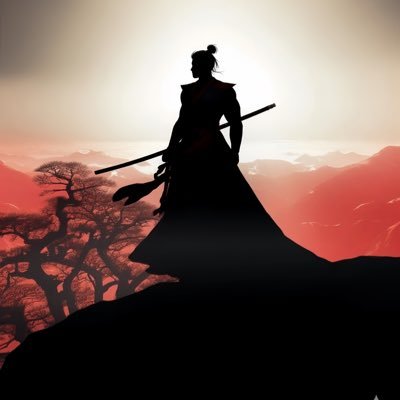
I went a little overboard with Codex last week... and burned through my entire weekly allowance in two days. Luckily, my quota reset today. Otherwise, I’m not sure what I would’ve done. It got me thinking: instead of asking one large model to handle everything from start to finish, why not let a stronger model plan the project and review the work, while a model built for execution handles the day-to-day implementation? So I tried it. The result was better than I expected. I used GPT-5.6 Sol in Codex as the decision-maker, then ran Ling-3.0-flash from Ant Ling inside OpenCode as the execution engine. Together, they built a small 3D farming game. Before writing any code, I had Codex create four documents: SPEC.md defined the product scope and the lines we couldn’t cross. ARCHITECTURE.md laid out the isometric coordinate system, state machine, and module boundaries. TASKS.md broke the project into small jobs Ling could tackle one at a time. ACCEPTANCE.md explained how each step would be tested and what “done” actually meant. Then I gave Ling a very straightforward role: You are the execution model for this project. Read all four documents before you begin. Work only on the task assigned for this round. When you’re done, run typecheck, test, and build. If anything fails, read the error, fix it, and run the checks again. Do not move on to the next task early. Ling handled dependency installation, project structure, strict TypeScript configuration, test setup, and a production build in 6 minutes and 3 seconds. It ran into issues with the Vite test config, a TS6310 error, and a missing jsdom dependency along the way. Instead of stopping at the first error, it kept reading the logs and fixing the problems until all three checks passed. The speed was honestly hard to believe. If you exclude the time spent waiting on tools, it was producing more than 100 tokens per second. That made the whole development loop feel noticeably faster. After this experiment, I’m planning to keep using the same workflow. If the task is small, there’s no reason to call an expensive planning model for every single step. If the task is large, handing the entire project to a Flash model in one prompt isn’t a great idea either. The setup that makes more sense to me is: Use a more capable model such as Codex to explore the project, make architectural decisions, and break the work down. Put the constraints into specs, schemas, types, and tests instead of leaving them buried in chat history. Give Ling-3.0-flash a steady stream of clear, verifiable implementation tasks. Report bugs with structured context and actual error logs, rather than saying, “It still doesn’t work.” Bring Codex back in for architecture reviews, visual checks, and changes that affect multiple parts of the project. The point of this setup isn’t to give AI a big “build the whole project” button. It’s to turn software development into a pipeline with a much more sensible cost structure: Codex figures out the plan, sets the boundaries, and catches problems. Ling-3.0-flash moves quickly, calls tools reliably, and works through well-defined tasks at scale. For agent workflows that involve lots of repetitive edits, production tasks, and tool calls, this may be a more practical answer than simply using the biggest model for everything.show more
雪踏乌云
23,107 просмотров • 2 месяцев назад
I made over 2.5 million dollars this past week... betting sports. Yes, it sounds easy. Yes, it sounds simple. But the truth is, this is the result of years of obsession, discipline, and grinding at my craft. I spent four straight years playing poker 18 hours a day. That was my entire life. Wake up, play poker, think about poker, sleep, repeat. That level of focus is how I became one of the top players in the world and made over 10 million dollars playing poker. Poker built my foundation. Discipline, risk management, emotional control, and the ability to perform under real pressure. But the reality is, there are no billionaires in poker. There are billionaires in sports betting. So I went all in on sports betting and walked away from poker completely. I took everything I learned and built this the right way. I hired the best analysts and handicappers in the world, people I met through poker, and brought them together under one operation. Because of the platform I’ve built, these guys make more money working with me than they ever could on their own. That is how I’m able to operate at an extraordinary level and consistently win at a very high rate. Winning 2.5 million dollars in a week is incredible, and I’m grateful, but I’m not satisfied. I’m constantly sharpening my edge and building something bigger. My vision is to turn this into a nine figure a year business. I truly believe I’m on the path to becoming a billionaire one day. I think back to being a kid, dreaming of being a professional gambler, having a gambling themed bar mitzvah, and looking up to my father, one of the best poker players in the world. This path has been inside me for a long time. Today, my entire life revolves around becoming the best sports bettor possible. I wake up thinking about it, go to sleep thinking about it, and live it every single day. Grateful for the journey. Let’s keep going.show more

Sean Perry
106,001 просмотров • 8 месяцев назад
I Combined ChatGPT 5.5 Image-2 + Claude Fable 5…... And Built This FULL Game in JUST 8 Hours 😱 The World Has Officially Changed Forever Guys… I still can’t believe what I just pulled off. I took ChatGPT 5.5’s new Image-2 to generate every single visual characters, environments, UI, particles, everything and paired it with Claude Fable 5 for the entire codebase. The result? A complete, polished, fully playable game… finished in only 8 hours. No massive team. No months of crunch. No expensive asset packs. Image-2 created mind-blowing art assets on demand. Fable 5 turned those images into real, working code mechanics, physics, AI, animations, menus everything. This hybrid combo is straight-up sorcery. The world has truly changed. We are no longer waiting years for games to be made. One person + these two god-tier AIs just built something that used to require entire studios and huge budgets… in less than a single workday. This is the next level of human civilization. This is what creation looks like from now on. But here’s the crazy part: This free access ends June 22, 2026. After that, you’ll have to pay/subscribe to keep using it. If you’ve been waiting to see what the future of game dev actually looks like… THIS IS IT. Go try it right now before the paywall hits. Don’t sleep on this. Seriously. Drop in the comments: What game should I build next with this insane Image-2 + Fable 5 hybrid? Like if your mind is blown too 🔥 And tag a friend who NEEDS to see this before it’s gone. The future isn’t coming… It’s already here. And it’s free for one more day only. #Fable5 #ChatGPT55 #Image2 #AIHybrid #GameDevRevolutionshow more

Zayro.ETH
28,075 просмотров • 4 месяцев назад
EVERYONE PROMPTS THE ACTION. ALMOST NOBODY LOCKS THE IDENTITY... — WHICH IS WHY TWO-CHARACTER SCENES FALL APART. Two freerunners racing across Tokyo rooftops, eight cuts, corkscrews over a rooftop gap at the end. The parkour is the easy part. Keeping them two separate people who never blend into each other is the part that actually breaks. Here's the full prompt built that way. Attach two reference photos as image_1 and image_2, and the same structure works for any multi-character action piece: FORMAT: 15 seconds, 16:9, 1080p, 8-cut cinematic ultra-advanced parkour footage. CHARACTERS: Two realistic individuals from image_1 and image_2. Use the attached images as absolute character references, and fully maintain the facial features, hairstyles, hair colors, skin textures, body types, height differences, outfits, color schemes, and age appearances of each person across all cuts. No altering into different people, face swaps, outfit changes, hairstyle changes, or mixing of the two individuals' features. SETTING: A sunny modern Japanese city reminiscent of Tokyo, Shibuya, and Yokohama — rooftops, alleys, staircases, railings, pipes, concrete walls. The two protagonists, as equals, race through at high speed running side by side, following, crossing paths, and coordinating. CUTS: 1. (00:00–00:01.60) Low-angle rear tracking. Both accelerate side by side and simultaneously kong vault over separate obstacles. 2. (00:01.60–00:03.40) Front low-angle. One wall runs the left wall, the other the right, then tic-tac to cross in midair and land on opposite rooftops. 3. (00:03.40–00:05.20) Lateral tracking. Consecutive precision jumps, then cat leaps to grab and climb a high wall. 4. (00:05.20–00:07.20) Rooftop tracking. The leader dash vaults, the trailer websters over the gap, then they swap front and back positions. 5. (00:07.20–00:09.20) Overhead moving camera. Both dive roll, then run side by side to speed vault a long railing. 6. (00:09.20–00:11.30) Handheld retreating from the front. One underbars, the other side flips, conquering the obstacle simultaneously. 7. (00:11.30–00:13.20) Drone from diagonal rear above. Both palm spin off left and right walls, kong vault, accelerate into the final jump. 8. (00:13.20–00:15.00) Climax. Both leap a large rooftop gap, each doing a corkscrew, camera circling them in midair as they land on separate rooftop edges — then run side by side into the distance. QUALITY: Live-action film quality. World-championship-level smooth freerunning. Realistic center-of-gravity shifts, muscle movement, natural landing impacts, swaying hair and clothing. Sharp background, natural motion blur only during high-speed movement. PROHIBITED: Facial distortion, altering into different people, face or body swaps, outfit changes, hairstyle changes, body type changes, limb multiplication, duplicates, body fusion, penetration, warping, floating, unnatural landings, anime style, CG style. A few things worth noticing about why it's built this way: The character block does identity work three separate times — the reference images, the "fully maintain" list, and the prohibited list at the end. That redundancy isn't padding; each one closes a different door the model tends to walk through. The prohibited list names the exact failure modes — face swaps, body fusion, limb multiplication. Telling the model what not to do is more effective here than describing what you want, because these are the specific ways two-character scenes collapse. Every cut assigns each person a distinct action — one wall runs left, the other right; one underbars, the other side flips. Giving them separate roles keeps them functionally two people, so the model can't average them into one. And the cuts are individually timed and framed. Long continuous motion is where identity drift creeps in — breaking it into eight discrete shots gives the model less room to blend them. Made in Seedance 2.0.show more

Nexlow
114,509 просмотров • 2 месяцев назад
The ChainGPT AI skill for Claude Code is one... of the most complete Web3-AI dev environment on the market. Let me prove it. Open Claude Code with the installed skill, and you have direct access to: • Built-in wallets across 33+ chains • DEX trading, perps, and Hyperliquid execution • Smart contract generation and auditing • NFT generation across 22 chains • Real-time crypto news API • Fine-tuned crypto LLM with live on-chain data Every part of the Web3 stack, one prompt away. Here's what that looks like in practice. I built a real-time on-chain whale tracker in a single afternoon. It's called Whale Watch. → Pulls live swap data from Ethereum DEX pools → Filters every trade over $100K → Runs each whale through the ChainGPT LLM for a trader-grade live analysis → Routes the user into 1inch with the token pair pre-loaded if they want to follow the trade Real data. Real AI. Real action layer. The skill wrote the server. It hit the right APIs. It generated the UI. It debugged itself when something broke. The only thing I supplied was the idea and the polish. Open Claude Code. Ship something with ChainGPT AI this weekend! /plugin install ChainGPT-org/chaingpt-claude-skillshow more

ChainGPT
25,853 просмотров • 4 месяцев назад
Every inch of this train becomes a weapon when... survival is the only option. Made this video for @thankyouai_hq by using GPT Image 2 + Seedance 2.0 prompt Part 1 (0–15 Seconds) A cinematic 15-second realistic action sequence inside an empty modern subway train car at night. Fluorescent ceiling lights cast harsh, cool white reflections across polished gray floors, brushed metal walls, silver handrails, and blue fabric seats. The train moves at high speed, creating subtle vibrations as overhead straps sway naturally. A fierce East Asian woman in her late 20s with dark hair secured in a tight high bun wears sleek black tactical gear consisting of a fitted long-sleeve compression top, cargo pants, combat boots, fingerless gloves, and tactical harness straps. She faces four heavily armed male assassins dressed in black tactical uniforms with balaclavas. The sequence opens with a low-angle tracking shot as the assassins rapidly surround her. She instantly drops into a low combat stance, slides across the polished floor beneath a sweeping attack, and uses the momentum to sweep an opponent's legs. She springs to her feet, delivering rapid elbow strikes and spinning back kicks while weaving between vertical poles and seat rows. One attacker charges from behind; she vaults over a subway seat, plants both feet on the seatback, and launches herself into a flying kick that knocks him backward into the train doors. Another assassin swings a baton, but she ducks, rolls beneath the strike, grabs an overhead handrail, and swings through the aisle to deliver a powerful mid-air double kick that sends two attackers crashing into opposite rows of seats. Fast handheld camera, dynamic tracking shots, Dutch angles, realistic impacts, gritty high-contrast desaturated color grading, movie-quality choreography inspired by Atomic Blonde and John Wick. No music, only heavy breathing, punches, impacts, footsteps, metallic rattles, and train ambience. Part 2 (15–30 Seconds) — Continuation Continuation of the exact same subway fight with identical character appearance, clothing, lighting, camera style, and environment. The East Asian woman maintains the same hairstyle, tactical outfit, and fluid fighting style as the battle intensifies inside the moving subway car. One assassin pulls a combat knife while another rushes with a metal pipe. She sidesteps at the last second, forcing them to collide before countering with rapid knee strikes and a spinning hook kick. She dives low between seat rows, crawls beneath grabbing hands, then explodes upward into a devastating uppercut that sends one attacker crashing into a glass partition. The tempered glass shatters realistically as fragments scatter across the floor. She grabs a dropped backpack and hurls it into another attacker's face before using a vertical pole to spin around with incredible momentum, delivering a flying roundhouse kick that throws the final assassin through a subway window. Glass bursts outward in slow, realistic fragments while cold night air rushes into the train. The final moments show the floor covered with shattered glass, abandoned weapons, backpacks, and defeated assassins. She stands breathing heavily in the center aisle, adjusting her fingerless glove before calmly walking toward the subway doors as sparks flicker from damaged lighting overhead. Dynamic low-angle tracking, close-up impact shots, handheld cinematography, realistic physics, gritty desaturated color grade, razor-sharp action, cinematic lighting, no music, only realistic fight sounds, shattering glass, metallic impacts, train rumble, and heavy breathing.show more

Sharon Riley
38,823 просмотров • 2 месяцев назад
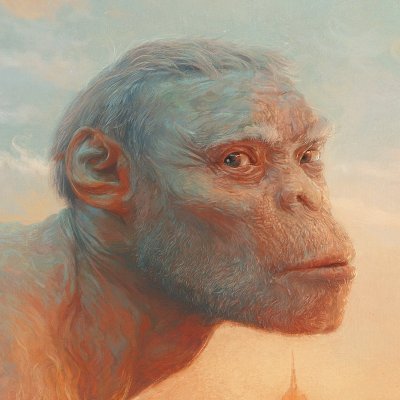
A very good morning. Welcome to The Council Benji... This marks the third Skull in a little run. The first went to a fund I've never met. The second: through Eli Scheinman to a new collector/foundation who has been quietly entering the space in a very significant way across a number of collections whom I’ve never spoken to. Their new entrance enabled a wedding and start of a new married life for Conviction. In my very first conversation with him, we spoke about curses and commitments to the people we love. Since meeting got to talk through each step on that path, from letting go, what is imbued in the ring and ceremony of it all, a proposal, and on the way to the most important of the steps in pursuit of a blessed life. It is easy to get a little cynical on the over-leveraged exit stories that spring up from time to time, so it is a treat to watch one go towards a celebration that’s been building up in his life since the Skull was first acquired. And now: this. The third Skull and the first I can really write about as a shared story across both source and destination. An exit and an entrance. The exit: The Skulls of Luci were awarded as gifts 4 years ago. But before I'd minted Birth of Luci or painted the other 49, the first person in this space I showed the sketch of The Blueprint Skull to was actually Casey💎, when he was working at SuperRare . Casey was the very first person who onboarded me to NFTs, helping me navigate the early days of whatever it meant to even mint something. I explained the idea of gifting one to each person who bid in my first auctions. Though most of the Skulls went to the bidders, Casey's didn't. He didn't ask for one. I didn't tell him I'd give him one. But he helped me take my first steps here, and it's hard to imagine any of this making sense, or unfolding the way it has, without him. Since then, we've broken bread across continents, seen quite a lot of chortling margarita consumption, watched the rise and fall of a lot around us, weathered inter-Council dramas. He brought Laura El into The Monument Game, played as a Player, wore a Mask. Most of the vibe that started all of this, the wild west of it, feels faded in the broader space at times. But every Skull has a story and a person who helped us get here. Casey will always be the one who was there before any metric muddled the reason to care. The entrance: Last fall, Benji came over for a studio visit. We walked through Luci, the works, structure, and dream, as anyone who visits does. But we mostly talked about being a father and having a father. We discussed the very idea of "collection" stripped of accumulation, value, or signal, located more in the act or ceremony of it. What it was to grow up with a curious father who studied the edges of each thing he saw to know the next layer beneath why anyone might look or ignore it. That to pass this on is to pass on questioning, more than it is to pass on any kind of answer. The process of collecting can be perceived as an individual act of hoarding. For some it is maybe. But at its best, it's a way to bind through shared questioning, to bond in cooperation and competition with friends and family, it is the swapped story and meme of it all, and each object gathered along the way carries some shared memory that can, often does, and with intent: should; drift out of the object entirely. All in the psalm, always has been. The studio visit came and went. Soon after, a package arrived in the mail with two of the softest stuffed animals added to my daughter's own collection, now among her favorites. The Skull is a bonus to that, in the scheme of shared memory. For Rachel and I, while we are heads down making a body of work that unsettles us and excites us but demands unknown time to accomplish, it means a great deal to have this kind of support from long term people in the quiet process of making work we want to leave behind ourselves. Enormously grateful to Casey for the many years of support and friendship, to Benny for being a true patron, and to Benji for entering the arena for what I'm working on next. Welcome.show more
Sam Spratt
20,786 просмотров • 5 месяцев назад
THIS GUY JUST REBUILT A $35,000 ANIMATED SITE FOR... $12. IF YOU RUN A WEB STUDIO, YOU SHOULD PROBABLY KEEP SCROLLING. Every agency billing $100-149/hr is selling you five departments wearing one invoice. Here’s each one - collapsed into a single agentic session. LAYER 1 - THE CONCEPT ROOM (Claude) Reads the brief, pulls references, and scripts the scroll: what the visitor feels at second 3, second 15, second 40. → Used to be a strategist and a wall of mood boards. Now it’s a conversation. LAYER 2 - THE MOTION STUDIO (Higgsfield) Cinematic clips from 30+ generative models - hero shots, transitions, ambient loops - all matched to the story from Layer 1. → Used to be a motion artist on retainer. Now it’s a prompt. LAYER 3 - THE DEV TEAM (Claude Code) Scaffolds the site, writes the GSAP ScrollTrigger timelines and Lenis smooth-scroll, extracts frames, optimizes every asset. → A full scroll-driven build with zero hand-coded keyframes. LAYER 4 - THE DESIGN DEPT (baked-in cinematic layer) Six effects, zero config: film grain, particles, vignette, glass cards, color tints, scroll pacing. → The polish that justified the invoice - now it ships by default. LAYER 5 - THE QA PASS (Claude) Checks load speed, mobile breakpoints, and whether the scroll actually lands - then rewrites whatever doesn’t. → Used to be a client call and a revision cycle. Now it’s one more turn in the same session. Five departments. One operator. One pass. A strategist, a motion artist, a developer, a designer, and a QA lead - weeks of handoffs - now run in a single session. For a Claude subscription and a few dollars of Higgsfield credits. The studio was never selling talent. It was selling overhead. And the overhead just became five layers. Follow me, reply “website” to this post and I will send you the step-by-step Playbook 👇show more
ZEUS⚡️
141,973 просмотров • 3 месяцев назад
Fine-tune DeepSeek-OCR on your own language! (100% local) DeepSeek-OCR... is a 3B-parameter vision model that achieves 97% precision while using 10× fewer vision tokens than text-based LLMs. It handles tables, papers, and handwriting without killing your GPU or budget. Why it matters: Most vision models treat documents as massive sequences of tokens, making long-context processing expensive and slow. DeepSeek-OCR uses context optical compression to convert 2D layouts into vision tokens, enabling efficient processing of complex documents. The best part? You can easily fine-tune it for your specific use case on a single GPU. I used Unsloth to run this experiment on Persian text and saw an 88.26% improvement in character error rate. ↳ Base model: 149% character error rate (CER) ↳ Fine-tuned model: 60% CER (57% more accurate) ↳ Training time: 60 steps on a single GPU Persian was just the test case. You can swap in your own dataset for any language, document type, or specific domain you're working with. I've shared the complete guide in the next tweet - all the code, notebooks, and environment setup ready to run with a single click. Everything is 100% open-source!show more

Akshay 🚀
126,273 просмотров • 11 месяцев назад
Today I had my first demo drive in a... Tesla. It was also my first time ever sitting in one. This was the first car I’ve ever sat in the driver’s seat of where I didn’t touch the steering wheel for over 20 miles. Before I even got to the car, the people who had demoed it before me were an older married couple who were absolutely euphoric. They thought it was so cool that the car could drive itself. The Tesla employee told me this happens all the time. People come back from demo drives and tell the next test driver that they’re about to have an amazing experience. Little did I know, I’d end up carrying on the torch to the next couple demoing it after me. There was a ton of construction where I demoed the car, and FSD handled the entire drive extremely well. And yes, it can go through a drive-thru and stop at each window. The only thing I had to do was tap the pedal because it wouldn’t leave on its own, but it was still wild seeing the AI stop perfectly at the second window and wait. There are a million things I could write about why a Tesla feels like a better car and how much more it offers compared to a regular car. But for now, I’ll stick to FSD. There were only two moments that made me a little uneasy. The first was pretty minor. The car slightly hesitated going up a driveway, but quickly made up its mind. The second was more noticeable. I didn’t realize the car was nagging me. Once I touched the steering wheel, nothing happened, so I pulled it right a little harder, then let go. After that, the car turned left and crossed a double yellow on a backroad. (and yes I know you can sue the volume knob) I’m not totally sure if it was trying to pull over or what it was doing. I wanted to see how it would handle the situation, but there were cars coming, so I took over and corrected it. One of the coolest moments was when I thought FSD was glitching because it came to a complete stop in the middle of a busy road. Then I looked around and realized why. On the right side, there was a bicyclist waiting at a yellow crosswalk. The cars behind me didn’t honk, and the Tesla stopping actually incentivized another car in the right lane to stop and let him pass. The car is almost too nice to pedestrians, because 99.999% of humans would’ve blown through that, especially with no flashing light. For 99.9% of the drive, the car navigated confidently and smoothly. It was a real “feel the AGI” moment. Please do not let the media, the general public, or anyone else convince you that this technology is just some kind of auto assist or glorified cruise control. This is undoubtedly getting extremely close to feeling superhuman. You still have to pay attention to the road, but after experiencing it myself, I’d be shocked if HW4 Teslas aren’t unsupervised within the next couple years. The car was extremely smooth. There was no harsh braking, and it even avoided something in the road that I didn’t see. Driving with FSD made me realize I probably wasn’t driving as well as I could be. Hopefully, eventually, everyone’s car can be as mindful as a Tesla. I’ve never seen a brand so far removed from the public’s sentiment. I’m so happy I ordered one.show more

Chris
18,859 просмотров • 3 месяцев назад