Qwen3.6-27B dense quality ladder. Same tasks. Same grader. Same... day. How much does compression cost? FP8 - 83.3 · 29GB NVFP4 - 83.0 · ~15GB BF16 - 81.9 · 56GB GPTQ-Pro - 79.4 · 13GB IQ2_XXS - 79.0 · 9.4GB Who wins where: 🥇 Raw quality → FP8 (83.3) 🥇 Practical default → NVFP4 (83.0 at ~15GB) 🥈 Full precision → BF16 is NOT better (81.9) ❌ "Just use any 4-bit" → GPTQ-Pro loses 3.6 pts vs NVFP4 🛟 Emergency tiny → IQ2 still holds at 79.0 Overall winner: If you care about the absolute number: FP8 If you care about running it on a real box: NVFP4 is the overall pick. Same quality class as full precision. Half the size of FP8. ~4× smaller than BF16.show more

Wësche
24,599 次观看 • 1 个月前
If you have an RTX 3090 or 4090, Mia... just shipped you a free massive upgrade in both speed and intelligence. I will explain to you why this will make your Qwen 3.8 27B on your card, even better, and my flags for running it. Qwen3.8-27B, EXL3 3.5bpw, DFlash2 speculative decode, RTX 4090. Single stream. The kit is from MiaAI-Lab, EXL3 is turboderp's format. I re-measured everything on my own card because the my first benchmarks seemed off. It turns out it really does run much faster. WHY EXL3 IS A DIFFERENT ANIMAL The old way (Q4_K_M) rounds each weight to the nearest 4-bit value independently. Every weight introduces its own rounding error. Those errors accumulate across millions of weights and causes drift (Slightly dumber). EXL3 is a fundamentally different compression algorithm. Instead of rounding each weight on its own, it encodes the entire weight vector as a path through a constrained codebook and spreads the rounding error across dimensions using a Hadamard transform. The result is that at the same bits per weight, more of the original model's intelligence is preserved. The important part is this CAN ACTUALLY BE MEASURED. The cleanest way to see that is KL divergence against a high-precision teacher. Lower means the quantized model thinks more like the original. On the malaiwah independent teacher-logit panel for GLM-5.3-Flash: EXL3 4bpw: 0.0246 nats Official FP8: 0.0206 nats NVFP4: 0.0605 nats EXL3 sits 0.004 nats behind native FP8 at half the size. NVFP4 at higher bit width is 2.5x further from the teacher. That panel is GLM-5.3-Flash, not Qwen 3.8. Cited as the mechanism, not as this run's data. But the point stands: EXL3 is not just smaller, it is smarter per bit than the formats most people are running. WHAT I MEASURED I first measure 108 tok/s from a single run. After that number looked too good to be true. I reran it. It looks like after a warm up, the numbers are even better. Basically, like people long thought, the RTX 3090 and RTX 4090 are actually superb AI computer cards. Hence why NVIDIA stopped shipping them with NVLINK since the 4090. Short context ceiling (~2k in, 1016-token output, TTFT-separated): 135, 138, 153, 174, 133, 129 tok/s across 6 runs. Sustained longform (2040-token essay): 105.4, 94.5, 98.4 tok/s Short answer (504 tokens): 93.2 tok/s The honest shape: ~130-150 tok/s at short context is the ceiling, ~94-105 sustained on longform. The ceiling matters because that is what people feel in chat. The old dense Q4_K_M on llama.cpp ran ~37 tok/s on this same card. (No MTP), with MTP about 60 tok/s Sustained is roughly 2.5-3x. Ceiling is closer to 4x. Same model, different quantization and engine. The multiplier comes from EXL3, the ExLlamaV2 engine, and DFlash2 together. CONCURRENCY IS A RTX 4090 LANE. Just like the old config on the 4090, the 24gb vram, means a long context can only hold one stream, and running concurrency requires to lower context length, because it runs fast it sort of makes up for it by being faster than slower GPU chips. CONTEXT LADDER The recipe doc measured prefill. I re-ran it with TTFT separated from decode, because decode is what you actually feel after the first token. ~5k in: decode 140 tok/s (TTFT 0.5s), needle HIT ~18k in: decode 85 tok/s (TTFT 0.3s*), needle HIT ~73k in: decode 28 tok/s (TTFT 1.8s), needle HIT ~146k in: decode 16 tok/s (TTFT 2.3s), needle HIT (*0.3s at 18k is a prefix-cache hit from the paired pass. Cold prefill for reference: ~2,020 tok/s at 17k falling to ~508 at 153k.) Needle hit at every depth, mine and the original 7/7. Retrieval is intact at max context. Speed is not: decode falls ~9x from short to max. Past ~50k tokens this stops being a chat tool and becomes a batch tool. At 146k it works, but nobody is typing interactively against 16 tok/s. WHERE IT BROKE The model's native context is 262k. The README says DFlash2 fits ~220k on a 24GB card. My 200,704-token attempt failed with insufficient VRAM. Dropped to 168,960 and it booted. The real ceiling is somewhere between 168,960 and 200,704 and I never tested that gap. I jumped to a value that worked and called it done. That is ~32k tokens of context I left on the table. One thing the numbers taught me: JSON tokenizes at ~1.5 chars/token, prose at ~3.9. "150k tokens of JSON" needs ~2.7x more filler than the same estimate in prose. Size by real tokens, not estimates. THE UPGRADE If you own a 4090 and you are running Q4_K_M on llama.cpp, you are leaving a good bit of speed and measurable intelligence on the table. The same model, on the same card, with a better quantization and engine, goes from 60 tok/s to 130-150 at short context and 94-105 sustained. The model also thinks closer to the original because EXL3 preserves more of the output distribution per bit than the old rounding method. The recipe is in the first reply. Everything above came from one 4090 and one afternoon of re-measuring. The decode ladder especially needs independent numbers. If your card gets different falloff, that is worth knowing. Recipe and flags/ findings in reply 👇show more

Yume_X
38,511 次观看 • 12 天前
Big win for open-source LLMs! DeepSeek V4 Pro holds... the top open-weights score on SWE-bench Verified, in the GPT-5.5 range. GLM 5.2 leads the open-weight intelligence index and sits near the closed frontier on long-horizon coding. But this leaderboard number is a weak proxy for real performance. It comes from one task set, run through one harness, served at one precision. The same weights can even score differently across providers, since many hosts quantize activations to fp8 and drift the model off its reference weights. Real performance is determined based on whether a model can read a repo, make coordinated edits across files, run the tests, and recover when one breaks. By that measure, the top open models hold up, but only inside the right harness. The teams that actually put DeepSeek V4 into production pipelines as a frontier substitute got there through the harness they built around the model, not by picking a stronger model. If you want to see this in practice, Cline (64k+ stars) has actually built that harness around open models, tuned so they run at production quality. And it's tuned so that these LLMs can run at production quality, with plan and act modes, checkpoints, and terminal feedback. ClinePass is the new access layer on top of it. It runs a curated set of those models inside Cline, narrowed to the ones tested for coding-agent use, with 2 to 5x the standard rate limits and no separate provider accounts, keys, or billing to track. The video below shows the setup, and I worked with the team to put this together. It runs alongside custom keys and local models as well, not in place of them.show more

Avi Chawla
44,124 次观看 • 2 个月前
HERMES AGENT NOW RUNS CLAUDE OPUS 5. NEAR FABLE... 5 INTELLIGENCE. HALF THE PRICE. SELF-VERIFIES ITS OWN WORK. AVAILABLE TODAY VIA NOUS PORTAL (20% OFF ALL MODELS). Anthropic shipped Opus 5 on July 24, 2026. same $5/$25 per million tokens as Opus 4.8. but the benchmarks tell a different story. WHAT CHANGED FROM OPUS 4.8: FrontierBench v0.1: Opus 5: 43.3%. Opus 4.8: 18.7%. 2.3x jump on the same test. ARC-AGI-3: Opus 5: 30.2%. 3x better than the next closest model. beat Fable 5 on 8 out of 13 benchmarks. at half the cost ($5/$25 vs $10/$50). same price as Opus 4.8. twice the intelligence. no reason to stay on 4.8. THE SPECS: model ID: claude-opus-5 context: 1M tokens (default and maximum) max output: 128K tokens thinking: on by default effort toggle: low / medium / high per request fast mode: $10/$50, 2.5x faster knowledge cutoff: May 2026 minimum cacheable prompt: 512 tokens (was 1,024) SELF-VERIFICATION (the biggest change): Opus 5 checks its own work automatically. Anthropic says: delete your verification prompts. "include a final verification step" now causes OVER-verification because the model already does it. for Hermes /goal tasks this is a direct upgrade. the judge checks evidence. the model also checks evidence. double layer of verification without extra tokens. EFFORT TOGGLE: low: fast, cheap, routine work. medium: balanced, daily tasks. high: full reasoning, complex problems. set per request. not a global switch. matches Hermes /reasoning command: /reasoning low (routine) /reasoning high (complex) Opus 5 effort toggle + Hermes reasoning control = precise cost management per turn. WHERE OPUS 5 FITS IN HERMES: DAILY DRIVER (replaces Opus 4.8): same price. 2.3x better benchmarks. set as your main model: Desktop app / Dashboard: Models → claude-opus-5 CHIEF OF STAFF: synthesis across multiple agents. reads Kanban, prioritizes, routes tasks. self-verification catches routing errors before they cascade. COMPLEX CODING: SOTA on agentic coding benchmarks. FrontierBench 43.3% = best public model for coding. set as coder profile model. /GOAL TASKS: self-verification + completion contracts = the model proves its work AND double-checks the proof. long-horizon goals finish correctly more often. MoA AGGREGATOR: strongest synthesis model at $5/$25. pair with GPT-5.6 and Grok 4.5 as references. Opus 5 aggregates. best quality at mid-range price. presets: max-quality: reference_models: - provider: openai-codex model: gpt-5.6-sol - provider: xai model: grok-4.5 aggregator: provider: anthropic model: claude-opus-5 COMPUTER USE: near-Fable 5 quality for browser automation. at half the token cost per session. computer_use tasks burn lots of vision tokens. Opus 5 halves that bill vs Fable 5. WHAT TO KEEP OPUS 5 AWAY FROM: cron monitoring: too expensive. use DeepSeek or no_agent mode. sub-agent grunt work: use GPT-5.6 Luna ($1/$6) or DeepSeek. auxiliary tasks: use Gemini Flash. routine web extraction: use a cheap model. Opus 5 is for the turns where quality compounds. planning, synthesis, verification, complex reasoning. budget models handle everything else. NOUS PORTAL: 20% OFF ALL MODELS Nous Portal currently runs a 20% discount on all models including Opus 5. $5/$25 official → $4/$20 through Nous Portal. the cheapest way to run Opus 5 right now. hermes setup --portal select claude-opus-5 as your model. discount applies automatically. Opus 5 replaces Opus 4.8 everywhere. same price. better at everything. no tradeoff. straight upgrade. hermes update /model claude-opus-5show more

YanXbt
16,744 次观看 • 1 个月前
my 8 GB VRAM gaming laptop is absolutely going... to hate me for this. but I still did it. ran a 31b dense model (Gemma 4 31b Q4) with only 8 GB VRAM last week I ran Gemma 4 26B A4B a mixture of experts model on my RTX 4060 and hit 25–28 tokens/sec using llama.cpp's new MTP support. smooth. snappy. but MoE has a secret: it only activates 4B parameters per token despite having 26B total. that's why it flies. so the real question started haunting me. what if I throw a full, no tricks, every parameter fires on every token, 31B DENSE model at the same machine? # Hardware: GPU: NVIDIA RTX 4060, 8 GB VRAM RAM: 16 GB CPU: Intel Core i7 H Laptop. Gaming. Modest. The model: gemma-4-31B-it-qat-UD-Q4_K_XL.gguf (model's unsloth huggingface link in the comments) This is Google DeepMind's flagship dense model in the Gemma 4 family that can run on single consumer GPU. It packs a hybrid attention architecture, supports up to 256K context natively, and is QAT (Quantization Aware Training) optimized, meaning it retains far more quality than standard post training quants at the same bit depth. This is NOT the MoE. This is 31 BILLION dense parameters, every single one of them loaded. # the flags I used: -m gemma-4-31B-it-qat-UD-Q4_K_XL.gguf -cnv --spec-type draft-mtp --spec-draft-model mtp-gemma-4-31B-it.gguf --spec-draft-n-max 8 --spec-draft-p-min 0.6 -c 6000 -v Multi Token Prediction (MTP) is still active here. Separate draft GGUF required, same as the 26B setup. # Results: → Decode: ~3 tokens/sec → Prefill: ~2 tokens/sec → Context: 6000 tokens → Hardware crying quietly in the corner: yes so is 3 tps actually usable? For real time back and forth chat? Not ideal. You're not having a fluid conversation at 3 tps. but slow ≠ useless. And this is where it gets genuinely interesting. think about how senior devs actually work in a real team. But when something is architectural, deeply complex, or needs serious reasoning? they walk down the hall and escalate to the senior. That's exactly the local AI agent architecture this unlocks: → Fast orchestrator model (Gemma 4 26B MoE at 25+ tps) handles routing, simple queries, tool calls, memory. The junior dev. → Gemma 4 31B dense is the senior, called only when the fast model genuinely hits a wall. Hard multi step reasoning. Complex code generation. Deep architectural decisions. The agentic loop stays fast. Only the hard hops touch the 31B. That's a legitimate production grade local AI architecture on a budget hardware. (requires 2 8gb gpus) other workflows where 3 tps is completely fine: - overnight batch jobs. summarize documents, extract structured data, review code. Fire it off. Sleep. wake up to results. - One shot deep reasoning - Silent code audit loops, you write and test, the 31B reviews diffs and flags issues in the background between your sprints - Any workflow where output quality > output speed A few weeks ago, nobody was running a 30B+ dense model on a single consumer GPU with 8 GB VRAM. At all. Now we're doing it on an Intel i7-H gaming laptop with a NVIDIA RTX 4060, thanks to llama.cpp + QAT quants + MTP speculative drafting. Google DeepMind said the Gemma 4 31B targets "consumer GPUs and workstations." They were not exaggerating. The hardware bar to run serious frontier class models locally keeps dropping. the tools are here. the models are here. you just have to be willing to abuse your laptop a little. what workflows would you actually run on a local 3 tps 31B dense model? genuinely curious. drop it below.show more

Alok
63,689 次观看 • 3 个月前
On the second day of recruiting myths… Myth #2:... “The name on the front of your jersey doesn’t matter.” There is some truth here. But people usually say this to make you feel better if you’re not on a team in the “recruiting bubble.” And yes of course there are always outliers. If you’re Montana Fouts, you could show up playing for the Butterflies and coaches would still be lined up drooling at the fence. But for most of us? The jersey does matter. Especially if you don’t have true 5-star size or can’t blow people away with elite metrics. I know this because I’ve been on both sides of it. Same player. Same work ethic. Completely different response from coaches. Why does the jersey matter more than people admit? First impressions. If a coach doesn’t recognize your club as one that consistently produces players at their level, you have to overwhelm them with performance and numbers just to get the same look. What matters even more than the jersey name is the coach attached to it. My last club, Rising, was brand new. But my coach, Steve Appel, had a lot of successful former players at top 25 programs. Coaches knew him. Trusted him. We were at the best fields and no one cared what was on the front of our jerseys. At my first tournament with that team, I saw more college coaches than I had in my entire recruiting journey before that. It’s true. College coaches aren’t recruiting a jersey. They’re recruiting you. But your jersey affects: •what fields you play on •who stops to watch •how risky you look on paper A well-known club with proven coaches comes with built-in credibility. Can you get recruited without that? Yes. I did. But if you’ve read my book, you know how many things had to line up for that to happen. So is there truth to this myth? Yes. But most of the time, when people say it, they’re trying to protect you from a harder truth: Recruiting isn’t just about how good you are. It’s also about who’s willing to vouch for you. And your jersey is a powerful indicator of that before a coach sees you even pick up a ball. #RecruitingRules Rule #6: The lifeblood of recruiting is relationships. And whether you like it or not, the front of your jersey is part of that. Photo Caption: Top image my OG team, AZ Steel after winning the Colorado Sparkler Supplemental Power Pool. Bottom image with steve appel after winning PGF Nationals. My original team eventually made it into the “recruiting bubble” the summer after I committed. We were a solid competitive team at the national club level, but having played for both, no one will ever convince me that my recruiting opportunities would have been the same regardless of which jersey I was wearing. Completely different worlds. I wouldn’t change my path. I ended up exactly where I always dreamed to be, and my path made me who I am, but in my case believing this myth for so long cost me time and my family money.show more
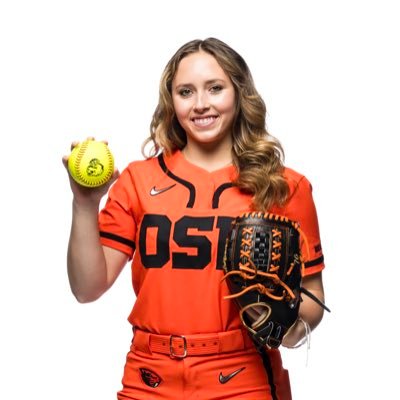
Amelia Streuber 2025 🦫
15,090 次观看 • 9 个月前
i spent $26,600 on cloud GPU rentals over 14... months before i found a NVIDIA DGX Spark at $2,999 (founder's edition) or $3,999 (shipping price) it paid for itself in 6 weeks i run 200B parameter models locally now and my old cloud provider keeps sending me loyalty discount emails the math on that $26,600 is embarrassing to type out loud $1,900/month for 14 months, H100 instances on a specialist cloud provider, because anything bigger than a 70B model simply would not fit anywhere else i paid the invoices like they were a utility bill and told myself it was just the cost of doing serious AI work it took me over a year to find out it wasn't 14 months, broken down: → months 1-4: $1,400-1,600/month - felt like manageable infrastructure overhead → months 5-9: crept to $1,900-2,100 as i started running DeepSeek-class experiments, costs tracking directly with model size → months 10-12: one agent loop ran for 36 hours against a 130B model while i slept, that month hit $2,400 → month 13: ran the cumulative total for the first time, saw $23,800, felt physically sick → month 14: another $2,800 month while i waited for the hardware to ship the box is the NVIDIA DGX Spark - roughly the footprint of a large mac mini, powered by a GB10 Grace Blackwell chip with 128GB of unified LPDDR5X memory that unified memory is the whole thing an RTX 4090 has 24GB of VRAM, which means a 70B model in full BF16 precision physically does not fit, you're quantizing down or you're renting cloud, those are your options this box loads a 200B parameter model quantized and serves it through vLLM over localhost, same API interface the cloud endpoint used the migration took one line of code - i changed the base URL from the provider's endpoint to 127.0.0.1:8000 and everything just worked electricity to run continuous 200B inference locally comes out to about $12/month the payback arithmetic is almost too clean: $2,999 hardware cost against $1,900/month saved, the box paid for itself before i'd owned it two months what i didn't account for was how completely the cost model changes your behavior when there's no hourly meter running, you greenlight experiments you'd never approve on cloud - agent loops that churn for hours, running 10,000 documents through a reasoning pass at 3am, speculative fine-tuning jobs you'd normally skip because the cost felt unjustifiable i ran more experiments in the first 30 days after the box arrived than in the four months before it the loyalty discount email landed about 8 weeks after i cancelled the cloud subscription 15% off my next three months, valued customer, we'd love to have you back i didn't reply the box was already runningshow more

Argona
22,355 次观看 • 3 个月前
Elon Musk gave the entire entertainment industry its expiration... date, and he is the one building the thing that kills it. Musk: “My guess is that we see the first compelling half hour, pure AI show next year.” Next year. A complete show generated entirely by AI. No writers. No actors. No cameras. No sets. No crew. No studio. Just a prompt and enough compute to render a reality that never physically existed. And shows are the easy part. Musk: “I say probably we’re maybe three years away from AI does the whole video game.” A show plays the same way every time. A game has to generate a living world that reacts to every decision in real time across every single frame. That is a fundamentally harder class of problem. And Musk put three years on it. Right now a single AAA title takes seven years and half a billion dollars across thousands of engineers and artists just to ship it. Musk is describing a world where one person types a paragraph and gets something comparable. The entire value proposition of a multi-billion dollar industry lives inside that gap. And it closes in thirty-six months. But the prediction is not the story. The person making it is. This is not an analyst speculating from the sidelines. This is the man building the largest AI compute clusters on the planet. The man who built xAI from zero in under two years. The man stacking hundreds of thousands of GPUs into facilities designed to do exactly what he is describing. When Musk says three years, he is not guessing about what someone else might eventually ship. He is reading you a delivery date off his own roadmap. Every media company on Earth is valued on a single assumption. That quality content is expensive and difficult to produce at scale. That one assumption is the structural foundation underneath every studio, every network, and every publisher in existence. Musk is dismantling it with raw compute. The studios still parading thousand-person production teams are not demonstrating strength. They are advertising the exact cost structure that one person with a prompt and a GPU allocation is about to make irrelevant. And it does not stop at entertainment. If AI can generate an interactive world that responds to human input in real time, it can generate anything. Advertising. Architecture. Training simulations. Product design. Every industry built on humans manually constructing visual experiences frame by frame is sitting on the same countdown Musk just read out loud. Now zoom out. Because this is not just an industry story. For the entire history of human civilization, the distance between imagining a world and actually creating one required thousands of people, millions of hours, and billions of dollars. That distance built Hollywood. That distance built the gaming industry. That distance made content scarce and studios powerful. Musk is collapsing that distance to zero. When the gap between imagining something and it existing disappears, every business model built on the difficulty of creation disappears with it. That is not disruption. That is a full inversion of how human beings create. Musk did not make a casual prediction on that podcast. He told you what he is building. He told you the timeline. And he told you which industries do not survive it. The entertainment industry is still debating whether this future is real. Musk is not part of that debate. He is building. And he just told you the delivery date.show more

Dustin
22,458 次观看 • 2 个月前
I spend my days explaining to teams why a... 770-billion-parameter open-weight model will never fit into their infrastructure. This week, I asked it to code a complete mobile game from a single prompt. The concept is one everyone has probably played before. A hole moving through an open-plan office, viewed from above, swallowing everything in its path. You start tiny, only able to swallow pens and cups. You grow, moving on to keyboards and plants, then chairs and printers, then desks and vending machines. Eventually, you swallow the entire meeting room. 60 seconds on the clock. One HTML file, zero external libraries, zero errors on launch. The video shows the generation and then the actual gameplay. What broke is more instructive than what worked. The structure came out right on the first try: fixed-timestep loop, spatial grid for collisions, tier system, spring camera. The balancing and rendering, not so much. The first version scored 70 points in 13 seconds with a tier threshold at 500, and drew colorful circles and triangles instead of furniture. I had to give it numbers and exact recipes. Speed: 640 pixels per second. Radii: 30, 58, 96, 150, 225. Tier thresholds: 150, 550, 1500, 3500. And for every object, a pixel-perfect drawing recipe. Once I gave it that, it followed the instructions exactly. A model that doesn't execute its own code won't tune itself. But it will execute, down to the exact numbers, what you tell it to build. The model is Hy4 preview, released by Tencent Hunyuan on August 28. 770 billion parameters in total, but 49 billion active per token. And that second number is what determines your serving bill. Native 1M context. Apache 2.0 license. vLLM and SGLang supported from day one, with an official FP8 checkpoint. Text-only preview. The part that matters for deployment is the compression. Tencent describes it as seven times smaller with almost no loss. GGUF builds use mixed per-layer quantization, where calibration data determines the bit width layer by layer. Some layers go as low as 1.31 bits, while others go up to 2.06 bits, averaging 2.38 bits per weight. The model drops from 1.5 TB in BF16 to 213.66 GiB while, according to their measurements, staying in the same performance range on real-world tasks. On this build, they report 204 tokens/s in prefill and 20 tokens/s in decoding, measured on an 8-GPU node. Their numbers, not mine. Their blind evaluation scores 2.99 out of 4 across 203 engineering tasks rated by 163 experts. Ahead of Kimi K3 at 2.94 and GLM-5.3 at 2.92. Their numbers too. My run went through the official hosted studio, not a local build, so I’m not claiming to have benchmarked the compressed GGUF myself. Two honest caveats. None of these builds run on standard llama.cpp. The hyv4 architecture isn't upstream yet, so patches are required. And 214 GiB of resident weights is still a server, not your laptop. This is a preview, and Tencent explicitly asks users to break it and report what fails. So here's my contribution.show more

Alexa Benchmark
16,315 次观看 • 11 天前
I just ran Gemma 4 31B on @CerebrasSystems at... 1,800+ tokens/sec and it's multimodal. For context: that's 35x faster than a typical GPU endpoint, and the first token (reasoning included) lands in 1.5 seconds. This isn't a benchmark slide, I recorded the inference live. Prompt I used: "Create a simulation of an iPhone. Include at least one working dummy note taking app, a functional notification pulldown, high quality graphics, single HTML file, any libs via CDN." - Generation time: 3 seconds. - Notes app worked. - Notification panel worked. - Rendered first try. This is what wafer-scale inference unlocks, not just "faster," but a different category of product. When generation is this fast, you stop waiting and start iterating in real time. Why this matters: Gemma 4 31B is Google DeepMind's flagship open weight model, Apache 2.0 licensed, dense (not MoE), and built for efficiency over raw parameter count. It scores close to Claude Haiku 4.5 on the Artificial Analysis Intelligence Index (30 vs 29) but runs ~18x faster on Cerebras. It's also the first multimodal model on Cerebras's platform, meaning you can now feed it screenshots, documents, charts, and UI states at wafer scale speed. # Applications I'm most excited about: - Screenshot → Insight: Drop in a dashboard or document screenshot, get structured findings back instantly. no waiting, no batching. - Live UI generation: Full interactive interfaces (like my iPhone sim) generated and rendered in under 2 seconds. - Screenshot -> Patch: Feed it a broken UI + console error, get a minimal code fix and verification steps back. - Computer use & agentic loops: See -> reason -> act - verify, fast enough to keep a human in the loop instead of waiting on the model. - Long context summarization: Full research reports condensed into decision ready summaries you can read and requery in one sitting. The bigger unlock isn't the speed number itself, it's that agentic and multimodal loops (see -> reason -> output -> tool call -> verify -> retry) finally run in real time instead of feeling sluggish. As Logan Kilpatrick (Logan Kilpatrick) put it: "If every model was doing 2,000 tokens per second, you wouldn't build the same product and just have it be faster, you'd build different products." Gemma 4 31B is live now on Cerebras Inference Cloud in public preview. If you're building multimodal, agentic, or real time apps, this is worth testing today. What would you build with such insane inference throughput?show more
Alok
12,962 次观看 • 2 个月前
🚨Zlatan Ibrahimović on PSG replacing Kang-in Lee with Akliouche... — only for Kang-in Lee to score on his Atlético Madrid debut. 🗣️ “I am Zlatan. I don’t study projects. I kill them or I build them. Paris has a habit. They always think they are smarter than the pitch. They sold the Korean who creates something from nothing, then spent fifty million on the French one so the story looks clean. Same old film. Different actors. I watched them do it before. They let real talent walk because it didn’t fit the nice picture they wanted to sell. They preferred the comfortable name over the uncomfortable one who actually changes games. Then they act surprised when the comfortable name looks average under pressure. Kang-in Lee scores a pure golazo on his Atletico debut — chest, three men left standing, left-foot rocket into the far corner — and they name him Man of the Match after thirteen minutes. The Korean they treated like a luxury substitute just reminded everyone why talent doesn’t need a French passport. Meanwhile they spent fifty million on the French boy because he’s French. Because the media will smile. Because the federation will clap. Because the project now cares more about identity than about winning the hard nights. I saw this disease before. When politics and nationality become more important than the left foot that can unlock a game, the dressing room starts rotting. Lee was never given a real role in that 4-3-3. He created when the game was stuck. They sold him for profit and replaced him with the local product so they can say ‘look how French we are.’ Talent does not carry a passport. Quality does not need a birth certificate from the banlieue. Lee just proved it in Madrid while they were still explaining why the nationality mattered more than the performance. This is not new. Paris has always mixed ambition with insecurity. They want to look French when it is convenient. They want to look global when it is fashionable. They never simply want the best player available. That is why they keep repeating the same soft mistakes. I have no problem with French players. I have a problem with weak decisions. Talent does not need a passport. Quality does not need approval from the federation. If you choose the flag over the football, don’t cry when the football leaves you behind. I arrived and forced them to raise the standard. I didn’t care about passports. I cared about winners. Now they are back to checking flags before they check the left foot. That is not strategy. That is fear dressed as identity. Madrid just took the better footballer. Paris took the safer narrative. One club chose the goal. The other chose the story. I don’t do stories. I do truth. And the truth is simple… they chose the wrong one again.”show more

Vfynn_🥷🏼 𐙚
99,249 次观看 • 27 天前
Last night I asked Claude Code to build me... a simple script: pull on-chain data from Polymarket and sort wallets by win rate Nothing ambitious. Just wanted to see who is actually making money on 15-minute BTC markets The terminal finished in about 20 minutes. Hundreds of addresses, columns of numbers, nothing interesting And then 1 wallet caught my eye 200+ trades per day, consistent profit every week, almost surgical timing precision. I reread the line 3 times. A real person does not trade like this I fed the address back into Claude Code and asked it to break down the pattern. Half an hour later I had a full strategy reconstruction on my screen The bot (and it is definitely a bot) pings Binance and Bybit every 100ms monitoring volatility compression on BTC. When it drops below 0.08% it enters Up and Down contracts simultaneously at 25 to 35 cents each. A pure straddle. 1 side burns, the other flies to a dollar. At a 30-cent entry that is 3 to 4x per position And so it goes in circles. Dozens of times a day I sat there staring at it for about 10 minutes $13K to $25K in daily profit from a single wallet. Not a trader with intuition, not an insider with information. An algorithm that found a hole in market mechanics and methodically milks it You can check the trade history yourself: After that I went looking for whether anyone else is tracking this wallet. Turns out yes. Found a Telegram bot that tracks wallets like this and copies their trades automatically I connected it to the same address just to see if the entries would match what my terminal was showing. Matched perfectly Still testing on minimum amounts for now: But the fact that you can stand next to an algorithm like this in real time is something that simply did not exist a year agoshow more

Blaze
488,557 次观看 • 6 个月前
How to make money on your faceless youtube channel... with affiliate before ever getting monetized i made over $23,000 from my faceless channel before youtube ever paid me a cent and here's the embarrassing part i literally FORGOT to apply for monetization. didn't even notice until i hit 121k subscribers. someone in my comments asked how much adsense was paying me and i just sat there like... oh no. that's how little adsense mattered to what i was building. let me break down exactly what i was doing instead, the same way i'd explain it to a friend: so everyone starting youtube waits for the magic 1,000 subs + 4,000 watch hours/ 10m views before they think they're allowed to earn. that waiting is the biggest beginner mistake on the whole platform. you don't need youtube's permission to make money from youtube. you need three things: a channel getting views (any views), an affiliate offer that fits your audience, and a link in your description. i was running mine through Glitchy. they've got a whole range of offers costco memberships, walmart, sam's club, target gift card offers, sweepstakes, cash app style offers, freebie offers the kind of low-friction stuff where the viewer doesn't have to buy anything expensive. they just sign up or enter, and you get paid per action. that last part matters more than people realise. you're not asking your audience to spend $200. you're showing them something free or nearly free that actually interests them. that's why it converts even with a small channel. now here's the part everyone gets wrong: matching the offer to the niche. you can't just slap any offer on any channel. the offer has to feel like a natural next step from the video they just watched: - frugal living / budgeting channel? costco, walmart, sam's club offers. your viewers are literally there to save money. - finance or "money hacks" content? gift card offers, cash back, sweeps. same audience, same desire. - giveaway / luck-based content? sweepstakes offers. it IS the content. - retirement & 55+ money content? membership deals + gift cards. older audiences actually complete these. - food & grocery content? grocery store offers are a perfect fit. they're already thinking about shopping. the question i ask before picking any offer: "would the person watching this video actually want this?" if the answer isn't an obvious yes, wrong offer. keep looking. one more thing that changed everything for me and almost nobody does this: don't send people straight to the offer link. build a simple landing page first. a raw affiliate link looks like spam. a clean little page that says what the offer is, who it's for, and what to do next looks professional and it converts so much better it's not even close. same traffic, same offer, double or triple the results just because of trust. you can build one in like 20 minutes now, there's zero excuse. so my actual flow was: video = description link = landing page = offer. that's it. that's the machine that quietly made $23k while i wasn't even monetized. and the funny part? when i finally DID turn on monetization at 121k subs, adsense just stacked on top of everything. now both run at the same time. but the affiliate side is the one that taught me how to actually sell adsense never teaches you anything. if you're sitting at 300 subs waiting for youtube to pay you, you're waiting for the wrong thing. the description box under your very first video is already a business. use it. if you want me to break down how i pick offers or set up the landing pages, say so in the replies i'll make it my next post. and follow, because i share everything i learned doing this the slow way.show more

Tryahd
63,642 次观看 • 18 天前
"Pros won’t use generative AI, and when the bubble... pops, nobody will ever talk about it again." No. That’s delusional. 1/ Generative AI is already being used professionally at the level of big studios like Disney ($1B to OpenAI), and there’s zero doubt that studios like Industrial Light & Magic, Netflix, Hollywood VFX experts, etc. are already experimenting with it too. Or do you think they’re idiots? They’re not idiots at all. They have the experience and, more importantly, the DISTRIBUTION POWER. The point is: someone with taste, judgment, and storytelling experience, basically from their living room, will have access to (almost, or not even almost) the same capability as the big guys, because the pure "making stuff" skills have been commoditized, and the new way to create is just NATURAL LANGUAGE. What hasn’t been commoditized is good taste, the ability to create great stories that move people, and the ability to get them in front of people. So in the end, what wins is story quality and distribution. Having good taste, making a name for yourself, and owning strong IP (Marvel, etc.) will still matter. That’ll be true right up until AI is genuinely opinionated and can create by itself: if it comes to that, with zero human direction, stuff as good as (or better than) the very best human experts today, and on top of that, interactive in real time... Because yeah: there’s nothing in this universe that actually prevents that from happening. BUT WE’RE NOT THERE. For now, generative AI is a tool that needs direction and taste to make anything decent. And I hope it stays that way for a long time, because otherwise that’s going to be a brutal hit to humanity’s ego. 2/ On the "bubble": you have to distinguish between a stock valuation bubble (possible, I actually believe it) vs a bubble like some people imagine where it "pops" and we never hear about AI again. That obviously makes no sense given how insanely useful it is. It can only grow, and it’s going to grow fast, regardless of any stock market drawdowns (the internet kept growing even when valuations got nuked in 2000). Either way, the near future is going to be extremely interesting.show more

Javi Lopez ⛩️
75,277 次观看 • 7 个月前
the model in that clip has no good signal... in it. it still put up +17% against the index's +5% the formula is doing the work R(t) = (Rmax / 7) · Σ s_i(t) seven separate signals, each scored, averaged into one number that's the entire model. no genius indicator anywhere in it and that's the part retail keeps missing retail hunts for the one signal that works a desk assumes every individual signal is weak and builds around that assumption here's why that assumption wins take N signals, each with sharpe s, and average them if they're uncorrelated, the combined sharpe is: s · √N seven weak signals at sharpe 0.3 each 0.3 × √7 = 0.79 nothing in that stack survives a backtest alone. together they clear the bar the noise in each signal is independent, so averaging cancels it the edge in each points the same way, so averaging keeps it that asymmetry is the whole mechanism but there's a catch, and it's the one that kills retail attempts correlation. the real formula is: s · √( N / (1 + (N−1)ρ) ) at ρ = 0.5 those same seven signals give: 0.3 × √(7 / 4) = 0.40 half the benefit, gone seven versions of momentum with different lookbacks aren't seven signals. they're one signal, repeated so the search isn't for better signals it's for signals that are wrong at different times grinold formalized this in 1989. the fundamental law of active management: IR = IC × √breadth skill per bet times the square root of how many independent bets you take you can be barely right, as long as you're barely right about many uncorrelated things renaissance doesn't run one model. it runs thousands of weak ones that's not a compromise. that's the design retail asks "is this signal good enough to trade" a desk asks "what does this add that i don't already have" the math is public. grinold's paper, every portfolio theory textbook the correlation matrix that tells you whether your signals are actually distinct is three lines of python they weren't finding better signals they were finding signals that disagree full breakdown in the article belowshow more

delost
28,032 次观看 • 1 个月前
We found a flaw in Polymarket that can’t be... patched. Then we built the most powerful bot of the World Cup around it. Here’s the flaw: their orderbook will always be slower than the pitch. When a goal, red card, or penalty hits, pro feeds (Sportradar, Opta, ScoutingFeed) register it in 200-500ms. Polymarket takes 2 to 8 seconds to reprice. For those few seconds the book is quoting a score that no longer exists. No amount of engineering closes that gap the event happens in the physical world before any oracle can confirm it on-chain. The engine detects the event, recalculates fair value, and fires via Jito bundles before the book catches up. In at the old price, out at the new. The match outcome is irrelevant we don’t bet on who wins. We capture the lag every event creates. We’ve been building Polymarket bots since 2025. This is the most powerful machine we’ve shipped yet. Two months ago we posted the architecture for this. It hit 1M views one of our most popular posts ever on X. That told us everything: this was the engine to build. First 7 days, - Starting balance: $5,000 - 22 matches scanned, 19 captured - Total profit: +$1,946.86 - ROI: +38.94% in 7 days Why it prints harder than anything we’ve built: the World Cup is the deepest liquidity event prediction markets have ever seen. Tens of millions in volume per match. Dozens of probability-shifting events per game. And an orderbook that physically can’t keep pace with the pitch. How to plug in: 1.Sign up at PolyArbiter (link in bio) 2.Generate PolyArbiter RPC URL 3.Paste it into Jupiter Predict (Polymarket but native on Solana) 4.Set your parameters, activate the World Cup module It’s free to use. We take a share of the profit the engine makes for you. You never deposit anything with us everything runs from your wallet. One honest note: the $1,946 above is our engine at our size and settings. Your numbers depend on your capital, your parameters, and how many matches you’re live for. We’re not promising you’ll match it we’re showing you the machine works, and handing you the same one. These numbers are from the engine running solo. Closed test, just us, before any public access wanted to confirm the whole loop held up end to end before handing it to anyone. That changes the second this goes public. Edge per capture is going to compress. When an event fires the mispriced liquidity is thin and gone in a few seconds more wallets hitting the same window, less left for each. Nothing we can do about it, that’s just how latency arb works. So if the edge thins out past the point where it’s still worth running, we cap access. Hard ceiling on how many engines can hit the same liquidity before it’s gone. Not gonna promise the machine stays this sharp in a few days it might not. But right now it’s live and free. Enjoy 🪄show more

PolyArbiter
100,534 次观看 • 3 个月前
🚨⚠️ I NEED TO SAY THIS, BECAUSE AS SOMEONE... WHO LEADS A TEAM, I KNOW EXACTLY HOW THESE THINGS WORK. ⚠️🚨 🩺 As a surgeon, I work every day with teams where every single person plays a vital role. In surgery, the anesthesiologist, scrub techs, assistants, nurses, and specialists each have a precise moment where their work must be seen, executed, and respected for the operation to succeed. If one part fails, the overall execution loses quality. 🎥 And the same applies to a stage performance. 📍There are cameramen positioned at every corner. 📍There are technical directors. 📍There are people coordinating transitions, camera cuts, and screen time. Everything is rehearsed. Everything is planned. Everything follows a script. So explain to me why, when it’s Jimin’s moment to execute his part —his lines, his center, his movements, his expressions— the camera suddenly cuts away, ignores him, or prioritizes other shots instead. 🎭📷 Because this is NOT accidental. ❌ And the fans can SEE IT. 👀 This is not about competing against other members. This is about professional respect for the work of EVERY member of BTS. A perfect performance works like a perfect surgery: ✨ every detail matters, ✨ every contribution matters, ✨ and every professional deserves to be shown at the exact moment their role is meant to shine. Jimin should not disappear from the screen during key moments of his performance. He should not be treated like background noise when he is an essential piece of the entire show. And don’t tell me I’m exaggerating. Don’t tell me everyone is treated equally. Don’t tell me anything at all. 👁️ JUST WATCH. 👁️ And if after watching you still choose to ignore it, then the problem isn’t that it doesn’t exist… the problem is that you refuse to see reality. Because to miss something this obvious, you would have to be completely blind. ⚠️🚨 And THIS is exactly why we, as fans, need to continue elevating Jimin’s music, his image, his artistry, and his impact even louder. 🎶🔥 Stream his music. Support his projects. Talk about his talent. Highlight his performances. Protect his name. Make sure the world sees what some cameras keep failing to show. Because no matter how much they try to minimize his moments… his presence is simply impossible to erase. ✨👑 BIGHIT MUSIC HYBE OFFICIAL WITH JIMIN TILL THE END WE LOVE YOU JIMIN JIMIN JIMINshow more

Ann Park
34,298 次观看 • 4 个月前
I've been working in silence for quite a while... now. Tbh, I don't really even know where to start, so cue the rambling and ranting. Regardless of which side of the fence you sit on, no one can argue the past few years haven't been politically and economically wild. For crypto as a whole it feels like a never ending game of tug of war. A lot of X content has become toxic, so I just largely am not interacting these days. But I read, I read a lot of it. I think we like to forget history a bit in this community. $PLS launched off the highs, and the SEC swooped in right after. Very few people want to admit it, but it shook confidence immediately. I mean no other crypto project has survived such a thing at the time. But #PLS $PLSX and $HEX did. However, winning doesn't unshake that confidence. And RH during and after that event took social precautions to protect himself and his creations. Thing is, the guy isn't stupid. Someone once asked me if I thought certain aspects of the launch we rushed because he knew it was coming? And honestly, maybe. I'd attribute at least a non-zero probability to it. And If that were the case, im glad it was rushed. That case may have gone differently otherwise. Do I still think #PulseChain, #HEX, etc... all have futures? Yes. RH has had the opportunity to just straight up bounce from all of this. Why hasn't he? You could point to exhibit A, B, C, D, etc... of how he's likely got the funds to do that and we all could relatively do nothing about it. So why is he still around? I think it's pretty simple. The usual answer, he wants to win. It's in his twitter handle for Christs sakes. I'll go a step further and say he likely also wants us to win by extension, arguably not as much as he wins, but I mean that's pretty locked in at the moment 🤣 That's not to say he hasn't long been encumbered. And in that state, at lot has gone on without him. Much of which is / was bad. $pDAI guys... I pointed out from day one how building all this around a protocol in a dangerous state was a risky move. And I was right about that.... on multiple occasions... But does that matter now? I suppose not as much. In its current state, it's seemingly no longer exploitable. No different than a meme token now. (presumably, not like I have deep dove on any further risks since ESM). So I guess just whale risk mainly now? Now a lot of people here are in the anti-pdai camp. Me too for what it's worth. But I don't care as much about it's negative anymore in its current state. A lot of people are still in the #pDAI camp strongly. We view this as tribalism, but it's important to note that makes all of us in the #PulseChain camp universally. So these day I find myself relatively pDAI neutral. If you guys want to send it to $1 do it. Only whales can stop you, they run out eventually. (insert super strong this is NOT financial advice). Hell you can maybe even use Sigma to help? Or maybe it wont help, idk. Depends on how people use the software. Conversely, when looking at chain state overall... Why is there nearly $50M in stables sitting on the sidelines. Why not just bridge it out if you want out of what you think is a dead chain. Surely leaving it there exposes you to bridge risk? Why all these yield movements, why the $HEX dusts.... Something is happening. People are seemingly waiting to see what that something is. Or I am reading into things, NFA as always. This whole post is just ramblings of someone trying to do the best they can and certainly not any kind of advice. When I look at other ecosystems, I see a level of polish we don't have. I see tooling we don't have, I see a fostered developer environment we don't have. So I've just been building it, painstakingly.... Because someone has to if we want to be taken seriously. And what I've been building has allowed me to get Sigma to where it is. Sigma is so close... Really just in UI mode, performance optimization, going through nice to haves. I don't believe in launching in a non-finished immutable state. So yeah, I take my time. As with everything. But my point with all of this, and the "why" #Sigma question.... It's unifying, anyone can participate. Which tribe you're in doesn't matter. And if you don't like it, don't use it. It's just software you can use or not use. As it should be. The years of tooling work to deliver this has been a lot of work for one guy in silence. In that time AI has appeared. My take, every dev should be using it. Given the right direction and context. It will make you better. If you blindly trust it, it will make you worse. GPT 5.4 audits smart contracts better than most auditing services. Especially if you give it the context of what you are trying to do. Anyways I digress, testnet is soon. Soon more meaning a feeling of near completion not always reality. That how software is. I do think Sigma stands to unify the chain in a common goal, and shift liquidity into more meaningful places, but ultimately it up to the people the decide to use the software or not use it. And after these frameworks I've built will be applied to what I am tentatively calling the universal hex UI. More or less something aggregative of every derivative I can reasonably support. With data and analytics we since lost. So not just $HEX, $HDRN, and $ICSA, but others as well. However, that depends on some aspect of $Sigma to exist first, so sigma first, chain unity first. And last but not least, take care of yourselves and strive to do cool things. If we aren't doing cool things then what's the point? Hope you think my UI looks good, I spent a while on it. /rantshow more

Alex McWhirter
42,356 次观看 • 5 个月前
🥚 Raw Eggs — They are nature's fast food,... and a complete food, with every nutrient you could need. A raw egg digests in only 27 to 37 minutes, which is phenomenal compared to other foods containing protein and fat, like meat and milk. This is because egg is a fully liquid food. The body doesn't need to use any digestive fluids, hydrochloric acid, to break it down, it will absorb within the first 5 inches of the intestine only, from bacterial digestion alone. Of course, if you cook the egg, this doesn't apply anymore. Cooking not only destroys nutrients, especially enzymes and vitamins, which impairs digestion, and generates toxins, like heterocyclic amines from proteins, and cauterizes the minerals, but it coagulates the egg. This not only makes a raw egg the perfect food to get instant energy in a healthful way, but a vital food that can save someone's life. If your digestive system is so compromised you cannot digest other animal protein, like meat, raw eggs will work. Or if you have leaky gut, they digest before they even have to go through the G.I. tract. In general, if you want to give your digestive system a rest, eat raw eggs, you will get back appetite for other foods very soon. In the next post of this thread is a quote of Aajonus' most incredible testimonial on the healing power of raw eggs. They are also the best food to repair. The only thing that Aajonus found that eggs cannot do is help the body reproduce cells quicker. That takes raw meat. So long-term, you cannot replace raw meat with raw eggs, they work complementarily. Don't discard the egg white. Aajonus proved the avidin in raw egg white is not an anti-nutrient. Aajonus ate up to 60 raw eggs a day (one or two dozens on most days) since 1976. He confirmed there was no biotin deficiency whatsoever. The narrow-minded lab experiments do not explain what actually happen and then draw the wrong conclusion. What actually happens is that biotin mixes with avidin to make a compound that cleans the body of biocarbons, which are leftover byproducts from macronutrient digestion that need to be eliminated by the body. This is actually a good thing. Plus, there is an excess of available biotin in raw egg compared to the amount of avidin. It is also recommended by Aajonus to not eat raw egg yolks alone either, as it creates imbalances when on a raw diet (this doesn't apply on a cooked diet). He did the experiments on animals, feeding them raw egg white and raw egg yolk separately, and it made them extremely hungry, they required twice as much food, had huge imbalances emotionally, caused obesity, water retention, all kinds of problems. So, if you go to a restaurant, you can request the egg white to be included in your steak tartare, just like Aajonus did. What about salmonella? Salmonella is already on our skin, in our eyes, our nose, our mouth, recycling dead cells. They are beneficial bacteria, not pathogenic. Of course, this isn't medical advice. Look into Aajonus and more broadly into terrain theory vs germ theory. Don't refrigerate eggs. Only in the USA do people do this. If you wash the egg, you remove the protective membrane around it, then health departments require them to be refrigerated. Just don't wash the eggs. Eggs are a bit of a fragile food, many of its natural bacteria die when in cold temperatures, so it's better to keep them at room temperatures, or they will lose digestibility. You can blend raw eggs, however it will oxidize them, destroying certain nutrients. There are three enzymes in the egg white which prevent certain hormones that help certain diseases progress like cancer. If you as little as whip the raw egg with a work, these enzymes in the egg white oxidize within seconds. Raw eggs are a detoxification food. They are rich in cholesterol. If you drink alcohol, eat plenty of raw eggs (before, during, after), and you will avoid a hangover. The cholesterol in raw eggs is very good at collecting the alcohol and other toxins. They also enable the body to make solvents to break down toxicity like cellulite. Raw eggs can be fermented, and aged in various ways. Century eggs, the real ones (which are around 25 years old), can cost a thousand dollars. They transform in all sorts of shapes, they can look like green boiled eggs, jewelry, eggs that could belong to a dragon, or turn into white, black powder. They can give incredible energy and libido. How to eat: If you eat the raw egg white first, then the yolk right after, the raw egg will digest in 27 minutes, otherwise in 37 minutes. It is easier to do so from the shell by poking a hole on each side and sucking from it. This is "Aajonus-style". From a glass is "Rocky-style". Nowadays also called slonking. Make the egg go through your teeth while you drink it, this makes it easier to mix it with saliva, which allows better digestion. That only works if you eat only one raw egg at a time. If you eat several raw eggs at once, they will digest slower. Not an issue, it is still extremely healthy. Therefore eating raw eggs frequently throughout the day, one at a time, can bring a steady flow of nutrients to your body. Eggs are perfect to eat upon waking up, providing quick energy from fats and providing protein for the body to make glycogen from and feed the nervous system. They are perfect to eat in-between meals. Only take a couple seconds and get you going for hours, and whenever you get tired. Eggs help gain and lose weight. It all depends how you combine them. A raw egg eaten alone can lead to weight loss, except if you eat more than around 22 a day to maintain. Aajonus' weight loss protocol relies on eating a raw egg diet for 1-3 weeks and is very effective. Raw eggs can help remove cellulite, strip down toxic fat (which is fat that was used to store toxins). Eggs eaten with other foods, or several at once, don't have this weight loss effect. They are very good to eat with other foods, such as raw meat (steak tartare). You can easily eat 3 raw eggs with your raw steak. There are many recipes, from raw pastries, to sauces like mayo, milkshakes, ... where you can keep the egg raw and whole.show more

The Primal Diet by Aajonus Vonderplanitz
23,266 次观看 • 1 年前
VTubing is for everyone! I don't like to bring... this up, but recent events in the VTuber community made some people really vile. I had my M&G at HolMat last week and had people come up and just yell at me for being a girl in the "womans world", that is VTubing, no idea about who I was, or why I was there. I had the same group return to my handler multiple times, I felt really worried about the person carrying me around having to deal with this repeatedly and tried to steer them away from the group. It seems they found my YT and left me a handful of the same comments, luckily all caught by moderation tools. While I will refrain from M&G's for a little until this calms down I want to say this; I have been managing for over 1.5 years now, I deliberately take on male VTubers to show them that they can still do it. I take on people that have babiniku accounts, those that are changing from one gender presentation to another and want help, and those that have no gender presentation in their avatar. A lot of male VTubers struggle to find a manager because the stereotype is that all male VTubers are evil and it perpetuates a stereotype that extends beyond entertainment industry subcultures like streaming. VTubing has always been a medium, while character and marketing matters, it's about what makes you happy, YOU are the person that makes the content. Use whatever you want as an avatar, use a voice changer if that's what you want to do. Every month I have a male client bring up they can't do it the same way, that it's easier if jiggle physics or a cute voice is the answer to fast growth. And I tell them yeah, I can also do ASMR, I can do drama content, collab with a larger person, and get to x amount of viewers. There are shortcuts in every entertainment profession and subculture. Does it last? Do quick fixes for anything ever last? Yes, great physics and an expensive model can get people in, but if your value, your way of interacting with people, your content plan and marketing is ass, you can pack up. Most of us start on a small budget, premade or resold models, and it's the same in the big league entertainment industry too. Can I take out a loan and put myself on a billboard tomorrow, can I pay the most expensive model artist and rigger and get in along corporate VTubers tomorrow? Sure. Will it last, will it be genuine, will people trust me? Hell no. Genuine communities and growth build trust. I think streaming, creative industries, entertainment, are full of people, regardless of gender, that will see success and call it "easy", because of what they see as the end product. They don't see most VTubers working a second job, they don't see the managers, they don't see 100+ hours a month going into content production, years invested in singing and voice lessons, model redebut after redebut. I think a lot of male VTubers get a bad rep, because so many boys are raised without putting emphasis on empathy and creativity, watching my brothers be told they should not pursue art, that theatre class is a waste of time, and that they needed to go study x or y to make money for their families in the future was heartbreaking. Nobody should have to look at others and feel so much hatred for society they turn against a whole group of people. If you want to pursue entertainment, please do. If you want to grow and try and make a name for yourself, you should start there, not with yelling about how you already failed. "Oh but I can't", "Oh but the odds are stacked against me", look at the big streamers, look at Ironmouse who overcame everything with hard work, look at Kiara who rose from the ashes, look at everyone that fights against their odds every day and give it your all. If you already think you lost, then you have nothing to lose. Don't give up on your dreams because others tell you to.show more

Kuromiya Lucien
15,552 次观看 • 8 个月前
You Can't Vibe-Code Trust Avishai Abrahami, Co-Founder & CEO... of Wix , interviewed by Harry Stebbings (kevin andres) Summary: Wix trades at a $2.8B market cap on $2.1B of revenue while the market ascribes roughly zero value to a business throwing off $400M a year in free cash flow. Wix CEO Avishai Abrahami's argument is that the market can't yet price what AI actually threatens: the moat is trust and business logic, and neither gets vibe-coded away. His response is to own the disruptor (Base44), train his own narrow models, and stay committed through a storm he insists always arrives on a random Wednesday. 1. Trust is the moat. The real value of Salesforce is trust: JP Morgan and huge banks let it hold all their customer data, and the CRM itself is a small part of that. "What other platform will JP Morgan trust for their customers' data? None." That trust took years to build and can't be reconstructed by an agent scraping a database, so the companies whose value lives in trust survive the SaaS apocalypse while the ones reduced to piping get commoditized. 2. The business-logic wall. "You're not going to vibe-code Shopify no matter how good you are. The business logic is too hard." Wix tested this directly: they asked a team of professional developers to build the operating logic for a single hairdresser in Base44, gave up after a week, brought in a stronger team, and still failed two weeks later. Complex operational software is far harder than a demo suggests, which is why the pizza shop and the hairdresser stay Wix customers rather than build their own stack. 3. Own the disruptor. Wix bought Base44, a one-person company, for $80M, and it now does over $150M in ARR, roughly double what they paid. Abrahami frames the future as three buckets: owners who never want to build, owners who vibe-code everything themselves, and a mix in the middle over the next five or six years. Rather than bet on which wins, Wix owns the tool customers would defect to, so a customer who switches platforms still switches to Wix. 4. Trading on someone else's news. "Today we are trading on other companies' news. We're not trading on Wix news. We're trading on what OpenAI or Anthropic or Google are saying." Base44 alone, valued on vibe-coding peer multiples, should be worth around $8B, which means the market assigns less than zero to Wix's core. Abrahami's response is to detach: he doesn't wake up checking whether the stock moved 20%, because the only thing he can influence is the business. 5. The narrow model. Wix fine-tuned and combined its own models and now matches top-tier frontier quality on Base44 tasks at far lower cost. The logic: they sit on a huge stream of training data from watching what users try and where they fail, so a model built for Base44 can skip what frontier models carry, like knowledge of Chinese poetry, and go deep on what someone means when they say "build me a task manager to tell my boyfriend where he's wrong." A narrow target is easier to hit than a frontier model, and Wix already runs a trained model on website generation that's faster, cheaper, and makes fewer errors, retrained weekly on a live feedback loop. 6. Quality before cost. When Harry cites Chamath's claim that open source runs 14-16x cheaper, Abrahami pushes back: that holds for small tasks, but for something as complex as Base44 the savings land at 5-10%, and his own model runs 1-30% cheaper than frontier, not the order of magnitude people assume. More to the point, this is the wrong time to chase cost: "20% more quality, 20% less cost, I'll go for the quality." It's a brand-new market that's just starting, and the job now is to make the product better. 7. The but is very big. "We all give too much credit for AI. It's amazing, it's incredible, it's super powerful, but the but is pretty big." He asked Claude to write a safety protocol and got six mandatory gates, then pushed back on each one and watched the model cave until only one survived, downgrading the rest from "must test" to "might want to look at later." We over-trust these systems, and that reflex, treating a Reddit post as equivalent to research published in Nature, is where the danger lives. 8. Customer support still breaks. Wix has 3,500 people and its single biggest department is customer support, serving 192 countries. They tried hard not to build their own AI support agent, tested many off-the-shelf products, and concluded flatly: "It doesn't work. We tried, we tried again, it didn't work." The gap between hyped AI support startups and what actually ships in production is the tell that the technology is earlier than the marketing, maybe five years from being different. 9. Buybacks as dividends. Wix had $1.5B sitting in the bank it couldn't put into a major acquisition because it was focused on the new product and Base44, so it bought back stock at a low price, with admittedly terrible short-term timing. Abrahami is unbothered: "The big question is where it's going to be in three years, not what happened in the last three months." He argues buybacks are a fantastic, underused tool, essentially a dividend to every shareholder, and companies should lean on them to balance stock-based compensation instead of endlessly diluting. 10. Execution, not finance. A low stock price makes M&A currency less valuable, but Abrahami says that's not his real constraint. Base44 was a one-person company; Wix had to build an entire company around it, staffing it with people pulled from the core. "I don't know how to do another one of those at the same time and have the same quality." The bottleneck on the next acquisition is execution capacity, not the balance sheet. 11. Chosen to be here. The one thing money buys beyond food security is freedom, and the deepest form of that freedom is knowing you're here by choice. "I'm here because I've chosen to be here. Nobody made me." He could move to Costa Rica or dance carnival in Brazil, and choosing to stay and run a public company through a crashing stock is where he finds his power. Money also made him more impatient and a bit lazier, and more rational because he's no longer deciding from fear. 12. The random Wednesday. Resilience starts with accepting the storm will come, because we assume that if yesterday was easy tomorrow will be too, and reality doesn't move in gentle slopes. "The worst thing that happens is probably some random thing on some random Wednesday. It's not something you get a lot of warning for." His anchor, borrowed from Babylon 5, is that you get there when you get there and the weapons you have are the weapons you have, so the only real question is whether you're doing the best you can with what you control.show more

Gokul Rajaram
22,843 次观看 • 1 个月前