🚨 THE “ALIEN COMET” MOMENT IS HERE — 3I/ATLAS... PASSES EARTH NEXT WEEK 🚨 Something extraordinary from outside our solar system is quietly passing by. The interstellar object 3I/ATLAS will reach its closest point to Earth on December 19, 2025, and many headlines are struggling to explain what’s really happening. Here’s the simple truth: 3I/ATLAS is NOT coming toward Earth. Instead, Earth is moving closer to its path as we orbit the Sun. It’s like two cars on different lanes briefly coming closer — dramatic to watch, but completely safe. 3I/ATLAS has already traveled beyond Mars’ orbit and is now heading out of the solar system forever. There is no impact risk. Even at its closest, it will remain hundreds of millions of kilometers away. What makes this moment special isn’t danger — it’s rarity. This object came from another star system, passed through our cosmic neighborhood, and will never return again. This isn’t a warning. It’s a reminder that the universe is vast, mysterious, and full of visitors we’re only just beginning to understand. #3IATLAS #interstellarobject #3Iアトラスshow more
Night Sky Now
155,049 views • 7 months ago
I am getting a lot of questions, so have... decided to say something. It seems "possible" that 3I/ATLAS will brake, and also change direction toward Earth, as it passes Mars. The gravity of Mars will pull 3I/ATLAS in a direction opposite to where it is now going. The gravity of Mars will also pull 3I/ATLAS slightly to the right by attraction. Now look please at the video shown below, and try to estimate whether 3I/ATLAS will be headed for Earth, after it passes Mars? As planet Earth turns around the Sun toward it? They all must know, but don't want to say. This is very simple orbital mechanics.show more

Red Collie (Dr. Horace Drew) scientist/inventor
4,478,075 views • 1 year ago
3I Atlas just flew past Mars—And it’s getting closer!... 3I/ATLAS, only the third interstellar visitor ever spotted in our Solar System. It swung closest to Mars on October 3, 2025 (~29 million km from Mars) and is racing toward the Sun for perihelion around October 29–30 (≈ 1.36–1.4 AU). At that point it’ll be ripping along at ~68 km/s. Afterward, it passes 0.65 AU from Venus (Nov 3) and makes its closest approach to Earth on December 19 at ~1.8 AU—far, but perfect for telescopes. How to watch: This won’t be a naked-eye show. Think astrophotography target: dark skies, telescope or long-lens + tracking, and stacked exposures. It’ll be tough through solar glare until after perihelion; December is when ground scopes get their best shot as it pulls away from the Sun. @europeanspaceagency already grabbed a time-lapse from Mars orbit—your final scene. Keep an eye out for its weird “backwards” dust stream (anti-tail): heavier grains pushed out by the comet’s own activity can line up sunward, while the classic ion/dust tail points away from the Sun. Interstellar, fast, and one-pass only—catch it now or it’s gone for good. Videos / Mars Express ESAshow more
Black Hole
56,258 views • 9 months ago
And finally....its NOT an Asteroid. Yes.... They are here......... . A mysterious interstellar object, 31/ATLAS, is racing through our solar system and will reach its closest point to the sun October 29. At the same time, NASA is preparing the Artemis II mission for 2026, and aiming to return humans to the Moon by 2027. But the question remains… Is NASA showing us everything? Or is something being kept in the shadows of space?show more

முரளி
90,545 views • 9 months ago
🚨 3I/ATLAS Critical Update 🚨 It’s happening again. 3I/ATLAS... has changed its shape —Its new form looks nothing like any comet we’ve ever seen before. A rounded, glowing green light has now appeared, with no visible tail at all. The image, captured on November 10 by Ray’s Astrophotography, shows what looks more like a moving sphere of energy than a frozen ball of ice and dust. Even more astonishing — researchers have noticed that this object seems to have absorbed solar energy, releasing it in geometric patterns, and is resonating at 7.83 Hz, the same frequency as the Schumann resonance — Earth’s natural heartbeat. Could this really be a comet… or something far greater — an intelligent presence moving silently through deep space? 👀 #3IATLAS #spacemystery #interstellarobjectshow more

Astronomy Vibes
593,822 views • 9 months ago
🚨 BREAKING: A NEW INTERSTELLAR OBJECT JUST APPEARED BETWEEN... EARTH AND 3I/ATLAS! ☄️ Astronomers discovered C/2025 V1 (Borisov) on Nov 2 — another hyperbolic-orbit comet (e>1.009) from outside our solar system, found by the same guy who spotted 2I/Borisov! 39 62 It’s literally positioned directly in line between Earth (0.71 AU away) and 3I/ATLAS (2.2 AU away) in Virgo — initial reports showed no tail, just a coma. Recent obs confirm a short tail, but it’s still super weird. 64 2 Perihelion Nov 16 at 0.46 AU. Two interstellar visitors in one year, perfectly aligned? Space just got WAY more serious than we thought… the truth is staring us in the face. 🌌👀 #C2025V1 #Borisov #3IATLAS #InterstellarComet #SpaceMystery 7 “新 rogue object” “LARGE” 3 ”” “LARGE” (These images show the dramatic alignment graphic everyone’s sharing + the actual sky position in Virgo.)show more

Carlos Escobar NFT METAVERSE
74,363 views • 9 months ago
🚨 It's official: JWST Will Observe Interstellar Object 3I/ATLAS... On August 6, 2025 🚨 The schedule from Space Telescope Science Institute shows two back to back NIRSpec IFU spectroscopy runs (10:15 UTC & 11:03 UTC) that will track the objects motion across the sky. JWST will look for chemical fingerprints, as it can detect water, CO₂, CO & other volatiles in infrared long before the comet reaches perihelion on Oct 29. Early phase spectra 'may' reveal the composition of pristine material untouched by the Sun for millions (or billions) of years. This is only the 3rd confirmed visitor from beyond our solar system, following Oumuamua & 2I/Borisov. JWST's eyes on 3I/ATLAS could tell us not just what it’s made of but where in the galaxy it may have come from. #JWST #3IATLAS #Astronomy #Space #Interstellar #NASA #Cometshow more

Skywatch Signal
45,734 views • 1 year ago
This is the new ESA video of 3I/ATLAS passing... Mars. I cropped around 3I/ATLAS, then made it larger, made it brighter, and added some blue color to help us see details. It has no "tail" like for a "comet". Yet it is carrying some kind of gaseous coma along with it on all sides. Since ESA did not give us a color image, we cannot say (from this video) which gasses that coma is made of.show more
Red Collie (Dr. Horace Drew) scientist/inventor
244,849 views • 10 months ago
Is this 3I/ATLAS?! I created a time-lapse using 9... minutes of images captured by Mars Perseverance on October 2nd, and we clearly observe something traveling very fast across the night sky against the normal motion of travel (due to Mar's rotation). Remember that #3IATLAS is moving incredibly quick at ~60 km/s, faster than nearly all objects in the Solar System. Credit to Drew Doss for first spotting this!show more

Stefan Burns
148,351 views • 10 months ago
NEWS 🚨: JWST found the strongest evidence yet of... a rocky planet with an atmosphere outside our solar system The exoplanet, TOI-561 b, defies prior beliefs that its insane 3,100°F dayside temp would prevent it from having a stable atmosphere "...Gases are coming out of the planet to feed the atmosphere [and] the magma ocean is sucking them back into the interior," said one scientist on the study It orbits 3,900x closer to its star than Earth is to the Sun 🥵show more

Latest in space
132,055 views • 8 months ago
🌠 Comet C/2024 S1 (ATLAS) is making an epic... appearance in October’s night sky! 🔭 From early to late October, this beauty brightens up, getting close to Earth and nearing the Sun. By the end of the month, it could reach a stunning magnitude of -7 or even -10, potentially becoming visible to the naked eye—even during the daytime! Keep an eye out as it races through the constellations and makes its closest approach to the Sun on October 28! 🌞 Will it survive the heat? Stay tuned and watch the skies! 🌌👀 #cometatlas #comet2024 #newcomet #c2024s1 #starwalk #skytonightshow more

Star Walk
10,525 views • 1 year ago
Most of us grew up seeing simplified diagrams of... the Hubble Space Telescope and assumed the James Webb Space Telescope follows a similar path around Earth. In reality, it operates in a very different region of space. It is not orbiting our planet in the traditional sense but instead travels around a point about 1.5 million kilometers away known as the Sun–Earth L2 point, keeping pace with Earth as both move around the Sun. This location is often described as a gravitational balance point, but it is not truly stable or neutral. JWST does not sit still there; it follows a controlled orbit around L2 and requires periodic adjustments to stay on course. The result is a delicate, engineered dance between gravity and motion, where the telescope remains aligned with Earth while staying far from its heat and light, allowing it to observe the universe with extraordinary clarity.show more
Cosmos Archive
31,985 views • 3 months ago
The Earth's magnetic field protects us not only from... solar flares but also from cosmic radiation. When the Sun enters a Grand Solar Minimum, its magnetic field weakens for a long period. This lets more cosmic radiation into the Solar System, and this directly impacts the climate on Earth and increases volcanic activity. The last Little Ice Age occurred during a Grand Solar Minimum. But the coming Grand Solar Minimum is going to hit harder because the Earth's magnetic field is at least 30% weaker and, with the ongoing geomagnetic excursion, is continuing to weaken. This will let in more cosmic radiation, which will directly cause mutations, pandemics, cooling, crop failures, and even crustal displacement. Since the advent of modern technology, we haven't experienced either a Grand Solar Minimum or a geomagnetic excursion, and we are due for both.show more

Open Minded Approach
91,880 views • 1 month ago
Did you know the James Webb Space Telescope isn’t... orbiting Earth at all? The James Webb Space Telescope operates near the Sun–Earth L2 point, about 1.5 million km from Earth. From there, the Sun, Earth, and Moon stay on the same side of the telescope, allowing its giant sunshield to block their heat and light at the same time. That keeps Webb cold and stable enough to detect extremely faint infrared signals from deep space. Because of this, Webb can peer through clouds of cosmic dust and observe galaxies whose light has traveled for more than 13 billion years. Every image it captures is not just a view across space, but a look back into the early history of the universe.show more
Cosmos Archive
22,557 views • 2 months ago
🚨 Starship Spinning Out of Control—Impact Point Unknown SpaceX’s... Starship is spiraling wildly out of control in orbit, and right now, it’s anyone’s guess where this damn thing is going to land. Originally planned to splash down in the Indian Ocean, the vehicle has lost attitude control, meaning it can’t orient itself for a safe reentry. And let’s be blunt—without control, this is a 150-foot, multi-ton steel missile just tumbling through space. They hope it hits the ocean. But "hope" isn’t a guidance system. This is no longer a precision landing. It's a high-stakes cosmic dice roll with Earth as the board. Stay tuned. Shit just got real.show more

P a u l ◉
2,012,314 views • 1 year ago
🚨 SCIENTISTS JUST DISCOVERED INTERSTELLAR “TUNNELS” CONNECTING OUR SOLAR... SYSTEM TO OTHER STARS. New data from the eROSITA X-ray telescope reveals that our Local Hot Bubble the 300-light-year-wide cavity of hot plasma surrounding the Sun isn’t an isolated pocket of space. Instead, it’s linked by massive structural “tunnels” of hot, low-density gas stretching toward the constellations Centaurus and Canis Major. Why this matters: For decades we thought our cosmic neighborhood was a relatively empty void carved out by ancient supernovae. eROSITA now shows it’s part of a much larger, foam-like network of hot interstellar channels. These tunnels act as cosmic conduits for gas, energy, cosmic rays, and heat across the galaxy. The deeper implication is staggering: Our solar system isn’t sitting in a quiet little bubble. We’re embedded in a dynamic, interconnected web of the Milky Way shaped by millions of years of stellar explosions and now revealed in stunning 3D detail. Space around us is far more alive and connected than we ever imagined. What happens when we start mapping the full galactic “foam” of these interstellar tunnels? Follow for more frontier physics and cosmic discoveries.show more

TheNewPhysics
129,007 views • 2 months ago
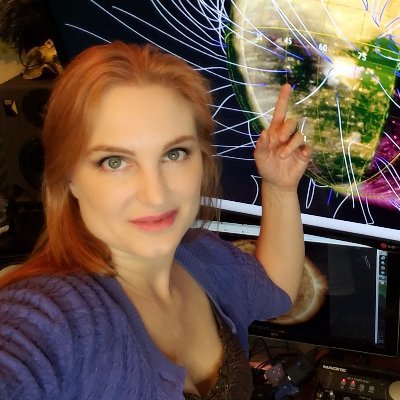
Here is a 3D visualization of the coming solar... storm using model parameters from NASA's run, NOAA's run (shown below), and the coronagraph views from STEREO-A/COR2 and SOHO/LASCO. The storm is expected to hit Earth early December 9. The 3D visualization clearly shows the low inclination orientation of the solar slinky core inside the larger storm envelope. Of course, the earlier eruption that erupted to the northeast, might deflect this structure a little bit, but likely that will only make the structure move more towards the ecliptic plane, which will give us a larger chance of crossing through the solar slinky core. One nice thing about low inclination flux rope cores is that they almost ALWAYS have southward field in them at some point. So this is good news for aurora photographers-- as long as this solar storm stays true to its launch trajectory and inclination, we could see some organized southward pointed magnetic field. Considering this solar storm is fast-- that usually indicates the storm will not deviate much from its original launch trajectory! Here is the link to a static frame of the 3D frame visualization so you can fly around it yourself:show more
Dr. Tamitha Skov
18,461 views • 8 months ago
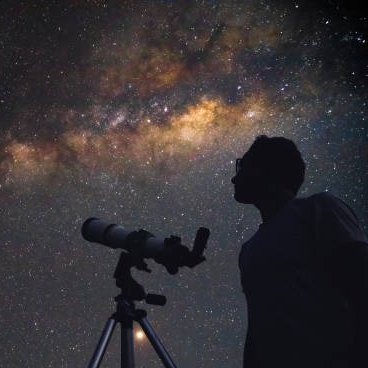
Space objects such as meteoroids and asteroids move across... the solar system and can collide with both Earth and the Moon. However, the Moon shows far more visible impact marks on its surface. One main reason is that Earth has a thick atmosphere that protects the planet. When many meteoroids enter Earth’s atmosphere, they burn up due to friction before they can reach the ground. This process creates the bright streaks of light we call shooting stars. The Moon, however, has almost no atmosphere, so incoming space rocks are not slowed down or burned up. They travel directly to the lunar surface and strike it at very high speed. Each collision creates an impact crater, throwing dust and rocks outward from the impact point. Over billions of years, thousands of these impacts have covered the Moon with craters. Unlike Earth, the Moon also has no wind, water, or weather to erase these craters, so they remain visible for millions or even billions of years. This is why the Moon looks heavily cratered when we observe it from Earth through telescopes.show more
The Astronomy Guy
17,473 views • 4 months ago
We've now had two 2.5 x-flares from sunspot 4419... over the last 12 hours, both launching gigantic coronal mass ejections outwards pretty much in the direction of Comet C/2025 R3 PANSTARRS. Surprisingly we're not in a radiation storm yet, and plasma headed to Earth from these events seems to be minimal, but sunspot 4420 is nearly Earth-direct now and 4423 following just behind just blasted off a 1.7 m-flare. As Comet R3 PANSTARRS continues to fly across Earth-facing while cutting through the ecliptic plane just outside the orbit of Mercury, my forecast is that we're most likely to enhanced activity from 4420 and 4423 as well over the next 2-3 days. Keep in mind the comet will begin experiencing #spaceweather from the CMEs very soon, and that will energize it electromagnetically even further, perhaps pronouncing this Comet-Sun effect we're seeing even further...show more
Stefan Burns
16,434 views • 3 months ago
Most people have no idea that these photos exist... from the surface of Venus. Climate change is real. It’s happening on Venus and it’s happening on Earth. Did you know that Venus may have been habitable at one point in time? It’s known as Earth’s sister planet. Below are some of the only images ever taken from the surface of Venus. One day Earth may look similar to this. There is no argument that climate change is real. It happened on Venus and it’s constantly happening on Earth. Human interaction most definitely has some effects on the planet’s climate change, but so too do non-human factors — even to a greater degree. My hope is that, not only can humans work to slow down the process, but also one day come up with solutions to reverse it.show more

Ed Krassenstein
1,591,073 views • 2 years ago