✧💢 VRChat asset update 💢✧ 「Avatar prop system」 An... avatar gimmick to create objects that other players can grab & rotate similar to VRChat items Hopefully official item support comes one day... ⬩ MA & VRCF support ⬩ More optimized ⬩ FREEEE #VRChat #BOOTH #Booth_pmshow more

ThatFatKidsMom
55,719 просмотров • 6 месяцев назад
✧💢 VRChat asset update 💢✧ 「Shareable Halo System」 An... avatar gimmick that lets other people grab and wear a halo (or any object really) from your avatar ⬩ MA & VRCF support ⬩ Quest compatible ⬩ FREEEE #VRChat #BOOTH #Booth_pmshow more
ThatFatKidsMom
121,154 просмотров • 4 месяцев назад
✧💢 VRChat asset release 💢✧ 「Limb grabber」 An avatar... gimmick that lets others grab and play with your limbs! ⬩ MA & VRCF support ⬩ Grabbable arms & legs ⬩ Player pick up ⬩ Punchable head Giving away 5 copies just like ❤️ and RT 🔁 #VRChat #BOOTH #Booth_pmshow more
ThatFatKidsMom
44,315 просмотров • 3 месяцев назад
Throwing knife asset almost done. A little preview of... the screen fx for when you get stabbed but Im pretending Im Soap Mactavish :D #VRChatshow more
ThatFatKidsMom
52,998 просмотров • 1 месяц назад
GUYS!!! Quit feeling bummed about Niantic destroying our global... communities and the constant screw ups with events / features that end in terrible compensation!!!!!! The team has been working on groundbreaking user experience updates 😀🙂😐 Anyway, since we're on the topic can we discuss other ideas that would actually improve UXP significantly compared to reorganizing the research tab that most of us have probably gotten used to by now anyway and that didn't have an explicitly negative impact on playing the game? Lol 1. This is an obvious one. I mean, they did a whole upgrade to the research tab and couldn't be bothered to include the ONE LINE OF CODE that ALREADY EXISTS IN THEIR FILES to make the BATTLE PASS REWARDS COLLAPSIBLE???????? Come on lol 2. An update to navigating within gyms would be nice :) i attached a video of me trying to feed berries and no matter what or how I clicked or swiped I could not get to that gdamn accelgor 🫠 can we have some ARROWS at the sides of the screen so we can actually get to each pokemon efficiently?! 3. Similar to #2, except with the friends list. When scrolling left and right through friends (as in, not in the list view) the scrolling function itself is not smoothe and it's too easy to accidentally press the trade or battle screen and get caught there for a sec. Frustrating little experience, could be easily fixed with arrows on the screen. 4. While we're on the topic of friends, let us see if we've interacted with a friend from their avatar screen and not just in list view from the blue aura around the avi's face :) In the grand scheme of everything Niantic does wrong with the game, these are... MINISCULE issues 🙂 but since they're apparently into focusing on UXP updates, instead of, like, making sure events and features run smoothly and players are properly compensated when they don't, it would be nice to get updates that actually fix some negative / inefficient aspects of navigating through the game 🙂 rather than an aesthetics tweak lol 🙂show more
the very best Singaporean grandma
17,537 просмотров • 2 лет назад
🔥 Congratulations on the Launch of the Die Last... Playtest & Upcoming Airdrop! 🔥 We are thrilled to announce the official start of the Playtest! Moreover—we've prepared a bunch of surprises just for you. Alongside the Playtest, we're hosting the first-ever in-game token AirDrop 💎. Your mission: dig and craft Lost Objects, remnants of a forgotten civilization. To participate in the upcoming token AirDrop, you need to find a Spy Radio to craft an NFT, your key to this exciting journey. Anyone can find in-game NFTs, which are the key to owning wallets with different amounts of tokens needed to participate in the AirdDrop: the more tokens you have, the more you'll get 💸. The luckiest players can obtain an NFT with a full-filled wallet, which means you can participate in the AirDrop at no cost! Didn't find an NFT with a 100% discount? No worries, keep digging! Every NFT you find boosts the number of tokens you receive during the AirDrop. For instance, if you have 100 tokens in your wallet and craft 6 NFTs, you’ll receive 80 tokens in the AirDrop. The more NFTs you have, the more tokens you’ll get. ✅ To participate, add #DieLast to your Steam wishlist and apply for the Playtest (approval of your application may take up to 24 hours or be approved instantly): ✅ To grab your NFT once it's dug up, visit our website: ❗️ Important note: We will approve applications for the Playtest on a limited basis to balance the load on the network. Once we are confident that the network is functioning as intended, we will accept all applications at once. We expect this to occur within one day and will keep you updated. 💥 Our dedicated followers know about our quest campaign with Bitget Wallet 🩵 and DeGame. Join us and complete quests to earn rewards totaling $3000+ USDT 👉 Dive into the adventure and unearth hidden treasures. Welcome to the Die Last Planet! 🌎 #crypto #taptap #clicker #gameshow more

Die Last
13,396 просмотров • 2 лет назад
THE COACH IS NOT THE CALENDAR. Gautam Gambhir is... a dear friend, but my support for him today is not based on friendship. It is based on fairness, experience and cricketing common sense. Indian cricket has developed a dangerous habit: celebrate people when they win, then look for one individual to publicly sacrifice when results turn against us. One difficult run does not suddenly make Gautam a poor coach. It does not erase his achievements, his cricketing intelligence, his leadership or the winning mentality he has brought to every team he has represented. Should his selections and tactics be questioned? Absolutely. That comes with the job. Gautam himself would expect nothing less. But before blaming only the coach, perhaps we should also question the people constructing these punishing schedules. Our players came through an intense IPL season and were immediately pushed into international cricket, different countries, different conditions and back-to-back series—with inadequate time to rest, recover, practise or mentally reset. Players are not machines. Coaches are not magicians. You cannot create exhaustion administratively and then blame the dressing room when performance suffers. India must decide what matters most. The IPL should remain the priority and the centrepiece of the cricketing calendar. ICC tournaments and meaningful Test cricket must be protected. Bilateral series should be selective, competitive and commercially relevant. Meaningless one-day series that add little beyond television inventory should be scrapped. More cricket does not automatically mean better cricket. Gautam must be judged over a full cycle, not condemned after one bad passage. Review the cricketing decisions—but also review the calendar, the travel, the recovery periods and the workload placed upon our players. Stand by the coach. Protect the players. Fix the schedule. Then demand results. I stand firmly with my friend Gautam Gambhir. Lalit Modi Founder, IPLshow more

Lalit Kumar Modi
74,284 просмотров • 1 месяц назад
In her article, Gretchen Voss goes into detail about... a lacrosse game that Aidan Kearney attended in an attempt to speak with Jennifer McCabe. It is clear that Voss likely spoke with Jen herself about that incident. What Voss mysteriously leaves out are the other occasions at sporting events where Jen herself treated other parents with complete disrespect. Below, I attached a video of fellow witness Tom Beatty, who Jen called seven times within 30 minutes on the morning of January 29, 2022. In the video, you can hear Jen tell him, "No one wants you here." Tom, who was simply trying to find a seat on the bleachers, brushed it off. As a reminder, Jen also called Tom's daughter, Erin, the morning of the 29th. Colin Albert did as well, except earlier at 12:33 AM. That timing has raised eyebrows because it would have been just one minute after John O'Keefe's phone reportedly stopped moving at 34 Fairview Road. Due to this, Erin was also subjected to similar harassment. Canton mothers who were upset that Erin had spoken about the missed call from Colin, and who are reportedly friends of Jen, told her to be quiet and put male genitalia in her mouth. Another example came to light through public records requests. This one came from Trial 1 sidebar discussions, which are private conversations between the attorneys and the judge outside the presence of the jury. During one of those sidebars, attorney Alan Jackson raised an incident involving Jen and another witness, Karina Kolokithas. He told Judge Cannone that he viewed Jen's conduct as a threat toward Karina. What happened next was even more interesting. After the public saw that sidebar transcript, women who openly support Jennifer McCabe posted private text messages between Karina and another friend of Jen's from the days immediately following John O'Keefe's death. In those messages, Karina was questioning how any of this could have happened. The women who posted them attempted to frame the texts as proof that Karina could not be trusted and that she was a flip-flopper. Even to this day, these women post similar verbiage. Instead, they highlighted a pattern. Every time something negative comes out about Jen, private messages somehow surface or the facts are twisted in a way that makes Jen appear to be the trustworthy one. And those text messages that were used in an attempt to smear Karina? They came from Jen's close friend, Meg Kennedy. We now know that because another public records request revealed that Meg emailed those exact messages to Massachusetts State Police Lieutenant Brian Tully on February 19, 2025, just before the second trial. Meg was present during Karina's testimony. Unfortunately for her, Special Prosecutor Hank Brennan chose not to use the messages. Oh, and let's not forget that Meg's husband, Larry Kennedy, appears in the Proctor text messages. He was once close with Michael Proctor and expressed racist sentiments similar to those attributed to his friend. But apparently none of the above was important to Voss and her reporting...show more

BoozeyBeauty
74,390 просмотров • 1 месяц назад
How ICP Token Holders Can Literally Vote To Upgrade... The Internet Computer? Most blockchains rely on developers and node operators to coordinate when the protocol needs a major upgrade. The Internet Computer (DFINITY Foundation) takes a different approach. Its Network Nervous System, or NNS, puts governance directly onchain. Here is how it works: 1. ICP HOLDERS LOCK TOKENS INTO NEURONS internet-computer:native holders can lock their ICP into a “neuron.” A neuron is essentially a governance position that gives the holder voting power over NNS proposals. Voting power depends mainly on: • The amount of ICP locked • The neuron’s dissolve delay • The age of the neuron The longer a holder commits their ICP, the greater their potential voting power. 2. NEURONS VOTE ON NETWORK PROPOSALS The NNS allows neuron holders to vote on proposals affecting the Internet Computer. These can include: • Protocol upgrades • Subnet changes • Network configuration • Node provider decisions • Governance parameters • Changes to the network’s underlying software This is where the system becomes particularly interesting. NNS governance is not simply deciding how a community treasury should spend money. Some proposals can directly affect how the blockchain operates. 3. VOTING CAN TRIGGER ACTUAL PROTOCOL CHANGES A successful proposal can instruct the network to adopt an approved change. For example, NNS proposals can be used to upgrade the replica software running across Internet Computer nodes. Once the proposal is approved, the NNS can coordinate the upgrade across the network. That means token holder voting can ultimately result in the protocol itself changing. 4. HOLDERS DO NOT HAVE TO VOTE ON EVERYTHING The NNS also uses a system known as liquid democracy. Neuron holders can choose to follow other neurons for particular proposal categories. When the followed neuron votes, the follower can automatically vote in the same direction. This creates a delegation system without requiring users to give up ownership of their ICP. In simple terms: • Stake ICP • Create a neuron • Choose your voting preferences • Vote yourself or follow another neuron • Earn rewards for participating 5. GOVERNANCE PARTICIPATION CAN EARN REWARDS The NNS gives users an economic incentive to participate. Neurons can accumulate maturity through governance participation. That maturity can later be used to generate new ICP. This turns governance participation into more than just a voting mechanism. It becomes part of the network’s economic design. 6. THE NNS IS ITSELF PART OF THE INTERNET COMPUTER This is arguably the most important part. The NNS is not simply a website where the community discusses proposals. The governance system itself runs on the Internet Computer. Its rules, proposals, neurons and governance decisions are handled through onchain infrastructure. That allows governance decisions to become executable actions. 7. WHY THIS MATTERS FOR PROTOCOL UPGRADES Traditional blockchain upgrades can require significant coordination. Developers may need to release new software. Node operators need to install it. Validators or miners need to support it. Exchanges and infrastructure providers may also need to update their systems. If coordination fails, competing versions of the blockchain can emerge. The NNS is designed to reduce some of that coordination problem. The community can approve a proposal through onchain governance, and the network can then execute the approved change. 8. IT IS NOT ONE ICP TOKEN, ONE VOTE Simply holding ICP does not automatically give someone governance power. Users need to commit their tokens through a neuron. And voting power is not based solely on the number of ICP held. Factors such as dissolve delay and neuron age also influence voting power. This means the system rewards committed participation rather than treating every wallet as an identical vote. 9. SO WHAT MAKES THE NNS DIFFERENT? The key difference is that governance is built into the protocol itself. On many blockchains, governance can look like: Community discussion → Vote → Developers implement the decision. The Internet Computer aims for something closer to: Stake ICP → Vote through NNS → Proposal passes → Network executes the change. The NNS is designed to make governance part of the Internet Computer’s operating machinery. ICP holders therefore have a direct role in deciding how the network evolves. Under the right proposal, their votes can ultimately determine which software the network runs.show more
BSCN
18,482 просмотров • 27 дней назад
So why we need open mainnet and when it's... the good time to open and can we make it faster? I think Yes! WE build up Pi public blockchain is like we are building a highway. When the highway complete, all drivers need this highway because it can bring them benefit. And the highway can charge them fees every time when they pass. Pi is similar like a highway. The drivers are outside eco and different organization. We all know Pi WEB 3.0 blockchain has great value. This will attract outside eco come. When they come, they don't have Pi to pledge to use our blockchain. So they need to use their FIAT to buy our Pi. However, if our inner community has difference on price, it's like the highway has been controlled by different groups. These groups charge different fees. It will confuse outside eco and make them hesitate to come. That's why I believe open mainnet need united price for outside eco. Of course united price can help inner eco develop grow fast too. There are two options regarding price: 1. Let the pioneers and merchants slowly reach the agreement and we do nothing . This is let it go naturally. I do know some pioneers advocate this way. But I am sure it will take long journey because more than 45 million pioneers or maybe will never reach agreement. They will use from $0.01 to 1 million $ different price. 2. Our pioneers community advocate GCV because it has been accepted by a lot pioneers and merchants already. If all pioneers can understand this GCV price logic and if they hold Pi, they will support it. The reason is so simple. It relate to their self interest. This can be done very fast if we all united together. Another reason is based on a business accounting system. All business has tax reporting system even crypto currency. From 2019, USA IRS has the tax regulation on individual crypto currency capital gain. Currently most merchants are pioneers, they use their individual Pi Wallet. I see recently there is developer/merchant business wallet come out. Then they should use business Pi wallet. So it's easier for them to track crypto business profit and loss. As an accountant I know all capital gain or loss are calculated by using USD in USA. So accountant need a unified price. If not, the company will hesitate to join Pi eco system. Based the above reason, i call on Pi Community to support GCV price so that eco can satisfied prosperous condition to open mainnet. As for KYC and migration, the technology part has been mature or almost mature. And we believe CT and all pioneers can follow very fast. During close mainnet all merchants should do barter according to your availability. Please don't put all your products now! Close mainnet period is for cultivate the Pi Payment environment! If you have inventory and small items, you can put maybe 10% or less of your products to barter. All business owners should realize before opening mainnet there is risk of loss. Why many Chinese merchant do it? Because they are pioneers too ! They want to realize Pi GCV price so they do it volunteering to use inventory and small items with limit supply. Therefore it won't have much risk. And if open mainnet can reach GCV, they will not incur loss. So please all merchants do it wisely. Close mainnet small items and use inventory. Of course if you want to put big items, this is your choice and pioneers will be appreciated. But my suggestion is to be Rationalism. If everyone can do a little, it will create big influence. As a pioneer close mainnet it's not a time to get profit for yourself. So please don't expect cross border or big items because merchant has business risk. I see some cross border barter incur which is based on individual merchant. When open mainnet, you can realize all of it. But now it's time to help GCV price as a trend from my opinion. The above analysis is only my personal analysis. Reference only. It is not Business Advice! #WhatIDoForPi #PiGCVshow more

Doris Yin 东方紫莲🪷
28,979 просмотров • 3 лет назад
8 things I'm doing to capture the "magic window"... of my kid's childhood. For a bit of context: I'm 42 with 4 kids, ages 11 to 2, and run my own content + services business for creators. 1. I work from home Even though I own my business, I used to have an office too. I miss it sometimes (ok at least once a week), but being closer to the kids is a bigger benefit. I get to take breaks to hit golf balls at the park, fish, and play. 2. My wife stays at home Prolly worth a whole post, but this was a shared decision that was led by my wife. We wanted to have one of us available for the kids as much as they needed. She's a nurse, which definitely comes in handy 🤕 Also means she can start work again when she wants. 3. We homeschool I was homeschooled until 9th grade, so this wasn't a hard sell for me. My wife leads the charge here, but I help the older boys with math and other topics. One cool part is they have a desk in my office room too, so we can "cowork" together. 4. I coach their teams If my kid is playing a sport, I'll be coaching. We get to be physical with each other, learn teamwork, he gets to be coached by other dads and see my coach other kids. I also started leading jiu-jitsu classes in the neighborhood for kids and my 11 yr old helps me teach. 5. We exercise together I stopped going to CrossFit a couple years ago and built a simple garage gym so my kids could work out with me. Bodyweight exercises and GORUCK sandbags are the majority of our shared movements, but they also get to see their Dad being active and practicing good habits. 6. We're active in Church Another one that deserves an entire post, but similar to coaching their teams, our kids get to be around like-minded families, mentored by adults who care about them, and build a shared faith that binds us together. We also read the Bible and pray together each day. 7. I create content May not have expected this one, but when I started my YouTube channel a primary motivator was for my kids to be able to watch the videos when they got older. To see what Dad was thinking about, how I solved problems, set goals, etc. In many ways my content is a snapshot of our lives that has value beyond audience or monetization. 8. Leveraging AI AI has made me a lot more productive—I'd say 2-3x what I was capable of just a year ago. But a few months ago I realized I was just putting those "saved" hours right back into more work. If I was twice as productive, why wasn't I working half as many hours? I'm not quite working part-time, but I have cut back and used my new efficiencies for more time with the family instead of working at the same pace. ---- If you're reading this partly because this post is blowing up— hope it gives a little more context to how I'm structuring my life and work to be as intentional as I can with my family while being the provider they need too. It's a constant balancing act, more like walking a tightrope than balancing the scales of family and work. But I'm incredibly blessed to have such a great family and good work to do with cool people. Thanks for reading!show more
Matt Ragland
10,335 просмотров • 3 месяцев назад
🚀📣 LinkersMap Expands Its Reach Through the InterLink App... 🌐🔗 LinkersMap is opening a new distribution channel that could help its official updates reach InterLink’s community of nearly 10 million users more directly. 👥📲 Through the InterLink App, posts published by the official LinkersMap X account can now be linked and surfaced inside the app. 🐦➡️📱 This gives LinkersMap another effective way to communicate with users, businesses, partners and members of the wider InterLink community. 🤝🌍 🔗✨ Why This Matters Building a strong platform is only one part of long-term growth. 🏗️📈 The other part is ensuring that important updates reach the right audience at the right time. ⏰🎯 By connecting LinkersMap’s official X content with the InterLink App, the project can improve the distribution of important information, including: 🛠️📲 Platform updates 🎉📅 Campaigns and events 💼🤝 Business opportunities 📢🌐 Ecosystem announcements 🚀💰 Future developments related to $LMP 🏪📍 New business listings and merchant activity 📣👥 Community news and important notices This creates a more direct communication path between LinkersMap and InterLink users. 🔄🌍 It also makes important updates easier to discover, follow and share. 👀✅🔁 📈💼 Benefits for Businesses Businesses registered on LinkersMap may gain greater visibility within an expanding digital community. 🏪🌐📊 A stronger distribution system can help businesses: 👋 Present their products and services to a wider audience 🎁 Share promotions, offers and campaigns more effectively 🤝 Connect with potential customers and business partners 📢 Increase awareness of their LinkersMap presence 🌱 Participate in future ecosystem activities 📈 Build stronger recognition over time For businesses, visibility is an important part of digital growth. 💡📱 A business listing becomes more valuable when people can easily find it, understand its offer and take action. 🔍🛒✅ 🌍👥 Benefits for the Wider Community The new connection may also make it easier for InterLink users to follow LinkersMap’s progress from one central app environment. 📲🏠 Users could gain more convenient access to: 📰 Official project announcements 💼 New business opportunities 🎉 Community campaigns 🛠️ Platform developments 💰 Updates concerning the $LMP ecosystem 🏪 New stores, services and merchant listings 🤝 Partnership and collaboration news This can help bring projects, businesses and users closer together. 🔗👥 It may also encourage greater participation, communication and commercial activity across the wider ecosystem. 📊🚀 📊📣 Distribution Is as Important as Development A project may have useful technology, services and business opportunities, but these advantages can be missed if updates do not reach the intended audience. 🧠⚠️📉 That is why effective content distribution matters. 📢🔄 Regular communication can help a project: 👀 Build awareness ❤️ Maintain user interest 🙌 Encourage participation 📈 Support business growth 🤝 Strengthen community relationships ✅ Make important information easier to follow 🌐 Reach users across multiple digital channels The connection between LinkersMap’s official X account and the InterLink App gives the project another method for sharing information with a large and active user base. 📲🐦➡️👥 🏪📝 Register Your Business Today Businesses interested in joining LinkersMap can register through the official website: 👉🔗 Registration may provide an opportunity to become part of LinkersMap’s growing business network and take part in future promotional, community and ecosystem activities. 🌱🏪🤝📣 ✅🔑 Key Takeaway The LinkersMap–InterLink connection is more than an additional content channel. 🔗📲 It creates a practical bridge between LinkersMap’s business network and InterLink’s expanding user community. 🌉🌍👥 As digital platforms continue to grow, successful projects need both strong development and reliable communication. 🏗️📢 LinkersMap is taking steps to improve both—creating more opportunities for businesses, users and the wider ecosystem. 🚀💼🤝 📌 Register your business:🔗 InterLink Labs 👤 + 🌐 Dr Altcoin ✝️ LinkersMap Arif Ahmed Core Ambassador | Interlink Labs KV Reina | InterLink Labs #LinkersMap #LMP #InterLink #ITLG #ITL #Web3 #Blockchain #Commerce #BusinessToken #DigitalEconomy 🚀show more
Tekkaus® | InterLink • MOD • T2 Community Builder
20,357 просмотров • 23 дней назад
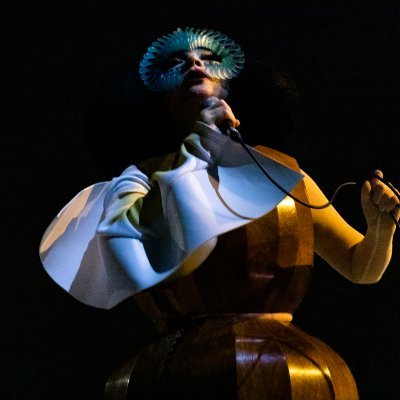
i wanted to tell you how we made the... visuals for nerve-bloom i did it with Natalia Kleszczewska and Natalie Liu . Natalia Kleszczewska is a painter , she painted the creatures and the backgrounds . Natalie Liu is a computer graphics director , she shaped the digital dimension of the work . my role in it was a creative director , bringing in the singer-songwriter tradition , where emotionally precise things happen inside the structure of a song . i guided colour pallettes , textures and the environments the music happens in . to make this possible , during the process , natalia often had to paint many shapes and sizes , different textures and layers of colours . natalie then developed the visuals, designing and overseeing CGI elements , and finding ways for the digital to sit organically alongside Natalia’s world . and include my dramaturgy and creative direction. we spent 7 months talking and working together , dedicated to relish in the craft of blending hand-made visuals with digital experimentation , 3D design and commit it to physical display technology . a lot of time was spent on researching different tools and techniques to find what worked best at each stage in the song . like i’ve done before , i wanted to merge old things with tech , giving it soul & a meaning . to paint a painting is an analog craft but computer programming is craftmanship too !! and both can co-exist , .....encouraging each other to bloom even further towards a mutual world . there is a tradition in pop music for the mucisian to choose a video director . in the art world , this is called “curation” , but where we came from , it was natural that the musician would have strong opinions on what your song needed , which mood , colours , textures & storyline . today this is called “creative director” and it is something we didn’t credit ourselves with in the 90s , but i am starting to understand this better now . i don´t think of me as a visual artist . because my heart is music . everything i do comes from a sonic point of view . this is something i have called “sonic symbolism” , sound made visual , a reverse synesthesia . when you listen to a song for the first time , it is like swallowing a whale , you need to feel the whole musical sculpture in one go . the structure of a song has always been extremely important to me : what shape it is . this is part of the craft of being a singer-songwriter ........... we are tune sculpturors ....... since i am talking about the visuals for nerve bloom it is impossible to not mention the avatars in my music videos . they have replaced the storyteller with anattempt to connect to the more universal element of music , through animation, avatars , puppetry both digital and analog . for me they are marionettes in a puppet-theatre , hopefully in a similar realm as the jungian archetypes ( which we all can act out the characteristics of ...) .... i feel nerve-bloom is a natural continuation .... an animated avatar archetype singing you a song ––––– Avatars, animation and archetypes: Nerve Bloom (remix) – on display at Listasafn Íslands / National Gallery of Iceland until September 20th 2026. The production of this film was made possible with the generous support of #bottegaveneta.show more
björk
1,407,960 просмотров • 3 месяцев назад
Played Kingdoms of the Dump for 30 hours, here... is my review: -The game is a loving homage to classic SNES RPGs like Chrono Trigger and Final Fantasy, perfectly capturing their atmosphere -A tactical turn-based combat system with active elements, reminiscent of Super Mario RPG or more recently Expedition 33 -One of the most unique settings ever in an RPG -Incredible variety of enemies, all beautifully rendered in pixel art (boss design by Look Outside pixel artist) -The game is divided into multiple acts, taking you through a wide variety of regions and kingdoms -It’s full of charm and incredible attention to detail. Heal with rotting items, fight flying jellyshorts, and save using toilet paper rolls on toilets. Just lovely. -Fun fact: Game is made by 2 real janitors -The original soundtrack is an absolute banger, instantly transporting you back to the SNES era -There’s a Mode 7-style overworld that you can explore on foot, on a mount, or by airship -The overworld invites exploration and is packed with secrets and hidden areas -What brings the game into the modern era is a dedicated jump button. You can jump pretty much anywhere and explore the world on entirely new levels -There are also various characters, each with unique abilities outside of combat, and you can switch between them at any time -Characters are just lovely -The game is wonderfully written and well paced, full of great story moments and twists, but it’s only available in English at the moment -I would compare the difficulty to Chrono Trigger. It’s challenging but never unfair, and grinding is never necessary -If you die in a battle, you can retry it immediately -Enemies are visible before battle and can be avoided -Fast battles, quick in and out -Various battle themes -Fallen characters and those outside your active party still gain experience -The game is pure indie at heart, over eight years in the making and packed with content -Lots of side quests -Dedicated character quests that explore each character’s backstory -Secret weapons and bosses -Dungeons with puzzle elements -25 hours of story content (more with side stuff) -Only 20 bucks (discount right now) -Great on Steam Deck -Full controller support -Sometimes the jumping sections demand too much precision -I ran into a few bugs during my playtime. The game froze, I got stuck in walls, the music sometimes cut out, and I wasn’t able to use an item at one point -I reached out to the developers, and they have already responded with multiple updates Kingdoms of the Dump is a love letter to an era that produced some of the greatest RPGs of all time. It’s a modern classic, only held back by some technical issues. For me, it’s the best SNES game that was never actually released on a Super Nintendo. Verdict: 9/10 #KingdomsoftheDump 👑 Kingdoms of the Dump - OUT NOWshow more

GermanStrands
36,817 просмотров • 9 месяцев назад
BREAKING: Lebanon has ordered the Iranian ambassador to leave... the country by 29th March. Persona non grata. The host nation of Iran’s most successful proxy just told the patron state to get out. This happened on the same day that Hezbollah fired its 55th rocket and drone attack since March 22nd. On the same day that the IDF struck hundreds of Hezbollah targets in southern Lebanon, the Bekaa Valley, and Beirut’s southern suburbs. On the same day that the Lebanese Health Ministry reported 18 killed and 65 injured from Israeli strikes on Lebanese soil. Lebanon expelled the ambassador of the country whose proxy is fighting a war from Lebanon’s territory while Lebanon’s own citizens die in the crossfire. Process what that means. Lebanon has two governments. One sits in the Grand Serail and issues decrees. The other sits in Dahieh and launches missiles. Prime Minister Nawaf Salam has banned all Hezbollah military and security activities. He has demanded weapon surrender. He has expelled the Iranian ambassador. And Hezbollah has responded by firing another barrage into northern Israel this morning. The decrees do not reach Dahieh. The Lebanese Armed Forces remain non-engaged. The state issues orders that the parallel state ignores. The ambassador leaves. The rockets do not. Lebanon created Hezbollah’s host environment and Hezbollah consumed it. Iran’s IRGC dispatched advisors to the Bekaa Valley in 1982 during the Israeli invasion and the chaos of civil war. They trained Shiite militants. They funded mosques, hospitals, schools. They built a social infrastructure that the Lebanese state could not provide, then militarised it. Hezbollah’s 1985 manifesto pledged allegiance to Ayatollah Khomeini. Iran provides an estimated $700 million annually. Forty-four years later, the organisation that Iran built inside Lebanon is more powerful than the state that hosts it. The ambassador can be expelled. The $700 million pipeline cannot. The expulsion is not strength. It is the last card a government plays when it has no others. Lebanon’s economy loses $30 to $80 million per day from the strikes. Five hundred and seventeen thousand people are displaced. The banking system collapsed in 2020 and never recovered. The currency has lost 98 percent of its value since 2019. And now Israel is striking Lebanese territory daily because Hezbollah is using Lebanese territory to attack Israel in solidarity with an Iranian war that the Lebanese government did not start, does not support, and cannot stop. The country is being destroyed by a war between its tenant and its neighbour, and the landlord has no power over either. Hezbollah fights because Iran’s sealed packets and $700 million command it. Israel strikes because Hezbollah fires from Lebanese positions. Lebanon’s government expels an ambassador because expelling an ambassador is the one sovereign act it can still perform. The army cannot disarm Hezbollah. The police cannot enter Dahieh. The courts cannot prosecute a militia that provides social services to a third of the population. The only tool the state has left is a diplomatic note handed to a man whose organisation does not need his presence to continue operating. The Axis of Resistance was designed for exactly this: to fight from inside states that cannot control the fight. Lebanon is the template. Iraq, Yemen, and Syria are the copies. The patron state provides the funding. The proxy provides the violence. The host state absorbs the retaliation. And when the host state protests, the proxy ignores the protest and the patron state sends a new ambassador. The rockets will continue after March 29. The ambassador will leave. The $700 million will not.show more

Shanaka Anslem Perera ⚡
74,745 просмотров • 5 месяцев назад
🌟 Fortnite Ecosystem v41.00 Update Summary 📅 June 5,... 2026 🎮 Major Creator Updates: 1️⃣ Sidekicks as NPCs in UEFN Sidekicks are now available as scriptable NPCs in UEFN. Creators can customize how they look, animate them, script behavior with Verse, and even bring a player’s own Sidekick into an island experience. Important note: 🔹 Publishing islands with Sidekick NPCs opens July 23 🔹 Creature based islands may get new Discover opportunities 🔹 Great for monster battlers, cozy farming games, creature RPGs, companion adventures, and more 🔹 Epic plans to feature creature-based islands in a new creature-based Collection page 2️⃣ Custom Weapon Templates Creators can now use Scene Graph weapon templates for: 🔸 Pistol 🔸 SMG 🔸 Assault Rifle 🔸 Shotgun You can customize how weapons look, sound, and play, including mesh, VFX, audio, damage, fire rate, spread, and recoil. Important note: These Scene Graph entities are not compatible with older saving methods like the Save Point device. Epic says to use Verse persistence. 3️⃣ Mobile Controls Upgrade (Experimental) Big step for mobile friendly Fortnite games. 🔹 Touch Input Gestures 🔹 Custom touchscreen control layouts 🔹 Tappable custom HUD widgets 🔹 Verse API to detect touch enabled devices 🔹 New Designing for Mobile guide This should help genres like tycoons, puzzle games, menus, inventories, and mobile first UI feel way better. 4️⃣ Community Events Starting June 8, creators can create events in Fortnite Communities and share them in game. Events can show in: 🔸 Following tab 🔸 Creator Profile page 🔸 Island page 🔸 Island Lobby, if enabled Epic is also testing a Community Events row in Discover, but it will not show for all players and placement is not guaranteed. 🛠 UEFN Workflow Updates: 🔸 Push Changes now incrementally cooks only modified project parts 🔸 New Edit List Panel shows what is live and what still needs a push 🔸 Launch Session now combines multiple session actions 🔸 New Session Inspector gives better visibility into launch and Live Edit status 🔸 New Publishing Report helps catch issues before publishing 🔸 Improved Verse warning panel with direct VS Code links 🔸 New Editor Gizmo System 🔸 Physics setting moved into Island Settings 🔸 New Memory Snapshot tools help identify asset memory costs 🔸 Asset validation now warns when static meshes exceed 30k vertices at LOD0 Important Live Edit note: Live Edit is improved, but some changes can still require Push Changes. The new tools make it clearer what is already live and what still needs to be pushed. ⚠️ Important Publishing Change: Illegal Property Override warnings are now errors in v41.00. That means new or updated islands with these errors are blocked from publishing. Current published versions where the warning appeared will stay live. 👤 Follow a Developer Update: In v41.10, Epic will remove the Follow a Developer button from the Developer Profile Link device. The device itself will still be usable, and existing follower counts are not affected. If your island currently tells players to follow you through that device, update those callouts before v41.10. 🧑🚀 Hero Device Star Wars Update: More Star Wars characters have been added to the Hero device for Star Wars islands: 🔹 Luke Skywalker 🔹 Obi-Wan Kenobi 🔹 Mace Windu 🔹 Kylo Ren 🔹 IG-11 🔹 Moff Gideon 🔹 Boba Fett 🔹 Mandalorian (Pen & Ink), Clone Wars Anakin, and Clone Wars Ahsoka were also added to cosmetic-based devices 📦 New Content: 🌾 Cozy and Creature Tools 🔸 Plumpton Architecture Kit 🔸 Plumpton Farm Gallery 🔸 Pet Props Gallery 🔸 Updated foliage 🔸 Plumpton Feature Example ☕ New Prefabs and Galleries 🔹 Latte Landing Prop Gallery 🔹 Latte Landing Bun Store 🔹 Latte Landing Big Shots Cafe 🔹 Latte Landing Krunchy Krickets 🔹 Latte Landing Espresso Experiments 🔹 Latte Landing floors, walls, and roofs 🔹 More Plumpton props, plants, farm, pet shop, tavern, farmhouse, and more 🔫 New Weapons and Items: Weapons: 🔸 Vanguard Burst Rifle 🔸 The Voidblade’s Burst Rifle 🔸 Extending Focus Shotgun 🔸 Reacher Extending Shotgun 🔸 Chaos Exploder Rifle 🔸 Dark Voyager’s Chaos Rifle 🔸 Exotic Overdrive Pulse Rifle 🔸 Exotic Recon Bow 🔸 Exotic Leaping Lightning Gun Items: 🔹 Seven Sliders 🔹 Limitless Seven Sliders 🔹 Brick-a-Bunker 🏃 Player Movement Device Update: More movement settings are now available directly in the Player Movement device, giving creators better control over which players are affected. Includes: 🔸 Jump Fatigue 🔸 Slide Kick 🔸 Shoulder Bashing 🔸 Wall Kick 🔸 Roll Landing 🔸 Glider Redeploy 🔸 Player Flight 🔸 Flight Speed 🔸 Infinite Wall Kicks 🔸 Sprint and boosted jump energy costs 🧪 Experimental and Beta Updates: 🔹 Skeletal Animation in Scene Graph is now experimental 🔹 Physics remains Beta 🔹 Mobile touch controls and gesture support are experimental 🔹 Skeletal Animation in Scene Graph cannot be used in published islands yet 🛠 Community Bug Fixes: 🔸 Fixed server degradation from adding and removing entities 🔸 Fixed some Physics Materials not being exposed 🔸 Fixed some session launch cook errors 🔸 Fixed Fortnite not closing properly after launching a session through UEFN 🔸 Fixed crashes after repeated entity spawning and despawning 🔧 More Fixes: 🔹 Fixed quickbar and phone tool freezes 🔹 Fixed thumbnail capture preview actor issues 🔹 Fixed building on Instanced Static Meshes 🔹 Fixed Live Edit visual update issues 🔹 Fixed several editor crashes and performance issues 🔹 Fixed inventory UI not showing Fortnite item info correctly 🔹 Fixed multiple physics, movement, swimming, gliding, and launch pad issues 🔹 Fixed Scene Graph prefab and Verse path issuesshow more

Immature
15,577 просмотров • 3 месяцев назад
ARTIST OPEN CALL! We’re sponsoring six artists to fly... out to NFT NYC. On Us. For Free. We’re also exhibiting your art at the World Trade Center, Oculus (THE CANVAS) RULES: FOLLOW US UNHRD LIKE & RT Tag two friends Submit your artwork below Ends on 03/15 More info ⤵️ For the open call, we invite artists from various mediums to apply for this unique opportunity to come to NFT NYC, exhibit their unminted work, collaborate on an NFT drop, and be part of an exclusive membership pass in the UNHRD community. All artists will be curated by our partners, Forbes Web3, JJ, NFT Asia, AOI, Transient Labs, & MakersPlace 🔳. Eligibility and Opportunity 1. Open to artists from the US and Visa Waiver Program countries. 2. Exhibition at the prestigious Oculus during the UNHRD Launch event. 3. Flight and accommodation costs up to $1,500 covered. 4. Participate in a collaborative NFT drop and revenue split option. 5. Gain exposure alongside partners like Forbes Web3, Makersplace, AOI, NFT Asia, and Transient Labs. Application Requirements and Dates 1. Submit artwork and a statement aligning with your goals. 2. Accommodation for 3 nights (April 2nd-5th). 3. Applications open now! So, what is UNHRD? We're a blockchain protocol transforming philanthropy with efficiency, transparency, and security. Our technology hopes to revolutionize fund management and distribution in the philanthropic sector. Part of our broader mission involves leveraging blockchain for NGOs, grant makers, and altruistic companies. By providing grants and cultivating a nurturing environment, UNHRD makes artists' dreams worldwide a reality. How do we do this? What makes UNHRD unique is how we're going to do all of this on-chain. This is our early concept of the UNHRD Protocol. In the world of philanthropy, especially when it involves artists and creative projects, managing and distributing funds efficiently and transparently can be a challenge. That's where the UNHRD Protocol comes in—a solution we're actively working to build, aiming to transform how financial support is handled in the artistic community. What is the UNHRD Protocol? The UNHRD Protocol is a planned blockchain-based system, a series of smart contracts designed to streamline the process of managing and distributing funds. In simpler terms, it's like a highly efficient digital ledger tailored for philanthropy, ensuring that every penny goes where it's supposed to, without the usual red tape or delays. Application to UNHRD: Streamlined Fund Distribution: Whether it's grant money or proceeds from NFT sales, the protocol ensures swift and accurate distribution to artists and other beneficiaries. Transparency and Trust: Every transaction, from donation to disbursement, is recorded on the blockchain, fostering trust and transparency among artists, donors, and the public. Reduced Overhead: By automating many of the administrative tasks, we reduce overhead costs, ensuring more funds directly support the artists. At UNHRD, we believe that through blockchain technology, we can create a more equitable and accessible platform for artists worldwide. Our commitment goes beyond just funding - it's about building a community, nurturing talent, and paving the way for a new era of digital art and philanthropy. Join us in this exciting journey as we redefine what's possible at the confluence of art, technology, and philanthropy.show more
UNHRD
51,785 просмотров • 2 лет назад
As we prepare to launch several projects, we're eager... to provide a general update to our community. We are steadily approaching our end goal, thanks to the daily progress we're making toward our vision. Achieving our objectives will bring about a significant transformation in cross-chain interoperability and the flow of liquidity within protocols. This will address crucial challenges and drive mass adoption. Our future-focused approach and effective team collaboration keep us moving forward in an organized manner. Let’s delve deeper into the state of development of our current products and upcoming projects. Tao Bridge Starting with the Tao Bridge, which enables the #Bittensor community to unlock DeFi opportunities with their $TAO via a highly efficient blockchain like #MultiversX, known for its security, speed, and affordability. We deeply admire #Bittensor and believe a project like that is crucial for the future of not just the crypto space but also humanity, as it addresses the major challenges AI faces today: centralization, siloed and isolated work, which pose risks and hinder the technology's potential. We are committed to the vision of subnets and dynamic $TAO, convinced that this ecosystem is as groundbreaking as #Ethereum or #Bitcoin. We will continue to support #Bittensor wherever possible, and our bridge will also expand to other chains with Hatom V2. The TAO Bridge, deployed on and accessible through will launch on the Mainnet in 14 days, on March 27th. You can follow the countdown on the lending page at Given that our main priorities are security and stability, this period will be primarily focused on quality assurance to ensure a flawless Mainnet launch. The launch will also introduce TAO Liquid Staking at along with the integration of both $wTAO and $swTAO on the lending page. This allows #Bittensor users to leverage liquid stake, employ short or long strategies, among other DeFi strategies, or simply access stablecoin liquidity while maintaining exposure to their $TAO. Up to $1M will be distributed as additional incentives on top of the supply APYs at the launch of the $wTAO and $swTAO money markets, with $200K allocated for the first month specifically for bootstrapping. Initially, 70% of rewards will go to liquidity providers, and 30% to those using $HTM to boost their lending positions. This changes to a 50-50 split in the second month, and by the third month, all incentives are directed through the Booster. This approach encourages early participation and sustained engagement with $HTM. Introducing $TAO to #MultiversX will result in the creation of Liquidity Pools (LPs) on both AshSwap 🔥 and xExchange ⚡. These LPs will be incentivized by both entities, and Hatom will distribute extra rewards at launch. The goal is to make #MultiversX a one-stop hub for $TAO holders. Upon stabilizing the volumes, there will also be plans to integrate it on AshPerp 🔥. Furthermore, with the release of $USH, users will have the ability to mint it while retaining exposure to their $TAO. The TAO Bridge and TAO Liquid Staking smart contracts have been audited by Runtime Vеrification and @arda_project, while penetration testing and DevSecOps have been performed on our infrastructure by CertiK. We're excited to announce our exclusive partnership with TAONEW one of the top 5 validators on #Bittensor. TAONEW has been extremely helpful and supportive from day one. By sharing 50% of its service fee with its stakers, TAONEW enables Hatom to offer an optimized Staking APY to its users. Since our initial reference, #Bittensor has grown sevenfold, becoming the largest AI project in the crypto sphere. We reiterate our commitment to contribute to such technology and hope to address some of its current DeFi challenges. Syfy Moving forward, today marks a significant milestone, not only for our decentralized protocols but also for our development companies, which currently stand as the sole and primary contributors to the Hatom Labs and Soul Labs. We’re excited to unveil Syfy, the evolved identity of Hatom Labs and Soul Labs, now serving as the parent entity for our burgeoning development companies. Organization is crucial for scalability, which is why Syfy was established to cultivate an environment where our teams can collaborate more seamlessly, enhancing our effectiveness and efficiency. At the same time, we remain committed to upholding the financial independence of each project, supported by its own community of funding contributors. Feel free to explore our website at for more information! Additionally, don't forget to follow Syfy and explore their Genesis article highlighted in their initial post: Booster V2 The Booster V2 will introduce a range of new features and opportunities for $HTM holders: Optimized Position Boosting: Previously, boosting was done individually for each money market, necessitating $HTM token distribution and periodic rebalancing due to price fluctuations. With Booster V2, the system now considers the overall position, eliminating the need for manual rebalancing. Gas Fee Reduction: Booster V2 implements optimizations that result in reduced gas fees, making transactions more cost-effective for users. Incorporation of Governance: Users staking $HTM tokens gain voting rights directly within the Booster, allowing them to participate in governance decisions while maintaining their staked positions. (Note: Only $HTM tokens are considered for governance; LP tokens are not included.) Enhanced Boosting Mechanism: The Booster V2 enables LP Tokens to boost positions within the Booster, leveraging trading fees from swaps and farm incentives while boosting lending positions. Smart Contract Completion: The Booster smart contract has been completed and audited by @arda_project, ensuring security and reliability. Frontend Implementation: The frontend design for Booster V2 has been successfully implemented, providing users with an intuitive interface. Collaboration with xExchange: Exploration is ongoing for collaboration with xExchange ⚡ to enable LP creation, farming, and meta-staking within the Booster. Upon finalization of testing, we will launch the Booster V2 on the devnet to gather community feedback and begin preparations for the mainnet release. Soul Before delving into Soul Labs's developments, it's essential to summarize its core functionality briefly: Soul Labs seamlessly connects different lending protocols and blockchains, facilitating lending and borrowing across platforms like Aave, Compound Labs, and Hatom Labs, consolidating liquidity and users' borrowing capabilities. Utilizing LayerZero Labs and other messaging layers for cross-chain communication, Soul Labs bypasses asset bridging or synthetics, unlocking novel DeFi strategies and solidifying its position as the ultimate solution for cross-lending dilemmas. Soul V1 will be permissionless, holding censorship-resistant features, incorporating multiple redundancy mechanisms, and providing support for various DApps. We're thrilled to announce that, following the launch of the Tao Bridge in 2-3 weeks, we will introduce the Soul Labs website. This platform has been meticulously crafted over 250 days to not only provide a comprehensive overview of our vision but also to offer an engaging and captivating experience that promises to be memorable. Regarding the app, significant progress has been made on the V1 protocol, including: Smart Contract Development and Testing: • Completion of the initial phase of smart contract development. • Conducting advanced testing to ensure the system's robustness. • Establishment of a fully functional proof of concept. Successful deployment and testing on the #Goerli (#Ethereum Testnet) and #Mumbai (#Polygon Testnet), leveraging LayerZero Labs for seamless operation. Feature Enhancement and Protocol Optimization: • Enhanced testing procedures to bolster system resilience. • Integration of advanced features and significant code refactoring for optimization. • Incorporation of various communication methods, including LayerZero Labs, Formerly Axelar, now at @axelar, Chainlink CCIP), and wormholecrypto, into Soul Labs framework, enhancing its resilience and flexibility. This allows Soul Labs to maintain operation through alternative protocols if the primary one is temporarily paused. Website Development and Documentation: • Nearing the completion of the v1 app, with final touches being applied. • The preparation of comprehensive V1 documentation and the Yellow Paper, available upon Soul Labs's public launch, offering detailed insights into the platform's infrastructure and capabilities. USH Recognizing the critical need for stable liquidity within the ecosystem, we have positioned ourselves at the forefront of providing a solution by introducing $USH, the first native, decentralized, and over-collateralized stablecoin on #MultiversX. As market conditions have improved, we have observed a growing demand for stablecoins in the ecosystem, evidenced by the utilization rate in the Lending Protocol spiking to over 90% several times in recent months. Therefore, our goal is to tackle the current challenges faced by users by creating a robust product that will not only help them hedge against market volatility but also open up better opportunities to trade the markets and generate yield. We're happy to unveil the $USH website, now live with a sleek and intuitive user interface, designed for ease of use, which ensures that interacting with the protocol is straightforward and accessible for all. You can access it now through this link: For the technical side, we’re advancing steadily and we’ve accomplished the following milestones: Lending Protocol Facilitator: • Coded the first version to support multiple discount factors for different collaterals. • Implemented tracking of borrowing effectiveness to enable earnings forecasting for the module and support minting processes. Isolated Pools Facilitator: • Coded the first version of Isolated Pools Facilitator. • Use of $EGLD or $sEGLD as collateral, with positions stored always in $EGLD to benefit the protocol through Liquid Staking and lending interest. • Virtual account implementation for converting $sEGLD earnings into $USH, functioning like liquidation where users deposit $USH for a higher amount of $HsELGD. Staking Module • Coded the first version of the Staking Module that allows users to stake and unstake without any restrictions. We're currently focusing our efforts on the following tasks: • Implementation of HTM Booster in the discount model in the Lending Protocol. • Implementation of different depeg strategies and brainstorming further potential “soft” depeg mechanisms. • Research and implementation of rewards model for Staking Module. • Research and implementation of Boosted Vaults Facilitator. • Review and stress-test the first version of the code. Upon launch, $USH will be integrated into various protocols and AMMs across the ecosystem, further increasing both its utility and liquidity. The opportunities will be vast, enabling users to engage in a wide range of activities such as yield farming, staking, and arbitrage, all while leveraging a stable and reliable asset. Regarding the USH Airdrop campaign, it will continue until the official launch of $USH planned for late Q2-early Q3, rewarding all users who have actively participated in the initiative. Hatom V2 It is clear by now that we are driven to build a more robust, interoperable, and secure DeFi space, removing the current barriers that hinder users' capabilities to seamlessly interact with different blockchains. Through Hatom V2, we will introduce Hatom's cross-chain architecture, designed from the ground up for interoperability. This approach will elevate the protocol to unprecedented levels, enabling its deployment across various blockchains and facilitating seamless connections between them through Soul. By enhancing interoperability, Hatom V2 aims to foster a more inclusive and accessible ecosystem. This expansion will not only broaden the protocol's reach but also significantly increase its flexibility and utility, allowing users to interact with a diverse range of assets and products across different chains. We’re thrilled to share that we are currently crafting the V2 redesign of the Hatom webpage. Anticipate a jaw-dropping transformation that will truly astonish, blending cutting-edge design with an unparalleled user experience, elevating it to a dynamic, interactive hub, and making every interaction more engaging. Good things take time, but we are confident that the release of V2 website will take place in the second quarter of this year and will officially mark the start of our journey into the cross-chain landscape. We are excited about the future and we truly believe that this will mark the beginning of a new era for Hatom. It's crucial for us to develop rapidly without sacrificing the quality or the security of each product. We're strategically allocating resources to ensure smooth progress in every area of our work. As we push forward, we believe that the launch of Soul Labs will be the most important milestone due to its massive potential and disruptive technology. We would like to thank you all for the unwavering support you've shown over the past few months; it truly fuels our passion to push daily and make strides toward achieving our ambitious goals.show more

Hatom Labs
203,486 просмотров • 2 лет назад
here's how you can scale to 10k/month on tiktok... shop with slideshows so most affiliates are stuck doing the same thing every day. film, edit, post, make like $60-80 in commissions. and the problem isn't effort, it's that your time is the bottleneck. you can't film 15 videos a day. so your output caps and your money caps with it. meanwhile there's a guy in canada who made $18k in his first two weeks. never filmed anything. never showed his face. never even held a product. canada doesn't even support tiktok shop, he's running us tiktok from there. all slideshows. and when i say slideshows i mean 4-7 images posted like a normal tiktok with a product link attached. that's it. someone buys off it, you get paid. making one takes maybe 5% of the skill of making a video. now here's the catch. tiktok gated the feature. most accounts can't attach products to photo posts, you'll get a "product links not available in photo mode" error. some accounts randomly have it. quick way to check: open tiktok studio on desktop (has to be desktop, mobile won't work), hit upload. if you see "videos or photos" you have access. click photos, upload your images, attach the link. if you only see video upload, you're not in yet. uk and europe are getting it randomly right now, us is only top gmv creators for the moment. check every day because tiktok doesn't tell you when you get it, the option just shows up. worst case you build the system now and execute day one when your account unlocks. because the people getting random access with no clue what they're doing are posting random images and making nothing. the format is easy, that doesn't mean it's mindless. the format itself is one thing repeated over and over: pain point first, product second. slide one hits an insecurity. back acne from the gym. car turning into an oven all summer. makeup that never sits right. the person scrolling sees it and goes "wait that's literally me." middle slides twist the knife a bit more. then "so i tried this thing everyone's using," show it working, before and after, and the last slide is just the offer. sale, free shipping, link below. done. that structure sells cold traffic. people who've never seen the product buy off one slideshow because you sold the problem, not the product. and here's the part most people don't clock when they're scrolling past these: none of it is real. the guy holding the ceiling fan doesn't own a ceiling fan. the back acne was generated onto the model. the smoothies were never made. it's all ai images. which kills every excuse at once. no face, no product in hand, no waiting on shipping, no country restrictions. the workflow is dumb simple. screenshot a slideshow style you like, drop it in chatgpt, say "make me 3x4 images in this style." then describe your pain point scene. couple walking to a car that's been baking in the sun, whatever it is. then grab the product image off the tiktok listing, feed it in, "now show them using this." repeat per slide. no fancy prompts, the reference images do all the work. two small things that matter more than they should. keep everything 3:4 or the mixed sizes make the whole post look off. and don't bake text into the images, add it inside tiktok. native text looks like a person posted it. baked text looks like an ad. people can feel the difference even if they can't explain it. if you want it to look even more real, take a photo of your actual kitchen or desk and only generate the product into it. real room, ai product. nobody can tell. for ideas, don't invent anything. steal structure, swap one variable. the number one post in the uk right now is a simpsons style slideshow about linen trousers. take that exact skeleton and run it with a sports set or summer shorts instead. same format, different product, suddenly it's unsaturated again. or take viral videos and turn them into slides. one guy took a viral video about a sink drainage thing, rebuilt it as images, and beat the original with 1.7m views. first week on the platform. the biggest edge though is going backwards. pull products that went viral 2-3 months ago, take the exact hooks that already converted millions of views, and rerun them as slideshows. nobody's done them in this format because the format barely exists. you're not testing ideas, you're re-releasing proven hits. then it just comes down to volume. no filming, no editing, no product costs means each post is basically free. so post 10-15 a day. most will flop, who cares. one will do 500k views in two days and when it does you remake it 50 times and drain it. every gated feature on tiktok runs the same cycle. early access prints, wide rollout saturates, then it's just another format everyone does. slideshows are still in the first part of that cycle.show more
Mufasa
13,066 просмотров • 23 дней назад
AgentLinter is here! Is your agent sharp & secure?... I built AgentLinter, a linter for and agent config files. Here's why. Whether you're vibe-coding or agent-coding, your AI's output quality comes down to one thing: how well you wrote your But managing these files properly? Way harder than it looks. 🎯 The Silent Failure Problem Vague instructions like "write good code" let the agent interpret however it wants. Output gets inconsistent, but nothing throws an error. The failure is silent. Anthropic's own docs say write "Use 2-space indentation" not "Format code properly." But as the file grows, spotting these with your eyes alone is nearly impossible. 🔐 The Security Problem People hard-code API keys and tokens directly into or and commit them, way more often than you'd think. AgentLinter stats show 1 in 5 workspaces has exposed credentials. .gitignore doesn't catch secrets buried inside markdown files. 💥 The Consistency Problem Multiple config files = contradictions. says "be a friendly assistant," says "concise, direct tone." The agent gets confused. references files that don't exist. Past 5 files, these conflicts triple. So I thought: is code. Code has ESLint. Why doesn't this have a linter? 🔍 What AgentLinter Does It diagnoses your agent config across 8 categories: 1) Structure: file organization 2) Clarity: instruction specificity 3) Completeness: missing definitions 4) Security: exposed secrets 5) Consistency: cross-file contradictions 6) Memory: session handoff 7) Runtime Config: gateway/auth settings 8) Skill Safety: dangerous shell commands & injection patterns Each scored 0–100 with concrete fix suggestions. Write "be helpful" and it tells you to specify response length, tone, and format. Find an API key? Instant CRITICAL alert to rotate. 🔒 Privacy-First & 100% Local Everything runs on your machine. Files never leave. Only the results are shared, and you can turn that off in settings. This matters — these files can contain system prompts, security rules, and personal context. Fully open source, MIT license, 100% free. 🛠️ Multi-Tool Support Works with Claude Code, Cursor, Windsurf, and Clawdbot. Detects for project mode, or clawdbot.json for agent mode and adjusts diagnostics automatically. 🚀 Get Started with one line npx agentlinter Node.js 18+, no config needed. Run it, check your score, fix what needs fixing. Happy vibe-coding & happy agent life! 🤙 Website: Github:show more

Simon Kim
44,224 просмотров • 7 месяцев назад