Why Data Acceleration Supports Decentralization In a blockchain network,... keeping validator hardware requirements low and geographic diversity high are both essential components of decentralization. However, node operators with lower spec hardware and in less connected regions are the most negatively impacted by latency. They face greater risk of missing attestation deadlines or being excluded from the mesh due to low peering scores. This acts as a centralizing force, pushing node operations towards larger enterprise operators in EU/NA regions. mump2p offers a unique value prop to smaller independent operators and those in less densely connected regions like APAC/Africa/LATAM. By offering an accessible software solution to closing the latency gap, mump2p makes greater decentralization easier to achieve.show more

Optimum
14,699 görüntüleme • 4 ay önce
Destra Network| True decentralized Storage solution How Destra Decentralized... File Storage solves the centralization issues in Filecoin & IPFS Filecoin and IPFS have become synonymous with decentralized file storage, highly hyped alternatives to traditional centralized data storage systems. However, a deep dive into their architecture reveals a crucially centralized component: both networks rely on a set of centralized bootstrap nodes. Whenever a new node wants to join the Filecoin or IPFS network, it must first communicate with these bootstrap nodes to obtain information about other peers, placing complete trust in the provided information. The Filecoin team operates these bootstrap nodes on centralized cloud servers. These nodes serve as the initial points of contact for new nodes entering the network, acting as directories to facilitate the network's mesh topology, and thus are critical components of the architecture. Major Centralization Concerns: 1. Surveillance: Centralized nodes offer a concentrated point for surveillance. Authorities or malicious actors could target these nodes to gather data on user activities, node interactions, and network dynamics, posing significant privacy risks. 2. Central Control and Censorship: The operators of bootstrap nodes potentially wield significant control over the network. They can influence which parts of the network are more discoverable or enforce certain network rules, leading to a form of gatekeeping. This centralized control contrasts with the decentralization ethos of blockchain and peer-to-peer technologies. 3. Single Points of Failure: Bootstrap nodes act as central hubs through which traffic and connections are often routed, especially during the initial connection phase. This setup can create single points of failure. If these nodes are compromised, go offline, or experience technical issues, new nodes may struggle to integrate into the network, potentially taking down the whole network. At Destra, we are building the Destra Decentralized File Storage to ensure that such centralization or pseudo-decentralization has no place in our architecture. As always, we are committed to our vision of 100% decentralization, delivering an unprecedented level of decentralization to our users and the broader ecosystem. As we continue developing the Destra Decentralized File Storage, we will keep on publishing regular updates to our community.show more

Destra Network
10,985 görüntüleme • 2 yıl önce
Over the last few months, our engineering teams have... been heads down building a high throughput, low-latency blockchain coupled with an exchange replicable across different data centers. We’ve invested thousands of developer hours designing our data infrastructure stack from scratch. We designed our own streaming indexer to serve data to our frontend in real-time, and shipped optimized memory crates to push our general shared IPC to under 100 nanoseconds. This architecture enables us to colocate our sequencers with the key sources of price discovery across all asset classes: Tokyo for crypto, New Jersey for equities, Chicago for commodities. In turn, institutional market makers colocated with GTE bare metal racks will be able to post orders with minimal roundtrip latency, resulting in the tightest spreads and pristine liquidity. We call this GTE Turbo. By optimizing the entire stack from hardware, to the software, into the networking stack, we will build a world where anyone, anywhere, can trade anything, at anytime. lfGTEshow more

Matteo
141,317 görüntüleme • 10 ay önce
Aim for the stars with Pyth Data 💫 Vega... Protocol enables anyone to create and trade derivatives products like dated futures or perpetual markets on a fully decentralized network. Learn more about our integration below: ℹ️ About Vega With Vega, everything from the order book to market creation and maintenance, liquidity provision, prices, management of margin, and how that position eventually settles happen on chain as part of the Vega network—all of it is managed and governed by the community Interacting with Vega is gasless, and uses a different fee structure that charges fees from trades continuously. Vega offers sub-second latency together with circuit breakers and auctions in low liquidity regimes to discover true market prices for assets. Additionally, Vega's cross-margining and portfolio risk evaluation innovations significantly lower capital costs opening up hedging instruments to a far greater range of people. 🔮 Reach the stars with Pyth Data Vega requires an oracle to provide an asset price to settle a market or to terminate trading at a market's expiry, with millions in trading already processed, it is paramount for Vega to access up-to-date and accurate price data. Vega perpetual markets already support main crypto assets like $BTC, $ETH, $INJ, $SNX, and $LDO.show more

Pyth Network 🔮
25,764 görüntüleme • 2 yıl önce
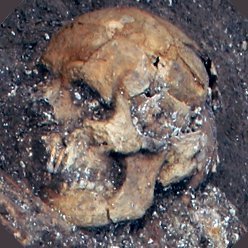
Facial reconstruction of a 4,200-year-old Catacomb culture man from... kurgan 1 in Snihurivka, Ukraine The Catacomb culture was a continuation of the Yamnaya culture. Catacomb culture covers the end of the 3rd millennium to the first half of the 2nd millennium BCE. It is distributed in the southern regions of the East European Plain, from the Manych River and the North Caucasus to the Dnieper. Within the Catacomb culture, as in the Yamnaya culture, such local variants are distinguished: the Lower Dnieper, the North Azov, the Middle Dnieper, as well as the Donetsk (or Middle Donets), the Volga–Manych (also known as the Pre-Caucasian culture) (Popova, 1955; Lagodovskaya, 1957; Klein, 1961). Close to them is the Poltavka culture. (Konduktorova, 1973) Skulls of the Yamnaya and Catacomb cultures are characterized on average by dolichocrany, although in some skulls mesocrany and brachycrany are observed. The cranial capacity is large. The longitudinal and vertical diameters are large, while the transverse diameter is medium. The relief is strongly developed. The glabella, external occipital protuberance, and mastoid processes are well expressed. The slope of the forehead is pronounced. The face is broad and of medium height; according to the index, however, it is low and orthognathic. Horizontal facial profiling is sharply expressed. The orbits are low. The nose is of medium width and strongly projecting. The nasal bridge protrudes sharply. The canine fossae are deep. It should be noted, however, that when comparing Catacomb with Yamnaya series, the formers relief is somewhat less pronounced, and the angle of the forehead is smaller. (Konduktorova, 1973)show more
Ancestral Whispers
99,154 görüntüleme • 4 ay önce
[Graph Convolutional Network] by hand ✍️ Graph Convolutional Networks... (GCNs), introduced by Thomas Kipf and Max Welling in 2017, have emerged as a powerful tool in the analysis and interpretation of data structured as graphs. This exercise demonstrates how GCN works in a simple application: binary classification. -- Goal -- Predict if a node in a graph is X. -- Architecture -- 🟪 Graph Convolutional Network (GCN) 1. GCN1(4,3) 2. GCN2(3,3) 🟦 Fully Connected Network (FCN) 1. Linear1(3,5) 2. ReLU 3. Linear2(5,1) 4. Sigmoid Simplications: • Adjacent matrices are not normalized. • ReLU is applied to messages directly. -- Walkthrough -- [1] Given ↳ A graph with five nodes A, B, C, D, E [2] 🟩 Adjacency Matrix: Neighbors ↳ Add 1 for each edge to neighbors ↳ Repeat in both directions (e.g., A->C, C->A) ↳ Repeat for both GCN layers [3] 🟩 Adjacency Matrix: Self ↳ Add 1's for each self loop ↳ Equivalent to adding the identity matrix ↳ Repeat for both GCN layers [4] 🟪 GCN1: Messages ↳ Multiply the node embeddings 🟨 with weights and biases ↳ Apply ReLU (negatives → 0) ↳ The result is one message per node [5] 🟪 GCN1: Pooling ↳ Multiply the messages with the adjacent matrix ↳ The purpose is the pool messages from each node's neighbors as well as from the node itself. ↳ The result is a new feature per node [6] 🟪 GCN1: Visualize ↳ For node 1, visualize how messages are pooled to obtain a new feature for better understanding ↳ [3,0,1] + [1,0,0] = [4,0,1] [7] 🟪 GCN2: Messages ↳ Multiply the node features with weights and biases ↳ Apply ReLU (negatives → 0) ↳ The result is one message per node [8] 🟪 GCN2: Pooling ↳ Multiply the messages with the adjacent matrix ↳ The result is a new feature per node [9] 🟪 GCN2: Visualize ↳ For node 3, visualize how messages are pooled to obtain a new feature for better understanding ↳ [1,2,4] + [1,3,5] + [0,0,1] = [2,5,10] [10] 🟦 FCN: Linear 1 + ReLU ↳ Multiply node features with weights and biases ↳ Apply ReLU (negatives → 0) ↳ The result is a new feature per node ↳ Unlike in GCN layers, no messages from other nodes are included. [11] 🟦 FCN: Linear 2 ↳ Multiply node features with weights and biases [12] 🟦 FCN: Sigmoid ↳ Apply the Sigmoid activation function ↳ The purpose is to obtain a probability value for each node ↳ One way to calculate Sigmoid by hand ✍️ is to use the approximation below: • >= 3 → 1 • 0 → 0.5 • <= -3 → 0 -- Outputs -- A: 0 (Very unlikely) B: 1 (Very likely) C: 1 (Very likely) D: 1 (Very likely) E: 0.5 (Neutral)show more

Tom Yeh
46,779 görüntüleme • 2 yıl önce
Facial reconstruction of a 7,500-year-old man from Kenya A... large collection of ancient human remains was recovered in the Elmenteita district of Kenya, at the Bromhead site. Eight relatively complete skulls and numerous skeletal fragments were found, representing as many as 29 individuals. The burials belong to different periods, but their exact chronology remains uncertain; it is only clear that they date to the Mesolithic. The best available date comes from ten mandibles, which were dated to approximately 7,400 years ago (Bada et al., 1974), although some of the skeletons are undoubtedly older, while others are younger. Individual finds from Elmenteita were variously described as proto-Bushmanoid, resembling the Khoikhoi of Kakamas, or as a distinct "Elmenteita type" characterized by extreme dolichocephaly, long faces, and tall stature. However, these classifications were purely typological, and even the "Bushman type" grouped together the markedly different Elmenteita A and F1 skulls. All of the Elmenteita skulls are long or very long, but they vary greatly in breadth, ranging from very narrow to broad, and from hyperdolichocranic to brachycranic. Cranial height also varies considerably, from low to high, though the average is moderate. Minimum frontal breadth is average or slightly above average. Most skulls have a receding forehead, while the brow ridges are relatively weak by Mesolithic standards. A distinctive feature is the very high placement of the temporal lines. The face has a long cranial base and is of moderate to great height (very low only in the female Elmenteita F1), with a broad upper portion. Facial and bizygomatic breadth vary greatly, from very narrow to broad. Vertical facial profile ranges from prognathous to orthognathous. In transverse profile, the faces show no exceptional flattening and remain within the range of clinopy and clinozygy. The orbits are high, broad, or very broad, and mesoconchic. The interorbital region is broad and flattened. Nasal height ranges from moderate to very great (very low in Elmenteita F1), while nasal breadth varies enormously, from very narrow to very broad. The noses are leptorrhine. As is evident, the Elmenteita series is highly heterogeneous. The male skulls Elmenteita A and B differ noticeably from one another, while Elmenteita F1 stands out most distinctly. L. Leakey divided the series into two groups: the first included Elmenteita A and D, and the second Elmenteita B, F, and F1. The skulls of the first group (to which the reconstructed individual belongs) are more robust, hyperdolichocranic or dolichocranic, with faces that are broad relative to the cranial vault. Their faces are mesognathous and either mesoprosopic or leptoprosopic, with chamaeconchic orbits and leptorrhine or mesorrhine noses. The skulls of the second group are more gracile, being moderately dolichocranic (B), mesocranic (F), or brachycranic (F1). Their cranial vaults are broad relative to the face, with pronounced parietal eminences. They exhibit overall facial orthognathism (B) or prognathism (F and F1), a narrow, high leptorrhine nose, and pronounced alveolar prognathism. In fact, this second group could itself be divided into two or even three distinct types, since skull B differs from F and F1 in being dolichocranic, orthognathous, and hypsiconchic, while F1 is distinguished by its brachycrany, euryprosopy, and chamaeconchy. To what extent this diversity reflects individual variation or true population differences remains unknown. Judging from the stratigraphy, the Elmenteita cemetery may well contain burials of people from different periods, cultures, populations, and biological races. Overall, the series displays an unusual combination of traits for Africa: large cranial size, a receding forehead, a high face, and, in some individuals, orthognathism, high orbits, and a narrow nose. However, this combination is also atypical for the East African race, to which the Elmenteita skulls are often assigned. Only Elmenteita F1 more or less fits the description of the southern prognathous variant of the East African race (S. V. Drobyshevsky, Antropogenez).show more
Ancestral Whispers
23,418 görüntüleme • 1 ay önce
❗️⚡️🇪🇸🇵🇹🇫🇷🇦🇩 - On April 28, 2025, a significant power... outage continues to affect Spain, Portugal, Andorra, and parts of France, with no immediate resolution in sight. The blackout has disrupted electricity supply in major cities, including Madrid, Valencia, and Barcelona, as well as communication networks, impacting internet and mobile services across the affected regions. Government authorities have not yet issued an official statement, though Spain’s Ministry of the Interior has urged the public to remain calm while investigations are underway. Preliminary reports suggest the outage may stem from a failure in the interconnected European power grid, potentially exacerbated by recent high demand and integration challenges with renewable energy sources. Energy experts note that the European Network of Transmission System Operators (ENTSO-E) is working to stabilize the grid and restore full service. Social media reports indicate growing public concern, with users highlighting disruptions to daily activities and businesses. Authorities are prioritizing critical infrastructure, such as hospitals and emergency services, to mitigate the impact while a coordinated response is developed.show more

🔥🗞The Informant
382,288 görüntüleme • 1 yıl önce
🚨 THE RACE TO 6G JUST ACCELERATED. Northrop Grumman... has developed a W-band GaN chip operating at up to 110 GHz and took it from concept to market-ready hardware in less than six months. The new gallium nitride chip operates in the W-band (75–110 GHz), a frequency range that delivers massive bandwidth, extremely high data rates, and much lower latency than current systems. What makes this impressive is the speed: the chip went from concept to market-ready hardware in less than six months through a U.S. government-backed microelectronics program. That’s unusually fast for advanced defense-grade semiconductors. The chip acts as a high-power signal amplifier that can strengthen wireless links while shrinking the size and power consumption of the hardware. It’s designed for military radar, secure satellite communications, and the coming wave of 6G networks. Why this matters: • W-band offers far more spectrum than current 5G bands, enabling much faster data transmission and higher-resolution sensing • Gallium nitride can handle significantly higher power and frequencies than silicon, making it ideal for these demanding applications • The rapid development cycle shows how public-private collaboration can accelerate critical semiconductor technologies • The same tech that strengthens military radar and satellite links will directly feed into future commercial 6G infrastructure The deeper implication: We’re watching the foundation of next-generation wireless and sensing systems being laid in real time. High-frequency GaN chips like this won’t just improve existing radar and satellite systems they’re likely to become core building blocks for 6G, autonomous systems, and advanced defense platforms. The fact that this moved from lab to market in under six months suggests the pace of high-frequency electronics is accelerating dramatically. The future of wireless isn’t just faster. It’s operating at frequencies most people have never heard of and it’s being built right now. How soon do you think W-band and GaN technology will start appearing in everyday 6G devices? Follow for more frontier semiconductors, defense tech, and next-generation wireless systems.show more

TheNewPhysics
22,647 görüntüleme • 3 ay önce
The Chinese are flying 4 sixth-generation prototypes, but what... does that mean? While the West keeps debating wars that seem never-ending, huh, China is flying low – or rather, high! – improving their 6th generation fighter prototypes, like the J-36/J-50, with total focus on advanced integration. This gives a huge strategic advantage, with emphasis on long-range missiles and multiple guidance to dominate global scenarios. China already has about 4 6th generation prototypes and plans to reach 8, selecting the most adapted one. All this under the General Concept: Indestructible Flying Brain: 6th generation fighters go way beyond just a slightly improved stealth; they are central platforms that command a global war web via AI, drones, and varied weapons, making previous fighters obsolete in connectivity and limiting them to very local operations. This omnipresence redefines air superiority, with the fighter surviving as a resilient node in the first hours of conflicts and being able to operate with speed. Kill Web: The Global War Web: The fighter acts as the central node of a real-time network, connecting submarines, satellites, ships, drones, and troops worldwide. It allows omnipresence, receiving data from a destroyer thousands of km away and attacking as if it were right nearby, with AI assisting the pilot in analysis and target acquisition. That's why the Chinese focus on missiles with ranges of thousands of km, with multiple guidance, turning the 6th generation pilot into a tactical manager very different from today's. Being a 6th generation fighter pilot is going to demand a lot. Command of Drone Swarms (CCA/Loyal Wingman) The fighter controls 6-20 drones simultaneously for reconnaissance, jamming, or suicide attacks. It transforms the pilot (or AI) into a "maestro" of a robotic orchestra, or quarterback of Collaborative Combat Aircraft (CCAs), which carry extra weapons, expanding offensive power without exposing the main fighter. Like, a controlled symphony of destruction! Superior Multi-Spectral Stealth (Stealth++) Not limited to radar, it covers infrared, acoustic, visual, and electromagnetic. It uses advanced materials, tailless designs, and minimal thermal signature to penetrate dense A2/AD defenses, making it extremely hard to detect and essential for operations in contested environments. Extreme Range, Autonomy, and New Generation Weapons Combat radius of 1,800-2,500 km without refueling, with sustained supercruise (Mach 1.5-2.0) without afterburner, thanks to adaptive cycle engines and huge internal tanks. There's talk of including lasers, but so far, what's really there are internal hypersonic missiles and 2-3x greater armament capacity than the F-35, all while maintaining total stealth. Artificial Intelligence, Integrated Sensors, Resilience, and Open Architecture AI as co-pilot or main, processing data in real time and making tactical decisions to reduce human load; optionally manned mode: piloted, remote, or autonomous flight; virtual cockpit via helmet visor. Multifunctional sensors combine radar, electronic warfare, communications, and non-kinetic effects, with total data fusion transforming the fighter into a flying data center. Network resistant to jamming and GPS loss via quantum-resistant communications, mesh networks, and inertial/computer vision navigation. Modular architecture allows quick upgrades (90% by software), avoiding high costs like in the F-35; in "Decision Centric Warfare," AI decides in milliseconds, with the human as an optional bottleneck, including cyber warfare and active defense. In another article, I'll talk about what I think of this in terms of costs and demand and if such an investment is really worth it.show more

Patricia Marins
60,403 görüntüleme • 10 ay önce
We’re taking decisive action to protect consumers and support... reputable traders. Why? Because too many families are ripped off by home improvement work, or threatened by intimidation tactics if they’ve fallen behind with debt. And because too many businesses are being undercut by rogue operators. From September, a new government supported scheme will help you identify and hire trusted traders with confidence. It will also protect your money during building projects, with payments linked to key project milestones. In addition, we’re announcing tougher regulation to better protect people facing debt in England and Wales. This will help hold bailiffs to consistent professional standards, and give families a new independent complaints process if they are mistreated. We’re supporting businesses that already play by the rules, and making sure families keeping more of their hard-earned cash in their pockets. The latest in our everyday fixes to restore fairness and give families room to breathe.show more

Jonathan Reynolds
14,294 görüntüleme • 22 gün önce
hypergamy is going to hit women like a 50-megaton... thermonuclear bomb, and the reason is because these women are hypergamous themselves female hypergamy hit society first due to the natural supply/demand gap between the sexes, and it's certainly caused somewhat of a death spiral of intersexual relations, but the outcome will not be this hypercompetition between men for women, but rather men checking out of the game entirely as the juice stops being worth the squeeze porn is only getting more immersive and sex bots are on the way, and social media exposes men to 10/10 women nonstop; why then would men break their backs for a crumb of attention for mediocre women? even men with genuine value to bring struggle in the current dating market, the fatigue is beginning to set in for women there are two options: a) make the squeeze easier, or b) make the juice more worthwhile a) would require that they lower their standards and expectations, make themselves more accessible, accept a man with less to offer when they know someone better is out there they don't have that in them, so they resort to b) b) means making the juice tastier, it mean tightening up the juice's nasolabial folds and waist-to-hip ratio. it means injecting the juice with hyaluronic acid fillers and, when that isn't enough to get ahead, it means making real changes to the juice's recipe like getting structural surgery there is a very small supply of beautiful people on this planet, but in the age of the internet that small supply is accessible to everyone at all times instead of being a random beautiful stranger you may rarely come across on the street. everyone’s perceptions of what is accessible to them is being distorted, and even if only 1% of people are truly beautiful themselves that is enough for 99% of the subpar masses to feel like they can share. past a certain point of abundance a person cannot comprehend the difference between 10 million people and 1 billion, it’s just a lot. if 1 billion compete for 10 million it still feels like an infinite prize pool. this has corrupted women tremendously, but it is absolutely going to and already beginning to do the same with men as men get more and more immersed in and addicted to cheap hits of sexual dopamine such as porn, social media, online dating (which is a corrupting force for both genders) they will be less and less willing to settle for a girl who is any less than perfect because quite frankly, she probably just won’t be worth it to them anyway there is already a long cultural precedent for women going to extreme measures to looksmaxx for male attention, if men start to become fed up with them and hypergamy increases on both ends the blackpill will explode with women. already women know when they are left on delivered by chad that if they were prettier this wouldn’t be happening, they are beginning to make this observation en masse and it is driving the rise in radfem and “femcel” (i.e. girl who can’t bag chad) ideology. women are realizing that body positivity and self-love was a scam, and that looks are law i’m betting all in on the upcoming female blackpill trend, putting my stock in it. i’d keep an eye out for it because it has already begun and it’s only going to get biggershow more

𝖒𝖔𝖌𝖌𝖎𝖓𝖌
43,916 görüntüleme • 2 ay önce
Facial reconstruction of a 2,700-year-old Scythian/Saka from the Sokolovka... site in Kazakhstan The Scythians, also known as the Saka, were an Iranic-speaking people who originated in the regions of Minusinsk, Altai, Tuva, Mongolia, and Xinjiang. The male Scythian/Saka skulls of Kazakhstan are characterized by medium longitudinal and transverse diameters, giving a cranial index of 80.2, which lies at the lower boundary of brachycrany. The skull height is low (131.6 mm), and the forehead is relatively wide (99.6 mm) and somewhat sloping, with a more pronounced than average glabella and superciliary arches. The face is broad (138.8 mm), of medium height (71.4 mm), and moderately projecting in the horizontal plane (nasomalar angle 141.8°, zygomaxillary angle 129.8°), with shallow canine fossae, low orbits, and a medium-wide, protruding nose (nasal index 50.6; nasal bone angle 29.5°). Female skulls, accounting for sexual dimorphism, show the same general traits. The anthropological type of the Sakas of Kazakhstan derives from the Andronovo population that occupied much of the region during the Bronze Age. Their slightly higher facial height compared to typical Andronovo skulls, the lower cranial vault, and the somewhat less projecting nose reflect East Asian admixture, which had already manifested itself in the Saka period. The skulls (both male and female) from Sokolovka in northern Kazakhstan belong to a clearly defined Europoid type. (Ginzburg & Trofimova, 1972)show more
Ancestral Whispers
251,684 görüntüleme • 9 ay önce
Say hello to Boojum 👋: zkSync Era’s new high-performance... proof system for radical decentralization. Boojum is an upgrade that will transition zkSync Era to a STARK-powered proof system, providing world-class performance on consumer-grade hardware. 💡 Learn more: TL;DR 👇 Boojum is the name of our Rust-based cryptographic library, which we use to implement the upgraded version of the ZK circuits for zkSync Era and the ZK Stack. The name Boojum was inspired by Lewis Carroll's poem "The Hunting of the Snark," where the Boojum represents the most fearsome kind of Snark. We intentionally designed zkSync Era in a way that cryptographic upgrades can be made without a regenesis, meaning that the Boojum upgrade won’t cause any user disruptions. Why Boojum❓ From day one, zkSync’s mission is to advance personal freedom for all — making digital self-ownership universally accessible by building a blockchain network that is trustless, secure, permissionless, affordable, easy to use, resilient and limitlessly scalable. Boojum plays an important role in advancing this mission by delivering: 1. World-class performance zkSync Era’s current SNARK-based proof system is effective today, but it won’t scale to the volume that we envision for hyperchains. zkSync Era’s sequencer can already process over 100 TPS; Boojum orders of magnitude improvements to performance complements this well. 2. Reduced hardware requirements for decentralization Our long-term goal is to enable user-powered, decentralized proof generation. Boojum represents a breakthrough in this direction — with the prover running on consumer-grade GPUs requiring only 16 GB GPU RAM. Boojum’s Journey to Mainnet 🚴🏽♀️ Boojum is now live on Mainnet, generating and verifying ‘shadow proofs’ today with real production data so that we can carefully test the system ahead of fully migrating. Today, we’re also open-sourcing the repo; if you’d like to take a look, you can find it here 👇 This is the first of a series of posts on Boojum. We will provide updates on our progress, including more details on implementation, security, and performance. Watch here for more, anon ∎show more

ZKsync
828,201 görüntüleme • 3 yıl önce
😓 Air India 🇮🇳 Flight AI171 with fully loaded... Boeing 787-7 Dreamliner fatal accident: I‘m an airline pilot with >15‘000h of experience and a physics institute: My brief PRELIMINARY analysis of the visible facts from the video of the takeoff: * The flaps are only slightly extended, presumably to position 1 instead of 5. * The landing gear is still extended, which should have been retracted at this altitude and causes additional drag. * The aircraft is at a high angle of attack, which confirms the insufficient flap setting. * From the video and witness accounts, only low engine noise is audible. * Neither smoke nor fire is visible. * An engine failure is less likely. The most probable cause is presumably a human factor, an incorrectly chosen, insufficient flap setting for takeoff, and consequently an inadequately selected thrust. In this context, the correlated speeds were too low because they were calculated for a larger flap setting or a lighter aircraft. As a result, the aircraft took off with insufficient speed and intentionally but falsely derated thrust, was therefore on the unstable side, and rapidly lost more speed and altitude due to the additional failure to retract the landing gear in a timely manner, leading to a subsequent stall at low altitude and crash. For the experts: the aircraft got onto the wrong side of the speed vs drag curve and maneuvered itself into a corner from where there is no escape. Another possible cause could also have been an incorrect input of a wrong takeoff weight into the Flight Management System, resulting in too low thrust and too low speeds. The pilots got startled after takeoff, couldn’t wrap their head around what went wrong and incorrectly prioritized making an emergency call instead of flying the aircraft first, manually increasing thrust immediately to maximum, and retracting the landing gear. In summary of this very early and preliminary assessment (your confidence level should be as low as mine): The most probable cause is human error 😓 - as most of the time these days. Not because the pilots got worse (although that effect can be observed as well with prioritization of diversity over competence) - but because technology got so much better.show more

Iven‘s Dad
2,786,862 görüntüleme • 1 yıl önce