𝗦𝗰𝘆𝘁𝗵𝗶𝗮𝗻 𝟬𝟬𝟵 - 𝗦𝘁𝗮𝗿𝗼𝘀𝗶𝗹𝗹𝘆𝗮, 𝗨𝗸𝗿𝗮𝗶𝗻𝗲 Ancient DNA analysis from... Starosillya, Ukraine has yielded Sample 009, representing a Scythian individual from the classical steppe period. The sample’s Y-DNA haplogroup R1b1a1b1a1a2b1 (L2/S139) indicates clear Western Eurasian paternal ancestry, while the maternal lineage J2b1a6 suggests similar geographic origins. Harjazshow more

࣪Scythes—ψ数术小丑ψ
30,193 views • 1 year ago
NEW DNA ANALYSIS SUGGESTS THE SHROUD OF TURIN MAY... HAVE INDIAN ORIGINS. Visionary Suresh Chavhanke 🔥 🤣show more

Being Political
30,534 views • 5 months ago
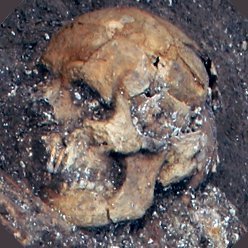
Facial reconstruction of a 43,000-year-old woman from the Czech... Republic. Her remains represent an early phase of a culture such as the Initial Upper Paleolithic (IUP). The IUP is recognized as one of the earliest modern human cultures in Europe. The Zlaty kun individual is notable not only as one of the oldest anatomically modern humans to have her genome successfully sequenced, but also because her DNA represents a lineage that is basal to, and predates, the later genetic split between East and West Eurasian populations. Genetically similar populations have been found in Ranis, Germany. Later IUP populations in Europe also predate this split, though they may show a closer affinity to early East Eurasians than to West Eurasians. Her mitochondrial DNA belongs to a basal branch of haplogroup N and shows the closest affinity to Paleolithic individuals from Bacho Kiro Cave (Bulgaria) and Salkhit (Mongolia). Like other ancient DNA samples of similar age, the Zlaty kun woman does not appear to have been directly ancestral to modern European or Asian populations.show more
Ancestral Whispers
84,234 views • 8 months ago
Facial reconstruction of a 5,100-year-old Afanasievan from Mongolia with... Yamnaya-like auDNA He carried Y-DNA haplogroup J1a2b and mtDNA U5a1. His maternal lineage, associated with European hunter-gatherers, was widespread among Indo-Europeans. His paternal lineage, J1a2b, has been previously detected in the Khvalynsk culture; a downstream of this haplogroup also dominates the Y-DNA of the Kura-Araxes culture, possibly suggesting a dispersal of J1a2b from the Caucasus into the Steppe, where a related branch persisted and became the main haplogroup of the Kura-Araxes culture. The man, belonging to the Paleoeuropoid/Protoeuropoid type, stood roughly 180 cm tall (498mm femur length) and possessed a notably massive and robust skull, with a very long cranial length of 193 mm, massive cranial width of 151 mm, and a very broad cheekbone width of 147 mm. In Inner Asia, the Bronze Age begins with the emergence of the Afanasievo culture, which spread across vast regions of southern Siberia and Central Asia. Its sites are known from western and central Mongolia, eastern Kazakhstan, the Dzungarian Basin, and even the Middle Zarafshan, though the highest concentration lies in the Altai and the Minusinsk Basin. AMS radiocarbon dates place the Afanasievo horizon between 3300–2500 BCE. Both anthropological and ancient DNA evidence indicate that the Afanasievo culture arose from a migration of populations from Eastern Europe, specifically from the Yamnaya cultural sphere (Solodovnikov et al. 2023). The Altai Afanasievo individuals rank among the tallest ancient populations of Eurasia (Solodovnikov et al. 2018). A similarly tall stature is seen among Afanasievo individuals from central Mongolia, based on limited material from the Shatar-Chuluu cemetery (where the reconstructed individual was found) near the Khangai range (Tumen 1978; Solodovnikov, Erdene 2022). Two published Afanasievo individuals have been identified as fifth-degree relatives. One was buried at Inskaya Dol in the northwestern Altai (I11752, BARN-039) [Narasimhan et al. 2019], and the other at the Shatar-Chuluu cemetery in central Mongolia (SHT002, AT-25 (I6221, the reconstructed individual)) [Jeong et al. 2020; Ringbauer et al. 2023]. Although these sites lie 1,410 km apart, both individuals share the characteristic Afanasievo/Yamnaya genetic profile and cluster closely with other Afanasievo samples. Their biological relationship implies that at least one ancestor in their family line must have traveled several hundred kilometers within their lifetime.show more
Ancestral Whispers
365,023 views • 9 months ago
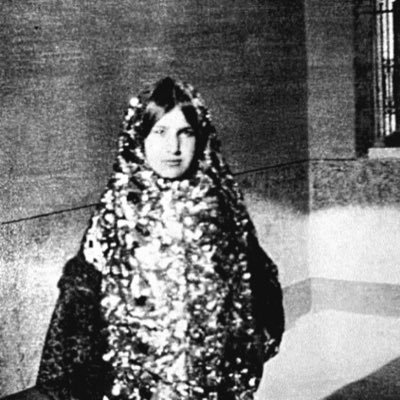
Although Arabian family trees typically prioritize paternal lineage and... exclude women, the Saud dynasty’s genealogy records both mothers and fathers, reflecting a central Arabian view that maternal lineage is as significant as paternal descent.show more
Najdi Memoirs
49,325 views • 8 months ago
Facial reconstruction of a 9,400-year-old EHG from Minino, Vologda... Region This individual (Minino 2, Burial 3 / MIN3), carrying Y-DNA haplogroup J1 and mtDNA haplogroup U4a1, is one of the oldest known J1 ancient DNA samples identified to date, alongside Satsurblia CHG from Georgia and Nemrik PPN from Iraq. Autosomally, he was a typical EHG individual (Hofmanova et al. 2022). The Minino archaeological cluster, located on Lake Kubenskoye (Minino I and Minino II, Vologda Region), was identified and systematically described by A. V. Suvorov, who studied the Mesolithic and Neolithic materials from the site (Suvorov, 2001). The analysis of the craniological characteristics of the male skull series from Minino revealed similarities with the populations associated with the Veretye and Onega cultures. The morphological variant represented by the Minino 2 population is most frequently found among Mesolithic and Upper Paleolithic populations of northern Eastern Europe. Similar cranial features are observed in individuals from Mesolithic burial sites such as Yuzhny Oleniy Ostrov, Popovo, Peschanitsa, Zvejnieki, Vasilievka I, and several others. The males from the Minino burial ground had, on average, a medium-large cranial length (183.3 mm) and a medium-small cranial breadth (135 mm) (A. P. Buzhilova, 2017).show more
Ancestral Whispers
95,645 views • 1 month ago
I recently did a DNA ancestry thing and the... results were pretty much this sceneshow more

Saberspark
764,407 views • 11 months ago
A woman from Albania took a DNA test. The... result is this 👇show more

well-meaning
32,329 views • 1 year ago
until her dna changes my ancestry results

ree
18,793 views • 1 year ago
🚨#BREAKING: A fabric sample taken from the sofa contained... DNA that was later analyzed has suggested that Adolf Hitler likely had a microp*nis reportedly measuring less than two inches and had only one ballshow more

R A W S A L E R T S
2,721,486 views • 9 months ago
The mission: Collect DNA samples from the most dangerous... living dinosaurs 🧬show more
Jurassic World
56,137 views • 1 year ago
Facial reconstruction of a 2,500-year-old mixed Koban-Scythian woman from... Ghazhara-Yurt, Ingushetia (Nesterovsky burial) The Nesterovsky burial ground, one of the type-sites of the eastern variant of the Koban culture, was discovered and partially damaged in 1938. The Eastern Koban variant developed from the main Central Koban tradition through interactions with the Kayakent-Kharachoy culture, the latter likely representing a Northeast Caucasian-speaking population, possibly Nakh. Regarding the Nesterovsky burial ground in particular, E. I. Krupnov noted the presence of mixed Koban and Scythian elements. The Koban culture was a major Late Bronze Age and Early Iron Age culture of the Central Caucasus, renowned for its advanced bronze metallurgy and craftsmanship. It bordered the Proto-Maeotian culture in the west and the Kayakent-Kharachoy culture in the east. The language of the Koban population remains unknown. Some scholars, including Valentina Ivanovna Kozenkova, have proposed a Kartvelian affiliation based on the culture's origins in the Great Liakhvi Basin (such as the site of Tlia in Georgia, the prototypical and one of the longest-inhabited Koban site, which has archaeological parallels with the even older site of Brili to the west), although no direct linguistic evidence has survived. Genetic studies reveal high levels of CHG ancestry and a predominance of Y-DNA haplogroup G2a1 within the main Koban genetic cluster. Similar genetic profiles are found among populations associated with the Late Bronze Age expansion of Kartvelian-speaking groups into eastern Georgia. Together with archaeological parallels, particularly similarities between Colchian and Koban axe forms, this evidence supports a possible Kartvelian connection. A facial reconstruction was created by Mikhail Gerasimov based on one of the best-preserved cranium from the Nesterovsky burial ground. Gerasimov noted her overall gracility and very pronounced Europoid features, a characteristic trait of the Koban population. However, he also observed that this individual differed from typical Koban crania in its large absolute dimensions (188 mm cranial length, 148 mm cranial breadth, and 140 mm bizygomatic breadth). On this basis, Gerasimov agreed with the archaeological interpretation that individuals from the Nesterovsky burial ground possessed a Scythian component. Koban ceramics and metal artifacts have been discovered in Scythian burials, while Scythian-style akinakai and a masterpiece of the Koban variant of the Scythian animal style - sword chapes depicting an elk - have likewise been found in Koban graves. Metallographic studies have shown that, after adopting the akinakes from the Scythians, Koban craftsmen quickly learned to manufacture such weapons themselves, employing even more advanced production techniques. The Scythians left a significant imprint on Koban culture, while the local Koban population also influenced Scythian cultural development - as seen in Kobanian ceramics and metal objects found in Scythian burials. The initial contact was likely military in nature and probably involved armed conflict, although clear archaeological evidence of such clashes has not yet been identified. Aside from the Scythians, the Koban population maintained contacts with the tribes of the Colchian cultural-historical sphere to the south, including tribes inhabiting the territory of modern Svaneti, through passes like Donguzorun/Babis mta and Becho, while also participating, alongside the Scytho-Cimmerians, in campaigns against the Kingdom of Urartu.show more
Ancestral Whispers
30,912 views • 2 months ago
Facial reconstruction of a 10,000-year-old man from Iran Found... at Ganj Dareh Tepe, a Neolithic site with some of the earliest evidence of goat domestication in the world. The individuals from Ganj Dareh belong to the Iran_N genetic cluster, and most carry Y-DNA haplogroup R2, which is associated with the dispersal of Ancient North Eurasian ancestry. This young adult was described by anthropologist Peter Lambert as follows: This individual is the third of the sarcophagus burial group and is complete except for several vertebrae and portions of the skull and pelvis. The mandible and both maxillae are well preserved. Overall, the large and robust musculature suggests that this is a male, whose age—estimated from epiphyseal fusions (Krogman, ’73)—is approximately 15–18 years at death... The third mandibular molars are partially erupted. Gray’s Anatomy (’77) gives an estimated age range of 18–25 years. The reconstructed cranium is complete except for the basal elements. The vault is artificially deformed and represents the best example of the Ganj Dareh deformation style. The teeth show deposits of salivary calculus in the anterior arcades, but no other pathology is present. Reconstruction commissioned by 𒁍𒊑 𒋗𒊑𒌍 Buri Šoreš 𓄂❤️☀️💚show more
Ancestral Whispers
261,763 views • 8 months ago
There currently isn’t a single Invincible from the new... Generation DNA set on the Auction House 😭show more

໊
38,475 views • 3 months ago
Facial reconstruction of a 4,600-year-old Yamnaya from Chelyabinsk She... belonged to the Ural variant of the Yamnaya culture, known as the “Tamarutkul type,” which was contemporaneous with the early Poltavka sites of the Volga region and carried the mtDNA lineage T2a1a. The anthropologist Alexander Khokhlov writes (in Paleoanthropological Materials of the Beginning of the Metal Epoch of the South of the Volga Region, the Cis-Ural Region and Western Kazakhstan: Yamnaya Kurgan Cultures) that the Kizilskyi skulls are dolichocranial and have a medium to broad, tall face with pronounced horizontal profiling. These features are similar to those characteristic of the Eastern European Yamnaya craniological series. A specific trait of the Kizilskyi series is the medium projection of the nasal bones. This Ural group, dominated by burials of individuals contracted on the right side, represents a predominantly mesomorphic, dolichocranial, “Steppe Southeuropid” type. Genetic material from the Kizilskyi burial grounds of Trans-Uralia shows that their Y-DNA (R-Z2106) matches that of early Poltavka individuals.show more
Ancestral Whispers
98,211 views • 9 months ago
NEW: Scientists have brought back dire wolves using ancient... DNA, with the first born on October 1, 2024, over 10,000 years after their extinction The genome was reconstructed by Colossal from ancient DNA found in fossils The fossils date back 11,500 and 72,000 years Colossal Biosciences said: "This moment marks not only a milestone for us as a company but also a leap forward for science, conservation, and humanity. From the beginning, our goal has been clear: To revolutionize history and be the first company to use CRISPR technology successfully in the de-extinction of previously lost species. By achieving this, we continue to push forward our broader mission on—accepting humanity’s duty to restore Earth to a healthier state."show more

Unlimited L's
12,427,468 views • 1 year ago
Facial reconstruction of a 6,800-year-old man from the Middle... Volga The individual (Khvalynsk II, Burial 26), who carried Y-DNA J1-CTS1026, belonged to the Khvalynsk culture. The Khvalynsk cemeteries (201 burials) are the largest Eneolithic burial grounds in the Don–Volga–Ural region. They were initially regarded as likely precursors of the Yamnaya culture because of shared features such as shell-tempered pottery, similar burial positions, the use of ochre, and comparable decorative motifs. However, Khvalynsk is a flat cemetery rather than a kurgan cemetery, differs in its tools and material culture, and predates the Yamnaya culture by over 1,000 years. The cemeteries contained an exceptional number of copper artifacts (373) and numerous sacrificial domestic animals, including goats (the same goat lineage identified at Khvalynsk has also been found in Eneolithic Dagestan). Genetic, anthropological, and archaeological evidence indicates that the population combined ancestry from the Forest-Steppe, the Lower Don, and the North Caucasus, forming a genetically diverse community with extensive marriage networks. Khvalynsk was an important ritual and exchange center connected to the Balkan-Carpathian Metallurgical Province, which supplied copper from Balkan cultures such as Karanovo, Gumelnița, and Trypillia. The people of the Khvalynsk culture may have spoken a very archaic form of a Para-Indo-European language. The physical appearance of the bearers of the Khvalynsk culture was the result of admixture processes that took place throughout the Eneolithic between representatives of different Europoid populations: on the one hand, a hypermorphic western anthropological type, and on the other, a hypomorphic, gracile eastern type (Yablonsky 1990, p. 78; Yablonsky 1996, pp. 127–128). Based on the material from the Khvalynsk II cemetery, at least three morphological variants can be distinguished (Khokhlov 1998b): The first is dolicho-mesocranial, with a large facial skeleton and a well-profiled face, resembling the Nadporozhye–Azov cranial complex that was widespread among Neolithic populations of the Dnieper-Donets area (Ukr_N, Golubaya Krinitsa, Rakushechny Yar clusters). However, this complex appears in a more attenuated form. The second variant is characterized by a certain gracility, dolicho-mesocrany, and a moderately flattened facial skeleton. This complex finds its closest analogies among the Neo-Eneolithic skulls of the forest and forest-steppe regions of the Volga–Ural area and the Middle Volga (EHG cluster). The third variant is dolichocranial, with a narrow and strongly profiled face, and is close to the ancient Mediterranean type. This type show affinities with populations of the Trypillia culture, the Caucasus, and the Near East, with the closest parallels coming from the Caucasus. Although most comparative Caucasian series (such as the Kura-Araxes culture) are later in date, a contemporaneous Eneolithic female skull from Nalchik (genetically Mesopotamian/Lower Don 50/50) closely resembles the Khvalynsk material, it demonstrates a pronounced dolichocranial europoid type [Debets, 1948, p. 107], and in general dimensions it is quite close to Khvalynsk skulls. Another similar Southeuropoid skull comes from Koskuduk I in the eastern Caspian, where the local Oiuklin culture has been linked to interactions between Khvalynsk migrants and Kelteminar (Sarazam, Anau cluster) culture groups. However, the origin of this southern Europoid component in the Khvalynsk population remains uncertain because Eneolithic anthropological evidence is sparse. (Khokhlov, 2010a, 2017) Burial 26 contained the remains of an individual that was originally identified as female, aDNA revealed that the individual was genetically male. He was buried supine, with his head facing northwest, tightly flexed legs turned to the right, bent arms, and the skull tilted slightly forward and to the left. The skeleton was covered with ochre, with the heaviest staining on the feet and elbows. An ochre patch was found beside the skull, and shell beads were recovered from the skull, left shoulder, pelvis, and waist area. The individual’s (I6735) Y-DNA belongs to a lineage upstream of the main Kura-Araxes lineage, which was widespread in the EBA South Caucasus and Dagestan. A related lineage has also been found in the Afanasievo culture. His mtDNA, U4a, is a common EHG maternal lineage. Autosomally, he was roughly half EHG half Steppe Eneolithic.show more
Ancestral Whispers
102,518 views • 2 months ago