#oman




"Si #Oman se met en travers de notre chemin, on va leur bombarder la gueule." Ces propos de Donald #Trump illustrent la frustration du président américain alors que l'#Iran a annoncé être proche d'un accord avec #Mascate, mais sans #Washington, sur le détroit d'#Ormuz
FRANCE 24 Français40,451 просмотров • 17 дней назад


#UAE do remember this speech, some say karma is a bi*t*ch. Our prayer to goes to #Qatar, #Bahrain,#Oman,#Kuwait
Eri_Blooming ,🇪🇷215,705 просмотров • 6 месяцев назад

2:14
Sensitive content
This media may contain sensitive content.


L’#Iran dit s’être accordé avec #Oman sur un nouvel itinéraire de transit dans le détroit d'#Ormuz. Explications
FRANCE 24 Français31,842 просмотров • 29 дней назад

🇴🇲 لحظة وصول سيل جارف إلى وادي بني عوف عند بلدة الطيب بولاية الرستاق اليوم، 20 أغسطس 2026. #Oman | #Rustaq
طقس_العالم ⚡️15,413 просмотров • 15 дней назад


❄️Large hailstones in Izki, Oman today 25-3-2026 #Oman
OMAR ALFARSI122,894 просмотров • 5 месяцев назад

#Iran DepFM: If #Oman rejects Tehran's proposal, Iran won’t recognize southern corridor in Strait of Hormuz, the waterway will remain closed & we’ll be ready to resume war. Iran demands full control over one route & partial control over the other. No other formula is acceptable.
Iran Nuances33,047 просмотров • 1 месяц назад

• The GCC is over as a political entity, polarized with #UAE on one end of the spectrum, #Oman on the other. • For the first time ever, #Israel defended an Arab country, while despite much promise, #Egypt’s vaunted Air Force remained absent. • This, and the aftermath of the #Iran war, will feed further fragmentation, despite all Gulf countries being US allies attacked by Iran. More with Becky Anderson
Firas Maksad93,595 просмотров • 4 месяцев назад

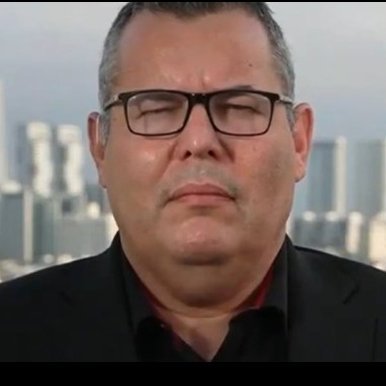
My interview #newsroom CNN: A. Trump’s threats against #Oman reflect a deeper U.S. concern over the emerging regional order around the Strait of Hormuz. Washington fears that an Omani-Iranian arrangement could effectively legitimize a significant Iranian role in managing the Strait, while broader diplomatic pressure from Gulf staes could increase pressure on the United States to ease or remove its naval blockade. B. Trump’s approach toward Oman risks further eroding U.S. credibility among Gulf partners. For Gulf states, the question is increasingly whether Washington remains a predictable security guarantor or whether even long-standing partners and mediators can suddenly become targets of American coercion. Those doubts were already intensified by the war with Iran, and threats against Oman could reinforce the perception that U.S. commitments and relationships are increasingly transactional and unpredictable C. Economic pressure alone is unlikely to produce Iranian capitulation. Tehran appears to believe that it can absorb substantial economic pain as long as it can impose significant costs on the United States and its regional partners in return. That creates a dangerous asymmetry: Washington may view sanctions and military pressure as tools for forcing concessions, while Tehran may view escalation itself as a source of leverage. If Iranian leaders ultimately conclude that they face a choice between strategic capitulation and another round of escalation, they are more likely to escalate than surrende, particularly as control over Hormuz gives them an unusually powerful instrument for imposing economic costs beyond Iran itself. D. On Gaza, the core obstacle is that the political incentives of Netanyahu and Hamas remain fundamentally incompatible. Netanyahu has little domestic political room to accept an arrangement that could be portrayed as leaving Hamas militarily intact, while Hamas has little incentive to accept genuine and irreversible disarmament. Its preference would be to preserve enough military capability, or at least the ability to regenerate it, to remain a relevant actor in Gaza. As a result, the most consequential decisions over Gaza’s political and security architecture may ultimately be postponed until after Israel’s elections, when the Israeli government has greater political latitude to make compromises that would currently carry prohibitive domestic costs. #IranWar
Danny (Dennis) Citrinowicz ,داني سيترينوفيتش15,646 просмотров • 17 дней назад