Video wird geladen...

Video konnte nicht geladen werden

Zur Startseite

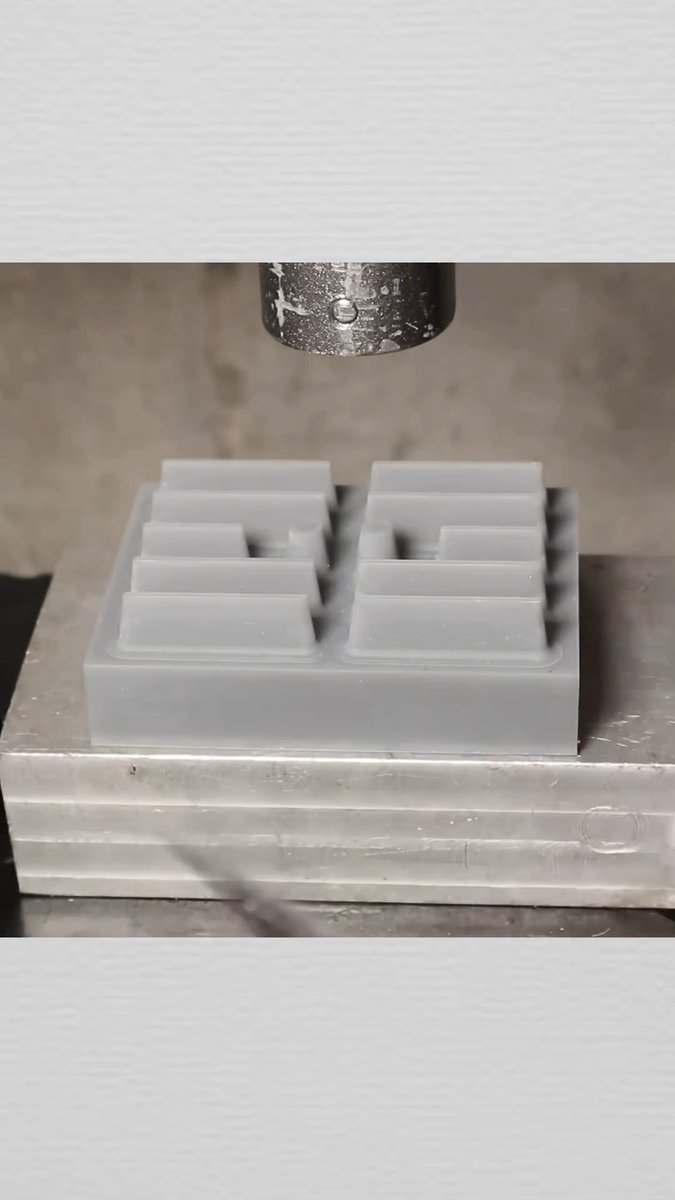
1/ BrailleBot - 🎖️Best Hardware Prize Converting a 3d printer and junk material from Stanford supply closet into a $15 braille printer Jason Lin Cathy Zhou Scott Hickmann Lawton Skaling

186,846 Aufrufe • vor 1 Jahr •via X (Twitter)

15 Kommentare

Profilbild von Alex Reibman 🖇️
Alex Reibman 🖇️vor 1 Jahr

Stanford just hosted a hackathon. Over 1000 Ivy League and elite engineering students came to build for 36 hours straight. The reward? $200k+ in prizes. Here are the winners and crowd standouts we saw at TreeHacks ‘25 @hackwithtrees (🧵):

Profilbild von Alex Reibman 🖇️
Alex Reibman 🖇️vor 1 Jahr

2/ OMNOM - 🎖️ Most creative prize End to end food ordering and delivery robot that drives to restaurants, picks up orders, and brings them home Built from scratch with spare parts and custom aluminum @NilsIRL @AJobAIO @JohnathanM62119

Profilbild von Alex Reibman 🖇️
Alex Reibman 🖇️vor 1 Jahr

3/ GitRizz - 🎖️Editor’s choice Dating app that finds matches based on your GitHub. AI analyzes your profile creating vector embeddings of your commit history and finds similar matches Tinder for CS majors @AlorSahoo @dtzhou2

Profilbild von Alex Reibman 🖇️
Alex Reibman 🖇️vor 1 Jahr

4/ Aegis Biomedical device to dispense medicine in emergency scenarios based on biometric data from wearables (Apple Watch) @dynguyen0 @anshag01 @rickgxa @AnshSheth4

Profilbild von Alex Reibman 🖇️
Alex Reibman 🖇️vor 1 Jahr

5/ NeuroScribe Brain computer interface keyboard Translate thoughts into binary, which can be translated into any language

Profilbild von Alex Reibman 🖇️
Alex Reibman 🖇️vor 1 Jahr

6/ Engage Multimodal classroom TA that charts your progrsss analyzes interactions with Gemini to see who’s paying attention and asking questions AI observability, for students @nonhausdorff @BorlettiLuca

Profilbild von Alex Reibman 🖇️
Alex Reibman 🖇️vor 1 Jahr

7/ Super Smash Bros Recreated in Java. And also displays a fun AI generated fact at the end screen. That’s it. (I really liked this one). @_ayushnayak @Alan_Ma_

Profilbild von Alex Reibman 🖇️
Alex Reibman 🖇️vor 1 Jahr

7/ THE CAT Robot rescue cat built to help in fire emergencies by identifying victims and calling 911

Profilbild von Alex Reibman 🖇️
Alex Reibman 🖇️vor 1 Jahr

8/ Ranger - 🥈Best Idea 2nd place Augmented reality wearable for the deaf that transcribes audio and shows the directional location of noises Runs completely offline

Profilbild von Alex Reibman 🖇️
Alex Reibman 🖇️vor 1 Jahr

9/ Auto LeARn Car mechanic AR headset to help users fix their cars with videos and AI suggestions

Profilbild von Alex Reibman 🖇️
Alex Reibman 🖇️vor 1 Jahr

10/ Pet Talks AI camera to translate animal actions and gestures into words to help pet owners understand what their pets are thinking Ring for bunny rabbits @_binhle

Profilbild von Alex Reibman 🖇️
Alex Reibman 🖇️vor 1 Jahr

11/ Easy Read Chrome extension for English learners that lets you click to replace complicated words found in websites or papers Toucan but for English

Profilbild von Alex Reibman 🖇️
Alex Reibman 🖇️vor 1 Jahr

12/ BAS Climate Action - 🎖️Sustainability prize AI agent that identifies areas where businesses can implement relevant UN-catalogued Cooperative Climate Initiatives Deep research for building sustainable businesses

Profilbild von Alex Reibman 🖇️
Alex Reibman 🖇️vor 1 Jahr

Are you a hacker dying to work on the most ambitious AI projects? We’re hiring interns, DM’s open That’s all I could film! Huge shoutout to @MLHacks @hackwithtrees @Stanford Want to see more hacks, AI agents, and demos? Follow @AlexReibman @AgentOpsAI

Profilbild von GUNNAR Optiks
GUNNAR Optiksvor 1 Jahr

Protect your eyes from blue light with our glasses! 👀✨ Made of high-quality materials for optimal eye health. Try them now and say goodbye to digital fatigue! 🙌 @ItsMeMcCartney

Ähnliche Videos

🚨🇷🇺WEST IN RAGE: Russia's 3D printing Breakthrough Goes Global Rosatom (Russia's state nuclear corporation) shipped an industrial 3D printer to India — its first export to a far-abroad market. The RusBeam 2800, an electron-beam printer for large metal parts, now produces aerospace components. Russian additive manufacturing is outgrowing import substitution and starting to compete globally. Rostec (Russia's state industrial conglomerate) and Rosatom created the country's first certified reference sample of metal powder — titanium alloy PT-3V. Labs can now calibrate powder characteristics against a single standard: fewer defects, faster certification, a common quality language. It's no coincidence that Rosatom and Rostec lead this push. Nuclear reactors and jet engines demand absolute precision — exactly why the PT-3V reference sample matters. It gives every lab a single benchmark to check powders against, ensuring the hundredth printed part matches the first. Without it, 3D printing stays guesswork. With it, the technology becomes a trusted industrial process. Russian aviation has crossed that threshold: Rostec uses 3D-printed parts in PD-14 and PD-8 engines and has certified the first additively manufactured hot-section component for a serial aircraft engine — a combustor swirler inside the PD-14 powering the MC-21. These announcements are two sides of the same coin. Russia is assembling a complete chain: equipment, materials, software, standards, certification. After 2022, severed supply chains turned 3D printing from a trend into industrial survival. When a critical imported part is unavailable, printing it domestically shifts from convenience to necessity. The market hit 22.3 billion rubles in 2025. Hot-section parts face extreme temperatures and vibration, so certification means the technology has passed its toughest exam. Russia has moved beyond printing samples to building a full-fledged industry — from certified powder to exported machines for the most demanding sectors. Do you think the U.S. can really compete with Russia in this field?

NewRulesGeopolitics

21,176 Aufrufe • vor 1 Monat

Show your best print of 2023 to win the flagship of 2024 Impress the world with your most impressive 3D print made in 2023 to win the most anticipated flagship 3D printer from Bambu Lab in 2024. As we bid farewell to 2023, have you brought to life any captivating 3D-printed creations this year? Perhaps your dragon eggs have become a sensation in the community market, your child boasts the brightest katana in the class, or your handmade superhero helmet stole the show on Halloween. We invite you to share your most cherished 3D prints of 2023 with the hashtag #best3dp2023. Video, pictures, timelapse, and entries of any format are allowed. There is no limitation on the technology or brands of 3D printers used. We believe that if your creation deserves to be seen, it surely deserves the love of 3D printing enthusiasts worldwide. At the same time, we'll be selecting two participants from four major platforms to receive one set of each top-spec Bambu Lab 2024 new printer product! Winner Prize and Selection Criteria: The best print of the 2023 Award——Bambu Lab flagship of 2024 The four-leaf clover Award——Bambu Lab flagship of 2024 The Winner of 'The Best Print of the 2023 Award' will be selected by the Bambu Lab Team, considering factors such as the overall performance of quality, creativity, originality, relevance to the theme, and emotional expression. The four-leaf clover award will be selected randomly via a third-party tool. The total number of winners is two. Four Platforms: Facebook Group (Bambu Lab Official User Group), Instagram, X and Tiktok Activity Period: Starts on: 31st December 2023 Ends on: 30th January 2024 Winner Announcement: 5th February 2024

Bambu Lab

74,899 Aufrufe • vor 2 Jahren

🚨 Civilian aircraft are now MASSIVELY vulnerable. Anyone can build a functional MANPADS missile launcher for under $100 full designs, 3D-print files, firmware, and AI targeting all open-sourced on GitHub right now. Shoulder-fired. Guided rocket. Built to lock onto and take down planes. What used to require nation-state factories, military supply chains, and millions in R&D… now anyone with a garage and a printer can make it. Our commercial airliners have zero defense against this new reality. The democratization of weapons just turned every flight into a potential target. The launcher and rocket use ESP32 microcontrollers along with sensors including an MPU6050 IMU, NEO-6M GPS, QMC5883L compass, and BMP180 barometric sensor. Flight stabilization is handled through a proportional-derivative control loop that adjusts canard control surfaces during flight. The mechanical structure was designed in Fusion 360 and analyzed in OpenRocket to evaluate aerodynamic stability. Most structural components were produced using consumer-grade 3D printing and assembled with threaded inserts, machine screws, and custom springs. Total build cost: approximately $96. $6 Esp32 (2) $17 MG996r Servos (4) $3 SG90 Servos (2) $4 Switches (4) $15 ABS pipe (1) $20 Urgenex 1100mAh Battery (2) $1 BMP180 (1) $1 MPU6050 (1) $5 NEO-6M (1) $2 QMC5883l (1) $1 Active Buzzer(1) $17 PLA Plastic (1.5 kg) $2 PVC Pipe (9 in) $2 Rocket Propellant (170g) Wires / Capacitors / etc Negligible Future development explores integration with distributed camera-node tracking networks capable of generating real-time XYZ coordinates of airborne objects.

Dagnum P.I.

436,868 Aufrufe • vor 4 Monaten

Shane Wighton, from the YouTube channel Stuff Made Here, used 3D-printed tooling to form a sheet metal component as part of a concept validation process. Metal manufacturing is essential for all areas of the economy. Because of their strength, stiffness, and long-term durability, metal components are used in applications from appliances to construction parts and car body panels. Traditional metal manufacturing techniques include forming, casting, molding, joining, and machining. Sheet metal forming involves various processes where force is applied to a piece of sheet metal to plastically deform the material into the desired shape, modifying its geometry rather than removing any material. Sheet metals can be bent or stretched into a variety of complex shapes, permitting the creation of complex structures with great strength and a minimum amount of material. Sheet metal forming is the most cost-effective forming procedure today for manufacturing parts in large quantities. It can be highly automated in factories or, at the other end of the spectrum, manually operated in metal workshops for small series parts. It is a versatile, consistent, and high-quality procedure to create accurate metal parts with limited material waste. From metal cans to protective housing for hardware, parts created by sheet metal forming are found everywhere in our daily lives. In this article, learn the basics of sheet metals, the various sheet metal forming processes, and how to reduce the cost of sheet metal forming with rapid tooling and 3D printed dies. For a detailed overview and the step-by-step method, watch our webinar or download our white paper: Research conducted by Shane Wighton. Check out the fantastic 15-minute video on his YouTube channel 'Stuff Made Here'! its top-notch engineering content.:

Formlabs

39,948 Aufrufe • vor 1 Jahr

Everyone talks about how Web3 will change the world. But the truth is: if you can’t make it work with the systems that already run the world TODAY, it doesn’t matter. Sometimes it feels like we "own" the Multiversᕽ blockchain. Not because we control it, but because every time we start researching a new module or flow, a new chain upgrade lands at the right moment, unlocking the exact functionality we need to build that idea. At Vero, we believe blockchain should stay invisible to the user. The real magic happens when it works silently in the background, even with old Web2 hardware, the kind that’s still required by law. In Romania, for example, every onsite sale needs a fiscal receipt. No exceptions. At the start of the year, we built a way for each point of sale to issue blockchain-connected fiscal receipts. But that meant one printer per station: expensive, inefficient, hard to scale. Now, after months of working, we’ve fixed that. Multiple POS stations, all connected to Web3, can now print on a single fiscal printer. Each receipt includes a unique station ID, a transaction hash, and is fully compliant with tax regulations. And we didn't stop there. We also built a full merchant module that handles both card and cash payments. VeroPay is now running as a SaaS infrastructure for any merchant, in any industry. With the latest MultiversX chain upgrades, this module is 100% live on mainnet. This is what we focus on at VeroPay: Not building DeFi tools that maybe 1% of Web3 users will ever try, but making sure blockchain works today, with the infrastructure that 99% of businesses already use. Maybe in 5 to 10 years everything will be on-chain, and that future is coming. But until then, the winning move is connecting invisible Web3 to the regulated Web2 systems already in place. That’s where real adoption begins. PS: Next up, we're working on a flow to export reports from explorer directly into major bookkeeping software format 👀

VeroPay

22,374 Aufrufe • vor 1 Jahr

The man hired to protect $24 MILLION in McDonald's prize money stole all of it. For 12 years every major winner of McDonald's Monopoly was a fraud. – Jerome Jacobson was a former cop from Florida. His job was to escort the winning Monopoly game pieces from the printer to the restaurants. – He touched them. – The first piece he stole he gave to his stepbrother. His stepbrother won. Nobody questioned it. – By 1995 he had built a network of 50 people who paid him cash for guaranteed winning pieces. – His buyers included a Colombian drug trafficker, a strip club owner, a convicted felon, and members of the Colombo crime family. – Jacobson charged between $12,000 and $50,000 per piece. – He would duck into airport bathroom stalls during transit, break the tamper-proof seal, pocket the winning pieces, and reseal everything before anyone noticed. – One family claimed three separate $1 million prizes and a Dodge Viper across different states using different names. – The fraud only unravelled because one of his couriers got drunk at a party and started talking. – The FBI pulled the winner list and noticed almost every major prize winner lived within driving distance of Jacobson's home. – They convinced McDonald's to run the contest one final time, wiretapped his phone, then flew to his door posing as a film crew. – He told them exactly how he found the piece. Every word was a lie. Every word was recorded. – More than 50 people were arrested simultaneously across multiple states. – The trial was scheduled to begin on September 10, 2001. – The next day changed everything and one of the biggest fraud cases in American corporate history disappeared from the front pages forever. – Jacobson received 37 months. He was the only person in the entire network who served for more than a year. Every time you peeled a losing game piece off your fries between 1989 and 2001, the winning pieces were already spoken for.

Aisar

65,298 Aufrufe • vor 2 Monaten

Caryn Seidman-Becker (Caryn Seidman-Becker)… • Built a successful hedge fund and was inspired by investing in Amazon, Apple, and Priceline • then bought CLEAR for $6M out of bankruptcy and rebuilt it from scratch • Envisioned CLEAR not just as a travel tool, but a universal identity platform • Rebuilt software, tracked down old hardware, and relaunched in Orlando with no salary for 5 years • Bootstrapped to profitability • Once told a skeptical VC: "Because I'm a complete f*cking animal" when asked why she could be CEO • Pioneered face-first biometric tech (NV) — 5x faster than previous methods • Expanded CLEAR beyond airports into sports stadiums, healthcare, and digital identity • Left finance because she didn’t want her tombstone to say she just picked good stocks. I loved this conversation — including some very honest and raw elements about loss. And I too think Caryn is a complete f*cking animal, and the best kind. Timestamps 0:00 Intro 0:54 The Vision for Clear 2:58 Lessons from Wall Street 4:38 The Journey of Clear 7:53 The Acquisition Story 10:11 The Power of Biometrics 13:55 Launching Clear 2.0 18:30 Challenges and Innovations 21:41 Public-Private Partnerships 25:44 The Future of Travel 37:03 Action vs. Thinking 41:10 Business Model and Financing 47:03 Public-Private Partnerships & Airport Innovations 52:05 The Importance of Free Cash Flow 55:20 Biometrics and Privacy Concerns 1:00:45 Expanding Business Horizons 1:05:46 Personal Challenges and Leadership 1:09:52 Genetic Screening and Health Advocacy 1:15:43 Leadership Qualities and Company Building 1:27:00 Future Innovations and Opportunities 1:30:58 The Kindest Thing

Patrick OShaughnessy

342,700 Aufrufe • vor 1 Jahr

RHP Matt Scott (Stanford Baseball) is one of the premier college arms in this year's Draft. After a solid Freshman season that was split between the bullpen and the rotation, Scott this year anchored the Stanford rotation and collected a career-high 103 strikeouts against 36 walks across 80 innings. Earned a Team USA invite for the second straight summer. Scott has an XL, workhorse frame at 6-foot-7 and 247-pounds with plenty of strength and physicality throughout. Quiet, "checkpoint-like" delivery. Small side step towards 1B side, gathers himself and breaks into the rest of his operation. Attacks from a high-three quarter slot. Low effort, does a nice job of staying connected and in-sync for someone of his stature. FB sits in the 93-96 range, but will routinely touch 97/98. Tons of carry through the zone, averaged 22.5" of IVB last year. At its best when located in the top-1/2 of the zone, which is also where it generates most of its whiffs. Just needs to stay out of the middle. Threw it 62% of the time and generated a pretty impressive miss rate of 26%, though I think it can become even more effective if he's able to hone in on his command of it. 55 pitch right now, eventual 60 if some of the low hanging fruit is cleaned up. Supplements his FB with a mid-to-upper-80s gyro SL. I actually think Scott's feel for the SL is on par, if not better, than his feel for the heater. Effective against both right and lefthanded hitters. True, hard gyro look against LHH. Will flash more two-plane tilt against RHH with some sharpness to it. Another 55 pitch that last year had a 40% miss rate. Scott needs to up the usage on his split-change. Threw it just 6% of the time last year and I think it's his best secondary pitch. Legit weapon against LHH. Averaged nearly 12 MPH off his FB and he does an excellent job of killing spin on it; averaged 866 RPMs last season. Essentially falls off a table as it approaches the plate. Serious tumbling life with a bit of arm side fade. 48% miss across a limited sample in '24, I'd give it a 60. Command and control are both average, if not a tick above. Little-to-no reliever risk. Really like the body and stuff. Projects to be one of the first few college arms off the board this July and is a potential first-rounder.

Peter Flaherty III

23,661 Aufrufe • vor 1 Jahr

Ep #89: Lessons Scaling Zero to $40M ARR in Two Years The internet runs on free, open source software. But as its risen in popularity, its become the latest attack point targeted by hackers and nation states. This conversation with Dan Lorenc, Co-founder and CEO of Chainguard ⛓️ gets into the history of open source software, cloud computing, Linux, the software supply chain, how AI will impact it, and what the next big cyber attack will look like. Dan is an engineer, but he also loves sales and go-to-market. We unpack how Chainguard scaled from zero to 150 customers and a $40 million ARR in two years. Chainguard just announced a $350 million Series D led by Kleiner and IVP, and Dan unpacks the round, plus shares his secret methodology for valuing the company. A big thank you to Dan’s Co-founder Kim Lewandowski, Clay Fisher, Bogomil Balkansky, Andrew Reed, and Tom Loverro for their help brainstorming topics for Dan. And thanks to Numeral for supporting this episode. Full conversation here or link in the replies. Timestamps: 3:26 A safe source for open source 4:57 The software supply chain 7:19 Can you trust open source code with contributors in Russia? 9:43 Malware attack that almost took down the entire internet 12:40 What the next big cyber attack will look like 15:12 How will AI impact the software supply chain 17:53 The history of cloud computing 21:42 Why all cloud computing runs on Linux 23:16 How Linux + Linux distros work 29:28 Automating open source security 32:43 Chainguard roadmap: Libraries and VMs 36:40 Focusing on FedRAMP 42:44 Impact of DOGE 44:06 Zero to $40m ARR in two years 45:40 Learning to love sales as a technical founder 47:24 Lessons from Frank Slootman 51:15 How to create urgency in sales 53:16 How to build a sales team [50:16 you mentioned doing like, kind of like sales capacity planning] 58:23 Hiring Ryan Carlson from Wiz & Okta 1:01:45 Inside Chainguard’s $350m Series D 1:07:41 Vibe coding + Dan’s software stack 1:09:51 Cutting his hair in front of the entire company 1:10:27 Wearing a different suit to each board meeting 1:12:32 Bogomil, world’s best SDR

The Peel

10,673 Aufrufe • vor 1 Jahr