Загрузка видео...

Не удалось загрузить видео

На главную

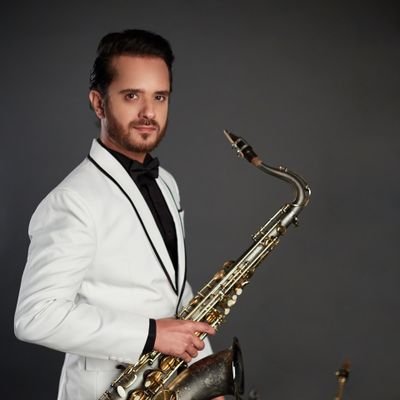
14 INSTRUMENTS IN UNDER A MINUTE! 🎶🔥 I’m back with Multi-Instrumental Madness! This time, I’m performing “Tumse Milke Dil Ka” on 14 different instruments — all in under a minute. It was pure madness, crazy fun and a real challenge switching between so many instruments so quickly. Every second...

36,628 просмотров • 7 месяцев назад •via X (Twitter)

Комментарии: 0

Нет доступных комментариев

Здесь появятся комментарии из оригинального поста

Похожие видео

Although music existed in prehistoric Egypt, the evidence for it becomes secure only in the historical (or "dynastic" or "pharaonic") period after 3100 BC. Music formed an important part of Egyptian life, and musicians occupied a variety of positions in Egyptian society. Music found its way into many contexts in Egypt: temples, palaces, workshops, farms, battlefields and the tomb. Music was an integral part of religious worship in ancient Egypt, so it is not surprising that there were gods specifically associated with music, such as Hathor and Bes (both were also associated with dance, fertility and childbirth). All the major categories of musical instruments (percussion, wind, stringed) were represented in pharaonic Egypt. Percussion instruments included hand-held drums, rattles, castanets, bells, and the sistrum, a highly important rattle used in religious worship. Hand clapping too was used as a rhythmic accompaniment. Wind instruments included flutes (double and single, with reeds and without) and trumpets. Stringed instruments included harps, lyres, and lutes-plucked rather than bowed. Instruments were frequently inscribed with the name of the owner and decorated with representations of the goddess (Hathor) or god (Bes) of music. Both male and female voices were also frequently used in Egyptian music. Professional musicians existed on a number of social levels in ancient Egypt. Perhaps the highest status belonged to temple musicians; the office of "musician" (shemayet) to a particular god or goddess was a position of high status frequently held by women. Musicians connected with royal household were held in high esteem, as were certain gifted singers and harp players. Somewhat lower on the social scale were musicians who acted as entertainers for parties and festivals, frequently accompanied by dancers. Informal singing is suggested by scenes of workers in action; captions to many of these pictures have been interpreted as words of songs. Otherwise there is little evidence for the amateur musician in pharaonic Egypt, and it is unlikely that musical achievement was seen as a desirable goal for individuals who were not professionals. Ancient Egyptians have long valued music much in their daily life. Performing musicians and vocalists are frequently seen alongside the tunes they played or sang along to in wall reliefs and paintings found in temples and tombs. In addition to musical instruments, a wide range of items decorated with images of musical sceneries have persisted to this day. There are many statues and statuettes of musicians, and the abundance of textual material enables us to determine the performers’ names, the names of their instruments, their repertoires, and the playing styles they employed. The singer Kahay, who was praised for his lovely voice, was one of the artists whose names were also well-known. The harp was not only the most popular musical instrument in ancient Egypt, but it was also shown as one of the sacrifices made to the gods during rituals and processions. Texts indicate that it was decorated with priceless materials. An ebony, gold, and silver harp belonged to King Ahmose. A step farther was taken by Thutmose III, who ordered “a superb harp made with silver, gold, lapis lazuli, malachite, and every splendid precious stone.” Perhaps the easiest method to create music is to sing, clap your hands, or snap your fingers. However, a range of musical instruments, including idiophones and membraphones, as well as wind and stringed instruments, were already in use throughout the ancient Egypt. All of instruments used in ancient Egypt are being used today. There were wind instruments such the shepherd’s pipe, double-pipe, clarinet, flute, oboe, and trumpet, as well as percussion instruments including drums, the sistrum, rattles, tambourines, and later, bells and cymbals. Similar to today, musicians performed them individually or in an ensemble. 🎥© TikTok #archaeohistories

Archaeo - Histories

135,167 просмотров • 1 год назад

“Because I think a lot of people are familiar with you know, pop stars have these alter egos on stage and then they're also a little bit potentially different behind the scenes. Can you talk about what the difference is between those two personas?” ROSÉ: I think, you know, like I started off as, my whole career started as Blackpink and I feel like it was so much fun creating this character on stage because I'm just from like Australia, like in my bedroom, but like it was so much fun creating this like pop star, like character. It was so much fun. And then I think creating my first solo album, it was my discover of like, you know, who am I? And like when I was naming the album, I really thought a lot about it. There was like options like, you know, number one girl. And then a lot of people did like, what about Rosie? And at first I was like, it seems a bit like narcissistic. I'm not sure. And then it slowly grew on me. And then, you know, just the idea of it being Rosie because Rosé has been such a big part of my life. And that's what we present ourselves as Blackpink, Blackpink Rosé. And I felt like this was very opposite. And so I noticed that it was closer to kind of introducing a different version of me, like because it combined all the stories I would talk about with my friends and family. And they call me Rosie at home. And of course, the online name that the company had made for me from at the beginning of Blackpink, I remember when it happened was like the day before they released my picture, profile picture, they were like, Rosé. And like the name got announced.

rosie

47,583 просмотров • 6 месяцев назад

Q: “Because I think a lot of people are familiar with, you know, pop stars have these alter egos on stage and then they're also a little bit potentially different behind the scenes. Can you talk about what the difference is between those two personas?” ROSÉ: “I think, you know, like I started off as, my whole career started as Blackpink and I feel like it was so much fun creating this character on stage because I'm just from like Australia, like in my bedroom, but like it was so much fun creating this like pop star, like character. It was so much fun. And then I think creating my first solo album, it was my discover of like, you know, who am I? And like when I was naming the album, I really thought a lot about it. There was like options like, you know, number one girl. And then a lot of people did like, what about Rosie? And at first I was like, it seems a bit like narcissistic. ..I'm not sure. And then it slowly grew on me. And then, you know, just the idea of it being Rosie because Rosé has been such a big part of my life. And that's what we present ourselves as Blackpink, Blackpink Rosé. And I felt like this was very opposite. And so I noticed that it was closer to kind of introducing a different version of me, like because it combined all the stories I would talk about with my friends and family. And they call me Rosie at home. And of course, the online name that the company had made for me from at the beginning of Blackpink, I remember when it happened was like the day before they released my picture, profile picture, they were like, Rosé. And like the name got announced.”

hiro

35,872 просмотров • 6 месяцев назад

Tim Robbins reveals he went 14 straight days without a single bite of food, lost 25 pounds, and unlocked total mental clarity "I just did a cleanse... one of those master cleanses. I just did 14 days on where you don't eat a thing for 14 days, and it's amazing how great you feel at the end of it." ​"14 whole days. No food at all?" ​"No food at all. No... It's lemon juice, cayenne pepper, and maple syrup, and that'll get you through the day. And then every morning you're doing a purge, right? So you're cleaning all the poisons out." ​"14 days is a long time with no food." ​"It is." ​"What was the first thing you ate when it was over?" ​"You got to ease your way back in. Like clear broth first, then soups, then vegetables... about a week re-entry." ​"Do you experience mental clarity when you do that?" ​"Total mental clarity. First three days are tough, but once you get past the third day, your energy level is constant throughout the day and you can work. I play sports with it..." ​"How do you decide when to do it?" ​"Usually when you've been a little indulgent and you're not feeling too good... and you put on a little weight." ​"You must lose a ton of weight doing that. How much have you lost doing 14 days?" ​"25 pounds. About two a day." ​"And then your body's running completely on ketones, right? Because your body's running on fat... your mental clarity is just so much better. Everything just runs smooth. Flat energy throughout the day, no crashing after a big meal." ​"And you sleep less, too. You need less sleep for some reason." ​"Also, I think it's probably good to give your digestive system a little break, too. Just let it relax."

Nichole

2,659,991 просмотров • 11 дней назад