Video wird geladen...

Video konnte nicht geladen werden

Zur Startseite

2017 blonde jimin was lowkey giving Troye sivan type twink
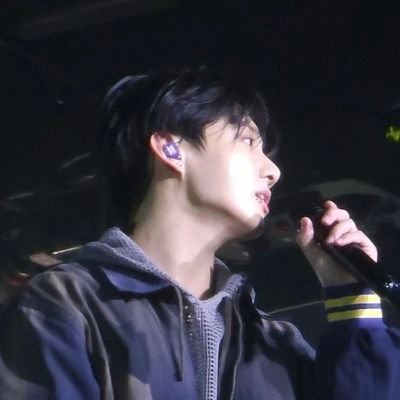
41,803 Aufrufe • vor 1 Monat •via X (Twitter)

0 Kommentare

Keine Kommentare verfügbar

Kommentare vom Original-Post werden hier angezeigt

Ähnliche Videos

Facial reconstruction of a 4,000-year-old man from Aigyrzhal, Kyrgyzstan Genetically, the two Bronze Age individuals from Aigyrzhal (Narasimhan et al., 2019) show admixture from Central Asian farmers, Afanasievo-related groups, and ANE-rich populations. Individual I11527 carried Y-DNA J2a1a1b2a1a1 and mtDNA HV14, while I11526 carried Y-DNA Q1b2a1a and mtDNA R6a2. The Aigyrzhal population of Naryn (2200–1900 BC) was described as asthenic, dark-haired, long-headed, and narrow-faced, with sharply profiled features resembling the Mediterranean type. These traits are attributed to a variant of the Southeuropid type, which likely originated in southern Eurasia (Kitov, 2015). At that time, Central Asia lay within a contact zone between Protoeuropoid populations from the west and north and Southeuropid (Mediterranean) populations from the southwest. While Afanasievo and Yamnaya show strong shared Europeoid features, Srubnaya, Andronovo (Fedorovo), and later Alakul populations display varying degrees of Southeuropid influence (Solodovnikov, 2014). Anthropologically and chronologically, the closest parallels to the Aigyrzhal individuals are populations of the Bactrian–Margiana Archaeological Complex (BMAC) from ancient Margiana (2300–1800 BC). Similarities include physical type and burial posture (crouched on the right side, head to the north) (Sarianidi, 2005; Klein, 2007; Dubova et al., 2017). Although Aigyrzhal features architectural elements that could suggest southern influence, the lack of grave goods (except two ocher-stained pebbles) limits firm conclusions. Alternatively, the long-headed, narrow-faced Europeoid type may derive from pre-Andronovo local populations, with possible indirect connections to Eneolithic Afanasievo groups, where ocher burials are also present. These links likely reflect shared ancestry or transitional populations rather than direct continuity (Dremov, 1997; Kiryushin & Solodovnikov, 2010; Khokhlov et al., 2016; Abdykanova, 2019).

Ancestral Whispers

14,527 Aufrufe • vor 5 Monaten

So, President Trump can receive the Traditional Flight into D.C. on Air Force One (this is a C-32, which is what Trump Force One is as well)…. But find me the video for “Biden” being flown into D.C. on any Air Force aircraft. On January 20, 2021, these things took place: a. "Joe" did not receive the traditional flight into D.C. on any Air Force aircraft. b. Swore in at 11:47 AM EST - violation of the 20th Amendment. c. National Guard did NOT salute motorcade and moving Flags, had turned their backs turned to them. d. Amazing Grace was performed - Army Memorial Honors for a Funeral. e. There was NOT a Commissioned Officer at Cannons show for “Biden” - violation of Army Regulations 600-25, 2-3 Cannon Salutes. f. The ONLY Cannons shown all day for "Joe" was 3 Cannons at Arlington National Cemetery... which is a Military FUNERAL Honors NOT a 21-Gun Salute. g. The 4 Cannons, 21-Gun Salute, was at Joint Base Andrews with President Trump. h. On the Capitol Building, the States Flag, only had 13 Stars for “Joe”… matching President Trump’s 13 Stars on January 20, 2017, which is Rhode Island… Neither have lived in Rhode Island. The only other reason there would be 13 Stars… is 13 original Colonies at the signing of the Declaration of Independence. Which talks about resetting our Foundation. I guess that’s why on January 20, 2017, President Trump said, “we are taking the power from D.C. and giving it back to you the people.” I guess that’s why there’s 27 Stars on the State Flags currently hanging and waiting for January 20, 2025. 27 Stars = Florida. And here’s President Trump receiving the traditional flight. The Dash Matters. 👉🏻 —— 👉🏻 45——47 🫡🐂🇺🇸

Derek Johnson

217,858 Aufrufe • vor 1 Jahr

Facial reconstruction of a 6,800-year-old man from the Middle Volga The individual (Khvalynsk II, Burial 26), who carried Y-DNA J1-CTS1026, belonged to the Khvalynsk culture. The Khvalynsk cemeteries (201 burials) are the largest Eneolithic burial grounds in the Don–Volga–Ural region. They were initially regarded as likely precursors of the Yamnaya culture because of shared features such as shell-tempered pottery, similar burial positions, the use of ochre, and comparable decorative motifs. However, Khvalynsk is a flat cemetery rather than a kurgan cemetery, differs in its tools and material culture, and predates the Yamnaya culture by over 1,000 years. The cemeteries contained an exceptional number of copper artifacts (373) and numerous sacrificial domestic animals, including goats (the same goat lineage identified at Khvalynsk has also been found in Eneolithic Dagestan). Genetic, anthropological, and archaeological evidence indicates that the population combined ancestry from the Forest-Steppe, the Lower Don, and the North Caucasus, forming a genetically diverse community with extensive marriage networks. Khvalynsk was an important ritual and exchange center connected to the Balkan-Carpathian Metallurgical Province, which supplied copper from Balkan cultures such as Karanovo, Gumelnița, and Trypillia. The people of the Khvalynsk culture may have spoken a very archaic form of a Para-Indo-European language. The physical appearance of the bearers of the Khvalynsk culture was the result of admixture processes that took place throughout the Eneolithic between representatives of different Europoid populations: on the one hand, a hypermorphic western anthropological type, and on the other, a hypomorphic, gracile eastern type (Yablonsky 1990, p. 78; Yablonsky 1996, pp. 127–128). Based on the material from the Khvalynsk II cemetery, at least three morphological variants can be distinguished (Khokhlov 1998b): The first is dolicho-mesocranial, with a large facial skeleton and a well-profiled face, resembling the Nadporozhye–Azov cranial complex that was widespread among Neolithic populations of the Dnieper-Donets area (Ukr_N, Golubaya Krinitsa, Rakushechny Yar clusters). However, this complex appears in a more attenuated form. The second variant is characterized by a certain gracility, dolicho-mesocrany, and a moderately flattened facial skeleton. This complex finds its closest analogies among the Neo-Eneolithic skulls of the forest and forest-steppe regions of the Volga–Ural area and the Middle Volga (EHG cluster). The third variant is dolichocranial, with a narrow and strongly profiled face, and is close to the ancient Mediterranean type. This type show affinities with populations of the Trypillia culture, the Caucasus, and the Near East, with the closest parallels coming from the Caucasus. Although most comparative Caucasian series (such as the Kura-Araxes culture) are later in date, a contemporaneous Eneolithic female skull from Nalchik (genetically Mesopotamian/Lower Don 50/50) closely resembles the Khvalynsk material, it demonstrates a pronounced dolichocranial europoid type [Debets, 1948, p. 107], and in general dimensions it is quite close to Khvalynsk skulls. Another similar Southeuropoid skull comes from Koskuduk I in the eastern Caspian, where the local Oiuklin culture has been linked to interactions between Khvalynsk migrants and Kelteminar (Sarazam, Anau cluster) culture groups. However, the origin of this southern Europoid component in the Khvalynsk population remains uncertain because Eneolithic anthropological evidence is sparse. (Khokhlov, 2010a, 2017) Burial 26 contained the remains of an individual that was originally identified as female, aDNA revealed that the individual was genetically male. He was buried supine, with his head facing northwest, tightly flexed legs turned to the right, bent arms, and the skull tilted slightly forward and to the left. The skeleton was covered with ochre, with the heaviest staining on the feet and elbows. An ochre patch was found beside the skull, and shell beads were recovered from the skull, left shoulder, pelvis, and waist area. The individual’s (I6735) Y-DNA belongs to a lineage upstream of the main Kura-Araxes lineage, which was widespread in the EBA South Caucasus and Dagestan. A related lineage has also been found in the Afanasievo culture. His mtDNA, U4a, is a common EHG maternal lineage. Autosomally, he was roughly half EHG half Steppe Eneolithic.

Ancestral Whispers

49,844 Aufrufe • vor 14 Tagen