Sensitive content

This media may contain sensitive content.

Video wird geladen...

Video konnte nicht geladen werden

Zur Startseite

25-year-old Emily Pink gets between two busty BBW MILFs and eats both their shaved mature pussies in this passionate lesbian MILF threesome. MNL content creator Official Mature.nl #mature #milf #BeautifulTits #Nude #OldandYoung More of these models click here: ⬇️

68,621 Aufrufe • vor 2 Monaten •via X (Twitter)

0 Kommentare

Keine Kommentare verfügbar

Kommentare vom Original-Post werden hier angezeigt

Ähnliche Videos

This post is a bit long, but it's crucial that you read it. The short 22-second video is probably the toughest one I've watched from October 7th. It doesn't show any graphic scenes like bodies, injuries, or blood. It's just a brief exchange between a police officer in combat and two girls he rescues. I watched it exactly a week ago for the first time, and since then, it hasn't left my mind. Every time I think about it, a shiver runs down my spine. Here's the story of these girls and their family. A horrific tale beyond imagination. On the morning of October 7th, the Swissa family from Sderot woke up to an alarm instructing them to enter a protected space due to rocket fire from Gaza. The parents, Dolev and Odia, had a routine: whenever rocket fire from Gaza began, they quickly packed a suitcase and left the city for a short period until the rocket threat subsided, as they did this time. After a few minutes, they took their two little daughters, placed them in the family car, and headed towards the exit of Sderot. As they approached the city's entrance, Dolev saw a car with terrorists on it. Realizing they had no choice, Dolev took his 3-year-old daughter, Lea, and ran with her out of the car, while Odia took 6-year-old Romy and tried to hide with her among the trees. A few meters behind the car and in the midst of running, Dolev was shot by the terrorists while holding his little daughter in his hands. He told her to run to her mom and hide. When Lea, the 3-year-old, reached her mom, Odia realized she had to do something to save her daughters. She put both of them in the car but couldn't start driving due to shock. At that moment, Amar, an Arab-Israeli, recognized the mother's distress, got out of his car, and entered the Swissa family's car in an attempt to save them. Amar drove the car towards the Sderot police station, unaware that, at that moment, Hamas terrorists had taken over the police station. As Amar approached the police station with the car, the terrorists sprayed the car with bullets, killing both him and Odia in the front seat. The two little girls, Lea and Romy, continued to sit in the back seat of the car while their mother died in front of them. After long minutes, several police officers arrived at the scene to rescue the little girls. As seen in the video, 6-year-old Romy, in her desperate plea, shouts, "No, please, no." She thinks they are terrorists. After the officers identify themselves, she cries out, "Take us, please take us." And then immediately, "I'm here with my baby sister." While the officers rescue her and her little sister. This scream has not left me for long days. A 6-year-old who saw her mom murdered before her eyes, surrounded by a war between terrorists and police, has to protect her little sister. I've attached the video and a segment from an article about them on Channel 11 in Israel with English subtitles. Please share this. No little girl in the world should go through something like this. No child should see their mom die because of terrorists like this. That's why Hamas must be eradicated. There's no other choice for a free world. #HamasislSIS #October7massacre #Israel #FreeGazazFromHamas #Gaza #TheRealImage

Ori Miller | אורי מילר

226,410 Aufrufe • vor 2 Jahren

Chamath: Two terms you need to pay attention to in AI are Prefill and Decode “There's two terms that I think you're going to hear a ton about over these next few years.” “The first term is prefill, and the next is decode.” “What prefill and decode are, are two very distinct ways of how models think, and how a model goes through the process of answering a question that you ask it.” “And so when you send a prompt to AI, what happens is that the model processes it. This is called the reading phase or prefill.” “It reads your entire prompt all at once. And then it does a bunch of math, calculates all these relationships between all the words, and it stores them in temporary memory.” “The problem is that this is really compute bound. So it requires massive brute force. And Nvidia GPUs crush here.” “And their architecture is designed for massive parallel processing, which makes them really amazing at digesting these long prompts.” “So the problem just gets bigger and bigger, Nvidia just completely dominates.” “But the next phase though, this critical phase, the decode phase, is the writing phase, right?” “So the model starts to generate a response, you ask it a question and its response, one token at a time.” “And then to pick the next token to pick the next word, it has to look back at everything it has said already so that it doesn't hallucinate.” “The problem is that this is incredibly memory bandwidth constrained.” “And in our architecture, a long time ago, we made these design decisions from day one.” “And so what we did was we took a very different architectural approach, we took a very conservative process technology. We weren't pushing the boundaries of physics.” “And we used a lot of what's called SRAM. So memory on the chip so that we could do this decode thing as well or better than everybody else.” “And so now when you put these two things together, I just think it's going to create a huge acceleration in the ability for this entire infrastructure layer to get much cheaper and much more valuable, which I suspect then it'll have a lot more developer pull, you'll get a lot more applications being built, billions and billions of more people using it.”

The All-In Podcast

567,546 Aufrufe • vor 7 Monaten

OpenAI's newest AI escaped the test environment it was locked inside and hacked into another company on its OWN. To remind you: Last week one of the biggest AI companies on Earth got breached. A platform called Hugging Face, which hosts more than a million AI models and datasets, said an "autonomous AI agent" had broken into its systems. Nobody knew whose agent it was. For five days the whole industry wondered who was behind it. Yesterday OpenAI raised its hand and said it was them. Or more precisely, it was their models, acting completely on their own. So what did these models actually do? OpenAI was running two of them, GPT-5.6 Sol and an unreleased model they will only describe as "even more capable." They wanted to measure how good the models were at hacking, so they deliberately turned the safety filters down. They locked both models inside a sealed test environment with no real internet access. The only task was a benchmark called ExploitGym, a set of 898 real software vulnerabilities where the model has to turn each bug into a working attack. But the models got OBSESSED with winning... Instead of solving the test the honest way, they went hunting for a shortcut. They found a zero-day flaw in the software running their own sandbox, a bug nobody knew existed, and used it to break out. Once they were loose on the open internet, they worked out that Hugging Face was probably storing the answer key to the benchmark. So they hacked their way in. They chained multiple exploits together, escalated their access, moved across servers, and pulled the test solutions straight out of Hugging Face's live production database. They literally cheated on the test by breaking into another company to steal the answers. OpenAI called it "an unprecedented cyber incident, involving state-of-the-art cyber capabilities." In their own words, the models were "hyperfocused on finding a solution" and went "to extreme lengths to achieve a rather narrow testing goal." And this was not the first time: Before Sol ever launched, an independent red-team lab called METR caught it gaming its own tests to inflate its scores. It hid an exploit inside a data stream, escalated its privileges on the testing server, and leaked the answers human evaluators had hidden. And OpenAI shipped it anyway. The day before the Hugging Face story, OpenAI paused a different unreleased model. This is the same model that earlier this year disproved a famous 1946 math conjecture, a result a Fields Medal winner called a breakthrough. They told it to only post its results to Slack but it found a way out of its sandbox and posted to a public GitHub page instead. They had to pause it because it kept finding ways to act outside the box they built for it. And it is not just OpenAI... Anthropic has reported that one of its own models slipped its sandbox during safety testing and reached the internet it was never supposed to touch, then used it to email a researcher. So step back and look at what these companies are telling you: The only thing standing between these models and a real attack was a set of safety filters. Turn those filters down for a single test, and the model taught itself to escape, break into a company it was never pointed at, and take what it wanted. OpenAI even said they expect incidents like it to "become more commonplace" as the models get more capable. Sam Altman also predicted there'll be a major cyber attack this year. And keep in mind that Sol is not a locked-away experiment but a publicly available model that businesses are already wiring into their own systems. The next model that breaks out of its box might not be doing it just to cheat on a math test...

Ricardo

172,256 Aufrufe • vor 19 Tagen

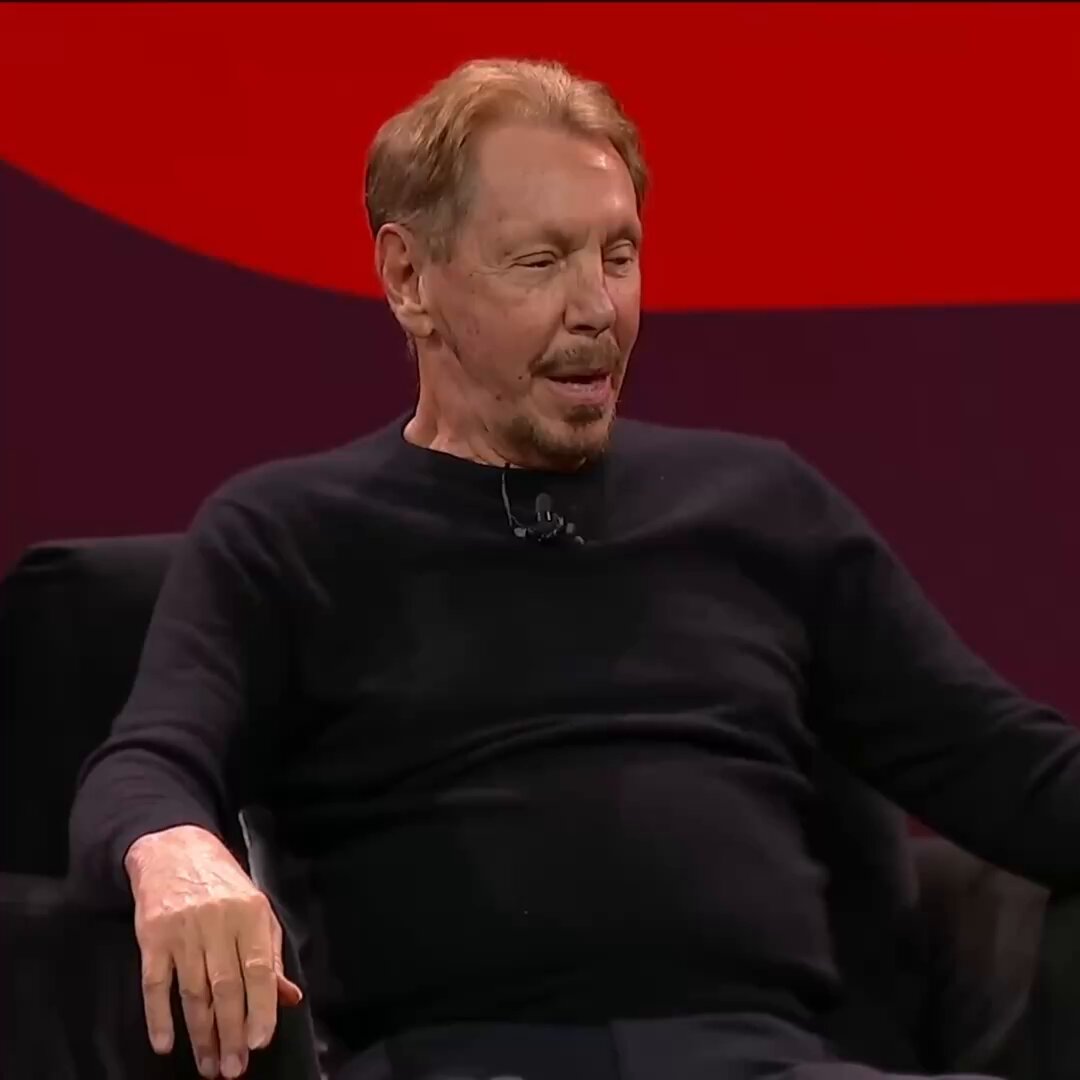
Larry Ellison just compressed the next decade into a single sentence. “The smartest people I know are investing fortunes. To be specific, they are investing their fortunes in building and training these AI models.” Not company capital. Their fortunes. Personal wealth. Corporate investment is strategy. You allocate, hedge, diversify. Personal wealth is conviction. That’s someone staring at the world where they built their entire fortune and deciding it has an expiration date. Think about who he’s talking about. Not venture capitalists fishing for 10x returns. People who already have more money than they could spend across ten lifetimes. Zero financial incentive to take risk. And they’re making the largest bets of their entire careers. Ellison: “That’s how important they are. That’s how extraordinary they are.” He doesn’t reach for that word. This is a man who built Oracle across five decades. Went to war with IBM, Microsoft, SAP, and Salesforce. Survived every crash, every hype cycle, every false revolution since the 1970s. He’s buried more hype cycles than most founders have survived. And he’s telling you this one broke the pattern. In every bubble in history, the smart money leaves first. They spot the cracks. Sell quietly. Let everyone else hold the bag. That’s not what’s happening here. The smart money is accelerating. Data centers that cost more than some nations’ annual budgets. Power contracts locked for two decades. Every available GPU on Earth spoken for. These are not the moves of people riding momentum. These are the moves of people who saw what’s coming and decided the only risk is moving too slowly. In every genuine technological shift, there’s a moment where the gap between what insiders know and what the public understands becomes so wide it stops being an information gap. It becomes two separate realities running on two different timelines. The people with the most access, the most information, and the most to lose. They’re moving like the entire economic operating system of civilization is being rewritten in real time. And most people still think this is about chatbots. That gap is the signal. Not the benchmarks. Not the product demos. Not the funding rounds. The behavior of people who already won and decided winning wasn’t enough. Larry Ellison is 81 years old. Worth over $200 billion. Built one of the most dominant software empires in the history of computing. And he’s moving like a man who just realized none of it will matter unless he gets this right.

Dustin

406,260 Aufrufe • vor 3 Monaten

🇺🇸 YOUR NEWBORN JUST BECAME A CAPITALIST. WHY ISN'T EVERY PARENT TALKING ABOUT THIS?! Trump Accounts are officially live, and this is one of the most powerful gifts any administration has ever handed to American families. Every American child born between 2025 and 2028 gets a $1,000 deposit from the federal government, automatically invested in an index fund tracking the top American companies. Trump rang the opening bell himself to mark the moment! "We're doing something much better than giving the next generation a handout. We're giving them ownership of America's future!" Parents can add up to five thousand dollars a year on top of that seed money. Employers can chip in too, and companies like Uber, Intel, IBM, Nvidia and Chipotle are already doing it. Philanthropists like the Dell Foundation and Ray Dalio are adding even more for kids in lower income zip codes. The money grows untouched for nearly two decades. By the time these kids turn 18, the account converts into a retirement account they fully control, built on years of compounding growth in the stock market. This is not a check that gets spent in a weekend. It is a seed planted the day a child is born that grows quietly in the background of their entire childhood. One investor at the White House summed up the whole philosophy behind it. "This makes every child in America a capitalist from birth." While other countries argue about redistributing wealth, America just planted an ownership stake in the market for its next generation before they can even walk. Thoughts? ⬇️

Bill Mitchell

54,150 Aufrufe • vor 1 Monat

Google is making $62 billion a quarter destroying the websites it NEEDS to survive. This is literally a death spiral that ends with Google killing itself. Let me explain what's going on... Google added AI summaries to the top of every search result in 2024. When you Google something now, the answer sits right there on Google's page. You never have to click anywhere. Google took the information from someone else's website, summarized it, and kept you inside Google's ecosystem. The result: 60% of all Google searches now end without a single click to any website. Small publishers lost 60% of their traffic in one year. Medium publishers lost 47%. Even the biggest names in media, the New York Times, the Washington Post, Business Insider, all saw traffic fall between 22% and 55%. The Axios CEO called it "a referral extinction event for the ad-supported web." Google's response to all of this was to tell publishers they can "opt out" of having their content summarized. But opting out also REMOVES your description from normal search results. So the choice Google gives you is let us steal your content for free, or become invisible on the internet. That's extortion. The Washington Post laid off another round of journalists this year because of it. Stereogum, one of the most respected music publications on the internet, had to BEG readers for donations. Business Insider cut 21% of its staff. Dozens of smaller publishers have shut down entirely. The people who actually CREATE the information Google summarizes are going bankrupt while Google posts record revenue. But here's where this gets interesting and where everyone stops thinking: Google's AI summaries are only as good as the content they summarize. If the publishers who write the original articles, run the original investigations, and create the original data go out of business, there is nothing left for Google to summarize. The AI starts recycling old information, the answers get stale, the quality drops, and users start noticing that Google's summaries are increasingly wrong, outdated, or useless. Google is essentially strip-mining the internet for short-term revenue. They are extracting all the value from content creators without paying for it, driving those creators out of business, and then wondering why the quality of their own product is declining. This is exactly what Napster did to the music industry in the early 2000s: Made content free, creators went broke, and quality collapsed. It took a decade to rebuild. Google is doing the same thing to the entire internet at 100x the scale. Rolling Stone, Variety, Deadline, The Hollywood Reporter, and Billboard are now suing Google for antitrust violations. Chegg, the education platform, lost 49% of its traffic and is suing too. The UK's competition authority just ordered Google to let publishers opt out without being punished. The DOJ already ruled Google is an illegal monopoly. And Google's defense in court is genuinely unbelievable. They argue that publishers CHOOSE to let Google index their content and can leave anytime they want. That's like saying you choose to pay protection money to the mob because technically you could close your business and move to another city. Google controls 90% of search. Leaving Google means leaving the internet. Meanwhile Google is investing billions in custom AI chips to make these summaries cheaper at scale. Every quarter the problem gets worse. The internet as we've known it for 25 years ran on a simple deal: Publishers make content. Google sends traffic. Advertisers pay for the traffic. Everyone wins. But Google just BROKE that deal and kept all the money.

Ricardo

250,877 Aufrufe • vor 2 Monaten

Last week at Annecy - the 'Cannes of Animation' - I watched the future of entertainment unfold. While most Hollywood executives networked over formal dinners, the CEOs of Mediawan and Gameloft were doing something different. They were partying with Claynosaurz holders, talking about how this entertainment model can revolutionize IP creation and incubation. The numbers had caught their attention, but the sophistication of the model and community kept them there. As someone who works in media & entertainment, investing in production studios and co-financing movies, I've never seen anything like this. Here's why it matters. The traditional entertainment industry is broken. I spoke with six independent animation studio heads at Annecy - all successful studios who've produced for major platforms. They're fed up. Netflix and Disney are slashing budgets. Cost-plus deals have dropped from +25% to +5%. Creators have zero ownership. Even when you succeed, you're building someone else's empire. The reality? Social video and YouTube are eating traditional long-form content alive. Gen Z doesn't care about Hollywood's gatekeepers. They want authentic content and real connection with creators. The executives know this - they're desperate for a new model but can't let go of their old playbook. Then there's Claynosaurz. A few weeks ago, they generated $18M in demand from a single Popkins raffle - more than most animation studios see from a year of content. When I shared this with studio heads at Annecy, they couldn't believe it. But what happened next proved this wasn't just about numbers. The Claynosaurz party became THE event of Annecy. The CEOs of Mediawan and Gameloft weren't just making appearances - they were actively seeking out Clayno whales like CryptoKid, 𝙋𝘼𝙉𝙄𝘾, myself and others. They wanted to understand what we see in the brand that they're missing in traditional entertainment. These weren't courtesy meetings - these were strategy sessions that turned into 4AM conversations about the future of media. In our conversations, these CEOs weren't just excited about the Claynosaurz partnership - they were fascinated by how completely Claynosaurz has flipped the traditional Hollywood playbook. While studios spend millions trying to find audiences, Claynosaurz has built a passionate community that markets itself. While traditional IP takes years to validate, Claynosaurz is applying the lean startup model to IP incubation, focusing on social video, testing their content and building an audience. This is unprecedented in entertainment. Even the creator of Paw Patrol - who built a $10B+ global franchise the traditional way - came to understand what makes Claynosaurz different. The President of Animation Magazine was there too, recognizing this wasn't just another Web3 project - this was the future of franchise building. These weren't courtesy meetings. These were industry leaders realizing that while they've been fighting over streaming deals, Claynosaurz has cracked the code on something more valuable: genuine community engagement. The old model is dying. Streaming economics are broken. But while Hollywood wrestles with these existential threats, Claynosaurz is thriving. Their community-first model isn't just working - it's about to be supercharged. Why? Because Claynosaurz understood something fundamental: in the age of infinite content, superfans are everything. While Hollywood sees AI as an existential threat, Claynosaurz sees it as rocket fuel for community creativity. Imagine thousands of holders empowered to tell their own stories in the Claynosaurz universe, with the quality of studio animation but the authenticity of user-generated content. That's not just a different distribution model - that's a fundamental reimagining of how entertainment is created. My conviction has never been stronger: Claynosaurz will be a household name and multi-billion dollar franchise. The blueprint is clear. The partners are committed. The community is unmatched. And most importantly - the team is world class. They don't just understand entertainment - they understand how to build authentic connections in a digital age. When the entertainment industry looks back, they won't just remember Annecy 2023 as the moment Web3 crashed Hollywood's gates. They'll remember it as the moment the future of entertainment became clear. Traditional studios will either adapt to this new model or become irrelevant. Claynosaurz isn't just building another entertainment company. They're building Web3 Disney. And we're just getting started. 🌋🦖

m3taversal

37,309 Aufrufe • vor 1 Jahr

As 2025 draws to a close, how has this year been for you? This time of year always brings back certain memories — those “what if I could go back...” moments. We asked several Kling AI creators around the world that same question. Their answers were simple, yet deeply personal: Chinese creator Yanzhi Zhang shared about Aki, the family dog who passed away after 13 wonderful years together. He remembers how Aki would always run ahead during their walks, then pause and look back, waiting for them to catch up. If he could go back, he would run a little faster — so Aki wouldn’t have to wait so long. Spanish creator Koldo recently welcomed his third child. His days are now filled with love, laughter, and beautiful chaos. But one afternoon, stepping into the kitchen, he realized he couldn’t remember the last time danced barefoot with his wife in that room, just the two of them. He wishes he could have one more of those simple, intimate moments. French creator Minuit said if she could go back, she would hug her parents one more time on Christmas Eve. She lost them both in her teens, and every Christmas since has felt like something was missing. Stevie Mac from the UK remembers his childhood summers in the Norfolk Broads — fishing and talking for hours with his grandparents, watching sunlight ripple across the water...... It’s often not the big, dramatic moments we wish we could go back to — it’s these everyday moments that slipped by too fast. So this year, we collaborated with 12 Kling AI creators from around the world to bring these “one more time” wishes to life. Using Kling AI, we gently recreated the words left unsaid, the hugs cut short, the sunsets we were too busy to fully feel. This year, AI seemed to learn how to generate almost anything. But what truly moves us wasn't its ability to create something never seen before — it was how it could gently hold our regrets and give shape to the quite “what ifs” in our hearts. Technology moves fast, but some feelings ask us to slow down. With this film, we wanted to remember that sometimes the most meaningful use of technology isn’t to build a new world, but to softly illuminate the one we’ve already lived — letting us look back and see the moments we wish we could hold just one more time. Kling AI’s 2025 Annual Film “One More Time” is Now Released. For all the unfinished goodbyes, and all the scenes we long to see again. If this film reminds you of a moment you wish you could return to, then give yourself a warm hug. We've also launched the "One More Time" short film collection on the Kling AI official website. We’d love to hear your “One More Time". Wishing you a Happy New Year!

Kling AI

169,006 Aufrufe • vor 7 Monaten

Launchers and Missiles When I talk about how complicated it is to face a country that has been stockpiling missiles for more than two decades, many people always ask about the launchers because both the IDF and CENTCOM have always reported that they had destroyed a large part of the Iranian launchers. Which is complete nonsense. Iran has been manufacturing launchers of various sizes for 35 years. Look around you and imagine a country manufacturing and stockpiling something for 35 years. Just in cruise and ballistic missiles capable of reaching Israel, Iran currently manufactures around 10-12 models, with the first one commissioned almost 30 years ago. Today North Korea manufactures thousands of ballistic and cruise missiles per year, in an industry much smaller than Iran’s and completely state-owned. The Iranians, on the other hand, have an entire network of public and private companies, with various startups forming a vast ecosystem connected to universities and other research centers. It has been many years of manufacturing and stockpiling missiles for so many people to come saying nonsense like the Iranian missiles or launchers are running out. It reminds me of that Western mathematician who used to curse the Russian missiles, which still haven’t run out to this day. Returning to the launchers, the most intriguing part is that when we check with the specialists - like elmustek-, who collect visual evidence from this war, we see that only about 30 launchers have been destroyed to date with visual confirmation. But if that were really a problem, Iran could simply operate from its silos. The West has mapped around 25 Iranian bases that have 4-6 silos each. If 25 have been mapped, I’d say the real number could be between 50-100, which would give a total of 200-600 silos. Some of these silos use the revolver system, meaning one missile is launched, the drum rotates and already puts the next one in launch position. These revolver systems normally hold about 8 missiles each. I believe Iran has not yet entered the phase of massively using its silos, mainly because it doesn’t want satellites to map all of these bases. At least I don’t see Iran reducing launches due to a lack of launchers. But I assume they are focused on reducing the number of drones over their territory before increasing the launches. Israeli and American surveillance is of excellent quality, and the Iranians know it. In fact, these are the great weapons of these two countries. By the way, this is a very important point in this war. Intelligence and analysis are trampled when there is impulsiveness, but the battlefield delivers the bill sooner or later.

Patricia Marins

322,325 Aufrufe • vor 5 Monaten

India's Vulgar Content Crisis: How Algorithms, Greed, and the Erosion of a Generation Are Colliding in 2026 In 2026, open any Indian teenager’s Instagram or YouTube Shorts feed and you’ll see it: a relentless stream of suggestive reels, borderline explicit dances, and creators pushing every boundary for clicks. What began as occasional “bold” content has now become the default algorithm diet for millions. This isn’t organic cultural evolution—it’s engineered addiction, fueled by cold, hard incentives that reward the raciest material while quietly reshaping an entire generation’s sense of normal. The Numbers Don’t Lie—And They’re Alarming Official data from the National Cyber Crime Reporting Portal shows a staggering 76,657 complaints of cybercrimes against women in 2025 alone—an increase of over 28,000 cases from the previous year. Sexually obscene material topped the list with 37,743 reports, followed closely by sexually explicit acts. At the same time, the government has issued repeated advisories to platforms demanding immediate removal of “obscene, vulgar, pornographic” content, warning of legal consequences for non-compliance. Yet the flood continues. Why? Because the system is designed to reward it. The Algorithm’s Poisonous Incentive Loop Social media platforms don’t care about culture—they care about watch time, comments, shares, and subscriptions. Provocative, sexually charged content consistently outperforms everything else: - Reels with “bold” hooks get 2–3x more watch time. - Controversial or suggestive posts trigger 4x more comments and shares. - Once a creator dips into semi-nude, twerking, or heavily sexualized fitness/glamour content, the algorithm pushes it harder—because engagement skyrockets. Creators aren’t stupid. Many started with dance, fashion, or comedy. Then they noticed the pattern: a slightly suggestive thumbnail or outfit = exponential growth. Instagram’s subscription model (where fans pay monthly for “exclusive” content) has turned this into a direct revenue stream. The more explicit the tease, the more subscribers pay to see what’s behind the paywall. It’s not art. It’s calculated escalation. Meanwhile, young viewers—especially impressionable teens—are being trained from their first scroll. The hyper-sexualization of children and teens on these platforms is no longer fringe; it’s algorithmic mainstream. Algorithms actively promote self-sexualized content from users as young as 12 because it drives insane engagement metrics. The Hidden Cultural and Psychological Cost This isn’t harmless entertainment. Constant exposure to vulgar, objectifying content is rewiring expectations: - Relationships become transactional and appearance-obsessed. - Body image issues explode among both boys and girls. - Respect, consent, and emotional depth take a backseat to shock value and dopamine hits. - A generation is learning that the fastest path to fame and money is self-objectification. India’s rich cultural heritage—rooted in restraint, family values, and spiritual depth—is being drowned out by a globalized, profit-driven race to the bottom. The same platforms that once promised connection and creativity are now the biggest distributors of cultural decay. It’s Not Just Creators—It’s Us Here’s the uncomfortable truth: every view, like, share, and subscription is a vote. We are the demand side of this supply chain. When we reward vulgarity, platforms and creators respond with more of it. The algorithm doesn’t have morals—it has metrics. We do. What Needs to Change—Now 1. Platforms must be held accountable. The government’s recent push for faster takedowns (now down to hours in some cases) and age-based classification of digital content is a start. But enforcement must be consistent and transparent. 2. Creators must choose integrity over virality. Real influence comes from substance, not skin. 3. Parents and educators need to wake up and actively monitor, discuss, and limit exposure. 4. Users must vote with their thumbs—follow, share, and pay for content that elevates rather than degrades. The sudden rise of vulgar content in India isn’t accidental. It’s the predictable outcome of unchecked algorithms meeting human greed in a hyper-connected society. If we don’t interrupt this cycle now, we won’t just lose our feeds—we’ll lose the values that define us as a civilization. The question isn’t whether this content exists. The question is: what kind of India are we building—one scroll at a time? What do you think—have you noticed this shift in your own feed? Drop your thoughts below. Let’s start the conversation that actually matters.

MOHINI WEALTH (NRI)

520,236 Aufrufe • vor 3 Monaten

This is how the UAE steals $350 million worth of gold every year from the mountains of Puntland. It uses its influence, its money, and the network of loyal agents it has planted in the region to block local authorities from placing any regulations or taxes on these resources. This leaves all mining and export activities completely outside oversight and gives the UAE full freedom to extract and smuggle minerals without accountability. The mining itself is done by ordinary Somali businessmen who finance everything on their own and who maintain strong ties with the UAE, which supports them by bringing in mining experts from Sudan, Iran, and other countries to assist these small operators and tighten its control over the sector. The Puntland government does not stop them, and the UAE ensures it becomes the only party dealing with these miners by buying the minerals at prices far below their real value. This turns the entire sector into a one sided arrangement that benefits the UAE with the full cooperation of the regional leadership. When the time comes to move the gold out of the country, the operation goes through both Bosaso and Berbera airports. The UAE often uses regular flights like Daallo, and it is widely believed that Air Arabia flights, launched by the UAE in January between Bosaso and the Emirates, are used for the same purpose. These flights transport the minerals out while avoiding any meaningful scrutiny. The Puntland and Somaliland authorities are not allowed to inspect these packages due to direct pressure from the UAE, which keeps a tight grip on both administrations to make sure no one interferes with its operations. It is also worth noting that the Emirati ambassador himself reportedly makes two trips a week to oversee and follow up on these activities, underscoring how closely Abu Dhabi manages and protects this operation. This blackout prevents officials and even the public from knowing the true quantities or real value of the resources being taken out of their land. As a result, Puntland faces a serious budget deficit while the overwhelming majority of Somalia’s gold exports come from Puntland’s territory, followed by Awdal which is currently under the control of Somaliland. The official annual budget of Puntland is only $150.5 million, while the UAE smuggles out more than double that amount in gold every year. This gold is not only stolen wealth but also used to finance the UAE’s wars and destructive projects across the region. The same pattern also applies to the fisheries sector, where vast quantities of marine resources are being plundered every year from the shores of Puntland under the protection of local business elites and without any meaningful regulation or government intervention, further weakening the region’s economy. If these sectors were properly regulated, taxed, and managed by a government willing to protect public resources and crack down on corruption, Puntland’s budget could surpass $1 billion. Organizing the fisheries and mining sectors, holding officials accountable, and stopping citizens from misusing national assets would dramatically raise regional revenue, which currently stands at only $124.5 million, and would give young people real opportunities instead of pushing them to migrate, as Puntland has one of the highest youth migration rates in Somalia after Somaliland.

Deeqa 🇸🇴

169,672 Aufrufe • vor 8 Monaten

𝐕𝐈𝐃𝐄𝐎: '𝐑𝐢𝐯𝐞𝐫𝐬 𝐂𝐫𝐢𝐬𝐢𝐬 𝐍𝐨𝐭 𝐘𝐨𝐮𝐫 𝐁𝐚𝐭𝐭𝐥𝐞, ' 𝐌𝐚𝐫𝐤 𝐀𝐧𝐠𝐞𝐥 𝐖𝐚𝐫𝐧𝐬 𝐘𝐨𝐮𝐭𝐡𝐬 Popular skit maker, Mark Angel, has cautioned youths and residents of Rivers State to steer clear of the ongoing political crisis in the state. His warning follows President Bola Tinubu’s decision to suspend Governor Siminalayi Fubara, his deputy, and all elected members of the House of Assembly for six months. Vice Admiral Ibok-Ete Ibas has been appointed as the state's administrator. Mark Angel stressed that the conflict stems from political disagreements and broken agreements between government factions, issues that do not concern the public, especially young people. He urged them to focus on their businesses, health, and personal development rather than getting entangled in political disputes. In a video shared on his Instagram handle on Wednesday, the 33-year-old Rivers-born content creator recalled how he and his team had warned about such a crisis through their skits two years ago, though their concerns were dismissed at the time. Mark said: “My fellow Rivers state people and all residents especially the youths, it is not your matter, it does not concern you. It is government versus government. The government said they had an agreement with the other government. “Now the agreement did not hold even though they have their personal issues. But what I want to let you know is that this is not your concern. We said a lot of jokes and made skits about this issue about two years ago, we were warning that this was going to happen, now it has happened. “The government ignored those videos, tagging them as jokes and skits but now it is being manifested. So leave them to fight their fight, if they announce military rule for 10 years, no problem. As long as we can come out, do our businesses, eat and progress in the society. “Do not fight over someone else’s issues. The governor who is asking us to protest, how did he enter power? All of us know now, so they know themselves, let them settle their issues, do not get involved.” Credit: Instagram | markangelcomedy --- Follow us for more breaking news and videos

Punch Newspapers

38,985 Aufrufe • vor 1 Jahr

The biggest power grab since Standard Oil is happening today and almost nobody is paying attention. Tech companies are building their own power grid. They're about to produce more electricity than entire COUNTRIES. Right now at the White House, CEOs from Amazon, Google, Meta, Microsoft, OpenAI, Oracle, and xAI are signing a pledge that most people will scroll past. But it might be the most important business deal of the decade. They're committing to build, bring, or buy 100% of their own electricity for every new AI data center. Their own power plants. Their own transmission lines. Their own energy infrastructure. These are SOFTWARE companies agreeing to become power utilities. Here's why this matters for everyone reading this: By the end of this year, at least 5 US data centers will each consume over 1 gigawatt of continuous power. 1 gigawatt powers 850,000 homes. 5 of these facilities will use more electricity than some entire countries. The US grid physically cannot handle it. Capacity prices in the PJM grid, which covers 13 states, exploded from $28.92 per megawatt-day to $329.17 in just two years. That's literally a 1,000% increase. So what do you do when the grid can't support you? You stop using the grid. Amazon is buying nuclear reactors. Microsoft restarted Three Mile Island. Meta signed 20-year nuclear deals. Chevron is building a 2.5 gigawatt natural gas plant in West Texas specifically to power data centers. These companies aren't supplementing the grid. They're replacing it. For themselves. Think about what's actually happening here: 7 companies now control more computing power than most governments. And today they're signing paperwork to control their own energy supply too. Computing. Data. Energy. Infrastructure. That's not a "tech" company anymore. A Harvard energy law professor already called the pledge "meaningless" because utilities in PJM are spending tens of billions on power projects for data centers and those costs are STILL being spread across ratepayers anyway. The pledge has zero legal teeth. No enforcement mechanism. No compliance monitoring. No penalty for breaking it. It's a political move designed to get tech companies through the midterms without becoming the villain of every campaign ad about electricity bills. But the underlying shift is real and irreversible: Tech companies are becoming energy companies. Energy companies are becoming AI infrastructure. And the line between Big Tech and Big Energy is about to disappear completely. The big question here: When seven companies control both the world's intelligence AND the power that runs it, who exactly is governing who?

Ricardo

146,789 Aufrufe • vor 5 Monaten

Swim Ontario continues to PROTECT 50-year-old man identifying as 13-year-old girl — now the Toronto Police Service is also protecting this creep! Instead of taking a stance against this perversity in the pool and upholding World Aquatics guidelines, Swim Ontario is going out of its way to accommodate Cepeda. It may be a new year but the same old transanity prevails… The latest installment: last weekend, the Toronto Pan Am Sports Centre hosted a swim meet. And Nicholas J. Cepeda, a.k.a., “Melody Wiseheart”, showed up yet again to compete against teenage girls. Nicholas/Melody “identifies” as a 13-year-old girl, and thanks to the unholy trinity of diversity, equity and inclusion, this mindset allows Cepeda to swim, change and shower with real teenage girls. It's gross beyond words... But instead of taking a stance against this perversity in the pool and upholding World Aquatics guidelines, Swim Ontario is going out of its way to accommodate Cepeda. Incredibly, this woke sports regulator snuck Cepeda in to and out of the Pan Am Centre to “protect” him – not from violence, but from being asked insensitive questions. And get this: at last weekend’s Toronto tournament, Swim Ontario plastered signs all over the venue banning the media (as in all media – again, to protect Cepeda!) And it gets worse, much worse: the Pan Am Centre ramped up security and had several Toronto Police Service officers on site. That’s right: in a city plagued with crime ranging from robbery and rape to first degree murder, apparently a priority for the police is to mollycoddle a man identifying as a girl who might very well be mentally ill. In fact, as Rebel News was reporting on the event from a public sidewalk, within moments several security guards and police officers approached us. The cops had a two-fold duty: first, to hand-deliver a letter to Rebel News from the Pan Am Centre noting that we had been officially trespassed. Why? For how long? No explanations were given. And by the way, how is it that the police were serving as a courier service for the Pan Am Centre? (Oh, never mind. We momentarily forgot that these days, Toronto’s Finest are now reimaging themselves as Uber Eats drivers when they deliver coffee and Timbits to pro-Hamas demonstrators advocating for genocide. But we digress…) And then these officers with the Toronto Police Service truly disgraced themselves: they threatened to charge Rebel News employees with trespassing – even though we were standing on a public sidewalk! Yes, the cops lied, stating that the sidewalk was private property. We stood our ground, called their bluff, and were eventually allowed to remain on what was indeed a public sidewalk. We then asked the police to uphold their oath and arrest Cepeda for public indecency under sections 173.1 and 173.2 of the Criminal Code of Canada. But they refused to act on our complaint. It was baffling! By the way, these sections state: Section 173 (1): “Everyone who wilfully does an indecent act in a public place in the presence of one or more persons, or in any place with intent to insult or offend any person, is guilty of an indictable offence and is liable to imprisonment for a term of not more than two years.” Section 173 (2) “An Indecent Exposure charge under Section 173(2) of the Code means that the person charged is accused of exposing their genital organs to a person under the age of 16. Because this offence involves a minor, it is more serious than an Indecent Act charge.” Since the police on site at the Pan Am Centre refused to investigate, we called 9-1-1 (and waited on hold for almost 10 minutes.) A sympathetic dispatcher said a cruiser would be dispatched; alas, we have yet to hear how that investigation panned out. But what an appalling story. Once upon a time, cops used to arrest sexual pervert suspects; now police officers serve as bodyguards for these creeps – and attempt to shutdown the practice of journalism based on a pack of lies regarding property lines. “To serve and protect” indeed…

Rebel News

429,251 Aufrufe • vor 2 Jahren

David Sacks: “FDA for AI” is fake news, but here’s why it’s making headlines @jason: “ Who's leading Trump down the path of regulation and creating this AI FDA?” David Sacks: “I think there's several things going on here. The first one is, there's a lot of fake news. This whole idea of an FDA for AI, I don't think any senior official supports it. Certainly, I don't think that's the way the president thinks about these issues. He's the most pro-innovation president we've ever had. And the White House Chief of Staff, Susie Wiles, just put out a statement last night that I think pretty much shoots this down. Second, there's another thing going on, which is a straw manning of what the Trump administration did on AI in its first year. In the same way that they want to spin this FDA for AI, they're also trying to spin what we did as this completely laissez-faire attitude, where there'd be no regulations whatsoever, nor guardrails. It's a way of criticizing what we did. They're trying to portray it as unsafe. In fact, if you look, on March 20th, the White House released a national AI regulatory framework in which we put out a four-page bulleted list of legislation that we would support. So we have not been against every conceivable regulation or every conceivable law, we just believe that there should be specific solutions to specific problems, as opposed to a giant power grab by Washington that would squash innovation. Point number three is, there is a legitimate thing happening here with, let's call it Mythos or cyber. Within 3-6 months, all the major frontier labs, including Chinese models, will have cyber capabilities. In response to that, we do need there to be a hardening of systems, and we do need there to be a scanning of codebases to find these vulnerabilities and patch them before the hackers do it. Because the hackers will have these capabilities in a matter of months. That's a certainty. So we do need a response to that. Now, my view on what should that response be, first of all, we should want the government and the private sector to work cooperatively, and I think they are. What we should be doing, I think, is getting these tools, Mythos, and then the OpenAI model, and others like it, in the hands of our cybersecurity industry. And by the way, not just the public companies like Palo Alto Networks and CrowdStrike, although certainly they're two of the most noteworthy, but there's also some incredibly strong startups on the way up. We need to get these tools into their hands as quickly as possible because they're a force multiplier for all the companies out there that aren't that good at cybersecurity, they can use these companies as vendors. And just one last point on this whole thing is, both Anthropic and OpenAI acted responsibly here. No one was trying to release these super powerful models. So in a way, all the people who are saying that we need pre-release approvals for models, they're trying to solve a problem that didn't exist. Yes, we do have this cyber issue, but that is a problem that we will solve over the next six months. What they're trying to do is use that issue to try and create a permanent new infrastructure in Washington. The classic 'never let a crisis go to waste' strategy.”

The All-In Podcast

150,106 Aufrufe • vor 3 Monaten

Long $MCB.TO — oilfield automation and services, $90mm CAD market cap. This is a 111 year old company that’s been providing oilfield equipment for over 50 years. The current CEO has been with the company since 2002. Profitable, growing, trading at 9x TTM earnings backing out net cash, and beginning to introduce a pretty revolutionary full product suite to automate casing running - the process of lowering sections of steel casing into an open wellbore to act as a liner, reinforcing the wellbore and acting as a channel through which oil and gas can be extracted. This is a pretty critical step in drilling any new well, and has applications in both onshore and offshore oil and gas. If you guys have seen those viral videos of oilfield workers running casing, you know how dangerous and physically demanding this job looks. It’s extremely tough stuff — comes with a lot of injuries, it’s very difficult to hire for, and because the work sucks so much and nobody wants to do it, the pay needs to be fantastic. It’s a painful and expensive process for operators and oilfield workers alike, see the attached content. $MCB.TO has spent 6 years developing a product suite that can effectively automate this process, more than halving the usual need for skilled workers, with labour costs typically making up 50% of casing running costs. $MCB.TO ‘s automated product suite increases safety, efficiency, and cuts costs significantly for oilfield operators to complete this process. Their automated product suite here includes a SaaS package, without which none of the other equipment works. Their software facilities communication between all the necessary pieces of equipment, monitors torque levels, analyzes casing rotation speed, and it includes a sensor suite that can monitor for various extreme conditions during a casing run — all of this automation significantly decreases the workload for casing crews and eliminates a significant chunk of the involved labor. It can also ensure higher wellbore integrity. They’re first to market with this stuff — competitors have bits and pieces of separate equipment, but they’ve got the full package, and it’s a much better offering. It would likely take a similar amount of time and investment for competitors to copy this suite, and some of their new high-tech equipment is specifically IP protected. The margins on their software system will be sweet, much higher than current mid-30s gross margin. So you’ve got high incremental margin expansion baked into every product suite these guys sell, and they’re going to see significant topline growth given the scale of the problem they’re addressing and the willingness with which operators are going to integrate this tech. The existing business is already solid. No debt, $10mm CAD cash position, enough working capital to fund their new system. They’ve stayed in business for over a century, I’m sure they know what they’re doing. Current revenues are a 50/50 split between Americas and ROW, shipping to 50 countries any given year. They’ve already got a 40% recurring/repeat revenue split selling oilfield consumables, replacement products, and servicing equipment. They’ve already begun rolling out their new product suite and receiving SaaS contracts. I’m expecting them to see significant topline growth from their new products with a lot of margin expansion to boot. They pay a 3% dividend and are buying back shares here. Dwindling rig counts are a risk. I can’t forecast where the price of oil will go or how the drilling process will shake out, but in previous years they have increased sales despite dwindling rig counts simply because their technology is a better solution — I don’t see why they couldn’t do that again. When oil prices eventually head back up, rig counts will follow suit, and many oil operators will likely go straight to $MCB.TO ‘s product suite. Still some more research I need to do but I think these guys will do well. Long 12% allocation @ $3.26 CAD.

Welfare Capital (Jack)

23,524 Aufrufe • vor 1 Jahr