Loading video...

Video Failed to Load

Go Home

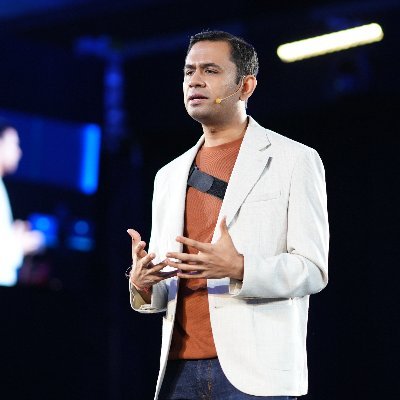
4 billion payments. 3 trillion data points. One model trained on all of it. Meet Razorpay Vulcan - India’s first transformer-based AI foundation model for payments. Built, trained and hosted in India, in partnership with NVIDIA and Amazon Web Services. Until now, every payments problem was solved separately: routing,...

554,061 views • 8 days ago •via X (Twitter)

0 Comments

No comments available

Comments from the original post will appear here

Related Videos

Bitcoin is money AND digital gold. The two are not mutually exclusive. For Michael Saylor - it's the purest form of digital credit. For David Marcus - it's the payment rails of the future. "No one cares what humans think about how people need to Bitcoin because it's an unopinionated, code-based money platform." The Lightspark founder is forging ahead with building Bitcoin-based payment rails, while Saylor and Strategy are doubling down on Bitcoin-backed financial products. "I'm really grateful that Michael is really focused on the store of value use case, and he can do that, and I can be the one focused on bringing utility to Bitcoin. Both things will actually help one another to make Bitcoin more relevant to many more people and that's the beauty of building on an open network," Marcus told Robert Baggs and me on our latest Chain Reaction show. Marcus has been keenly focused on abstracting complexity away from payments using Bitcoin payments infrastructure with the launch of Lightspark Grid. "It's like Bitcoin as a network being used to move all kinds of other money, whether it's stablecoin or fiat at the edges, and you don't even understand that you're using Bitcoin. For instance, if you're a SoFi client in the US, and you want to send money to Europe or India, Brazil or Mexico, you send dollars and the other person on the other side receives Mexican peso, you have no clue you're using Bitcoin. And it's like magical TCP/IP for money between payment systems in the world." Bitcoin infrastructure works. Like most widely adopted technologies, the average person has no idea what's going on under the hood. That is the future that takes Bitcoin global. And it's being built in real-time.

Gareth Jenkinson

19,172 views • 6 months ago

Today, I’m proud to share something we’ve been building for months - Artham, India’s first Small Language Model (SLM) built exclusively for Indian Capital Markets. We unveiled it at AWS re:Invent 2025 in Las Vegas, marking a defining milestone for India, AI, and Raise on the world stage. 🚀 This isn’t just a product launch. It’s a statement that India no longer has to rely on global AI models that were never designed to understand the depth, nuance, and realities of our markets. We can and we will build for ourselves. Artham is shaped by the realities of Indian markets — SEBI’s rulebook, NSE & BSE dynamics, corporate filings, trading cycles, investor sentiment, and the everyday language of Indian finance. Every layer is grounded in local context, built to serve Indian participants, not global assumptions. This isn’t a “global model adapted for India.” Built in India. Hosted in India. Built for India. 🇮🇳 This is a model born from India’s capital markets. At Raise Financial Services, we’ve always believed that true financial empowerment cannot come from imported solutions. It must be created on-ground, in-context, with an Indian-first mindset. Artham is our step towards making Indian finance more intelligent, more relevant, and more accessible for retail investors, traders, institutions, and the next generation of market participants. Behind this launch is a team that stayed obsessed with one thing: relevance. Relevance to the Indian investor. Relevance to the Indian market cycle. Relevance to India’s financial future. This isn’t a concept or a test model. Artham is already live in production for millions of users: • fuzz AI (AI research) • ScanX (markets insights) • Dhan - Made for Trade (trading and investing) Proud of our team. Proud of our mission. Proud to build for India. 🇮🇳 Anirudha Basak Amazon Web Services AWS Cloud India #AWSreInvent2025

shraddha

94,117 views • 8 months ago

Elon Musk just made one if the biggest moves in taking over the programming industry “SpaceX just bought Cursor for $60 billion. Do you realize how big this is? SpaceX went public — the biggest IPO in history. $75 billion raised, almost a $2 trillion valuation and the first thing to do with that money? Buy the most popular AI coding tool on the planet. Here's why that changes everything. Elon now owns 3 layers: the compute, Colossus data centers, the models, Grok through xAI, and now the tool that developers actually use every day. It's the full stack. And here's what makes Cursor different from Claude Code or Codex. Cursor is model agnostic. You can run Claude in it, GPT, Gemini, whatever model you want. It's not locked to any one company, and now it has SpaceX's resources behind it. Cursor said they were bottlenecked by compute. Well, that bottleneck has just been removed. $4 billion in annual revenue, over half the Fortune 500 already uses it, and now it's backed by a $2 trillion company. OpenAI has Codex, Anthropic has Claude Code, and now Elon has Cursor.” Let me break this down in simple terms Elon Musk now controls more of the full AI picture: - Massive computers, power (data centers like Colossus) - Smart AI models (Grok from xAI) - The actual tool millions of developers use every day (Cursor) For every day users this means Faster and smarter apps and websites in the future. More developers using powerful AI tools means new apps, games, websites, and features get built quicker and cheaper. This means better video games, smoother streaming, smarter phone apps and better programs For Developers they can describe what they want in plain English (“make a feature that does X”) and the AI handles more of the heavy lifting

Wall Street Apes

213,601 views • 2 months ago

I just watched a machine buy something on Stripe. No card. No human. No checkout. Stripe Dev shipped it yesterday — machine payments, live in preview. Commerce isn't designed for machines. --- We need to re-organize around that thought. It is designed for humans. He's right. Every fraud model, every auth flow, every billing system we've built assumes a person is on the other end. Agents break all of it. They need - Microtransactions. - 24/7 rails. - HTTP-native settlement (!!) - Finality guarantees. - No subscriptions. No accounts. - Pay at the point of consumption and move on. Cards weren't designed for this. Nothing was. --- So it needs to be completely rethought Now on Stripe Agents can now pay for API calls, compute, and data through the same PaymentIntents API millions of businesses already use. Settled in seconds. --- Stripe says billions the billions of humans will lead to trillions of agents. If even 10% of that plays out, machine payments become the fastest-growing payment category on earth. --- But here's the part that keeps me up at night — If every PSP builds its own proprietary agent payment flow, we repeat the same fragmentation mess that took human payments 15 years to sort out. We need internet native, IETF-grade, ready-for-scale standards that don't over-index on crypto. Protocols that work across any network, any rail, any provider. --- Stripe just proved the market is coming. Now we need protocols and infrastructure ready for scale. PS. Machine is a better word than agentic isn't it.

Simon Taylor

32,667 views • 6 months ago