Загрузка видео...

Не удалось загрузить видео

На главную

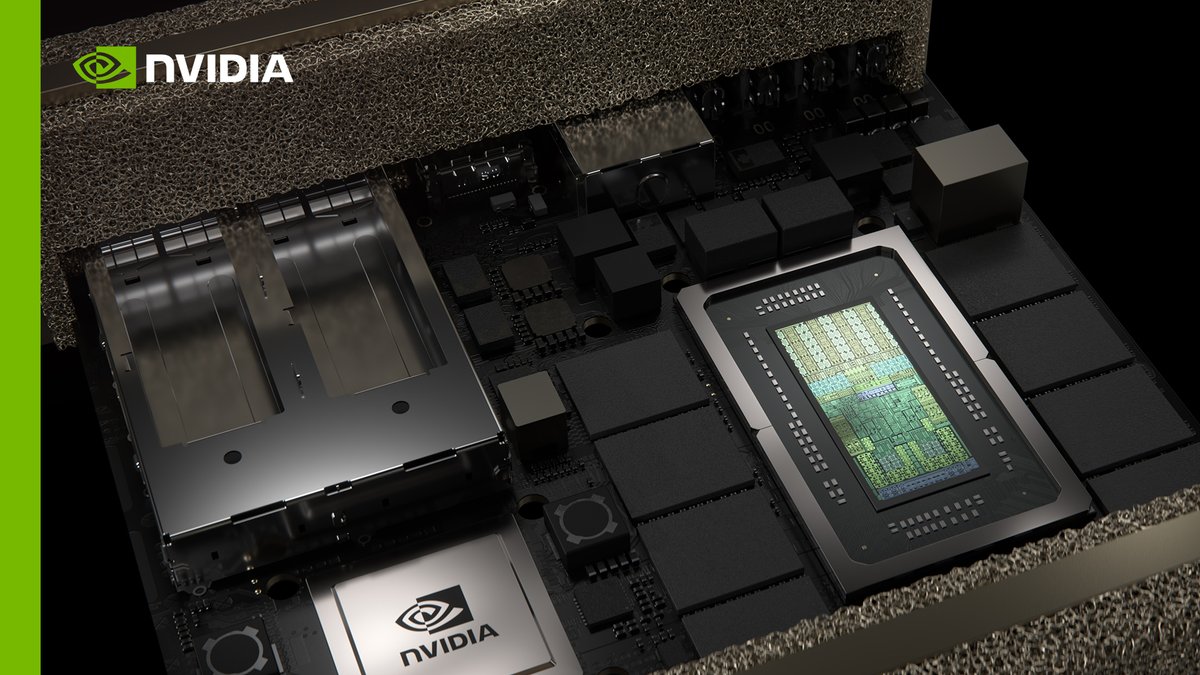
4/ NVIDIA announced Project Digits: a $3,000 personal AI supercomputer. All of NVIDIA's software runs on this.

547,494 просмотров • 1 год назад •via X (Twitter)

Комментарии: 17

Фото профиля Poonam Soni
Poonam Soni1 год назад

It's only been 1 day since CES 2025, and people are going crazy it. This will change the way we use technology forever. 13 most jaw-dropping reveals so far (Don't miss the 5th one)

Фото профиля Poonam Soni
Poonam Soni1 год назад

1/ A wearable Robot

Фото профиля Poonam Soni
Poonam Soni1 год назад

2/ The Roborock Saros Z70 It is not just another robot vacuum—it’s got an arm!

Фото профиля Poonam Soni
Poonam Soni1 год назад

3/ PUBG Ally

Фото профиля Poonam Soni
Poonam Soni1 год назад

5/ OMNIA: a 360° body-scanning health mirror - Scans for heart, lung, sleep, body, and metabolic composition - AI assistant decodes metrics & offers personalized insights

Фото профиля Poonam Soni
Poonam Soni1 год назад

6/ Stretchable Screen from Samsung

Фото профиля Poonam Soni
Poonam Soni1 год назад

Get access of AI Insights and Tutorials in your mailbox. Join "AI Toast" Community of over 30,000 readers for FREE:

Фото профиля Poonam Soni
Poonam Soni1 год назад

7/ The Nuwa Pen It digitizes handwriting on any paper with its triple camera. Unlike other digital pens, it doesn't need a special notebook, turning any surface into a canvas.

Фото профиля Poonam Soni
Poonam Soni1 год назад

8/ First Ever Stringless Smart Guitar

Фото профиля Poonam Soni
Poonam Soni1 год назад

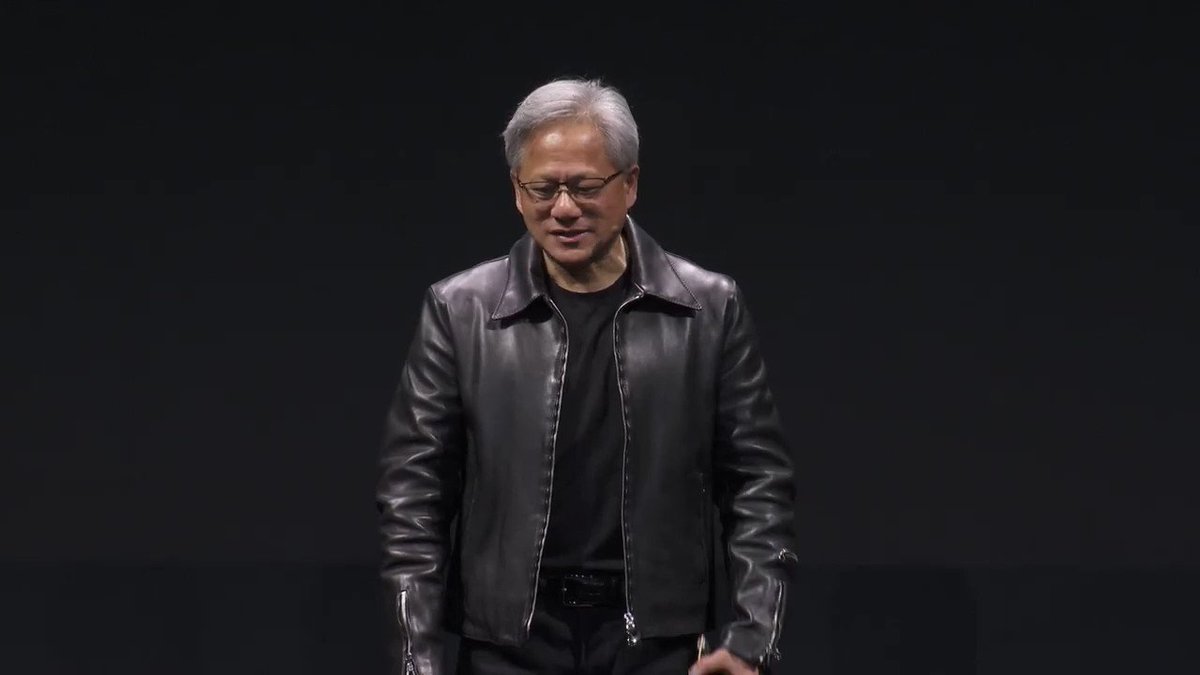
9/ Jensen, at the CES 2025 stage with 14 humanoid robots standing in the background, announced NVIDIA Isaac GR00T Blueprint.

Фото профиля Poonam Soni
Poonam Soni1 год назад

10/ Real-Time translation with Smart glasses

Фото профиля Poonam Soni
Poonam Soni1 год назад

11/ The room made of fully immersive screen displays

Фото профиля Poonam Soni
Poonam Soni1 год назад

12/ Robot plush toys: a real passion in Asia

Фото профиля Poonam Soni
Poonam Soni1 год назад

13/ Electric Salt Spoon A culinary tool that uses electric currents to enhance the taste of salt.

Фото профиля Poonam Soni
Poonam Soni1 год назад

Thanks for reading. If you enjoyed reading this post, you will love my Newsletter on AI updates and Tutorials. Join AI Toast Community of 30,000 readers for FREE:

Фото профиля Poonam Soni
Poonam Soni1 год назад

Don't forget to bookmark for later. If you enjoyed reading this post, please support it with like/repost of the post below 👇

Фото профиля Inc.
Inc.1 год назад

Software is as hot as ever. Kudos to the software and AI companies on this year’s Inc 5000 list. @BatteryVentures looks at some of the larger trends driving this year’s Inc. software success stories.

Похожие видео

Google just launched a direct attack on Nvidia's most valuable asset. Not their chips. Their SOFTWARE. And if this works, Nvidia's $4 trillion empire collapses. Here's what just leaked: Google is building "TorchTPU" - a secret project that makes PyTorch seamlessly run on Google's TPU chips instead of Nvidia GPUs. Why does this matter? PyTorch is the MOST USED AI framework on Earth. Every AI developer uses it. And PyTorch was built around Nvidia's CUDA software. Wall Street analysts call CUDA "Nvidia's strongest defensive wall." It's the reason companies can't easily switch away from Nvidia even when alternatives exist. You don't just buy Nvidia chips. You buy into their entire ecosystem. Switching costs MILLIONS in engineering work. Months of rewrites. Performance drops. So companies stay locked in. Even when Nvidia raises prices. Even when supply runs short. That's not a hardware moat. That's a SOFTWARE prison. And Google just found the escape route. Here's the problem Nvidia created for itself: Google's TPU chips are actually GOOD. Competitive performance. Better availability. Lower cost. But developers won't use them because Google's chips run JAX (Google's internal framework), not PyTorch. That means if you want to use Google TPUs, you have to rewrite your entire codebase. Nobody wants to do that. So Google TPUs sit unused while developers fight over Nvidia chips. Until now. TorchTPU makes PyTorch run natively on Google hardware. No rewrites. No performance loss. No months of engineering. You just... switch. And Google is partnering with META (who built PyTorch) to make it happen. They're even considering OPEN-SOURCING parts of it to speed adoption. Translation: Google is willing to give this away for free just to break Nvidia's lock. The implications are insane: Every company currently paying Nvidia's premium prices suddenly has a way out. Oracle, Microsoft, OpenAI - all locked into Nvidia's ecosystem - can switch to Google. Nvidia's pricing power evaporates overnight. And the timing is perfect: Nvidia is already facing heat. Semiconductor index dropped 3% today. Oracle just lost their biggest investor over AI spending concerns. Companies are realizing AI infrastructure costs are unsustainable. Now Google hands them an alternative. Same performance. Lower cost. Better availability. Jensen Huang knows exactly what this means. CUDA has been Nvidia's untouchable advantage for YEARS. It's why Nvidia trades at 50x earnings while AMD trades at 25x. The software moat justified the premium. But if Google removes that switching cost? Nvidia becomes just another chip company. And chip companies compete on price, not ecosystem lock-in. Here's what happens next: Google needs 12-18 months to make TorchTPU production-ready. If it works, cloud providers will adopt it instantly. They WANT an alternative to Nvidia's monopoly pricing. Amazon already building their own Trainium chips. Microsoft making Maia. They're all trying to escape Nvidia. Google just gave them the software bridge. Nvidia's response options are limited: They can't buy Google. Can't kill PyTorch (Meta owns it). Can't stop open source. Their only play is to keep improving CUDA faster than Google can catch up. But that's a race, not a moat. The market isn't pricing this in yet. Nvidia down 2% today. Google down 2%. Investors think this is just "another competitor." They don't understand this is an attack on the FOUNDATION of Nvidia's valuation. Hardware is replaceable. Software lock-in is what made Nvidia worth $4 trillion. Google is attacking the lock-in. Watch what happens in 2026 when TorchTPU goes live and companies realize they can actually leave Nvidia. The "Nvidia is unstoppable" narrative dies. And a $4 trillion valuation built on software moats gets repriced.

Ricardo

1,615,983 просмотров • 6 месяцев назад

Jensen Huang just doubled NVIDIA's demand forecast to $1 Trillion through 2027 🤯 Then spent two hours explaining why that number is conservative… Here's everything today from GTC: - NemoClaw: NVIDIA's open-source enterprise AI agent stack built around OpenClaw. Jensen called OpenClaw "the operating system for personal AI" and said every company needs a strategy for it. - Space-1: NVIDIA is putting Vera Rubin data centers in orbit. Not a concept. An actual system being designed for space deployment right now. - DLSS 5: 3D-guided neural rendering that blends raw graphics with generative AI. Jensen called it the future of real-time rendering. - AWS: Deploying 1 million+ NVIDIA GPUs starting this year. Azure was the first hyperscaler to power up Vera Rubin. - Vera Rubin: NVIDIA's next-gen AI supercomputer. 10x more performance per watt than Blackwell, 700 million tokens per second, shipping later this year. - Groq 3 LPU: First chip from NVIDIA's $20B Groq acquisition. A purpose-built inference accelerator that ships Q3. NVIDIA now owns training AND inference. -Feynman: The architecture after Rubin, coming 2028. New GPU, new LPU, new CPU. NVIDIA is on a 12-month chip cadence and the treadmill never stops. - Autonomous driving: BYD, Hyundai, Nissan, and Geely building Level 4 vehicles on NVIDIA. Uber deploying NVIDIA-powered robotaxis across 28 cities by 2028. The man doubled his demand forecast to a trillion dollars, announced data centers in space, and closed the show with a robot singing country music. This is NVIDIA's world. Everyone else is just renting compute in it.

Josh Kale

45,875 просмотров • 3 месяцев назад