Video yükleniyor...

Video Yüklenemedi

Ana Sayfaya Dön

5 Predictions For The Next 5 Months Treasury Permanently Expands Long End Buybacks I expect the increase from $2 billion to at least $4 billion per operation to become more than a temporary adjustment. If long yields rise again, Treasury will likely increase the size or frequency of buybacks...

20,646 görüntüleme • 15 gün önce •via X (Twitter)

0 Yorum

Yorum bulunmuyor

Orijinal gönderinin yorumları burada görünecek

Benzer Videolar

🚨 TOMORROW COULD BE THE WORST DAY OF 2026 FOR MARKETS. You need to understand what’s happening before August 24. Japan and China are both reducing exposure to U.S. Treasuries while China keeps accumulating gold. This is much bigger than one bond trade. For decades, near-zero Japanese rates created one of the biggest carry trades in history: Japan and China are forcing capital back into their countries. And the biggest carry trade in history is now starting to unwind. This is NOT normal. For decades, Japan kept interest rates near zero. That turned the yen into the world's cheapest funding currency. Investors borrowed trillions of yen. Then they poured that money into U.S. Treasuries, stocks, real estate, crypto, and markets around the world. That trade is now breaking apart. Japan is facing soaring government debt. A rapidly aging population. Massive pension obligations. And years of pressure from a weak yen. Now policymakers want that capital back home. And now China is adding another layer of pressure to the U.S. Treasury market. China has been steadily reducing its holdings of U.S. Treasuries. Chinese Treasury holdings just fell to $633 BILLION, the lowest level since 2008. At the same time, China continues to build its gold reserves. → U.S. Treasuries get reduced → Gold holdings increase → Demand for U.S. debt weakens → Pressure on Treasury yields increases Japan and China were both among the major sources of the latest decline in foreign Treasury holdings. And when two of the world's biggest holders reduce their exposure at the same time... Someone else has to absorb that supply. That means higher yields are required to attract buyers. And U.S. bond yields are already surging. The 30-year Treasury yield recently pushed above 5.3%, reaching levels not seen since 2007. The U.S. Treasury is now forced to buy back its own debt because no one else wants it. Read that again. This is the part most people are missing. Japan is pulling capital toward Japan. China is reducing Treasury exposure and increasing its strategic gold position. → Foreign Treasury demand weakens → Treasury prices fall → U.S. bond yields rise → Borrowing costs increase → Liquidity tightens This creates another feedback loop. Higher U.S. yields increase the cost of financing the enormous U.S. government debt load. Higher Japanese yields make Japanese assets more attractive. And China's continued diversification adds another structural source of pressure to the Treasury market. Pay attention. Most people won't understand why markets are collapsing until it's already happening. I’ve studied markets for over 12 years and called nearly every major top and bottom. If you want to survive the 2026 cycle, follow and turn notifications on. I warned you before. And I'll warn you again soon. A lot of people will wish they paid attention earlier.

DANNY

187,057 görüntüleme • 11 gün önce

🇺🇸 The U.S. Treasury is trying to stop bond yields from rising. But according to David Lin, Washington may be picking a fight with a market it simply doesn't have enough firepower to control. Treasury Secretary Scott Bessent doubled planned bond buybacks from $2 billion to $4 billion per operation, signalling that Washington is prepared to intervene more aggressively. Yields fell for one day. Then they went straight back up. The problem is scale. The Treasury market is measured in tens of trillions of dollars, making $4 billion of intervention little more than a signal. And if yields keep rising, the consequences spread far beyond Wall Street. Mortgages, corporate borrowing and government debt servicing all become more expensive. Lin's bigger concern is what governments do when financial pressure starts limiting their options. Higher debt costs could push governments toward more aggressive tariffs, trade wars and foreign-policy decisions as they try to protect their economies. Meanwhile, the dollar remains the world's dominant safe haven, even as central banks accumulate more gold and countries increasingly look for ways around a dollar-based system. And then there's the Iran war. Lin argues that the conflict has exposed another vulnerability: energy infrastructure is remarkably easy to disrupt with cheap drones. Refineries, pipelines and shipping can all become targets, creating a much bigger problem for an already fragile global economy. So the biggest risk may not be a sudden financial collapse. It may be governments gradually losing room to maneuver, while markets become increasingly unwilling to listen. The Treasury can announce bigger interventions. The bond market can simply decide they aren't big enough. David Lin

Mario Nawfal

295,040 görüntüleme • 11 gün önce

Michael Burry Sees The Financial System Running Out of Time The long end of the Treasury market is where several unresolved stresses are colliding. A 30 year yield above 5% reflects inflation uncertainty, heavy federal borrowing and weaker demand for duration. When the economy is deteriorating but long yields refuse to fall, the usual recessionary relief valve is failing. Slower growth is not producing cheaper capital because inflation volatility and debt supply are overpowering it. Burry does not mention 2007, but the comparison is useful. The 30 year yield stayed above 5% for 50 days that year, versus 27 days already in 2026. That does not mean another identical housing crisis. It shows how prolonged high rates corrode leveraged balance sheets. In 2007 the leverage sat mainly in housing and banks. Today it is spread across private equity, private credit, commercial property and data centers. AI Has Become A Debt Story The AI buildout increasingly relies on bonds, leases, project finance and private credit. Burry is not saying major technology companies are about to default. He is saying AI is creating another huge source of long duration debt just as the Treasury must finance persistent deficits. Technology companies and the government are competing for many of the same buyers. AI also consumes electricity, natural gas, copper and grid capacity. The market sees future productivity. Burry is asking whether AI first becomes an inflation and leverage problem. Inflation Volatility , Oil And The Basis Trade Bond investors care not only about current inflation but how predictable it will be over decades. When CPI components move violently, the headline can look contained while the system underneath becomes unstable. Investors then demand a larger term premium. Oil near $100 intensifies that problem. The shock spreads through transportation, agriculture, fertilizer and shipping. Businesses face higher costs while households lose purchasing power. The basis trade depends on hedge funds buying cash Treasuries, shorting futures and financing them through repo. The return is tiny, so it requires enormous leverage and stable funding. If funding costs or volatility rise, funds may unwind by selling cash bonds. Burry is asking who absorbs the next wave of Treasury and AI debt if a major buyer is retreating. PE and PC is private equity and private credit. Holding their breath means extending maturities, delaying exits and postponing writedowns. Private assets can hide deterioration longer, but accounting flexibility does not create cash flow. The sequence Burry appears to see • Oil and inflation volatility keep long yields elevated • Treasury and AI borrowing compete for capital • The basis trade loses capacity • Private markets can no longer delay recognition • Credit spreads widen and valuations reset • High multiple equities finally react • A credit event creates demand destruction • Only then do Treasuries rally and the Fed cut aggressively Burry can be bearish on long bonds now while still expecting them to rally later in a crisis. The lower rates needed to validate existing prices may not arrive until something breaks.

EndGame Macro

101,589 görüntüleme • 1 ay önce

The Fed Is Trapped — And Gold Knows It $GLD #gold Please ❤️like, bookmark🔖, and 🔁share with fellow investors In this Short video, Andy Schectman Andy Schectman and Adam Taggart discuss why the breakout in gold and #silver $SLV may have real legs — and why the most important signal isn’t simply that precious metals are rising, but that they’re doing it despite higher interest rates and higher oil prices. * Normally, rising Treasury yields should be a headwind for gold. Higher yields increase the opportunity cost of holding a non-yielding asset and should attract global capital into U.S. Treasuries and the dollar. But that’s not what’s happening. Yields are rising. Gold is rising. And the dollar is falling. Andy sees that combination as a potential warning that investors are demanding higher yields to own U.S. government debt rather than viewing those yields as an increasingly attractive safe-haven return. In other words, this could be less about economic strength and more about declining confidence in Treasuries. * That leads to the bigger thesis: the Fed may be trapped. Years of suppressed interest rates created distortions in asset prices, capital allocation and leverage. Allow rates to rise too far, and those vulnerabilities begin to surface. But cap yields or inject liquidity to keep the financial system stable, and the pressure doesn’t disappear — it can instead show up through higher inflation and a weaker currency. * Andy argues that the era of genuine balance-sheet normalization may already be over. He points to roughly $40 billion per month of liquidity/purchases and what he views as de facto yield-curve control through efforts to prevent Japan from selling Treasuries. * Meanwhile, #crudeoil adds another problem. Higher energy prices eventually feed through transportation, manufacturing, food and other costs, and Andy argues that the full inflationary impact can take roughly six months to appear. That may explain why gold is moving now. His view is that sophisticated traders are “skating to where the puck is going”: front-running the possibility that policymakers ultimately cannot allow rates to keep rising and will eventually have to suppress yields or provide additional liquidity. * That’s why the current relationship matters so much: – Treasury yields up – Gold up – Dollar down If higher yields alone were restoring confidence in U.S. assets, gold should face much stronger competition from Treasuries. Instead, precious metals continue to attract buyers. * And Andy sees another major difference versus the 2011 gold peak: persistent record buying by major strategic players. That structural demand gives him more confidence that this isn’t simply a dead-cat bounce. * Bottom line: Andy believes this is a real breakout. Gold may be front-running a world in which the Fed faces an increasingly difficult choice between allowing rates to rise and exposing financial vulnerabilities, or suppressing rates and risking even greater inflationary pressure. The Fed is trapped — and gold may already know which way this ends. #yields $TLT $BND 💡 Get access to my notes with the key takeaways from this interview with Andy Schectman by visiting my Substack (link below)⬇️

Thoughtful Money®

11,038 görüntüleme • 15 gün önce

What If Warsh Cuts Rates Next Week? Markets are overwhelmingly expecting Kevin Warsh to keep rates unchanged at his first Fed meeting next week, with some traders even pricing in the possibility of higher rates later this year. But what if the consensus is wrong? In this Short video, Lawrence Lepard, "fix the money, fix the world" presents the contrarian case that Warsh could be far more dovish than investors expect. The argument starts with inflation. Warsh has suggested that traditional inflation measures may overstate current price pressures and that alternative metrics, such as Dallas Trimmed PCE, paint a much cooler picture. If inflation is closer to target than headline data suggests, the justification for maintaining restrictive policy becomes much weaker. Another key piece of the thesis is productivity. Warsh has repeatedly discussed the transformative impact of AI on economic output. If artificial intelligence drives a meaningful productivity boom, the economy could grow faster without generating the same inflationary pressures that normally accompany growth. That would give the Fed more room to lower rates without reigniting inflation. The discussion also highlights the possibility that recent inflation pressures are being driven by temporary factors, particularly energy prices and geopolitical tensions. If those pressures ease, inflation could fall naturally, strengthening the case for easier monetary policy. There is also a broader economic backdrop to consider. The administration has made economic growth, domestic manufacturing, and reindustrialization central priorities. Building factories, infrastructure, and supply chains requires capital, and high interest rates make those investments more difficult. Lower rates would provide the financial fuel needed to accelerate those goals. The most controversial part of the conversation is the suggestion that Warsh could deliver not just a rate cut, but potentially a larger-than-expected cut (50 bps) if he wants to quickly reset policy. While that remains a low-probability outcome, Lawrence Lepard, "fix the money, fix the world" argues that markets may be underestimating the possibility of a significant shift in direction. If that happens, stocks could respond very positively as lower rates improve liquidity, reduce financing costs, and support higher valuations. However, the bigger story may be in #bonds. Long-term Treasury investors could view aggressive easing as inflationary or fiscally irresponsible, pushing #yields sharply higher. In that scenario, equities celebrate the pivot while the bond market revolts. So, according to Lawrence Lepard, "fix the money, fix the world", Kevin Warsh may not follow the path investors currently expect. If he embraces alternative inflation measures, leans on the AI productivity story, and prioritizes growth, the market could be forced to rapidly reprice both interest-rate expectations and long-term bond yields. 🔽Get access to my notes with the key takeaways from this interview with Lawrence Lepard, "fix the money, fix the world" by visiting my Substack (link below) ⬇️

Thoughtful Money®

11,749 görüntüleme • 2 ay önce

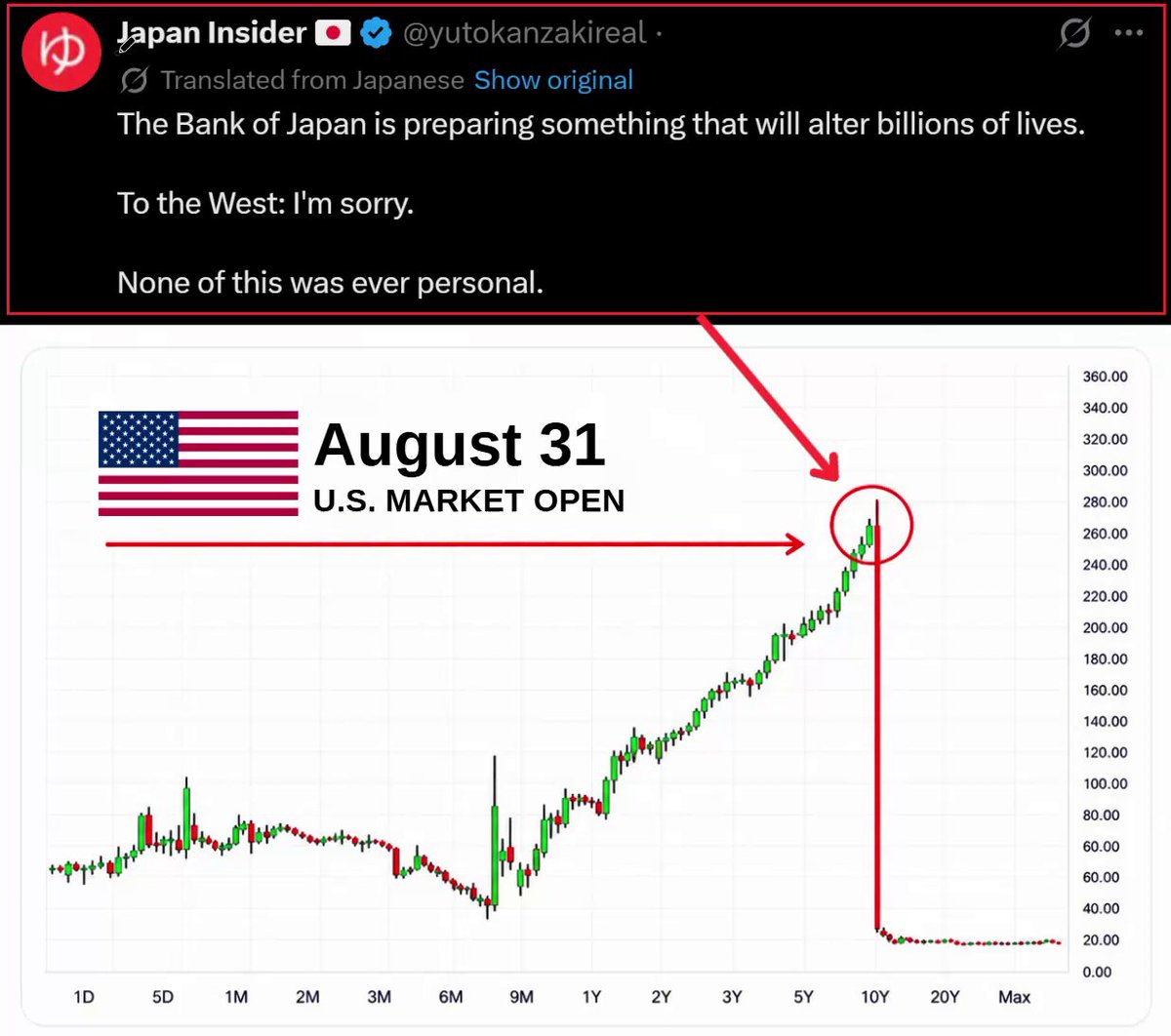
🚨 WARNING: TOMORROW WILL BE THE WORST DAY OF 2026!! 99% of people will lose everything. You MUST read this before August 31. → Japan is dumping $5.25 TRILLION in U.S. Treasuries → China is dumping $600 BILLION in U.S. Treasuries The U.S. just confirmed the crisis is real, and DOUBLED buybacks to cover the damage. If you own any assets today, you need to understand this: Japan and China are forcing capital back into their countries. And the biggest carry trade in history is now starting to unwind, with devastating consequences. This is NOT a normal market correction. For decades, Japan kept interest rates near zero, turning the yen into the world's cheapest funding currency. Investors borrowed trillions of yen and poured that money into U.S. Treasuries, stocks, real estate, crypto, and markets around the world. But now, the Japan trade is breaking apart: → Soaring government debt → Rapidly aging population → Massive pension obligations → Years of pressure from a weak yen And now, China is adding another layer of pressure to the U.S. Treasury market. China has been steadily reducing its holdings of U.S. Treasuries. Chinese Treasury holdings just fell to $633 BILLION, the lowest level since 2008. At the same time, China continues to build its gold reserves in a bold move. The implications are clear: → U.S. Treasury holdings decrease → Gold holdings increase → Demand for U.S. debt weakens → Pressure on Treasury yields increases Japan and China were both among the major sources of the latest decline in foreign Treasury holdings. And when two of the world's biggest holders reduce their exposure at the same time... Someone else has to absorb that supply, which means higher yields are required to attract buyers. The 30-year Treasury yield recently pushed above 5.3%, reaching levels not seen since 2007. The U.S. Treasury is now forced to buy back its own debt because no one else wants it. And that's a desperate move with catastrophic consequences. This creates another feedback loop: → Higher U.S. yields increase the cost of financing the enormous U.S. government debt load → Higher Japanese yields make Japanese assets more attractive → China's diversification adds another structural source of pressure to the Treasury market Pay attention, because most people won't understand why markets are collapsing until it's already happening. I’ve studied markets for over 12 years and have called nearly every major top and bottom. And I'm warning you now. If you want to survive the 2026-2027 cycle, follow and turn on notifications. A lot of people will wish they had paid attention earlier.

0xNobler

478,529 görüntüleme • 4 gün önce

🚨 TOMORROW COULD BE THE DAY GLOBAL MARKETS FINALLY SNAP. August 24 could expose a problem Wall Street has spent years pretending doesn’t exist. Japan and China are both pulling away from U.S. Treasuries — while China keeps stacking gold. This isn’t just another bond-market story. It’s a warning that one of the biggest sources of global liquidity is starting to reverse. For decades, Japan kept rates near zero. The yen became the world’s funding currency. Investors borrowed dirt-cheap yen and poured that money into everything: U.S. Treasuries. Stocks. Real estate. Crypto. Trillions of dollars in global assets were built on this trade. Now the foundation is shifting. Japan is dealing with an enormous debt burden, an aging population, massive pension obligations, and years of damage from a weak yen. Higher Japanese yields change the equation. Capital that spent years searching for returns overseas suddenly has a reason to come home. And China is applying pressure from the other side. Chinese holdings of U.S. Treasuries have fallen to roughly $633 BILLION — the lowest level since 2008. At the same time, China continues accumulating gold. The message is impossible to ignore: → Treasuries reduced → Gold accumulated → Foreign demand for U.S. debt weakens → Treasury yields face more pressure And when major foreign holders stop absorbing American debt, someone else has to. If buyers demand higher yields, the consequences spread everywhere. Mortgages get more expensive. Corporate refinancing gets uglier. Government interest costs explode. Liquidity gets tighter. Risk assets get hit. The 30-year Treasury yield recently pushed above 5.3%, reaching territory not seen since 2007. And this is where things can get dangerous FAST. Japan pulls capital home. China diversifies away from Treasuries. Foreign demand weakens. Bond prices fall. Yields rise. Financing costs rise. Liquidity disappears. Then the same leverage that pushed markets higher starts working IN REVERSE. That’s how a bond-market problem becomes a stock-market problem. And then a crypto problem. Most investors will stare at falling prices and ask what happened. By then, it won’t matter. I’ve spent more than 12 years studying these cycles and calling major tops and bottoms before the crowd sees them. PAY ATTENTION TO AUGUST 24. I warned you before. I’ll warn you again before the next major move. Follow and turn notifications on. A lot of people are going to wish they did.

Phantom_Defi

24,193 görüntüleme • 11 gün önce

🇺🇸🇯🇵 Mohamed El-Erian: Washington is trying to impose outcomes on markets that fundamentals don't support The yen intervention isn't working. The attempt to push down long-term Treasury yields isn't working either. And Mohamed El-Erian thinks both are symptoms of the same problem: Washington increasingly believes government policy can dictate market outcomes. Markets are reminding it otherwise. Japan has already sold roughly $96 billion in foreign securities in a month while defending the yen, putting additional upward pressure on U.S. yields. Yet the yen has weakened again, creating what El-Erian agrees is essentially a vicious loop: defend the yen, sell Treasuries, push U.S. yields higher, make the carry trade more attractive, weaken the yen again. Washington is simultaneously trying its own financial engineering. With mortgage costs hurting voters ahead of the midterms, the administration wants lower long-term yields. But El-Erian says Treasury lacks the “bazooka” required to overpower a market this large. Without fixing the fundamentals, intervention becomes another Band-Aid. And those fundamentals aren't pretty. U.S. debt has crossed $40 trillion, doubled in 10 years, and interest payments are rising roughly 15% annually. Meanwhile, the AI boom is creating another enormous demand for capital, forcing government, companies and households to compete for money and pushing borrowing costs higher. El-Erian's broader warning is about “geo-economics.” Tariffs. Sanctions. Currency intervention. Treasury intervention. Economic tools increasingly look attractive because their costs aren't immediately visible. But the costs don't disappear. They accumulate. And eventually, El-Erian warns, markets will react. Mohamed A. El-Erian

Mario Nawfal

403,755 görüntüleme • 5 gün önce

What if the U.S. starts buying Treasury bonds with ripple:native or RLUSD and puts them on the XRP Ledger? South Korea’s YTN just asked a question that sounds wild at first: “Buying U.S. Treasury Bonds with Crypto?” But when I started connecting it with what Scott Bessent, Ripple, RLUSD and the XRP Ledger are already doing, this stopped looking like some random crypto theory. The pieces are already sitting right in front of us. The United States has now crossed roughly $40 trillion in federal debt. That means the government constantly needs buyers for enormous amounts of Treasury securities. Not once. Again and again. Old debt matures. New debt gets issued. Short-term bills need buyers. Interest keeps getting paid. The whole system depends on keeping demand for U.S. government debt strong. And this is exactly where stablecoins suddenly become much more important than most people realize. Scott Bessent has already talked about stablecoins creating more demand for U.S. Treasuries. The logic is actually simple. A regulated dollar stablecoin needs real assets behind it. Under the GENIUS Act framework, stablecoins are backed 1:1 by eligible high-quality reserves such as cash, short-term Treasuries, Treasury-backed repo and government money-market funds. So when stablecoins grow, their reserve pools grow too. And when those reserves include Treasury bills, stablecoin adoption can create another source of demand for U.S. government debt. That means crypto growth does not have to weaken the dollar. It can actually create another global buyer base for dollar assets. That completely changes how I look at RLUSD. RLUSD is not just another dollar token sitting beside USDC and other stablecoins. Ripple’s own RLUSD reserve structure already allows short-term U.S. Treasury bills with three months or less remaining maturity, overnight reverse repos backed by Treasuries, U.S. government money-market funds and bank deposits. Think about what that means. If RLUSD grows, the pool of assets backing RLUSD grows. If RLUSD becomes a major institutional stablecoin, Ripple’s ecosystem can become a major holder of the same short-term government assets the U.S. Treasury needs constant demand for. Imagine RLUSD at $10 billion. Then $25 billion. Then $50 billion. Then $100 billion. The bigger the supply becomes, the bigger the reserve base behind it becomes. And part of that reserve base can be short-term U.S. government debt. That already gives Ripple a direct connection to the exact stablecoin-Treasury thesis Scott Bessent has been talking about. But this is where it gets even more interesting. Ripple is not stopping at Treasuries backing RLUSD. Treasuries themselves are already being brought onto the XRP Ledger. Ondo Finance launched OUSG on XRPL. OUSG gives qualified institutional investors exposure to short-term U.S. government Treasuries. And what can institutions use to mint and redeem that Treasury exposure on XRPL? RLUSD. That means this architecture already exists: RLUSD ↓ tokenized U.S. Treasury exposure ↓ OUSG ↓ XRP Ledger This is the part that really gets me. We are not imagining some future where Ripple eventually connects stablecoins with U.S. Treasuries. That connection is already being built. You have Treasury assets sitting behind the digital dollar. Then you also have Treasury products represented directly on the blockchain. And both can interact through the same ecosystem. That gives Ripple two different positions inside the Treasury market. First: Treasuries can back RLUSD. Second: Treasuries can themselves be tokenized on XRPL. That means Ripple could potentially sit on both sides of a new digital Treasury market. Digital cash on one side. Digital U.S. government debt on the other. XRP Ledger between them. And ripple:native sitting underneath the network as the native asset and potential bridge between different pools of liquidity. That is a much bigger story than “Ripple has a stablecoin.” Ripple has also committed $10 million to OpenEden’s tokenized U.S. Treasury-bill product on XRPL. That tells me Ripple clearly understands where this is going. They are not waiting for tokenized Treasuries to become a trend. They have already put capital behind bringing those products directly onto XRP Ledger. Then you have Guggenheim Treasury Services. Ripple highlighted digital commercial paper administered by Guggenheim Treasury Services on XRPL. That instrument is secured by U.S. Treasuries and carries a Prime-1 Moody’s rating. Now step back and look at what is forming. RLUSD. Ondo OUSG. OpenEden Treasury bills. Guggenheim Treasury Services. Tokenized fixed income. Institutional custody. Ripple Prime. Ripple Payments. XRP Ledger. ripple:native. All of these pieces are starting to sit inside the same financial stack. That is why I think people are looking at the $40 trillion U.S. debt problem from the wrong angle when they only ask: “How will America ever pay this?” The more interesting question for me is: How will America keep finding buyers for trillions of dollars of government debt while modernizing the financial system at the same time? Stablecoins can help create buyers. Tokenization can help create distribution. Blockchain can help create 24/7 settlement. And Ripple is building in all three areas. Imagine how Treasury investing works for a normal global institution today. You may need banking relationships. Custody. Brokerage. Settlement infrastructure. Different accounts. Different systems. Different operating hours. Now imagine Treasury exposure existing directly on XRPL. The investor can hold RLUSD. Move into tokenized Treasury exposure. Redeem back into RLUSD. Move the dollar liquidity somewhere else. Do it around the clock. That is a completely different experience. Treasuries stop being something that only sits inside old databases. They become programmable financial assets. That matters because America does not just need Treasuries to exist. America needs Treasuries to remain attractive. Liquid. Easy to buy. Easy to hold. Easy to use. Easy to move. And eventually, easy to use as collateral. That is where tokenization becomes much bigger than simply putting a bond onchain. Imagine buying a tokenized Treasury and then using it as collateral. Borrowing against it. Moving it between institutions. Settling it against digital dollars. Redeploying that liquidity instantly. Now a Treasury is no longer just something you buy and wait for. It becomes a working financial asset. And the more useful Treasuries become, the more reasons global institutions have to hold them. This is why the XRP Ledger piece matters. XRPL can become infrastructure where those assets move. RLUSD can become the digital cash side. Then ripple:native can become the neutral liquidity layer between all the different assets and currencies touching that network. Because the future XRPL does not have to contain only RLUSD and Treasury products. Imagine it contains: RLUSD. Tokenized Treasuries. EUR stablecoins. MXN stablecoins. Tokenized deposits. Money-market funds. Commercial paper. Foreign government debt. Private credit. Different institutions will hold different assets. Different countries will use different currencies. That creates a liquidity problem. You cannot expect every possible asset pair to have a massive direct market. A Japanese institution may start with yen liquidity. A European institution may need euros. A Mexican institution may need pesos. A U.S. institution may need RLUSD. A Treasury fund may need to move into cash. This is where ripple:native becomes much more interesting. XRP can potentially sit in the middle as the bridge. Asset A → ripple:native → Asset B. So imagine a Japanese bank wants $1 billion worth of tokenized U.S. Treasury exposure. It starts with Japanese liquidity. The route could eventually become: JPY ↓ ripple:native ↓ RLUSD ↓ tokenized Treasury Then later that institution wants to exit. Tokenized Treasury ↓ RLUSD ↓ ripple:native ↓ JPY Now imagine the same thing happening from Europe. -South Korea. -Singapore. -Hong Kong. -UAE. -Mexico. -Brazil. The United States gets another global distribution channel for its debt. Ripple gets institutional activity. XRPL gets settlement volume. RLUSD gets dollar demand. And ripple:native can become part of the liquidity connecting all of those markets. That is where this gets much bigger than payments. Because once tokenized Treasuries become collateral, you are no longer only talking about buying and selling government debt. You are talking about credit. -Repo. -Margin. -Working capital. -Liquidity management. -Treasury management. -Institutional trading. Imagine a company holds $2 billion in tokenized Treasuries on XRPL. It suddenly needs $500 million of liquidity. Instead of selling everything and moving through multiple systems, it uses the Treasury position as collateral. Receives RLUSD. Then converts part of that liquidity into another currency through ripple:native. Now ripple:native is sitting in the middle of: -money -government debt -FX -credit -collateral That is a completely different role from people simply trading XRP on an exchange. And Ripple has been building the institutional infrastructure around that role. Ripple Prime gives Ripple a connection into professional capital markets. Ripple Custody gives institutions infrastructure for holding digital assets. Ripple Payments handles movement. RLUSD provides regulated dollar liquidity. XRPL handles tokenization and settlement. ripple:native sits natively underneath the ledger. When I put all of that beside what Scott Bessent is saying about stablecoins and Treasuries, I cannot ignore the alignment. The U.S. wants stronger global demand for dollars. Stablecoins can extend dollars onto digital rails. The U.S. wants buyers for Treasury bills. Stablecoin reserves can become buyers. The U.S. wants more efficient capital markets. Tokenized Treasuries can make those assets easier to move and use. Ripple already has a regulated stablecoin. RLUSD already has Treasury-eligible reserve assets. XRPL already has tokenized Treasury products. RLUSD already interacts with OUSG. Ripple has already backed OpenEden Treasury infrastructure. Guggenheim Treasury Services already has Treasury-secured digital commercial paper on XRPL. This is not one random announcement. It is a system starting to form. And there is another point I think is being missed. The bullish XRP thesis does not require the U.S. dollar to fail. I actually think the opposite scenario is much stronger. Imagine the dollar becomes even more dominant because regulated stablecoins make it easier for anyone in the world to hold and move digital dollars. Those stablecoins create more demand for U.S. Treasuries. Treasuries themselves become tokenized. Global investors buy them 24/7. And ripple:native becomes one of the liquidity assets connecting those digital dollars and Treasury products to currencies around the world. In that world: the dollar wins. Treasuries win. Ripple wins. XRPL wins. And ripple:native gets a much bigger liquidity role. That is why the GENIUS Act matters here too. The framework is pushing stablecoins toward regulated 1:1 reserve structures. Bessent has talked about stablecoins strengthening dollar dominance. Ripple already has RLUSD. RLUSD is issued through a New York-regulated structure. BNY is the primary custodian for RLUSD reserves. That is serious financial infrastructure. It means Ripple is not building some completely separate parallel monetary system. It is building directly around the same regulated dollar and Treasury framework Washington is encouraging. And that is what makes this thesis so powerful to me. The path does not need to be: America abandons the dollar. America adopts XRP. That sounds unrealistic and honestly misses the point. The much bigger setup is: America keeps the dollar. America keeps Treasuries. Stablecoins make the dollar more digital. Tokenization makes Treasuries more accessible. Ripple builds the infrastructure around both. And ripple:native connects them to the rest of the global financial system. That is a completely different level of adoption. Now take this to the highly bullish scenario. Imagine the global stablecoin market reaches $3 trillion. RLUSD becomes one of the major institutional stablecoins. Maybe it reaches $100 billion or more in circulation. That means an enormous reserve pool exists behind it. Part of that reserve base holds short-term Treasury securities, Treasury-backed repo and government money-market instruments. Ripple becomes a major private-sector participant in short-term U.S. government debt demand. At the same time, tokenized Treasury products on XRPL grow from where they are today into tens of billions. Then hundreds of billions. Global asset managers start holding Treasury exposure directly on XRPL. Banks use RLUSD to enter and exit those positions. Treasuries get used as collateral. Institutions borrow against them. Ripple Prime connects the professional market. Ripple Custody holds the assets. XRPL settles them. Then currencies from around the world need to enter and exit that system. That is where ripple:native can explode in importance. Market makers need XRP inventory. Liquidity providers need deeper XRP books. Banks need larger settlement capacity. More XRP sits inside institutional liquidity operations. The amount of financial value that needs to move through the system keeps increasing. And suddenly the market has to ask a very different question: Is the current dollar value of ripple:native large enough to provide liquidity for this kind of financial system? Imagine $100 billion of tokenized Treasuries. Then $500 billion. Then trillions of tokenized fixed income across XRPL and connected markets. Imagine RLUSD at $100 billion. Imagine global currencies continuously moving in and out. At that point, the amount of liquidity required looks nothing like today's crypto market. A higher ripple:native price means every unit can represent more dollar value. That gives liquidity providers more settlement capacity without needing absurd quantities of XRP for every transaction. That is why I see price and liquidity eventually becoming connected. The bigger the financial system that XRP is asked to connect, the deeper the dollar value of XRP liquidity needs to become. The full loop could look like this: U.S. debt keeps growing ↓ Treasury needs more buyers ↓ stablecoins expand ↓ stablecoin issuers buy more short-term Treasury assets ↓ RLUSD grows ↓ Treasury products become tokenized ↓ XRPL captures more of those assets ↓ global investors enter through RLUSD ↓ more global currencies connect ↓ ripple:native bridges fragmented liquidity ↓ market makers need more XRP inventory ↓ Ripple Prime expands institutional liquidity ↓ XRPL becomes deeper financial infrastructure ↓ ripple:native represents more value inside that system ↓ price reprices higher. That is the scenario I keep coming back to. Because the wild part is that the starting pieces already exist. RLUSD already has Treasury-eligible reserves. Scott Bessent already sees stablecoins as a potential source of Treasury demand. The GENIUS Act already created the regulatory direction. Ondo OUSG already exists on XRP Ledger. RLUSD already provides an entry and redemption path for that Treasury exposure. Ripple already committed $10 million to OpenEden Treasury products. Guggenheim Treasury Services already has Treasury-secured fixed income on XRPL. BNY already sits behind RLUSD reserve custody. Ripple already has Prime, Payments and Custody. So when YTN asks: “Buying U.S. Treasury Bonds with Crypto?” I do not read that as some distant fantasy anymore. I look at the infrastructure being built and think: What happens when the world's largest government debt market meets regulated stablecoins, tokenized securities and 24/7 blockchain settlement? And what happens if XRP Ledger becomes one of the rails carrying it? That is the part people should be thinking about. Because the real ripple:native thesis may not be about replacing the dollar at all. It may be about becoming the liquidity layer underneath a stronger, more digital dollar system. RLUSD can bring dollars onchain. Tokenized Treasuries can bring U.S. debt onchain. XRPL can become the marketplace and settlement layer. And ripple:native can connect that system to the rest of the world. If that scales into trillions, we are no longer talking about XRP as just another crypto asset. We are talking about ripple:native sitting inside the liquidity architecture connecting digital dollars, U.S. government debt, FX, collateral and global institutional capital. That is the scenario I am watching. You?

X Finance Bull

176,440 görüntüleme • 3 gün önce

🇮🇷🇺🇸 Oil is back near $95. Japanese bond yields are surging. U.S. 30-year yields are back around levels last seen before the 2008 financial crisis. And Philip Pilkington thinks we're watching the early stages of something much bigger. His argument is that the pressure has moved beyond individual geopolitical shocks and become structural. Treasury is trying to suppress long-term borrowing costs. The Fed is signalling tighter policy. Japan is struggling to defend the yen. Meanwhile, the Iran war is pushing energy prices higher and adding another inflationary shock. Pilkington says Treasury Secretary Scott Bessent is effectively trapped between the bond market and the Federal Reserve, while Trump's own policies are making the inflation problem harder to contain. And he thinks the usual tricks are running out. Bessent is now publicly pressuring Japan to raise rates and unwind the carry trade, which Pilkington calls an “admission of defeat” for Treasury's attempts to stabilize the situation itself. His warning is extreme: If current trends continue, he fears a serious financial crisis within 3 to 6 months, potentially the worst episode of financial instability the U.S. has faced since the Great Depression. And Washington is escalating against Iran right in the middle of it. Pilkington's concern isn't simply that the war could cause the crisis, but that the financial system may already be entering one, and the war is pouring oil on it. Philip Pilkington

Mario Nawfal

318,796 görüntüleme • 2 gün önce

🚨 WARNING: SOMETHING TERRIBLE COULD HAPPEN ON MONDAY The U.S. just hit the panic button. The odds of a September Fed rate hike have jumped to 70%. At the same time, the U.S. Treasury is preparing a massive buyback program as stress continues building across global markets. And I don’t think this will be “just another dip.” Stocks could dump. Metals could sell off. And Bitcoin could get hit even harder. While retail keeps buying every dip, big money is doing the opposite: Raising cash → Cutting risk → Preparing for volatility. The warning signs are everywhere. China’s U.S. Treasury holdings have fallen toward levels not seen since 2008. Japan’s bond market remains under pressure. Kevin Warsh is sounding increasingly hawkish. And global liquidity is tightening fast: → Japanese bond yields surging → Foreign Treasury demand weakening → Global bond markets under pressure → Volatility spreading across assets → Liquidity disappearing This is exactly how chain reactions begin. One market breaks → liquidity gets pulled → forced selling begins → everything correlated gets hit. And once that process accelerates, there may be very little time to react. Risk assets won’t simply “dip.” They could DUMP HARD. I’ve spent 10+ years tracking macro cycles and systemic market reactions like this. I’ll share my next move here publicly. Follow and turn notifications on. Because by the time everyone sees it in the headlines, the move may already be over.

DANNY

224,776 görüntüleme • 5 gün önce

🚨 SOMETHING TERRIBLE IS HAPPENING IN JAPAN RIGHT NOW!! Every government bond yield just hit its highest level in history. Japan is sitting on ¥15.3 TRILLION in bond losses. And the BOJ just hit the panic button. They're dumping $6 TRILLION in U.S. Treasuries to cover the damage. If you hold any assets right now, you MUST read this: Japan has been one of the most important sources of global liquidity for decades. For years, interest rates stayed near zero. That made the yen one of the world's cheapest funding currencies. Investors borrowed trillions of yen. Then poured that money into stocks, bonds, real estate, crypto, and markets around the world. But that trade is now coming under pressure. Japanese bonds are surging. Yields are moving higher. And money is starting to have a reason to return home. This is where things get dangerous. Because when Japanese capital comes back... Someone else has to buy what Japan is selling. → More bonds hit the market → Yields move higher → Liquidity dries up And financial conditions tighten everywhere. The U.S. Treasury has already doubled its Treasury buybacks in an attempt to stop the bleeding. A sign that even the world's largest bond market is starting to show cracks. That's how market stress spreads. Quietly at first. Then all at once. AND THIS IS NOT GOOD... Most people won't understand what's happening until markets are already collapsing. Japan's bond market is sending a warning. And the rest of the world will be next. I've spent 10+ years studying these markets. And I've seen the warning signs before most people knew what was coming. If you want to stay ahead of the 2026 cycle, follow and turn notifications on. I've warned you before. And I'll warn you again soon. Follow and turn on notifications. Many people will wish they had paid attention sooner.

0xNobler

46,333 görüntüleme • 2 gün önce

When Oil Becomes A Macro Wrecking Ball Oil behaves differently from most assets during conflict because demand does not fall immediately just because price rises. People still need fuel to drive, ship goods, fly planes, run factories, and move food. That is why even a relatively small disruption in physical flows can create a much larger move in price. Why This Matters More Than The Headline The first move is inflationary. Higher crude pushes up gasoline, diesel, freight, chemicals, plastics, fertilizers, airline costs, and a long list of consumer goods. Households pay more just to maintain the same lifestyle. Businesses face higher input costs before they can raise prices enough to protect margins. That is the first squeeze. Then the second squeeze begins. Consumers start cutting discretionary spending to cover essentials. Companies see volume weaken. Hiring slows. Credit quality worsens. Confidence falls. Banks get more cautious. In other words, the same oil spike that first looks inflationary can later become deflationary because it helps break demand. That is the part people miss. Oil shocks often arrive as inflation and leave as recession. What History Usually Shows The pattern has repeated before. In 1973 to 1974, oil became a geopolitical weapon and helped intensify stagflation. In 1979 to 1980, another major oil shock fed inflation and forced a much harsher policy response. In 1990 to 1991, the Gulf War spike hit confidence and growth, though it was shorter lived. In 2007 to 2008, oil surged into an already fragile economy, squeezed consumers and transport heavy industries, and then collapsed once the broader system cracked. That sequence matters. Oil spikes do not always cause recessions by themselves, but they often accelerate weakness that was already there. They expose fragility. They pressure central banks. They make policy mistakes more likely. The Policy Trap This is where it gets dangerous. When oil spikes, central banks cannot easily look through it if the move is large and persistent. Headline inflation rises. Inflation expectations can become less stable. But if officials stay tight to fight the inflation impulse, they risk making the growth slowdown worse. That is why sustained high oil is so destabilizing. It is not just a price issue. It is a policy trap. My Take If this is persistent and lasts longer than people expect, oil stops being a geopolitical headline and starts becoming a macro tax. First comes the inflation shock. Then comes the margin squeeze. Then comes weaker demand, softer labor conditions, credit deterioration, and rising recession risk. If the economy finally buckles, oil can fall hard later not because the world is healthy again, but because demand has been damaged enough to break the spike. So the real lesson of this chart is simple. A vertical oil move is not just about energy. It is often the beginning of a much bigger sequence where inflation rises first, growth breaks second, and deflationary pressure shows up only after the economic damage has already been done.

EndGame Macro

24,838 görüntüleme • 5 ay önce

🚨WARNING: MONDAY COULD BE A BLOODBATH Read this before it's too late. Two of the largest holders of U.S. debt are heading for the exit at the same time, and almost nobody understands what that unleashes. → Japan is offloading a massive wave of U.S. Treasuries → China just cut its holdings to $633 billion, the lowest since 2008 And the U.S. just confirmed how serious this is by doubling its bond buybacks to cover the damage. If you own any assets, you need to understand what's happening: the biggest carry trade in history is starting to unwind. For decades, Japan pinned rates near zero, making the yen the cheapest money on Earth. Investors borrowed trillions of it and poured that cash into Treasuries, stocks, real estate, and crypto worldwide. That trade became the plumbing underneath global asset prices. Now it's breaking. Japan is buried under soaring debt, an aging population, and a collapsing yen, so the money is being pulled home. And China is stacking pressure on top. It's been steadily dumping Treasuries and loading up on gold instead. Less demand for U.S. debt, more for hard assets. The message is clear. Here's why it matters: when the two biggest buyers step back at once, someone else has to absorb that supply, and they'll only do it at higher yields. That's exactly what's happening. The 30-year Treasury yield just pushed above 5.3%, the highest since 2007. The Treasury is now forced to buy back its own debt because demand is drying up. That's not strength. That's a desperate move. And it feeds on itself: higher yields make the debt more expensive to finance, which forces more issuance, which pushes yields even higher. Most people won't understand why markets are unraveling until it's already happening. I've studied these cycles for over 12 years and called nearly every major top and bottom. I'm warning you now. If you want to survive the 2026–2027 cycle, follow and turn on notifications. A lot of people are going to wish they'd listened sooner.

Shelpid.WI3M

141,797 görüntüleme • 4 gün önce

Welcome Back to The Hurdle Rate Episode 71: Liquidity Is The Moat In this week’s Hurdle Rate, the crew breaks down an explosive week across Bitcoin $BTC treasury markets, from Strategy $MSTR reaching 0% net leverage and expanding its cash reserves to Strive growing its Bitcoin stack and seeing major liquidity across $ASST and $SATA. We dig into why liquidity itself can become a powerful competitive moat, how rising short interest could amplify $ASST, and why Strive has chosen to let that pressure build rather than immediately satisfy large block demand. The conversation then turns to the macro setup, including a potentially weaker dollar, Treasury buybacks, rising long-term yields, and why those forces could create a backdrop for Bitcoin unlike anything it has experienced before. We close with the case for Bitcoin entering a broader melt-up in scarce assets, why the traditional four-year cycle may be breaking down, and why the crew believes investors still aren’t bullish enough. Here's the latest with Tim Kotzman, Matt Cole, Jeff Walton, and Ben Werkman. Timestamps: 00:00 - Welcome Back to The Hurdle Rate 02:02 - Bitcoin Volatility Returns 03:40 - The SATA and ASST Two-Security Moat 12:44 - Building Liquidity Through the Bear Market 18:32 - Why SATA Stayed Near $100 28:50 - The Dollar, Treasury Yields and Bitcoin 30:15 - The Structural Dollar Bear Market 33:35 - Treasury Buybacks and Yield Intervention 38:34 - Bitcoin’s Grand Slam Macro Setup 40:44 - Bitcoin’s Four-Year Cycle vs. Gold 46:53 - Strive’s Positioning and Outlook

The Hurdle Rate Podcast

121,705 görüntüleme • 9 gün önce

🚨 WARNING: TOMORROW WILL BE THE WORST DAY OF 2026!! Read this before August 17. → U.S.-Iran diplomacy is breaking down. → Fed rate hikes are back on the table. → Over ¥15.1 TRILLION in bond losses. → The bond market is exploding to ATH. But Japan is the part almost everyone is ignoring. For decades, near-zero rates turned the yen into the world's cheapest funding currency. Investors borrowed TRILLIONS of yen and poured that money into: → U.S. Treasuries → Stocks → Real estate → Crypto Now that trade is reversing. Japan is sitting on massive bond losses while higher domestic yields are giving Japanese investors a reason to bring their money HOME. And when Japanese capital comes home, foreign assets have to be SOLD. This is the Reverse Carry Trade: Japanese capital returns home → U.S. Treasuries get sold → Treasury yields rise → Global liquidity dries up → Financial conditions tighten → Risk assets get hit Now combine that with geopolitical stress and higher-for-longer rates. That's the REAL danger. There are three ways Monday goes: → LIGHT SHOCK: Initial panic, oil and yields spike, but markets stabilize if headlines improve. → HEAVIER SCENARIO: Diplomacy deteriorates further while the carry trade unwind accelerates. Stocks and crypto start pricing a much larger risk-off move. → WORST CASE: Geopolitical stress + rising yields + Japanese capital leaving foreign markets hit at the SAME TIME. That's when liquidity can disappear FAST. Watch oil. Watch bonds. Watch the yen. Watch rates. Because once this unwind accelerates, markets won't wait for everyone to understand what's happening. I've studied markets for over 10 years and called major tops, including the October $BTC ATH. Follow and turn notifications on. I'll post the warning BEFORE it hits the headlines.

DANNY

148,506 görüntüleme • 18 gün önce